This Saturday evening The Times Cheltenham Science Festival in the United Kingdom will host the 2011 international final of the FameLab competition, featuring leading science communicators from Europe, Asia and the Middle East. Naturejobs caught up with three of the 14 finalists to get their tips on how you can improve the way you present and discuss your research to those outside your field.
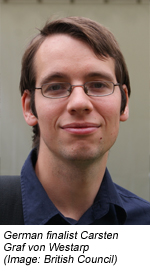 Carsten Graf von Westarp, a PhD student from Germany studying semiconductor physics at the University of Hamburg, says the key to successful communication is to show how your research relates to everyday life. “Be aware of the interests of the audience or reader,” he says. Use simple language: keep technical terms to a minimum, and make sure you explain any that you do use.
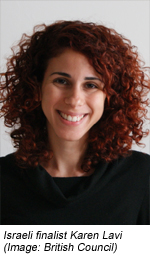
Another tip from Graf von Westarp is to show your fascination with your topic, advice that is echoed by the other two finalists. Karen Lavi, a PhD student studying memory and learning at the Bar-Ilan University and Haifa University in Israel, says enthusiasm is essential for good communication. “Keep in mind that [to you] your subject is the most interesting topic that ever existed — otherwise you wouldn’t have chosen to invest your whole life in it,” she says. “Try to pass on this feeling to your audience.”
 Fellow finalist Mahmoud Abu-khedr, a third-year student at the University of Alexandria in Egypt, agrees that talking from your heart is key, and adds that you also need to believe in the importance of science communication itself.
In addition, Lavi emphasises the power of using metaphors and story-telling, suggesting that you talk about your research as if it were a detective story rather than a presentation at a conference. She also recommends you try to personalise your audience — “Imagine you are talking with your mother,” she says — and make sure that you can sum up your entire talk in a few sentences: “What is the message your audience should take home with them? What will they tell their friends and family?”
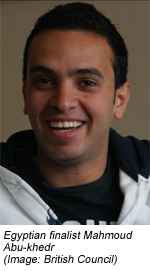 Considering how you present yourself can also help you communicate better, says Abu-khedr. Remember to smile, and work on your charisma: “You have to act as well as present,” he says. Lavi adds that you should also inject some humour if you can. But don’t force it so that you become uncomfortable — it’s important to have confidence in yourself. “Be how you are,” concludes Abu-khedr.
Do you have any tips to add? Share your advice and experiences below. And best of luck to all the FameLab international finalists.
UPDATE: Congratulations to Karen Lavi and Mahmoud Abu-khedr, who took second and third places respectively in the competition. You can read more about the results on the FameLab website.