
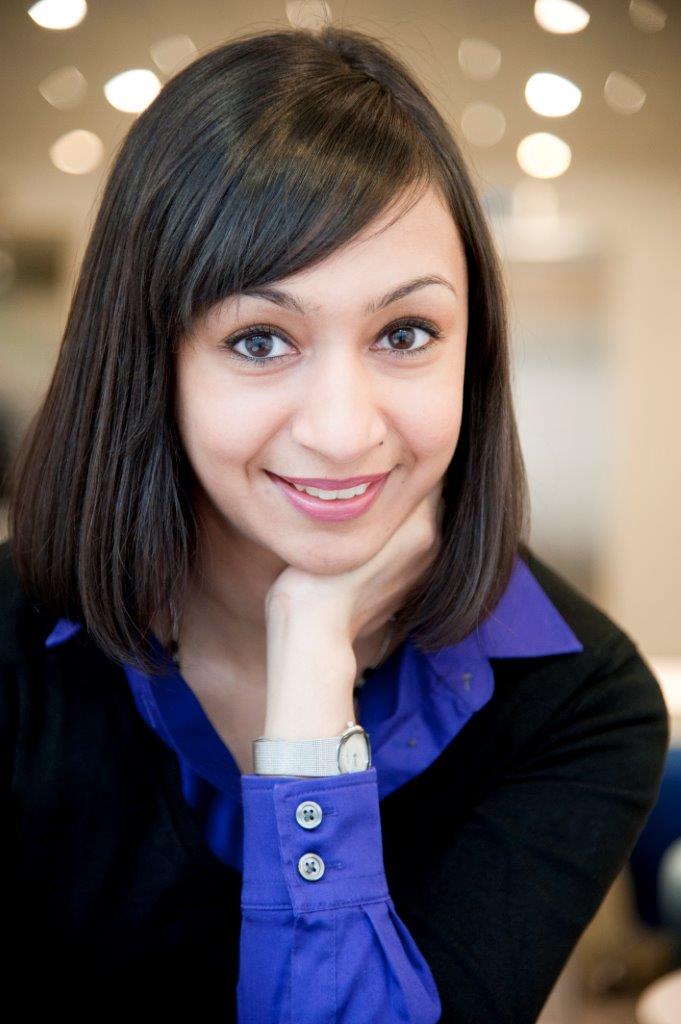
Roma Agrawal: “We have to make sure stereotypes don’t get in the way of future choices.” (Image courtesy of Nicola Evans, WSP)
Roma is an Associate Structural Engineer at WSP where she spent six years working on The Shard. Roma has a BA in Physics from the University of Oxford and an MSc in Structural Engineering from Imperial College.
She was awarded the ‘Diamond Award for Engineering Excellence’ and is an M&S Leading Lady. Roma was the only woman featured on Channel 4’s documentary, ‘The Tallest Tower’.
Outside work, she promotes engineering careers to young people. She is a founding member of the Your Life campaign and has spoken to more than 3000 people at over 50 organisations in the last three years. She enjoys Indian classical, ballroom and Latin dancing, yoga, reading and baking. You can follow her on twitter @RomaTheEngineer and find out more at www.RomaTheEngineer.com.
When a young Roma Agrawal moved from her hometown of Mumbai in India to London, she could never have imagined that years later her ideas would be helping shape the future skyline of the capital. A maths and science whizz at school, with a childhood passion for design, technology and all things LEGO, she was encouraged by her teachers to go on to study physics at the University of Oxford.
At Oxford, Agrawal found her interests for design and science were a perfect fit to pursue a career in structural engineering. “I had no idea what I wanted to do when I grew up. I was fortunate that the teachers at my school were very encouraging of girls wanting to go on to study maths and science,” says Agrawal.
It was this encouragement throughout her education that sticks with her today and remains a source of inspiration for many of her projects. As one of a small team of structural engineers at WSP, who worked on the city’s most iconic building, The Shard, Agrawal’s profile quickly rocketed into the media spotlight. Yet it was with this attention that opportunity rose. Promoting engineering, scientific and technical careers to young people and under-represented groups, particularly women, became a priority and Agrawal was the perfect role model to do this.
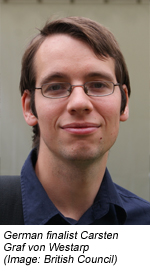 Carsten Graf von Westarp, a PhD student from Germany studying semiconductor physics at the University of Hamburg, says the key to successful communication is to show how your research relates to everyday life. “Be aware of the interests of the audience or reader,” he says. Use simple language: keep technical terms to a minimum, and make sure you explain any that you do use.
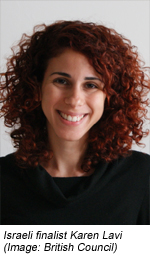 Fellow finalist Mahmoud Abu-khedr, a third-year student at the University of Alexandria in Egypt, agrees that talking from your heart is key, and adds that you also need to believe in the importance of science communication itself.
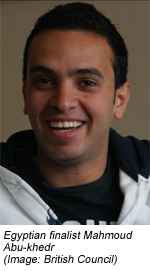 Considering how you present yourself can also help you communicate better, says Abu-khedr. Remember to smile, and work on your charisma: “You have to act as well as present,” he says. Lavi adds that you should also inject some humour if you can. But don’t force it so that you become uncomfortable — it’s important to have confidence in yourself. “Be how you are,” concludes Abu-khedr.