
The NIH’s BRAIN Initiative interim report – notes and thoughts

The first official report lists the scientific priorities that will be funded by the NIH as part of the BRAIN Initiative
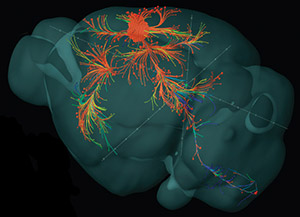
brain_map

{credit}Margrie & Osten, Nat. Methods{/credit}

Yesterday evening we heard the first official report that delivered some details about what scientific areas the BRAIN Initiative (at least the part coordinated by the National Institutes of Health) will focus on and what its general approach to science funding will be.

Cori Bargmann and Bill Newsome (co-chairs of the NIH-appointed panel that is advising the NIH-director about the plan) spoke through a webcasted seminar to explain the conclusions that arose from the series of scientific workshops and meetings that have been taking place over the summer to discuss what could be the scientific priorities of the BRAIN Initiative. These priorities will set the ground of the research areas to be funded by the BRAIN initiative NIH funding in Fiscal Year 2014 (with a budget of US $40M).

The overall goal of the project was summarized as focusing of developing tools and resources for analyzing neuronal circuits and their function in living organisms.

The two scientists delved on a number of principles that applied to the overall initiative, such as promoting platforms for data sharing, promoting interdisciplinary research and focusing on a variety of experimental organisms and studies across temporal and spatial scales.

The specific areas that will be funded through the Initiative are summarized below:

  1. Generate a census of cell types in the nervous system. Including neurons and glia and techniques for targeting them. To be attempted in parallel in human and animal samples. Methods developed for this should apply across species.
  2. Create structural maps of the brain. This means cell to cell level connections in different animal models. This would complement the Human Connectome project (based on macroscale neuroimaging approaches).
  3. Develop new large scale methods for recording chemical and electrical activity of neurons. Scaling up of electrophysiological and imaging methods as well as completely new technologies.
  4. Develop a suite of tools for circuit manipulation and perturbation of circuit function. A push for the development of technologies like optogenetics that enable manipulating nervous activity in ways that resemble natural activity patterns.
  5. Linking brain activity to behavior. Activity monitoring at the same time that behavior is monitored. Highlighting the importance of making simultaneous measurements during long periods of time and during different types of behaviors.
  6. Integrating theory, statistics and computation with experimentation. Importance of theoretical frameworks that could explain principles of brain function.
  7. Delineate mechanisms underlying macroscale brain imaging technologies, as used in humans.
  8. Create mechanisms to enable collection of human data.
  9. Provide training so that new methods reach the community and promoting interdisciplinary research.

Although these FY2014 research priorities are presented as 9 independent entities, the goal is really to integrate these approaches as much as possible —but how exactly this integration will take place or be promoted is to be revealed by June 2014.  The goals are also highly ambitious and will require much more funding than the BRAIN Intiative’s current budget.

The speakers noted that the goals were not “to develop tools for tools sake” but tools that could have applicability. Innovative tools, thoroughly validated and applied in real nervous systems, improved through iterations and to ensure that they are disseminated efficiently to the community.

The commission also highlighted that their goal was not to deliver the solutions but the problems. Solutions to addressing these challenges are to come from ‘bottom-up’ approaches proposed by the community of scientists.

Tools for studying individual cells in the brain or the entire brain as a whole exist and continue to be very useful. But methods for understanding how connected networks of cells in the brain work and relate to behavior are still largely missing. Even maps of these connected entities remain unknown. Focusing funding on better tools to close this gap will be exciting and productive for advancing neuroscience as a whole.

The conclusions disclosed in this interim report are very much in line with what was expected of the project as announced a few months ago. They also largely agree with the main scientific goals that were deemed to be the top funding priorities for the National Science Foundation for the BRAIN Initiative (which will have US$20M to contribute, as well). Indeed, many of the topics covered in these 9 areas were things we and others discussed in editorials and commentaries related to the BRAIN Initiative in our pages and in this blog. The working group that has developed these priorities has had an inclusive, overarching frame of mind and included most of the major challenges that neuroscience currently faces, as most scientists would probably agree.

As we’ve said before, a push for technology development in neuroscience, with clear goals and challenges that these tools need to tackle, will surely be an efficient way of advancing the science of the brain.
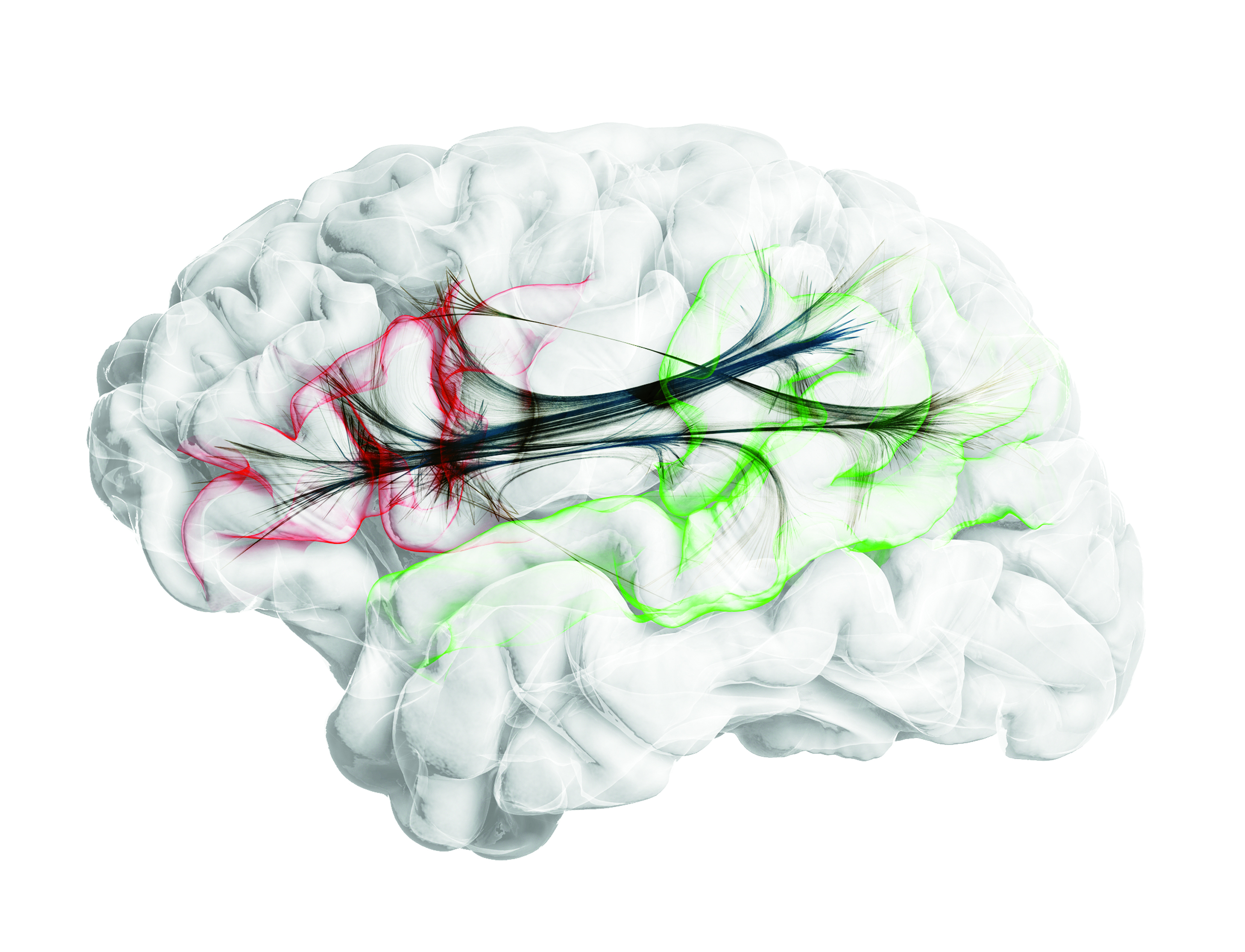
It’s time to map the brain

A special complimentary focus on technology for large scale mapping of anatomy and function of brain circuits at Nature Methods
0613 NMeth cover-hires

These are exciting times in neuroscience. The technology available for  large-scale anatomical and functional brain mapping is advancing at a very high speed and it is foreseeable that these brain maps will have a profound impact on our understanding of how the brain works. Because of the importance of this topic, we devote a special focus to it.

To understand the brain we need to know how and when neurons fire in the living animal while it performs naturalistic behaviors. We need to know the underlying wiring patterns and anatomical configuration of the circuits and we need to be able to develop testable models of how behaviors arise from the underlying function of the cells in the brain.

Obtaining this type of systems-level information about the brain has not been easy up to now. But thanks to technological development, this is rapidly changing.

Rendering the connectivity maps of entire areas of the mammalian nervous system, like the retina, at nanometer resolution is now feasible in a few years work. These structural maps will contain unique information about the characteristics of neural circuits. But in addition to anatomical information, we need to monitor the brain at work at cellular level and we need to gather molecular information about its components. Together, the compilation of functional, structural and molecular data about the circuits in the living brain and their relation to behavior opens new posibilities for neuroscience.

Data-gathering alone will not, however, deliver the answers. Neuroscientists will need help from statisticians and mathematicians to make the information understandable and interpretable. After all, the data is only a tool that one hopes will lead to testable theories and models about how the brain works.

Because of the exciting moment at which the technology for mapping the brain is, we have put together a collection of Reviews, Perspectives and Commentaries in which experts discuss the state of the art technologies available for mapping the brain, the challenges and the potential of this endeavor. All the materials in this focus are freely available (thanks to our sponsors)—you can also read more about our views on the importance of this topic for neuroscience in our editorial.

We hope that these pieces will inform, inspire and incite discussions about mapping the brain and its potential to help us advance towards a deeper understanding of our own minds.

An era for BRAIN technology

President Barack Obama has just proposed large investments in a project aiming to develop technologies that enhance our understanding of brain function.

In an official announcement from the White House, US President Obama just launched the BRAIN (Brain Research through Advancing Innovative Neurotechnologies) Initiative project. This basic research project is expected to receive large sums of public and private funding to promote technologies that expand our knowledge of brain function.

This was a much awaited announcement. From what can be read in the White House’s official Press release, the BRAIN Initiative will be a collaboration between the US National Institutes of Health, the Defense Advanced Research Projects Agency and the National Science Foundation, with an initial injection of funds going up to $100 million for 2014.

To set the goals and timeline of this project, the NIH will establish a working group composed of 60-80 scientists co-chaired by Cori Bargmann of Rockefeller University and Bill Newsome from Stanford University. Through workshops and meetings that will take place in 2013, the working group will define the detailed scientific goals and establish a multi-year scientific plan for achieving them. The workshops are to start in about one month.

In addition, the project will have several private sector partners: the Allen Institute for Brain Science, the Howard Hughes Medical Institute (HHMI), the Kavli Foundation and the Salk Institute for Biological Studies. Most of these institutions have already been investing in technology development to address the challenges of understanding the brain for some time. In fact, Nature Methods recently published work from HHMI investigators showing the first whole brain imaging of neural activity at the single-cell level. As the details of the goals and timelines of the BRAIN Initiative become clearer over the next few months, we will likely have a more concrete idea of how the budget for BRAIN will be projected in the coming years.

What is unique about BRAIN compared to other previous ‘big science’ projects like the Human Genome Project is that it is advocating for technology development first as it lays out its broad goals without indicating a particular biological idea or concept. The need for technology development is so dear in neuroscience that in our view devoting substantial resources to this is essential for understanding brain function, a view that appears to be shared by the HHMI as evidenced by the substantial technology development they are funding for brain research at the HHMI Janelia Farm Research campus.

As we have discussed in previous posts on this site and in our April Editorial, to understand the brain we will need technologies that help large scale mapping of the structural wiring diagrams in the brain, that record the activity of whole brains in action at resolutions that mirror those of physiology and behavior and that link function and behavior. In all these areas, we first need to improve our tools and methods.

The progress that can be made by promoting technological development cannot be underestimated. Once more powerful methods are in the hands of researchers, knowledge will advance at a much higher speed and investments in science will be more productive and efficient.

Technology development at the heart of ‘big neuroscience’

European and US initiatives aiming to advance our understanding of brain function depend on new technologies.  

Last January the European Commission awarded one of its flagship grants worth 1 billion Euros ($1.3 billion) to the Human Brain Project, an international initiative that seeks to integrate everything we know about the brain into databases and computer models. The Human Brain Project builds on the work of the Blue Brain Project led by Henry Markram of the École Polytechnique Fédérale de Lausanne and seeks to simulate the workings of the human brain.  

The NIH is also likely to support a  big collaborative effort to improve our understanding of the brain through the Brain Activity Map, a  project that aims to develop technologies to monitor and modulate the activity of whole brain circuits at cellular level.

As we discuss in our recent editorial, technological development is a fundamental pillar of both of these projects. The Human Brain Project will require significant advancements in algorithms and computing technology, and will benefit from improvements in the type of data that is used to create the models. The Brain Activity Map faces challenges due to the difficulty of recording the activity of neurons distributed across large brain areas simultaneously and at the cellular level. As its proponents have outlined, the project will require large efforts in new technological development in the areas of functional brain imaging and optogenetics. It also has to set realistic goals and focus much of its initial effors in model organisms.

Understanding brain function and its pathologies is undoubtedly a challenge worth taking—the steps that will take us in the right direction hinge on our capacity to work across scientific disciplines and stimulate major technological advances.

Whole brain cellular-level activity mapping in a second

It is now possible to map the activity of nearly all the neurons in a vertebrate brain at cellular resolution in just over a second. What does this mean for neuroscience research and projects like the Brain Activity Map proposal?

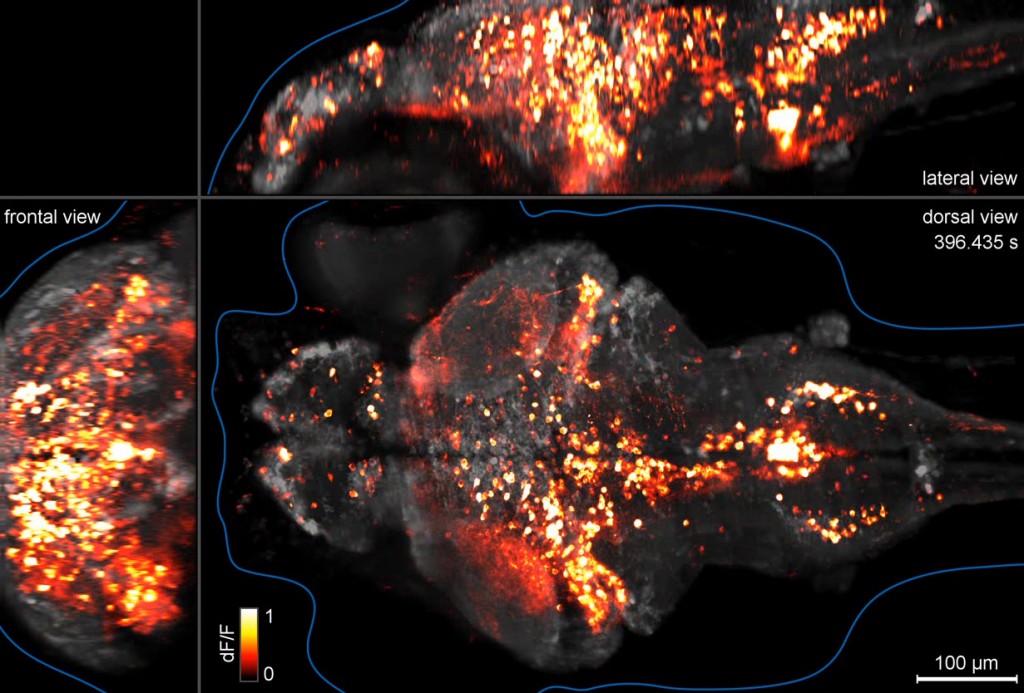
In an Article that just went live in Nature Methods, Misha Ahrens and Philipp Keller from HHMI’s Janelia Farm Research Campus used high-speed light sheet microscopy to image the activity of 80% of the neurons in the brain of a fish larva at speeds of a whole brain every 1.3 seconds. This represents—to our knowledge—the first technology that achieves whole brain imaging of a vertebrate brain at cellular resolution with speeds that approximate neural activity patterns and behavior.

Click on the image to view the video.

Brain activity imaging of a whole zebrafish brain at single-cell resolution. Click on image to view video [20 MB].

Interestingly, the paper comes out at a time when much is being discussed and written about mapping brain activity at the cellular level. This is one of the main proposals of the Brain Activity Map—a project that is being discussed at the White House and could be NIH’s next ‘big science’ project for the next 10-15 years. [Just for clarity, the authors of this work are not formally associated with the BAM proposal].

The details of BAM’s exact goals and a clear roadmap and timeline to achieve them have yet to be presented, but from what its proponents have described in a recent Science paper the main aspiration of the project is to improve our understanding of how whole neuronal circuits work at the cellular level. The project seeks to monitor the activity of whole circuits as well as manipulate them to study their functional role. To reach these goals, first and foremost one must have technology capable of measuring the activity of individual neurons throughout the entire brain in a way that can discriminate individual circuits. The most obvious way to do this is by imaging the activity as it is occurring.

With improvements in the speed and resolution of existing microscopy setups and in the probes for monitoring activity, exhaustive imaging of neuronal function across a small transparent organism was bound to be possible—as this study has now shown.

The study has also made interesting discoveries. The authors saw correlated activity patterns measured at the cellular level that spanned large areas of the brain—pointing to the existence of broadly distributed functional circuits. The next steps will be to determine the causal role that these circuits play in behavior—something that will require improvements in the methods for 3D optogenetics. Obtaining the detailed anatomical map of these circuits will also be key to understand the brain’s organization at its deepest level.

These are some of the types of experiments described in the BAM proposal and they are clearly within reach in the next 10 years–whether through a centralized initiative or through normal lab competition and peer review. While it is expected that in mice, too, functional circuits will span large brain areas, performing these types of experiments in mice will require more methodological imagination. It will not be possible to place a living mouse brain within the microscope system used by Ahrens and Keller to image the zebrafish brain. The mouse brain is significantly bigger, is largely impenetrable to visible light and is surrounded by a skull. Realistically, we may not see methods that enable whole brain activity mapping in mammals at the cellular level for quite a while.

But there is much worth learning about brain function in smaller organisms such as the zebrafish and drosophila, and microscopy systems such as this will be capable of providing important fundamental insights into brain function that are relevant to our understanding of the human brain.

Whether it will be through BAM or not, the neuroscience community has important challenges to tackle ahead. At Nature Methods, we have been actively involved in supporting technology development in the neurosciences from the very beginning and we look forward with enthusiasm to doing so during this exciting period in neuroscience research.

Update: We just published an Editorial on this topic in our May issue.

A hit below the belt to Spanish science

In a report published last Thursday, the Spanish government released a sudden modification of the established rules pertaining to the financing of research projects sentencing the research community to more hardships.

Public funds are the main financing source that Spanish science relies on. These programs, which fund research projects as well as individual investigators (mostly young talented scientists starting their labs and returning from postdocs overseas) are granted every year and typically provide funds for projects spanning 3-to-5 years. In the present financial climate, the Spanish government has been continuously and drastically cutting funds for these programs.

In 2009 the Spanish government spent 547 million euros to support science. In the latest resolution of these programs, published last December, these funds were reduced to 309 million (a more than 40% reduction). Rubbing salt into the wound, these funds will also be significantly delayed according to the recent communication, which states that researchers will receive the funds in four years instead of the three that the original call had stipulated back in December 2011.

Making things even worse, the government has announced that during the first year, less than 10% of the funds will be made available to scientists. This is in direct contrast to previous resolutions, in which funds were administered following a 40% in year one, 40% in year two and 20% in year three formula that was deemed appropriate as projects typically require big investments in equipment and reagents during the first years.

In the past, it has been possible for universities or the CSIC (the Spanish National Research Council) to advance some of the funds to awardees, but now these institutions have no money to put forward.

This delay and changed formula for administration of funds will have a devastating effect on the vast majority of active Spanish scientists. In addition, the manner in which this new ‘rule’ has been communicated, late and by surprise, has angered a community of researchers that has already been particularly hit by the economic woes that the country is suffering.

During the 30 years before the 2008 crisis, Spanish research and development productivity had been steadily increasing and gaining visibility in the international community. Young investigators who had gone abroad to do science were returning to Spain aided by new grants and programs. Innovative, cutting-edge Spanish science was no longer a dream but a reality.

Since 2009, the Spanish government has been cutting science budgets relatively more than other areas (average ministries are experiencing cuts of 16%). It is clear that these cuts threaten to undermine the ability of scientific institutes across the country to hire and retain talented personnel. While Spain continues to reduce its support for research, other European countries and the European Union are proposing to increase their investment in science.

The Spanish science secretary Carmen Vela has proposed that Spanish scientists focus ‘on innovation and quality over quantity’ and that private funding of science should increase. But if policymakers continue to take measures that result in more labs closing down and the fleeing of scientists, there will be no talented people left in Spain to drive the innovation that will guarantee a sustainable economy in the future.

Links to other news coverage and political reactions to this resolution

https://sociedad.elpais.com/sociedad/2013/01/24/actualidad/1359061061_171675.html

https://www.abc.es/espana/20130126/abci-gobierno-reduce-ayudas-ciencia-201301261848.html

https://www.izquierda-unida.es/node/11697

Prioritizing ‘bottom-up’ investments in infrastructures, as well

In this month’s editorial we discuss the importance of prioritizing funds for researcher-originated projects, such as those supported by the European Research Council (ERC) over thematically-defined grants inEurope’s next program for research and innovation.

In addition to the ERC, another instrument that will be of critical importance for the competitiveness of Europe’s researchers is good access to world leading research infrastructures.

In 2002, the European Union set up the European Strategy Forum on Research Infrastructures (ESFRI), a group of senior science administrators who advise national governments and the European Commission on infrastructure needs. In 2006, the ESFRI released its first roadmap: a list of 35 infrastructure projects that the forum deemed to be of pan-European interest. This roadmap has been subsequently updated to include a total of 44 initiatives and after several years of financial support to the ‘preparatory’ phases, some of these projects are finally ready to enter the critical ‘realization phase’.

However, taking all 44-initiatives through the construction phase is estimated to cost the EU ten times more than the funds allocated to these projects under FP7. Horizon 2020’s proposed budget follows a similar trend.

To ensure that at least the most successful projects defined under ESFRI see the light of day, ESFRI needs more funds and more power to act.

As discussed in a prior editorial, the creation of the ESFRI was an important first step, but not enough, as the forum neither funds the projects nor sets explicit priorities among them. Following the model of the ERC, ESFRI should be given the autonomy to evaluate infrastructure projects on the basis of their scientific promise, prioritize them and, ultimately, to fund them.

The creation of such a ‘European Research Infrastructure Council’ should be accompanied by the necessary stimulus in funds so that successful projects make it through the realization phase and investments that have already been made can be fully exploited.

What’s behind an fMRI signal?

In this month’s editorial we discuss the importance of gaining a deeper understanding of the signals underlying fMRI technology.

Despite the increased interest in this technology and the huge investments, we know very little about the underlying biology that produces these signals. This lack of understanding limits the type of information that can be obtained from this methodology and its utility to help us understand how our brains work.

We discuss new technological developments that might help address this question, including a research article by Dr. Helmchen and colleagues in this issue.

Dialogs between neuroimagers and cellular neurobiologists are critical to solve this question, as has been discussed before and funding institutions should give a higher priority to projects focused on gaining a deeper understanding of these complex signals.

Using the NIH RePORTER database we performed a search based on the following terms: ‘functional magnetic resonance imaging’ and ‘brain imaging’. We restricted the search to active projects starting on 1 January 2010 and we screened through the list of projects to remove those that were related to MRI but not fMRI. We then added up the total cost of all projects in the curated list. The number that we present in the piece is approximate and has not been scrutinized in detail. This way, we came up with the approximate amount of money that the US National Institute of Health has spent over different time periods in the last years. 

An exponential increase in scientific publications based on fMRI research has also been observed over the last years.

We’re curious to hear what you think of this!

Head-to-head comparisons of methods and tools

Choosing the best tool or method for a particular experiment can be a daunting task. Finding the right choice can mean much time and many resources and an improper one can lead to poor or inaccurate results.

Direct head-to-head comparisons of methods or tools under standardized experimental conditions can yield extremely valuable information for method users and also for tool developers. To ensure publication of these types of papers, Nature Methods provides the ‘Analysis’ format.

In our February issue Editorial we discuss the value of these types of publications and we highlight two recent examples of Analysis papers that we hope will become well-thumbed copies in many desks throughout the world.

Zhuang and colleagues performed a systematic empirical comparison of different fluorescent dyes used for super-resolution imaging and Deisseroth and colleagues compare a wealth of optogenetic tools for the modulation of neuronal activity.

Nature Methods will continue to look for these kinds of comparative projects and we are eager to hear your thoughts about  particular areas that might benefit from this type of work and to receive proposals and submissions of this kind.

Method of the Year 2010: Optogenetics

The time to celebrate methods has come and this year we have chosen to devote our end of year special feature to Optogenetics.

While neuroscientists will hardly need any introduction to this booming technology, recent developments have shown that this technique can go beyond controlling the activity of neurons in the brain and has the potential to open new avenues of experimentation across multiple other biological fields as well.

The term optogenetics was only coined 4 years ago but the technology has already matured to the point that it is having a substantial impact on basic biological research. Because of the transformative effect that it has already had in neuroscience studies and the excitement of its future prospects in other fields, it’s nomination as Method of the Year has not been a difficult one.

You can read more about this choice in the editorial of our January issue and access all the content of our special issue here.

We hope that you will share our excitement for this technology and we welcome any comments on our selection!