How to get a ticket for this year’s SpotOn London

Screen Shot 2014-10-02 at 15.13.36

With a month to go, we’ve been busy behind the scenes planning for this year’s SpotOn London conference on 14th and 15th November. We are pleased to announce that we can now share some more details about how you can attend the event.

What is SpotOn London?

If you’ve not attended before, SpotOn London is an annual opportunity to meet other people interested in how science is carried out and communicated online. The two day event, which marks its sixth year, is hosted by Nature Publishing Group, Palgrave Macmillan, Digital Science and the Wellcome Trust.  We’re also delighted to have Martin Fenner of PLOS joining us as a co-organiser again this year.

The conference is taking place on Friday 14th and Saturday 15th November  Find out more details about the event in our blog post announcing the dates.

This year’s theme will be on the challenges of balancing the public and the private in the digital age. Friday will see panels, workshops and keynotes on topics including: sharing sensitive data, measuring social impact, open peer review and the right to be forgotten. In an exciting change to our Saturday programme, SpotOn London will be hosting an unconference completely picked and run by the community within this year’s theme.

How can I get a ticket?

This year we’re releasing tickets to attend the main conference in one batch which will go on sale at noon (UK time) on Monday 13th October via our Eventbrite page.

This year there are two ticket types, a full two-day conference ticket (£60) and a Saturday only ticket (£35) – which includes breakfast, lunch and other refreshments.

As the conference has sold out every year, we recommend buying your ticket as soon as possible to avoid disappointment.

What if I want to run a session

On Saturday, the programme will be crafted by the delegates. There will be a Google doc before the conference for session suggestions. Saturday’s schedule will be formulated on the Friday at the conference. If you are only attending on the Saturday and want to run a session, do let us know in advance.

If we’ve already been in touch with you and you’ve agreed to coordinate a session on the Friday, please don’t purchase a ticket. If you’ve got any questions about organising sessions and joining in the unconference, please do get in touch.

What about attending fringe events?

We’ve also been busy coordinating plans for fringe events on the evenings of Thursday 13th and Friday 14th November. Tickets to these events will be offered to conference attendees first. We’ll announce details of the fringe events soon – so stay tuned!

Follow @SpotonLondon and the hashtag #solo14 for updates and if you’re not already on our mailing list, or if you have any questions, drop us a line at blogs@nature.com and we’ll happily add you!
Under the covers (Nature revealed) – 2 October

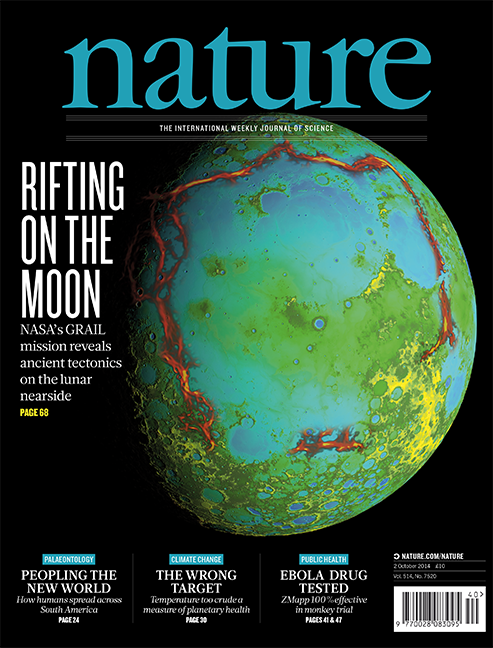
This week’s cover shows the findings from NASA’s Grail Mission which revealed ancient tectonics on the lunar nearside. Nature’s Art Director Kelly Krause talks us through the inspiration behind the cover.

Caption:

The Procellarum is a broad feature on the nearside of the Moon, characterized by low elevations and thin crust, and largely covered by dark basalts that can be seen from Earth with the unaided eye. The red colours on the cover image show gravity anomalies bordering the Procellarum region, calculated with data from the Gravity Recovery and Interior Laboratory (GRAIL) mission. The background globe represents the topography of the Moon as measured by the Lunar Orbiter Laser Altimeter (LOLA). Andrews-Hanna et al. interpret the observed gravity anomalies as evidence of ancient lava-flooded rift zones buried beneath the volcanic plains (or maria) on the nearside of the Moon. Cover: NASA/ Colorado School of Mines/ Goddard Space Flight Center/ Scientific Visualization Studio

NASA's GRAIL mission reveals ancient tectonics on the lunar nearside.

NASA’s GRAIL mission reveals ancient tectonics on the lunar nearside.

Continue reading →

SpotOn London: Public interest and privacy in the digital world – 14/15 November 2014

Screen Shot 2014-10-02 at 15.13.36The annual conference, SpotOn London, will be taking place at the Wellcome Trust on Friday, 14 November and Saturday, 15 November 2014. The two day event, which marks its sixth year, will be hosted by Nature Publishing Group, Palgrave Macmillan, Digital Science and the Wellcome Trust.  We’re also delighted to have Martin Fenner of PLOS joining us as a co-organiser again this year. SpotOn London is a dynamic, lively melting pot of scientists, science communicators, technologists, and those interested in science policy.

This year’s theme will be on the challenges of balancing the public and the private in the digital age. Friday will see panels, workshops and keynotes on topics including: sharing sensitive data, measuring social impact, open peer review and the right to be forgotten. In an exciting change to our Saturday programme, SpotOn London will be hosting an unconference completely picked and run by the community within this year’s theme. Issues explored will include:

  • Is our understanding of where the lines blur between private and public keeping pace with technology?
  • How do we balance public interest with the right to privacy when it comes to personal data?
  • How much are we prepared to share for our own interests, and do we really know how much we are sharing about ourselves?
  • How do we balance personal opinion and professional image on social media?
  • Has the right to be forgotten managed to strike a balance between the right of information and the individual’s right to privacy?
  • Does scientific peer review need to be open? And would this work?

Continue reading →

Under the covers (Nature revealed) – 18 September

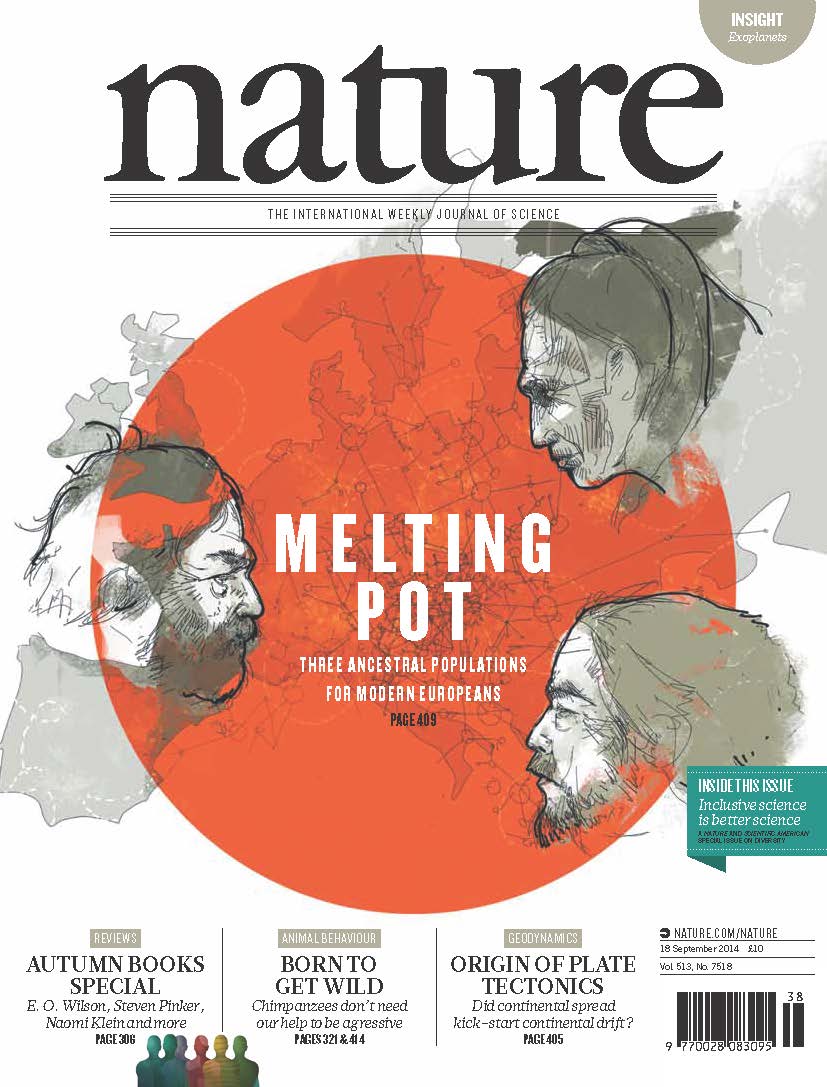
This week’s cover shows the three ancestral populations for modern Europeans in an informative and beautifully crafted sketch. Nature’s Art Director Kelly Krause talks us through the inspiration behind the cover.

Caption:

By sequencing and comparing the genomes of nine ancient Europeans that bridge the transition to agriculture in Europe between 8,000 and 7,000 years ago, David Reich and colleagues show that most present-day Europeans derive from at least three highly differentiated populations — west European hunter-gatherers, ancient north Eurasians (related to Upper Palaeolithic Siberians) and early European farmers of mainly Near Eastern origin. They further propose that early European farmers had about 44% ancestry from a ‘basal Eurasian’ population that split before the diversification of other non-African lineages. These results raise interesting new questions, for instance that of where and when the Near Eastern farmers mixed with European hunter-gatherers to produce the early European farmers. Cover: Leonardo Gonzalez.

Three Ancestral Populations For Modern Europeans

Three Ancestral Populations For Modern Europeans

Continue reading →

Roma Agrawal on bridging the diversity gap in engineering and inspiring a future generation

Roma Agrawal: "We have to make sure stereotypes don’t get in the way of future choices.”

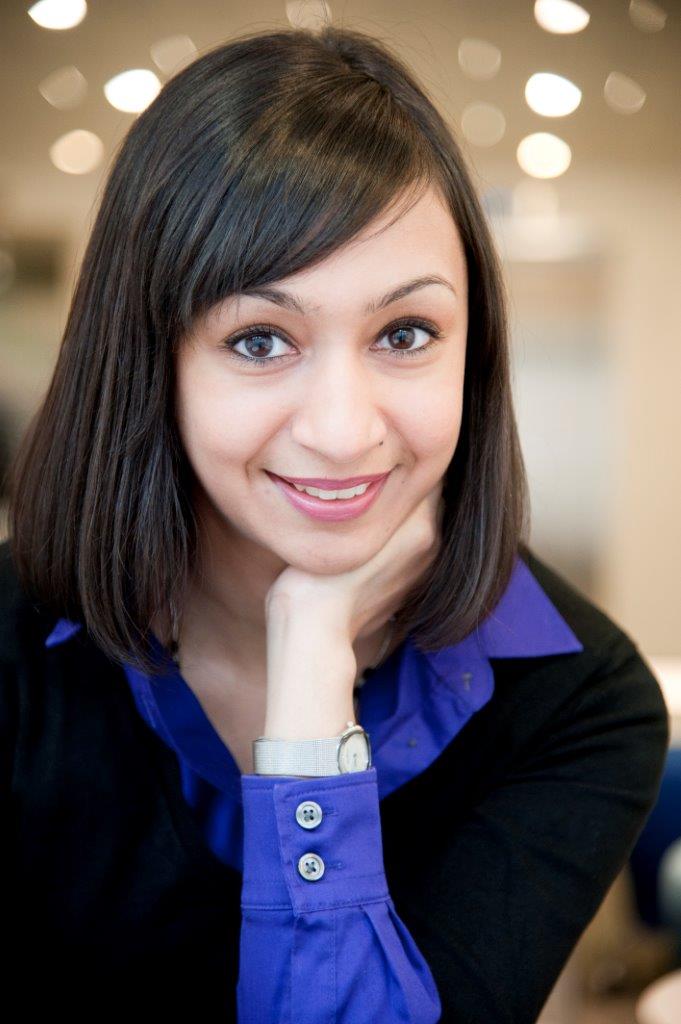
Roma Agrawal: “We have to make sure stereotypes don’t get in the way of future choices.” (Image courtesy of Nicola Evans, WSP)

Roma is an Associate Structural Engineer at WSP where she spent six years working on The Shard. Roma has a BA in Physics from the University of Oxford and an MSc in Structural Engineering from Imperial College.

She was awarded the ‘Diamond Award for Engineering Excellence’ and is an M&S Leading Lady. Roma was the only woman featured on Channel 4’s documentary, ‘The Tallest Tower’. 

Outside work, she promotes engineering careers to young people. She is a founding member of the Your Life campaign and has spoken to more than 3000 people at over 50 organisations in the last three years. She enjoys Indian classical, ballroom and Latin dancing, yoga, reading and baking. You can follow her on twitter @RomaTheEngineer and find out more at www.RomaTheEngineer.com.

When a young Roma Agrawal moved from her hometown of Mumbai in India to London, she could never have imagined that years later her ideas would be helping shape the future skyline of the capital. A maths and science whizz at school, with a childhood passion for design, technology and all things LEGO, she was encouraged by her teachers to go on to study physics at the University of Oxford.

At Oxford, Agrawal found her interests for design and science were a perfect fit to pursue a career in structural engineering. “I had no idea what I wanted to do when I grew up. I was fortunate that the teachers at my school were very encouraging of girls wanting to go on to study maths and science,” says Agrawal.

It was this encouragement throughout her education that sticks with her today and remains a source of inspiration for many of her projects. As one of a small team of structural engineers at WSP, who worked on the city’s most iconic building, The Shard, Agrawal’s profile quickly rocketed into the media spotlight. Yet it was with this attention that opportunity rose. Promoting engineering, scientific and technical careers to young people and under-represented groups, particularly women, became a priority and Agrawal was the perfect role model to do this.

Continue reading →

What does Indian science represent to you?

Nature India recently challenged photographers across the globe to provide their stories and perspectives through a stunning image and short description encapsulating science and technology in India.

There has been a diverse range of entries with a distinct flair for photography and fascinating personal tales. Over the course of the next two weeks, Nature India will be sharing the best seven images and encouraging people to share and like on social media.

The inaugural photo competition judges entries on their novelty, creativity and quality. Once all seven have been rolled out across social media, the Nature India editors and design team will pick their favourite based on the engagement and reception each has received from the online science community.

Continue reading →

Turning art to science: A focus on lung cancer

The fine art of representing complex science in illustrations and images can often be tasking to the most adept artists and designers. First there is the brainstorming process, then the pages and pages of sketches and templates, and then the small matter of aligning those thoughts and ideas with those of the editor.

This is a situation very familiar to UK illustrator, Russell Cobb, whose work has been much coveted by national publications and featured across the world. Cobb, this month, took on the challenge of designing the front cover of the Nature Outlook on lung cancer working alongside supplement editor, Herb Brody and the Outlook team.

Here Cobb and Brody talk through how their initial designs and thoughts evolved into the final cover seen below. Read the full Outlook supported by Cancer Research UK and Boehringer Ingelheim here.

Continue reading →

The Dominant Malignancy: Lung Cancer

Lung cancer is the leading cause of cancer mortality. In some countries, incidence rates are dropping but survival rates for those with the disease remain low.

A special supplement published in Nature today explores the current risks, therapies and causes of lung cancer.

The Nature Outlook on lung cancer, supported by Cancer Research UK and Boehringer Ingelheim, contains commentaries, features and articles on topics including: the risks and costs associated with lung-cancer screening, therapies targeted at the specific genetics of a patient’s lung cancer, air pollution risks and key lung-cancer mutations in non-smokers.

Here is a snapshot of the striking graphics that can be found in the supplement.

For more graphics, features and information, click through to read the free-to-access Outlook.

Continue reading →

The big issues affecting lung cancer worldwide

This blog has been produced in collaboration with Cancer Research UK.

Lung cancer is the biggest cancer killer – both here in the UK and globally.

And although the UK has seen signs of improvement – lung cancer rates in men have dropped by 50 per cent in the last four decades – a huge burden still looms. Over the last 40 years, the number of women being diagnosed with the disease has increased by 75 per cent, largely mirroring trends in smoking from decades ago.

To highlight this continuing challenge, Cancer Research UK has teamed up with Nature, which today publishes a series of articles that touch on some key areas for lung cancer – from research to prevention – from across the globe.

Here’s a summary of what to expect from the Nature Outlook on lung cancer.

The dominant malignancy

In the first article, Eric Bender explores global statistics for lung cancer, including the impact of smoking in the UK, and the worrying rise in men smoking in China. Cancer Research UK’s graphic below shows how lung cancer rates follow the pattern of smoking rates in the UK.

Read more


Risk factors: Estimated causes of lung cancer in Britain, 2014. Most cases of lung cancer are attributable to smoking, and so could be prevented.

Risk factors: Estimated causes of lung cancer in Britain, 2014. Most cases of lung cancer are attributable to smoking, and so could be prevented.

Continue reading →

Under the covers (Nature revealed) – 4 September 2014

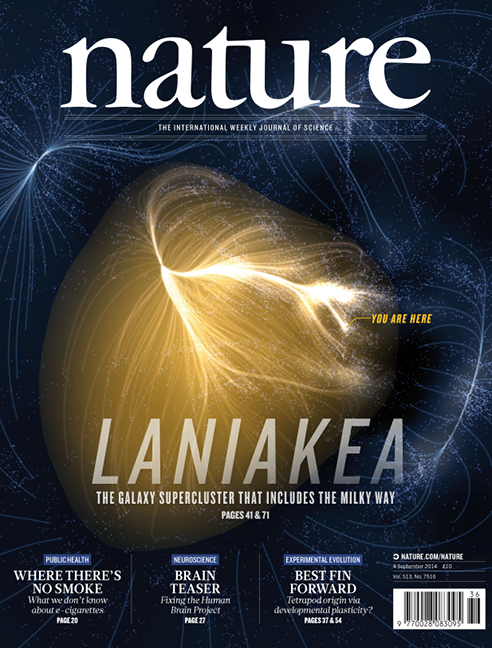
This week’s incredible image has been masterly put together by artist Mark A. Garlick and the Nature Art Team. Nature’s Art Director Kelly Krause talks us through the design process of the cover, which focuses on the Laniakea supercluster.

Caption:

A slice through the Laniakea supercluster — home: velocity flow streams within our supercluster are shown white, external flows dark blue. The Milky Way is a member of the Local Group of galaxies. The Milky Way is a member of the Local Group of galaxies. Now have sufficient data on the distances and motions of galaxies to be able to describe a much larger level of organization in our corner of the Universe — a supercluster 160 megaparsecs across and containing 1017 solar masses. Brent Tully et al. use a new catalogue of ‘peculiar velocities’, line-of-sight departures from cosmic expansion caused by gravitational perturbation, to develop a map representing the distribution of matter. They identify a ‘home’ supercluster that they name Laniakea — from the Hawaiian lani and akea (‘heaven’ and ‘spacious’). It includes the Virgo cluster, the Norma, Hydra and Centaurus clusters (also known as the Great Attractor), the Pavo-Indus filament and a number of voids. Cover art: Mark A. Garlick / Source: Daniel Pomarede.

The Galaxy Supercluster That Includes The Milky Way.

The Galaxy Supercluster That Includes The Milky Way

Continue reading →