
Could shared post-docs improve work-life balance and make academia more attractive for early career scientists?
Naturejobs journalism competition winner Ulrike Träger.
If you look for advice on work-life balance in science online, the message seems clear: it’s possible to fit a 10-hour work day around quality time with your kids and family as long as you’re organized. Flexible hours of working in the lab help. Experiments don’t mind when you do them, and can be postponed until your kids are asleep. But still, long hours are expected in order to be successful, and finding childcare during midnight experiments is not always easy if you don’t live close by. So for many (including myself, a post-doc in my late twenties pondering the right time to start a family) the prospect of having to plan each and every minute of the day to be a good parent and scientist is daunting. This leaves promising young scientists everywhere feeling like they have to choose between family and career.
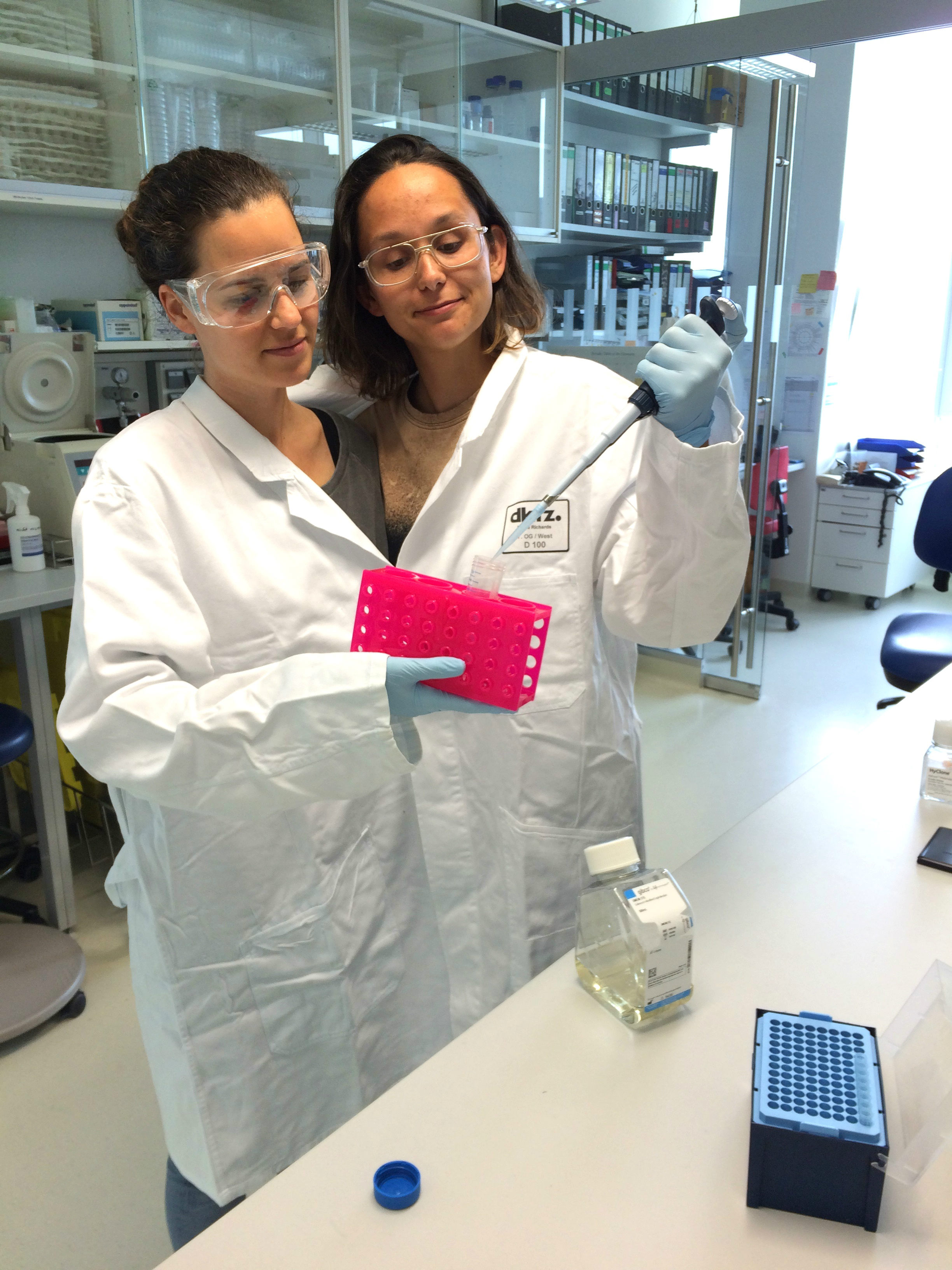
But should “be organized” really be our best advice for anxious parent-scientists? Should we not rather try to promote flexible models beyond working 10 hours a day to keep highly trained, young scientists, who want to prioritize their families, in academia?
One option would be the much frowned upon part-time post-doc. Only 2.5% of post-docs work part-time, and many post-docs and PIs will tell you that ‘part time’ and ‘post doc’ just don’t mix. But I haven’t seen much opposition for shared post-docs, where two post-docs share the same research project. Two (part-time) pairs of hands would mean a project still moves along at a lively pace, whilst still allowing long experimental set-ups to be covered.
In addition to workload, two minds can only be beneficial in designing new experiments and approaches. From a PI’s perspective, there also seems to be few financial downsides in hiring two part-time post-docs instead of one full-time post-doc, and the concept of “job-sharing” is already in use in companies such as BASF. So why is this model nowhere to be found in academia? Surely it’s not due to a lack of demand.
No. As a post doc myself, my guess is what’s holding this model back is the stigma that if a scientist is not committed to working 50-60 hours a week they have no place in science. I’m not sure where this comes from, but I imagine that the pressure to publish high-impact first author papers, to be able to secure funding, has something to do with it.
New open-access publishing strategies and assessments based on smarter paper metrics may start to decrease this pressure. But still, the bigger problem is our mindset, as grants are often awarded by peer-review. It is on us as a community to change our thinking when reviewing CVs – part time work, shared post-docs and children should no longer be seen as a problem, or can we afford to let all these highly qualified people go?
Ulrike is a post-doc at the German Cancer Research Center in Heidelberg. Her research focuses on the development of immune cells in different tissues. Outside the lab she loves to travel and run, ideally combining the two. You can follow Ulrike on Twitter or her blog.
Suggested posts:
7 posts to help you find the right work-life balance with children
Work/life balance: New definitions