German vessel sets out to explore quake-struck seafloor off Japan

One year after the devastating Tohoku earthquake and tsunami, Japanese oceanographers and geologists are teaming up with German scientists to uncover any traces that the the magnitude-9 quake might have left on the sea floor. The scientists will search for geomorphological evidence of what exactly happened on 11 March last year during the two-and-a-half-minute rupture that released massive amounts of seismic energy and triggered a deadly tsunami off the northeastern coast of Honshu.

The 33-strong crew, led by Gerold Wefer of the University of Bremen, will set out on 8 March from the port of Yokohama on a four-week expedition aboard the German research vessel the Sonne (pictured). The German science ministry is providing €1.5 million (roughly US$2 million) to fund the cruise, with German and Japanese funding agencies providing additional support. You can follow the expedition here.

The team will use the Bremen-built MARUM-SEAL, an unmanned submersible equipped with advanced sonar technology, to map in great detail the 2,000-metre-deep sea floor around the quake epicentre. Japanese scientists mapped several segments of the sea floor in 1999 and 2004. The Sonne crew will re-map the same profiles, to allow scientists to compare sea-floor morphology before and after the quake.

Scientists suspect that the extraordinary force of the tsunami, which killed some 20,000 people, may have been the combined result of the sea floor rising with a jolt by up to five metres and of quake-triggered slides of the Japanese continental shelf. The team will search for clues of either mechanism: the fine-scaled pattern of horizontal and vertical displacement of the crust beneath the ocean floor and the amount and origin of sediment that may have slid into the 7,000 metre-deep Japan trench will shed light on the fateful chain of events and help constrain the precise source of the tsunami, they hope.

“In the light of the tragic events last year the stability of the continental shelf off Honshu is a key research topic,” says Wefer. “We are glad that we can assist our Japanese colleagues with precious ship time. I hope that this cruise will mark the beginning of a close collaboration between our countries in marine sciences.”

The expedition will also target the sites of two drill holes made more than ten years ago by the US vessel JOIDES Resolution under the Ocean Drilling Programme. If the metal casings and electrical connections of the sealed drilling holes are still intact, the team will install there a set of instruments for recording seismic waves. For that purpose, the Sonne hosts the University of Bremen’s remotely operated diving vehicle MARUM-QUEST, which can operate in water depths up to 4,000 metres.

In a separate expedition, the recently modernized Japanese drilling ship the CHIKYU will in April drill into the fault zone and take temperature measurements near the epicentre of the quake to confirm various theories about friction in faults.

Image:  RF Forschungsschiffahrt Bremen.

NIH announces database for genetic test information

The National Institutes of Health (NIH) has unveiled its Genetic Testing Registry, a  database of  information on genetic tests that will be voluntarily submitted by test producers.

According to the NIH, there are now genetic tests available for some 2,500 diseases, including those tests that can be directly purchased by consumers. Most tests do not require the approval of the Food and Drug Administration (FDA).

The registry, launched on 29 February, is meant to provide patients and health-care providers with a centralized repository for details on the myriad of disease-specific tests that are now available. The agency, which has been planning the registry for years, said it will be a resource for “all who are struggling to make sense of the complex world of genetic testing”.

Because the registry just launched, its contents are limited to entries that have been carried over from genetest.org, an NIH resource of medical-genetics information for health-care providers and researchers. The NIH is now asking for genetic-testing companies to submit to the registry on a voluntary basis.

The registry can be queried by the name of a genetic test, the name of the test’s provider or, more generally, by a condition (for example, cardiomyopathy or hearing loss) or gene. It also links to National Library of Medicine descriptions and data.

The Council for Responsible Genetics (CRG), a Boston-area consumer-advocacy group, commends the NIH for creating the database, which offers consumers previously inaccessible information. However, the group is concerned by the lack of oversight to ensure that the data are accurate. Continue reading

Coalition launches effort on ‘short-lived’ climate pollutants

Last month we previewed a new effort targeting ‘short-lived climate forcers’ to minimize global warming’s immediate impacts and buy time on the most troublesome greenhouse gas, carbon dioxide (see ‘Pollutants key to climate fix‘).  As forecast, an international coalition launched the programme Thursday at the US State Department in Washington DC, unveiling a modest new fund to promote curbs on emissions of things like methane and black carbon, or soot (AFP).

US Secretary of State Hillary Clinton committed US$12 million to the new fund, and Canada kicked in $3 million. Sweden is expected to follow up with additional resources, and the United Nations Environment Programme will serve as the secretariat. The founding coalition also includes Mexico, Bangladesh and Ghana. Additional background can be found in a briefing transcript posted by the State Department.

Exactly how the new programme will function remains to be worked out, but the challenge isn’t so much what to do as where to start and how to scale up. Whereas carbon dioxide poses century-scale problems that will take many decades to address, curbing a host of more powerful pollutants could help to stabilize temperatures over the near-term (this is the basis of a ‘fast-action’ agenda being pushed by groups like the Washington DC-based Institute on Governance and Sustainable Development). Targets could include brick kilns like the one in Nepal pictured at top right, or diesel engines and methane emissions from landfills and the oil and gas industry. As discussed in a recent editorial, there are also opportunities to reduce the growing climate footprint of a family of chemicals used in air conditioners and other applications.

Is the new programme enough to make a difference?

“What’s enough?” asks Ellen Baum, a senior scientist with the Boston-based Clean Air Task Force who attended the announcement in Washington DC. The scale of the problem — and its many solutions — is enormous, and clearly this week’s announcement is just a start. “Is that sobering? Yes,” she says, but at least the initiative points the world in the right direction. “Between what is enough and what we can actually do, this is a nice bite of the cookie.”

To be clear, many remain concerned that such efforts could fall short while at the same time detracting from the primary emphasis on carbon dioxide (see WWF’s statement here). For their part, supporters of the agenda on short-lived climate forcers are careful to say that these efforts should parallel, not supplant, the mainstream climate agenda.

Photo: Clean Air Task Force

From Downtown! Innovative robot hand learns to shoot hoops

A robot equipped with a ‘universal gripper’ can now fire objects through basketball hoops and play darts, after a fashion.

Researchers from Cornell University in Ithaca, New York, and the University of Chicago previously demonstrated that their ‘gripper’, which consists of a rubber bag filled with granular material instead of the more common articulated ‘fingers’, could pick up heavy items, such as car shock absorbers, and delicate items, such as raw eggs (see: ‘Ground coffee helps robots get a grip‘).

They have now added the ability to shoot objects picked up via positive pressure, as demonstrated in this video. Time to resurrect the Robo-Hoops contest.

You are currently viewing a placeholder content from YouTube. To access the actual content, click the button below. Please note that doing so will share data with third-party providers.

More Information

Mixed news for biodefence in President’s budget request

President Barack Obama’s budget request for 2013 contains mixed news for the US biodefence effort, which came under heavy criticism last year for failing to deliver treatments against biodefence threats despite spending some US$60 billion over the previous decade.

According to figures compiled by Crystal Franco of the Center for Biosecurity of UPMC in Baltimore, Maryland, winners include the Department of Homeland Security (DHS) and three agencies falling under the umbrella of the US Department of Health and Human Services: the Biomedical Advanced Research and Development Authority (BARDA), the Food and Drug Administration (FDA) and the National Institutes of Health (NIH). Losers include military biological-defence development efforts and public-health programmes at the US Centers for Disease Control and Prevention (CDC).

Under the president’s request, the DHS is slated to receive an $11-million boost for its controversial BioWatch programme, bringing the programme’s total 2013 spending to $125 million. BARDA’s budget would grow from $415 million to $547 million, including a $415-million ‘supplement’ from the BioShield Special Reserve Fund. The FDA would receive $346 million for biodefence — about equal to last year — plus $18 million to begin building a new Life Sciences–Biodefense Laboratory complex in White Oak, Maryland. And biodefence funding at the NIH — like the overall NIH budget — would stay flat at $1.3 billion.

“It’s good news that there is more money for BARDA, and no significant cuts to basic science at NIH or to regulatory science at FDA,” says Randall Larsen, founding director of the WMD Center, which last year issued a report card critical of the US biodefence effort to date. The centre and other analysts have long contended that BARDA is too underfunded to properly do its job of ushering promising ‘countermeasures’ through to FDA approval, and that the FDA has been a choke point in the biodefence effort owing to lack of clarity about how it will evaluate and approve biodefence treatments.

Larsen expressed concern that much of BARDA’s budget is slated to come out of the BioShield fund, which exists to lure companies into the biodefence effort in the absence of a significant private market in the field. However, Larsen said, “some could argue that there’s nothing in the queue right now to be purchased” with BioShield funds, “so let’s prime the pump by boosting BARDA.”

Losers in this budget would include the CDC, which is slated for cuts in state and local preparedness programmes and in the Strategic National Stockpile, which would take a $47-million dip to $486 million. The president’s request would also cut the Department of Defense’s medical biological-defence programme by $257 million, leaving its funding at $347.9 million, by eliminating money for basic and applied research and advanced development.

Critics had said that elements of the Pentagon’s biodefence research effort, such as the Transformational Medical Technologies programme, were ineffective; TMT’s early-stage research efforts have now been stopped or folded into new programmes focused on areas such as biosurveillance, diagnostics and advanced manufacturing capabilities.

But Philip Russell, a former director of the Walter Reed Army Institute of Research and adviser to the US Department of Health and Human Services, said that it was a mistake to cut military biodefence research money at the expense of other funding sources.

“Taking money out of the military research budget and leaving NIH funded at $1.3 billion even though it hasn’t produced a single countermeasure is pretty tragic,” Russell says.

The president also requested a boost for the DHS’s science and technology directorate, from $668 million to $831.5 million, but Franco notes that the directorate’s budget is “very opaque,” so it’s difficult to tell how that increase will affect biodefence programmes. The budget also commits no funding to construct the National Bio and Agro-Defense Facility in Manhattan, Kansas, which has not yet been built.

Follow Erika on Twitter at Erika_Check.

F1000 launches fast, open science publishing for biology and medicine

The Faculty of 1000 (F1000), in London, has announced an experiment in online science publishing, aimed at sharing research results widely and rapidly, and using open peer review to check postings afterwards.

The F1000 Research project, which begins publishing later this year and covers biology and medicine, will accept any format of work (examples given include posters, data tables, discursive speculation based on preliminary results, raw data sets and protocols) after an ‘initial sanity check’. It encourages authors to keep revising and updating what they have published. And by default, it will use open publishing licenses, allowing others to share and remix posted research (with attribution).

To reassure those worried that posting up data sets might nix chances of later more formal publication, there’s a long list of journals and publishers who say they wouldn’t view publication of data sets as ‘prior’ publication that prevents them from considering a more formal article.

The blog Retraction Watch characterizes the effort as similar to the well-established ArXiv site, which covers maths and some physics, and which marked its 20th anniversary in August. F1000Research isn’t quite the same as ArXiv: for one thing, it will charge fees to submit a publication, whereas ArXiv preprints are free. On its twitter feed (@F1000Research), F1000 says it is still working out the costs to authors for submissions, and will experiment with test papers over the next few months. Another open question is how much formal post-publication refereeing will be required — the project plans (unlike ArXiv) to invite referees to review published work. The biggest question of all is whether the project can get community buy-in; previous efforts such as Nature Precedings have attracted a few thousand submissions, although the emphasis there is on preprint manuscripts and presentations, not raw data sets.

Retraction Watch wonders how the new project would deal with work that needed retracting. Physicist Paul Ginsparg at Cornell University in Ithaca, New York, who founded ArXiv, e-mails me that ArXiv retains previous versions, but gives authors the possibility to retract.  “Many authors do withdraw articles when they’ve found errors (particularly in mathematical proofs). Most responsible authors would rather not have something incorrect under their names, but of course it’s as low a barrier to withdrawal as submission to Arxiv was in the first place. Perhaps there’s more face to lose in withdrawing a journal publication,” he says.

As for coping with plagiarism,  “there are some administrative removals (a few past plagiarism cases), and we’re prepared to freeze and publicly flag anything that is demonstrably ‘not compatible with Cornell academic standards’,” says Ginsparg. “But it has to be reported, and to be definitive without detective work since we don’t have staff to serve as an international policing body.”

Research strategy urged on risks of nanotechnology

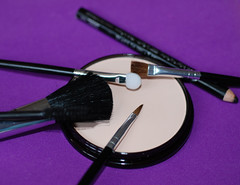
A selection of CosmeticsCalls for high-quality research into the risks of nanotechnology date back as far as the field itself,  but now one august body has added its voice. In a report released today the US National Academy of Sciences (NAS) calls for a more coordinated research strategy to cover open questions as basic as how many nanoparticles of different kinds are being released into the environment, and who is being exposed to them. “There are some significant gaps that we need to address in order to move forward,” says Rebecca Klaper, an ecologist at the University of Wisconsin-Milwaukee who served on the authoring committee.

The report also criticizes the US National Nanotechnology Initiative (NNI), which since 2000 has coordinated operations at the many US agencies that fund nanomaterials-risks research, focusing on the NNI’s dual role in promoting nanotechnology while also overseeing research on its risks. Klaper says that the NNI was founded to promote job creation in industries that use nanotechnology, such as cosmetics and car manufacturing. “There’s a potential conflict,” she says. The NAS panel is urging that the promotional activity be separated from the oversight of research into risks. It also says the NNI needs additional budgetary authority to shepherd some of the US$120 million that the US now spends piecemeal on nanomaterials-risk research in a larger, better coordinated effort. Research would also benefit from a small funding increase of around $22 million–$24 million per year, the panel says.

A spokeswoman for NNI says, “we see no inherent conflict of interest in the NNI’s focus on the responsible development of nanotechnology.” She adds that the NNI believes the current approach to shared budgetary responsibilities has been very effective and that the new authority recommended by the report would require action by the US Congress.

A report issued by the NNI in 2011 released a research strategy for nanotechnology but the NAS did not look at that as part of its study, which the spokeswoman says is unfortunate, as the NNI has already covered many of the elements the study calls for.

In December, Nature reported on concerns over the standards and quality of the nanotoxicology literature. As did the experts quoted in that story, the NAS called for accelerated development of standard reference materials so that researchers can calibrate the materials they are testing relative to one another.

Image by incurable_hippie on Flickr under Creative Commons.

The $1,000 genome: are we there yet?

The race to the US$1,000 genome heated up today as Life Technologies, based in Carlsbad, California, announced that it will debut a new sequencing machine this year that will eventually be capable of decoding entire human genomes in a day for less than $1,000. The machine, called the Ion Proton, will be the successor to the Personal Genome Machine made by the company Ion Torrent, a subsidiary of Life Technologies.

Not to be outdone, Illumina, the present market leader based in San Diego, California, said that it will release its own genome-in-a-day contender, the HiSeq 2500, in the second half of this year. Unlike Life Technologies, which is asking customers to buy an entirely new machine, Illumina says that it will be able to upgrade existing customers’ HiSeq 2000 machines for a relatively low price.

So how will this battle of the sequencers shake out?

Ion Torrent is positioning its new machine as a lower-cost alternative to Illumina’s $690,000 HiSeq.  Scientists seem willing to believe that the Ion Proton will reach its speed goals, largely because Ion Torrent’s present model, the Personal Genome Machine, is performing well for its customers. That sets Ion Torrent apart from other companies with novel technologies that couldn’t deliver on their first-generation models, such as Pacific Biosciences of Menlo Park, California, which switched CEOs last week amid financial and legal hiccups, and the Cambridge, Massachusetts-based Helicos, which continues to struggle with lackluster demand for its machines.

Continue reading

Rise of the (soft) robots

A soft robot that can crawl across surfaces and under obstacles has been created by a research team based in Cambridge, Massachusetts.

Led by chemist George Whitesides of Harvard University, the team’s robot eschews the hard joints, hydraulics and motors of current robot technology in favour of low-pressure air.

Inspired by starfish, squid and worms, their squishy four-armed creation lacks any kind of skeleton. Instead, air is pumped through valves and tubes made of elastomeric polymers to one of five pneumatic sections. By alternatively inflating and deflating the four leg ‘pneu-nets’ and the fifth body section, the robot can move at a stately 13 metres an hour (shown here, and in another video below).

“Instead of basing this and other designs on highly evolved animals as models, we are using simpler organisms for inspiration,” the team writes in Proceedings of the National Academy of Sciences. “These organisms, ones without internal skeletons, suggest designs that are simpler to make and are less expensive than conventional hard robots, and that may, in some respects, be more capable of complex motions and functions.”

The team’s beast was also able to crawl under a 2-centimetre-high barrier, something that would be difficult with a similarly sized hard robot.

Soft systems such as this new one are unlikely to replace more complex hard designs. They lack the ability to carry heavy loads, and paths strewn with sharp objects are necessarily closed to them.

However, the rise of the soft robots could find new applications in areas where their variety of gaits and relative inexpensiveness are advantages. Of particular interest may be tasks that require delicate actions: Whitesides has already demonstrated that similar pneumatic devices can be used to pick things up (see: ‘Soft’ robot has deft touch and video, below).

Continue reading

The ‘Eiffel Tower of micro-architecture’

metal lattice.jpgA new method of producing extremely lightweight materials with unlikely properties could herald the advent of architectural engineering on the micro-scale.

Many ultra-low density materials have already been produced based on carbon nanotubes, metallic foams and the like. But these have random structures, notes materials scientist Tobias Schaedler of HRL Laboratories in Malibu.

His team’s new material, described this week in Science, consists of a regular arrangement of metallic tubes intersecting at nodes and is made by plating nickel-phosphorous onto a carefully produced polymer micro-lattice.

Schaedler compares this approach to macro-scale objects such as the Eiffel Tower, which has an impressive size and rigidity despite its relative lack of mass, due to its careful and non-random design.

“The long term vision is to bring architecture that’s responsible for modern buildings like the Eiffel Tower to the materials level,” he says.

His team made various versions of the metal micro-lattice described in their new paper, one of which came in at an amazingly low density of 0.9 milligrams per cubic centimetre (measured, as is convention, excluding the air in the pores).

Unlike the rather brittle properties of nickel-phosphorous in bulk, the new material is surprisingly springy and can completely recover from being compressed, as shown in the video below. It also has very good energy absorption properties.

Schaedler says versions of it could eventually find use in everything from insulation materials to the aerospace industry. Perhaps more ambitiously, he hopes this could usher in a new approach to materials, where careful control of the structure can produce materials with properties wildly different from the original elements.

“There are only so many elements in the periodic table. If we introduce structure architecture we can make new materials with new properties,” says Schaedler.

Image top: HRL Laboratories LLC / picture by Dan Little

Video: HRL Laboratories LLC, narration by Science press team