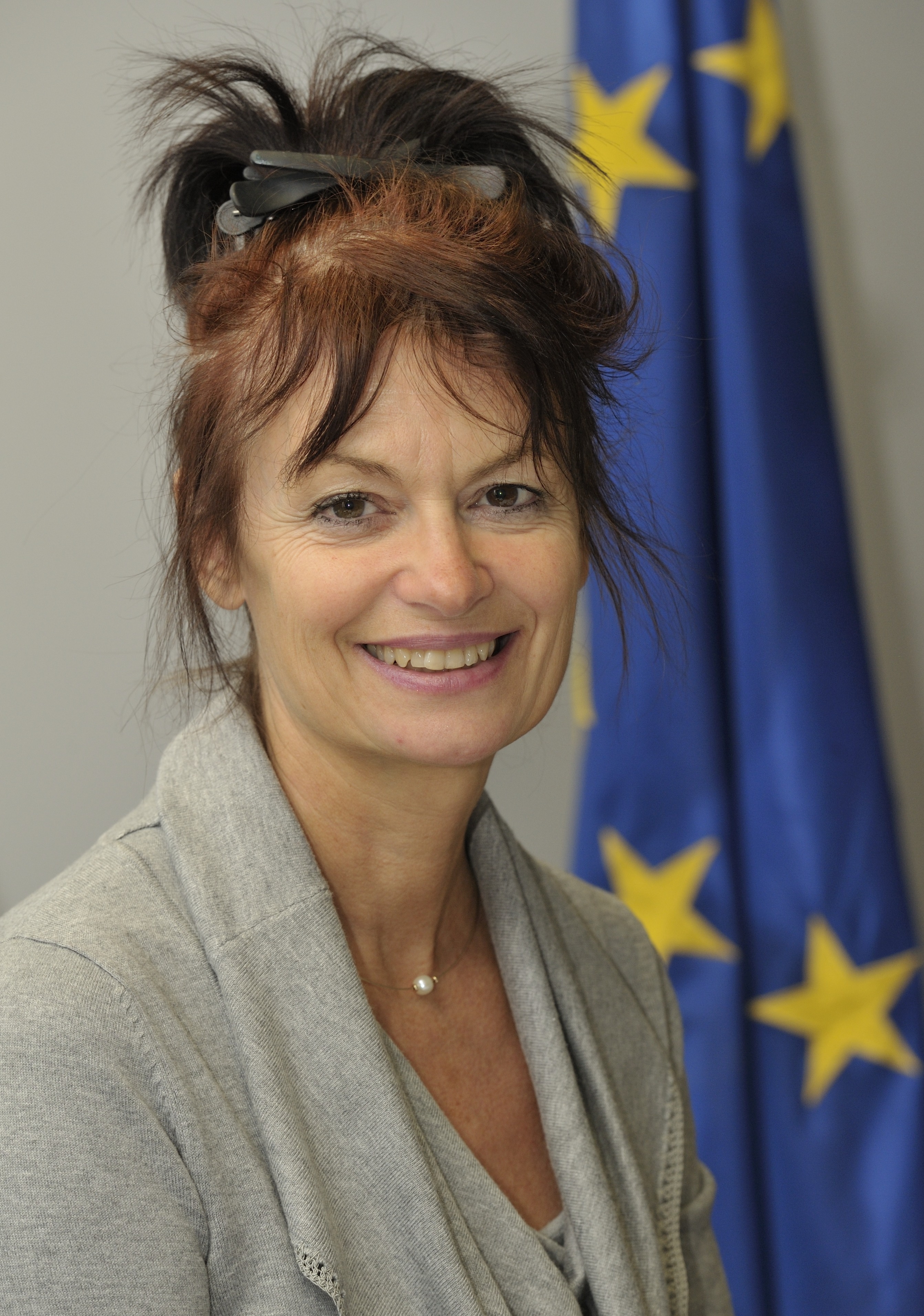
Chief Scientific Adviser to the European Commission discusses evidence-based policy and nurturing and supporting a European scientific culture

"The policy world very much mirrors what we do in science today."  Image: (c) European Union

“The policy world very much mirrors what we do in science today.” Image: (c) European Union

Professor Anne Glover joined the European Commission as Chief Scientific Adviser to the President in January 2012, and is the first person to hold this position.

In this role she advises the President on any aspect of science and technology, liaises with other science advisory bodies of the Commission, the Member States and beyond, coordinates science and technology foresight, and promotes the European culture of science to a wide audience, conveying the excitement and relevance of science to non-scientists. She also chairs the recently established Science & Technology Advisory Council of the President.

Prior to her current appointment she was Chief Scientific Adviser for Scotland from 2006-2011. Professor Glover currently holds a Personal Chair of Molecular and Cell Biology at the University of Aberdeen. Most of her academic career has been spent at the University of Aberdeen where she has a research group pursuing a variety of areas from microbial diversity to the development and application of whole cell biosensors (biological sensors) for environmental monitoring and investigating how organisms respond to stress at a cellular level.

Professor Glover holds several honorary doctoral degrees and is an elected Fellow of the Royal Society of Edinburgh, the Society of Biology, the Royal Society of Arts and the American Academy of Microbiology. Professor Glover was recognised in March 2008 as a Woman of Outstanding Achievement in the UK and was awarded a CBE for services to Environmental Science in the Queen’s New Years Honours list 2009.

When Professor Anne Glover finished her five-year term as Chief Scientific Adviser for Scotland, the biologist was lauded for not only raising the visibility of science in Scotland and the UK, but for further increasing the role of scientific evidence in the policy-making process.

These fruitful five years led her to the challenging and geographically diverse role of Chief Scientific Adviser to the European Commission (EC), which she leaves after three years in the position, at the end of 2014. As the first ever scientist to be tasked with the responsibility of independently advising politicians and policy-makers governing more than 500m people across 28 member states, this was no easy assignment.
Continue reading

Naked Neuroscience: Dr Hannah Critchlow reflects on educating the public about Neuroscience

Hannah Critchlow: Educating people across the globe on the values of neuroscience.

Hannah Critchlow: Educating people across the globe on the values of neuroscience.

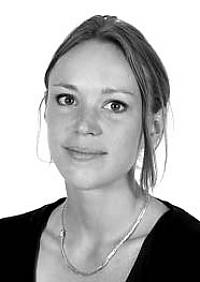
Dr Hannah Critchlow is a neuroscientist with a background in neuropsychiatry. She currently strips down the brain with the BBC broadcast Naked Scientists. Using radio, on-line channels and live events she designs, produces and presents a neuroscience-focused, interactive multimedia experience for the public.

In 2014 Hannah was named as a ‘Top 100 UK scientist’ by the Science Council for her work in science communication. In 2013 she was named as one of Cambridge University’s most ‘inspirational and successful women in science’. During her PhD she was awarded a Magdalene College, Cambridge University Fellowship, and as an undergraduate received three University prizes as Best Biologist. She previously worked as Strategic Manager for Cambridge Neuroscience and on secondment with the British Neuroscience Association.

Hannah’s choice of career stemmed from working as a nursing assistant at St Andrews Psychiatric Hospital. When not being enthused by all things brainy, Hannah spends her time splashing about by the river and living the houseboat dream.

For neuroscientist Dr Hannah Critchlow, the last 12 months have been pretty special. If being named one of Cambridge University’s most ‘inspirational and successful women in science’ late in 2013 wasn’t surprise enough, what was to follow was in her words, even more “gobsmacking.” Just days later, while in New Zealand for Christmas, Dr Critchlow was recognised by the Science Council as one of the top 100 UK scientists for her work in science communication.

Continue reading

Neil deGrasse Tyson on Cosmos and integrating science in popular culture

"science matters in our lives for us to be better shepherds of not only our civilization, but the world." Image courtesy of Patrick Eccelsine/FOX.

“Science matters in our lives for us to be better shepherds of not only our civilization, but the world.”
Image courtesy of Patrick Eccelsine/FOX.

Neil deGrasse Tyson is the Frederick P. Rose Director of the Hayden Planetarium at the Rose Center for Earth and Space and a research associate in the department of astrophysics at the American Museum of Natural History.

A popular American astrophysicist, author, science communicator and educator, Tyson hosted the science educational show NOVA ScienceNow on PBS for five years. He received a bachelor’s degree in Physics from Harvard University and a doctorate in Astrophysics from Columbia University in 1991. After spending a number of years doing post-doctorate work at Princeton University, Tyson landed a role at the Hayden Planetarium.

He is the author of several best-selling books, including Space Chronicles: Facing the Ultimate Frontier, Death By Black Hole and Other Cosmic Quandaries and the Pluto Files: The Rise and Fall of America’s Favorite Planet. In 2001, US President George W Bush appointed Tyson to the Commission on the Future of the United States Aerospace Industry. He also served another commission three years later to examine US policy on space exploration. In 2004, Tyson was awarded the NASA Distinguished Public Service Medal, the highest civilian honour bestowed by NASA. He also hosts his own podcast and radio show StarTalk.

Cosmos is truly intended for anyone with a beating heart. I haven’t checked recently whether zombies have beating hearts, but if they do – I’ll take them too,” barks Astrophysicist Neil deGrasse Tyson, with exalted hilarity.

Continue reading

Oscar-winning visual effects mastermind behind Gravity, talks Physics lessons, NASA imagery and defining the art of CG ‘weightlessness’ in space.

Tim Webber

“It could have fallen flat as a fairly unusual film, largely focused on one person in space. We thought it may be a tough film to sell to the public”.
Image Courtesy of Framestore.

Tim Webber is a visual effects supervisor  who has worked on an array of critically acclaimed blockbusters. He joined British visual effects company Framestore in 1988 and has been the driving force behind the company’s push into digital film and television, developing Framestore’s virtual camera and motion rig systems. He has worked on The Dark Knight, James Cameron’s Avatar and was second unit director on the Hallmark production of Merlin. He has most recently taken charge as Warner Brother’s VFX supervisor on Alfonso Cuarón’s space epic, Gravity. He won the Bafta Award for Best Special Effects and the Oscar for Best Achievement in Visual Effects.

Tim Webber has become one of the most talked about people in film in recent months. In the past, he has been an ‘unsung hero’ of visual effects, who has wielded his magic on many memorable cinematic scenes. From his previous Oscar nod on Christopher Nolan’s The Dark Knight in 2008, to creating the CG baby in Children of Men with Gravity’s director Alfonso Cuarón ; Webber has been a visionary, who until recently, has shied away from the spotlight.

Thrust deservedly into the limelight with last night’s Oscar win (Best Achievement in Visual Effects) and the previous month’s Bafta success for space epic, Gravity, Webber and the influential team of visual effects artists from Framestore have taken filmmaking to a whole new level. Yet Webber, who had a passion for Maths and Physics at school, before completing a degree in Physics at Oxford, still finds the attention and acclaim surprising.

Continue reading

Google Chrome’s security lead on STEM, women in technology and fighting cyber crime

An ambassador for women in technology and STEM education.

An ambassador for women in technology and STEM education. Image courtesy of Brandon Downey.

Parisa Tabriz is Google Chrome’s security lead. She has worked on information security at Google for more than 6 years, starting as a “hired hacker” software engineer for Google’s security team. As an engineer, she found and closed security holes in Google’s web applications, and taught other engineers how to do the same.

Today, Parisa manages Google’s Chrome security engineering team, whose goal is to make Chrome the most secure browser and keep users safe as they surf the web. In late 2012, she was selected by Forbes as one of the 30 under 30 pioneers in technology. When she’s not hacking, she likes to make things (art, food, miscellaneous DIY projects) or escape Silicon Valley to go hiking and rock climbing in the mountains.

“Good code is marked by qualities that go beyond the purely practical; like equations in physics or mathematics, code can aspire to elegance,” author Vikram Chandra recently exclaimed in an article in the Financial Times.  In an environment where statistics in US education make for grim reading in the numbers of young people, especially women, that are going into programming and computer science, this “beautiful art form” needs to be embraced – and fast.

Column inches have been filled with critics condemning the state of technology education in the US and all the while increasingly more jobs are now reliant on computer and coding across all sectors. A 2010 report from both the Association for Computing Machinery and the Computer Science Teachers Association found that more than two-thirds of US states had little or no literacy in computer science at secondary school level. It is a problem, which the report suggests, has left the US “woefully behind in preparing students with the fundamental computer science knowledge and skills they need for the future.”

Continue reading

The presence of a chemical is not the same as presence of risk

Dr. Joe Schwarcz bio pic 2Dr. Schwarcz’s is currently a chemistry professor at McGill University and the Director of McGill University’s Office for Science and Society. He also hosts “The Dr. Joe Show” on Montreal’s CJAD and has appeared on The Discovery Channel, CBC, TV Ontario and other networks. Dr. Schwarcz has received numerous awards for his work, including the American Chemical Society’s Grady-Stack Award for demystifying chemistry and the Canadian Chemical Institute’s “Montreal Medal” recognizing his lifetime contributions to chemistry in Canada. 

“Chemical” is not a dirty word. Nor is it a synonym for “poison” or “toxin.” Chemicals are the basic building blocks of all matter and classifying them as “safe” or “dangerous” is inappropriate. But of course there are safe or dangerous ways of using chemicals. In any case, chemicals are not to be feared or worshipped, they are to be understood. And perhaps the most important point to understand is that the presence of a chemical does not equate to the presence of a risk.

Thanks to our analytical capabilities, we can now routinely detect substances down to the part per trillion (ppt) level. That’s not finding a needle in a haystack; it’s finding a needle in a world full of haystacks. At that level, we can detect a myriad of chemicals should we choose to look for them! And by selectively referencing the scientific literature, the spectra of risk can be readily raised. Continue reading

The Heart of the Matter – Can Our Hearts Repair Themselves?

JosephJoseph Jebelli is a Neuroscience PhD Candidate at University College London (UCL). His research involves studying the cellular and molecular mechanisms of neurodegenerative disorders, such as Alzheimer’s and Parkinson’s disease.

When the English physician William Harvey first described the motion of the heart over 300 years ago, he might have envisioned that by 2013 we would understand the organ in its entirety. But while significant medical advances have been made, the answer to one of the most rudimentary questions about the heart remains deeply enigmatic: can our hearts repair themselves?

The answer has been steeped in controversy for over a century, but recent findings are helping to resolve the issue, with promising implications for our health. Continue reading

Team Science – The Science of Collaborative Research

Dr. Simon Williams is a Research Associate at the Feinberg School of Medicine, Northwestern University, in Chicago, Illinois. As a member of the Scientific Careers Research and Development Group, he is interested in issues of scientific training and careers, as well as broader issues related to scientific knowledge and the scientific method.

Scientists are usually the ones doing the investigating, not the ones being investigated.  However, a growing number of researchers have recently decided that it is high time that scientists themselves are put under the microscope.  This is a response to the fact that science, as practice and culture, is itself undergoing a rapid evolution.

The science of the twenty-first century looks very different to the science of the Enlightenment or even to the science of the twentieth century.  The days of the lone scientist, immersed in their laboratory, locked in their disciplinary silo, narrowly focused on basic research problems is rapidly becoming a thing of the past. In their place, we see the emergence of a new breed of “Team Science”; where  large, cross-disciplinary teams focus on complex, applied and translational problems. Continue reading

Scientific publishing 2.0: moving the compute to the data rather than moving the data to the computers

Adrian Giordani has a Masters in Science Communication from Imperial College London, where he was also the Editor-in-Chief of I, Science magazine. He was a science journalist and Interim Editor-in-Chief at CERN, Geneva, Switzerland. The publication he worked for, International Science Grid This Week, covers news about science and computing in Europe, the US and Asia Pacific regions. Adrian writes about technology such as supercomputing, grid computing, cloud computing, volunteer computing, networks, big data, software and the science it enables. You can follow him on Twitter.

Today, data-intensive science turns raw data into information and then knowledge. This represents the vision of the late and influential computer scientist, Jim Gray, who divided the evolution of science into four paradigms. One thousand years ago, science was experimental in nature, a few hundred years ago it became theoretical, a few decades ago it moved to a computational discipline, and today it’s data driven. Researchers are reliant on e-science tools to enable collaboration, federation, analysis, and exploration to address the data deluge, currently equal to about 1.2 zettabytes each year. If 11 ounces of coffee equalled one gigabyte, a zettabyte would be the same volume as the Great Wall of China.

So much data is produced that the journal Neuroscience stopped accepting supplementary files along with research manuscripts to enable them to better handle the peer review process. In an attempt to address the challenges presented by so much data, some are combing software, databases and infrastructures to transform the way scientific publishing is done, which has been little changed for centuries. Continue reading

Effective Strategies for Personalized Cancer Therapy Lessons from the 2012 US Presidential Elections

Sandeep C. Pingle has a PhD in Pharmacology and is a clinically trained physician. He is currently working as a postdoctoral scholar at Moores Cancer Center, UC San Diego. His research focuses on signaling pathways in cancer and treatment-associated neurotoxicity. In addition, Sandeep is San Diego Editor for the blog Roundtable Review by Oxbridge Biotech Roundtable. You can follow him on Twitter.

The 2012 election season in the US that ended a few weeks ago witnessed a never-before-seen barrage of “targeted” television advertisements, phone calls and door knocks. The use of “big data” by campaigns to effectively micro-target voter groups was particularly striking. Data companies gathered over 500 attributes from individual records including voting histories, demographics, hobbies, income etc. These data points were plugged into sophisticated algorithms on computer models to generate scores that identified undecided voters most likely to “swing”. The “persuasion scores” thus obtained drove campaign strategies to target these swing voters. Research shows that such voter targeting likely yields huge successes in terms of persuading unconvinced voters. Another layer to political campaigning was the use of transactional data to evaluate how opinions would change after interactions with campaign volunteers. Together, big data and an efficient use of technology have radically changed the nature of campaigning. It is remarkable how similar this approach is to that of personalized cancer medicine. Or at least to how an ideal personalized medicine approach should be for cancer management. Continue reading