
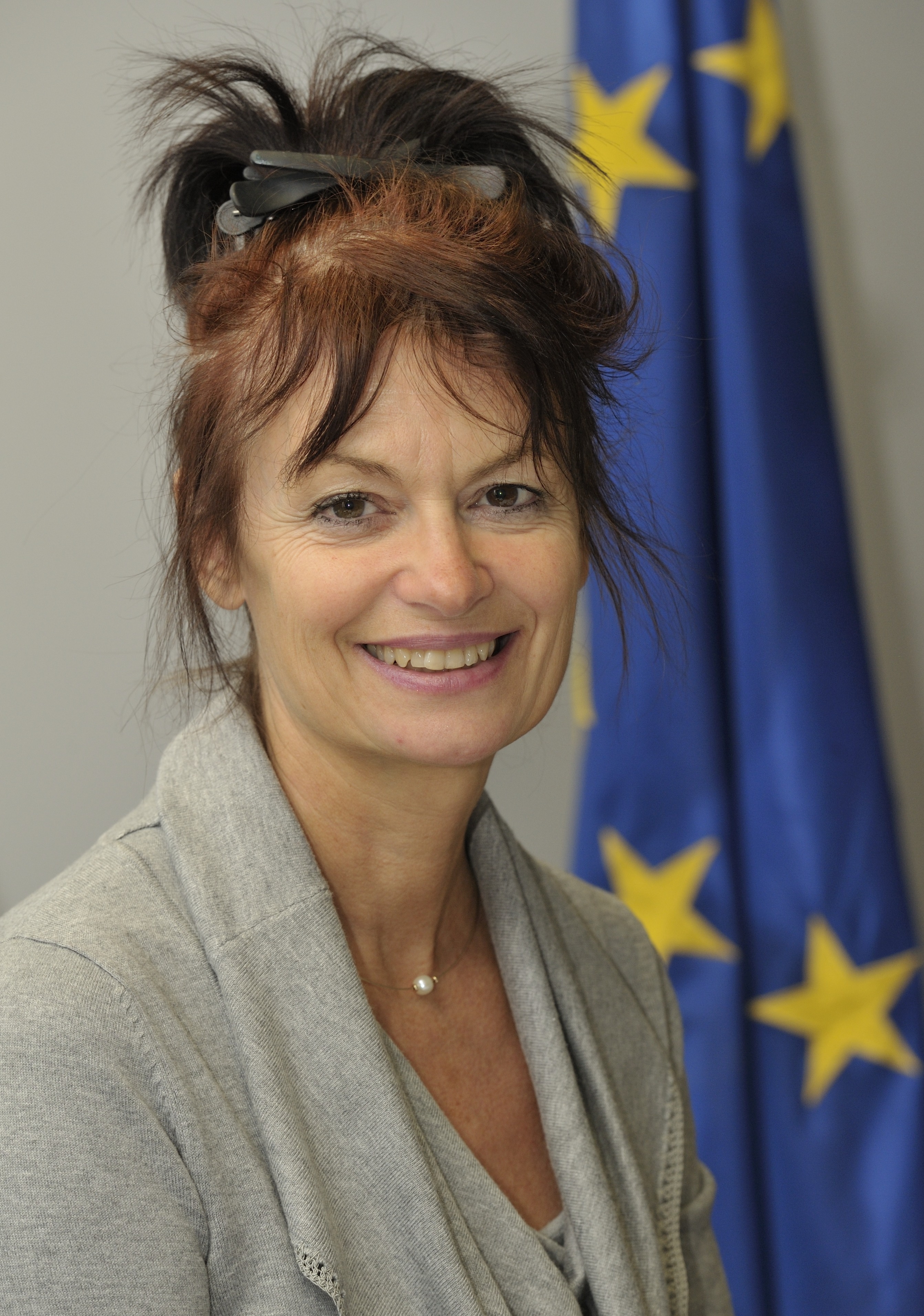
“The policy world very much mirrors what we do in science today.” Image: (c) European Union
Professor Anne Glover joined the European Commission as Chief Scientific Adviser to the President in January 2012, and is the first person to hold this position.
In this role she advises the President on any aspect of science and technology, liaises with other science advisory bodies of the Commission, the Member States and beyond, coordinates science and technology foresight, and promotes the European culture of science to a wide audience, conveying the excitement and relevance of science to non-scientists. She also chairs the recently established Science & Technology Advisory Council of the President.
Prior to her current appointment she was Chief Scientific Adviser for Scotland from 2006-2011. Professor Glover currently holds a Personal Chair of Molecular and Cell Biology at the University of Aberdeen. Most of her academic career has been spent at the University of Aberdeen where she has a research group pursuing a variety of areas from microbial diversity to the development and application of whole cell biosensors (biological sensors) for environmental monitoring and investigating how organisms respond to stress at a cellular level.
Professor Glover holds several honorary doctoral degrees and is an elected Fellow of the Royal Society of Edinburgh, the Society of Biology, the Royal Society of Arts and the American Academy of Microbiology. Professor Glover was recognised in March 2008 as a Woman of Outstanding Achievement in the UK and was awarded a CBE for services to Environmental Science in the Queen’s New Years Honours list 2009.
When Professor Anne Glover finished her five-year term as Chief Scientific Adviser for Scotland, the biologist was lauded for not only raising the visibility of science in Scotland and the UK, but for further increasing the role of scientific evidence in the policy-making process.
These fruitful five years led her to the challenging and geographically diverse role of Chief Scientific Adviser to the European Commission (EC), which she leaves after three years in the position, at the end of 2014. As the first ever scientist to be tasked with the responsibility of independently advising politicians and policy-makers governing more than 500m people across 28 member states, this was no easy assignment.