
Tag Archives: Depression

Degree and depression
Freelance writer Chris Woolston explains how a new study of PhD students in Belgium has underscored a harsh reality: Pursuing a PhD can be hazardous to mental health.
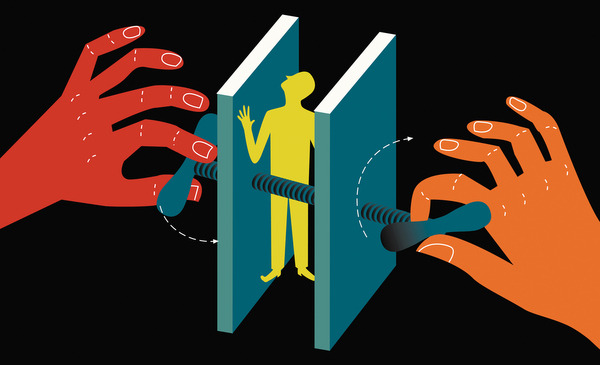
The study, published online in March in Research Policy, found high levels of mental distress among students. More than half of respondents reported at least two mental-health symptoms in recent weeks, and 32% reported four or more symptoms. Common complaints included feelings of constant strain, unhappiness, worry-induced sleep problems, and an inability to enjoy everyday activities. Continue reading
Panic and a PhD
The authors are recent PhD graduates who’ve all experienced anxiety during and after their doctoral program.
Here they share their story to support current doctoral students working to navigate and maintain a healthy work/life balance.
The lifestyle of graduate school has been associated with the presence of mental health issues, such as depression and anxiety, in students during their academic programs. A 2013 analysis of the 2009 National College Health Assessment found that 61.3% of current graduate students reported ever feeling anxiety, with 43.8% feeling anxiety within the past 12 months. As recent graduates from a doctoral program, we’ve experienced this anxiety firsthand, and hope that our stories and recommendations can help to tackle this problem head-on.
Stress is an essential reaction to danger, a mechanism ingrained in us long ago to force a “fight” or “fly” response. However, it’s how we react to stress that impacts our long-term health, including the potential development of anxiety through cognitive distortions and unhealthy coping mechanisms. While we three may have already been naturally anxious people, this became increasingly heightened when under the stress of working on our PhDs.

Six posts to help with mental health
We run through some of our favourites for Mental Health Awareness Week

{credit}iStock/Thinkstock{/credit}
Depression has become leading cause of disability burden amongst US and Canadian teens
Reply
 The recent tragedy in Newtown, Connecticut, perpetrated by 20 year-old Adam Lanza, has intensified the discussion about how mental health is handled and documented in the US. Officials have not provided information about Lanza’s motivation and state of mind, and many are rightfully quick to point out that it is wrong to equate mental illness with the fatal sociopathic actions of a small group of individuals. The conversation about access to mental health care should, however, take into account new data showing an increasing contribution of mental and behavioral disorders to deterioration in the health-related quality of life among teenagers in the US and Canada over the last two decades, and increases elsewhere around the globe.
The estimation of ‘years lived with disabilities’, or YLDs, is used as a collective metric to determine how much a particular disorder deprives the population of healthy years of life during a particular window of time. In 2010 just as in 1990, depression ranked as the number two contributor of YLDs, affecting 4% of the global population, eclipsed only by back pain that affected almost 10% of population worldwide. Among 10 to 14 year olds, the top contributor worldwide is iron deficiency. Asthma had been the largest contributor to YLDs for youths in that age range in the US and Canada in 1990, but the study published in The Lancet on Thursday led by researchers at the Institute of Health Metrics and Evaluation (IHME) at the University of Washington in Seattle showed that depression surpassed asthma to claim the number one spot in this group in 2010. Among this cohort, the collective number of ‘years lost to disability’ grew from about 140,000 in 1990 to almost 180,000 in 2010, a 30% increase. Notably, global figures for the same age group show that the number of years lost to disability from depression grew from 4.9 million in 1990 to 5.5 million in 2010, a 13% increase as shown in the graphs below.