A New Era of Science Funding – Part 4: Speaking up in support of federally funded research

Over the years science funding has changed significantly. In the past, funding would have been obtained through private benefaction or from wealthy individuals. Today, researchers are usually funded by a mixture of grants from government agencies, non-profit foundations and institutions. However, with the increasing popularity of social media and the internet, methods used to obtain money may be undergoing a shift. New routes linking funding sources with scientists are being increasingly explored. Tighter budgets and struggling economies are driving a need for new ways of funding and social media is proving to be invaluable in raising awareness of projects and linking like-minded people more effectively.

In this special Soapbox Science series, we focus on the new ways in which science groups and individuals are obtaining funding and how projects such as Petridish, Tekla LabsKickstarter and the #scifundchallenge may change the future of scientific research.

Dr. Thon holds joint appointments within the hematology division at Brigham and Women’s Hospital, and Harvard Medical School in Boston, and is an American Society of Hematology Scholar. Dr. Thon received his doctorate from the University of British Columbia, Canada, under Dr. Dana Devine where he worked closely with Canadian Blood Services for the improvement of the processing and storage of blood platelets. As a post-doctoral fellow in Dr. Joseph Italiano’s lab, Dr. Thon’s research now focuses on the cytoskeletal mechanics and signaling pathways leading to platelet formation. This research has set the groundwork for the development of biological model systems that will be used to (1) study the process of platelet release under physiologically relevant conditions, (2) develop bio-mimetic systems to generate useable numbers of clinically viable platelets for infusion, and (3) establish representative ex vivo models of human bone marrow and surrounding blood vessels to test drugs and develop treatments for thrombocytopenia.

The day-to-day rigors of academic biomedical research are difficult to appreciate, and it is necessary that scientists share their perspective of the knowledge market with politicians and government representatives who are burdened with making difficult decisions on our behalf. Unlike the airline industry which also does research and development (R&D) to create safer, lighter and more efficient airplanes, academic medicine does not build R&D into the pricing of its services. This is because biomedical research is a surprisingly random process which depends on chance observations, unexpected results and seemingly unrelated outcomes. As a result, downstream applications of research are almost impossible to predict at the outset and necessitate an altogether different model of cost recovery. To subsidize national biomedical research endeavors, projected costs are spread among citizens in the form of taxes, and distributed to multiple academic institutes as operating grants. Investments in research lead to licensed technologies which create jobs and revenues far in excess of the grants that support them, with every dollar invested in academic biomedical research generating two dollars in economic growth (Murphy K., Topel, R. The economic value of medical research, 1999).

A country’s biomedical advancement and innovation is thus tied to its investment in academic research. Funding of research comes entirely from government and private donors, and is as value-based, bottom-up and pork- and crony-free as it gets. In North America approximately two-thirds of academic biomedical research is supported through federal funding agencies such as the National Institute of Health (NIH) and the Canadian Institute of Health Research (CIHR). The mainstays of NIH/CIHR support are grants made to individual investigators for reasonably broad research projects, and researchers compete for these funds through a rigorous process of peer review. Nevertheless, the lack of sustained growth for both the NIH and CIHR has forced success rates for primary operating grants to drop significantly over the last decade to approximately 12% (NIH, R01) and 15% (CIHR Operating Grant); Fiscal Year 2011. This means that only a very small percentage of outstanding applications for research projects are being actively supported to tackle the multitude of health needs in these countries. As a result, a majority of highly-rated research proposals will not be funded, opening the field for countries like Germany, India and China which are boasting funding rates of 47% and higher to take the lead.

Relatively flat funding rates in North America have meant that universities, hospitals and research institutes have been forced to implement hiring freezes of PhDs into faculty positions, effectively stranding their scientists in temporary, low-paying jobs with limited prospects of advancement. Not only does this risk exporting our scientists abroad, but private industry’s reliance on biomedical research, both in terms of scientific innovation and the researchers they help train, means industry will follow suit. Canadians call this the ‘brain drain.’

Indeed, 80% of PhDs in North America will not become professors (Fuhrmann et al., Improving graduate education to support a branching career pipeline: Recommendations based on a survey of doctoral students in the basic biomedical sciences, 2011). For the majority of these scientific investigators, the inability to secure a faculty position has meant that they must languish in a series of post-doctoral positions supported by grant-funded professors who are finding themselves increasingly with limited resources. The average age of independence in research is now in the mid-40s, a testament to the bleak prospects facing young scientists. Given the state of academic funding, it is not surprising that many investigators have chosen to transition into more secure professions like teaching, medicine or law. The loss hurts our competitiveness in biomedical research and forces industry abroad.

Given our current economy, it is imperative that efforts to improve the nation’s fiscal stability be grounded in the long-term competitiveness of industries we currently head, and that we leverage our expertise in medical science and capacity to do high-tech research. This does not need to come from increased government spending alone. Whereas academic medicine cannot build R&D into the pricing of its services, universities profit directly from tuition fees, patents and personal endowments. Since these revenues are derived from faculty teaching loads, the scientific success of their investigators, and established reputation of their research program, faculty support must be factored into departmental operating budgets. For American institutions, the Canadian system represents a more sustainable model in this regard, and universities on both sides of the border should be required to assume greater responsibility for investigator salaries and administrative support, freeing up tax dollars to directly support research innovation. Likewise, tax breaks for private donations to federal funding agencies would reduce their dependence on tax-payer dollars and incentivize industry investment in national research programs. Finally, limiting the number of federal awards issued per investigator (most of which are held by senior faculty) would open up more funding opportunities to help support young investigators and significantly lower the age of independence.

Science is a marathon, and if we fall behind now, while we lead health innovation in the world, the cost of recovering our position, in light of emerging economies with which we compete, will become progressively more expensive. Sustained increases in NIH/CIHR funding are critical to maintain North America’s innovation engines at a crucial time for research and the economy, and most importantly, improve the health and well-being of our nations. Now is the time for scientists to advocate most strongly for national investment in biomedical research. Senators, congressmen, and members of parliament are the decision-makers you elect to represent you – write to them. You can go here and enter your zip code (in the United States), or here and enter your postal code (in Canada), to access your representative.

While the argument for the government to prioritize an industry where the number of clinical advances, drug developments and cures is proportional to total research investment is not a difficult case to make – make it. Addressing these concerns forces the issue to light, and commits politicians to publicly defensible positions for which they can subsequently be held accountable. Government agencies cannot lobby for themselves and policy makers do not share your unique perspective. Our health, economy, and the future of scientific progress are at stake.

To find out more about science funding you can read this special Nature News feature,  Finding philanthropy: Like it? Pay for it.

A New Era of Science Funding – Part 3: Crowdfunding via Petridish

Over the years science funding has changed significantly. In the past, funding would have been obtained through private benefaction from wealthy individuals. Today, researchers are usually funded by a mixture of grants from government agencies, non-profit foundations and institutions. However, with the increasing popularity of social media and the internet, methods used to obtain money may be undergoing a shift. New routes linking funding sources with scientists are being increasingly explored. Tighter budgets and struggling economies are driving a need for new ways of funding and social media is proving to be invaluable in raising awareness of projects and linking like-minded people more effectively.

In this special Soapbox Science series, we focus on the new ways in which science groups and individuals are obtaining funding and how projects such as Tekla LabsKickstarter and the #scifundchallenge may change the future of scientific research.

In this post we will hear from three different groups who are using a new website, Petridish.org, to help fund their research. 

Geoff Gallice grew up in the suburbs of Baltimore, where he spent every available minute searching nearby fields and small forest patches for insects. At the University of Maryland, he quickly chose biology as his major and since making his first trip to the tropics during his third year, he has been unequivocally devoted to tropical ecology and conservation. He is currently a graduate student at the University of Florida’s McGuire Center.

After watching a documentary about the Amazon when I was child, I wanted desperately to visit. I finally got my chance just a few years ago, and the rainforest that I encountered both met and exceeded all of my expectations – I decided right then and there, without vacillation, that I would study tropical biology. Today, I am a graduate student at the University of Florida’s McGuire Center for Lepidoptera and Biodiversity, a leading center for tropical Lepidoptera research. I’m interested primarily in the large scale relationship between species abundance and distribution, as well as its underlying causes, using Neotropical butterflies as a model system.

A clearwing butterfly, Ithomia salapia, from Moyobamba, Peru

I’m planning a trip to Peru beginning in late 2012, where I will gather butterfly abundance and other ecological information to test this relationship, as well as potential underlying causes, including breadth of host-plant use. I’ve prepared thoroughly for the trip, first by conducting a similar brief project in Ecuador for my Master’s, and currently by teaching myself everything I can about ithomiine host-plants. I feel very well-equipped to see the project through – the only gaping hole in my plan at this moment is funding, and securing the relatively small amount of cash that I need to conduct my field study in Peru has indeed been a struggle.

Peruvian rainforest, Cordillera Escalera, near Tarapoto

Apart from a few comparatively well-studied groups, even the basic biology of nearly every species of tropical plant and animal remains almost completely unknown. Certainly a large number of causes are to blame for this situation, but two in particular stand out. First, most of the world’s biologists are trained, and therefore conduct research close to home in the temperate regions of Western Europe and North America. Second, and perhaps more importantly, there is an abysmal lack of funding for research in the tropics. But a ground-breaking new website, Petridish.org, aims to change that. The folks at Petridish recently launched their first round of projects and anyone is free to donate to a project that they wish to see completed.

This crowdfunding approach accomplishes two things simultaneously. It helps scientists raise funds by tapping a previously neglected resource, the interested public, while engaging said public in science from its incipient stage. Given both the scarcity of science funding and an alarming disconnect between science and the general public, the application of crowdfunding to science is a welcomed new approach. I’m excited to be part of the initial launch of Petridish.org, and not just because I envision a real chance to raise the funds needed for my research. I simply love the crowdfunding model and I hope to see Petridish usher in a new era of funding for tropical biology, and indeed science in general.

Credit: Marcelo Rotundo.

Morgan Gustison is a doctoral graduate student in the Psychology Department at the University of Michigan – Ann Arbor. She is a member of the University of Michigan Gelada Research Project, a team of researchers who have studied the behavior and biology of Ethiopian gelada monkeys in the Simien Mountains since 2005. Morgan studies the complexity of gelada monkey vocal communication.

There are two common questions I get when telling my friends, family and new acquaintances about what I do for a living. The first is, “Wait… why would you willingly go back to school for 5-7 years in order to study monkey behavior?” The second is, “Do you actually get paid for that?

“Wait… why would you willingly go back to school for 5-7 years in order to study monkey behavior?”

It’s always fun to answer the first question – I start by reliving some of my experiences as a cage-cleaner at the  Wisconsin Primate Research Center. At first, the rhesus macaques gave me lots of dirty looks, just as they would any newbie. After working there for several months, however, I began noticing a shift in their behavior – they started grooming each other. One monkey would sprawl out like a dog wanting a belly scratch and its partner would furiously weave through his or her hair to find items that only they can see. This affiliative social behavior was endearing and their trust in one another eerily ‘human-like’. I wondered whether primate behavior was like this in the wild. So, I sought out a series of experiences to learn more about naturalistic primate behavior, including following around owl monkeys in Formosa, Argentina.

Credit: Clay Wilton

Being a ‘field’ researcher is rewarding. We collect data on events that no one else is ever likely to see, like the hostile reactions of a family group to another family group on territory boundaries (think of the Jets and the Sharks from West Side Story), or the sexy calls of a solitary animal to locate potential mates. After observing our non-human primate relatives in the wild, it’s extremely difficult not to be hooked on wanting to know more about their similarities and differences with humans.  For instance, humans have language at our our disposal, but what about our primate relatives? This is the question driving my current research directions. Perhaps surprisingly, the wealth of research on primate communication suggests that overall, non-human primates have relatively simple ways of communicating vocally – using small repertoires of sounds and rarely combining these sounds into complex sequences. Preliminary observations and analysis carried out by my academic supervisor at the University of Michigan, Dr. Thore Bergman, collaborator Dr. Aliza le Roux and I suggest that gelada monkeys are one of the rare species that produce a large repertoire of vocalizations and express the special ability to combine these vocalizations. Gelada monkeys, a primate endemic to the highlands of Ethiopia, are particularly interesting because they  produce and combine together several unique vocalizations that do not have homologous versions produced by closely related monkey species.

“Do you actually get paid for that?”

To answer this question, I explain that funding for research comes from two sides: the first side is to cover your living expenses, or salary, and the second is to cover the research itself. Both types of funding have their own unique challenges to a budding scientist in the world of primate behaviour. Main sources of funding for U.S. graduate students to carry out research on primate behavior come from dissertation grants from the National Science Foundation, Fulbright, and the Leakey Foundation. As with most funding sources, these organizations were hit hard by the recession. With no choice but to restrict budgets, this means that researchers have to “apply for anything and everything” with the hope that at least 10% of their grant applications will succeed in the heightened competition from their peers’ applications. In a sense, the scene is becoming much more like individual-biased sport, with a greater and greater weaning of athlete scientists from the arena over time. Yet, science isn’t an individualistic sport, right? Shouldn’t we be working together as a team to enhance our understanding of the natural world?

This funding competition is what has driven some researchers to locate novel ways to fund their work. Recently, I have run into an idea called ‘crowdfunding’ – this basically means that you seek out sponsorship from the public. I just began advertising my proposed gelada monkey communication research on a newly launched crowdfunding website called Petridish.org.  Several of my colleagues and I are excited about Petridish because its benefits are two-fold. Not only is it a potential source for funding for projects that would be unaffordable otherwise, we also have the opportunity to interact directly with the public. This ‘outreach’ phase in science often happens after your projects are said and done, and Petridish gives us the chance to excite people one-on-one about our research right at the very beginning. It’s great that people can now be a part of scientific discovery from start to finish.

Already, 42 people have decided to back my project and I have reached 50% of my funding goal. There are still 4 weeks to go before my time is up and I leave for a 2-month field season in Ethiopia (to be followed by another 4-5 months next January). Seeing the enthusiasm from my backers on Petridish has only boosted my excitement about my upcoming fieldwork. It’s comforting to know that several people will be looking forward to email updates on the project when I am in the field and when I am back in the USA analyzing my data. I hope that this website is a success so that it can be a resource for future scientists to interact with the public and find support for their research. I encourage readers to check out the website and spread the news to friends and colleagues.

Often found hip-deep in Madagascar mud, Dr. Brian Fisher is a modern day explorer who has devoted his life to the study and conservation of ants and biodiversity around the world. He is Curator of Entomology at CAS and adjunct professor at UCB and SFSU.  He created the annual Ant Course in 2001, AntWeb in 2002, and the Madagascar Biodiversity Center in 2004. He has published over 90 articles on ants, and trains dozens of international graduate students in the taxonomy and natural history of ants, skills enabling them to use ants as an important indicator of biodiversity across the globe.

In the past, scientists could depend on just a few government sources such as NSF or NIH to support our programs. But as funding opportunities there have decreased, we have had no option but to develop alternative sources to keep our research programs moving forward as we wait for the next NSF grant. One way to deal with the current funding environment in science is to act more like an entrepreneur and cultivate a portfolio of investors to support research programs. Because I am often locked up in my office looking at ants, it was not apparent how I could meet potential donors. A recently launched site, Petridish, provides just the service I’d been looking for. It matches research ideas with interested members of the public willing to invest in projects.  Crowdsourcing, as such matchmaking services are called, could help locate patrons to support science activities. If the Medicis, who helped support Leonardo da Vinci, represent the patronage of the 1%, Petridish offers patronage to the 99%. When I first learned about Petridish, I realized this concept could be very helpful to those studying primates or maybe elephants. I was less certain the average person would be interested in supporting my research into organisms which most people consider “invisible” or see only as a kitchen pest.

Monormorium worker ant caring brood. Photo credit Brian L Fisher

My research on ant taxonomy and evolution starts with very simple question: what species exist and where? My goal is to place ants on equal footing with birds in ecological and conservation studies across the world. With only an estimated 15% of life  on Earth described, it’s clear that we need a renewed investment in species discovery and description to reach this vision. Convincing the general public to support this research is quite different than writing a proposal to colleagues at NSF. The challenge is to find a way to make them investment partners in the research. Some might be convinced once they realize that ants are the glue that holds ecosystems together. Others might care because species discovery improves our understanding of the history and evolution of life on this planet. Still others may be moved by the adventure of discovery (if you have any doubt that species discovery is one of the greatest adventures left on earth, check out these photos and images of Madagascar after cyclone Irina hit the island in early March of this year).

I recently gave Petridish.org a try and put together a request for backers for an expedition to discover new ant species in a remote region of Madagascar. The project is now almost completely funded and demonstrates that crowdsourcing has real potential to support my research program. For an NSF grant, we are used to devoting three weeks of writing aimed at other experts in the field to prepare the proposal. With crowdsourcing, we need to get used to developing text and video aimed at a much wider audience.  For me, this was not easy – I needed to figure out how to make a video and create and develop a compelling project description.

At a time when there is growing public concern about the role and importance of basic science, we need scientists who can also act as advocates. No longer can we afford to work in isolation without engaging the broader public in our endeavors. The public must understand the importance of funding science and the role of science in society.  Crowdsourcing, in addition to funding science, offers a great way for scientists to connect directly with the public. In the long run, methods that invite the community to take part will hopefully help to keep science funded.

To find out more about science funding you can read this special Nature News feature,  Finding philanthropy: Like it? Pay for it.

A post-quantum world

Cross-posted with permission of OUPblog. 

Vlatko Vedral is at the University of Oxford and the Centre for Quantum Technologies, National University of Singapore. His popular book “Decoding Reality: The Universe as Quantum Information” (recently reprinted in paperback by Oxford University Press) discusses many aspects of the relationship between information, thermodynamics and physics.

Every time physicists face experiments that cannot be explained with the existing theories they have to decide which aspects of these theories to keep and which to throw away. Planck, when faced with the inability of classical physics to explain black body radiation, decided to keep the laws of thermodynamics, but threw away the assumption that energy is continuous (which is an integral part of Newtonian mechanics). Similarly, Einstein, when trying to explain the inability of the Michelson and Morley experiments to detect Earth’s motion through the ether, kept the Newtonian assumption that the laws of physics should be the same in all reference frames, but he also introduced the invariance of the speed of light in different reference frames (a fact that is naturally encoded into Maxwell’s theory of electro-magnetism, but not Newtonian physics). Continue reading

Does a new treatment for leukemia herald a new era in drug discovery?

Brent R. Stockwell, Ph.D. is an Associate Professor of Biological Sciences and of Chemistry at Columbia University, an Early Career Scientist of the Howard Hughes Medical Institute and author of The Quest for the Cure: The Science and Stories Behind the Next Generation of Medicines, which was called “critical reading” by Robert Bazell, chief science correspondent at NBC News and “an absolute page-turner” that manages to “distill a complex, changing field into a beautifully written, well-crafted story” by Siddhartha Mukherjee, winner of the 2011 Pulitzer Prize for General Nonfiction.

Dr. Stockwell’s research involves the discovery of small molecules that can be used to understand and treat cancer and neurodegeneration. He has received numerous awards, including a Burroughs Wellcome Fund Career Award at the Scientific Interface, and a Beckman Young Investigator Award. He has published 59 scientific papers, is an inventor on 10 issued US patents, has given 60 invited presentations around the world, and has received 33 research grants for over $10 million. He co-founded the biopharmaceutical companies CombinatoRx (now Zalicus) and Solaris Therapeutics. You can follow him on Twitter at @bstockwell.

A few years back, a 75-year-old woman whom we will call Dorothy went to see her doctor and received a disturbing diagnosis: Dorothy had developed chronic lymphocytic leukemia (CLL), a type of cancer of the white blood cells. Hearing the words diagnosis and cancer together in the same sentence in your doctor’s office will likely induce a sense of fear and panic, before any mitigating factors seep into your consciousness. This fear alone may jeopardize your well-being, as has been remarked upon in a recent Soapbox Science blogpost by David Ropeik.

Dorothy was at the beginning of her disease course. Each patient’s cancer can be assigned a specific stage in its evolution from a single ill-behaved cell to a massive metastatic invader1. Dorothy was fortunate, if such a word is appropriate in this context, to have stage 0 CLL, which indicates merely an unusually large number of lymphocytes (white blood cells), but no other, more dangerous, manifestations of disease. Since cancers are better treated at early stages, this appeared to be good news, in a relative sense. Unlike more aggressive and rapidly fatal cancers such as pancreatic cancer, the clinical course of CLL is uncertain. One patient may live with the disease for decades without treatment, whereas others will rapidly develop a more advanced disease and need aggressive drug therapy, which may or may not be effective2. So, although Dorothy faced an uncertain future, all indications were that she should be optimistic.

Two years passed as Dorothy watched her leukemia, and in this time, it evolved to stage 1 CLL, manifesting as enlarged lymph nodes. Nine moths later, Dorothy’s health problems began to mount. She endured deep-vein thrombosis, a clotting of her veins, which caused a blockage in one of her arteries in her lungs. Three months later, in April of 2010, Dorothy came down with a weeklong fever and cough, and developed swelling of her legs and a general weariness, for which she was admitted to Montreal General Hospital3. Within days, Dorothy’s liver failed, and her mental health declined, as she faded from consciousness into a delirious state. Finally, 48 days after she was admitted to the hospital, and three years from her initial diagnosis, Dorothy succumbed to her disease.

With our burgeoning knowledge of cancer genetics and mechanisms, why is there no drug that could have slowed or reversed the course of Dorothy’s leukemia—is there any hope for the CLL patients of the future? An emerging trend in cancer therapeutics is the need for precise matching of drugs to disease subtypes—could one make a drug that is designed to address the unique networks and proteins found in CLL tumor cells? Such a tailor-made drug for CLL would likely have fewer side effects than the systemic, blunt chemotherapy this is commonly used to treat most cancers today. Moreover, such a customized drug would likely be more effective, by disabling the specific molecular defects found in CLL. This customization of drugs to diseases is an emerging challenge in cancer drug discovery, and indeed in all of medicine—how do we turn our increasingly sophisticated understanding of disease mechanisms into better therapies for patients?

Increasingly in this post-genomic era, our molecular understanding of disease leads us to a protein that appears to be an ideal candidate for attack with a drug. However, more often than not, these therapeutically and biologically attractive proteins are considered undruggable, resistant to modulation with small molecule drugs (most drug molecules are considered small compared to proteins, which are quite large on the scale of atoms).

Orally available drugs typically function by penetrating inside cells and tissues and directly attaching themselves to crucial proteins that regulate or cause disease. However, proteins vary tremendously in their susceptibility to drug-based attacks. A few proteins have large cavities or pockets that are perfectly suited to tightly enveloping small molecule drugs, whereas most proteins have relatively smooth and featureless surfaces, akin to the side of a sheer cliff, with no footholds for drug molecules. Indeed, all known drugs affect just 2% of human proteins, and most of the remaining proteins are considered challenging or impossible to target with small molecule drugs. Unfortunately, most disease-regulating and disease-causing proteins lie within this more challenging category of potential drug targets, suggesting it may not be possible to address the diseases controlled by these proteins.

The Bcl-2 family of proteins has been thought to represent such a class of challenging drug targets, because they function by interacting with other proteins, as most challenging proteins do. That is, their molecular function is to engage in a tight-fitting interaction across a large region of their surface with other proteins—a surface area much larger than a traditional drug molecule can cover. A grand challenge for chemists and biochemists is to create methods for disrupting these large protein-protein interactions. If it were possible to disrupt any protein-protein interaction of interest, potently and specifically, a wealth of new medicines would be within reach; these would likely be far more effective than out current drugs, and they could be targeted to each disease subtype to reduce systemic side effects, such as hair loss and nausea, that are so common with older, blunter drugs.

One approach that is emerging as effective for attacking protein-protein interactions with small molecules is fragment-based drug design. In this approach, pioneered by Stephen Fesik4, instead of throwing thousands of randomly chosen drug candidates at a target protein to find one that sticks, researchers break drug candidates down into smaller functional units, and test these fragments, as they are known, for their ability to interact with a specific protein. Fesik and his colleagues used this approach to design a molecule, piece by piece, that can specifically and potently interact with the Bcl-2 family of proteins that prevent apoptosis, a specific form of cell death that many tumor cells become resistant to5.

This approach appears to have born fruit: in December of 2011, it was reported in the Journal of Clinical Oncology that patients with CLL were particularly susceptible to treatment with the Fesik drug that targets the Bcl-2 family of proteins6. Bcl-2 family proteins play a pivotal and specific role in allowing CLL tumor cells to survive, as though their default state is death. In these specific tumor cells, Bcl-2 proteins serve as a critical switch that turns off their death program; blocking the Bcl-2 proteins with a small molecule drug can re-activate this death program.


Figure 1. Structure of the Bcl-2 protein (red, white and blue surface) bound to a portion of the Bax protein (grey balls and sticks). When these proteins are bound together as shown, CLL tumor cells can survive and grow.   


This Bcl-2 targeted drug represents new hope for CLL patients, such as Dorothy. However, the implications are even broader: an otherwise challenging set of proteins (Bcl-2 family proteins) has succumbed to a small molecule drug attack. There are more than 20,000 protein-coding human genes, and only 2% of these have been targeted with small molecule drugs. Perhaps we are seeing the beginning of the assault on the remaining proteins, untouched by drugs until now. If fragment-based screening and other emerging methods for tackling these difficult proteins are successful, we may see a renaissance in the coming decade in the fields of drug discovery and medicine.

Figure 2. Model of a small molecule inhibitor (ABT263, from Abbott Laboratories, grey balls and sticks) bound to Bcl-2 (white, red and blue surface), displacing the Bax protein. By disrupting the Bcl2-Bax protein-protein interaction, this small molecule drug candidate can initiate cell death in CLL tumor cells. Images generated by Miki Hayano and Gisun Park.

References

1. NCI. Stages of Chronic Lymphocytic Leukemia. National Cancer Institute;  [cited 1/18/2005]; Available from: https://www.cancer.gov/cancertopics/pdq/treatment/CLL/Patient/page2.

2. Gribben JG, O’Brien S. Update on therapy of chronic lymphocytic leukemia. Journal of clinical oncology : official journal of the American Society of Clinical Oncology. 2011;29(5):544-50.

3. Esfahani K, Gold P, Wakil S, Michel RP, Solymoss S. Acute liver failure because of chronic lymphocytic leukemia: case report and review of the literature. Curr Oncol. 2011;18(1):39-42. PMCID: 3031356.

4. Shuker SB, Hajduk PJ, Meadows RP, Fesik SW. Discovering high-affinity ligands for proteins: SAR by NMR. Science. 1996;274(5292):1531-4.

5. Oltersdorf T, Elmore SW, Shoemaker AR, Armstrong RC, Augeri DJ, Belli BA, Bruncko M, Deckwerth TL, Dinges J, Hajduk PJ, Joseph MK, Kitada S, Korsmeyer SJ, Kunzer AR, Letai A, Li C, Mitten MJ, Nettesheim DG, Ng S, Nimmer PM, O’Connor JM, Oleksijew A, Petros AM, Reed JC, Shen W, Tahir SK, Thompson CB, Tomaselli KJ, Wang B, Wendt MD, Zhang H, Fesik SW, Rosenberg SH. An inhibitor of Bcl-2 family proteins induces regression of solid tumours. Nature. 2005;435(7042):677-81.

6. Roberts AW, Seymour JF, Brown JR, Wierda WG, Kipps TJ, Khaw SL, Carney DA, He SZ, Huang DC, Xiong H, Cui Y, Busman TA, McKeegan EM, Krivoshik AP, Enschede SH, Humerickhouse R. Substantial Susceptibility of Chronic Lymphocytic Leukemia to BCL2 Inhibition: Results of a Phase I Study of Navitoclax in Patients With Relapsed or Refractory Disease. Journal of clinical oncology : official journal of the American Society of Clinical Oncology. 2011.

Widening the climate conversation

Richard Betts is Head of Climate Impacts at the Met Office Hadley Centre and a visiting Professor at the Universityof Exeter.  He was a lead author on the IPCC Fourth Assessment Report with Working Group 1 (Physical Science Basis) responsible for the assessment of radiative forcing due to land cover change.  For the Fifth Assessment Report he is a lead author, assessing impacts on terrestrial ecosystems.  Richard was also a lead author on the Millennium Ecosystem Assessment.  He is a regular contributor to climate blogs such as https://bishophill.squarespace.com/ and https://judithcurry.com/ and can be found on Twitter as @richardabetts

Richard Feynman used to bemoan the fact that much of the communication of science was focussed on whether a particular discovery provided a cure for cancer.  An analogous situation seems to apply to communication of climate science – the message often seems to be about whether a new piece of work has shown anthropogenic climate change to be either a greater or lesser problem than previously thought, and hence whether cuts in greenhouse gas emissions are even more urgent or completely unnecessary.

But climate science is not a single-issue subject.  It is not carried out solely to see whether cuts in greenhouse gas emissions are needed or not.  A further and increasingly important issue is to understand the changes and variability we are seeing in order to help us live with the ever-changing weather and climate.  Also, of course, it is important simply to increase the sum total of human understanding simply as an end in itself.  Like art and music, gaining deeper insights into how the world around us actually works can enrich our lives and bring enjoyment.

Unfortunately, these other aspects of climate science are rarely seen outside of the scientific community, giving a skewed impression of the science.  Public discussion of the science mostly focuses on the implications for policy, and also increasingly on attacking or defending the integrity of the science rather than on its intellectual content.  A very large proportion of the commentary on climate science is not actually from working scientists, it is from others who have a political rather than scientific interest.  When scientists are involved, they are often discussing it within the usual policy context.  It seems that in an increasingly polarised debate on climate policy, science can get sucked in and used as a political football.

In any policy debate, opponents of a policy will naturally seek to question and challenge the evidence base underpinning the need for the policy.  They may perceive or claim the evidence to be unreliable or even biased.  Promoters of the policy will naturally be defensive of the evidence base.  This is all expected behaviour in the policy world.

The difficulty comes when those responsible for gathering the evidence feel under attack and respond in a defensive manner themselves.  If they perceive themselves as opponents of those challenging the evidence whilst being allies of those defending the evidence, and start behaving accordingly, this only reinforces the perception of bias from the opponents, and positive feedback sets in.  This appears to have happened with climate science in the context of mitigation policy.  The scientific aspects of the wider climate debate have become increasingly focussed on one end of the policy debate or the other.  It is much less common to see discussion of the implications of the science for other questions such as adaptation planning, and even rarer to see public discussion of climate science merely for intellectual interest.  Climate scientists have consequently become perceived as being part of the debate on a single policy issue, rather than as just scientists seeking to advance knowledge.

This leads to the risk of loss of trust in scientists as objective advisors.  If climate science communication remains focussed on a single policy issue then of course the science can be perceived or presented as being part of the policy and not merely informing it.  Despite repeated protestations that the science is objective, the constant framing of it within a narrow policy discussion does nothing to back this up.

What to do about this?  I think the only solution is to talk about the science as science, in the context of all its implications and also for its own academic interest – and talk about it to everyone irrespective of their position in the policy debate.  This includes talking with sceptics, and not in defensive mode but as scientists willing to talk around the issue.  It used to be the received wisdom that climate scientists should not engage with “sceptics” beause, it was said, it only wasted time and gave credibility to arguments that had already been countered many times before.  In my view this is no longer a helpful strategy, if it ever was.  Counter-arguments to criticism are given from a distance, but without direct engagement they may be ignored, and without a proper conversation it is often hard to get the real heart of the issue and address the real nature of the disagreement.  Also, while arguing from a distance may address some of the scientific issues, it is hard to clarify misconceptions of motivation.  If “sceptics” believe scientists to be motivated by political agendas or simply protecting their jobs, and scientists believe sceptics to be “anti-science” or promoted or even funded by vested interests, each side merely claiming otherwise is unlikely to make a difference.  Proper discussion is required if true motivations are to be understood.

Of course this needs to happen in a wide variety of communications arenas, but social media offers great opportunities for such engagement.  A large number of blogs cover climate change issues, but with one or two exceptions these cover scientific discussions with little direct engagement from critics, or feature discussions amongst groups of largely like-minded individuals who merely reinforce each others views. There are signs that this is starting to change, for example with some scientists engaging with sceptic blogs, and while discussions can often be robust they can be constructive if participants take care to remain civil.  Twitter, with its completely open and unmoderated format and easy facilities for tracking and searching topics, increasingly features discussions from across the traditional divide.  However, there is still room for much greater engagement outside of traditional interest groups.

Importantly, such discussions need to move on from being anchored in the usual one-dimensional policy debate.  Scientists need to be willing to discuss uncertainties, controversies and technical challenges (ie: the interesting bits!) rather than just feeling they need to defend themselves against attack.  Only by scientists being clearly seen to operate as scientists will trust be maintained – and this means being seen to explore the issues, challenge each other and not worry about how this will be seen or presented in the mitigation policy debate.

As Feyman said, ““Scientific knowledge is a body of statements of varying degrees of certainty — some most unsure, some nearly sure, none absolutely certain.”  Focussing only on the nearly sure may suit the policy debate but it doesn’t help advance the science or engage others in it.  Let’s talk about it all, with everybody.

Geology for Global Development

This week’s guest blogger is Joel Gill, Director/Founder of Geology for Global Development. Joel has been studying geology since the age of 14 and collecting rocks since long before that. His enthusiasm for the subject led him to study for an undergraduate degree in Natural Sciences at Cambridge University, specialising in Geological Sciences, and a postgraduate MSc in Engineering Geology at the University of Leeds.

As part of his study Joel undertook fieldwork across the UK, and overseas in Greece and Chile – applying his skills and knowledge to active seismic and volcanic regions, areas affected by modern and historic landslides, and areas with important economic geology. In addition to this Joel has also worked on water projects in East Africa (Tanzania and Uganda), overseeing evaluations of failed shallow wells and surveys for new wells. Since September 2011, Joel has been studying for a PhD within the Environmental Modelling and Monitoring Research Group, in the Department of Geography at King’s College London. His work hopes to reduce the impacts of natural disasters through developing multi-hazard models for small urban areas.

Across the world millions of people are living in severe poverty, without access to any of the basic needs that many of us take for granted – a clean water supply, a reliable food source, safe shelter and suitable infrastructure. This lack of basic needs can also mean communities are particularly vulnerable to devastating natural hazards, such as floods, earthquakes, volcanic eruptions and landslides. Geologists have a crucial role to play in supporting communities to overcome poverty. Their knowledge of subjects from hydrogeology, natural resources, engineering geology and geohazards mean they can make a significant contribution to global and sustainable development.

Though geoscientists possess many important and relevant skills, there are two major gaps which can hinder their engagement in the serious debates surrounding development. Firstly, there are very few cases where students are given the opportunity within their university education to think about issues related to development, such as vulnerability, sustainability, building technical capacity and communication to other cultures. These ‘soft-skills’ are fundamental to effective and long-lasting development. Secondly, there are very few opportunities to gain experience in the sector, working with NGOs in the UK or working overseas with universities, NGOs or governments, undertaking specific geo-related projects and building the technical capacity of local geologists, teachers and students.

Geology for Global Development (GfGD), established in 2011, is working to fill these gaps, with a particular focus on students and recent graduates. GfGD is working to inspire and engage young geologists from all backgrounds, supporting them to think about how they can apply their interdisciplinary knowledge and wide-ranging skills to generate solutions and resources which support NGOs, empower communities and help lift people out of poverty.

Through the establishment of GfGD University Groups, run and developed by student ambassadors, we are starting to outwork our vision and grow our membership. These groups give students of the geosciences and related subjects an opportunity to pursue and outwork their interest in development, through seminars, discussion groups, advocacy, fundraising, writing for our blog and getting involved in our national work. Our national work currently involves an advocacy programme, writing resources to support NGOs requiring some geological support, developing resources to support members thinking about relevant MSc courses and placements, and fundraising. We have exciting plans for the future which include fieldwork grants, supporting capacity-building work in developing countries, a GfGD conference for our members, and UK/Overseas placements to give members on the ground experience and skill development.

As Director of GfGD, I am tremendously excited by the enthusiastic response from geologists, and their willingness of those beginning their careers to use their skills to benefit society, fight poverty and improve the lives of many people for the better.

Local Tanzanian water engineer, working with the local community, to survey for water in Tanzania © Geology for Global Development 2011

When I visited Tanzania I saw the impacts on communities that are forced to walk several kilometres for a glass of clean water. I saw the impacts on communities whose hopes were raised as a well was dug – only to find it stopped working soon afterwards because of a lack of good geoscience knowledge and poor community engagement. I also saw the joy that a sustainable water supply brought, built with a thorough understanding of the local groundwater conditions and appropriate community involvement.

Through inspiring and engaging students in the UK with a deeper understanding of the applications of their work to fighting poverty, it is this latter scenario that we believe we can see replicated and become the norm. It is our long term aim to develop a generation of geologists recognised across many sectors for their role in improving the lives of communities across the world.

Young children in Tanzania, appreciating their newly repaired water supply © Geology for Global Development 2011

If you would like more information about Geology for Global Development, then please do get in touch through our website – www.gfgd.org – and you can also find us on Facebook. 

Climate change and extreme events

Dr Andy Russell is a climate science lecturer in the Institute for the Environment at Brunel University. His research focuses on how severe storms develop in Europe and Antarctic climate dynamics. He blogs his thoughts on weather and climate issues and tweets as @dr_andy_russell.

Despite the recent controversies regarding the Intergovernmental Panel on Climate Change (IPCC), the international effort to summarise the state of the climate and make projections about its likely condition by the end of the 21st Century rumbles on.

As I type, I have a massive chapter for the next full Assessment Report (due to be published in 2014) sitting on my desk to review and a couple of analysis routines churning their way through terabytes of climate model data. There’ll be hundreds of other people around the world focussed on similar things. The aim is to produce the 5th series of Assessment Reports since the IPCC was formed in 1988 to help decision makers, well, make decisions.

But the IPCC has been up to other things recently as well. In November 2011 it published a Special Report Summary for Policymakers on “Managing the Risks of Extreme Events and Disasters to Advance Climate Change Adaptation” (or SREX, the full report will be published in February 2012). Understanding how extreme events might change in the future is really important as it’s these things that will really impact people: heat waves, flash floods, hurricanes, droughts and sea level rise related inundation. This is far more useful to know than the quite abstract concept of global mean temperature change. This report looks like an advance in the IPCC procedure as it involved a far more integrated approach than usual IPCC outputs, having authors from climate science, impacts and adaptation backgrounds as well as disaster risk management experts.

Although it sounds obvious, one of the key conclusions of SREX was that the impact of extreme climatic events is greatest where vulnerability is highest. On the ground, this has manifested itself as higher fatality levels in developing nations and higher economic losses in developed countries. There’s a lot to think about here in terms of how developing nations move forward and how developed nations approach things sustainably to reduce exposure. That’s not really my area though.

From a scientific point of view, they also point out that analysing extremes is relatively difficult as they are rare and data from around the world are not always up to the job. That said, this depends a lot on the particular “extreme” being investigated – this has always struck me as slightly odd about the climate extremes community in that the only common theme is the statistics and not the science behind the phenomena.

Looking to projections, the IPCC SREX assign their highest confidence assessment (“virtually certain”) to increases in temperature extremes by 2100. This is because this is pretty much a direct response to the radiation changes forced by atmospheric greenhouse gas emissions. Everything else is a slightly more messy consequence of the temperature changes and these other fields vary much more amongst the 12 different models used in this analysis making their projections uncertain. However, it also looks likely that heavy precipitation events will increase in certain regions and that the maximum winds associated with tropical cyclones will increase whilst their total number will likely decrease.

Oddly enough, the emissions pathway that we take in the future (the IPCC analyses different sets of projections based on different socioeconomic and technological development assumptions) has little impact on extreme events in the next 30 years or so – they don’t appear to have an impact until the latter half of the 21st Century when inter-model variability masks most of the climate signal anyway. This highlights how making projections of extreme events is a difficult game. In that spirit, here are two of the key problems as I see them relating to my area of research on severe storms in Europe:

Loading the dice or getting new dice?

If we assume that climatic quantities have a normal distribution (which isn’t always the case, especially with precipitation) then you can view the extremes as the tails at either end of the distribution e.g. hot or cold. So climate change could be viewed as like loading dice – you start rolling more sixes (or getting more hot days). However, when the climate regime changes this analogy breaks down as, instead of just rolling more sixes, you start needing to roll sevens as climate records are broken (see the figure below). This poses a problem for climate models as, like a six sided die isn’t designed to roll a seven, climate models haven’t been designed (or at least haven’t been verified against) conditions that have never been observed.

We’re gonna need a smaller box.

The second problem is that some important things – like severe storms, tornados and regional and local changes such as river catchment area precipitation changes – are too small for climate models to represent or resolve. The reason for this is that these computer models split the atmosphere (and oceans) into a 3D array of boxes. The important equations are solved in each box and then they pass information to neighbouring boxes as appropriate at each model time step. These boxes usually have horizontal dimensions of around 100-400 km to allow for a convenient computational time. However, storms and tornados work on scales of significantly less than 100 km so there’s no way that the models can tell us anything about these things. This problem is particularly acute in relation to the IPCC SREX as this analysis used a suite of climate model data from a project called CMIP3, which was completed in 2006 for the last IPCC assessment and, therefore, does not use the most up-to-date and highest resolution model data. (The data currently being prepared for the next IPCC Assessment Report called CMIP5 is, however, not yet complete so perhaps this criticism is a bit unfair.)

Is this good enough?

So does this mean that analyses using these model data are not useful or reliable? When faced with this question I struggle to get past the fact that, however much they can improve in the future, these models are still the best and only tool we have for making climate projections. Beyond that, we can take comfort in the fact that the very basic physics of climate science is really well understood – even very simple energy balance models can tell us useful things about the effects of increasing atmospheric greenhouse gas changes. What we’re talking about here are the details, albeit very important details, and in that respect our current analyses are consistent with the things that we’re pretty sure of.

The green curve represents the distribution of Swiss summer temperatures from 1864 to 2002. Clearly, 2003 does not align well with that distribution and is an example of an extreme breaking a previous record. This figure has been taken from the IPCC AR4, for more details see here.


The War on Cancer…Phobia

untitled.bmpDavid Ropeik is an international consultant in risk perception and risk communication, and an Instructor in the Environmental Management Program at the Harvard University Extension School. He is the author of How Risky Is It, Really? Why Our Fears Don’t Always Match the Facts and principal co-author of RISK A Practical Guide for Deciding What’s Really Safe and What’s Really Dangerous in the World Around You. He writes the blog Risk; Reason and Reality at Big Think.com and also writes for Huffington Post,  Psychology Today,  and Scientific American.

He founded the program “Improving Media Coverage of Risk,” was an award-winning journalist in Boston for 22 years and a Knight Science Journalism Fellow at MIT.

If you were to be diagnosed with cancer, how do you think you would feel? It would depend on the type of cancer of course, but there’s a good chance that no matter the details, the word ‘cancer’ would make the diagnosis much more frightening. Frightening enough, in fact, to do you as much harm, or more, than the disease itself.  There is no question that in many cases, we are Cancer Phobic, more afraid of the disease than the medical evidence says we need to be, and that fear alone can be bad for our health. As much as we need to understand cancer itself, we need to recognize and understand this risk, the risk of Cancer Phobia, in order to avoid all of what this awful disease can do to us.

In a recent report to the U.S. National Institutes of Health (NIH), a panel of leading experts on prostate cancer, the second most common cancer in men (after skin), said;

“Although most prostate cancers are slow growing and unlikely to spread, most men receive immediate treatment with surgery or radiation. These therapeutic strategies are associated with short- and long-term complications including impotence and urinary incontinence.”

“Approximately 10 percent of men who are eligible for observational strategies (keep an eye on it but no immediate need for surgery or radiation) choose this approach.”

“Early results demonstrate disease-free and survival rates that compare favorably (between observation and) curative therapy.”

“Because of the very favorable prognosis of low-risk prostate cancer, strong consideration should be given to removing the anxiety-provoking term ‘cancer’ for this condition.”

Let me sum that up. Many prostate cancers grow so slowly they don’t need to be treated right away…the unnecessary treatment causes significant harm…and one of the reasons nine men out of ten men diagnosed with slow-growing prostate cancer accept, indeed choose these unnecessary harms, is because “cancer” sounds scary.

Consider more evidence for Cancer Phobia. In “Overdiagnosis in Cancer”  doctors at Dartmouth classified “25% of mammographically detected breast cancers, 50% of chest x-ray and/or sputum-detected lung cancers, and 60% of prostate-specific antigen–detected prostate cancers”, as ‘overdiagnosed’, which they defined as “1. The cancer never progresses (or, in fact, regresses) or 2. The cancer progresses slowly enough that the patient dies of other causes before the cancer becomes symptomatic.” The doctors described the negative health effects such patients suffer from a range of treatments that often involve radical surgery and noted; “Although such patients cannot benefit from unnecessary treatment, they can be harmed.”

Add to those harms the damage from stress caused by the diagnosis of cancer, or even the fear of getting it. Chronic stress raises blood pressure and contributes to heart disease. Even more directly as regards cancer, chronic stress weakens the immune system, the very system our bodies need to help prevent, fight, or recover from, the disease itself. and beyond these harms to individual patients, consider the cost of Cancer Phobia at the societal level.

The basic biological mechanics of what causes both cancer and heart disease are still inadequately understood and need fundamental research. But the U.S. National Institutes of Health spend about four times as much on cancer research as on heart disease research, despite the fact that heart disease kills about 10% more people (60,000 each year, 25 per day), than cancer. We are spending far more on the second leading cause of death than we are trying to figure out what is much more likely to kill us.

Despite all the progress we’ve made on cancer, a recent Harris poll found that cancer is the most feared disease in the U.S., 41% to Alzheimer’s 31%. (Only 8% of American are most afraid of the leading cause of death in the U.S., heart disease). In August 2011, Cancer Research UK found 35% of Britons feared cancer most, followed by Alzheimer’s at 25%.And this fear is hardly new. 40 years ago the U.S. National Cancer Act of 1971, which declared “War on Cancer” said “…cancer is the disease which is the major health concern of Americans today.”

Cancer Phobia goes even further back. The term itself was coined in an article by Dr. George Crile, Jr., in Life Magazine, in 1955, “Fear of Cancer and unnecessary operations”. His insights describe conditions  today as accurately as they did then; “Those responsible for telling the public about cancer have chosen the weapon of fear, believing that only through fear can the public be educated. Newspapers and magazines have magnified and spread this fear, knowing that the public is always interested in the melodramatic and the frightening. This has fostered a disease, fear of cancer, a contagious disease that spreads from mouth to ear. It is possible that today, in terms of the total number of people affected, fear of cancer is causing more suffering than cancer itself. This fear leads both doctors and patients to do unreasonable and therefore dangerous things.”

Unfortunately, Dr. Crile Jr. overlooked the key truth about our fear of cancer; Cancer Phobia is hardly just the product of zealous health and environmental advocates magnified by media alarmism. It comes from the innate way we perceive all risks, a process that relies not only the statistical and medical facts, but on how those facts feel. Risk perception is a blend of conscious reasoning and subconscious instinct, and neuroscience suggests that between the two, instincts and emotions have the upper hand. While we’ve been busy studying cancer, we have also learned a lot about the specific psychological characteristics of cancer that make it particularly frightening.

The more pain and suffering a risk involves, like cancer, the scarier it is.

The less control over a risk we feel we have, the scarier it is. Despite great medical progress, cancer is still something that too often can’t be controlled. It is still widely assumed that a diagnosis of cancer is a death sentence.

The more a risk feels imposed on us, rather than the result of something we did by choice, the scarier it is. Many people continue to believe that a majority of cancers are ‘done to us’ by outside forces, despite the medical evidence that environmental cancers (beyond those caused by our lifestyle choices of diet and exercise) make up perhaps 10-15% of all cases.

The greater our ‘mental availability’ about a risk – how readily the risk comes to mind – the scarier it is. Cancer is constantly in the news. And the very mention of the word ‘cancer’ is instantly overwhelmingly negative, a psychological effect called Stigmatization that makes it difficult for us to think about things objectively.

“Cancer” is no longer the automatic death sentence it was once feared to be. From 1990 to 2010 the overall death rate from cancer in the U.S.has dropped 22% in men and 14% in women.  (Incidence in the U.S.has stayed about the same.) In the U.K., the male mortality rate has dropped 26% and the female rate has declined 16% since 1980, (even while the incidence rate in the UK have increased 22%).

We have learned an immense amount about cancer, allowing us to treat, or even prevent, some types that used to be fatal. But we have also learned a great deal about the psychology of risk perception and why our fears often don’t match the evidence. We are failing to use that knowledge to protect ourselves from the significant, tangible health risks of our innately subjective risk perception system. The proposal of the NIH panel to replace the “C” word with something else that is medically honest but emotionally less frightening, is a tiny first step in the right direction, to open a new front in the War on Cancer, the battle against Cancer Phobia.

Science Across Egypt© Project

gihan.png This week’s guest blogger is Gihan Samy Soliman, an Educational Consultant & Master’s Researcher at the Institute of Environmental Studies & Research, Ain Shams University.

Since 1936, when Egypt became a party to the Convention Relative to the Preservation of Fauna and Flora in their Natural State, they have been among the pioneering countries taking an active interest in the conservation of biodiversity and the preservation of natural resources. In 1992, Egypt signed the Biodiversity Convention of Rio de Janeiro and ratification of this Convention was completed in 1994. This Convention required the parties to formulate national strategies setting a framework for the conservation of biological diversity (biodiversity). Although much “technical” attention has been paid to biodiversity in Egypt, with many conferences, recommendations and ratification of laws, the problem of an evidently defective system of education in Egypt means that the right information on conservation doesn’t seem to reach the right people: students.

fig 1.jpg

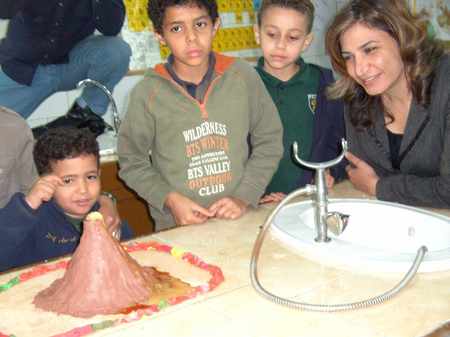
Teaching methods in Egypt need to be addressed, particularly in relation to biodiversity. Biodiversity is the degree of variation of life forms within a given ecosystem and is a measure of the health of ecosystems. Biologists define biodiversity as the “totality of genes, species, and ecosystems of a region.” For students in the US, biodiversity is studied as a science; students can explore textbooks and review material according to their curriculum, which is usually based on each state’s learning standards (Figure 1). However, in Egypt there is hardly any real relationship between science and the environment, making learning about these issues difficult.

Several attempts at reform have been made to enhance science education in Egypt and raise awareness of biodiversity issues. However, they’re usually confined to issuing books, booklets, CDs and posters which are not systematically presented to students and end up sitting on school library shelves and hidden away in cupboards (e.g. www.biomapegypt.org ).

As an educational consultant working with Ahmed Abdel Azeem, Ph.D, I have started working with schools on a self-financing environmental and applied science project called Science Across Egypt©. The project’s aim is to integrate conservation of biological diversity into curricula and extra-curricular activities in “Egyptian schools”.:https://www.misrnewsagency.com/main/art.php?id=109&art=10914

fig 2.png

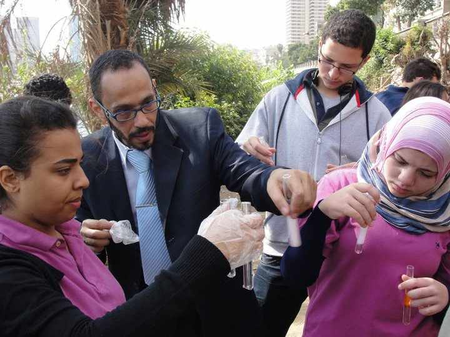
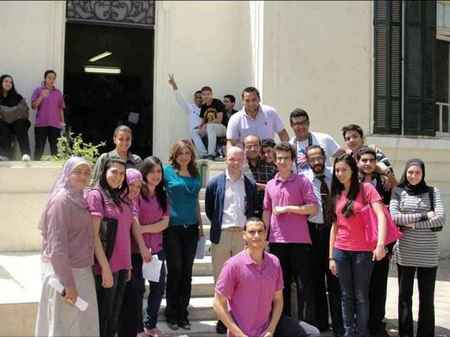
The Science Across Egypt project carries out many initiatives that aim to teach children more about the environment. As an example, on International Water Day on March 22, 2011, students of Port Said American School

were accompanied to the Nile River bank to celebrate the event and take water samples to measure the level of pollution onsite. They also campaigned for declaring the river Nile as a natural protectorate (Figure 2). The Media reported the event as being a unique opportunity for children to learn more about the environment.

fig 3.jpg

Reforming science education in Egypt will need more determined efforts on both national and international levels (Figure 3). Taking a step in this direction, for the first time in Egypt, a group of scientists and attentive community leaders have established an international Egyptian NGO (International Foundation for Environment Protections and Sustainability) to address the issues of biodiversity in Egypt (www.ifeps.org ). Will such efforts work? Let’s keep our fingers crossed.

Science in the Arab world

rana.bmp Dr. Rana Dajani teaches molecular biology and is the Director of the Center for Studies at the Hashemite University of Jordan. She is also the founder of the initiative We Love Reading, which aims to encourage children in the Arab world to read for pleasure. Dr Rana Dajani, who took part in the Belief in Dialogue conference on 21-23 June, blogs about what’s needed for science to flourish.

The conference was organised by the British Council in partnership with the American University of Sharjah and in association with the International Society of Science and Religion.

As a scientist in the Arab world, I practise science and research everyday. The challenges are multiple and in many cases not so obvious for those in the West, who can afford to take these things for granted. The most important element for fostering research is creating an environment to encourage, support and sustain it.

Firstly, such an environment can only be created if you put in the work and deal with the problems as they arise. It’s not something that you can just dream up while sitting at your desk. Secondly, to make it sustainable, management needs to be accountable for its actions. Unfortunately, this is not always the case here. Without these two elements, no money in the world will allow science to progress and develop.

There is an abundance of minds and creativity in the Arab world. However, most of them drain into the West because there is a well-established support system for research.

So, what is the solution? The solution is freedom; freedom of opinion, being able to come to a decision through questioning, unhindered contemplation, institutional accountability, democracy and human rights.

Freedom will ultimately lead to progress and development not only in science but in all aspects of life in the Arab world. Freedom of opinion starts at home, with children given the opportunity and encouragement to question, challenge and form their own opinions.

This should further be fostered in schools, where teachers encourage students to ask questions. If teachers don’t have the answers, they should say so honestly and without covering up gaps in their knowledge by stifling the student. Children can learn to form their own opinions if they are taught reasoning and deduction and are granted the space to practise those skills. That is what our children need and that is what is missing in the Arab world.

University students have not been able to form independent opinions reflecting their original thinking. The day my students wrote essays expressing themselves was the day they felt human. One student told me that he was finally Someone – with a capital S.

The day I listened to a student explain her opinion was the day she could give me a big smile and tell me it was the first time she felt respected. It is such individuals who build our communities and nations, who will make a difference, who will take us into the twenty-first century with confidence.

How do we achieve this goal?

I believe the only effective way is to instil a love of reading in our young ones, so that they can learn from other people’s experiences across time and space and see and respect other ways, other narratives, that are equally justified. I have developed a programme called We Love Reading to do that throughout the Arab world by training women to read aloud to children in their neighbourhoods.

Follow Belief in Dialogue on Twitter