Biotech investment panorama in Chile

In bloom.

In bloom.

The “Chilecon Valley” bubble is a weird one. Four years ago, people wrinkled their nose at you when you called yourself an entrepreneur. Today, they treat you like a rockstar and maybe even throw money at your face – especially if you’re a foreign entrepreneur coming to the country. There is an oversupply of tools, help and attention directed at entrepreneurs in Chile just now, which should seem like good news. The bad news? We are getting far too comfortable with all these entities babying us, and once the bubble bursts (if indeed it does) we will be left with nothing – because we have not built any sustainable structure.

Continue reading

Chile’s Austral Incuba


valdivia_la_nube

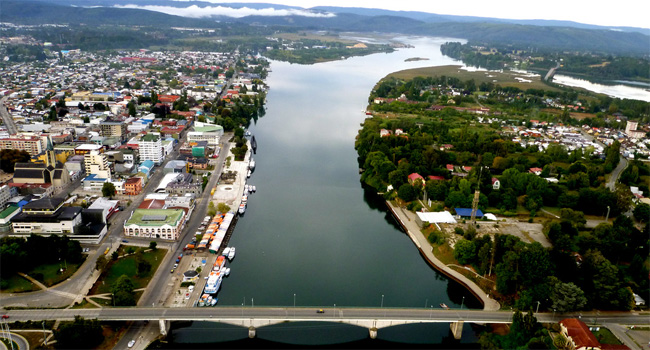
Rio Valdivia, cutting through Valdivia, Chile.

Or, why hatch a biotech business?

There are around 20 business incubators in Chile, and for the last couple of years they have been getting kind of a bad reputation. Their main job is to take government grants (usually seed funds) and allocate them to different projects that they scout through competitions and direct application. Many of these incubators base their business models on taking a percentage of their startups’ sales for up to 5 years, or equity up to 7% to be cashed out in 5 years, or a combination of both. Considering this timeline, it will probably come as no surprise that most business incubators here avoid biotech projects like the plague.

Which is why the case of Austral Incuba, arguably the only business incubator to focus in biotech in all of Chile, is so special. How have they managed to survive while competing with IT-based incubators with shorter timelines, lower risks and less capital-intensive projects?

Macarena Sáez, Austral Incuba’s CEO, tells me the choice to focus on bio-based projects was a conscious one, made about six years ago (the incubator has been in existence 11 years). Like every other incubator, they started working with the inevitable app and website groups, and all the projects that make you go “why are you wasting your brainpower in this,” (my words, not hers) until they realized that most of those entrepreneurs seemed much more interested in bettering the state of their personal finances than the state of their country.

But Austral Incuba was different from the start. It is located in Valdivia, a city more than 800 km away from Santiago, the country’s capital, and is housed within Universidad Austral de Chile. The university’s motto, “knowledge and nature,” reflects its environment (it is smack in the middle of forests and rivers) and their academic focus. Their most prestigious Master’s program, in human-scale development and ecological economy, is actually dictated by Manfred Max Nef, who was awarded the Right Livelihood Award in 1982. The downside is that not only is Valdivia far away from Santiago (we are talking a 12-hour bus ride at least), but also the city’s GDP is roughly 4 times smaller than that of Santiago, and still has grave illiteracy and poverty issues. So if incubating a business “from the end of the world,” as we ourselves refer to Chile, seemed hard, trying to do that from the south of said end-of-the-world sounds impossible.

ok3-1030x773

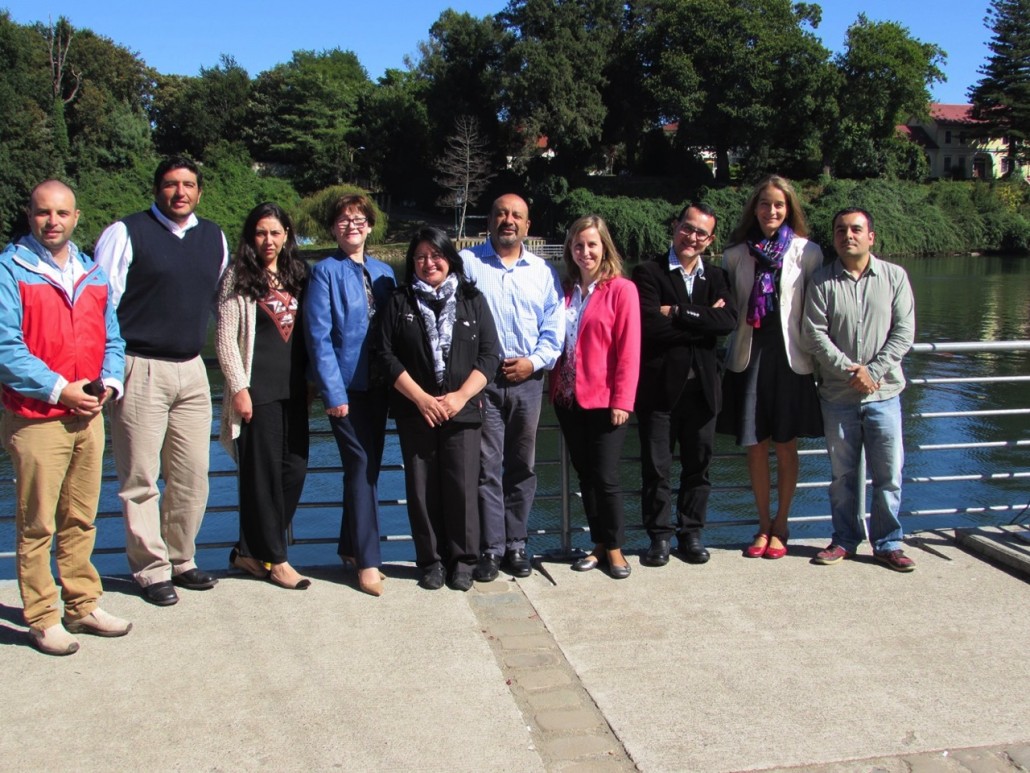
The Austral Incuba team.

“It feels like our very own crusade,” says Macarena. “We know the conditions are unfavorable and yet we choose high-risk projects such as biotech-related ones, because those are the ones that actually respond to what we see in our environment. The impact you can have while developing bio-based projects is infinitely bigger than your classic app or website, and can actually take responsibility for what is happening in our local area, both socially and environmentally speaking.”

Even the entrepreneurs there are different. They bring premises from their scientific disciplines to their startup work. They don’t just want to make a sustainable product; they want to work in creating a sustainable economy, capable of regenerating their local environment and society.

It’s not all butterflies and rainbows, though. The “diva scientist syndrome,” as I like to call it, is quite real and can be a huge impediment to the development of a project. As Macarena puts it, “We understand that you rule the lab but that does not mean you rule the world!” Which is to say that these entrepreneurs might know everything about their science, but sometimes have no idea what a value proposition is. A scientist’s ego might be one of the worst obstacles when becoming entrepreneurs – they can be un-coachable and deaf to feedback. In Chile this “diva scientist” attitude can become even worse when combined with the “rockstar entrepreneur” vibe we all seem to be getting secondhand from Silicon Valley. There are so many entities here that exist solely to serve the entrepreneur, including throwing money at them, that we haven’t been able to create a proper VC structure. This also has hurt the development of the entrepreneurs. We get money all the time, but we don’t get the smarts that should come with it – which is precisely what Austral and other business incubators are trying to solve.

Luckily, Macarena says that trait is more common in an older generation of entrepreneurs and not as prevalent in the younger crops. And it’s these younger ones that have proved themselves worthy of Austral’s help, over and over. “One of our entrepreneurs relocated from Santiago and practically revived a small town that had been left down on its luck by employing tens of people that had been left unemployed after the closing of a local industry. Another is obsessed with creating added value to local industry’s waste, and is now exporting his products to the US and Europe – all while making the region cleaner and greener,” she says.

The experience Austral has had with these entrepreneurs reaffirms their belief that there’s a certain common trait to all scientific entrepreneurs: a spirit of collaboration. “During our first 5 years we witnessed the non-necessity of collaborating that traditional startups put in place through constant outsourcing and extreme secretiveness,” Macarena says. “Bioentrepreneurs are radically different. They are aware of social pain, and that pushes them towards collaboration as a tool to improve social conditions around them.”

Emilia Diaz

Made in Chile

newspaper-1173913-640x480Chile has this bad habit of being in the news solely for terrible reasons. Take September 2015: an 8.4 earthquake hits the country and is followed by around a thousand aftershocks. But among the pictures of fallen houses and coastal damages and the half-sad, half-numb resignation that proceeds them there was good news: the apparition of an innocuous and universal cancer drug, made in Chile. This is the promise of Andes Biotechnologies, a Chilean biotech company whose invention has just been cleared by the FDA for clinical trials in the US.

The FDA granted approval on September 13th for the start of US-based clinical trials on Andes Biotechnologies’ cancer drug. The product has been tested in animal models, specifically mice and monkeys, where the treatment has proven both universal and innocuous.

Sounds too good to be true? Too unlikely?

It’s actually even more so.

According to a 2014 study published by the Tufts Center for the Study of Drug Development, the average R&D cost of developing a new drug is $1.4 billion. Even if this figure might be overinflated, as stated by The Economist, the minimum amount is considered to be around half a billion. Not exactly what you can invest in a country where the total investment, both public and private, totals less than 70 billion.

And yet, Andes not only developed what could potentially be a hit in the battle against cancer: it even managed to run the whole development process in Chile and with only Chilean investors.

You read that correctly. With only 31 people in their team today, Andes Biotechnologies’ drug is the first biomedical development that has been invented, developed and financed in Chile, while also being cleared for clinical trials in the US. Even now, when these trials abroad are about to start, they will be spearheaded by chilenos.

The technology’s development started around the year 2000, when Dr. Luis Burzio, one of Andes’ main researchers, discovered a new family of RNAs while conducting research on spermatogenesis. These RNAs, of mitochondrial origin, sparked the researchers’ interest and after many tests proved to be a promising universal target for both cancer treatment and diagnosis. On 2009 Burzio was joined by Dr. Pablo Valenzuela, who in 2002 was awarded the Chilean National Award in Applied Sciences and Technologies and also happens to be the inventor of the world’s first recombinant vaccine (against hepatitis B virus), and by Arturo Yudelevich, co-founder of one of the biggest biomedical companies in Chile, to found Andes Biotechnologies.

Since its founding, the company has obtained 29 patents worldwide, and has become a standard for biotechnology innovation in the country. The company’s success in recent years has, in my opinion, played a major role in inspiring new developments, technologies and yes, new entrepreneurs as well. Innovation in biomedicine, and entrepreneurship in general at this point, tend to be presented as a club you are only granted access to if you had the good luck of being born or based in the US or Europe. As an aspiring biotech student seven years ago, I couldn’t name even one Chilean company that had made it there, in that faraway place where success happened.

Now that the glass ceiling has been broken there is no way back. Companies like Andes will help ensure that Chilean biotech is finally recognized as a force to be reckoned with. The new crop of entrepreneurs that my generation brings will gladly course through the path this development has cemented for us. Knowing now that something as difficult and unlikely to succeed can undergo preclinical development in our country, we have no excuse not to try.

Hopefully this will be the news you will hear now. Not about the earthquakes and the occasional wine review or football match, but around the new inventions and advances in biomedicine created within our borders. We cannot write a full newspaper yet, but we do have the first headline:

The rise of a universal drug against cancer seems to be closer each day – and it’s made in Chile.

Andes_peeps

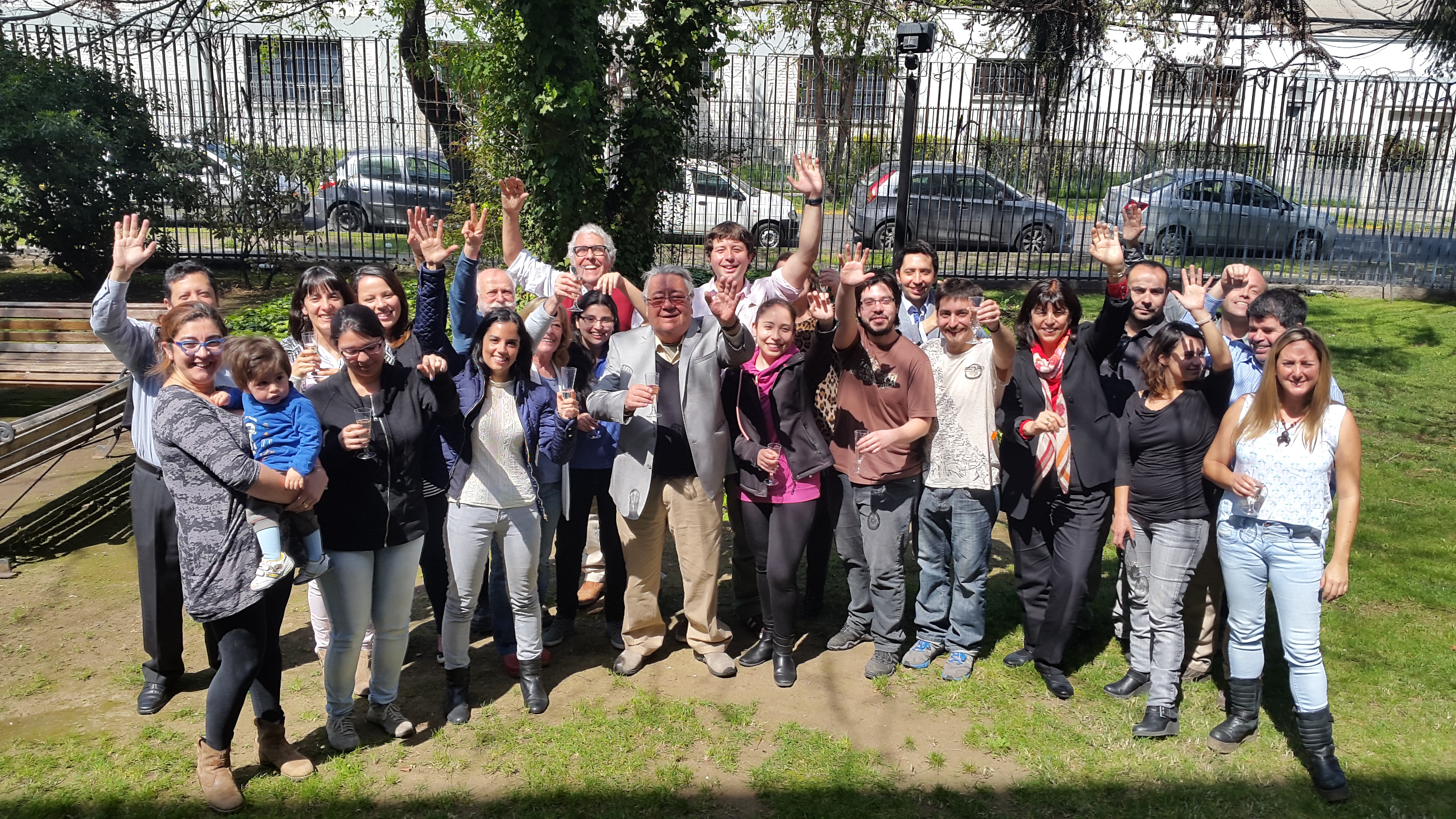
The team at Andes celebrates FDA clearance for clinical trials.

Emilia Diaz

The birth of a cluster

black_holeHopefully you read my latest post, and how I practically demanded the appearance of local clusters of biotechnology, with research and innovation throughout the world. There’s a first effort in my country that is proving to be a great framework for this: Redbionova.

This platform, founded and managed by Chilean scientists, aims to bring together students, researchers and entrepreneurs in all the areas of biotechnology. They have more than 10,000 visits per month, which may not sound like much until you learn that their impact indicators are almost 5 times better than any other website of similar niche in our country.

The great thing about Redbionova is the exposure of national biotechnology it provides. It’s very easy to go through your biotech career in Chile without ever knowing there are exciting projects being developed one door down from where you stand, and this can be both discouraging and generally mind-numbing. You end up thinking that your work won’t amount to much after all, because, Who are you? Just a student in a tiny, remote country subject to the tyranny of distance. You end up thinking, Of course nothing interesting will come out of here, because nothing is happening right now.

Wrong.

There are amazing Chilean projects generating an impact worldwide. Through Redbionova I have been able to interact with teams that are creating crowdsourcing platforms for biotechnology (Dodo Crowdfunding), producing modified bacteriophages for cattle (Phage Technologies), designing probiotics for lactose intolerance (Novalact), creating new cancer therapies (Andes Biotechnologies), designing new medical devices that diminish the need for incisions (Levita Magnetics), and inventing new stem cell-based therapies for neurodegenerative diseases (Cell for Cells). Plus my two personal favorites: Kaitek Labs, which develops microbiological sensors for marine biotoxins; and Lab4u, which develops technologies to use mobile devices as science instruments for education and was the winner of the Latin American version of Intel Challenge.

These projects are finally being recognized, or at least known, within the community. Redbionova organizes meetups, known as “Biotech Tonics,” throughout the year, bringing together researchers and innovators to share their ideas and visions on biotechnology. We even had an associated TV program (Todo x la ciencia, or Anything for Science) specialized in showcasing research advances all across the country, driving science and technology closer to everyone in Chile.

This visibility is paving the road for new teams, new people and new projects. One can only hope that the projects showcased today will be the inspiration of great discoveries tomorrow. Hopefully more communities like Redbionova will sprout up throughout non-clustered countries, finally creating a better, more robust and more complete network of biotechnology innovators.

Emilia Díaz

Biotech from the end of the world

endCreating a biotechnology company in Chile is bound to be a bittersweet experience. On one hand, we’ve recently become an entrepreneurial paradise, ranking 20 in Entrepreneur’s “World’s hottest startup scenes,” and thus making us the only country in Latin America to actually be featured in the ranking. Pretty impressive for a country that has one of the lowest investment in research and development and innovation (R+D+I) in the region, if you ask me. On the other hand, this entrepreneurial paradise tends to welcome only fast-working projects, also known as apps, and biotech gets pushed into the background. Biotechnology is not even featured in the country’s strong research and development thematic categories for this year. Knowing this, does creating a biotechnology-based company even make sense in Chile?

Well, we entrepreneurs don’t get called crazy for nothing.

I’ve been through heaven and hell creating my company. As an entrepreneur, you already get judged on everything: career, manner of speaking, looks, income, etc. – oh, and also your project, at some point. But as a science entrepreneur, or more specifically, a bioentrepreneur, more things come into play, and not in a nice way – at least for me. I’m a 22-year-old undergrad who took a leave of absence from college to pursue my dream project, creating an R+D+I biotech company that will finally provide science made in Chile. Nobody took me seriously at first. As a student, one would think I at least had the support of my faculty, but apparently the school of engineering is not ready to house student-entrepreneurs. Being young and bringing a new approach doesn’t work in biological sciences as well as it does in computer science. And it’s even worse if you’re a woman. We may be on the tip of the wave when it comes to metabolic pathways and systems biology, but science is still hasn’t shaken its old sexist judgment of the female mind.

You may think the picture I’ve painted is enough to prevent people from trying. But after you power through the initial disillusionment and scratch the surface, what’s inside doesn’t disappoint.

On the last two years, respectively the year of Entrepreneurship (2012) and the year of Innovation (2013) in Chile, an amazing amount of contests and founding opportunities have sprouted from seemingly out of nowhere. New biotech companies founded by students or recent grads are starting to fill the national scenario, giving more and more students the push they need to know that yes, it’s possible. Younger people with fresh ideas are finally being taken seriously, and their projects are being listened to as carefully as a post-doc’s. Public funding is now accessible to anyone with a good idea and a tenacious working plan. Private companies are slowly starting to open up to new projects pitched by overexcited students. Suddenly, a near future with national science, and especially national biotechnology, is more than possible.

It appears as if, little by little, the country is realizing that anyone can have a life-changing idea – even a 22-year-old-girl with a tiny biotech company at the end of the world.

Emilia Díaz