 Trade Secrets will be quiet until the after the New Year. Happy Holidays and enjoy the snow, if those things factor into your life.
See you in 2014.

Trade Secrets will be quiet until the after the New Year. Happy Holidays and enjoy the snow, if those things factor into your life.
See you in 2014.
 Bogotá, Colombia, the city from where the Spanish conquistadors pursued the mythical ‘El Dorado’, launched BioLatam 2013, the first Latin American biotechnology conference with an emphasis on partnering and business. The meeting took place December 9-10, and talk centred not on gold but on attracting investors and partners to the region. The conference itself, which might have been summarized as ‘Investors wanted’, was born of a bridge-building exercise between Invest in Bogotá, the city’s investment agency and Asebio, Spain’s biotechnology association.
The link with Asebio ensured that among the 700 delegates, including 300 small businesses, there was a strong Spanish presence. Also, large international players such as Amgen, and Grifols, currently exploring biosimilars manufacturing agreements with Colombia and Brazil, respectively, exhibited side-by side with Colombian government and regional initiatives. “Our doors are open” said Catalina Ortiz, Director of INNpulsa, one of the programs set up to drive the growth of the biotech sector in Colombia.
Ortiz reminded those present that Colombia is the second most biodiverse country in the world (Brazil is first), with 14% of the world’s species. Although ownership issues have dogged bioprospecting, these are now resolved, prompting German Castaño Valero from agricultural biotech Solar Ciencia Agricola in Ibague, Tolima, to tell the audience that “biodiversity does not need to be exploited, but rather cultivated.”
The push to find new uses and develop natural products has already resulted in a few Colombian startups, among them is Satech, a Colombian agro-industrial company, that applies enzymatic technologies to improve the environmental footprint of food and packaging processes, and returning metals from industrial processes to the value chain. Another example is InBiotech, which investigates native plants for use in shampoo and cosmetics.
In life sciences, Colombia has nurtured some interesting startups. Keraderm, founded in 2008 by plastic surgeon Rodrigo Soto, reached the finals of the Mass Challenge in 2012. Their product, a stem-cell-derived autologous skin graft, has treated more than 200 people with chronic wounds and severe burns. Soto, Keraderm’s CEO, says their product is currently being considered for approval by Colombian regulatory authorities. Phairilab, born from a research group in the Javeriana University, is testing extracts of Petiveria alliacea, whose popular name is anamu, in mice for its anti-tumoral activity, as well as the extract from Dividivi that blocks metastasis in breast cancer lines.
Colombian-born scientist, Esteban Pombo Villar, now with Oxford Biotherapeutics, a company pursuing antibody-drug conjugates for treating cancer, headquartered in Abingdon, Oxford, said, “In Latin America, there are opportunities to work in collaboration with foreign companies who can also contribute [to their development]”. But what is really needed are venture investors. So far, most companies are supported by a mix of private equity and government funds, says Mateo Grazzi, from the InterAmerican bank, based in Bogota, and in terms of scientific knowledge base, the figures so far are not exactly encouraging. After Africa, the region invests the lowest percentage of GDP in science and technology. Only Brazil, Cuba and Venezuela exceed 1 % of GDP. The drive from the Colombian government to build the nation’s biotech potential is recent, and initiatives will take time to mature. The presence of venture capital companies at BioLatam 2013, such as The Netherlands-based Forbion Capital, Edmond de Rothschild, located in France, The Burrill Brazil Fund and Spanish VC firm Ysios Capital are perhaps are sign that, across Latin America, change is afoot.

Source: Ridge Carpenter
We published in the December 2013 issue a news feature looking at this year’s biotech IPO rush. We’ve removed the article from behind our paywall, and it can be freely read here. The PDF is here: Burning Bright.
By our count, by the end of the third quarter there had been 36 biotech IPOs across global exchanges this year, raising on average $73.8 million apiece. The companies going public on either NASDAQ or NYSE have done better, raising on average $86 million each. Another 10 biotech companies or so have gone public since September ended; you’d need to go back to the year 2000 to see a similar combination of new IPOs and high amounts raised.
The post-IPO market has been robust, too, with the stock of many companies soaring in the weeks following their debut. Our calculations found that overall, the 29 companies that went public this year on either NYSE or NASDAQ had returned ~62% over their IPO price at the end of the third quarter.
There has not been nearly as much enthusiasm for non-US-based companies or beyond the US exchanges, though Oncolys BioPharma raised ~$48 million on the Tokyo Exchange, and TWI Pharmaceuticals, which works in generics and immune modulation, raised more than $100 million in Taiwan (link is to BioCentury — subscription required). The Netherlands-based Prosensa grossed nearly $90 million in the US, though it shortly after reported a drug failure that cut the stock down. And from the UK? GW Pharmaceuticals raised about $31 million on NASDAQ, but that firm didn’t make Nature Biotechnology‘s rather stringent definition of biotech. Egalet, of Westminster, UK, is in the queue, but we’ll need to see what type of reception it gets if and when it does price.
Comments on the article can be posted below, or tweet them to us at @naturebiotech.
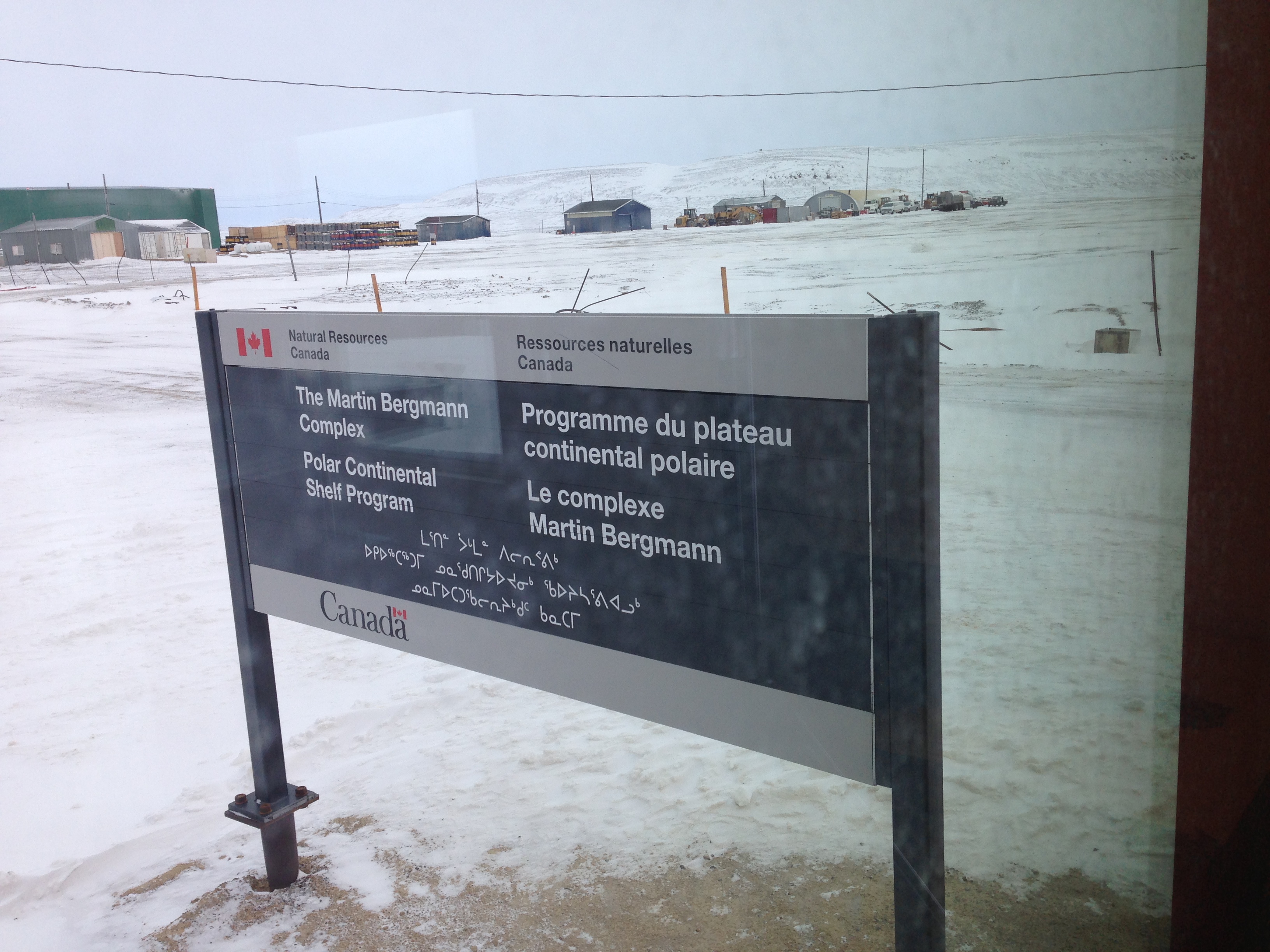
Welcome to the Polar Continental Shelf Program
This post isn’t so much about biotech or even health as it is research overall, but stick with me, as I introduce a research base very few ever think of…
There have been recent highlights of the importance of the changes in the Arctic, monitoring of climate change, discovery of natural resources, territorial disputes over tiny islands and the tensions of economic development and environmental stewardship.
Daily transactions, policy briefs and international cooperation agreements are discussed, negotiated and approved with the help of essential research that builds the evidence for key decisions. Where do the data come from? Who collects them? What organizations help enable research to be conducted in extreme conditions of isolation, cold weather and remote infrastructure?
I had the opportunity to find out during my inaugural visit to Resolute Bay in Nunavut, Canada, on the tip of the mythical Northwest Passage – home of the Polar Continental Shelf Program. The PCSP is located in the high-Arctic and coordinates field logistics in support of advancing scientific knowledge. It operates adjacent to the Inuit village of Resolute Bay. The PCSP was established in 1958 by the government of Canada and has built up a logistics support network that stretches approximately 2,160 km from Alaska to Greenland, and from the Arctic Circle to the geographic North Pole. The PCSP also serves a secondary purpose as an Arctic base to support management of Canada’s lands and natural resources and contributes to the exercise of Canadian arctic sovereignty.
Arriving at Resolute Bay from the majestic Canadian ice-breaker the Louis S. St. Laurent (LSSL) via helicopter (as there is no port), it took several minutes for the reality of being in the Arctic Circle to sink in. The landscape was flat and barren, unlike the lush green forests and Rocky Mountains of the Canadian ‘south’. The first room of the PCSP looks like a replica of an elementary school’s cloak room, with pegs and benches for personnel to de-layer from their coats, gloves, hats and other winter gear. Past two additional sets of doors, one enters the warm and welcoming 100-person cafeteria room, where copies of Nature can be found on the information table, next to Polar Bear warning brochures (yes, even the scientific journals make it to the land of the polar bears).
Each year, PCSP is the landing base/home for 1000+ scientists who conduct more than 165 research projects at more than 60 field camps across the Canadian Arctic. Researchers rely on PCSP for equipment, logistics and knowledge of safety and cultural aspects of working in the extreme environment. PCSP arranges air and overland transportation, radio communications and navigation and global positioning. It is able to coordinate and arrange research camps to share in logistics synergies and mitigate the risks and dangers of working in isolation in the high arctic. PCSP delivers about $10 million worth of logistical services to science projects ranging from anthropology to zoology. The transportation costs are immense and the terrain treacherous – the costs of disarray are high. PCSP acts as an Arctic liaison between Canadian Arctic residents and the incoming scientists, providing advice on permitting, licensing and environmental assessment process that makes the science possible. In practical terms, PCSP also provides accommodation, daily catering, internet and working space. Specialty laboratory extensions include a walk-in freezer, fume hoods, compressed-air supply and a water purification system. There may not be rows upon rows of drug development or green biotech happening in the Arctic, but the one can feel the air of insatiable curiosity to know more about the edges of our world.
Resolute is one of the globe’s coldest inhabited places, with an average yearly temperature of -16.4˚C. My visit to PCSP came at the close of the 2013 ‘summer’ research season, as the Resolute Bay base had ushered all the scientists home and completed Operation Nanook for the Canadian military. We were the last large visiting party for the lean staff of PCSP to manage. Tim McCagherty and Glen Parsons were the PSCP managers on duty and shared with us the important work of the base. Even at the end of the 2013 season, the two men talked with energy, enthusiasm and gusto about the need to understand the North and to achieve that understanding with respect and safety.
The PCSP team welcomed the 2010 Canadian government investment of $11 million to refurbish the PCSP, doubling the number of beds available and adding leisure areas and an exercise room. The staff reminded us that for scientists engaged in short intense periods of research, it is important they have a comfortable start and end to their projects. Conducting frontier research in Canada’s remote Arctic is not without its dangers – the nexus community has suffered losses in 2011 with the crash of a Boeing 737 and recently in September 2013 with the loss of a Canadian coast guard helicopter.
I came away from PCSP with a new appreciation of frontier research. With the development issues of the Arctic coming to the fore with climate change, it is important to know where our research comes from and the support network that it takes to obtain data and evidence. Government investment in basic science is not only about the principle investigators, but also the community of hard-working personnel who support frontier research.
Nice to see you, Mexico. Spain, glad you could make it. You, too, South Africa — thanks for joining December’s Monthly Map. (Click to enlarge.)

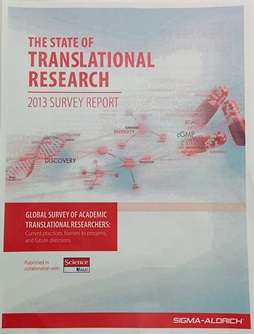 The blog post title above is also the title of a report by Sigma-Aldrich (published with partners AAAS and Science). The report is based on 608 survey respondents, 45% of which were in the US; 23% of respondents were graduate students. It’s not so long, as reports go, and you might easily read it on the bus or while eating lunch. I’ll give you a few nuggets from the report here to whet your appetite.
When asked about their barriers to progressing their research, 62% of respondents named insufficient funding, with inappropriate duration of grants and insufficient scope of grants coming next, both with 18%. Twenty-two percent of responders said their funding for translational research decreased over the past 12 months (17% said it increased). Also, the majority of respondents (62%) said that collaboration with their business school would benefit their research groups, but only 13% are actually collaborating.
That last bit of information Pat Sullivan found shocking. He’s the former liaison for academic partnerships at Pfizer and now works for Sigma-Aldrich. He thinks there is an opportunity for pharma to help educate universities on how to best fill the voids in research left by pharma cutbacks.
I asked him for further thoughts on the report, and he supplied this:
Through aggressive downsizing, Pharma has reduced its capacity to identify new commercially viable therapeutic disease targets and new drug candidates. These reduced capabilities have driven Large Pharma to seek out new partnerships with academic researchers working in the translational research fields. However, in order to take full advantage of this new opportunity, academic researchers and institutions will need to conduct their research programs in a new way. In fact, they will have to model and conduct their translational research programs after the processes and workflows currently being used in Large Pharma. This will require the translational researcher to work on interdisciplinary scientific teams and with non-scientific departments like their Business and Law schools. Institutions that set up their programs to promote collaborations across departments will learn how to leverage their scientific discoveries into commercial opportunities. They will also learn how to choose external partners to help them to generate quality data and obtain key reagents needed to attract Pharma collaborations and funding. Institutions and Funding agencies will also have to support Principal Investigators seeking to work in the translational research field by recognizing contributions beyond just publishing.
Eventually, institutions that conduct translational research will learn to focus their programs on the drug development process that will be the most efficient for them to execute and add the most value to Large Pharma. In most cases, they will focus their programs on the early drug development phases involving new disease target validation and lead chemistry discovery. If the translational research program focuses on an orphan disease, it will be required to work with several external partners to conduct preclinical and clinical activities and obtain manufacturing capabilities.
Thoughts? You can access the report at the link below.
Enjoy your lunch,