Alnylam launches era of RNAi drugs

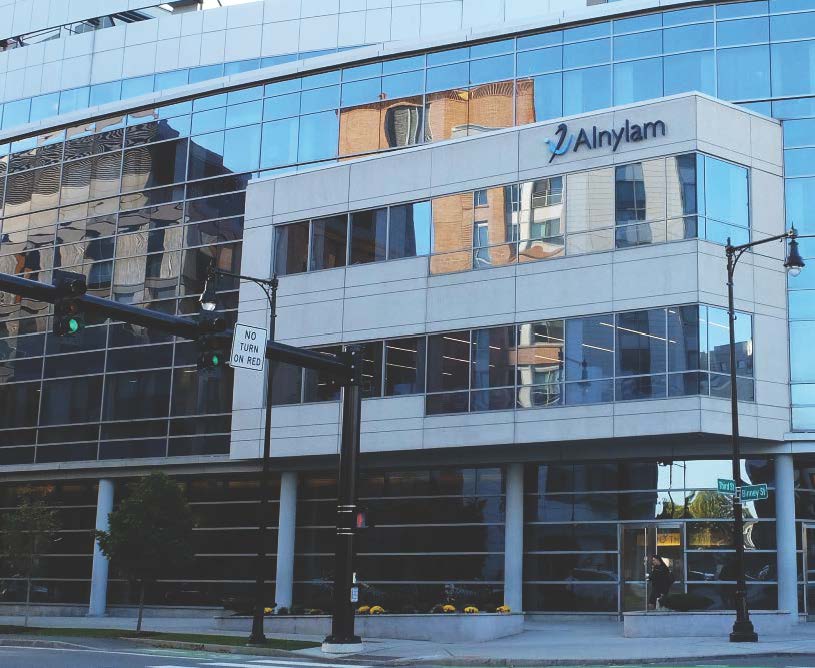
Alnylam’s office in Cambridge, Mass. The company’s Onpattro is the first RNA interference drug.

On August 10, the US Food and Drug Administration approved the first RNA interference (RNAi) therapeutic, a treatment for polyneuropathy caused by transthyretin (TTR) amyloidosis from Alnylam Pharmaceuticals. The go-ahead for Onpattro (patisiran) sees the RNAi field clear an approval hurdle considered unlikely as recently as six years ago, when pharma exited the RNAi field en masse. The US approval, with Europe expected to follow by early September, is “a major milestone,” says Anastasia Khvorova, an RNAi researcher at the University of Massachusetts in Worcester. Onpattro has an excellent safety record, but there are lingering concerns about potential long-term toxicity from newer, more potent RNAi therapeutics. And the field as a whole still faces investor skepticism in the wake of a decade of clinical trial failures.

But Onpattro could prove a very lucrative drug for Alnylam, the clear leader in the RNAi therapeutics field. Transthyretin amyloidosis “is an inexorable decline to death,” says Morie Gertz, a hematologist at the Mayo Clinic in Rochester, Minnesota. “You either have a liver transplant or hope for the best.” Onpattro, in phase 3, met its neurologic endpoint, with 56% of patients showing improvement at 18 months, compared with 4% of patients on placebo (New Engl. J. Med. 379, 11–21, 2018). Before approval, Goldman Sachs analyst Terence Flynn projected $1.8 billion in peak sales. Alnylam is pricing Onpattro at $450,000 average list, dropping to $345,000 after taking into account mandatory discounts for eligible health care organizations. Alnylam is also negotiating discounts in cases where individual patients don’t do well on the drug.

Onpattro is a 21-mer double-stranded small interfering RNA (siRNA) oligonucleotide containing 2´O-methyl modified and unmodified ribonucleosides, with 2´-deoxythymidine dinucleotide overhangs at the 3´ ends, which is encapsulated in a cationic amino MC3 lipid nanoparticle comprising (6Z,9Z,28Z,31Z)-heptatriaconta-6,9,28,31-tetraen-19-yl-4-(dimethylamino) butanoate (DLin-MC3-DMA) plus cholesterol, 1,2-distearoyl-sn-glycero-3-phosphocholine (DSPC) and á-(3´-{[1,2-di(myristyloxy)propanoxy] carbonylamino}propyl)-ω-methoxy polyoxyethylene (PEG2000-C-DMG). Close behind is another type of oligonucleotide drug, a single-stranded antisense molecule from Ionis Pharmaceuticals and its affiliate Akcea Therapeutics. Ionis’s Tegsedi (inotersen) is a 20-mer with five 2´-O-methoxyethyl-modified ribonucleotides at each terminus, a central region of ten 2´-deoxynucleotide residues, a full phosphorothioate modified backbone, and all cytosine residues methylated at position 5.  It recently completed its own successful phase 3 trial (New Engl. J. Med. 379, 22-31, 2018). With either drug, “you can slow and in some instances actually reverse the disease,” says Gertz. “It’s a big deal.” Analysts’ projected sales, however, assume strong market preference for Onpattro. The Ionis drug, which caused thrombocytopenia and kidney toxicity in some patients, such that all will require platelet monitoring, received European approval July 11 and has a Prescription Drug User Fee Act date with the FDA of October 6.

Both Alnylam’s and Ionis’s drugs prevent TTR mRNA translation into the transthyretin protein. Transthyretin normally forms tetramers, but in the hereditary form of the disease mutant monomers are released and misfold into amyloid fibrils, which accumulate in the nerves, heart and other tissues. By depleting both wild-type and mutant transthyretin mRNA, Onpattro (and Tegsedi) can arrest disease pathology. Single-stranded antisense binds directly to target mRNA for cleavage by RNase H or occupancy, whereas double-stranded small interfering RNAs (siRNAs) engages the RNA interference silencing complex (RISC), which directs target cleavage. In general, antisense has better cellular penetration properties, whereas siRNA is more potent intracellularly.

A wild card in the battle for market ascendancy is Vyndaqel (tafamidis), an oral drug from Pfizer in New York that works by stabilizing the normal transthyretin tetramer. The European Medicines Agency approved Vyndaqel for hereditary transthyretin polyneuropathy in 2011 (Nat. Biotechnol. 30, 121, 2012), but the FDA failed to follow suit, requesting a second efficacy study. In March 2018 Pfizer announced topline phase 3 results for Vyndaqel in transthyretin cardiomyopathy, another presentation of TTR amyloidosis, which exists on a spectrum. Vyndaqel met its primary endpoint, with the company expected to present full results at the European Society of Cardiology Congress in Munich at the end of August. Alnylam’s stock traded 36% lower in July than in March, a drop that Needham & Co. biotech analyst Alan Carr attributes to the Vyndaqel uncertainty. “We’re all very interested in seeing these data,” Carr said.

Alnylam CEO John Maraganore views Onpattro as the winner in TTR amyloidosis with polyneuropathy. “Tafamidis, based on previous studies, slows down the progression of neuropathy in patients with the disease, but it doesn’t really halt it,” he says. But patients with hereditary TTR amyloidosis with cardiomyopathy, as well as with wild-type TTR disease—in which TTR amyloid slowly deposits in the heartmight be different. Alnylam has aspirations for its second-generation TTR amyloidosis drug, ALN-TTRsc02, which tethers the siRNA molecule to multivalent N-acetylgalactosamine (GalNAc) ligands that bind the asialoglycoprotein receptor on liver cells. The company is hopeful this second-generation molecule will be superior in both indications because it’s more potent than Onpattro, with far more convenient dosing and delivery. Wild-type disease affects about ten times as many people as the hereditary form, so the market stakes are high. “We’re really quite eager to see what the tafamidis results are,” Maraganore said in early August. ALN-TTRsc02 should begin phase 3 by year’s end.

Alnylam’s second-generation drug should eventually supplant Onpattro, which is only approved for hereditary disease. Onpattro uses a delivery system that Alnylam no longer pursues. Double-stranded siRNAs need to evade nuclease degradation and the innate immune response and then enter cells, where they must escape the endosome to load into RISC for sequence-specific cleavage of target mRNAs. Alnylam’s early solution was encapsulation in a lipid nanoparticle (LNP). When the company set out to treat TTR amyloidosis, the LNP was “the only technology that had really been demonstrated to work,” says Rachel Meyers, Alnylam’s former head of research. “It led to a very elaborate discovery effort to optimize it.” The result is an effective drug, but Onpattro is not perfect. It’s still immunogenic enough to require steroid pretreatment to minimize reactions to its 80-minute IV infusions, given every three weeks.

Although Alnylam is no longer developing LNP drugs, some RNAi companies are still pursuing LNP delivery, as are many working on CRISPR–Cas gene editing and therapeutic modified mRNAs. Patisiran’s approval “is a very big step forward for the guys that are going to come behind, in gene editing and mRNA delivery,” says Meyers, now entrepreneur-in-residence at Third Rock Ventures in Boston.

Even before Onpattro entered the clinic, in 2012, Alnylam was looking at GalNAc-conjugated siRNAs as an alternative to LNPs. GalNAc delivery requires extensive modification of the siRNA, as it is no longer protected from nucleases by the LNP. Alnylam eventually worked out a specific pattern of O-methyl and fluoro modifications at the 2´ position of the ribose, along with fewer phosphorothioate modifications (a sulfur substituting for one of the non-bridging oxygens) in the backbone, with spectacular results. In phase 1, a single subcutaneous dose of Alnylam’s GalNAc-conjugated siRNA, ALN-TTRsc02, knocked down 80% of the TTR target for a full year. The drug, says Khvorova, “is very close to perfection.” Alnylam plans to start phase 3 for ALN-TTR02 (with subcutaneous dosing every three months) by the end of 2018. 

Other Alnylam drugs, all for liver diseases, are even further along. The company expects to submit an New Drug Application for givosiran, for acute hepatic porphyrias, by year’s end. Inclisiran, for hypercholesterolemia, and fitusiran, for hemophilia, are in phase 3. (Inclisiran is partnered with The Medicines Company in Parsippany, New Jersey, and fitusiran with Sanofi Genzyme in Cambridge, Massachusetts.). Competitors Dicerna Pharmaceuticals in Cambridge, Massachusetts, Silence Therapeutics in London, UK and Arrowhead Pharmaceuticals in Pasadena, California also have GalNAc-conjugate siRNAs in development. According to Khvorova, the field considers the problem of liver delivery basically solved with GalNAc.

Except, she adds, for a few lingering theoretical toxicity concerns. One is the 2´-fluoro modification. Ionis scientists have reported that treatment of cells with 2´-fluoro-modified antisense oligos results in the off-target binding and knockdown of several DNA repair genes, resulting in cell death in in vitro assays (Nucleic Acids Res. 43, 4569–4578, 2015). A second worry is that high levels of persistent siRNAs might outcompete endogenous microRNAs for RISC loading, with unpredictable biological effects. Finally, superstable siRNAs might accumulate in endosomes and lysosomes, with toxic consequences. “So far there is no indication that there are any issues,” says Khvorova. “But … things can pop up years after you administer a compound.”

Fueling the concern is revusiran, Alnylam’s original GalNAc conjugate for TTR amyloidosis. Alnylam discontinued revusiran in phase 3 because of the high number of deaths in the treatment arm relative to the placebo group (Nat. Biotechnol. 34, 1213–1214, 2016). Alnylam stock plunged 49% on the news. The company’s subsequent analysis could not rule out a drug effect. “The tox was there and the tox was real,” says Khvorova. “That is why we have those lingering concerns.”

“There is reason to believe [the death imbalance] might be a chance occurrence, but we can’t exculpate the drug,” says Maraganore. “That’s unfortunate.” But he points out that the newer, more potent GalNAc compounds use doses 20–100 times lower than revusiran’s. Alnylam also conducted rodent studies showing that 2´-fluoro modifications and RISC loading were unlikely to contribute to liver toxicity from siRNAs at supraphysiological doses (Nat. Commun. 9, 723, 2018). The company will soon move newer oligonucleotides into the clinic that appear to be even safer. These incorporate a single GNA (glycol nucleic acid) into the siRNA’s antisense seed region, the part of the molecule that recognizes the target mRNA, which would reduce off-target base pairing. The company is also developing an antidote to its long-acting GalNAc-siRNA conjugates (Nat. Biotechnol. 36, 509–511, 2018) to shut them off if necessary.

For the moment, Alnylam can savor its first drug approval, the fruit of 15 years of continuous effort. The company survived the pharma backlash of 2008–2011 battered but intact, thanks to an ample cash cushion. “Alnylam was able to weather the storm of pharmaceutical companies being naysayers because they had the resources, plain and simple,” says Meyers. Now the company must build on Onpattro to establish RNAi as a platform technology. After so many failures, says Khvorova, “it will require some more successful stories, not just one patisiran, to rebuild … investor confidence.”

Ken Garber Ann Arbor, Michigan
A new approach for DNA synthesis

Credit: Eduardo de Ugarte, Berkeley Lab Creative Services

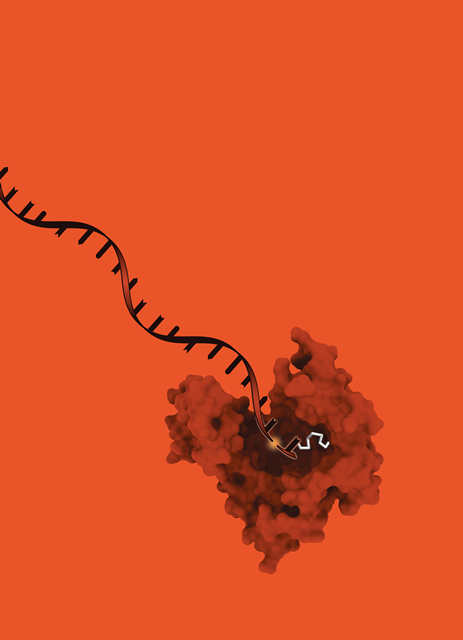
Ordering synthetic oligos or genes online is now commonplace and an essential resource to scientists across disciplines. But the phosphoramidite chemistry currently used to synthesize DNA is limited to direct synthesis of about 200 nucleotides, with longer stretches requiring assembly. The capacity to synthesize long stretches of DNA is important for a variety of applications, including DNA storage, DNA origami, and to synthesize DNA containing regions with repeats, which are difficult to put together. In a paper published recently in Nature Biotechnology, Jay Keasling and colleagues report a promising new approach to DNA synthesis. Using a terminal deoxynucleotidyl transferase (TdT) conjugated to a single deoxyribonucleoside triphosphate (dNTP), they tether the primer to TdT after extending it by one nucleotide. This tethering prevents further extension until the dNTP is cleaved by, for example, light. Keasling and colleagues demonstrate synthesis of short oligos, providing proof-of-principle for a method that may in time represent a useful approach to enzymatic DNA synthesis.

Irene Jarchum

Hunting connections between cell types and cytokines

Credit: Denise Feiger Visual Design, Shutterstock

Cytokines are small proteins that mediate signalling among immune and non-immune cells, and they trigger a range of cellular activity, such as proliferation, activation and killing. Over many decades, immunologists have described countless associations between cell types and the cytokines they produce or sense, but many of these findings, although published, are difficult to access. Associations may have been discovered in a particular disease context or cell type, or uncovered as part of a larger study and thus not corroborated or expanded. Work from Shai Shen-Orr and colleagues, published in Nature Biotechnology, aims to unearth these connections and provide a useful resource for enabling new discoveries. The researchers developed a computational tool that mines PubMed data and connects cell types to cytokines and diseases. The text-mining tool, called immuneXpresso, was used to identify connections between 340 cell types and 140 cytokines across thousands of diseases. Shen-Orr and colleagues showed they could corroborate known interactions and discover previously unappreciated connections worthy of further investigation. The resource is openly available and can be accessed here.

Irene Jarchum


Will the EU deregulate gene-edited plants?

At the beginning of the year, the advocate general of the Court of Justice of the European Union (CJEU) issued an opinion that plants created using new plant breeding techniques, including gene-editing platforms like CRISPR, TALENs and the like, are eligible for the so-called mutagenesis exemption. This exemption relates to rules the European Union uses to regulate the release and marketing of genetically modified organisms (GMOs), which are outlined in Directive (2001/18/EC), originally drafted in 2001. The exemption covers any plants considered ‘safe’ or produced using techniques that have a history of safety, including plants derived from traditional mutagenesis (hence the mutagenesis exemption).

Agbiotech and seed companies are now waiting for the CJEU to issue its ruling on the AG’s opinion, which is anticipated in the next few weeks. If the CJEU follows the AG’s opinion, several NPBTs and their resultant products will be exempt from scrutiny under the Directive. Here, a set of authors from Wageningen University and Research in The Netherlands, headed by Kai Purnhagen, outline four options for how the European Union and its member states may implement a new policy overseeing approval of products generated via NPBTs. Most intriguing of all, they suggest the new policy that follows the AG’s opinion would create an opportunity to move EU regulation for new crop varieties to a more scientific, risk-based and decentralized strategy.

The Correspondence PDF is accessible via the link below.

Correspondence


Rumen microbial genomics resource

Robert (Bob) E. Hungate developed methods (the ‘Hungate technique') to culture anaerobic bacteria and archaea. These methods are still used in many labs worldwide.

Robert (Bob) E. Hungate developed methods (the ‘Hungate technique’) to culture anaerobic bacteria and archaea. These methods are still used in many labs worldwide. {credit}Special Collections, University of California Library, Davis{/credit}

The Hungate1000 project, named after one of the great microbiologists, Robert E. Hungate (pictured), was launched with the aim of producing a reference set of rumen microbial genome sequences. When this project began there was only a handful of rumen reference microbial genomes available. The first output of the Hungate1000 project, comprising 410 high-quality genome sequences, is reported online today in Nature Biotechnology. Seshadri et al. highlight discovery of degradative enzymes, biosynthetic gene clusters and Crispr sequences. These reference genomes will enable robust interpretation of rumen metagenomes, which should result in a better understanding of rumen functions. Genome-enabled research into feed conversion efficiency, methanogenesis and cellulose degradation will, in turn, assist development of strategies to balance food production with efforts to minimize greenhouse gas emissions. Finally, access to cultivated Hungate Collection strains will provide vital tools for studying carbon flow in the rumen, breakdown of lignocelluloses and methane formation.

Susan Jones

The Developing World Needs GMOs

MudThe need to feed growing populations in developing countries, especially countries in Africa, must be met by increasing the yields of crops. Also, climate-change related problem such as drought continue to worsen hunger problem and humanitarian crisis in the continent. Genetically modified organisms (GMOs) could greatly help with these issues, yet resistance persists in Europe and Africa both.

For several years, I have been thinking about what should be done to address the negative sentiment about GMOs. As an African scientist who has the vast knowledge of biotechnology and understands the potential of the new technology, I took the task upon myself to gather evidence with experts around the world and publish a book and a Correspondence on how to address GMO regulation problems at the international level.

While this was a difficult task, I am proud to be the first African scholar to mobilize experts from around the world to review or abandon current regulatory framework for GMOs. It is uncommon but I have taken this bold step and made an initial attempt to challenge the current status quo of GMO regulation.

Europe is overly cautious about the use of GMOs. But Europeans are well fed, and are not experiencing the type of hunger and malnutrition that affects people in other parts of the world. Europeans must stop playing fear-based politics on technologies that can benefit millions of people dying from micronutrient deficiency and hunger in Africa.

But the problem exists here in Africa, too. Some years ago I travelled to several countries across different regions in Africa to discuss the benefits of GMOs with policymakers. These talks spurred the largest study in the history of GM agriculture in Africa, but the debating continues, with policymakers asking for more evidence to prove GMOs are safe. In my own country, Nigeria, I was threatened in the local news for promoting the use of GMOs. Media reported that eating food made from GMOs is bad for your health and could cause cancer.

We need to stop media bias towards the use of GMOs, and educate the individuals and organizations that are influencing policies against GMOs. There is overwhelming evidence that GMOs are safe for human consumption. If the world is to achieve the United Nations sustainable-development goals, GMOs will need to play a part.

Adenle Ademola

Linking the scientific and patent literatures

LENS

The scientific literature and patent literature have for a long time been viewed as two different worlds, with publications in the latter one measure of a researcher’s translational activity. But a much larger cadre of researchers influence inventions beyond those who are named as inventors on patents. Within patent filings there is often an extensive list of citations to the non-patent literature, including peer-reviewed papers, monographs, meetings and more. In a Patent article, Jefferson Osmat and her colleagues have created a tool to mine an open database termed the Lens containing filings from the US Patent and Trademark Office, The European Patent Office, the World Intellectual Property Organization Patent Cooperation Treaty applications and IP Australia for the non-patent literature. This enables an assessment of individual and institutional contributions to the global patent literature.

Andrew Marshall

Gottlieb on pricing, competition and new therapeutic modalities

While freelancing for Nature Biotechnology, I recently talked to US Food and Drug Administration (Rockville, MD) Commissioner Scott Gottlieb. The conversation ranged from pricing, to market competition to new therapeutic modalities like gene therapy coming down the pipeline. A more extended extract of our discussion is also available in the News Feature.


You’ve helped to insert FDA into the drug affordability debate in 2017, by emphasizing competition and, by extension, more approvals, as a means to reduced costs.

Scott Gottlieb: A lot of what FDA can do around competition comes down to what we can do on the generic drug side with respect to complex drugs that are hard to make generic because of scientific or regulatory obstacles. We also see companies sometimes taking advantage of certain regulations and policies to extend patents beyond the time Congress really intended. And built into the generic drug approval process is a sort of regulatory arbitrage, where a company can come in, pick off one of the 300 or so products that was typically a low-volume generic but didn’t face any competition and jack up the price. So we’ve been taking action to try to resolve what I think are regulatory policy obstacles to allowing more vigorous competition.

Focusing on complex drugs where the patents and exclusivities have lapsed but they don’t face any competition yet, companies maintain monopolies on these products. We will be putting out some analysis early in the year on what the total spend is on complex drugs that should be subject to competition but aren’t.

These are drugs like metered dose inhalers. Drugs that are hard to copy under the traditional framework of the generic drug approval process. When a drug can’t be easily measured in the blood or it acts locally on tissue because it’s a topical agent or it’s an eye drop, or it’s a metered dose inhaler, that framework doesn’t apply very well.

So we’ve committed to putting forward product-specific guidance two years ahead of the first potential patent expiry on any complex drug going forward. We’ve gone back and tried to revise guidances on existing complex drugs that aren’t subject to generic competition. We’ve revised general principles in various areas for demonstrating sameness when it comes to things like metered dose inhalers, or topical agents, or liposomal agents. We’ve also put forward changes in how we infer sameness in drug-device combinations when the generic device that delivers the drug might be slightly different than the branded device.

Would you have expected to see more biosimilar competition by now, given when that pathway was created?

SG: I think we’re going to. When we look at the pipeline we see a pretty robust pipeline of companies that have come in to us, starting to engage the agency on biosimilars they want to develop. We have to keep in mind, there’s a small subset of biologics that have come off of patent. And also the biosimilars that have been approved have been subject to litigation. I think that if you look back at the early days of Hatch/Waxman the experience that we’re having with the biosimilars isn’t that different. It took a while for firms to gain the sophistication to come through the regulatory process. It took a while for providers to gain confidence in adopting the generic drugs. And it also took a while for a lot of litigation to get settled. I think we’re basically in the early days of that. That said, the big initiative we’re going to announce next year on drug competition is a biosimilar policy initiative. It’s going to be a collection of policies that we undertake to try to loosen the framework for bringing biosimilars onto the market to try to instigate more competition. We’re also going to be spending money trying to help educate providers about biosimilars. We’ve done that on the generic drug side of the house where we do public service campaigns. We’re going to be undertaking and are in the throes of it right now a big public service campaign on adoption of biosimilars, trying to educate providers on using biosimilar drugs as well.

I think that we’re still in the early days for biosimilars. But I never had the expectation that this market would evolve in as robust a fashion in its early years as some of the initial policy estimates. There were estimates put forward in Washington that inferred and imputed enormous savings from biosimilars very early. I think it was always going to be the case that this is going to be a slower evolution. And I think we’re doing quite well. I feel pretty confident and I base that not on what’s been approved. I’m looking at what we see in terms of the action of companies coming in and engaging us.

How do you think about creating competition in areas like gene therapy?

SG: Right now we’ve validated a handful of tools and I think over time we’re going to validate more tools that are going to enable different ways to try to address the same disease through multiple modalities.

If you look at sickle cell disease, for example, there are people developing CRISPR/Cas9 approaches to it, people who are developing exogenous gene therapy, people doing in vivo gene therapy techniques, people who are using fetal hemoglobin, people trying to correct the underlying defect. There’s a lot of different approaches that will hopefully create some inherent competition in the market. Right now it’s early days because we’ve validated a handful of tools. –like antibodies I think the inflection point we’ve witnessed in gene therapy in the past couple of years is the advent of the AAV vector and more reliable vectors that don’t have any immunogenicity, and deliver the gene therapy products more reliably. And so I think we’re going to see other types of modalities come forward, just as we saw in the biologics space, where you saw multiple ways to humanize and develop fully human antibodies. I think the same thing will play out in gene therapy and you’ll see competition by virtue of that.

Chris Morrison

Why Every Life Science CEO Needs a Leadership Coach

table4

{credit}Emily Winiker{/credit}

The biggest graduation for an academic researcher comes without diplomas or Latin superlatives, caps or gowns. It’s the leap from academia to business, the shepherding of our beloved ideas and inventions out of the known world of the lab and into the strange land of the marketplace.

It’s a bigger jump than any researcher imagines. When my co-founder Sarindr (we call him “Ik” for short) and I graduated our bone-growth technology from a Columbia University lab to a startup company, we realized lab reports don’t translate easily to investor pitch decks, and hiring a lab assistant from within your university department does not prepare you to build a cohesive company staff. We knew how to respond to the requests of an academic lab director, but that does not equate to answering to the FDA.

In short: A science project does not a science business make.

That’s why I sought the guidance of leadership coach. I had discovered the benefits of coaching when I was a TED Fellow (through their SupporTED program) and transitioning my role from academic postdoc to EpiBone CEO. My coach, Mark Capellino, helped me find my best professional self, one session at a time, through self-examination, skill and connections to outside resources. I started to see clearly the overlaps (and gaps) between my dreams and my skills, to answer the essential question: “What kind of CEO do you want to be?” and then enact my answer.

I knew this kind of expert guidance was indispensable for EpiBone—not only for Ik and me, but for staff at every level. A startup company is strong and nimble only when every teammate gets the support they need to do their best work. When obstacles arise within the team, the right coach can teach you to solve thorny social dynamics and smooth communications. As you increase the trust in the organization, you increase speed and efficiency.

Ik and I wanted a New York-based coach who could embed with our team, and someone with the experience to guide us without getting dogmatic. We found Lori Dernavich, who has advised and coached a host of ex-academics before us. Lori, who previously worked as a high-tech recruiter and psychotherapist, specializes in leadership coaching at growth-stage startups.

I am happy now to be able to say something radical: every single person who joins EpiBone is supported with one-on-one coaching. Besides coaching founders, Lori provides three to five sessions for every employee who is new or in a new role, plus monthly sessions for each manager. While her individual conversations are confidential, her wisdom and observations about the company overall help me keep EpiBone thriving—to grow a strong business while growing strong bone.

I recently got Lori to go on the record about why every biotech startup founder needs a leadership coach. Here are highlights of our conversation.

* * *

NINA: Lots of life-science executives come from academia. We’re in a new world here, but we’re smart people. Leadership coaching is not remedial. If you just got into the Olympics, wouldn’t the expectation be that you would need an Olympic coach?

LORI: Yes. You hear all the time from investors that they invest in the people. They want someone with a lot of passion, resilience, grit, empathy—meaning they can really work with other people. But VCs don’t often put their money where their mouth is. They often only call me when there’s a problem, when damage has been done. Founders need someone to have their back as they’re leading and growing a team.

When everyone’s a scientist, there’s little understanding of what’s coming next, or even what questions to ask in building a company. You can do it by trial and error, but startups have just a couple chances to make things work. It’s better to make fewer mistakes, or to recover from mistakes faster.

With founders coming out of the sciences, there’s a natural desire to learn. You’re brilliant at what you do, but you’re willing to learn what you don’t know. I love that.

Skills for the Science CEO

NINA: I see the need for this in the life sciences only growing. The trend in the past 10 years is of Big Pharma getting their R&D off their balance sheets by buying startups. That has pushed people like me and Ik into the position of leading emerging R&D groups.

If our last graduation was out of the lab into our own space, and from having government funds to angel funds, now we’re graduating from pre-clinical into clinical, and we’re transitioning from angel investors to VC investors. So I want to proactively address the pitfalls that many startups face, to be sure we address our blind spots in business building. Why would someone in my position seek out a science-leadership coach rather than a VC entrepreneur-in-residence (EIR) or simply a lot of deep reading?

LORI: Lots of people I meet wonder about this. The answer is that a leadership coach—and, ideally, the startup leader—are after something deeper. An EIR is a subject-matter expert in science, operations, sales, or finance, but they usually don’t specialize in coaching or the human dynamics of organizational growth. A leadership coach works with startups on their day-to-day interpersonal issues and in the development of leadership skills needed to scale. Not only for the founders, but for employees at all levels (a.k.a. your future leaders). Plus, there are going to be some things you don’t want to take to your VC, like those moments of self-doubt and uncertainty that visit every founder. You can Google how to be a better leader all you want, but that’s not the same as having a coach there to be your mirror, to show you your blind spots. Blind spots are called blind spots because you can’t see them.

NINA: I’ve found, too, that those more visible skills are easy to commodify. The value of good leadership is in the subtler skill sets. There’s a huge upside for people who recognize that. So as a founder, you have to ask yourself who are you going to bare your soul to, because you have to if you’re really going to do this work.

LORI: Right. What’s needed in all startups are basics like hiring the right people, leading meetings well, articulating the big picture. Communicating everything, a lot. And delegating. Delegating is huge. This is my baby; how do I let it go, so that other brilliant people can take pieces of it?

In life sciences specifically, founders are going into an environment that’s far more collaborative than academia. Scientists can be more introverted than those in high tech, so communication is also a challenge. How do you focus on other people? How do you turn your language into something that someone on the outside can understand?

This is not soft stuff. It’s the team and the people that make your business. The quote-unquote softer skills are some of the hardest ones to learn.

NINA: It’s the same with hiring. We may have had experiences as grad students working with undergrads in the lab, and we’ve trained them on the thing we want them to do. So, we think we’re good at hiring, but we’re not. We may be good at testing for skills. We don’t realize that we should also be interviewing for flexibility, adaptability.

And we think we’re good at communication because we deliver a paper presentation twice a year. But we’re not. In a way, we’re being tricked. We think it’s the quality of the idea that carries the day and that we’re on an infinite timeline to get the right answer. In reality, by the time you figure that out the world has changed. We have to learn the 80/20 rule for startups, where the need for speed means you can sacrifice some accuracy. What’s the 80% correct answer that I can get to in 20% of the time? Because making an imperfect decision quicker is more important than making the absolutely correct decision too late. That’s the biggest shift.

Growing Leaders at Every Level

NINA: Lori, you led hiring and on-boarding workshops for our whole staff to help us figure out how to bring new employees into the company, in deeper ways than the standard paperwork. You helped us tailor our process to our company’s character. We got a chance to think tangibly about how to make sure we’re hiring the right people, what is our philosophy, what is the cost of getting it wrong. That was valuable. Instead of “the company culture is what it is because there’s only five of us and we’re all in the same room together,” now we’re 20 people, and you need to starting naming and codifying things to be sure they continue to live. You can’t just rely on osmosis and chance and serendipity.

LORI: That’s true. Plus, people tend to feel more engaged and motivated if they have ownership. It shouldn’t just be for hiring managers to define our values. Anyone who is going to be working with new hires should understand what are you looking for. You don’t have to be managing somebody to be a leader. You should all have leadership skills and be able to come up with different solutions.

Cultivating Culture

LORI: Compared to solo academic work, building a company culture is completely different. As a startup, you have to define that from the get-go: What are our values? And then you have to live out those values in every area and action of the business.

NINA: Yes. I’ve learned that every single thing you do is actually two things: you are transacting business and you are also demonstrating through your actions the norms through which your business should be conducted.

When you’re growing bone cells, you can’t have cell culture medium that’s undefined. The reason it’s called cell culture is you’re trying to create an environment that works for your cells. What are the key ingredients that you need to make the cells not just survive but thrive, to foster attachment, proliferation, differentiation, collaboration? If we have this idea down pat when we’re thinking about how to encourage cells to grow, how do we apply that thinking to our company?

Nina Tandon

A new tool to study the immune system

mixr_crop

{credit}Irina D. Chudakova and Dmitriy M. Chudakov{/credit}

Beyond fighting infection, the immune system has important roles in many systems in the body. To study the involvement of T cells and B cells, researchers often sequence their T cell and B cell receptors (TCRs and BCRs), which provide insights into their clonal diversity. However, even more useful would be to gather T cell and B cell receptor information together with the transcriptomic profile of their tissue sample of origin. Now, in a paper published in Nature Biotechnology, Dmitriy Chudakov and colleagues report a software tool that enables extracting TCR and BCR sequences from bulk RNA-seq data sets. Because RNA-seq data is already available for thousands of tumor samples, this method will allow revisiting those data sets to extract important information.

Irene Jarchum