Biotech leaders call for free press

To the Editor: We, the undersigned, are biotechnology executives, entrepreneurs, academic leaders and investors. We are gravely concerned about trends in the United States that are undermining our news media, such that more than 300 news publications across the country recently found it necessary to run coordinated editorials in defense of the First Amendment’s guarantee of freedom of the press.

Why do we, in particular, feel compelled to speak out? We dedicate our lives to discovering and developing new medicines. In recent years, we have witnessed astonishing advances in medicine, including treating diseases at the level of genes and cells. These modern miracles rely, more than anything else, on the free and public exchange of ideas. This encompasses the ability to collaborate, debate, and test one another’s ideas and findings, and to publish data regardless of political, religious or other external pressures or considerations. This is foundational to the scientific method, without which we all might still be living in caves and have an average life expectancy of 30.

The Framers of the US Constitution understood this well; in 1774, the First Continental Congress wrote, in the Appeal to the Inhabitants of Quebec:

The last right we shall mention regards the freedom of the press. The importance of this consists, besides the advancement of truth, science, morality, and arts in general, in … its ready communication of thoughts between subjects, and its consequential promotion of union among them, whereby oppressive officers are shamed or intimidated into more honorable and just modes of conducting affairs.

We believe it is critical to recognize that a free press is not equivalent to a perfect press. Reporters, just like scientists and every other variety of human being, at times make mistakes, can be biased, or may be just plain wrong. We see no compelling evidence to indicate that this is more prevalent now than it was 250 years ago at the time of our country’s founding, or any time thereafter.

The great virtue in having a free press is that everyone’s mistakes, including those of politicians, scientists and the press itself, have the opportunity to be exposed and ultimately corrected. Thomas Jefferson, who, like many presidents, chafed under the scrutiny of the press while he was in office, nevertheless wrote: “Our liberty depends on the freedom of the press, and that cannot be limited without being lost.” To consider our press “the enemy of the people” is antithetical to this key founding principle of our nation.

Technology now provides near instantaneous access to almost every vehicle for news; perversely, this has created more silos of news consumption, as we citizens receive news from outlets that are tailored to our particular tastes and prejudices, and we are less and less frequently exposed to alternative perspectives.

The progress of science and medicine requires that their practitioners not only be exposed to, but actively seek out, such perspectives. This is just as true for the progress of our country and our citizens at large. For America to remain the world’s foremost beacon of liberty and human progress, as well as the world’s leader in science and medicine, we must be resolute in upholding the rights guaranteed us by the First Amendment. 

ACKNOWLEDGMENTS

This letter represents solely the individual and personal views of the authors and signatories, and not those of their employers, companies, universities or any other organization or agency.

COMPETING INTERESTS

John Maraganore is CEO and board member of Alnylam Pharmaceuticals, and on the board of Agios Pharmaceuticals and the Biotechnology Innovation Organization. Steve Holtzman is president, CEO and board member of Decibel Therapeutics, and on the board of Molecular Partners. Ron Cohen is president and CEO of Acorda Therapeutics and a board member of VBL Therapeutics. Jeremy Levin is an officer at Ovid Therapeutics and on the board of Lundbeck A/S, Biocon Limited and ZappRX.

John M Maraganore1, Steven Holtzman2, Ron Cohen3& Jeremy M Levin4

Signatories to the statement

Michael Aberman5, Chris Adams6, Julian Adams7, Jeffrey Albers8, Bonnie Anderson9, Mara G Aspinall10, James E Audia11, Martin Babler12, David Baltimore13, Stephane Bancel14, Peter Barrett15, Zoe Barry16, David Bartel17, Jean-Jacques Bienaime18, Burkhard Blank19, Robert I Blum20, Daniel M Bradbury21, Eugene Braunwald22, John P Butler23, Bruce Carter24, Gustav Christensen25, Isaac Ciechanover26, Chip Clark27, John K Clarke28, Michael D Clayman29, Jeffrey L Cleland30, David Clem31, N Anthony Coles32, Charles L Cooney33, Robert K Coughlin34, Zoltan Csimma35, Sally J Curley36, Bassil Dahiyat37, Daniel A de Boer38, Elisabet de los Pinos39, Ronald A DePinho40, Douglas Doerfler41, Daniel Dornbusch42, Richard H Douglas43, Deborah Dunsire44, Neil Exter45, Nima Farzan46, Jean-François Formela47, Robert Forrester48, Maureen N Franco49, Cedric Francois50, Heather Franklin51, Scott Garland52, Simba Gill53, David V Goeddel54, Maxine Gowen55, Kurt Graves56, Mary Ann Gray57, Barry Greene58, David-Alexandre C Gros59, Faheem Hasnain60, Michael Hammerschmidt61, Elma S Hawkins62, Russell Herndon63, Paul Hastings64, Andrew Hindman65, Annalisa Jenkins66, Cigall Kadoch67, Emil D Kakkis68, Johanne Kaplan69, Laurie Keating70, Rachel King71, Vanessa King72, Scott Koenig73, Peter Kolchinsky74, Daphne Koller75, Marc Kozin76, Paul Laikind77, Robert Langer78, Donna L LaVoie79, John J Lee80, Jonathan Leff81, Alan Levy82, Judy Lieberman83, Christine Lindenboom84, David R Liu85, Uri Lopatin86, Ted W Love87, David N Low Jr88, Nagesh K Mahanthappa89, Tony Martignetti90, W Eddie Martucci91, Kiran Mazumdar-Shaw92, Tracey L McCain93, Corey M McCann94, David J McLachlan95, David Meeker96, Ravi Mehrotra97, Steven J Mento98, Rachel Meyers99, Gregory Miller100, Ken Mills101, Kenneth I Moch102, Michael M Morrissey103, Robert Mulroy104, Imran Nasrullah105, William J Newell106, John F Neylan107, Bernat Olle108, Eric T Olson109, Douglas E Onsi110, John E Osborn111, Julia C Owens112, Stelios Papadopoulos113, Steve Paul114, Brian J G Pereira115, Doris Peterkin116, Cary Pfeffer117, Mark Pruzanski118, Gerald E Quirk119, Michael Raab120, Paula Ragan121, Amit Rakhit122, Bill Rastetter123, Ron Renaud124, Jason P Rhodes125, Scott M Rocklage126, Michael Rosenblatt127, William J Rutter128, Camille Samuels129, James Sapirstein130, Amar Sawhney131, David Scadden132, George Scangos133, John A Scarlett134, Stuart L Schreiber135, Paul J Sekhri136, Eric Shaff137, Bennett Shapiro138, Thomas Shenk139, Nancy Simonian140, William Slattery141, Erika R Smith142, Bruce Steel143, Harald F Stock144, Clifford J Stocks145, Michael Su146, Tim Surgenor147, Jean-Christophe Tellier148, Charles Theuer149, Martin Tolar150, Eric Topol151, Beth Trehu152, Akshay K Vaishnaw153, Christi van Heek154, Michael J Vasconcelles155, George P Vlasuk156, Michel Vounatsos157, Christopher T Walsh158, Jane Wasman159, Andrew Weisenfeld160, Yaron Werber161, Christoph Westphal162, Wendell Wierenga163, Terry Winters164, Eugene Williams165, Chuck Wilson166, Peter Wirth167, Kleanthis Xanthopoulos168 & Sanford (Sandy) Zweifach169

1Alnylam Pharmaceuticals, Inc., Cambridge, Massachusetts, USA. 2Decibel Therapeutics, Boston, Massachusetts, USA. 3Acorda Therapeutics, Ardsley, New York, US. 4New Milford, Connecticut, USA. 5Quentis Therapeutics, Inc., New York, New York, USA. 6Cydan II, Cambridge, Massachusetts, USA. 7Gamida Cell, Boston, Massachusetts, USA. 8Blueprint Medicines, Cambridge, Massachusetts, USA. 9Veracyte, Inc., South San Francisco, California, USA. 10Health Catalysts Group, Tucson, Arizona, USA. 11Constellation Pharmaceuticals, Inc., Cambridge, Massachusetts, USA. 12Principa Biopharma, South San Francisco, California, USA. 13Caltech, Pasadena, California, USA. 14Moderna, Inc., Cambridge, Massachusetts, USA.  15Atlas Venture, Cambridge, Massachusetts, USA. 16ZappRx, Boston, Massachusetts, USA. 17MIT/Whitehead Institute, Cambridge, Massachusetts, USA. 18BioMarin Pharmaceutical, Novato, California, USA. 19Acorda Therapeutics, Inc., Ardsley, New York, USA. 20Cytokinetics, Inc., South San Francisco, California, USA. 21Equillium, Inc., La Jolla, California, USA. 22Harvard Medical School, Brigham and Women’s Hospital, Boston, Massachusetts, USA. 23Akebia Therapeutics, Cambridge, Massachusetts, USA. 24Novo Nordisk (retired), Seattle, Washington, USA. 25Morphic Therapeutic, Waltham, Massachusetts, USA. 26Atara Biotherapeutics, South San Francisco, California, USA. 27Genocea Biosciences, Inc., Cambridge, Massachusetts, USA. 28Cardinal Partners, Princeton, New Jersey, USA. 29Flexion Therapeutics, Burlington, Massachusetts, USA. 30Graybug Vision, Redwood City, California, USA. 31Lyme Properties 2, LLC, West Lebanon, New Hampshire, USA. 32Yumanity Therapeutics, Cambridge, Massachusetts, USA. 33Massachusetts Institute of Technology, Cambridge, Massachusetts, USA. 34MassBio, Cambridge, Massachusetts, USA. 35Csimma LLC, Lincoln, Massachusetts, USA. 36IRC, CGIR, LLC, Savannah, Georgia, USA. 37Xencor, Monrovia California, USA. 38ProQR Therapeutics, Cambridge, Massachusetts, USA. 39Aura Biosciences Inc., Cambridge Massachusetts, USA. 40Department of Cancer Biology, MD Anderson Cancer Center, Houston, Texas, USA. 41MaxCyte Inc., Gaithersburg Maryland, USA. 42Dornbusch & Company, Oakland, California, USA. 43Aldeyra Therapeutics, Lexington, Massachusetts, USA. 44Lundbeck Pharmaceuticals, København, Denmark. 45Third Rock Ventures, Boston, Massachusetts, USA. 46PaxVax, Redwood City, California, USA. 47Atlas Venture, Cambridge, Massachusetts, USA. 48Verastem, Inc., Needham, Massachusetts, USA. 49Cambridge BioMarketing, Boston, Massachusetts, USA.  50Apellis Pharmaceuticals, Crestwood, Kentucky, USA. 51Blaze Bioscience Inc., Seattle, Washington, USA. 52Relypsa, a Vifor Pharma Group Company, Redwood City, California, USA.  53Evelo Biosciences, Boston, Massachusetts, USA. 54The Column Group, San Francisco, California, USA. 55Trevena Inc., Wayne, Pennsylvania, USA. 56Intarcia Therapeutics, Boston, Massachusetts, USA. 57Gray Strategic Advisors, LLC, New York, New York, USA. 58Alnylam Pharmaceuticals, Cambridge, Massachusetts, USA. 59Imbria Pharmaceuticals, Rancho Santa Fe, California, USA. 60Gossamer Bio, San Diego California, USA. 61Science History Institute, Philadelphia, Pennsylvania, USA. 62Redpin Therapeutics, New York, New York, USA. 63Hydra Biosciences, Cambridge, Massachusetts, USA. 64Nkarta Therapeutics, South San Francisco, California, USA. 65Acorda Therapeutics, Ardsley, New York, USA. 66Cell Medica, London, UK. 67Dana-Farber Cancer Institute/Harvard Medical School/MIT/Foghorn Therapeutics, Inc., Boston, Massachusetts, USA. 68Ultragenyx Pharmaceutical Inc., Novato, California, USA. 69ProMIS Neurosciences, Cambridge, Massachusetts, USA.  70Alnylam Pharmaceuticals, Inc., Cambridge, Massachusetts, USA. 71GlycoMimetics, Rockville, Maryland, USA. 72Virion Biotherapeutics LLC, London, UK. 73MacroGenics Inc., Rockville, Maryland, USA. 74RA Capital Management, Boston, Massachusetts, USA. 75Insitro, South San Francisco, California, USA. 76Naples, Florida, USA. 77ViaCyte, San Diego, California, USA. 78MIT, Cambridge, Massachusetts, USA. 79LaVoieHealthScience, Boston, Massachusetts, USA. 80Decibel Therapeutics, Boston, Massachusetts, USA. 81Deerfield Management, New York, New York, USA. 82Tasso, Inc., Bellevue, Washington, USA. 83Harvard Medical School, Boston, Massachusetts, USA. 84Alnylam Pharmaceuticals, Cambridge, Massachusetts, USA. 85Broad Institute/Howard Hughes Medical Institute/Harvard University, Cambridge, Massachusetts, USA. 86Assembly Biosciences, San Francisco, California, USA. 87Global Blood Therapeutics, South San Francisco, California, USA. 88MTS Health Partners, New York, New York, USA. 89Scholar Rock, Cambridge, Massachusetts, USA. 90Inspired Purpose Coaching LLC, Canton, Massachusetts, USA. 91Akili Interactive Labs, Inc., Boston, Massachusetts, USA. 92Biocon Pharma Inc., Iselin, New Jersey, USA.  93Blueprint Medicines Corporation, Cambridge, Massachusetts, USA. 94Pear Therapeutics, Boston, Massachusetts, USA. 95Skyworks Solutions, Inc., Woburn, Massachusetts, USA. 96KSQ Therapeutics, Cambridge Massachusetts, USA.  97MTS Health Partners, New York, New York, USA. 98Conatus Pharmaceuticals Inc., San Diego, California, USA. 99Third Rock Ventures, Boston, Massachusetts, USA. 100Visterra Inc., Waltham, Massachusetts, USA. 101Regenxbio Inc., Rockville, Maryland, USA. 102Cognition Therapeutics, Inc., Pittsburgh, Pennsylvania, USA. 103Exelixis, Inc., Alameda, California, USA.   104PTX Partner Therapeutics, Lexington, Massachusetts, USA. 105Boehringer Ingelheim Pharmaceuticals, Cambridge, Massachusetts, USA. 106Sutro Biopharma, Inc., South San Francisco, California, USA. 107Keryx Biopharmaceuticals, Inc., Boston, Massachusetts, USA. 108Vedanta Biosciences, Cambridge, Massachusetts, USA. 109Marblehead, Massachusetts, USA. 110HealthCare Ventures, Cambridge, Massachusetts, USA. 111BioVentures/Egalet Corporation, Wayne, Pennsylvania, USA. 112Millendo Therapeutics, Inc., Ann Arbor, Michigan, USA. 113Biogen Inc., Cambridge Massachusetts, USA.  114Karuna Pharmaceuticals, Boston, Massachusetts, USA. 115Visterra, Inc., Cambridge, Massachusetts, USA. 116OncoPep, Inc., North Andover Massachusetts, USA. 117Third Rock Ventures, Boston, Massachusetts, USA. 118Intercept, New York, New York, USA. 119Syros Pharmaceuticals, Inc., Cambridge, Massachusetts, USA.  120Ardelyx, Inc., Fremont, California, USA. 121X4 Pharmaceuticals Inc., Cambridge, Massachusetts, USA. 122Ovid Therapeutics, New York, New York, USA. 123Grail/Neurocrine Biosciences/Fate Therapeutics/Daré Bioscience/Regulus Therapeutics, Rancho Santa Fe, California, USA. 124Translate Bio, Lexington, Massachusetts, USA. 125Atlas Venture, Cambridge, Massachusetts, USA. 1265AM Ventures, Boston, Massachusetts, USA. 127Flagship Pioneering, Cambridge, Massachusetts, USA. 128Synergenics, LLC., San Francisco, California, USA. 129Venrock, Palo Alto, California, USA. 130Contravir Pharmaceuticals, Edison, New Jersey, USA. 131Ocular Therapeutix, Bedford, Massachusetts, USA. 132Harvard University/Massachusetts General Hospital, Boston, Massachusetts, USA. 133Vir Biotechnology, Inc., San Francisco, California, USA. 134Geron Corporation, Menlo Park, California, USA. 135Broad Institute/Harvard University, Boston, Massachusetts, USA. 136Lycera Corp., New York, New York, USA. 137Seres Therapeutics, Cambridge Massachusetts, USA. 138Puretech Health, Boston, Massachusetts, USA. 139Princeton University, Princeton, New Jersey, USA. 140Syros Pharmaceuticals, Cambridge Massachusetts, USA. 141Deerfield Management, New York, New York, USA. 142ReNetX Bio, New Haven, Connecticut, USA.  143Equillium, Inc., La Jolla California, USA. 144CognifiSense, Inc., Park City, Utah, USA. 145OncoResponse, Inc., Seattle, Washington, USA.  146Decibel Therapeutics Incorporated, Boston, Massachusetts, USA. 147Red Sky Partners, Cambridge, Massachusetts, USA. 148UCB S.A., Brussels, Belgium. 149Tracon Pharmaceuticals Inc., San Diego, California, USA. 150Alzheon, Framingham, Massachusetts, USA.  151Scripps Research Translational Institute/Molecular Medicine, La Jolla, California, USA. 152Jounce Therapeutics, Inc., Cambridge, Massachusetts, USA.  153Alnylam Pharmaceuticals Inc., Cambridge, Massachusetts, USA.  154Bio Point Group, Punta Gorda, Florida, USA. 155Unum Therapeutics Inc., Cambridge, Massachusetts, USA. 156Navitor Pharmaceuticals, Inc., Cambridge, Massachusetts, USA. 157Biogen, Cambridge, Massachusetts, USA. 158ChEM-H Institute/Stanford University, Stanford, California, USA.  159Acorda Therapeutics, Inc., Ardsley, New York, USA. 160MTS Health Partners LP, New York, New York, USA. 161Ovid Therapeutics, New York, New York, USA. 162TScan Therapeutics, Boston Massachusetts, USA. 163Crinetics Pharmaceuticals, San Diego, California, USA. 164Scottsdale, Arizona, USA. 165ProMIS Neurosciences, Cambridge, Massachusetts, USA. 166Unum Therapeutics Inc., Cambridge, Massachusetts, USA. 167Syros Pharmaceuticals, Inc., Cambridge, Massachusetts, USA.  168Irras, San Diego, California, USA. 169Nuvelution Pharma, Inc., South San Francisco, California, USA.
Alnylam launches era of RNAi drugs

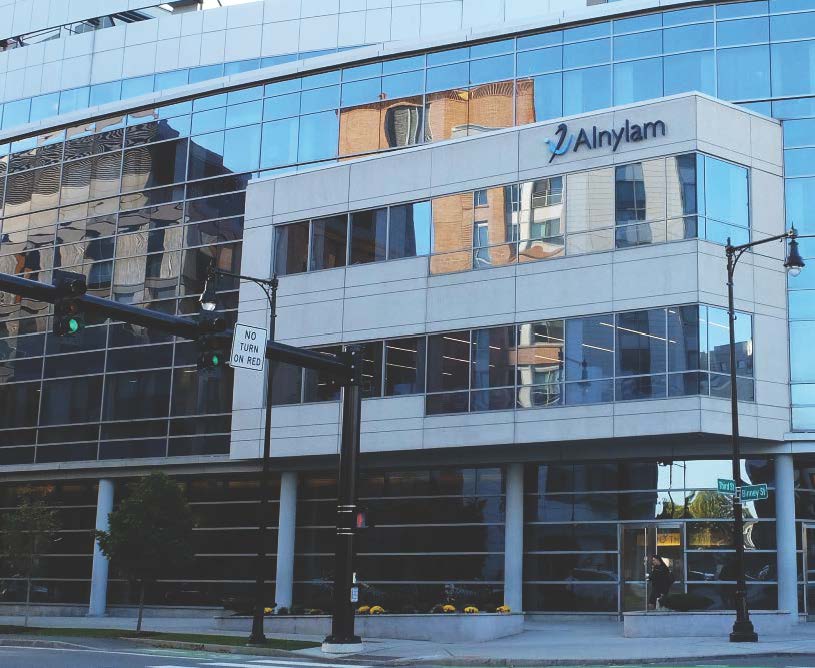
Alnylam’s office in Cambridge, Mass. The company’s Onpattro is the first RNA interference drug.

On August 10, the US Food and Drug Administration approved the first RNA interference (RNAi) therapeutic, a treatment for polyneuropathy caused by transthyretin (TTR) amyloidosis from Alnylam Pharmaceuticals. The go-ahead for Onpattro (patisiran) sees the RNAi field clear an approval hurdle considered unlikely as recently as six years ago, when pharma exited the RNAi field en masse. The US approval, with Europe expected to follow by early September, is “a major milestone,” says Anastasia Khvorova, an RNAi researcher at the University of Massachusetts in Worcester. Onpattro has an excellent safety record, but there are lingering concerns about potential long-term toxicity from newer, more potent RNAi therapeutics. And the field as a whole still faces investor skepticism in the wake of a decade of clinical trial failures.

But Onpattro could prove a very lucrative drug for Alnylam, the clear leader in the RNAi therapeutics field. Transthyretin amyloidosis “is an inexorable decline to death,” says Morie Gertz, a hematologist at the Mayo Clinic in Rochester, Minnesota. “You either have a liver transplant or hope for the best.” Onpattro, in phase 3, met its neurologic endpoint, with 56% of patients showing improvement at 18 months, compared with 4% of patients on placebo (New Engl. J. Med. 379, 11–21, 2018). Before approval, Goldman Sachs analyst Terence Flynn projected $1.8 billion in peak sales. Alnylam is pricing Onpattro at $450,000 average list, dropping to $345,000 after taking into account mandatory discounts for eligible health care organizations. Alnylam is also negotiating discounts in cases where individual patients don’t do well on the drug.

Onpattro is a 21-mer double-stranded small interfering RNA (siRNA) oligonucleotide containing 2´O-methyl modified and unmodified ribonucleosides, with 2´-deoxythymidine dinucleotide overhangs at the 3´ ends, which is encapsulated in a cationic amino MC3 lipid nanoparticle comprising (6Z,9Z,28Z,31Z)-heptatriaconta-6,9,28,31-tetraen-19-yl-4-(dimethylamino) butanoate (DLin-MC3-DMA) plus cholesterol, 1,2-distearoyl-sn-glycero-3-phosphocholine (DSPC) and á-(3´-{[1,2-di(myristyloxy)propanoxy] carbonylamino}propyl)-ω-methoxy polyoxyethylene (PEG2000-C-DMG). Close behind is another type of oligonucleotide drug, a single-stranded antisense molecule from Ionis Pharmaceuticals and its affiliate Akcea Therapeutics. Ionis’s Tegsedi (inotersen) is a 20-mer with five 2´-O-methoxyethyl-modified ribonucleotides at each terminus, a central region of ten 2´-deoxynucleotide residues, a full phosphorothioate modified backbone, and all cytosine residues methylated at position 5.  It recently completed its own successful phase 3 trial (New Engl. J. Med. 379, 22-31, 2018). With either drug, “you can slow and in some instances actually reverse the disease,” says Gertz. “It’s a big deal.” Analysts’ projected sales, however, assume strong market preference for Onpattro. The Ionis drug, which caused thrombocytopenia and kidney toxicity in some patients, such that all will require platelet monitoring, received European approval July 11 and has a Prescription Drug User Fee Act date with the FDA of October 6.

Both Alnylam’s and Ionis’s drugs prevent TTR mRNA translation into the transthyretin protein. Transthyretin normally forms tetramers, but in the hereditary form of the disease mutant monomers are released and misfold into amyloid fibrils, which accumulate in the nerves, heart and other tissues. By depleting both wild-type and mutant transthyretin mRNA, Onpattro (and Tegsedi) can arrest disease pathology. Single-stranded antisense binds directly to target mRNA for cleavage by RNase H or occupancy, whereas double-stranded small interfering RNAs (siRNAs) engages the RNA interference silencing complex (RISC), which directs target cleavage. In general, antisense has better cellular penetration properties, whereas siRNA is more potent intracellularly.

A wild card in the battle for market ascendancy is Vyndaqel (tafamidis), an oral drug from Pfizer in New York that works by stabilizing the normal transthyretin tetramer. The European Medicines Agency approved Vyndaqel for hereditary transthyretin polyneuropathy in 2011 (Nat. Biotechnol. 30, 121, 2012), but the FDA failed to follow suit, requesting a second efficacy study. In March 2018 Pfizer announced topline phase 3 results for Vyndaqel in transthyretin cardiomyopathy, another presentation of TTR amyloidosis, which exists on a spectrum. Vyndaqel met its primary endpoint, with the company expected to present full results at the European Society of Cardiology Congress in Munich at the end of August. Alnylam’s stock traded 36% lower in July than in March, a drop that Needham & Co. biotech analyst Alan Carr attributes to the Vyndaqel uncertainty. “We’re all very interested in seeing these data,” Carr said.

Alnylam CEO John Maraganore views Onpattro as the winner in TTR amyloidosis with polyneuropathy. “Tafamidis, based on previous studies, slows down the progression of neuropathy in patients with the disease, but it doesn’t really halt it,” he says. But patients with hereditary TTR amyloidosis with cardiomyopathy, as well as with wild-type TTR disease—in which TTR amyloid slowly deposits in the heartmight be different. Alnylam has aspirations for its second-generation TTR amyloidosis drug, ALN-TTRsc02, which tethers the siRNA molecule to multivalent N-acetylgalactosamine (GalNAc) ligands that bind the asialoglycoprotein receptor on liver cells. The company is hopeful this second-generation molecule will be superior in both indications because it’s more potent than Onpattro, with far more convenient dosing and delivery. Wild-type disease affects about ten times as many people as the hereditary form, so the market stakes are high. “We’re really quite eager to see what the tafamidis results are,” Maraganore said in early August. ALN-TTRsc02 should begin phase 3 by year’s end.

Alnylam’s second-generation drug should eventually supplant Onpattro, which is only approved for hereditary disease. Onpattro uses a delivery system that Alnylam no longer pursues. Double-stranded siRNAs need to evade nuclease degradation and the innate immune response and then enter cells, where they must escape the endosome to load into RISC for sequence-specific cleavage of target mRNAs. Alnylam’s early solution was encapsulation in a lipid nanoparticle (LNP). When the company set out to treat TTR amyloidosis, the LNP was “the only technology that had really been demonstrated to work,” says Rachel Meyers, Alnylam’s former head of research. “It led to a very elaborate discovery effort to optimize it.” The result is an effective drug, but Onpattro is not perfect. It’s still immunogenic enough to require steroid pretreatment to minimize reactions to its 80-minute IV infusions, given every three weeks.

Although Alnylam is no longer developing LNP drugs, some RNAi companies are still pursuing LNP delivery, as are many working on CRISPR–Cas gene editing and therapeutic modified mRNAs. Patisiran’s approval “is a very big step forward for the guys that are going to come behind, in gene editing and mRNA delivery,” says Meyers, now entrepreneur-in-residence at Third Rock Ventures in Boston.

Even before Onpattro entered the clinic, in 2012, Alnylam was looking at GalNAc-conjugated siRNAs as an alternative to LNPs. GalNAc delivery requires extensive modification of the siRNA, as it is no longer protected from nucleases by the LNP. Alnylam eventually worked out a specific pattern of O-methyl and fluoro modifications at the 2´ position of the ribose, along with fewer phosphorothioate modifications (a sulfur substituting for one of the non-bridging oxygens) in the backbone, with spectacular results. In phase 1, a single subcutaneous dose of Alnylam’s GalNAc-conjugated siRNA, ALN-TTRsc02, knocked down 80% of the TTR target for a full year. The drug, says Khvorova, “is very close to perfection.” Alnylam plans to start phase 3 for ALN-TTR02 (with subcutaneous dosing every three months) by the end of 2018. 

Other Alnylam drugs, all for liver diseases, are even further along. The company expects to submit an New Drug Application for givosiran, for acute hepatic porphyrias, by year’s end. Inclisiran, for hypercholesterolemia, and fitusiran, for hemophilia, are in phase 3. (Inclisiran is partnered with The Medicines Company in Parsippany, New Jersey, and fitusiran with Sanofi Genzyme in Cambridge, Massachusetts.). Competitors Dicerna Pharmaceuticals in Cambridge, Massachusetts, Silence Therapeutics in London, UK and Arrowhead Pharmaceuticals in Pasadena, California also have GalNAc-conjugate siRNAs in development. According to Khvorova, the field considers the problem of liver delivery basically solved with GalNAc.

Except, she adds, for a few lingering theoretical toxicity concerns. One is the 2´-fluoro modification. Ionis scientists have reported that treatment of cells with 2´-fluoro-modified antisense oligos results in the off-target binding and knockdown of several DNA repair genes, resulting in cell death in in vitro assays (Nucleic Acids Res. 43, 4569–4578, 2015). A second worry is that high levels of persistent siRNAs might outcompete endogenous microRNAs for RISC loading, with unpredictable biological effects. Finally, superstable siRNAs might accumulate in endosomes and lysosomes, with toxic consequences. “So far there is no indication that there are any issues,” says Khvorova. “But … things can pop up years after you administer a compound.”

Fueling the concern is revusiran, Alnylam’s original GalNAc conjugate for TTR amyloidosis. Alnylam discontinued revusiran in phase 3 because of the high number of deaths in the treatment arm relative to the placebo group (Nat. Biotechnol. 34, 1213–1214, 2016). Alnylam stock plunged 49% on the news. The company’s subsequent analysis could not rule out a drug effect. “The tox was there and the tox was real,” says Khvorova. “That is why we have those lingering concerns.”

“There is reason to believe [the death imbalance] might be a chance occurrence, but we can’t exculpate the drug,” says Maraganore. “That’s unfortunate.” But he points out that the newer, more potent GalNAc compounds use doses 20–100 times lower than revusiran’s. Alnylam also conducted rodent studies showing that 2´-fluoro modifications and RISC loading were unlikely to contribute to liver toxicity from siRNAs at supraphysiological doses (Nat. Commun. 9, 723, 2018). The company will soon move newer oligonucleotides into the clinic that appear to be even safer. These incorporate a single GNA (glycol nucleic acid) into the siRNA’s antisense seed region, the part of the molecule that recognizes the target mRNA, which would reduce off-target base pairing. The company is also developing an antidote to its long-acting GalNAc-siRNA conjugates (Nat. Biotechnol. 36, 509–511, 2018) to shut them off if necessary.

For the moment, Alnylam can savor its first drug approval, the fruit of 15 years of continuous effort. The company survived the pharma backlash of 2008–2011 battered but intact, thanks to an ample cash cushion. “Alnylam was able to weather the storm of pharmaceutical companies being naysayers because they had the resources, plain and simple,” says Meyers. Now the company must build on Onpattro to establish RNAi as a platform technology. After so many failures, says Khvorova, “it will require some more successful stories, not just one patisiran, to rebuild … investor confidence.”

Ken Garber Ann Arbor, Michigan

First approval in sight for Novartis’ CAR-T therapy after expert panel vote

Emily Whitehead, 12, the first child to receive CAR-T cell therapy has been cancer-free for five years.

Emily Whitehead, 12, the first child to receive CAR-T cell therapy has been cancer-free for five years. {credit}Getty Images{/credit}

On July 12, in a historic move, the FDA’s Oncologic Drugs Advisory Committee (ODAC) voted 10–0 in favor of approving CTL019 (tisagenlecleucel), a CD19-targeting chimeric antigen receptor (CAR) T-cell therapy developed by Novartis for treating relapsed or refractory B-cell acute lymphoblastic leukemia (ALL) in children and young adults. The committee’s unanimous backing opens the door to approval of the therapy by the US Food and Drug Administration (FDA) on or before October 3. The US, which has lagged behind Europe in approving both gene therapy and cell therapy, has now taken a lead in adopting an innovative immuno-oncology treatment that combines elements of each modality—and which addresses a real and sizeable unmet need. “It reflects the culmination of many decades of work in several discrete areas, which all came together to help patients,” says Glenn Dranoff, global head of immuno-oncology at Novartis Institutes for BioMedical Research in Boston, which developed the therapy in partnership with Carl June at the Perelman School of Medicine at the University of Pennsylvania, in Philadelphia. A new era of high-tech medicine is about to begin.

The case for CTL019’s approval is persuasive. Its dramatic efficacy—an 82.5% overall response rate in a pivotal program treating highly refractory patients and a 79% survival probability over 12 months—combined with an apparently manageable safety profile, makes the agency’s go-ahead a formality. The arguments in favor of approval are made even more compelling by the limited treatments for the approximately 15% of pediatric ALL patients who relapse after high-dose chemotherapy. Their only option, a hematopoietic stem cell transplant, is potentially curative but remains a high risk. Will CAR-T therapy will be a bridge to, or, ultimately, a replacement for, transplant? “Obviously, we all sure hope it’s a replacement for it,” says Timothy Cripe, professor of pediatrics at The Ohio State University in Columbus, Ohio, and a member of the ODAC panel.

Once it is approved, Basel, Switzerland–based Novartis plans to restrict the initial roll-out of CTL019 to 30–35 accredited treatment centers in the US, all of which will be trained on a comprehensive risk-mitigation strategy that drew high praise from several ODAC members during the hearing. Novartis will provide training to transplant teams on managing cytokine release syndrome (CRS)—which occurred in 81% of patients treated in its pivotal program—and neurotoxicities associated with CTL019 therapy. An authorized Novartis representative will be on site to monitor performance and compliance and to ensure that the correct systems are in place to ensure that only accredited personnel can prescribe CTL019. Depending on the experience gained with CTL019 during the first six to twelve months after approval, the therapy may then be rolled out to additional centers, says David Lebwohl, CAR-T franchise global program head at Novartis.

The geographic spread could be wider, says Cripe, who pointed out during the hearing that the limited rollout could place an emotional and financial burden on families who are not located close to one of the first wave of designated treatment centers. “There are 175 bone marrow transplant centers in the US certified by the US bone marrow registry that have to reach certain standards,” he says. It’s a measure of his confidence within the clinical community that he considers the severe side effects that accompany CAR-T cell therapy to be manageable. “The benefit seems to be so dramatic, it’s worth the risk,” Cripe says. Hematologists, moreover, are accustomed to managing the multi-organ side effects that often accompany allogeneic hematopoietic stem cell transplantation. What’s new is the five-step CRS treatment algorithm, which Novartis developed with the help of clinical collaborator Stephan Grupp, of the Children’s Hospital of Philadelphia.

Although CRS is an on-target effect—the most severe cases are associated with high levels of disease burden—it can be fatal. Grupp’s key observation was that Genentech’s anti-IL-6 antibody Actemra (tocilizumab) is an effective tool in controlling CRS. Only 6% of patients required fourth-line CRS management therapy during the Novartis pivotal program; none required fifth-line treatment. “There were no cases of cerebral edema in this study,” says Grubb. It’s one of the key risks associated with CRS and has dogged the other leaders in the development of CD19-targeted CAR-T cell therapies, namely, Kite Pharma, of Santa Monica, California, and Juno Therapeutics, of Seattle, Washington (Nat. Biotechnol. 35, 492, 2017).

Still, some questions about CTL019’s mechanism and side effects remain unanswered. The causes of the neurotoxicities that accompany CAR-T cell therapy are not fully understood; why a minority of patients do not respond to therapy is not understood either. The dose levels Novartis used in the pivotal study did not appear to correlate with either response, CRS severity or other safety signals, such as neurotoxicity or cytopenia. Novartis has not disclosed the release specifications for CTL019 infusions, but each contains mixed populations of both transduced and non-transduced T cells, representing various T-cell subsets. CTL019 is a living biologic, noted FDA reviewer Xiaobin Victor Lu during the advisory panel hearing. “The T cells in the product can expand and differentiate during the manufacturing process and after administration to patients,” he says. The heterogeneity of the infusions does not seem to compromise the efficacy of the therapy, but several advisory committee members questioned the associated safety implications. “This is one area which could really affect the future of this therapy,” says Larry Kwak, professor in translational medicine at City of Hope, Duarte, California. These questions are likely to stimulate further clinical research, says Dranoff. In addition, Novartis plans to conduct a follow-up study of at least 15 years’ duration, in which patients will be monitored for adverse events, efficacy, immunogenicity, CD19 CAR transgene persistence, the emergence of replication-competent lentivirus, and secondary malignancies associated with insertional mutagenesis.

Dranoff identifies three immediate priorities for Novartis in terms of further optimization of CTL019: simplifying the manufacturing process to enable it to scale up to meet the needs of more patients; extending the therapy to other B-cell malignancies; and extending it to other cancers, including solid tumors. Novartis has already reduced the rate of manufacturing failure, from insufficient expansion of a patient’s T cells, from 9% in the pivotal program to about 2% in recent lots. At commercial rollout, the turnaround time between receiving patients’ cells and infusion of the modified end product will be 22 days, one week less than the average time in the pivotal program. Further process improvements are also underway at Oxford Biomedica, an Oxford, UK–based gene therapy firm, which supplies the recombinant lentiviral vector encoding the CAR components used in CTL019. These include the extracellular CD19-targeting murine single-chain fragment antibody, spacer and transmembrane domains derived from human CD8-α, a human intracellular 4-1BB (CD137) co-stimulatory domain and a human intracellular CD3ζ T-cell-activation domain. The vector for CTL019 is currently produced with Oxford’s ‘cell factory’ process, a two-dimensional, multi-tray system, but its next-generation platform involves a 200-liter bioreactor. This could provide a tenfold reduction in price “We’re working hard with Novartis to move to the bioreactor process,” says CEO John Dawson. Oxford and Novartis, whose relationship extends back to 2013, recently entered a new three-year supply deal, covering CTL019 and other undisclosed CAR-T cell therapies, which could be worth over $100 million to the UK firm. It will also receive low-single-digit royalties on sales of CTL019 and other CAR-T products.

Looking ahead, Novartis, is gearing up for a filing later this year in diffuse large B-cell lymphoma and is also testing CTL019 in multiple myeloma and, in combination with the Bruton’s tyrosine kinase inhibitor Imbruvica (ibrutinib), in chronic lymphocytic leukemia. (The latter drug is jointly marketed by AbbVie, of North Chicago, Illinois, and Johnson & Johnson, of New Brunswick, New Jersey.)

But it is unclear at this point how broadly the CAR-T concept can be extended. CAR-T cell therapies that target other tumor antigens, particularly those expressed on solid tumors, have lagged behind CD19-directed therapies (Nat. Biotechnol. 34, 1079–1081, 2016). “Have we developed a new treatment for B-cell malignancies or is this a new paradigm for cancer in general?” asks Renjer Brentjens, medical oncologist at Memorial Sloan Kettering Cancer Center in New York and scientific co-founder of Juno Therapeutics. “It not a coincidence, I think, that everyone started targeting CD19.” Finding other tumor-associated antigens that are not expressed on essential tissue is challenging. “This becomes particularly difficult in the area of solid tumor malignancies,” Brentjens says. Patterns of antigen expression on solid tumor cells are more heterogeneous than those on hematological cancer cells, he says. “Immune escape is extremely possible,” he says. The immunosuppressive ‘scaffold’ that solid tumors erect further complicates the picture. “I do think the technology, as it stands right now—I may be wrong—is most likely going to be restricted to a select number of malignancies,” he says.  However, novel CAR-T architectures incorporating additional immunostimulatory features, as well as molecular safety switches, are already in early stages of development. A first CAR-T cell approval this year is likely to energize this research.

The pioneers who brought the technology to its present juncture deserve credit for keeping faith with the concept that the T-cell response is programmable, at least in the sense that the set of biological instructions encoded in an infusion of CAR-T cells can, when its technical specifications are properly defined and the clinical context in which it is deployed is properly understood, lead to dramatic outcomes. Young patients with relapsed or refractory B-cell ALL will be the first to benefit from this innovation; they’re unlikely to be the last. “We need to pause and acknowledge the extraordinary amount of scientific learning that went into this event,” Dranoff says.

Cormac Sheridan, Dublin


GM mosquitoes fire first salvo against Zika virus

pick

Genetically modified male Aedes aegypti mosquitoes made by Oxitec are released in Piracicaba, Brazil. © epa european pressphoto agency b.v. / Alamy Stock Photo.

A Brazilian city in January became the first to approve a program to grow transgenic mosquitoes for their release into the environment as a public health measure against the Zika virus outbreak. The city of Piracicaba in Brazil said it would work in collaboration with the Milton Park, UK–based Oxitec to scale up release of transgenic Aedes aegypti mosquitoes, the main vector for the Zika, dengue and Chikungunya viruses, and build a new production facility there. With no Zika vaccine in sight, government officials across the globe are pondering strategies that suppress the mosquito populations to thwart the spread of infection. US and Chinese regulators both green-lighted field tests for vector control strategies involving nontransgenic Aedes albopictus mosquitoes.

Infections with the flavivirus Zika appear to be linked to a surge in the number of infants born with microcephaly, or abnormally small heads. Nearly 5,000 cases of microcephaly have been reported in Brazil since late last year, according to the Brazilian health ministry. Normally about 150 cases are reported there annually. “The link between Zika and microcephaly is very strong and comes from multiple lines of evidence,” says Ernesto Marques, a public health scientist specializing in vaccines at the University of Pittsburgh in Pennsylvania.

The outbreak has spread fastest in Latin America, but has reached more than 33 countries. In response, the World Health Organization in January declared Zika an international public health emergency.

A handful of companies and institutes have begun working on a vaccine for Zika. Brazil’s Butantan Institute aims to develop a vaccine “in record time” and the US National Institute of Allergy and Infectious Diseases (NIAID) in January issued a call to the research community for Zika work. US President Barack Obama in February asked Congress for $1.8 billion in emergency funding for vaccine development, mosquito control and public education.

But a vaccine is many years—and clinical trials—away. Some knowledge gained from vaccine work on other flaviviruses such as dengue, West Nile and yellow fever can be transferred to a Zika vaccine program, but to what extent is unclear. “We know very little about Zika,” Marques says. “We don’t know if a vaccine [for it] requires any special technology.”

The only recourse, for now, is to fight the mosquitoes. Both A. aegypti and A. albopictus are likely Zika vectors, but A. aegypti seems to be the primary culprit, says Tom Scott, an entomologist at the University of California (UC), Davis. Vector control is woefully difficult, however. In Zika-affected areas, local governments have been spraying insecticides, minimizing mosquito breeding grounds, urging the public to cover up and wear repellent, and asking women to delay becoming pregnant.

Entomologists worldwide have been busy reviewing biological approaches. A strategy used in agriculture, the sterile insect technique (SIT) involves the release of large numbers of radiation-sterilized insects to mate with and reduce wild pest populations. Although successful against several agricultural pests, the technique has not been as effective against mosquitoes. Researchers have also proposed using gene drives to force a genetic change in mosquitoes that make them unsuitable hosts for a pathogen or drive vector species to extinction. But gene drives are untested in the field and guidelines for responsible use haven’t been hammered out.

The US and China are attempting to use mosquitoes sterilized, not by radiation, but by Wolbachia pipientis. The bacteria are introduced by microinjection followed by mass rearing. Mating of laboratory-reared males with wild females results in eggs that don’t hatch due to loss of paternal chromosomes. Lexington, Kentucky–based MosquitoMate has field-tested the technology on A. albopictus in three states in the US. The company is awaiting registration, or approval, from the US Environmental Protection Agency (EPA). A similar technology developed by a consortium of Chinese researchers in 2015 was field tested in A. albopictus in Guangzhou, China, and another test is planned for this year.

Furthest along is the genetically modified (GM) mosquito from Oxitec. The transgenic A. aegypti (OX513A) mosquito carries a gene encoding tetracycline-repressible transcription activator (tTA), a protein whose high-level expression is deleterious to cellular development. If the mosquitoes are grown in the presence of tetracycline, however, it binds and represses tTA expression, allowing batches of transgenic mosquitoes to be grown (whereas in the absence of the antibiotic, transgenic mosquito larvae die). The smaller male pupae are sorted from the female and released into the environment to mate with wild females, resulting in progeny that die before reaching reproductive stage (Nat. Biotechnol. 29, 9–11, 2011).

Oxitec, now a subsidiary of Intrexon of Germantown, Maryland, says OX513A mosquitoes reduced the wild mosquito population by 80–95% in field trials in Panama, the Cayman Islands and Juazeiro, in the Brazilian state of Bahia (PLOS Negl. Trop. Dis. 9, e0003864, 2015). Unlike insecticides traditionally used for vector control, Oxitec mosquitoes can easily get inside private properties, where much of the vector problem persists. “The male mosquito will always find the female. It doesn’t have to ask permission to enter the house,” says Hadyn Parry, CEO of Oxitec.

The company in 2014 received approval from Brazil’s National Technical Commission of Biosecurity (CTNBio) to commercialize the GM mosquito. But before the OX513A mosquitoes reach the market, the Health Surveillance Agency (Anvisa) must issue labeling and guidance. In the meantime, the city of Piracicaba, in the state of Sao Paulo, has taken matters into its own hands. The city first partnered with Oxitec in April 2015 to release the GM mosquitoes in a neighbourhood of about 5,000 people. The program reduced the larvae population by 82% compared to an untreated area, according to the company. In January, the partners announced they would expand the project to an area covering 60,000 people, and that Oxitec would build a local facility to rear enough mosquitoes to cover 300,000 people.

Other Brazilian officials have said they are interested OX513A. Local news organizations in Vitoria, a coastal city in the state of Espirito Santo, in December reported that health officials there and in nearby Vila Velha were considering the approach. Neither city, however, has pulled the trigger. Such a move is difficult without guidance from Anvisa and state authorities on the protocols for deploying the mosquitoes and how to integrate them with insecticides. “If you’re a municipal secretary of health and you’ve got a limited budget, it’s quite tricky, because you’ve got to follow the established rules and policies so that your back is covered by the state,” says Parry. That’s true for Piracicaba too. “We will need resources from other levels of government,” to continue scaling up the project, says Gabriel Ferrato, the mayor of Piracicaba. Many Brazilian cities lack the resources to do both traditional mosquito prevention and a new technology like Oxitec’s, he says.

Several independent researchers contacted by Nature Biotechnology said Oxitec’s technology is intriguing and worth pursuing. “I think it’s really important to look at this and see where it can go,” says Fred Gould, an entomologist at North Carolina State University in Raleigh. “Even if it only worked in specific, smaller cities, that’s one piece of the puzzle.”

Gould and others noted that neither Oxitec’s nor any other approach alone is going to fix a global problem like Zika. Pesticides, sanitation, water infrastructure, public education, biotech—all of it—must be deployed, and in ways that are tailored to local environments, adds Margareth Capurro, a biochemist at the University of Sao Paulo in Brazil, who was commissioned by Oxitec’s partner, Brazilian state-owned Moscamed, to study the mosquitoes.

Oxitec’s technology presents some unknowns. It is unclear how easily production could be ramped up, or how well it would perform on a large scale. “There are no studies on the cost-benefit” of Oxitec’s technology on a large scale, says Ferrato. Transporting large numbers of mosquitoes to their destinations could be a logistical obstacle and a considerable expense. In Piracicaba, Oxitec employees drove around in vans releasing mosquitoes through the windows to get them close to people’s homes. And even if mosquito populations are reduced drastically, it’s not clear what effect that will have on transmission of Zika. It seems logical that reducing the vector would decrease disease, but other factors come into play, says Scott at UC Davis. For example, if a population of people has no immunity to a virus “you can have very few mosquitoes and have an outbreak,” he says.

Carlos Brisola Marcondes, an entomologist at Federal University of Santa Catarina in Brazil, says it concerns him that most of the data about OX513A has come from Oxitec and its partners. “It would be advisable to get independent evaluations” that don’t involve Oxitec at all, he says. Marcondes says he would like to see large-scale studies, ecological assessments and cost analyses made before the technology is adopted.

With a virus as unstudied as Zika spreading explosively, officials are calling for a global full-court press from researchers. To that end, Capurro is leading a group of 40 scientists funded by the Brazilian government who will study how mosquitoes transmit the virus. And Marques in February headed to Brazil to join a research coalition called the Microcephaly Epidemic Research Group (MERG) studying the link between Zika and microcephaly, and to search for any co-factors that may contribute (Nature 530, 142–143, 2016). “It may be Zika plus something else” that causes microcephaly, Marques says.

Emily Waltz, Nashville, Tennessee

CRISPR germline editing reverberates through biotech community

Jennifer Doudna, Professor of Chemistry..........

Jennifer Doudna speaks about CRISPR editing at the World Economic Forum, at Davos, Switzerland in January. Source: Michele Limina/Photoshot/Newscom

The organizers of a recent meeting in Napa, California, to consider the broad societal implications of clustered, regularly interspaced, short palindromic repeats (CRISPR) genome editing have succeeded in their primary goal of stimulating public debate on the ethical issues raised by the technology. Although the event, held on January 24, took place behind closed doors, a subsequent commentary from its leading participants—plus two influential non-attendees, George Church of Harvard Medical School in Boston, and Martin Jinek of the University of Zurich—prompted widespread media coverage (Science 348, 36–38, 2015). The group has called for a broadly based discussion of the potential merits and risks of the technology and a global moratorium on germline applications, until such time, if ever, responsible uses can be identified.

But the declaration, along with a high-profile commentary in The Wall Street Journal on April 9 from David Baltimore and Paul Berg, two veterans of the 1970s debates on genetic engineering, has already altered the social context in which new developments in the field will be received. Any scientist or organization that crosses the ethical Rubicon by conducting human germline engineering experiments will now face a considerable level of opprobrium. “I doubt the unsanctioned use will happen soon,” says Nobel laureate Craig Mello of the University of Massachusetts Medical School, in Worcester, and a scientific founder of Basel-based CRISPR Therapeutics. “It’s not something that’s going to be easy, cost-effective or safe, given existing technology.”

The Napa event was by no means representative of all the main players in CRISPR-Cas9, however, which leaves its main organizer, the Innovative Genomics Initiative at the University of California, Berkeley, open to criticism that it is attempting to set the agenda without first building a broad front within the scientific community and beyond. “I do think it’s a discussion the community should have—not just the West Coast community,” says Rodger Novak, CEO and co-founder CRISPR Therapeutics, whose scientific founder, Emmanuelle Charpentier, is, along with Berkeley’s Jennifer Doudna, co-inventor of the technology. At the same time, there is no evidence of a rift opening up between those who attended and those who did not. “I don’t feel slighted in any way,” says Mello. “Anything that raises awareness is important.”

The cluster of companies working with CRISPR-Cas9 shares a common goal in ensuring that the technology gains public and regulatory acceptance and avoids the kind of backlash that would halt its development. All of them are proceeding cautiously. “The promise is so exciting, nobody wants to take the step that would undermine that promise,” says Katrine Bosley, CEO of Cambridge, Massachusetts–based Editas Medicine. Although individual companies are keeping details of their development programs under wraps for now, the present focus is on therapies that target somatic cells, most likely in ex vivo settings initially. “Germline, from an industry perspective right now, is a no,” says Novak. Nessan Bermingham, CEO of Cambridge-based Intellia Therapeutics, echoes the point. “We are not doing any germline modification—it is not in our business plan, nor is there any [such] plan at all.” Clinical trials involving therapies based on CRISPR-Cas9 have not yet started, but the research effort is moving ahead quickly. “I would be disappointed if we didn’t see something in the clinic three years from now,” says Novak. It could happen even sooner.

Whether CRISPR-Cas9 should be singled out for special attention is open to debate. It is not the first genome editing technology to emerge. Meganucleases, zinc finger nucleases (ZFNs) and transcription activator–like effector nucleases (TALENs) all preceded it. Sangamo Biosciences, of Richmond, California, is conducting trials of a ZFN-based therapy in HIV patients at present. What’s more, together with other researchers, Ed Lanphier and Fyodor Urnov from Sangamo authored a Comment in Nature (Nature 519, 410-411, 2015) calling for a moratorium on genome editing of the human germline. What distinguishes CRISPR-Cas9 from the earlier technologies is its accessibility, its ease of use and its low cost. Germline engineering with the technology, although not trivial, is feasible in a well-equipped molecular biology laboratory. “Something that was pretty much theoretical before now is now facing us,” says Bosley.

Policing the use of the technology is practically impossible. “One cannot control what’s happening in China, for example,” says Intellia’s Bermingham. Rumors are swirling through the research community that at least one laboratory may already have conducted human germline experiments—and that papers describing the process have been submitted to journals or published.

André Choulika, CEO and founder of Paris-based genome editing firm Cellectis is not convinced that the advent of CRISPR-Cas9 creates any new problems, however. “CRISPR is essentially a revolution because it makes gene editing accessible to any researcher—that’s all,” he says. Cellectis plans to complete an investigational new drug filing this year of allogeneic chimeric antigen receptor T-cells engineered using TALENs. “I think you could do germline changes with zinc finger nucleases, TALENs or meganucleases,” he says. The current explosive uptake of CRISPR-Cas9 in academic laboratories will not necessarily be replicated in clinical settings, he argues. “Once you want to push the technology into therapeutic applications—you want to be super-specific, you don’t want off-target effects—then it becomes far more challenging.” Ethical discussions, he suggests, are best left to those who are qualified to engage in them. “We are scientists, not philosophers.”

The Napa meeting has obvious resonances with the historic 1975 Asilomar conference on recombinant DNA, which set the agenda for managing the then poorly understood risks associated with genetic engineering. Paul Berg from Stanford University and David Baltimore, at Caltech in Pasadena, embodied that link by attending the Napa meeting and lending their names to the present campaign to prevent germline experiments. Science historian Susan Wright, who is currently based at the University of California, Santa Cruz, is author of Molecular Politics (Univ. of Chicago Press, 1994), a detailed account of the development of genetic engineering policy in the US and the UK. She is critical of any interpretation of the stance taken at the Asilomar meeting as “a noble act of self-sacrifice.” Its real focus, she says, was to shape consensus around how the technology would be used.

Forty years on, industry interests are more powerful, but the ethical stakes are higher than ever, and the uncertainty surrounding the long-term applications of the technology is genuine. The prospect of rogue laboratories operating in unregulated jurisdictions is not difficult to imagine. “We live in a world where female fetuses are routinely aborted, because the societies where that happens place a higher value on males,” says Ron Cohen, CEO of Acorda Therapeutics, of Ardsley, New York, and vice chair of the Biotechnology Industry Organization of Washington, DC (BIO)’s health section, who stresses he was speaking in a personal capacity. BIO is still formulating a policy on the area. For now, it states that “it is imperative” that the scientific community joins in an “open public discourse” to consider the responsible use of the technology.

In the meantime, the companies that are actively engaged with the technology have their hands full of routine work focused on establishing the safety profile of the technology in noncontroversial settings. “A large part of the work that’s been done has been documenting how frequently the off-target events occur,” Mello says. Different ways of monitoring and minimizing these events have started to emerge, not all of which have been published as yet. “I’m aware of several that are promising,” Mello says.

In the long term though, there is a possibility of germline applications (Box 1).  Would it be unethical not to fix something if you could?” he asks. “If it were very safe, wouldn’t it be wrong not to?” But it will take a very long time—and significant research on CRISPR-Cas9 and on disease biology—to be in a position even to contemplate those questions.

Cormac Sheridan, Dublin

Box 1. OvaScience IVF offerings stuck in regulatory limbo

Some companies working on infertility treatments have already started combining their platforms with genome engineering approaches. In December 2013, OvaScience a Cambridge, Massachusetts–based biotech working on next-generation in vitro fertilization technologies formed a joint venture with synthetic biology company Intrexon of Germantown, Maryland. Under the OvaXon Joint Venture the companies agreed to combine OvaScience’s EggPC (egg precursor cells: immature egg cells found inside the protective ovarian lining) platform with Intrexons’s genome engineering capabilities to prevent inherited diseases in humans, such as mitochondrial and other genetic disorders.

In its advertised offerings for fertility clinics, OvaScience is not employing CRISPR-Cas9—or any other form of genetic engineering—at present. Even so, the company has hit regulatory barriers in its efforts to translate controversial new insights on oocyte biology into fertility treatments.

The company was founded in 2011 to commercialize the research of co-founder Jonathan Tilly, then of Harvard Medical School, who is now chair of the biology department at Northeastern University in Boston. Over a decade ago, Tilly and colleagues identified putative immature egg precursor cells in the ovaries of juvenile and adult mice, a finding at odds with a central dogma of mammalian biology—that the supply of eggs is fixed at birth. (Nature 428, 145–150, 2004). The science remains disputed, but Tilly’s group and others have since reported the same observations in humans (Reprod. Sci. 20, 7–15, 2013). Moreover, OvaScience plans to roll out a treatment based on this concept to women undergoing in vitro fertilization (IVF) later this year. It aims to boost women’s egg reserves by transferring egg precursors—oogonial stem cells—from the lining of the ovary to its interior, where maturation to a viable egg cell can take place. The procedure, dubbed OvaPrime, will not be available in the US, however.

OvaScience’s initial offering, Augment—a process intended to improve the energy status of eggs used in IVF procedures by supplementing them with mitochondria derived from oogonial stem cells—has already run into a regulatory barrier. In 2013, the US Food and Drug Administration (FDA) informed the company it needed to file an investigational new drug application for the procedure, whereas OvaScience claims Augment is eligible for use as a 361 HCT/P, meaning it is covered by the FDA’s Regulation of Human Cells, Tissues, and Cellular and Tissue-Based Products (HCT/P’s) Product List and Section 361 of the Public Health Service Act.  Randomized clinical trials are not the norm in the fertility sector. “People are attempting to apply a high level of scientific rigor to an area that is not accustomed to it,” says Andrew Fein, analyst at HC Wainwright & Co. in New York.  

In the meantime, Augment is available in four territories only, Canada, Dubai, the UK and Turkey. As Nature Biotechnology went to press, the first baby conceived through the Augment process was due to be born. “The way the company foresees this playing out is after a few years of positive experience ex-US—US-based women will ask or essentially lobby the FDA for access to this technology,” Fein says. The example of egg freezing offers a precedent. “Demand in the US dictated its availability in the US,” he says.

David Sinclair, another scientific founder of OvaScience, alluded to the potential of CRISPR-Cas9 in germline engineering at an investor presentation, Fein says, but it is not part of the company’s research agenda at present. “They have enough headaches at this point without adding fuel to the fire.”


Nonbrowning GM apple cleared for market

appleThe US Department of Agriculture (USDA) on February 13 approved the first genetically modified (GM) apple developed to resist browning.  The Arctic apple’s go-ahead is a notable achievement for Canadian firm Okanagan Specialty Fruits, as the small biotech is one of the few to have successfully moved a GM plant through the regulatory process on its own. Indeed, two weeks after the apple’s launch, Okanagan announced its acquisition by Germantown, Maryland-based Intrexon, a synthetic biology company. Okanagan’s stockholders will receive $10 million in upfront cash and $31 million in Intrexon common stock. Industry observers now question whether the Arctic apple will carve a niche in the fruit tree industry or get caught up in the GM labeling debate.

Pre-cut fruit and vegetables are a growing trend in the food industry. “The [nonbrowning] trait will enable food service companies to cut and package the apples without adding browning inhibitors such as calcium ascorbate”—an antioxidant that changes the flavor of the apple, says Neal Carter, founder of the Summerland, British Columbia–based Okanagan. About 22,000 trees will be planted in the US this spring, with the resulting fruit available in fall 2016 for product demonstration, he says. Okanagan has also applied for regulatory approval of its apple in Canada.

Browning is caused by polyphenol oxidases (PPOs) naturally present in fruit and vegetables. When fruit is cut or bruised, these enzymes catalyze the oxidation of polyphenols to quinones, causing oxidative browning. The damage is superficial but can affect the taste and texture of the apple as well as its cosmetic qualities. In the Arctic varieties, the GM apples were genetically engineered with a transgene that produces specific RNAs to silence the expression of at least four browning PPO genes. The apple RNA sequences were introduced into Granny Smith and Golden Delicious varieties, where they bound complementary RNA to form a double strand. As RNA is single stranded, the double-stranded sequence is read as a mistake, and the plant’s naturally occurring Dicer enzymes are sent to chop it up, resulting in no or significantly fewer PPO proteins being produced.

RNA interference (RNAi) was also used by JR Simplot of Boise, Idaho to silence PPO production in nonbrowning potatoes, which were approved by the USDA in November (Nat. Biotechnol. 33, 12–13, 2015). For that product, fragments of a single potato PPO gene were re-introduced into potato, activating the RNAi pathway. But unlike the apple, the potato’s double-stranded RNA is formed by an inverted repeat transcribed in the tuber and processed into small interfering RNAs that ultimately silence their targets. JR Simplot’s crop was also modified to have reduced acrylamide, which was achieved by using RNAi to silence the asparagine synthetase-1 gene (ASn1).

Apples that won’t brown could make them more appealing to consumers and could also reduce waste by minimizing discarded apple due to bruising. But at least three growers associations urged US and Canadian regulatory agencies to reject Okanagan’s petitions for approval. Their objections were not made because of human health or safety concerns. In separate letters, the US Apple Association, the Northwest Horticultural Council and the BC Fruit Growers Association said GM apples may cause severe market disruptions, particularly in apple export markets averse to genetically modified organisms (GMOs). US Apple, however, changed its tune once USDA approval became imminent. “We are confident from the assurance we’ve received from Okanagan that they intend to stand by their pledge to clearly identify their apples in all marketing and packaging,” enabling consumers to choose between GM and non-GM apples, says Wendy Brannen, director of consumer health and public relations at US Apple.

Okanagan’s apples will not be labeled ‘GM’, but packaging will include the ‘Arctic’ name and logo. “It will be highly recognized as a GM product, given the amount of media attention we’ve had,” says Carter at Okanagan. The company has not yet decided whether the packaging will use other descriptive words, such as ‘nonbrowning’, which will partly depend on guidance from the US Food and Drug Administration, Carter says.

The GM apple may get caught up in the GMO labeling debate and used as an example, given its cachet as a family friendly, wholesome food, says Chris Schlect, president of the Northwest Horticultural Council in Yakima, Washington. “Apples are a symbolic product. It’s a fruit that a mother gives to a child going to school,” he says. “It’s going to be used in the media and by Congress in issues over the national labeling initiative.” Indeed, the Washington, DC–based Environmental Working Group put out a press release in February saying the approval of Arctic apples “underscores the need for a transparent and consistent national labeling standard.”

Other consumer groups argued against the safety of Okanagan’s apple. The Center for Food Safety (CFS) said USDA’s environmental assessment was inadequate—a complaint the Center has made for nearly every biotech crop assessment USDA has conducted in recent years. In its 61-page comment, the Center said that proper characterization of the PPO genes, their functions and the impacts of silencing them in the apple tree as a whole was not conducted. “I was floored by that,” says Martha Crouch, former professor of biology at Indiana University in Bloomington and a consultant for CFS. “It seems like that would be the minimum you would want to know before you start an assessment.” The Center noted that PPO genes have been shown in other plants to be associated with pathogen resistance, and that silencing them could lead to more susceptibility to disease and pests.

Okanagan says it conducted pest- and disease-resistance studies, and supplied the data to the USDA upon the agency’s request. “We have not seen any difference in disease susceptibility or plant pest risk between Arctic and control apple fruit or trees,” says Carter. “As summarized and analyzed in our petition document, we monitored all common orchard pests and diseases, including storage rot, over multiple years and multiple sites and saw no difference.”

Emily Waltz, Nashville, Tennessee 

$1-million price tag set for Glybera gene therapy

gene_Therapy

Gene therapy programs are generating much excitement, but there is little agreement about pricing and how payers will foot the bill. (Jim Dowdalls/Science Source)

The first gene therapy approved in the Western world is set to go on sale in Germany at a cost close to $1 million per treatment. The record-breaking price tag came to light in November 2014, when Amsterdam-based Uniqure and its marketing partner Chiesi, of Parma, Italy, filed a pricing dossier with German authorities to launch Glybera. A few weeks later, the focus on gene therapies sharpened further when Cambridge, Massachusetts–based Bluebird Bio presented striking early clinical data from four beta-thalassemia patients treated with its Lentiglobin BB305 gene therapy, at the American Society of Hematology meeting in San Francisco. Within three months, these patients had begun producing sufficient hemoglobin to reduce or eliminate the need for blood transfusions. Big pharma is taking notice; the most recent gene therapy deal signed in February, between Sanofi’s Genzyme unit and Third Rock Ventures’ Voyager Therapeutics, both in Cambridge, Massachusetts, is worth up to $845 million. But as gene therapies start to provide solutions for highly penetrant genetic diseases that had been intractable, the hand-wringing over their value and how government and private insurers around the globe will pay for them will likely begin.

“The pricing of specialty medicines has now caught everyone’s attention,” says Troyen Brennan, chief medical officer for the pharmacy benefit manager CVS Caremark, based in Woonsocket, Rhode Island. The pricing debate, sparked by Gilead Science’s hepatitis C virus drug regimen Sovaldi (sofosbuvir; Nat. Biotechnol. 32, 501–502, 2014), is set to intensify with the advent of these potentially curative—and very expensive—therapies for certain rare genetic diseases.

As the first and only approved gene therapy in Europe or the US, Glybera (alipogen tiparvovec) will likely become a bench-mark product. Glybera was recommended for approval by the European Medicines Agency in 2012 (Nat. Biotechnol. 30, 1153, 2012), and Chiesi plans to launch the product in Europe in early 2015, though it has yet to receive a nod from the US Food and Drug Administration (FDA). Glybera is used to treat adults with lipoprotein lipase (LPL) deficiency, an orphan disease which results in abnormally large particles of fat in the blood and causes inflammation of the pancreas. The therapy consists of LPL, encoded by an adeno-associated virus vector, administered through a series of intra-muscular injections. In addition to Germany, the company expects UK pricing March 1. So far, pricing discussions for gene therapy has remained “under the radar” for many payers in the US, says Brennan. “I’ve not seen the national health insurers talking much about this, but they will be sooner or later.” Glybera’s price depends on a patient’s weight, explained Uniqure CEO Jörn Aldag, at an investor meeting in early December. An average patient would need 19 vials of Glybera, he said, at a cost of nearly €44,000 (about $50,000) per vial. “Higher value to patients… should actually command a higher price,” Aldag noted. Uniqure has six-year follow-up data showing a 50% reduction in pancreatitis in Glybera-treated patients, he said, and dividing that up-front price by six years “you  get to a [per-year] price that’s actually lower than [typical] orphan drug pricing,” he said.

Pricing gene therapies might follow one of three general schemes. A classic up-front, one-time  payment,  such  that  Chiesi  and Uniqure are seeking for Glybera in Europe; an annuity model that spreads that payment over a number of years to lessen the cost-density burden on payers; and a pay-for-performance, risk-sharing model that tracks patient outcomes and rewards manufacturers for maintaining patients’ health over a period of time. Each of these schemes is likely to be used, depending on the specific attributes of any one therapy and specific negotiations between drug manufacturers and payers.

Rapid progress in the clinic may speed up such decisions. Bluebird’s therapy, was granted FDA’s  breakthrough therapy designation on Februar y 2, and  since the company’s December presentation at the hematology meeting, eight patients have been treated with the drug across two phase 1/2 clinical studies. Together, the two trials will enroll up to 22 patients with either beta-thalassemia major or severe sickle cell disease. BB305 treats those diseases by using a lentiviral vector to transfect a patient’s own hematopoietic stem cells ex vivo with a functional human beta-globin gene, then returning those cells to the patient.

“Ultimately, where industry needs to go is true pay for performance,” says Bluebird COO Jeff Walsh. But for such a model to work, the product would have to have “transformative data” and endpoints that can both be measured and have a direct correlation with disease. Bluebird’s BB305 may be among the first products that meet those criteria. The impact of the company’s gene therapy on beta-thalassemia patients who would otherwise require chronic blood transfusions is “measurable, with the ability to track on a patient-by-patient basis their level of hemoglobin, which has a direct correlation to whether they’re anemic,” says Walsh. “These are incredibly trackable outcomes and might be a perfect case study” for a pay-for-perfor- mance model, he says.

Spreading out the cost of therapy is likely to be important to insurance providers, especially private payers in the US who may have a patient for only a few years.“If I was working for a carrier right now, I’d be very eager to be pushing for some solutions that are not going to entail bearing the entire cost, just because I have a particular patient’s beta thalassemia this year,” says CVS’s Brennan. Now that insurers can’t reject patients based on pre-existing conditions, or limit lifetime benefits, and may be required to offer gene therapies that become standards of care as parts of minimum essential benefits packages (all of which came into law as part of the Patient Protection and Affordable Care Act in 2010), the environment for annuity-style payments for gene therapies is in place, he says (Nat. Biotechnol. 32, 874–876, 2014).

And for diseases with very clear cost off-sets—in beta-thalassemia, for example, the cost of chronic blood transfusions and disease complications—payers will be more likely to see gene therapies as being cost effective, says Roger Longman, CEO of Real Endpoints, a New York–based information and analytics company focused on pharmaceutical reimbursement. And at the same time, “companies can make a bunch of money without gouging the system,” he says.

Bluebird’s Walsh agrees that the efficacy and safety of a gene therapy and the cost savings for the overall healthcare system are the most important elements of pricing drugs in this space. In addition, he says, “quality of life is another major component of value,” in particular when you think about how a one-time treatment can replace a lifetime of medical interventions. And lastly, he says, “if a patient is having challenges maintaining an education or a job, and a curative therapy alters that equation, there’s societal value” to the therapy as well. The onus is on the drug developer to paint that picture on behalf of its therapy, says Walsh. “If we went to [payers] with a product that had incremental value, we wouldn’t be having the same dialogue,” says Walsh. “They realize there is a lot of value here for this patient population, one that has significant unmet medical need. That opens the door, and we’re starting to have really interesting discussions about their challenges, our challenges, and [finding] common ground,” he says.

Investors  are  clearly  excited  about  the potential for multibillion-dollar gene therapy products. As of early February the small biotech Bluebird was valued at more than $3 billion. Voyager is only a year old but its deal with Genzyme brought in a $100 million upfront payment to advance its adeno-associated virus gene therapy programs in Parkinson’s disease, Friedreich’s ataxia and Huntington’s disease, among other central nervous system disorders. In exchange for that upfront payment and future milestones and royalties, Genzyme will have the option to license multiple Voyager programs at the proof-of-concept stage. Voyager retains US rights to  some programs and global rights to its amyotrophic lateral sclerosis program. Another player in the space, Philadelphia-based Spark Therapeutics, went public on January 29 raising more than $130 million. Spark is developing gene therapies for hemophilia, inherited retinal dystrophies and neurodegenerative disorders, based on technologies developed at the Children’s Hospital of Philadelphia. The company’s lead product, RPE65, delivered by means of adeno-associated virus for inherited retinal dystrophies, received a breakthrough therapy designation in November 2014. The therapy is in a fully enrolled 28-patient phase 3 trial, and the company expects to  announce results later in 2015. Spark doubled in value on its first day of trading, to more than $1 billion.

All gene therapies are unlikely to be deemed equal in the eyes of payers—and Walsh’s four-part value equation hints at measuring what is, in some cases, unmeasurable. But curative products that are safe and have meaningful cost offsets, particularly in rare diseases, are likely to command record prices in the not-too-distant future.

Chris Morrison Yardley, Pennsylvania


First US biosimilar edges toward market

needle

Amgen’s Neupogen, the first biosimilar for which has been given the FDA’s blessing. @Bayne Stanley/Alamy

Sandoz’s biosimilar drug is about to become the first drug approved under the FDA’s biosimilar pathway. On January 7, the US Food and Drug Administration’s (FDA’s) oncologic drugs advisory committee voted unanimously to recommend approval of Basel-based Sandoz’s granulocyte colony stimulating factor filgrastim, a biosimilar of Thousand Oaks, California–based Amgen’s $1.2-billion seller Neupogen. Six years after Sandoz’s biosimilar filgrastim was approved in Europe, with 7.5 million patient-exposure days to support approval, it would seem a reasonable bet that the drug, whose proposed brand name is Zarxio, will get a green light on March 8, as Nature Biotechnology goes to press.

If so, it would mark a very long-awaited victory for biosimilars developers. The FDA’s biosimilar pathway was created in 2012 under the Biologics Price Competition and Innovation Act (BPCIA) after years of wrangling with originator firms. Zarxio’s launch would be symbolic of FDA’s broader blessing—at least in principle—for a whole new generation of cost-effective products. Zarxio, if approved to treat chemotherapy-induced neutropenia and related conditions, could save $5.7 billion in drug costs over the next decade, estimates US pharmacy benefit manager Express Scripts. No wonder New York–based Pfizer on February 5 deepened its commitment to biosimilars (and other hard-to-make generics) by a $17-billion bid for Lake Forest, Illinois–based Hospira, which is involved with two of the four known biosimilar submissions to FDA.

But if approval appears likely for Zarxio, several other barriers to commercial success remain (Nat. Biotechnol. 31, 264, 2013). Indeed, given the already relatively onerous nature of the US biosimilar pathway—known as 351(k)—“if this product doesn’t successfully launch, the biosimilar pathway is killed,” according to one Washington, DC–based expert who wants to remain anonymous.

What can go wrong? If Amgen gets its way, the courts could block, or at least delay, Sandoz (a division of Novartis) from launching. Amgen has thrown various accusations at the Swiss firm, ranging from not following the BPCIA rules over sharing information about its submission, to outright patent infringement.

Litigation aside, there remain unanswered questions around the product’s generic name and its label, just weeks away from the March 8 PDUFA (Prescription Drug User Fee Act) date. It’s unclear whether Zarxio will enjoy the same international nonproprietary (INN) name as the originator drug. FDA has yet to issue its promised guidance on biosimilar naming and faces strong pressure from innovator companies to mandate distinct INNs for each biosimilar product, purportedly to facilitate adverse event tracking. But ODAC member James Liebmann declared that the group had reviewed the drug as “filgrastim,” and that calling it anything else would be misleading. Sandoz agrees, pointing to the many US-marketed biologics that currently share an INN without any safety or traceability issues. “We’re sticking to our position that a brand name is the most useful” and that creating a new naming system is completely unwarranted, says a Sandoz spokesman.

FDA is unlikely to insist upon a completely different INN for Zarxio, but could suggest a hyphenated name, speculates Ronny Gal, a senior analyst at Sanford C. Bernstein in New York. A prefix wouldn’t be a disaster—Petah Tikva, Israel–based Teva’s long-acting Granix (filgrastim), approved as a novel biologic and launched in late 2013 as TBO-filgrastim, has about 15% market share by volume. But it would put another brake on the likely uphill battle convincing clinicians that the drug is clinically the same as Neupogen. It could also create headaches for pharmacy IT systems, including, for example, on alphabetical medication lists where the product would not appear with other filgrastims.

Sandoz doesn’t yet know how similar Zarxio’s label will be to the originator drug’s either. Biosimilar firms can apply for their products to be labeled ‘interchangeable’ with the originator drug—a designation that ostensibly supports automatic substitution by pharmacists, though several states have passed laws banning such action anyway (Nat. Biotechnol. 31, 269–270, 2013). For now, on FDA’s advice, Sandoz hasn’t applied for interchangeability; filgrastim is mainly a hospital-administered drug, anyway. But FDA may do so in future. “The standard for that [interchangeability] will include several years of real world use of the biosimilar, at least for the first ones,” opines Michael McCaughan, co-founder at Washington, DC–based information services firm Prevision Policy. But whether Zarxio is in the meantime labeled “noninterchangeable,” playing into the hands of those seeking to block widespread biosimilar uptake, remains to be seen. “Drugs aren’t normally labeled for what they’re not,” says Gillian Woollett, senior vice president FDA Regulatory Strategy and Policy at Avalere Health in Washington, DC. But there’s little that’s normal or straightforward so far about the road to biosimilar approval in the US.

The fact that an advisory panel was called at all is the first clear sign that this class of products won’t sail onto the market without very close scrutiny; small-molecule generic drugs aren’t typically subject to advisory committees. But as FDA’s Center for Drug Evaluation & Research director Janet Woodcock noted in opening remarks during the agency’s advisory committee meeting on Zarxio biosimilars represent “a different kind of development program” from what the agency has seen before. The unanimous vote in favor of Zarxio’s approval across all five of Neupogen’s licensed indications belies a detailed discussion within the  committee  as  to  whether  the  product could be deemed “biosimilar”—that is to say, with “no clinically meaningful differences… in terms of safety, purity and potency,” according to the agency’s definition.  The vote has been presented as a slam dunk, but there was much discussion leading up to it.

That’s not surprising, though. FDA advisory panels comprise mostly clinicians, accustomed to assessing clinical trials for safety and effec-tiveness, not to scrutinizing reams of analytical data and chemistry manufacturing and controls issues to determine biosimilarity. “A cognitive change has to occur within the agency, the pharmaceutical industry, and in the minds of clinicians and patients,” notes Leah Christl, FDA’s associate director for therapeutic biologics. Indeed, FDA officials were “highly supportive” of Novartis and its application, writes Prevision Policy co-founder Ramsey Baghdadi in a January 7 research note, and “steered the committee away from letting minor concerns turn into major hurdles.”

Still, warns Sanford C. Bernstein’s Ronny Gal, if advisory committees become a regular feature of biosimilar reviews, “their composition will have to change to include more protein scientists and animal pharmacologists. If they continue to focus on phase 3 data, it will be tougher for biosimilars to go through.”

Sandoz isn’t hanging around for the uncertainties to be resolved. Launching this first biosimilar will require the same kind of marketing and educational support as a branded drug, at least for now. Zarzio, as the drug is called in Europe, benefited from such preparedness and is now the region’s leading daily filgrastim, with 30% volume market share. Sandoz believes the US system will eventually adopt products that can save costs. Indeed, FDA’s Woodcock’s remarks at the committee included likening the potential impact of biosimilars on the healthcare system to that of small-molecule generics. Zarxio’s approval won’t open the floodgates to US biosimilars. The next in line for approval is an infliximab biosimilar made by Incheon, Korea–based Celltrion, with Hospira as the exclusive commercialization partner. It is a copy of Johnson & Johnson’s rheumatoid arthritis drug Remicade and is a far more complex molecule than filgrastim. Also, it lacks the extensive usage data that Sandoz was able to show for Zarxio, which is believed to have reassured the panel, regardless of the strength of the analytical data. Celltrion and Hospira have been selling biosimilar infliximab (as Remsima and Inflectra) in Europe only since September 2013, and only in some Central and Eastern European markets.

Infliximab’s review will test how far FDA is prepared to go in allowing extrapolation between indications. Remicade is indicated for eight very different  diseases,  including  rheumatoid  arthritis,  Crohn’s  disease and ulcerative colitis. In Europe, the biosimilar was approved for these indications, based on clinical trial data from only two. That might be tougher to achieve in the US, where the drug will face a biosimilar-naive Arthritis Advisory Committee. Toronto-based Apotex and Ahmedabad, India–based Intas Biopharmaceuticals with a biosimilar of Amgen’s Neulasta (pegfilgrastim) and Hospira with a biosimilar of Amgen’s Epogen (epoetin alfa) are the two other known applicants.

Amgen, facing biosimilar assaults on several of its products, announced its own biosimilar development pipeline. Even without that, though, the company will likely use bundling and rebates to leverage its portfolio and market position and defend against any single biosimilar competitor. “It will take time for the first biosimilar to gain share. If Zarxio gets to 30% in three years, it would be a good result,” says Gal.

Melanie Senior London