Alnylam launches era of RNAi drugs

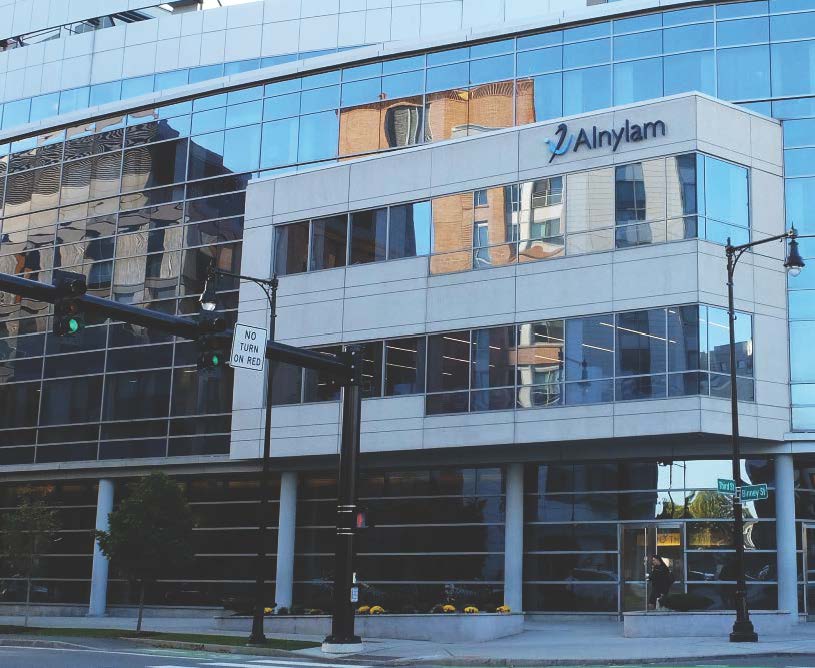
Alnylam’s office in Cambridge, Mass. The company’s Onpattro is the first RNA interference drug.

On August 10, the US Food and Drug Administration approved the first RNA interference (RNAi) therapeutic, a treatment for polyneuropathy caused by transthyretin (TTR) amyloidosis from Alnylam Pharmaceuticals. The go-ahead for Onpattro (patisiran) sees the RNAi field clear an approval hurdle considered unlikely as recently as six years ago, when pharma exited the RNAi field en masse. The US approval, with Europe expected to follow by early September, is “a major milestone,” says Anastasia Khvorova, an RNAi researcher at the University of Massachusetts in Worcester. Onpattro has an excellent safety record, but there are lingering concerns about potential long-term toxicity from newer, more potent RNAi therapeutics. And the field as a whole still faces investor skepticism in the wake of a decade of clinical trial failures.

But Onpattro could prove a very lucrative drug for Alnylam, the clear leader in the RNAi therapeutics field. Transthyretin amyloidosis “is an inexorable decline to death,” says Morie Gertz, a hematologist at the Mayo Clinic in Rochester, Minnesota. “You either have a liver transplant or hope for the best.” Onpattro, in phase 3, met its neurologic endpoint, with 56% of patients showing improvement at 18 months, compared with 4% of patients on placebo (New Engl. J. Med. 379, 11–21, 2018). Before approval, Goldman Sachs analyst Terence Flynn projected $1.8 billion in peak sales. Alnylam is pricing Onpattro at $450,000 average list, dropping to $345,000 after taking into account mandatory discounts for eligible health care organizations. Alnylam is also negotiating discounts in cases where individual patients don’t do well on the drug.

Onpattro is a 21-mer double-stranded small interfering RNA (siRNA) oligonucleotide containing 2´O-methyl modified and unmodified ribonucleosides, with 2´-deoxythymidine dinucleotide overhangs at the 3´ ends, which is encapsulated in a cationic amino MC3 lipid nanoparticle comprising (6Z,9Z,28Z,31Z)-heptatriaconta-6,9,28,31-tetraen-19-yl-4-(dimethylamino) butanoate (DLin-MC3-DMA) plus cholesterol, 1,2-distearoyl-sn-glycero-3-phosphocholine (DSPC) and á-(3´-{[1,2-di(myristyloxy)propanoxy] carbonylamino}propyl)-ω-methoxy polyoxyethylene (PEG2000-C-DMG). Close behind is another type of oligonucleotide drug, a single-stranded antisense molecule from Ionis Pharmaceuticals and its affiliate Akcea Therapeutics. Ionis’s Tegsedi (inotersen) is a 20-mer with five 2´-O-methoxyethyl-modified ribonucleotides at each terminus, a central region of ten 2´-deoxynucleotide residues, a full phosphorothioate modified backbone, and all cytosine residues methylated at position 5.  It recently completed its own successful phase 3 trial (New Engl. J. Med. 379, 22-31, 2018). With either drug, “you can slow and in some instances actually reverse the disease,” says Gertz. “It’s a big deal.” Analysts’ projected sales, however, assume strong market preference for Onpattro. The Ionis drug, which caused thrombocytopenia and kidney toxicity in some patients, such that all will require platelet monitoring, received European approval July 11 and has a Prescription Drug User Fee Act date with the FDA of October 6.

Both Alnylam’s and Ionis’s drugs prevent TTR mRNA translation into the transthyretin protein. Transthyretin normally forms tetramers, but in the hereditary form of the disease mutant monomers are released and misfold into amyloid fibrils, which accumulate in the nerves, heart and other tissues. By depleting both wild-type and mutant transthyretin mRNA, Onpattro (and Tegsedi) can arrest disease pathology. Single-stranded antisense binds directly to target mRNA for cleavage by RNase H or occupancy, whereas double-stranded small interfering RNAs (siRNAs) engages the RNA interference silencing complex (RISC), which directs target cleavage. In general, antisense has better cellular penetration properties, whereas siRNA is more potent intracellularly.

A wild card in the battle for market ascendancy is Vyndaqel (tafamidis), an oral drug from Pfizer in New York that works by stabilizing the normal transthyretin tetramer. The European Medicines Agency approved Vyndaqel for hereditary transthyretin polyneuropathy in 2011 (Nat. Biotechnol. 30, 121, 2012), but the FDA failed to follow suit, requesting a second efficacy study. In March 2018 Pfizer announced topline phase 3 results for Vyndaqel in transthyretin cardiomyopathy, another presentation of TTR amyloidosis, which exists on a spectrum. Vyndaqel met its primary endpoint, with the company expected to present full results at the European Society of Cardiology Congress in Munich at the end of August. Alnylam’s stock traded 36% lower in July than in March, a drop that Needham & Co. biotech analyst Alan Carr attributes to the Vyndaqel uncertainty. “We’re all very interested in seeing these data,” Carr said.

Alnylam CEO John Maraganore views Onpattro as the winner in TTR amyloidosis with polyneuropathy. “Tafamidis, based on previous studies, slows down the progression of neuropathy in patients with the disease, but it doesn’t really halt it,” he says. But patients with hereditary TTR amyloidosis with cardiomyopathy, as well as with wild-type TTR disease—in which TTR amyloid slowly deposits in the heartmight be different. Alnylam has aspirations for its second-generation TTR amyloidosis drug, ALN-TTRsc02, which tethers the siRNA molecule to multivalent N-acetylgalactosamine (GalNAc) ligands that bind the asialoglycoprotein receptor on liver cells. The company is hopeful this second-generation molecule will be superior in both indications because it’s more potent than Onpattro, with far more convenient dosing and delivery. Wild-type disease affects about ten times as many people as the hereditary form, so the market stakes are high. “We’re really quite eager to see what the tafamidis results are,” Maraganore said in early August. ALN-TTRsc02 should begin phase 3 by year’s end.

Alnylam’s second-generation drug should eventually supplant Onpattro, which is only approved for hereditary disease. Onpattro uses a delivery system that Alnylam no longer pursues. Double-stranded siRNAs need to evade nuclease degradation and the innate immune response and then enter cells, where they must escape the endosome to load into RISC for sequence-specific cleavage of target mRNAs. Alnylam’s early solution was encapsulation in a lipid nanoparticle (LNP). When the company set out to treat TTR amyloidosis, the LNP was “the only technology that had really been demonstrated to work,” says Rachel Meyers, Alnylam’s former head of research. “It led to a very elaborate discovery effort to optimize it.” The result is an effective drug, but Onpattro is not perfect. It’s still immunogenic enough to require steroid pretreatment to minimize reactions to its 80-minute IV infusions, given every three weeks.

Although Alnylam is no longer developing LNP drugs, some RNAi companies are still pursuing LNP delivery, as are many working on CRISPR–Cas gene editing and therapeutic modified mRNAs. Patisiran’s approval “is a very big step forward for the guys that are going to come behind, in gene editing and mRNA delivery,” says Meyers, now entrepreneur-in-residence at Third Rock Ventures in Boston.

Even before Onpattro entered the clinic, in 2012, Alnylam was looking at GalNAc-conjugated siRNAs as an alternative to LNPs. GalNAc delivery requires extensive modification of the siRNA, as it is no longer protected from nucleases by the LNP. Alnylam eventually worked out a specific pattern of O-methyl and fluoro modifications at the 2´ position of the ribose, along with fewer phosphorothioate modifications (a sulfur substituting for one of the non-bridging oxygens) in the backbone, with spectacular results. In phase 1, a single subcutaneous dose of Alnylam’s GalNAc-conjugated siRNA, ALN-TTRsc02, knocked down 80% of the TTR target for a full year. The drug, says Khvorova, “is very close to perfection.” Alnylam plans to start phase 3 for ALN-TTR02 (with subcutaneous dosing every three months) by the end of 2018. 

Other Alnylam drugs, all for liver diseases, are even further along. The company expects to submit an New Drug Application for givosiran, for acute hepatic porphyrias, by year’s end. Inclisiran, for hypercholesterolemia, and fitusiran, for hemophilia, are in phase 3. (Inclisiran is partnered with The Medicines Company in Parsippany, New Jersey, and fitusiran with Sanofi Genzyme in Cambridge, Massachusetts.). Competitors Dicerna Pharmaceuticals in Cambridge, Massachusetts, Silence Therapeutics in London, UK and Arrowhead Pharmaceuticals in Pasadena, California also have GalNAc-conjugate siRNAs in development. According to Khvorova, the field considers the problem of liver delivery basically solved with GalNAc.

Except, she adds, for a few lingering theoretical toxicity concerns. One is the 2´-fluoro modification. Ionis scientists have reported that treatment of cells with 2´-fluoro-modified antisense oligos results in the off-target binding and knockdown of several DNA repair genes, resulting in cell death in in vitro assays (Nucleic Acids Res. 43, 4569–4578, 2015). A second worry is that high levels of persistent siRNAs might outcompete endogenous microRNAs for RISC loading, with unpredictable biological effects. Finally, superstable siRNAs might accumulate in endosomes and lysosomes, with toxic consequences. “So far there is no indication that there are any issues,” says Khvorova. “But … things can pop up years after you administer a compound.”

Fueling the concern is revusiran, Alnylam’s original GalNAc conjugate for TTR amyloidosis. Alnylam discontinued revusiran in phase 3 because of the high number of deaths in the treatment arm relative to the placebo group (Nat. Biotechnol. 34, 1213–1214, 2016). Alnylam stock plunged 49% on the news. The company’s subsequent analysis could not rule out a drug effect. “The tox was there and the tox was real,” says Khvorova. “That is why we have those lingering concerns.”

“There is reason to believe [the death imbalance] might be a chance occurrence, but we can’t exculpate the drug,” says Maraganore. “That’s unfortunate.” But he points out that the newer, more potent GalNAc compounds use doses 20–100 times lower than revusiran’s. Alnylam also conducted rodent studies showing that 2´-fluoro modifications and RISC loading were unlikely to contribute to liver toxicity from siRNAs at supraphysiological doses (Nat. Commun. 9, 723, 2018). The company will soon move newer oligonucleotides into the clinic that appear to be even safer. These incorporate a single GNA (glycol nucleic acid) into the siRNA’s antisense seed region, the part of the molecule that recognizes the target mRNA, which would reduce off-target base pairing. The company is also developing an antidote to its long-acting GalNAc-siRNA conjugates (Nat. Biotechnol. 36, 509–511, 2018) to shut them off if necessary.

For the moment, Alnylam can savor its first drug approval, the fruit of 15 years of continuous effort. The company survived the pharma backlash of 2008–2011 battered but intact, thanks to an ample cash cushion. “Alnylam was able to weather the storm of pharmaceutical companies being naysayers because they had the resources, plain and simple,” says Meyers. Now the company must build on Onpattro to establish RNAi as a platform technology. After so many failures, says Khvorova, “it will require some more successful stories, not just one patisiran, to rebuild … investor confidence.”

Ken Garber Ann Arbor, Michigan
A new approach for DNA synthesis

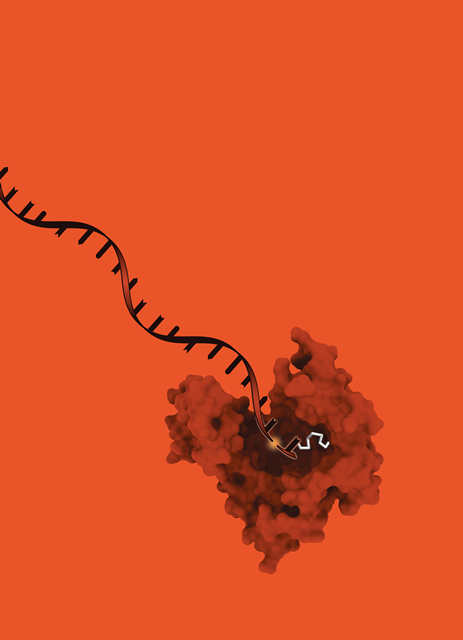
Credit: Eduardo de Ugarte, Berkeley Lab Creative Services

Ordering synthetic oligos or genes online is now commonplace and an essential resource to scientists across disciplines. But the phosphoramidite chemistry currently used to synthesize DNA is limited to direct synthesis of about 200 nucleotides, with longer stretches requiring assembly. The capacity to synthesize long stretches of DNA is important for a variety of applications, including DNA storage, DNA origami, and to synthesize DNA containing regions with repeats, which are difficult to put together. In a paper published recently in Nature Biotechnology, Jay Keasling and colleagues report a promising new approach to DNA synthesis. Using a terminal deoxynucleotidyl transferase (TdT) conjugated to a single deoxyribonucleoside triphosphate (dNTP), they tether the primer to TdT after extending it by one nucleotide. This tethering prevents further extension until the dNTP is cleaved by, for example, light. Keasling and colleagues demonstrate synthesis of short oligos, providing proof-of-principle for a method that may in time represent a useful approach to enzymatic DNA synthesis.

Irene Jarchum

Hunting connections between cell types and cytokines

Credit: Denise Feiger Visual Design, Shutterstock

Cytokines are small proteins that mediate signalling among immune and non-immune cells, and they trigger a range of cellular activity, such as proliferation, activation and killing. Over many decades, immunologists have described countless associations between cell types and the cytokines they produce or sense, but many of these findings, although published, are difficult to access. Associations may have been discovered in a particular disease context or cell type, or uncovered as part of a larger study and thus not corroborated or expanded. Work from Shai Shen-Orr and colleagues, published in Nature Biotechnology, aims to unearth these connections and provide a useful resource for enabling new discoveries. The researchers developed a computational tool that mines PubMed data and connects cell types to cytokines and diseases. The text-mining tool, called immuneXpresso, was used to identify connections between 340 cell types and 140 cytokines across thousands of diseases. Shen-Orr and colleagues showed they could corroborate known interactions and discover previously unappreciated connections worthy of further investigation. The resource is openly available and can be accessed here.

Irene Jarchum


Will the EU deregulate gene-edited plants?

At the beginning of the year, the advocate general of the Court of Justice of the European Union (CJEU) issued an opinion that plants created using new plant breeding techniques, including gene-editing platforms like CRISPR, TALENs and the like, are eligible for the so-called mutagenesis exemption. This exemption relates to rules the European Union uses to regulate the release and marketing of genetically modified organisms (GMOs), which are outlined in Directive (2001/18/EC), originally drafted in 2001. The exemption covers any plants considered ‘safe’ or produced using techniques that have a history of safety, including plants derived from traditional mutagenesis (hence the mutagenesis exemption).

Agbiotech and seed companies are now waiting for the CJEU to issue its ruling on the AG’s opinion, which is anticipated in the next few weeks. If the CJEU follows the AG’s opinion, several NPBTs and their resultant products will be exempt from scrutiny under the Directive. Here, a set of authors from Wageningen University and Research in The Netherlands, headed by Kai Purnhagen, outline four options for how the European Union and its member states may implement a new policy overseeing approval of products generated via NPBTs. Most intriguing of all, they suggest the new policy that follows the AG’s opinion would create an opportunity to move EU regulation for new crop varieties to a more scientific, risk-based and decentralized strategy.

The Correspondence PDF is accessible via the link below.

Correspondence


Is yellow fever back in Brazil?

yellow-chair-1190621-1280x960The answer to this question is, Not exactly. Yellow fever never left Brazil. I earlier wrote that Oswaldo Cruz eradicated yellow fever in Brazil in the 19th century. In fact the extraordinary work done by Cruz focused on yellow fever in urban areas in Rio de Janeiro, but the illness persisted in the jungles.

Basically, there are two kinds of yellow fever. The virus is absolutely the same in both, an arbovirus, but the vectors are geographically different. In the forests the vector is mosquitoes of the genus Haemagogus and Sabethes, and they acquire the virus from monkeys and transmit to humans entering the forests. The monkeys also die of the disease and thus are an important indicator of the presence of yellow fever.

In urban areas the vector is Aedes aegypiti, the same mosquito that transmits the virus that causes dengue, zika and chikungunya in cities.

The issue is that today’s urban areas and forests have boundaries that are more confluent than in the past. Brazil now has 90% of its population in urban areas. People go into the forests, get contaminated by the vectors that acquired the virus from monkeys. Once back in cities, the Aedes vector transfers the virus to others. In Brazil, 846 people have confirmed yellow fever, and 260 have died as of early March, and the number is growing all the time. The Minister of Health says we do not have epidemic occurrence of yellow fever in urban areas in Brazil. Deaths occurred so far because people are contaminated in the forest and may die in urban areas. In fact these are considered sylvatic yellow fever in nature.

Brazilians initially understood the threat from yellow fever, and many sought out the vaccine. Soon the demand outstripped the supply, and vaccines began to be given out at doses one-quarter of the usual amount. It works, but protects for only ten years. Campaigns have been established to vaccinate millions, particularly in the State of São Paulo, and there the supply was adequate because many thought the vaccines could harm them and others didn’t believe yellow fever could cause their death.

Vaccines in Brazil are produced in eggs, an old technology. This takes six months and people allergic to eggs cannot be vaccinated. We need to begin producing vaccines in plants as Medicago is doing in Canada located in Quebec for influenza.

safe and effective vaccine against yellow fever exists, and some countries require vaccinations for travelers. In areas where yellow fever is common and vaccination is uncommon, early diagnosis of cases and immunization of large parts of the population is important to prevent outbreaks. Once infected, management is symptomatic with no specific measures effective against the virus. Death occurs in up to half of those who get severe disease. In 2013, yellow fever resulted in about 127,000 severe infections and 45,000 deaths, with nearly 90% of these occurring in African nations, according to  Wikipedia.

Also, we have been waiting four years to begin using commercially in Brazil the GM mosquito developed by Oxitec Brasil that has the headquarters in Piracicaba in the State of São Paulo. So far Oxitec Brasil can only release the GM mosquitoes experimentally , celebrating contracts with  the government of counties. This is  because ANVISA, which in Brasil is equivalent to FDA, has not registered the GM mosquito to be released commercially. CTNBio, the Biosafety Commission, approved the release of the GM mosquitoes in April of 2014. It is possible that Aedes does not transmit yellow fever as well as it does dengue, zika and chikungunya. But the problem of yellow fever in urban areas will increase if the population of Aedes increases, and that can be prevented by the GM mosquitoes developed by Oxitec Brasil.

Luiz Antonio Barreto de Castro


Rumen microbial genomics resource

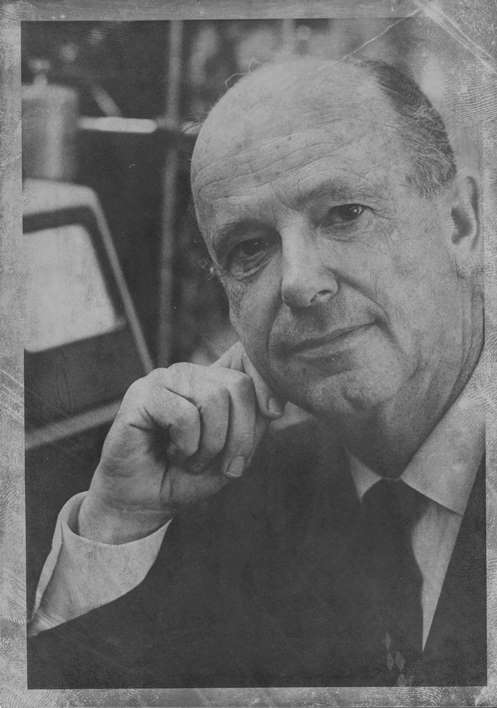
Robert (Bob) E. Hungate developed methods (the ‘Hungate technique') to culture anaerobic bacteria and archaea. These methods are still used in many labs worldwide.

Robert (Bob) E. Hungate developed methods (the ‘Hungate technique’) to culture anaerobic bacteria and archaea. These methods are still used in many labs worldwide. {credit}Special Collections, University of California Library, Davis{/credit}

The Hungate1000 project, named after one of the great microbiologists, Robert E. Hungate (pictured), was launched with the aim of producing a reference set of rumen microbial genome sequences. When this project began there was only a handful of rumen reference microbial genomes available. The first output of the Hungate1000 project, comprising 410 high-quality genome sequences, is reported online today in Nature Biotechnology. Seshadri et al. highlight discovery of degradative enzymes, biosynthetic gene clusters and Crispr sequences. These reference genomes will enable robust interpretation of rumen metagenomes, which should result in a better understanding of rumen functions. Genome-enabled research into feed conversion efficiency, methanogenesis and cellulose degradation will, in turn, assist development of strategies to balance food production with efforts to minimize greenhouse gas emissions. Finally, access to cultivated Hungate Collection strains will provide vital tools for studying carbon flow in the rumen, breakdown of lignocelluloses and methane formation.

Susan Jones

The Developing World Needs GMOs

MudThe need to feed growing populations in developing countries, especially countries in Africa, must be met by increasing the yields of crops. Also, climate-change related problem such as drought continue to worsen hunger problem and humanitarian crisis in the continent. Genetically modified organisms (GMOs) could greatly help with these issues, yet resistance persists in Europe and Africa both.

For several years, I have been thinking about what should be done to address the negative sentiment about GMOs. As an African scientist who has the vast knowledge of biotechnology and understands the potential of the new technology, I took the task upon myself to gather evidence with experts around the world and publish a book and a Correspondence on how to address GMO regulation problems at the international level.

While this was a difficult task, I am proud to be the first African scholar to mobilize experts from around the world to review or abandon current regulatory framework for GMOs. It is uncommon but I have taken this bold step and made an initial attempt to challenge the current status quo of GMO regulation.

Europe is overly cautious about the use of GMOs. But Europeans are well fed, and are not experiencing the type of hunger and malnutrition that affects people in other parts of the world. Europeans must stop playing fear-based politics on technologies that can benefit millions of people dying from micronutrient deficiency and hunger in Africa.

But the problem exists here in Africa, too. Some years ago I travelled to several countries across different regions in Africa to discuss the benefits of GMOs with policymakers. These talks spurred the largest study in the history of GM agriculture in Africa, but the debating continues, with policymakers asking for more evidence to prove GMOs are safe. In my own country, Nigeria, I was threatened in the local news for promoting the use of GMOs. Media reported that eating food made from GMOs is bad for your health and could cause cancer.

We need to stop media bias towards the use of GMOs, and educate the individuals and organizations that are influencing policies against GMOs. There is overwhelming evidence that GMOs are safe for human consumption. If the world is to achieve the United Nations sustainable-development goals, GMOs will need to play a part.

Adenle Ademola

Turning science and technology into a priority in Brazil

In a previous contribution to this blog, I said that science and technology is not a priority in less developed countries, including Brazil. I recently described why this is in Scientia & Ricerca. Brazil’s government claims it cannot treat science and technology different from other areas. If it cannot double the investments in other areas, it cannot double the investment in science and technology. Since the Gross National Product (GNP) of Brazil cannot double in one year we are stuck with investments in science and technology at 1% of GNP historically.

Yet we can still support this strategy. Consider that we multiplied our publishing output in science and technology by six over the last four decades through the work of returning Brazilians who had studied abroad, and through fellowship and scholarships supplied by the Ministry of Education. Still, Brazilian bureaucrats do not see the importance of translational work. When Fernando Cardoso was the President of Brazil, a ministry member said technology development is not for less developed countries and that we should buy technologies abroad.

As a National Secretary in Research and Development in Brazil at the Ministry of Science and Technology for thirteen years, I’ve heard four Presidents and six Ministries of Science and Technology say they would double the investments in science and technology in Brazil up from the 1% of GNP. In 2017 the investment was again at 1%.

In my experience, all Presidents and Ministries believed that science and technology is essential. So how to actually get increased investment? It is best to start small. First, presidents must accept that in order for science and technology to become a priority in the country, investment must increase. The second step is to negotiate an actual increase with the federal planning bureaucrats. I postulate that we should double the investment over five years, but we must be prepared to accept a different proposal.

Is that the end of the story? Of course not. In all developed countries the private sector invests up to 2% of the GNP in science and technology. This will only be possible if the economic and financial context in Brazil changes for the better and corruption comes under control.

Luiz Antonio Barreto de Castro

Synthetic Vaccines

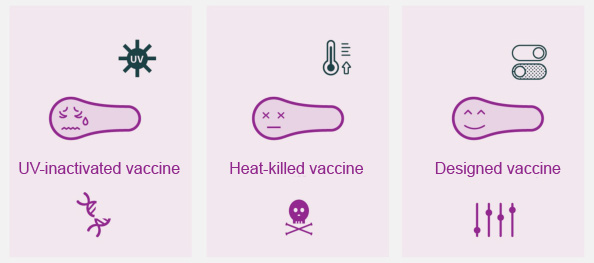
Traditional and novel forms of vaccines.

Traditional and novel forms of vaccines. {credit}Birgit Schmidt{/credit}

In 2010 scientists from the JCVI announced the creation of the first bacterial cell controlled by a chemically synthesized genome1. The ‘synthetic’ cell was mycoplasma, a bacterium with an exceptionally small genome of less than 1 million base pairs and without a cell wall. Carole Lartigue, one of the co-authors of that landmark paper, later returned to the National Research Institute for Agriculture (INRA) in Bordeaux, France, to continue working on Mycoplasma. In fact Mycoplasma is not just a beautiful model organism for synthetic genomics. Their small genomes make them also a great model for systems biology, a work that was spearheaded by Luis Serrano at CRG in Barcelona2, 3, 4, who characterized Mycoplasma in a quantitative manner to apply this knowledge to do a rational engineering for novel applications. Some mycoplasma, however, are pathogens affecting both human and farm animals (Table 1). The mycoplasma infections not only cause animal suffering and death, but also lead to epidemics, resulting in production delays, lower food-conversion rates and an overall decreasing efficiency and profit for farmers.

Table 1: Main mycoplasma infections of farm animals

Animal Mycoplasma species Disease Existing vaccines
Cattle   M. bovis Mastitis, Pneumonia, Arthritis Inactivated (not effective)
M. mycoides subsp mycoides Contagious bovine pleuropneumonia (CBPP) attenuated
Pig M. hyopneumoniae Respiratory disease Inactivated
Poultry   M. gallisepticum Chronic respiratory disease (CRD), sinusitis Inactivated
M. synoviae Arthritis, respiratory disease Inactivated
Sheep/goat M. agalactiae Contagious agalactiae, mastitis, pneumonia, arthritis none
M. ovipneumoniae Atypical pneumonia none
M. capricolum (subsp. capripneumoniae) Contagious caprine pleuropneumonia (CCPP) none


In the European H2020 funded project MycoSynVac (2015-2020), CRG together with INRA, the global healthcare leader MSD Animal Health, and other partners across Europe, are now working on the first synthetic biology-derived animal vaccine. Traditionally, bacterial vaccines are made from simply inactivated or attenuated pathogens, which are deployed to ‘train’ the immune system of the host. In many Mycoplasma species, however, these vaccines don’t work really well, because the inactivated pathogens don’t attach, for example, to the host epithelial cells, thus failing to trigger an appropriate immune reaction.

The goal of MycoSynVac is not just a mere attenuated pathogen, but a reprogrammed organism that has to be, so to say, ‘semi-infectious.’ In other words, the reprogrammed microbe should be able to ‘inhabit’ the host, to attach to host epithelial cells in the respiratory tract, but then refrain from causing cell damage and inflammatory response because the virulence factors had been removed5.

Re-programming this behaviour requires not only a deep understanding of the pathogenic life cycle and its cause on a genetic level6, but also reliable bioinformatics models7 and precise gene editing tools for Mycoplasma8,9.

Mycosynvac is also developing extra layers of safety with newly developed biosafety control circuits built into the vaccine. These and other challenges don’t exactly make this vaccine a low-hanging fruit, but when considering the impact and scope of a successful product, it immediately seems worthwhile. The reasons are manifold:

(A) The market for animal products and animal vaccines is huge, with M. hyopneumoniae vaccines alone currently topping $150 million annually.

(B) For many pathogens there is either no vaccine available or they don’t work very well, so new applications are in high demand.

(C) The designed vaccines will be based on a standardized ‘chassis’ that can hold several different types of pathogenic epitopes (the surface molecules necessary for the protective immune responses), so development of the next vaccine(s) will be much easier and faster.

(D) Making it easier to engineer novel vaccines will also allow for a systematic replacement of antibiotics in agriculture. Antibiotics in farming industry is already a serious concern in the surge of antimicrobial resistance (AMR) and so-called ‘superbugs’ (multi-resistant pathogens) affecting animals and humans alike. Vaccines as tools to reduce AMR have historically been under-recognized in these discussions, even though their effectiveness in reducing disease and AMR is well documented10.

(E) Last but not least, once approved for farm animals, the next goal will be synthetic biology vaccines for human infections with an even bigger market and impact.

Markus Schmidt

References:

  1. https://science.sciencemag.org/content/329/5987/52
  2. https://science.sciencemag.org/content/326/5957/1268
  3. https://science.sciencemag.org/content/326/5957/1235
  4. https://science.sciencemag.org/content/326/5957/1263
  5. https://journals.plos.org/plosone/article?id=10.1371/journal.pone.0137354
  6. https://genomea.asm.org/content/4/2/e00263-16.long
  7. https://www.frontiersin.org/articles/10.3389/fcimb.2017.00031/full
  8. https://pubs.acs.org/doi/pdf/10.1021/acssynbio.5b00196?src=recsys
  9. https://pubs.acs.org/doi/abs/10.1021/acssynbio.6b00379
  10. https://www.nature.com/articles/nm.4465