Boiling Things Down

1958.jpg

I haven’t had a chance to mention this yet, but Monday night’s reception at the Newseum was packed, pretty loud and interesting. The most memorable thing for me was the exhibit on Pulitzer Prize winning photographs.

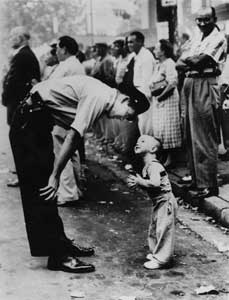
The images are haunting. You don’t receive the Pulitzer for pictures of kittens dozing among tulips. Winners included images of an execution in Saigon, Kosovo refugees passing a baby over barbed wire, and the reaction of students amid the Columbine massacre here in the US. Each picture seemed to show either an attempt to end a life, or efforts to protect/save one, so they stick with you. The picture at the top of this post won the Pulitzer in 1958, and was one of the sweeter photos in the exhibit.

Back to biotech. I had a meeting scheduled this morning with Francesco De Rubertis, to catch up and talk about the industry. He’s a partner at Index Ventures and was lead author on a Bioentrepreneur article a few years ago that focused on how to build a sustainable biotech company. (You can read that article here.)

Even before he was a venture capitalist, Francesco was concerned with turning research into products, and he thinks it’s important for scientists to adopt that business mindset. He himself moved right from academia to the VC side, because he felt building healthcare companies is one of the most direct ways to impact humanity. There’s a chance we’ll do a podcast later for the Meet the Author section of Bioentrepreneur.

I also spent some time milling around the country pavilions in the exhibit hall, talking with emerging biotech communities. I walked away from the Czech Republic booth with a CD database of the country’s biotechs. Overall, it shows 39 biotechs, and 308 ‘research entities.’

The survey breaks biotech down into categories: nanobiotechnology, bioinformatics, gene and RNA vectors, cell and tissue culture engineering, proteins and other molecules, process biotechnology techniques, DNA/RNA and ‘other.’ And the biotechnology itself is broken down into applications, such as human health (large molecule), human health (other), industrial processing, GM agricultural biotechnology, and the like. I won’t bother listing them all here, in the hopes of keeping this readable.

The CD lets you slice and dice all you want, and you can get some interesting looks. There are 15 companies focused on large-molecule human health, but only one focused on GM agriculture. (Given the attitude on GM crops in Europe, this makes sense, no?) There are eight companies that include ‘animal biotechnology’ in their description. There are two bioinformatics firms, and 13 focused on cell and tissue engineering.

Filtering will also give you an idea of the largest area of focus for Czech researchers, and where they are. There are 16 companies focused on DNA/RNA, and there are 160 research entities also investigating that category – both the largest percentage. And not surprisingly, most of the work is being done in Prague, Czech Republic’s largest and most populated city. Which means that a typical Czech biotech scientist, whether publicly funded or private, is in the DNA/RNA field and living in Prague.

There. I’ve neatly boiled down the entire CD to one sentence.
Brady Huggett

Talent is Talent

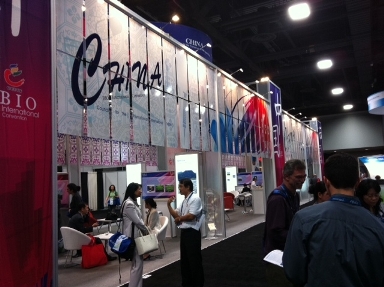
China.JPG

Even if the total numbers of attendees at BIO is down from its peak, it’s still an incredibly large gathering of diverse people across the biotech spectrum. The exhibit hall is a good reflection of that. I can remember when the hall was just a collection of simple individual company stands – a few employees in a booth, a poster hanging behind them.

But as the industry grew, the exhibitors changed; the first sign was a marked increase in law firms, because once it was clear how valuable IP is to biotech, biotech became valuable to lawyers. (That’s not cynicism – lawyers play an important part in biotechnology, as this article and this article illustrate.)

The second change was the amount of state and international exhibitors. The ‘booths’ of yesteryear are now huge country pavilions, like the massive structure built by China.

And why not? BIO is a perfect place for countries to trumpet their goals and successes, with high traffic in the exhibit hall and captive audiences in the panel sessions. I sat in on a series of presentations from South Korea yesterday, and the most interesting tidbit (for me) was its stance on biosimilars: it wants to own 22% of the global biosimilars market by 2020. That’s aggressive, but Choi Kyung-hwan, the minister of knowledge and economy in Korea, said that when Korea’s pharmaceutical generics division got up and running, it settled for the local market, and thus Korea feels it missed an opportunity. It does not plan on repeating that mistake with biosimilars, and plans to have the best biosimilar offerings across the board and go global.

So far that plan is working, if the Merck – Hanwha Chemical deal earlier this month is any indication. They signed to develop and commercialize a follow-on Enbrel (etanercept) after Merck searched for the best version around and settled on Hanwha. (Enbrel’s patent is set to expire fall 2012.)

That’s South Korea, though – a fairly established biotech player with a suggested 42 therapeutic biotech firms. On the other end of the spectrum is Mexico. In its session, there was less to discuss. One speaker basically outlined the market potential for pharmaceuticals in Mexico — $11.2 billion, which ranks them top 50 overall in the world and the largest in Latin America.

But paying customers is not a biotech base. Mexico does offer Instituto Bioclon, which is producing anti-venom ‘fabotherapics,’ and Silanes, which makes pharmaceutical diagnostics and diabetes drugs. And it has INMEGEN, the National Institute of Genomic Medicine in Mexico. But overall, biotech in Mexico is very young. In the Q&A part of the session, a representative from Concert Pharmaceuticals asked what I thought was a very interesting question: he pointed out that the massive layoffs in pharma and biotech have left a lot of qualified individuals out of work; has Mexico considered bringing some of them south of the border to help set up a nascent industry?

The panelists hemmed and hawed. A representative from the Federal Commission for Protection of Sanitary Risks (the FDA of Mexico) said, No, Mexico was looking to keep things local. That didn’t seem to sit well with the audience or the other two panel members, who in their responses were quick to suggest that talent is talent and Mexico is open to anything.

That ended the session, but I was a little confused by their answers, so I went to panel member Carmen Alvarez-Buylla (she works at INMEGEN), to get her to clarify Mexico’s stance. This seemed like a no-brainer to me, I said. If there are available, seasoned biotech vets who can help, execs who know VCs and who have built companies before, why not hire their services?

She agreed in theory that this could work, but said Mexico is “not there yet.” Yes, there is research happening; and yes, INMEGEN and others are collaborating with universities; and yes, Mexican researchers are actively looking to publish papers in major journals. But there is no universal tech transfer policy in place in Mexico, she said, and there are no rules for royalty sharing.

Without any of that, it’s simply too early to consider building anything.

Brady Huggett

That Elusive Factor

photo1.JPG

Day 1 of the BIO convention. The Walter E Washington Convention Center is a huge thing, split into two sections. Panel sessions run on both sides, and the exhibition hall (opening Tuesday) is below ground, spanning some great distance underneath it all. There are hundreds of rooms and people scurrying all over, yet I spent my first hour huddled in a quiet spot along a deserted corridor on the ground floor, talking to an Argentine. He’s working at the interface of science and research, helping Argentina recognize it can not only do routine biotech research, but also produce vaccines, antibodies and diagnostic kits right at home. He admitted that the science itself might not be new or groundbreaking, but translating that science into homegrown Argentine products is, and it’s been an important step. He’s put together a company (IncuINTA) to help facilitate the process. We talked about his background and the plans for IncuINTA, and in general, he’s just the type of person global biotechnology needs – gregarious, focused and passionate. You can find out more here.

Also spoke with Maxwell, a biotech venture fund focused on Russia. They have five portfolio companies now, though they also help non-Russian firms establish clinical trials in Russia. As a BRIC country, Russia is already considered an economy to watch, and it’s growing its biotech sector, too. Russia launched a program to help foster cooperation between the private sector and the government, and they’ve done that in the usual way – establishing economic zones for biotech, developing technology parks and by setting up venture funds like the Russian Venture Company. This has resulted in a few biotech clusters popping up.

We’ll have to wait and see what becomes of that concerted effort, because as much as every state in the US wants a biotech cluster, and nearly every country in the world wants to grow the industry in its backyard, it’s becoming less clear that this can be forced.

I sat in on an afternoon session titled “Taiwan: Post ECFA Era-Opportunities for Global Biomedical Market.” It turned out to be quite informative. Taiwan has 66 drug candidates in clinical trials, and it was the first country in Asia-Pacific region to introduce a venture capital industry. Taiwan’s Minister without Portfolio, Chin-Yi Chu, said Taiwan ranks third in the world in entrepreneurism, behind the US and Israel, and he said Taiwan ranks No. 1 in the world in patents per capita. (A good journalist would have spent the afternoon fact checking those statements; I did not.)

A strong VC presence is key for fueling a burgeoning biotech sector – that we know. And patents help protect research and investments. But Taiwan serves as a good example of how difficult growing biotech can be. First off, all those patents filed in Taiwan tend to be incremental, rather than pure innovation. And Chin-Yi Chu pointed out that in Taiwan, a professor is a desired, respectable position; a business person much less so. In fact, the pursuit of money is considered a rather vapid calling in Taiwan. (This is not a problem in the US, for better or worse.)

But perhaps the biggest strike against Taiwan is a lack of translational research. There is no collective mindset that envisions products from research. And if biotech is to drive the future economies of countries around the globe, there has to be nationwide efforts to turn academic research and publicly-funded lab work into something that can benefit patients and be sold. We’ve talked about it before on this blog – getting that mindset into the universities and researchers is hard to do. I’m not quite sure how to do it, but it’s proving a lot harder than convincing the government to throw a few millions at a biotech park.

Brady Huggett

BIO Convention 2011

BIO.jpg

I’ll be attending the annual Biotechnology Industry Organization (BIO) Convention next week in Washington, DC. For those readers not familiar, it’s biotech’s largest gathering of execs, insiders and supporters – in peak years, the convention drew more than 20,000 attendees. The total has dipped since then, but it’s expected that more than 15,000 will descend on the capital this year. That throng includes the media – there will be hundreds of members of the press there.

Although academics and researchers certainly attend, it’s more a business meeting than a research one, and it’s a great event for biotechs in search of business partners. Countless eventual deals spring from meetings at BIO, and at the BIO Business Forum – set up to help broker meetings – more than 190 company presentations will be given this year, and more than 20,000 meetings have already been scheduled.

Along those lines, if you’re headed to BIO and are not sure how to ready yourself, take a look at “Prepare to Meet your Partner,” a Bioentrepreneur article written by Cori Gorman, Cammie Edwards, and Robert Meister.

The supplementary information for that article offers a checklist of activities for before, during and after the conference, and also suggests a press release format if you’d like to alert the biotech community that your firm will be at the show. We published the article in advance of the BIO Convention in 2009, but it’s as useful now as ever.

Though the BIO convention is usually held in the US (the exceptions being Toronto in 1994 and 2002), it draws from all over the world. More than 5,000 attendees will be from outside the US this year, and there are representatives from 65 countries registered to attend. That provides a perfect opportunity for exploring the themes of this blog – entrepreneurism and biotech building, with a slant toward emerging economies. The days are very long at BIO – sessions start before 9 am and the evening receptions can run until…well, they can run late. But I’ll be passing along relevant material I uncover while there.

Brady Huggett

Can open innovation close the pharma productivity gap?

Analysis of research and development (R&D) expenditures compared to the number of new molecular entities approved by the Food and Drug Administration (FDA) each year indicates that there is definitely trouble in Pharmaland.

Put simply, not enough drugs are entering the clinic from internal discovery programs and many of those that do are failing at the worst possible time (late stage clinical trials or in the initial years, post-launch).

FDA.gif

What can be done to remedy this? Is the traditional “closed” model of proprietary discovery and development dead? Some commentators have predicted pharma will have no choice but to undergo “reverse M&A” and split into nimble, specialized pharma franchises better able to quickly adapt to market needs and keep development costs down. There certainly doesn’t appear to be much economy of scale using the traditional R&D model so far.

Alternatively, some would say that the multinational pharma model is, to paraphrase Zen master Shunryu Suzuki, “fine just as it is, but could use a little work.”

The “work” in this case means adopting innovative models of rapid drug discovery and development that will deliver increased pipeline breadth, depth, efficiency and quality while avoiding late stage clinical failures. But just how can this be done?

This theme was the central discussion point in a recent MaRS Market Insights event – “New Models of Innovation in Life Sciences.”

During the event we heard from:

The ensuing discussion made these important points:

  • Traditional pharma R&D has not produced the goods
  • Pharma is aggressively scaling back internal R&D programs
  • External academic partnerships are currently a high priority model for pharma discovery
  • Open innovation models such as the Structural Genomics Consortium (Toronto), which produces target structure data at an incredible pace, and CQDM (Montreal) which harnesses a large pool of academic expertise to solve pharma discovery challenges appear to be the quickest, cheapest and possibly best way for pharma to get the high value leads it requires
  • Patenting the targets is a fool’s errand that slows innovation and wastes valuable resources – better to focus on patenting the product
  • The barrier for open innovation could be raised as high as Phase II studies via collaborative “test” studies with a prototype compound

The final point – open innovation in the clinic – is a challenging concept at first glance, but on deeper scrutiny it makes abundant sense. Under the traditional model, when a new target of pharmaceutical relevance is discovered, several companies earnestly begin the process of lead identification, selection, preclinical studies and ultimately human trials. However, when any of these companies’ efforts fail, the lessons learned are quietly buried at night. Useful information on safety, metabolism, rare adverse events and so on is lost.

The open innovation clinical model encourages collaboration around a public domain “pioneer” compound. Once the data has been collected, all parties would be free to innovate their own optimized proprietary compounds and hopefully avoid painful and costly missteps. The result? Shorter development times and fewer late stage clinical disasters.

This is good news for pharma, for academia and most importantly, for patients.

John McCulloch

AVEO: An early stage VC perspective

I heard AVEO Pharmaceuticals’ CEO Tuan Ha-Ngoc speak at Convergence last month and decided AVEO would be a superb company to profile as a way to highlight the triad we all dream of in biotech venture investing: great science, great companies, great investments.

Founded as GenPath in 2001 by such academic all-stars as Ron DePinho and Lynda Chin of the Dana Farber, it’s mission was to make better cancer drugs by exploiting better animal models of cancer. Xenograft tumor models were as poorly predictive then as they are now, and they believed inducible cancer models would better reflect the disease. A well funded platform and pipeline evolved out of this vision. Today, AVEO (name was changed in 2005) has an interesting multi-kinase inhibitor tivozanib in Phase 3 for renal cell cancer, and their second program is an anti-HGF mAb. Its very clear that AVEO has all the hallmarks of being about Great Science.

And it’s a Great Company. Strong management team, impressive staff (150+ employees), super strong board (e..g, Tony Evnin, Ken Bate, Henri Termeer, many other luminaries of biotech). The investor roster is a solid list of A-grade venture firms: Venrock, Highland, Prospect, MPM, Flagship, Oxford, Bessemer, etc… And they’ve done lots of corporate partnerships over the years bring in heaps of non-dilutive capital: Merck, Lilly, Schering, OSI Pharma, Biogen all did deals with them related to the platform, and just this week J&J did a deal for anti-RON pathway antibodies.

With its lead program getting closer to an NDA, AVEO is well on its way to possibly becoming a sustainable biotech company: a feat only a rarefied few biotechs ever achieve.

So does a Great Company with Great Science mean it’s been a Great Investment? Sadly no, at least not for the private venture investors. Its been a long road with only a very modest return to date. Including the public offerings, AVEO now raised over $300M in equity capital to date and closed today with a market cap of $680M. So a little over 2x in aggregate.

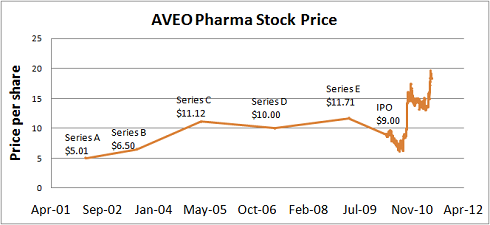
Here’s the chart and table that captures the Series A through E rounds and their split-adjusted price per share according to their S1 last year:

AVEO-Stock-chart.png

The average private investor stock price per share was $8.97 – essentially flat with the IPO offering price and only about 2x to today’s price. For Series A shares, it is close to a 3.7x multiple today – a reasonable win. However, since most investors do their part in subsequent rounds of financing, I’d speculate that for most of the Series A and B round venture investors, they are sitting at 2.5x or so. Better than the 50% of LS deals that lose money, but this is probably not a top quartile deal compared to other LS deals in the 2000s.

Although flat into the IPO, AVEO is now up over 100% and is one of the high fliers of the Class of 2010. So its been a great deal for the IPO buyers. But its been a rollercoaster even as a public company. It dropped down below its 2003 Series B price per share within the first four months of trading, seven years later. The first real jump in the stock occurred in early Oct 2011 when Merck gave back the anti-HGF program unexpectedly after their acquisition of Schering Plough. A great example of some positive serendipity. The stock continued its climb as news of the tivozanib trial results from Phase 2 and the rapid enrollment in Phase 3 occurred.

I hope that for cancer patients and shareholders of AVEO that their star keeps rising with strong clinical data – and that the investors who help provide the risk capital in the early days manage to drive a big return. These long roads have led to good endings before: Myogen was flat for the first eight years or so before skyrocketing in the public markets on good clinical data to an acquisition by Gilead at least 10x above its venture round prices. But unfortunately that’s not the most common outcome.

As an early stage VC, I’d certainly like to believe that a biotech worth more than $680M, built over nearly a decade with great science and strong leadership, should be celebrated as a huge winner. It should be a top decile, 10x+ deal that returns a large chunk of a venture fund. But the reality is that raising $150M+ privately makes it very hard to get to high multiple exits when the public capital markets aren’t there with some irrational exuberance. This model of “raise as much as you can, when you can” worked well in the 1980s and 1990s because the public markets were accommodating. But no longer, even for great companies like AVEO.

The key challenge is the equity capital intensity. The answer is simple: capital efficiency. We need to create winners with a lot less equity capital.

Trying to figure out the new models that address this issue is both the opportunity and challenge of early stage venture investing today. We’re experimenting with lots of approaches (asset-centric models, virtual companies, project-financings, leaner platforms), but only time will tell.

What is clear is that finding deals that actually fit the “Great Science, Great Company, Great Investment” triad is very tough to do.

Bruce Booth

Five Day Filter

Another week in the books, another Filter. Here’s some Father’s Day weekend catch-up reading for those of a bioentrepreneurial bent.

Beijing has identified biotech as one of the strategic industries in which to nurture innovators in order to reduce China’s reliance on foreign technology and create higher-paying jobs, according to Bloomberg Businessweek. But some of its tactics have irritated its trading partners.

In an interview with EurActiv, South Africa’s minister of science and technology Naledi Pandor touches on partnering with the BRIC countries and developing South African biotechnology in conjunction with indigenous knowledge, which is at present not well understood.

Microventures CEO Bill Clark, writing at Mashable, asks how much money should a start-up raise? For biotechs, the answer is “more than others.”

Please add your thoughts in the comments.

Michael Francisco

The Good, The Bad

iStock_000004474493XSmall.jpg

I’ve been in China for a year working in a joint venture with the China Medical City Government and it has been a terrific education and given me the opportunity to learn the business practices undertaken by government officials, their close associates and partners.

I’ll start with the positive aspects of starting a business in China;

• The optimism and willingness to take risks

• There is a hardworking talent pool in the major metropolitan areas such as Shanghai, Tianjin, Shenzhen, Suzhou and Beijing. Salaries are not as low as one might think for people with experience in biotechnology and pharmaceutical sciences.

• The availability of laboratory space, although it typically needs more investment that one might expect to make operational.

Some of the negative aspects of running a business in China;

• Negotiating with a Chinese national typically is not focused on a “win-win” outcome. The perspective is that one hasn’t won unless the other party has lost.

• Contracts, even after signed, are continuously under negotiation.

• Contractually defined funding, linked to milestones, is never on time in spite of verbal commitments, and business is always in “start/stop” mode due to the availability of money.

• As part of normal business practice there is the tendency to revert to an inefficient bureaucratic process if one has not been defined at the outset.

At this point I have withdrawn my involvement with the joint venture until the government has tangibly demonstrated their commitment to consistent funding and government-imposed management processes are streamlined. I can be more specific if there is interest from the readers.

My experience may be tainted by my interactions with the China Medical City management, but I remain upbeat about China and the prospects for innovation, business development and biotherapeutics development for the international and domestic markets. My advice at this point is, if you want to start a business in China, don’t have the government as your investor at any level, because their system of incentives and political motivations are not aligned with what is typically needed to mitigate the myriad of risks that are inherent is starting a new business. However, don’t for a minute think that the local, provincial and central government can be ignored. Having someone in your organization devoted to working with the government employees, and developing collegial working relationships at all levels will be critical for your business. You will need their support throughout the evolution of your company.

Please feel free to post questions and comments, and I encourage all dialogue on this subject.

David Wilson

Virtual Professorship at Work; the SMART Initiative

SMART2.jpg

The days when the physical presence of a professional in the place of work or a meeting was mandatory are gradually becoming extinct, in the same mode that Brachiosaurus faded from planet Earth. Communication technologies have revolutionized the way meetings happen, and there isn’t the need to always physically gather at one place. If meetings can be made virtual, deals struck and businesses flourish without the need for physical presence and proximity, why can’t ideas ignite minds across the biotech world, and why can’t researchers be tracked in remote control?

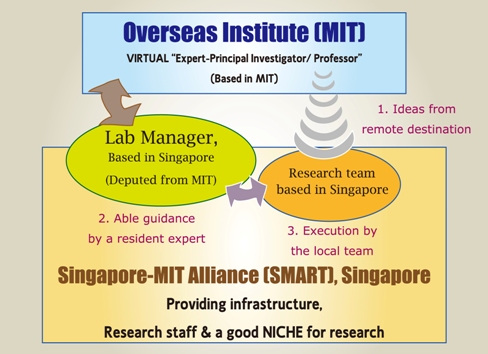
The Singapore-Massachusetts Institute of Technology Alliance for Research and Technology (SMART) has taken a smart decision in that direction, which I would equate to a “virtual professorship.”

Last year when I dropped in at SMART to meet a friend of mine, I found publications co-authored by faculty from MIT and by SMART, and I came across a lab-manager who had just come from MIT, where he oversaw the work done by Singapore-resident scholars.

SMART has produced a good infrastructure and has gathered many able hands and minds, but its novel system allowing the contribution of ideas and expertise by senior faculty without being physically present. In SMART, the virtual professor from another institute provides “idea-protocol & expertise,” which enlightens the researchers in a remote destination, who share the authorship, patents and other fruits of their joint work.

The physical space is of course important, as there are indispensable components such as the clusters of idea-igniting faculty assisted by a team of researchers, fuelled by the funding agencies and the strategic investors with exit plans after commercialization. There are difficulties, though, such as the delay in arrival of the materials for research or some expats who prefer to have shorter duration of stay.

Still, this novel initiative is worth being studied by new or would-be institution builders, as things have fallen in place fairly well, and in three years the SMART Bio-SYM team has published 45 papers and has 7 patents to their credit. Plus, one company is to be launched for commercializing a cancer drug screening application!

Samuel JK Abraham

Five Day Filter

As the week draws to a close, here are some of the stories that made headlines in the world of bioentrepreneurship this week.

Brazil’s state-run development bank BNDES announced that it would provide 30 billion to 35 billion reais (US $19 billion to $22 billion) for sugar cane ethanol production, vowing to work closely with the private sector to boost production in an industry that has struggled recently despite its immense promise.

The University of Zimbabwe has set up a new business unit to foster an entrepreneurial environment and help researchers commercialize their innovations. Key research areas include the development of animal vaccines, cassava-based foods and renewable energy—specifically solar power and non-carbon fuels.

A controversial 25-hectare biotech park has been given the go-ahead by Taiwan’s Environmental Protection Agency. The National Biotech Park, the brainchild of Taiwan’s Academia Sinica, will be the country’s second biotech center. Academia Sinica President Wong Chi-huey called the day “the most important date” in the country’s biotechnological development.

Come across anything else of note? Add your thoughts in the comments.

Michael Francisco