Guidelines for algorithms and software at Nature Biotechnology

NBT logo red

Nature Biotechnology outlined its recommendations for material sharing and reporting for algorithms and software in a April 2015 Editorial. On this page, the editors provide more detailed information for authors submitting manuscripts containing unpublished algorithms and software.

Client-side Software
This is software that is installed and used on a personal computer and not intended to be accessed remotely as a web service. It can be entirely stand-alone on a commonly available operating system (Windows, Mac OS X, or *nix) or can require the user to have a popular software platform installed (MATLAB or LabVIEW). In all cases, but particularly when using MATLAB or LabVIEW, all platform versions and software dependencies must be detailed in the supplied documentation.

At Submission

  • If the custom algorithm/software is central to the method and has not been reported previously in a published research paper it must be supplied by the authors in a usable form including one or more of the following.
    1. Source code
    2. Complete pseudocode
    3. Full mathematical description of the algorithm
    4. Compiled standalone software

Continue reading

Reviewing a mythbreaker

MythMythbreaker: Kiran Mazumdar-Shaw and the Story of Indian Biotech

Although I study the biotech industry, and mostly startups, I didn’t know the full story behind Mythbreaker. There will be many parts of the book new to other readers too, as the author, Seema Singh, has done some fantastic digging. What emerges is that Kiran Mazumdar-Shaw, the focus of the book, has beaten by a long shot the odds of a first-generation woman entrepreneur. She has also beaten (again, by a long shot) the odds against succeeding in India in a highly technical area.

The book can loosely be divided into three parts. In the first, we get the story of Kiran herself. The second gives us the evolution of Biocon, India’s largest biotech company. The third part is the growth of Indian biotech in general and its ecosystem.

It is clear that Kiran is hugely self-confident, tough, down-to-earth, tireless, ambitious, adventurous, resilient, unconventional, highly intuitive, a risk taker and a go getter with chutzpah. Here are a couple of stories from the book: Once, in the early days of Biocon, Kiran had to take a train journey.  The doors of the compartment were jammed full of people, but she needed to make that train and had family members and co-passengers “push and pull” her through a window. Second, around 1990, Kiran made a presentation to the much larger firm Unilever, and laid out three types of companies: those that make things happen, those that watch things happen, and those that wonder what happened.

Biocon is the first type, she said. Unilever the third.

Somebody once told me that when Kiran wants to cook a novel meal, she makes sure that the dalroti is ready in case the thing flops. So her risks are calculated, but nevertheless, she’s taken big risks. Still, the book is light on material from Kiran’s life, and Biocon’s evolution fills the pages.

It is indeed an incredible story. To start in a garage with an apron on, personally handling fish maws, and progress to a point at which Pfizer, the largest pharma company in the world, pays you a $200 million upfront in a partnering deal is impressive. This journey is recounted in this book with enough detail as to be educational.

The book also covers the industry itself. I live in Bangalore, which is also where Biocon and the author Seema are based. We Bangaloreans like to assert that the city is the biotech capital of the country. I have personally seen how many high-tech start-ups there are in the city now. Kiran has been the force behind many of the initiatives that have supported them, especially – but not solely – in Karnataka.

This section also includes the galling comment by Charles Cantor, at Columbia at the time: “Indians are good at learning [science] but they don’t deliver.” Certainly Kiran delivered in India, and so have others. It is not at all certain that Cantor would have, and it’s certain he has not faced the manifold difficulties that our entrepreneurs have faced.

Mythbreaker is a must read for anyone interested in the Indian biotech industry, or part of any course on biotech entrepreneurship in the country. A sequel needs to be written, about 15-20 years from now. I hope Seema takes up this project. She knows the background to the story that is currently unfolding and the thoroughness to dig up all that is needed to tell a compelling story and the ability to hold our undivided attention.

Gayatri Saberwal


The Aging of BIO International Convention

Brokaw_lunch

Jim Greenwood addresses attendees at Tuesday’s plenary luncheon.

Before BIO CEO Jim Greenwood interviewed broadcast journalist Tom Brokaw during Tuesday’s plenary lunch, Philadelphia Mayor Michael Nutter took the podium. This is standard fare for a BIO convention: the hosting mayor gets a chance to brag a little bit about their city, and thank BIO for bringing all these people to local hotels and restaurants.

Buried in Nutter’s remarks was an interesting tidbit. Nutter pointed out that the BIO convention was last held in Philly in 2005, but he’d wanted it back well before 2015. The problem was that the number of attendees had swelled so much that Philly’s convention center could not contain it, he said. And so the conference cycled elsewhere over the years – Chicago, Boston, San Diego, Atlanta, Washington DC.

Philadelphia in 2011 increased the size of its convention center (a $786 million expansion), and Nutter told Tuesday’s audience this was done specifically to bring BIO back. That seemed like savvy flattery from the podium, rather than truth, but regardless he was happy to have BIO in his city.

As he finished his speech, I looked around the giant hall. I’d showed up a little late to lunch and had been directed to a table far to one side, where I sat with just one other occupant. What looked like hundreds of untouched meals cluttered the empty tables around me (picture above). I wondered if BIO really needed this larger space, because the traffic in the long, carpeted hallways so far had seemed awfully thin, and then I began to wonder if BIO had peaked as an industry event.

There are reasons to think it has. Raw numbers show the attendance record was 22,366 people in 2007, in Boston (Table 1). Partial blame for the drop since then can be placed on the growth of the industry. The initial convention in 1993 was a first-of-its-kind event, but there are significantly more biotech gatherings today, many of them launched by BIO itself – BIO Latin America, BIO Convention in China, BIO-Europe (in partnership with EBD Group) and BIO CEO, to name a few. The success of BIO’s ancillary meetings have probably cannibalized the main event. And there are many others in the meeting game now: the JP Morgan conference, considered the official kick-off to the biotech year in January, is so popular it has spawned side conferences (Biotech Showcase, Life Science Nation) around Union Square in San Francisco, for those not allowed into the bank’s event. These days, one could travel to a biotech-related event nearly any week of the year.

But the global recession also played a part. Somewhere amid the downsizing and cutbacks of 2008-2009, the collective biotech world realized that while it was necessary to attend BIO, it was possible to send smaller teams. That seems to have become permanent, and the conference has stayed in this lower range ever since.

Table 1. BIO International Convention locations, attendance data. 

Year

Location

Attendees

Partnering Meetings

Companies Involved

Countries

States

2005

Philadelphia Convention Center (Philadelphia, PA)

18,730

7,500

1,525

56

50

2006

McCormick Place Convention Center(Chicago, IL)

19,479

11,018

1,700+

62

43

2007

Boston Convention and Exhibition Center(Boston,MA)

22,366

12,103

1,900+

64

48

2008

San Diego Convention Center (San Diego, CA)

20,108

14,500

2,100+

70

48

2009

Georgia World Congress Center (Atlanta, GA)

14,352

14,040

1,800

58

48

2010

McCormick Place (Chicago, IL)

15,322

17,100

2,125

65

49

2011

Walter E. Washington Convention Center (Washington D.C)

15,626

21,183

2,410

65

48

2012

Boston Convention & Exhibition Center (Boston, MA)

16,505

25,291

2,900

65

49

2013

McCormick Place (Chicago, IL)

13,594

25,573

2,800

62

47

2014

San Diego Convention Center (San Diego, CA)

15,667

29,000+

3,100

70

50

Source: BIO

Yet the figures in Table 1 show how the meeting has gained importance in other ways: the number of partnering meetings has been on a near continuous incline, reflecting an uptick in activity, and set a new record this year at 29,279. The number of countries represented last year tied the record high, detailing biotech’s global growth, and this year came in just below, at 69.

That international aspect is on full display in the exhibit hall, dominated by country pavilions, each wanting to stake their claim as a biotech center/hub/partner/manufacturing base. It’s also seen in the panel discussions: on Tuesday, I met a tech transfer agent from the Netherlands, a key contact for me, and on Wednesday I sat in on a presentation by Mauritius representatives describing the country’s 25 biotech companies. It’s difficult to imagine where else I would have access to such a wide range of biotech participants, all under one (massive) roof.

By Wednesday’s reception at the Reading Terminal Market, nothing about the conference felt diluted to me. It seemed like every single one of this year’s 15,858 attendees had flowed into the smaller space. The pathways between market stalls were crammed with people wearing BIO badges, and in every corner registrants clustered.

The conference remains a ripe opportunity to network with colleagues and get face time with biotech personnel who otherwise would be difficult to meet. Certainly the convention is morphing as it ages, and it may never reach 22,000 attendees again. With the proliferation of biotech meetings worldwide now, it no longer needs to. Which, when you think about it, can be seen as a measurement of the Biotechnology Industry Innovation Organization’s success in fostering the growth of this industry.

Brady Huggett

Quiet Time

IMG_20131224_105413Trade Secrets will be taking a winter break over the end of December and into the New Year. For those of us in our New York or London offices, it can be a period of cold weather, dark days, and snow. Perhaps it’s the same for you.

Until 2015…

Pictures from Penn

train_crop

Train trestle above a park outside the University of Pennsylvania’s tech transfer office.

The December issue of Nature Biotechnology contains a feature article on the shifting nature of US university technology transfer. It can be found here.

I’ve already posted about Wake Forest’s initiatives, and also the University of South Dakota’s. Much of the article focused on the University of Pennsylvania’s mission to expand and rebrand from the Univeristy of Pennsylvania Tech Transfer Office to the Penn Center for Innovation. The initiative involves a new Pennovation Center and a more open structure to invite participation with industry.

Penn’s story is fleshed out in the article, but here are some additional photos that did not run with the piece. (Photography by Travis Huggett.)

Brady Huggett


gutman_crop

Penn President Amy Gutmann in conversation with Walter Isaacson on Penn’s South Bank campus, Oct. 31, 2014.

penn_crop

The new Pennovation Center on the University of Pennsylvania’s South Bank.

Encouraging Pharma in Brazil 2: Shifting Paradigms

shiftSlightly more than two years ago I made a contribution to Trade Secrets on the very topic I’m about to again write about. In fact I have been dealing with this subject over the last five years. I devoted a whole chapter of an eBook I published with Bentham E Books last year: Opportunities and Limitation for Biotechnology Innovation in Brazil. Why is this issue so important?

Politicians such as like Tony Blair said many years ago that a sound pharmaceutical industry is the best example of what a government can offer back to taxpayers (not with these exact words). After all, a sound pharmaceutical industry should mean the best drugs, at affordable prices. We do not have this in Brazil.

The only way Brazil can have the best drugs is to import them, and we import a lot of drugs. In the range of $10 billion and $20 billion annually to supply the SUS (Unique Health System), linked to the Ministry of Health. Why am I back to this issue?

Though the science and technology in the world today is incredible, every few years we’re obliged to review concepts and strategies, even if it is clear that there is no magic answer for all the questions we have on the table. And it’s important to remember that there are always new ideas. Brazil confronted hyperinflation from 1965 until 1994. Inflation climbed for three decades, comparable only to what happened in Germany during the 1920s. In June 1994 alone inflation was nearly 47%. It got so bad that when the Plano Real (Real Plan) was launched by Itamar Franco (President of Brazil) and Fernando Henrique Cardoso (ministry of finance, though elected president of Brazil in October that year) that we had to adopt  a new currency, the real.

Inflation dropped in later years but the cost to promote technological development in Brazil for many years and even today is the highest in the world. On the other hand, Brazil multiplied its science output by six since the ’70s, and it is now 2.6%. Nothing else has grown that quickly in the last forty years of Brazilian history. Brazil has now adopted the most ambitious program to train young scientists abroad: Brazil offered in the past 3,000 to 5,000 scholarships a year to train students in foreign countries. President Roussef now will fund more than 100,000 scholarships over a four-year period.

But what about the future? How do we adjust the pharma industry? Companies in the pharma business do not partner easily with each other. More often pharma buys what it needs. Partnering, as I’ve mentioned before, takes the issue to shareholders and may take ages to be finalized. The drug market in Brazil is growing continuously, but if Brazil wants to become an important player in the pharmaceutical area, I see only one way: change of paradigms. The large pharma firms are satisfied with their paradigms and will not adopt new ones unless they are convinced the new paradigm works and is profitable.

Whatever the goal for Brazil’s pharma industry – for instance, will it be biosimilar monoclonal antibodies? – our products must be able to compete here. Cesar Milstein, born in Argentina and the father of monoclonal antibodies, said in a conference: “between the good ideas and the Nobel Prize, (he won for contributions in this area), one must do the experiments.”

We need to do experiments, too, but our funds are limited, and we will not be able to compete even with South Korea, India and China, who are more experienced than we are at expressing genes in Chinese hamster ovary (CHO) mammalian cell lines, bacteria and yeast. Building manufacturing units to work with CHO cells in Brazil will take too long and will cost too much.

Instead of lining up against these countries to compete with Big Pharma, we need other kinds of biofactories. We should aim to express genes in the milk of mammalians, such as rEVO Biologics is doing in Boston. Of course, FDA has approved only one drug from gene expression in the milk of animals: Atryn. We have to demonstrate that monoclonal antibodies produced in the milk of animals will behave as they do when produced in CHO cells and will not be rejected by the human immune system. Sialyltransferases, which transfer sialic acid to nascent carbohydrate chains in MABs, must work properly as they do in the MABs produced by CHO cells.

rEVO is optimistic, and they are in the process of doing these experiments with MABs coming from genetically modified animals. Will that become the silver bullet? The results of the experiments will tell us.

One big way to shift our paradigm is investment. We invest modestly in science and technology. Compared to the US where R&D receives in the vicinity of $300 billion to $400 billion annually (from this issue of Science).We invest $20 billion. The Gross National Products of the two countries are not 20 times apart from each other. We should at least double our investments from multiple sources. Venture capital – the US applies $30 billion to $40 billion per year – is very scant in Brazil. Start-up companies cannot scale up their products.

Where will this money be coming from? Marcia McNutt, Editor in Chief of Science, said in a recent editorial: “today a growing number of billionaires invest in scientific research in the US philanthropically. They are unafraid to take risks and abhor bureaucracy.” This is another paradigm we have to establish in Brazil.

Of course we do not have a growing number of billionaires, and they are not philanthropists.

Luiz Antonio Barreto de Castro


China’s Biotech Future

chakma globeContinuing our interview series with life sciences venture capitalists to accompany a study on venture capital in emerging markets published in the March 7th, 2013, issue of Nature Biotechnology, we return to China. Our third interview is with a venture capitalist, who wishes to remain anonymous, from the one of the most prolific early-stage life sciences investors in China (14 innovation-focused investments to date). Previous posts are here and here.


How much early-stage life sciences activity is there in China, and who is driving it?

China always goes by the five-year policy plan set by the Central Government. We are in our 12th five-year plan, and one of the clear initiatives is investing in innovative science, and one area specifically relates to life sciences, medical devices and new drug discovery. A year or two ago, many cities started moving toward establishing biotech parks, life sciences parks – initiatives similar to efforts in the internet sector early on. The government is pushing scientific research in universities, but the quality of the research – whether it is innovative enough compared to the United States or Europe is another question. I think there is some catching up.

Most of the brightest researchers in China want to go abroad. That was the trend 10 years and 15 years ago. There is a reversal with a small group of talented life sciences researchers coming back due to the economy in the United States and Europe not doing well. These people are becoming involved in copy-cats, improvement of old drugs, and some purely proprietary discovery work.

The local government is incentivizing these returnees or sea turtles by providing them with facilities. Not much of this research has originated from China’s universities or research institutions. Most of the work is sourced from the proprietary knowledge of returnees who have been educating in leading foreign universities. The researchers see the opportunity of being backed by the government, so they come back and start their own companies. There are some licensing deals, but these are mostly occurring in Hong Kong and Taiwan. But the knowledge that they’ve come back with is dated by 5 to 10 years, and is probably already behind the United States and Europe, where science and technology advance much faster.

There is a clear critical mass of leading scientists who want to build up the capabilities of Chinese universities similar to what we see in the United States. I’m not sure that is happening yet. People move because of money. Singapore has tried to attract a lot of talent by buying them to build its BioPolis hub, and they have been doing it for over 10+ years. The results have been so-so. People come and go, and they never really got good results. In 5 years, I predict nothing much will change.


If innovative science is still emerging, what are venture capitalists investing in?

Most healthcare venture capital funds typically have a 10-year life, and are allowed to invest in the first 5 years, with the last 5 years for harvesting. They have to identify opportunities in China that fit into their own timeframe. This means being revenue and profit-driven. There’s nothing wrong with that, investors look for returns, and for companies like WuXi PharmaTech. Their model is clear – US-dollar revenue and RMB costs, that’s an easy mode, so a lot of investments have been made into CROs. However, the CRO space is saturated, and typically the first three leaders pick up the most market share.

The hottest thing is in pharmaceutical and medical device distribution. It’s valued more than technology because even if you have a so-so product, you can still push your product and sell, and make a lot of revenue. If you have a world-class product, but you don’t have a channel to the doctors, then you are just going to sit there until the copy-cats come, in a few years.

In our own portfolio, most of the entrepreneurs went abroad and then returned. Very little IP is sourced from China. Virtually all of it is in-licensed from abroad. Certain studies are still being done in the United States and Europe, and part of the development is being done in China to take advantage of the lower costs. The cost advantage of development in China is still very apparent even though it is narrowing due to currency depreciation, as well as the rising cost of the people.


What advice do you have for potential life science investors in China?

My advice would vary depending on the fund mandate. If your fund’s mandate is really growth and returns, then you need to identify such models in China, which are not difficult to find. Right now, whoever captures the distribution channel basically captures the bulk of the value. In fact, if you look across all industries, whoever controls the distribution channels has the dominance in that sector. The key thing is how to negotiate with management. You have to really identify a management team that can deliver, and sometimes the scientist isn’t the right person.

Don’t invest in early-stage technologies unless you really think that you are a very, very long-term investor. If you’re not a long-term investor, go with the China-distribution model with a very good management team. Firms such as TPG and Carlyle initially wanted to do more early-stage investments, but came to the realization of where most of the returns were and started participating in IPOs.

Justin Chakma

Wellspring — the health of private biotech

tree

Source: Thinkstock

For nonsubscribers, we’ve made our annual feature on the health of the private biotech space freely available.  Many of the data are supplied by Dow Jones VentureSource, tailored to our requests and definitions of biotech, and highlight what some already know: venture capital funding for early stage innnovative companies continues to dwindle. The article also investigates start-up activity from universities, exits and more.  Go here for the PDF, and here for HTML version.

This follows up on last year’s article, which is also free and can be found here.

New Drug for an Age-Old Disease

At the end of 2012, the US Food & Drug Administration approved Sirturo, also known as bedaquiline as a viable treatment option for patients with drug-resistant strains of tuberculosis.  This was an important announcement for the TB drugs community as the last drug with a new mechanism of action approved for TB was rifampicin in 1963. Innovation in tuberculosis drugs and antibiotics in general, since then, has languished.

Unlike other bacterial infections that can be cleared within a few days/weeks with a short course of antibiotics, tuberculosis requires a lengthy chemotherapy regimen of rifampicin and isoniazid, supplemented with pyrazinamide and ethambutol[1].

Strains of M.tuberculosis bacteria that are resistant to at least one or more of the standard first-line antibiotic treatments are defined as multi-drug resistant TB (MDR-TB). The standard treatment will not cure patients with MDR-TB.   Expensive second line drugs have to be used with lower levels of efficacy, more toxic side effects and a longer treatment regimen.  The MDR-TB treatment regimen extends to two years and on average costs $5000/patient[2].  Drug resistance severely threatens the millennium development goals and infectious disease control of TB as it may return the world to an era where drugs are no longer effective.

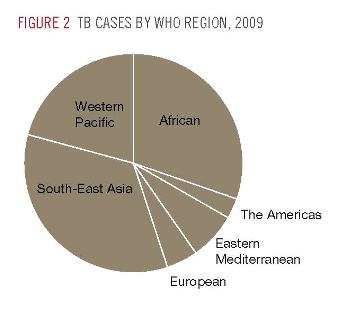
What surprised me on the press releases and news articles announcing the Sirturo approval was the clear admission by Johnson & Johnson that the Sirturo “commercial opportunity is very limited.” As the following diagram shows, TB is predominantly a disease that affects low and middle-income countries. However, there may be other value created for J&J that are not directly tied to top-line Sirturo sales.

{credit}Global Plan to Stop TB{/credit}

In the research & development process for Sirturo, management would have considered additional joint value propositions of a novel TB drug offering. For example, the successful commercialization of Sirturo for J&J can potentially win them a Priority Review Voucher (PRV) from the US Food & Drug Administration.  PRVs are administered by the US FDA and designed to encourage development of new therapeutics for prevention and treatment of tropical diseases including TB.  If a PRV is granted to J&J, it entitles the pharmaceutical firm to speed up the FDA regulatory process on another drug candidate from its portfolio. Economists estimate that the priority review can shorten the review process by 7-12 months.  With the faster time to market and increased sales under patent protection, the voucher can be worth between $50million-$500million USD to J&J.

Second, the downstream delivery and sales of Sirturo to emerging markets can open new distribution channels and relationships in developing countries.  This would potentially allow Janssen Pharmaceuticals, as a subsidiary of J&J to further open its entire product portfolio to new markets.

Sirturo offers hope to the approximately 450,000 MDR-TB patients each year with a new efficacious mechanism of action and shorter regimen.  It is difficult to model how much innovative pull incentives such as the FDA priority review voucher scheme or generation of goodwill impacted the development timeline for this Sirturo, but there is no question that it helps address a public health issue that has for too long only had limited options.


[1] Ma, Z., Lienhardt, C., Mcllleron, H., Nunn, A., & Wang, X. (2010). Global tuberculosis drug development pipeline: the need and the reality. The Lancet, 375(9731), 2100-2109.

[2] Harper, C. (2007). Tuberculosis, a neglected opportunity? Nature Medicine, 13(3), 309-312.