TechBlog: Tell-tale LIPSTIC reveals cell-cell interactions

Screen Shot 2018-05-22 at 8.44.27 AM

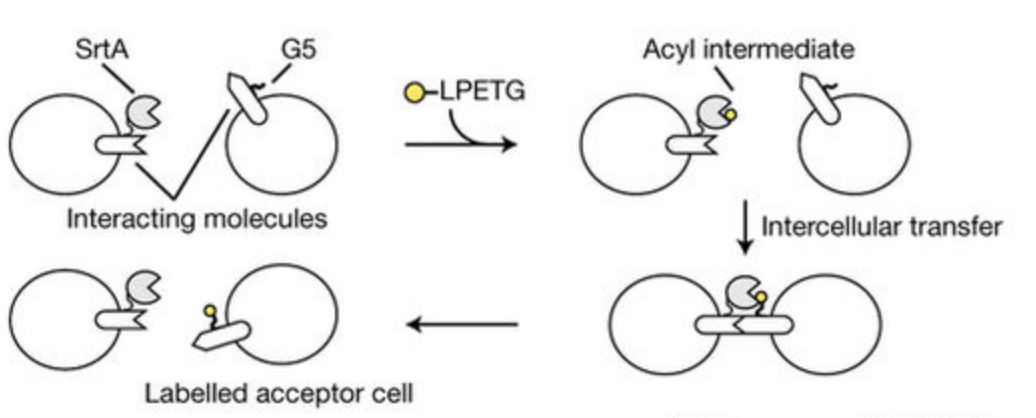
{credit}Pasqual, G. et al. Nature 553, 496–500 (2018).{/credit}

By Esther Landhuis

The mammalian immune system is a sprawling network of cells, each with unique properties and functions. As discussed in my latest Technology Feature, immunologists have developed a range of technologies to characterize those populations, from mass cytometry to single-cell DNA sequencing.

But the immune system is, in fact, a system, and its members don’t act alone. Immune activity depends upon cell-to-cell interaction, as when a dendritic cell cozies up to a T cell and activates it, or when a T cell run-in prompts a B cell to make antibodies. “When those cells meet physically, that’s when you start an immune response,” explains Gabriel Victora, an immunologist at Rockefeller University in New York.

Victora and coworkers came up with a clever way to track these sorts of kiss-and-run incidents using a method they’ve aptly named LIPSTIC (Labelling Immune Partnerships by SorTagging Intercellular Contacts). The system is designed such that an interaction between protein receptors on two cells — from a dish or a mouse — triggers an enzymatic reaction that tags one of the cells with a tell-tale reporter molecule. That tag – a five amino-acid peptide capped with biotin – is like lipstick on a paramour’s collar, Victora says: “You know there has been an interaction if you put ‘lipstick’ on one cell and it shows up on the other.”

In a study published in January in Nature, the Rockefeller team used the LIPSTIC approach to study interactions between dendritic cells and CD4+ helper-T cells in transgenic mice – interactions that are critical for jumpstarting CD8+ killer-T cells in response to immunization. “Within one lymph node we could detect the dozen or so dendritic cells that were starting an immune response,” Victora says.

Immunologist Scott Mueller of the University of Melbourne in Australia is also using LIPSTIC mice to determine how dendritic cells signal to CD4+ T cells – but his group is examining immune responses to viral infection. By visualising these cellular interactions in real-time with intravital microscopy, “we hope LIPSTIC will help us identify the types of interactions between cells that we cannot ‘see’ by other methods,” Mueller says.

At this point LIPSTIC mice are set up to analyze cell-cell interactions mediated by the pairing of CD40 and CD40L surface proteins, which are found on antigen-presenting cells and activated T cells, respectively. Victora’s group plans to create additional LIPSTIC strains to analyze other receptor-ligand pairs of interest to immunologists. So far they have distributed the CD40-CD40L mice or reagents to about a dozen labs.

Esther Landhuis is a freelance science journalist in the San Francisco Bay area.


Suggested posts

Lattice light-sheet microscopy gets an AO upgrade
‘Carbon rainbow’ enables highly multiplexed microscopy

eMAGE extends the gene-editing toolkit

Uncertain Airspace: Changing career paths is disorienting and exhilarating

Pursuing a new career makes PhD student Jonathan Wosen feel like a baby goose—and he loves it.

Sometimes I ask people, “if you weren’t studying biology, what would you do?”

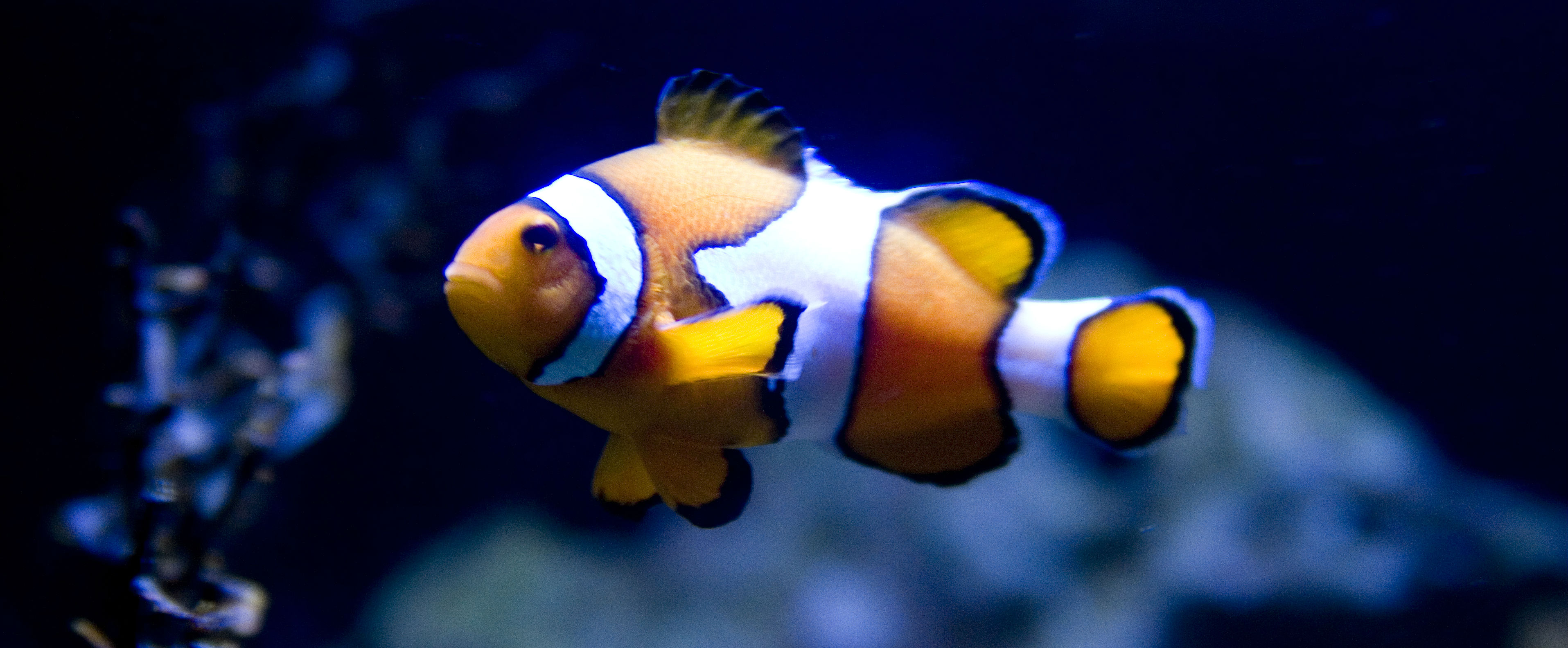
At first, they’re taken aback, and I don’t blame them. PhD students are self-selected for a certain kind of persistent, focused thinking; that’s what it takes to become the world’s leading expert on your thesis project. We are as deeply immersed in our work as a fish in water. That makes asking a graduate student to consider a different field of study a lot like asking a fish to imagine life on dry land.

Clownfish_in_blue_water-smaller

“We are as deeply immersed in our work as a fish in water. That makes asking a graduate student to consider a different field of study a lot like asking a fish to imagine life on dry land.”

Continue reading

Lessons from a laureate

Carina Dehner shares what she learnt at the 2015 Lindau Nobel meeting from Professor Peter Doherty, winner of the Medicine or Physiology Nobel in 1996.

Guest contributor Carina Dehner

Carina-Dehner-naturejobs-blog

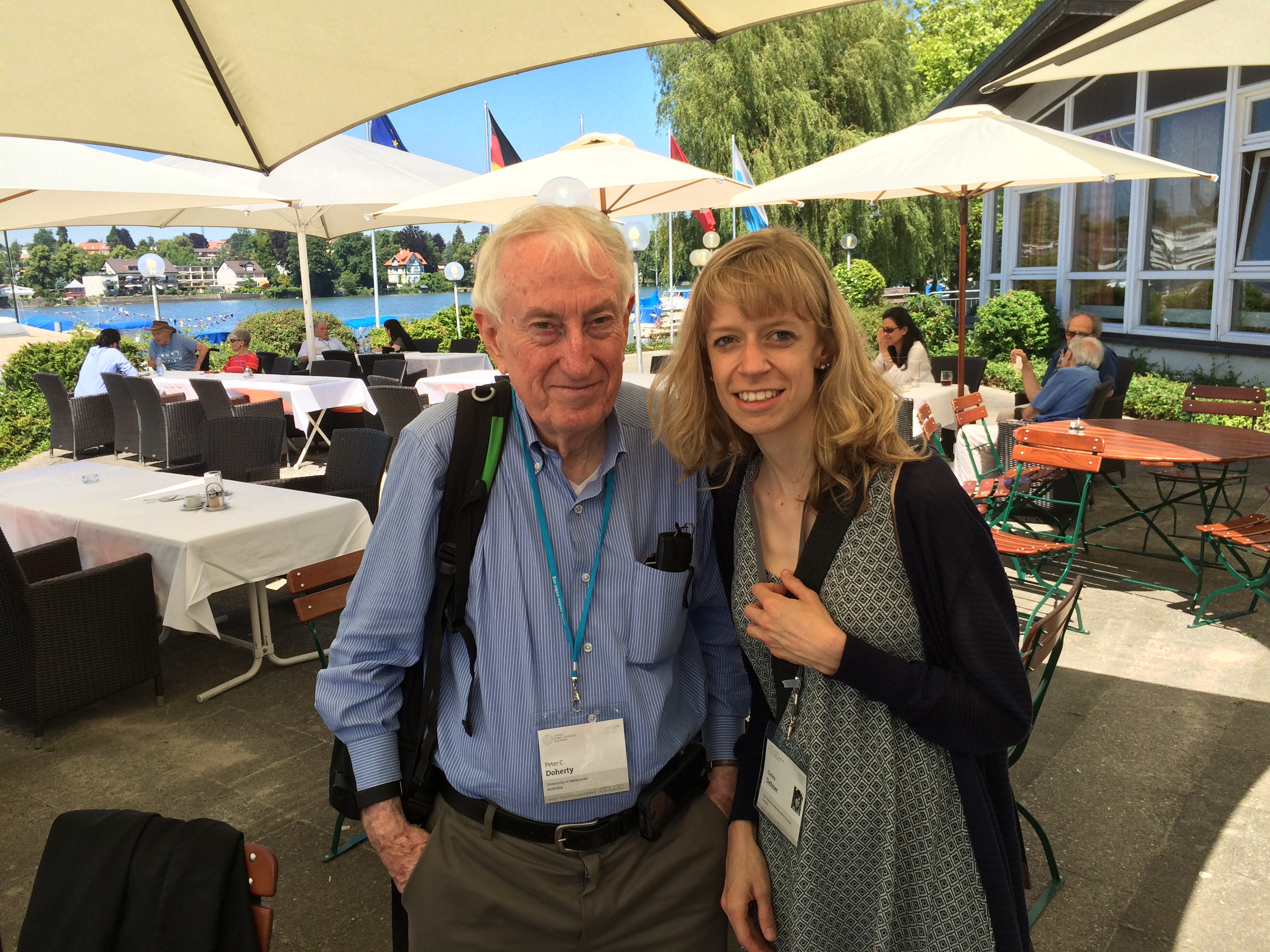
Peter Doherty and Carina Dehner{credit}Image credit Carina Dehner{/credit}

The Nobel Prize is a highly coveted and uniformly respected accolade. Receiving this honor opens almost every single door in the world; seemingly every country will welcome you with open arms. For example, the American immigration system will immediately provide you with a green card–. Furthermore, it conveys life-long prestige which many use to influence policy.

But, what is so special about these laureates? What happened in their lives and education that primed them for their seminal achievements? At the 2015 Lindau Nobel meeting I had the opportunity to interact with Professor Peter C. Doherty, winner of the 1996 Medicine or Physiology Nobel for his research on the immune system. He and Rolf Zinkernagl discovered how the immune system recognizes cells infected by a virus, deepening the understanding of how the immune system distinguishes self from foreign molecules. I was interested in his work as it closely relates to my own research on autoimmune diseases. What I was most excited about, however, was what I could learn from someone who has reached what many consider to be the pinnacle of a scientific career.

Nonlinear paths

Doherty began in Australia as a veterinary doctor, then switched to pathology, where he made his novel findings in immunology research. This meandering path is not unique to Doherty – many scientists often switch research fields, following research questions they find interesting. This type of career path is worth considering because it might stop you from developing tunnel vision and be open for other aspects.

Mentors

Today young scientists are advised to seek a mentor, but it struck me as interesting that Doherty’s never had one. Although he did mention annual meetings with a supervisor in pathology, he never gleaned constructive feedback that helped guide and formulate his thinking. He often left meetings with a simple “good idea” and nothing more. But this obviously did not discourage him.

He doesn’t believe mentors are the be-all-and-end-all. Many senior scientists are extremely busy, and might not be able to focus much attention on your needs as a young researcher. Instead, he suggests speaking to those who are just one or two steps ahead of you in your chosen career path to find out what they’ve experienced. Not only that, but if you want the best learning experience, “it helps to have a mentor who will continue to be enthusiastic about you after you’ve left “the fold”.

Yet he does his best to help his current students. Now, Doherty spends more time away from the bench, reviewing his staff’s papers and working with them to improve their communication skills. “Being able to express him- or herself is one of the most important things in a scientist,” he says.

Science communication

As part of my experience at Lindau, I was given the opportunity to present my research in Doherty’s master class on immunology research. I learned how difficult it can be to convey one’s research to an audience, particularly those not in your field. In asking essential word definitions and mechanisms in immunology – addressed to the audience, he made it obvious how important it is to make one’s own work understandable for any audience. Instead of skipping the details he recommended focusing on the message of the project.

Doherty enjoys communicating ideas that are important to him and encourages young scientists to express their opinions, thoughts and most importantly their work to others. One way he recommends is by submitting written articles to publications like The Conversation. “[It] is a great option for spreading your work – it’s openly accessible and it saves you from wrong journalism – you yourself can set your point of view there,” he says. He believes that the problem lies with well-qualified science journalists losing their jobs, “and the fact that media organizations push a particular (and at times toxic) line.”

So instead he suggests scientists reach out to the public themselves. “The lack of awareness of science and how it works is dangerous, especially when ignorance is a license to deny realities that may be dangerous to us,” he says. “We need everyone to speak up, and younger people are more likely to be adept in the ‘new media’.”

His advice on how to learn to do this is to just get writing.If you can find someone who is good and will read your stuff, listen to what they tell you,” he says. He had a short list of tips that would be useful for any scientists, whatever their career stage:

Less is more. You don’t have to cover everything. Instead, focus on getting a key message across.

Tell a story, whatever format you use.

Avoid jargon where you can.

Don’t reproduce anything you don’t understand. “If you read an impressive argument or statement that you don’t understand, don’t reproduce it. The originator probably doesn’t understand it either!”

The end goal

When reflecting on the Nobel itself, Doherty believes that “this prize is much more recognition than what you deserve – suddenly things come up you never thought about before.” But there are also advantages of a prize like this. He now has the ability to provide yearly financial support for the training of young scientists, which brings him much joy.

#ScientistOnTheMove: February 2015

This month scientists have been setting up new labs, coordinating research, moving continents and more.

haworth-davis-naturejobs

Claire Haworth and Oliver Davis{credit}Image credit: Jan MacDonald at Blenheim Photography{/credit}

Claire Haworth and Oliver Davis, who both work in behavioural and statistical genetics, met whilst they were studying for a PhD at the MRC Social, Genetic and Developmental Psychiatry Centre at King’s College London and “managed to squeeze in getting married between submitting our PhDs and starting fellowships!” After graduating from their PhDs in the summer of 2009, Oliver started a Wellcome Trust funded postdoc in Oxford and Claire, funded by the MRS and ESRC, stayed in London. After her second fellowship Claire moved to the University of Warwick to set up her own lab and Oliver moved to UCL to start his own group in January 2013. After years of long commutes to see each other, both Oliver and Claire will now be working in the same laboratory for the first time since they finished their PhDs. “We are moving to the new MRC Integrative Epidemiology Unit (IEU) at the University of Bristol to establish our joint Dynamic Genetics Lab. Oliver will be Associate Professor in Statistical Genetics, and I will be Associate Professor in Behavioural Genetics.” Oliver has already started his position, and Claire will begin in April. the biggest challenge for them is that whilst they are moving and settling into Bristol, they are both still fulfilling promises to UCL and Warwick by “providing the teaching we committed to at the start of the academic year. It’s an understatement to say we’re a little stretched by these commitments at the moment, but we’re looking forward to focusing on our new roles from the summer.”


Meru-sheel-naturejobs

{credit}image credit: Alpana Dave{/credit}

Meru Sheel was doing pre-clinical, lab-based studies of parasite immunology at the QIMR Berghofer Medical Research Institute in Brisbane, Australia, when she got itchy feet. “While my lab-based research was very exciting and challenging, it lacked the big picture scenario that I was after,” she says. This, combined with the long hours spent on failing experiments and the lack of grant funding, meant that she wanted to make a switch. For Sheel, the most challenging part of leaving her position was that she was going to miss the research. “That feeling that maybe I will crack the mechanism of action with this experiment,” she says. Now, Sheel is the senior research officer for Group A Streptococcal diseases at the Telethon Kids Institute in Western Australia, and while she isn’t in the lab doing research, she is “reading and hunting for ideas and technologies that we can use to advance the development of vaccines and improve an old antibiotic to treat the same bug!” The role of a senior research officer involves coordinating research, analysing data and generating ideas and while gaining some management skills. “I have learnt to transfer my skills and now I love what I am doing.” Continue reading

What skills do the University of Toronto department of immunology alumni take away from postgraduate courses?

contributors Yuriy Baglaenko and Eric Gracey

Students from the department of immunology at the University of Toronto recently completed a survey of their 288 alumni, tracking their career choices and progressions through life. In this post, Yuriy Baglaenko and Eric Gracey ask the alumni what they have done after leaving the University of Toronto, and which skills they learned there have come in useful in their careers.

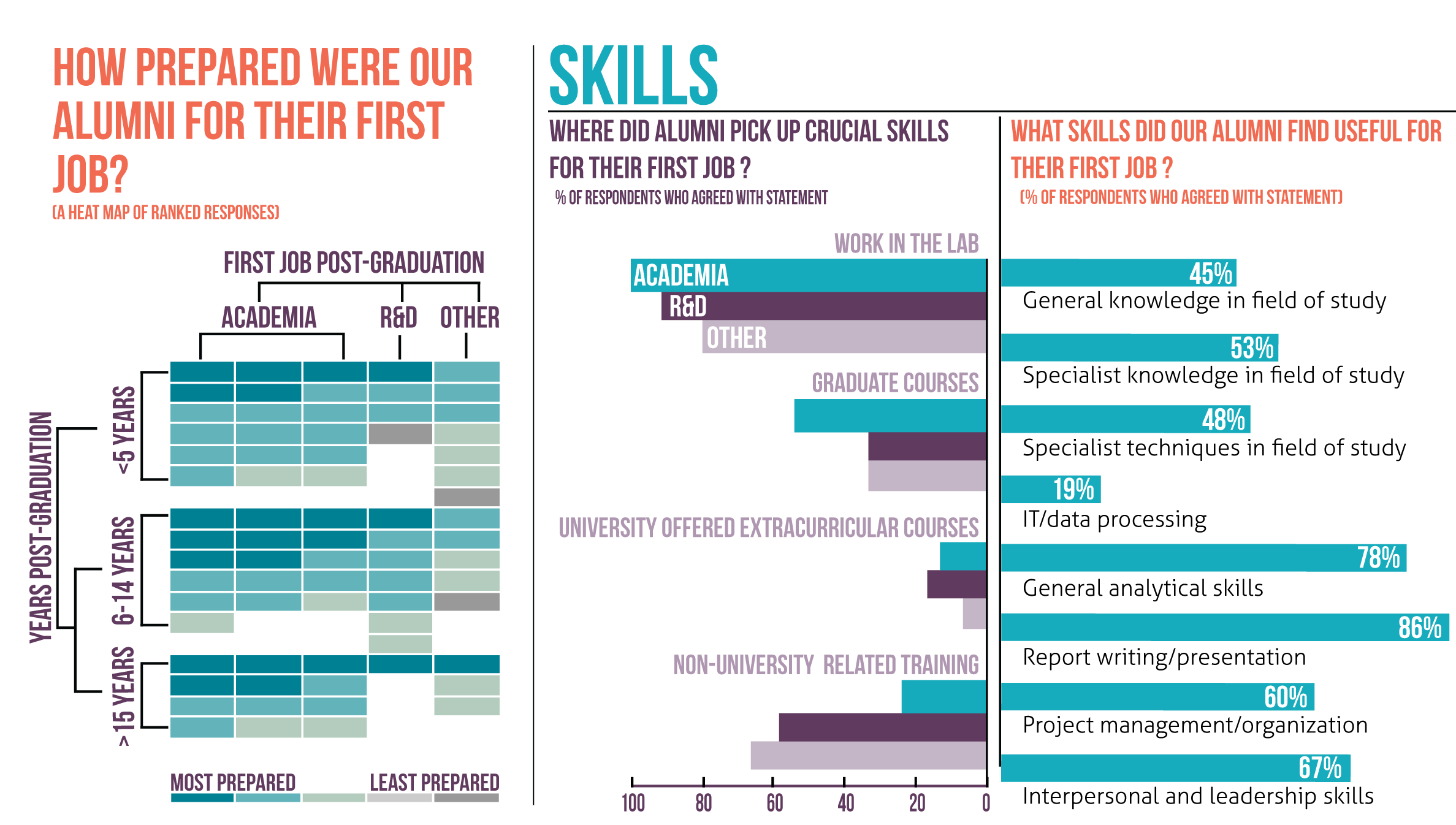
As graduate students, we are both the consumers of education and the producers of knowledge, and the success of universities depends on the research we produce. Many university ranking systems disproportionately value research impact: the Time’s Higher Education University rankings has 30% of the ranking composed of publication citation impact and an additional 30% comprised of research volume, income and reputation. Yet, graduate students are considered trainees and by attending courses and conducting independent research, we are supposed to be preparing for the next chapters of our lives. In a recent survey from the Department of Immunology at the University of Toronto, we asked our 288 alumni to evaluate the effectiveness of that training.

In a previous NatureJobs blog post, we summarized the vocation and location trends uncovered in this survey. In this post, we ask how well graduate training the University of Toronto immunology department prepared our alumni for their chosen careers and pass along some of the comments that emerged.

NJB - A student led graduate alumni survey Part 2_v2

{credit}Yi-Min Chun{/credit}

Continue reading

Where do all the alumni go?

Contributors Yuriy Baglaenko and Eric Gracey

Students from the department of immunology at the University of Toronto recently completed a survey of their 288 alumni, tracking their career choices and progressions through life. In this post, Yuriy Baglaenko and Eric Gracey follow the alumni around the globe, to see where they have ended up after leaving the University of Toronto.

The sub-prime mortgage crisis of 2008 had global economic ramifications, still felt to this day. This crisis was particularly close to the heart of business schools, which were criticized for not instilling the proper skills and ethics in their graduates. In response to this disaster, many MBA programs restructured to adapt their training by having continuous dialogues with industry and adding a stronger focus on softer skills.

Recent reports have provided evidence that the scientific system may also be facing an impending crash, with funding levels stagnant, grant success rates diving and an increasing reliance on trainees as producers of knowledge. Will graduate training preemptively change to avoid a scientific meltdown or continue to lag behind a changing world?

Why survey alumni?

Unfortunately, graduate training is rarely evaluated. New courses and technologies might come and go but fundamentally, graduate education has remained unchanged for many years. Only recently have a limited number of academic or industry track PhD programs been introduced to bring training in line with a changing job market. Continue reading