Finding job satisfaction as a scientific project manager

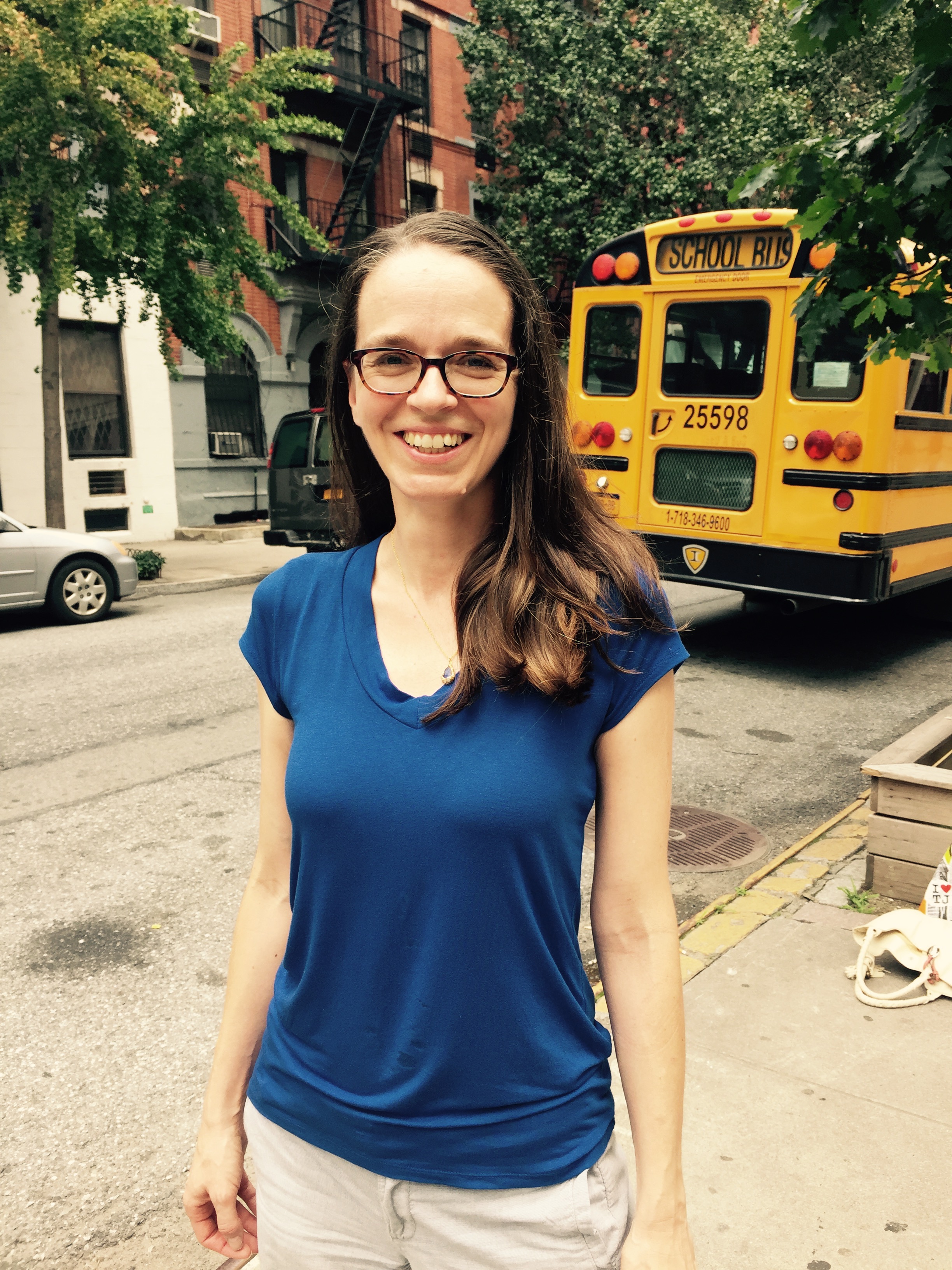
After completing a PhD and postdoc studying disease mechanisms behind epilepsy and autism, Dorothy Jones-Davis found job satisfaction as a scientific project manager working at the Foundation for the National Institutes of Health, where she coordinates projects on neuroimaging and Alzheimer’s Disease.


How does your scientific training help in your job?

My area of research was epilepsy and autism, so my specific research is not as applicable, but having a broad neuroscience background has served me. Even though I’m not at the bench, I still read neuroscience papers; I still understand science.

{credit}Dorothy Jones-Davis{/credit}

As for the intangible skills, some are leadership and some are organizational skills that you learn as you work your way through scientific training. I don’t think graduate students actually give themselves enough credit, but you are actually managing a project. My PhD was a portfolio of projects that I had strung together on a larger theme, and thinking about it that way, I am well equipped to be a project manager.

I think the fact that I did so much outside of my PhD and postdoc, such as mentoring, working with high school students and serving on university committees, helped me get a policy fellowship and the job I do now
Continue reading

Finding job satisfaction as a science strategist

After completing his PhD and postdoc at The University of California, Berkeley in the biophysics of cancer cell growth, Gautham Venugopalan completed a science policy fellowship sponsored by the American Association for the Advancement of Science (AAAS). He describes how that experience led him to a job as an analyst at Gryphon Scientific, a consultancy focused on public health and national security.

Tell me how you planned your career path.

I could tell you a story that I thought I should do this, and then I thought I should do that, and it all prepared me for this grand thing. But let’s be real. That’s not how that works.

Venugopalan Head Shot-2

{credit}Richard Novak{/credit}


Why did you get a PhD?

I have a history of just jumping off and doing things that I’ve never done before.  I went into the biology program in my senior year. And I decided to try grad school. At the time I was thinking, all these programs that I’m applying to are really solid, I’ll have an interesting skill set that I can use to do something, and I’ll work that out.


Did you do much outside the lab during your training?

I ended up starting a nonprofit in grad school with a few of my friends. I spent time at the career center at UCSF; I did a fellowship at the U.S. State Department.

Continue reading

Finding job satisfaction in a health nonprofit

After advanced training in psychology, neuroscience, and endocrinology, Lana Gent found job satisfaction as a director of science at the American Heart Association in Dallas. Here she describes what the job entails and how it uses her scientific training in a very different setting than a lab.

Tell me about your academic training.Lana_Gent_CM-2

I started in phenomenological psychology, looking first at chimpanzees in a zoo and then how dogs were making decisions based on social influences from their species. I did that throughout my graduate school career at the University of Texas at Arlington, but there aren’t a lot of jobs in the consciousness of animals. So I started research in neuroscience at UT Southwestern Medical Center, doing stereotactic surgery on rats and mice, to understand what was happening in the brain during cocaine addiction.

After a complicated pregnancy, I decided to stay home with my daughter for a year.  I went back to UT Southwestern in a different lab—my surgical skills were in high demand —this time looking at the effect of estrogen on metabolic syndrome.

Continue reading

Finding job satisfaction as a venture capitalist

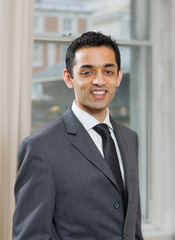
After a brief stint as a general surgeon, and a PhD in translational cancer research from the MRC Cancer Cell Unit, University of Cambridge, UK, Bali Muralidhar changed career direction to venture capital investment.

Read more about Bali’s career transition here.
Bali-Muralidhar-naturejobs-blog

{credit}Image credit: MVM Life Science Partners LLP{/credit}

What happened after you graduated from your PhD in 2008?

Throughout my academic and medical training I had seen a few start-ups come and go, and thought that investing in them could be something I might find interesting.

So after I completed my PhD in 2008, I moved to Bain & Company, a global consulting firm, where I spent time working with healthcare companies. It gave me a wider view of business and essentially replaced an MBA. This proved to be a great introduction for venture capital investment careers.

What skills did you acquire in academia that have been useful during your career in venture capital?

It’s helpful to understand where and how the pitfalls lie in science and how to read a paper. My understanding of the scientific method and ability to analyse different data sets have also been extremely useful.

For example, I’ve been looking at a potential drug that needs to go through a clinical trial before it is approved. Part of my diligence process is to comb through all the patient data, scientific literature, clinical papers, pre-clinical papers etcetera, to work out whether the thesis to the drug makes sense. I then need to work out if the clinical trial design is sound.

What was one of the biggest challenges you faced when switching from academia to venture capital?

As a scientist, you need to do all experiments and collect all the data before making a conclusion. In venture capital, this isn’t always possible. Sometimes you cannot get the data or collecting it is going to take too long, so you need to make the best decision you can with the information that you have. This mindset isn’t easy, but it comes with time and experience.

What do you enjoy most about your work?

I find I’m in a privileged position, seeing cutting edge science and potentially patient-changing companies that you might not see if you were doing niche research in academia, where, often, you’re stuck thinking about one field.

What advice do you have for any scientists looking to work in venture capital?

I wholeheartedly recommend that you get some experience with a consulting firm. These companies give you a wider view of what’s out there. You see lots of different science, work with lots of different people and you get an insight into the commercial world.

The training and professionalism that you get is a really great addition to a PhD. In a PhD you’re used to working in a lab and just with a supervisor; you don’t understand or have much experience of management. A consulting firm gives you the opportunity to develop these skills, which are essential for working in venture capital.

Interview by Julie Gould

Finding job satisfaction as a policy analyst

Working in science policy is all about taking complex science from experts and translating it into something accessible, to be used in key decision making.

catherine-ball-naturejobs-blog-small

{credit}Image credit: Catherine Ball{/credit}

After completing a PhD at the University of Oxford, trying to find different ways to make biological tools for drug development, Catherine Ball moved into science policy, and in May 2015 she started her current role as Policy Analyst for the House of Lords Science and Technology Select Committee. Here she describes her transition from academia.

Click here to read about how Ball pursued science policy as a career.

Why did you decide to leave academia?

About two thirds of the way through my PhD I realised that academia wasn’t for me. I found it quite frustrating when things didn’t work in the lab and I struggled to cope with the fact that you could spend a whole day in the lab and be no further forward than you were when you started.

My area of research was also quite niche and theoretical, and sometimes it felt like research for research sake. I soon realised I was more interested in the broader context and implications of science. So, in 2013 I took up a role as Policy Advisor for the Biochemical Society and Society of Biology where I focused on antimicrobial resistance, equality & diversity, science policy in the devolved nations, open access and drug discovery.

What was the transition from academia to science policy like?

It was a big learning curve. It’s also about understanding the landscape, how policies are made, where scientific expertise feeds it and the best way for it to do so. I had little experience in this when I realised this would be a good career for me, so I made sure I got some before I finished my PhD.

What skills did you need to transfer?

Science communication was the main one. Lots of the work I did in terms of translating complex science and articulating it in a readily understandable and translatable way was useful. It’s all about taking complex science from experts and translating that to something anyone can readily read and use to make a key decision based on that. Continue reading

Finding job satisfaction as a medical science liaison

David Crosby urges young scientists to take real advantage of the mentorship opportunities that abound everywhere.

David_CrosbyAfter completing a PhD at the University of California, Irvine and a postdoc at the University of California, San Francisco, David Crosby found job satisfaction teaching health care providers the latest information about hepatitis therapies. Here he describes how he founds this career, and the connections to land his first position.

Read more about David’s career transition here.

What’s the difference between medical science liaisons (MSL) and pharmaceutical sales reps?

In sales, they are principally involved in promotion. They spend a lot of time talking about the product, its utility within that physician’s practice, and strengths in comparison with the competition. My role, on the surface, it looks similar. I too go into the physician’s office and discuss the disease state and available medication. But my goal is not specifically to motivate the physician to use our product versus another product.

How did you learn that MSL jobs exist?

My sister-in-law has been in pharmaceutical sales for fifteen years. She asked me “did you ever think about becoming an MSL?” I said “what’s an MSL?” She plugged me in to some former colleagues who gave me more insight from the perspective of former bench scientists.

Then, I talked to a friend of mine from University of California, Irvine. She was a crystallographer, and she ended up going down the MSL route. I thought, “I’ve spent the last nine years working in infectious disease. That’s a little bit more closely related to the clinic than crystallography!” Continue reading

Finding job satisfaction in financial services

Fund management and financial services give physicist Ben Peters an insight into a highly uncertain world.

After completing a PhD at the University of Oxford, exploring single molecule transistors, Ben Peters moved into financial services. Here he describes his transition from academia.

Click here to read about how Peters pursued fund management as a career.

Ben-Peters-Naturejobs-blog

{credit}Image credit: Ben Peters{/credit}

Why did you decide to leave academia?

Job security is a big thing for a postdoctoral researcher. Having to reapply for funding every few years didn’t much appeal to me at the time, particularly as I’d just had a child.

But as it happened, I had become interested in the world of investment and investment management through my brother in law, Hugh, who I now in fact work with. So I had an ‘in’ to the industry, and I had an idea of where I wanted to look.

What are some of the biggest lessons you’ve learned since starting out in fund management?

In theoretical physics you derive an equation and you get a result. With experimental physics you do an experiment and within the boundaries of error, you get a result. You don’t really get one in this field in terms of finishing a project or getting a precise answer. Continue reading

Finding job satisfaction in venture philanthropy

Multiple informational interviews can bring great insights into possible careers, says Arie Meir.

arie_meir-naturejobs-blogAfter earning his degree in biophysics at Berkeley, Arie Meir took an engineering internship at Google. But he didn’t want to stay on that path. Here, he explains how informational interviewing led him to an intriguing position and helped him ace interviews.

Click here to read how Meir gained skills and career exposure in graduate school.

Tell me about your job.

I work for the philanthropic arm of Google; I help evaluate grant proposals from a technology standpoint. Our work is at the nexus of technology and impact. I work with social entrepreneurs and academic faculty to understand the state of the research in a field, like 3D printing for affordable prosthetics. I review funding opportunities and think ‘How is this game-changing and scalable?’ and ‘What are the risks?’ and ‘How would the world be different in five years if we fund this?’ Continue reading

Finding job satisfaction in science outreach

How Elizabeth Waters took a love of mentoring and training into Rockefeller University’s teaching labs.

Elizabeth-Waters-naturejobs-blog

Elizabeth Walters

After completing her PhD at Oregon Health Science University and doing postdoctoral and associate researcher work in neuroscience at Rockefeller University, Elizabeth Waters transitioned to a position in science outreach there. She describes her move to science education.

Click here to read about how Waters pursued science outreach as a career.

What do you do as lead scientist at the university’s outreach programme?

We offer lab classes to NYC high school students. This was something that was previously run twice a year and now it is run twice a week. We introduce kids and their teachers to the molecular biology skills that were so important in Rockefeller’s discoveries, and to the idea of how scientists choose what scientific questions interest them.  We ask: do you like top down questions or bottom up questions? Even in science, you have to discover what kind of scientist you want to be. Continue reading

Transferable skills: Helping PhDs and postdocs find careers

Thomas Magaldi explains how he found the career he wanted by starting with the job he got.

Contributor Monya Baker

Thomas-Magaldi-Naturejobs-Blog

Thomas Magaldi

After completing a PhD in genetics at Yale University and a postdoc in virology at the U.S. National Institutes of Health (NIH), Thomas Magaldi built a career designing professional development programmes for science students and trainees. He is now career services administrator at Sloan Kettering Institute in New York City. Here he describes how getting job offers meant finding ways to gain experience away from the bench.

What skills from your PhD and postdoc do you use in your job today?

Definitely presentation skills. That is one thing that I really learned from my PhD mentor; he was excellent at providing feedback. Everyone that comes out of his lab is an excellent communicator. I give presentations on networking and resume writing, and I love that part of the job. As a grad student, we look at that as a throwaway skill, but it is a crucial part of my success.

Also my problem solving ability. You’d be amazed at how often applying the scientific method is useful.

What skills can most PhDs bring to the workplace?

Persistence: that’s a skill all PhDs have in pushing through difficult problems.

Doing a thesis is like doing your own mini project. The ability to start and finish your own project is a useful skill in more than just academia. That is one of the most important skills employers look for, regardless of industry. Continue reading