Female Saudi scientist to join UN Scientific Advisory Board

?????????????Hayat Sindi,  a nanotechnologist and biotechnology entrepreneur from Saudi Arabia, has become the first Arab woman invited to the newly formed UN Scientific Advisory Board. She joins two other Middle Eastern scientists appointed to the board, Nobel laureate Ahmed Zewail from Egypt and Abdullah Daar, a professor of public health at the University of Toronto originally from Oman.

The 26-member board has scientists from all over the world who represent natural, social and human sciences and engineering to provide advice on science, technology and innovation (STI) for sustainable development to the UN.  “It brings together scientists of international stature, and will serve as a global reference point to improve links between science and public policies,” said UNESCO director-general Irina Bokova in a press statement.

Last year, Sindi was elected to be the first Saudi to become a UN goodwill ambassador to support science education, specially inspiring more girls to enroll in science subjects. Besides her work with the UN, Sindi is also a well-known speaker on entrepreneurship and has been vocal in her home country to promote education for girls. Born in Mecca, Saudi Arabia, she was the first Saudi woman to receive a PhD in biotechnology from Cambridge University.

She is the co-founder and director of Diagnostics for All, a non-profit institution that aims to create low-cost easy-to-use diagnostics tools for developing markets. Earlier this year, she also set up the ‘i2nstitute for Innovation and Ingenuity’ to promote entrepreneurship for young scientists in the Middle East.

Alberto Cairo on storytelling in science communication

Alberto Cairo responds to a Correspondence criticising the use of storytelling techniques in scientific research articles and journalism.

Nature Methods’ August Points of View article by Alberto Cairo and Martin Krzywinski described how to use techniques of storytelling to design better scientific figures. That article prompted a passionate response from Yarden Katz arguing that storytelling has no place in scientific articles. Cairo and Krzywinski respond that their article was overinterpreted. This exchange prompted us to argue in the November Editorial that storytelling serves an important role when used properly.

In this guest post, Alberto Cairo expands on their printed response.
Alberto CairoYarden Katz’s thoughtful response to our short column about visual storytelling techniques in science communication makes many cogent observations. We will use them as a starting point for a deeper discussion of the contents of the column itself.

First of all, Katz sees too much in our words. As explained in our published response to the Correspondence by Katz, we didn’t advocate for the use of storytelling to drive experiments. That is a very legitimate concern, but it was not our goal to promote this idea, so we won’t comment further on it.

Second, Katz presents an incomplete image of what storytelling and journalism are. He says that “great storytellers embellish and conceal information as necessary to evoke a response in their audience. Inconvenient truths are swept away while marginalities are amplified or spun to make a point more spectacular.” This is a rather bold claim that may be guilty of the same malady it denounces. It highlights the worst and obscures the best to be emotionally powerful.

It is true that many journalists begin with a preconceived idea—a narrative structure—and then choose the data which better fit it. They cherry-pick evidence to make a stronger and clearer point. They magnify outliers without mentioning the overwhelming prevalence of average values. This is the problem Christopher Chabris has identified in the work of famous journalist Malcolm Gladwell, in a recent long article (1).

This is not the approach we were trying to explain in our column. Proceeding this way, as Katz wrote, is wrong, and it is as wrong in science as it is in journalistic storytelling.

Moreover, we would like to remind Katz that there’s a long-rooted tradition in journalism that tries to stick to standards of truth which are close to those used in science. It was defined forty years ago by professor Philip Meyer, from the University of North Carolina at Chapel Hill, as “precision journalism”. Precision journalism consists of the use of social science research techniques in news reporting: Surveys, statistics, data analysis, visualization, etc. In the best of the worlds, all journalism should be based on a careful evaluation of data and evidence, but precision journalism tried to elevate the standards of what proper evidence really is, even considering the pressures and tight deadlines journalists need to endure and meet.

That tradition has mutated into different branches of journalism that overlap greatly: Computer-assisted reporting (CAR), and data-driven journalism (2) among them. The most famous exponent of this tradition nowadays is Nate Silver, author of the blog FiveThirtyEight who, using mainly Bayesian techniques, correctly predicted the results of several elections (3).

What is the method of journalists—storytellers—in these areas? They don’t pitch an idea and then try to find the best data to support and embellish it. Ideally, they may begin with a fuzzy notion of what they want to focus on, and then they collect evidence systematically and let stories emerge from it. These stories may be completely opposite to the notion they had in mind at the beginning. Finally, they write those stories or, as we suggested in our column, they visualize them, in many cases with the close advice of experts in the areas they are covering (4). This is the storytelling tradition we were thinking about when writing our column.

Another point that we made is that the techniques described are helpful mainly when researchers need to communicate with non-specialized audiences. Journalists and storytellers are aware that people cannot absorb large amounts of information at once, and that in many cases they lack the background necessary to understand complex scientific research. As we wrote, “inviting readers to draw their own conclusions is risky because even simple messages can hide in simple data sets.”

However, and this is a critical point, nothing impedes researchers or journalists to present two or more competing interpretations when they are equally founded on evidence or there’s great uncertainty. Or to first present their main conclusions in the form of an evidence-based visual story, a narrative or, at least, a compelling composition—not all information can be framed as a story, after all—and then let those readers interested in exploring the multiple nuances or angles of an investigation access the data gathered and analyzed for it. This is something data journalists do today (5).

Any of those approaches would help avoid the challenge correctly pointed out by Katz: “complex experiments afford multiple interpretations and so such deviances from the singular narrative must be present somewhere.” Indeed. Just not at the first level of the presentation. To communicate effectively, information needs to be layered and sequenced in a way that can be processed correctly by audiences (6) while respecting all its nuances. For good examples of journalistic work that is both engaging and evidence-based, see the books by David Quammen, Carl Zimmer, or David Dobbs.

And it’s not just journalists who embrace this particular kind of storytelling technique. Many scientists do, too. As a recent example, take Michael E. Mann’s The Hockey Stick and the Climate Wars: Dispatches from the Front Lines, a book that presents the evidence for global warming in the form of a narrative that is deep, rich, and captivating at the same time.

I’d like to conclude by quoting the words by the Yale University professor Robert P. Abelson that we included in our column. In his most popular book, Statistics as Principled Argument (1995), Abelson wrote that he used to ask his students “If your study were reported in the newspaper, what would the headline be?” That doesn’t mean that this headline is the only element that should be reported. Rather, it means that it should be the first element to be reported, followed by a discourse based on—to borrow Katz’s beautiful description—”evidence and arguments that are used—with varying degrees of certainty—to support models and theories.” This would be a discourse that is interesting to read and that thoroughly respects the integrity and the complexity of the underlying data. Therefore, we believe that storytelling, if carefully handled, can be compatible with the framing for presenting scientific results Katz outlines.

Footnotes
(1) See https://blog.chabris.com/2013/10/why-malcolm-gladwell-matters-and-why.html

(2) The academic literature in communication studies and journalism has not reached an agreement on how these categories should be defined. Basically CAR focuses on the use of data and databases to inform traditional reporting work (writing and speaking). Data-driven journalism expands the scope to include also the design of tools for readers to explore data, such as visualizations, mobile apps, etc.

(3) Silver’s blog used to be hosted by The New York Times. It has recently moved to ESPN.

(4) Journalists are, by tradition and training, jack-of-all-trades, even those who specialize in research, statistics, and computing.

(5) ProPublica and Texas Tribune, for instance, are two independent, non-profit investigative journalism organizations which frame their projects as stories, but then they usually let readers access the databases they put together and analyzed.

(6) Multiple recent books warn against the dangers of storytelling, cognitive biases, and patternicity, the tendency to see patterns where none exist. Arguably, the most popular ones are Kahneman (2011) and Shermer (2012). However, both authors also concede that we humans love stories, and we understand complicated information better if it can be presented as a story. So why not take advantage of that feature if we are conscious of its possible shortcomings?

REFERENCES
Abelson, Robert P. (1995) Statistics as Principled Argument. Psychology Press.

Kahneman, Daniel (2011). Thinking, Fast and Slow. Farrar, Straus and Giroux

Mann, Michael E. (2012) The Hockey Stick and the Climate Wars: Dispatches from the Front Lines. Columbia University Press.

Meyer, Philip (1973). Precision Journalism: A Reporter’s Introduction to Social Science Methods. Indiana University Press.

Shermer, Michael (2011). The Believing Brain: From Ghosts and Gods to Politics and Conspiracies—How We Construct Beliefs and Reinforce Them as Truths. Times Books.

Silver, Nate (2012). The Signal and the Noise: Why So Many Predictions Fail — but Some Don’t. Penguin Press.

India balks during Montreal Protocol talks

International negotiations over a proposal to regulate hydrofluorocarbons (HFCs) came up short in Bangkok this week.

Two separate proposals, one by Micronesia, Morocco and the Maldives and the second by Canada, Mexico and the United States, would expand the Montreal Protocol on Substances that Deplete the Ozone Layer to regulate HFCs, commonly used as refrigerants and in other industrial applications. HFCs were developed as ozone-friendly alternatives to chlorofluorocarbons (CFCs), but they double as powerful greenhouse gases.

Environmentalists reported that the idea continued to garner support at this week’s meeting, which ended today. In particular, South Africa and the larger negotiating block of African countries endorsed a call to begin formal negotiations over the HFC amendments. But many had hoped for a more concrete decision in favour of regulating HFCs this week, given the endorsement by leaders of the Group of 20 (G20) in September. India, joined by Saudi Arabia, blocked consideration of the amendments.

With China apparently on board thanks to an agreement between US President Barack Obama and Chinese President Xi Jinping, India shouldered most of the blame. India backpedaled after signing onto the G20 commitment, although Obama and Indian Prime Minister Manmohan Singh agreed on 27 September to launch negotiations over the issue.

The proposal has been in the works for several years (for prior coverage, see ‘Cutting out the chemicals’ and ‘Ozone treaty could be used for greenhouse gases’). At this week’s meeting, delegates called for a technical report on HFC alternatives and a formal workshop on the issue next year.

UK environmental regulator to cut more than 1,500 jobs

The UK Environment Agency is to slash its staffing numbers, raising fears that its ability to function will be compromised.

The agency, which is responsible for regulation in areas including pollution and fossil-fuel exploration, is to let around 1,550 staff go.

“Our budget for 2014/2015 will be confirmed shortly. However, we are likely to reduce staff numbers from the previous forecast of around 11,250 at the end of March 2014 to around 9,700 by October 2014,” said a spokesman.

Such cuts — which amount to more than 12% of the Environment Agency’s staff — have led some to speculate that some of the agency’s functions will have to be cut back too.

One anonymous member of agency staff told the ENDS Report — which broke the news of the job cuts: “We’ve already changed our ways of working so we regulate industry in a much more risk-based way and we rely on operators to self-report problems. We’ll do a lot more of that I guess, but how can you guarantee businesses are self-reporting properly if you don’t have the staff to check the reports?”

Top 5 most hated interview questions

By Anjie Cai, contributor

“What’s the most difficult question you were asked in an interview?”

We put this question to delegates at the Naturejobs Career Expo in London last month, and judging by the pained looks on their faces, it was clear that there had been some clangers. Here is a selection of the most hated questions, and what people thought of them.

161350828_interview_itstockthinkstock

{credit}iStockphoto/Thinkstock{/credit}

1. What’s a weakness of yours that has been mentioned by your colleagues?

Dreaded because: Having practiced the answer to ‘why are you the perfect candidate?’ you caught me by surprise with this negative twist. How am I supposed to navigate the fine line between being honest and planting a landmine?

 2. Tell me something unusual about yourself?

 Dreaded because: How unusual should I go? I have a pet spider? I could balance a chair on my chin? And compared to whom? How can I use this question to show the employer that I am capable, rather than weird?

 3. What other jobs have you applied for?

Dreaded because: This question is awkward and uncomfortable. It’s like being asked how many people you’ve dated. If I tell them all the jobs I have applied for, I might sound desperate and unappealing. If I say this job is my first choice, will you think I am committed? Or lacking in options?

4. Why does a PhD want an admin based job? Continue reading

Lead between the lines

Apologies for posting this a little late (again)… In the ‘in your element’ piece from our October issue, Somobrata Acharya from the Indian Association for the Cultivation of Science, Kolkata, recounts the role of lead throughout history. Element 82 has been known for thousands of years, and widely used owing to the fact that it is abundant, easy to extract, malleable and therefore easy to manipulate.

nchem.1761-i1

© MARY EVANS PICTURE LIBRARY / ALAMY

Lead was known to the ancient Greeks, somewhat confusingly under the name molybdos; it does make sense though, as they didn’t distinguish lead ores and molybdenum ones. In a similar manner, lead and tin were called plumbum nigrum (black lead) and plumbum candidum or album (bright lead), respectively, until the 16th century. Lead also appears in the Old Testament — I found these two incidences on the Elementymology & Elements Multidict website:

“Thou didst blow with thy wind, the sea covered them: they sank as lead in the mighty waters.” (Exodus 15, 10).

“Only the gold, and the silver, the brass, the iron, the tin, and the lead, Every thing that may abide the fire, ye shall make it go through the fire, and it shall be clean” (Numbers 31, 22-23).

This heavy metal was widespread in the Roman Empire, from water pipes to jewellery to sweetener production (in which lead acetate, also known as ‘lead sugar’ was used). It is toxic to humans though, damaging the nervous system and interfering with various organs and tissues. Lead poisoning can occur through either acute or chronic exposure — the latter being the most common one. It is very interesting that ancient Romans, Greeks and Chinese had noticed lead was toxic, yet it wasn’t until the 20th century that its use became strictly regulated, and leaded petrol and paint banned from sale.

The article also recounts some great discoveries involving this pervasive element — read for example in what way lead participated to the development of the radio, infrared technology, and understanding the quantum confinement effect.

Alice’s Analysis: The Book of Barely Imagined Beings by Caspar Henderson

Over the coming months, Nature’s Head of Press, Alice Henchley, will be reading and reviewing the books shortlisted for the 2013 Royal Society Winton Prize for Science Books, at a rate of one every week.  The winner will be announced at a public event at the Royal Society on the 25th November 2013 during which shortlisted authors will discuss their books with host Dara O Briain.  Prior to the announcement,  we’re running a competition on Of Schemes and Memes to win a set of the shortlisted books – all you have to do is predict the winning book and enter our prize draw.

The Book of Barely Imagined Beings by Caspar Henderson

When you first open the beautifully illustrated tome The Book of Barely Imagined Beings, you might think that it is a simple A to Z of the weird and wonderful creatures.  But this would be a gross misrepresentation of the ambition of the author Caspar Henderson and the wealth of disciplines covered therein. Whilst the book does catalogue some extraordinary beasts (just as the bestiaries of the Middle Ages did), it’s also a vehicle to engage the reader in physiology, evolutionary biology, behaviour and psychology, history of science and palaeontology, all written with a graceful literary style. Continue reading

Why does the new LEGO scientist work all night?

By Carolyn Beans, contributor

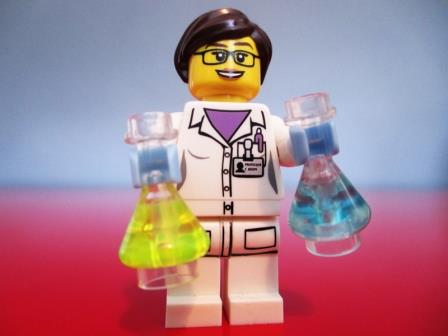
Professor C. Bodin, LEGO’s newest scientist minifigure, has a lot going for her. She built a fascinating career around finding “new and interesting ways to combine things together.” Her hard work was rewarded with a Nobrick Prize. She looks smart and professional in her crisp white lab coat and glasses. And last month, her very existence was met with a deluge of Tweets and blog posts as male and female science enthusiasts alike welcomed a long-over-due female scientist to the LEGO minifigure collection. Here is a LEGO character that will inspire girls to follow her away from pink-and-purple-sparkle-covered pass-times and into the lab.

The only trouble is that if girls actually read Professor C. Bodin’s bio, they’ll likely wonder whether they will ever get to leave that lab. According to Professor C. Bodin’s LEGO page, “She’ll spend all night in her lab analyzing how to connect bricks of different sizes and shapes…”

Prof Bodin

Prof Bodin{credit}Maia Weinstock {/credit}

I appreciate that LEGO wants to describe their new scientist as a hardworking professional. But I worry that we may lose budding scientists if we continue to depict STEM researchers as people who have no lives outside of their careers. Why can’t Professor C. Bodin do groundbreaking work during the day and still make it to her hip hop class or book club at night?  Continue reading

Blogroll: Exposing fraud

Editor’s note: As we continue to invite bloggers out there in the wild to compose our monthly Blogroll column, Tom Phillips penned the November 2013 column.

———-

Should bloggers highlight questionable research articles, and if so, how?

Paul Bracher, who blogs at ChemBark, was the first to write about the now infamous “just make up an elemental analysis” paper in Organometallics and he more recently raised questions about some peculiar NMR spectra in Organic Letters. Similarly, Mitch André Garcia of Chemistry Blog brought attention to some questionable TEM images in Nano Letters.

Some have asked whether blogs are an appropriate venue for exposing dubious work. Even Garcia has criticized Bracher for “[losing] sight of the line between witch hunting and the proper responsibilities of the online chemical community”. In defence, Bracher points out that by raising concerns about other scientists’ work publicly, he puts his own reputation and credibility on the line.

Derek Lowe, at In The Pipeline, reflects on who should look for and expose faked papers. Lowe believes that making a public spectacle out of fabricated work acts a deterrent, but he doesn’t intend to turn his blog into the chemical literature police. Instead, he prefers that those most harmed by a suspicious paper challenge it themselves. In a subsequent post commenters debate what action is appropriate for unreproducible papers — suggestions included publishing a rebuttal and simply “turn off your web browser and get back to work”.

Finally, on a less serious note, John Spevacek at It’s a Rheo Thing considers what he would do to win a competition held in Paris at a screening of the Ig Nobel awards show. It’s a competitive take on the pitch drop experiment, in which one must prepare the slowest flowing mixture possible out of kitchen ingredients, but with a catch — it has to drop before the end of the show.

Written by Tom Phillips, who blogs at https://blog.tomwphillips.co.uk.

———-

[As mentioned in this post, we’re posting the monthly blogroll column here on the Sceptical Chymist. This is the November 2013 article]