The wilder side of hip-hop

Posted on behalf of Boer Deng

Album Cover Art

{credit}Baba Brinkman{/credit}

Detroit rapper Eminem once managed to pair the lines “venereal diseases” and “burial of Jesus”. Though he does not rival that virtuosity, Canadian hip-hop artist Baba Brinkman blends scientific nous with polysyllabic prowess in singing about all things “-ology”, “-osis” and “-cene” (see the 2011 Nature Q&A).

Brinkman’s 2009 The Rap Guide to Evolution rhapsodized about progress in modern biology. After premiering at the Edinburgh Fringe Festival that year, it became so popular with students that downloadable teaching materials were made to accompany the music.

Brinkman’s new album The Rap Guide to Wilderness, released last month, again offers a lively and surprisingly sophisticated take on science. This time, it’s ecological balance. Part of the charm is the humorous incongruity of having weighty concepts squeezed into pithy musical compositions. This could have easily veered into parody, or heavy-handed didacticism, but The Rap Guide to Wilderness mixes seriousness and whimsy with some success. 

There are dud lines: take Party of Life‘s “Every creature’s got a skill and they all fit together/In incredibly intricate inter-connected networks”. But delightfully funny ones pop up too. Walden Pond, one of the strongest songs in the album, has a protagonist with “a cabin in the woods like Henry David Thoreau” where he waxes philosophical about our species: “we’ve been sedentary/For the blink of an eye; our lifestyles in the present vary/But never forget that we were quadrupeds and hairy.”

Canadian hip-hop artist Baba Brinkman

Canadian hip-hop artist Baba Brinkman{credit}Takavoli{/credit}

Brinkman is no dewy-eyed eco-martyr. “[D]on’t listen to back-to-landers/Thinkin they’re savin’ the planet by takin’ us ass-backwards,” he raps in Tranquility Bank.  Human destruction of wilderness is a theme, but the point is rather to do better with what has been learned. Science offers promising tools that would help stop or even reverse ecological decline, such as cloning (touched on in the song Bottleneck). While Brinkman recognises its Promethean potential, embracing new knowledge is essential to the discussion on wilderness and biodiversity, he reckons.

The Rap Guide to Wilderness is unlikely to replace Motor City rap at undergraduate parties. But it does have appeal for the modern, offbeat hylophile. Some of the proceeds from Wilderness will go to the WILD Foundation, a charity that collaborated on the album, and funds projects to conserve nature “while meeting the needs of human communities”. 

For Nature’s full coverage of science in culture, visit www.nature.com/news/booksandarts.


Churchill’s Scientists

Posted on behalf of Daniel Cressey

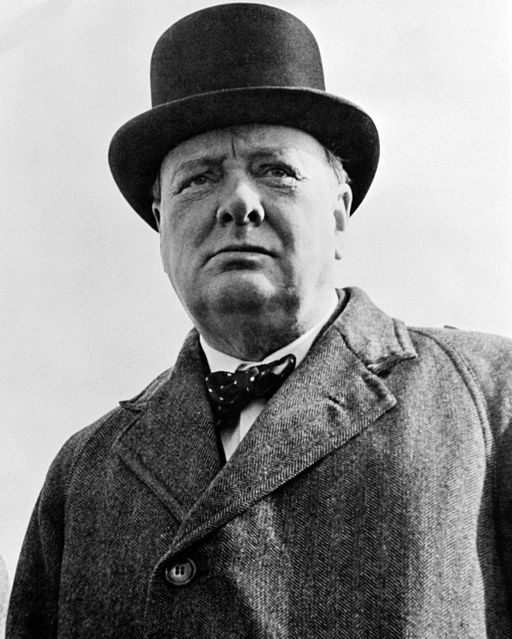
Winston Churchill in 1942

Winston Churchill in 1942{credit}The US Library of Congress{/credit}

Science both shaped and was shaped by Winston Churchill (1874–1965), twice prime minister of Britain, iconic orator and writer. That relationship is explored in an exhibition at London’s Science Museum marking the 50th anniversary of Churchill’s death. Nature spoke to Andrew Nahum, lead curator for Churchill’s Scientists, about his favourites of the objects on show.

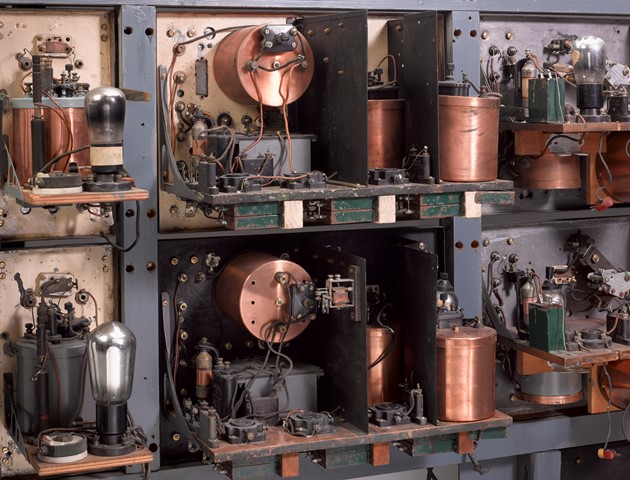
Watson-Watt’s radio receiver

Much has been written about how radar may have given Britain the edge in fighting the Nazi Luftwaffe’s bombing raids during the Second World War. But by the war’s start, radar was still an experimental technology in development by a number of nations, including the United States, Britain, the Soviet Union and Germany.

On display is a shortwave radio receiver used by Scottish radar pioneer Robert Watson-Watt and his colleague Arnold Wilkins in a secret experiment in 1935 — a time when the UK government was aware of the need for air defence against Nazi Germany. Explains Nahum, “the idea that you could get a radio reflection wasn’t new. It was just a question of whether you’d get a reflection off an aeroplane that was measurable.” Watson-Watt and Wilkins drove the equipment to Daventry, in England’s East Midlands, to a site near a powerful short-wave transmitter — a BBC radio mast. They then arranged for a pilot to fly a bomber past.


Robert Watson-Watt's original radar receiver, used in 1935

Robert Watson-Watt’s original radio receiver, used in 1935

“On the ground the boffins were looking at their cathode ray tube and saw a green spot on the oscilloscope grow and diminish as the aircraft crossed. That showed they had detected the short-wave BBC signal reflected from the bomber,” says Nahum. “Watson-Watt allegedly said, ‘Britain is an island once more.’”

Galley proofs of Churchill’s war memoirs

Churchill’s memoirs of the conflict, The Second World War, were published from 1948 to 1953 in six volumes — undoubtedly contributing to his winning the 1953 Nobel Prize for Literature.  Alongside details of battles against Germany’s ‘Desert Fox’, Field Marshall Rommel, in North Africa and politicking with Stalin, Churchill dedicated a not-insignificant amount of space to science.

He personally corrected thousands of printers’ proofs. Those on view — extracted from his chapter ‘The Wizard War’ — tell of the debt owed to wartime scientists, singling out the Battle of the Beams. This was the radio war that took place when the Luftwaffe started night bombing in the early 1940s. As Churchill wrote, “Unless British science had proved superior to German, and unless its strange, sinister resources had been effectively brought to bear on the struggle for survival, we might well have been defeated”.

John Kendrew’s ‘Forest of Rods’

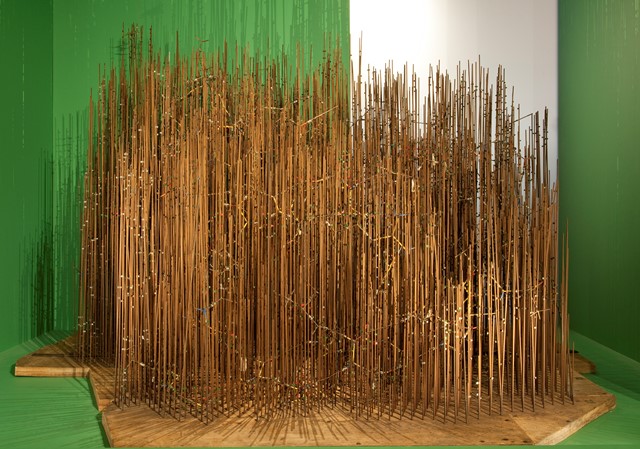
John Kendrew's 1960 'Forest of Rods' model showing the structure of myoglobin

John Kendrew’s 1960 ‘Forest of Rods’ model showing the structure of myoglobin{credit}The Science Museum, London{/credit}

This 1960 model, the ‘Forest of Rods’, shows the structure of myoglobin and was constructed by chemist John Kendrew. During the war Kendrew had met molecular biologist and X-ray crystallography pioneer J.D. Bernal in the Far East, “while they were waiting for an elephant to bring up explosives”, says Nahum. Kendrew thereafter set out to solve the structure of myoglobin.

In his model, coloured clips on the rods indicate the electron density. Nahum avers that this “icon of British molecular biology” should be seen as on a par with Watson and Crick’s DNA structure.

Aldermaston high-speed camera

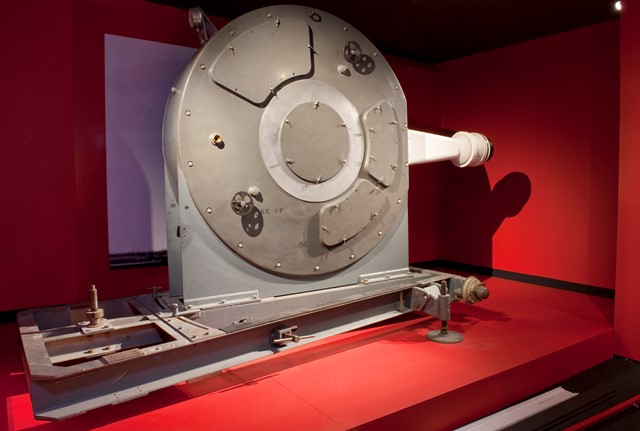
High-speed camera that caught the detonation of 'Churchill's bomb' in 1952

High-speed camera used to capture the detonation of ‘Churchill’s bomb’ in 1952{credit}The Science Museum, London{/credit}

After the war, Churchill was eager for Britain to gain knowledge of atomic science. When the United States refused to share the fruits of the Manhattan Project, some of ‘Churchill’s scientists’ were enlisted to build a British bomb by the new 1945 Labour government of Clement Attlee.  (See Richard Rhodes’ review of Graham Farmelo’s 2013 book, Churchill’s Bomb, for more.)

The Aldermaston high-speed camera was built to photograph the first test of the bomb in 1952. Shutter speeds in conventional cameras moved too slowly, so the camera sports a central mirror; film was laid around the outside. As the mirror spins, it projects the image to be captured onto the film, taking pictures at hundreds of frames per second.

Churchill’s Scientists is free and opens on 23 January.

Correction: The clarification that Clement Attlee was British prime minister while the British bomb was being built has been added to this post.

For Nature’s full coverage of science in culture, visit www.nature.com/news/booksandarts.
Of rice and men: debut review from Nature Plants

Posted on behalf of Anna Armstrong

k3567-16

Rice germplasm in the Philippines

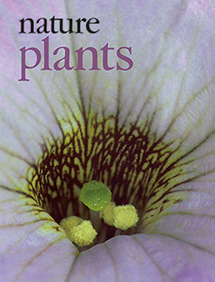
Nature Plants has sprouted. This new journal focuses on all aspects of plants, from their evolution, development and metabolism to their societal significance.

In the first book review of the first issue, archaeobotanist Dorian Fuller provides a lively review of Renee Marton’s book Rice: A Global History (Reaktion, 2014).  Marton’s slim volume explores the natural, social and cultural history of this staple, consumed by two-thirds of the world population.

She lucidly introduces readers to the long, cross-cultural history of rice, and illustrates some of the social consequences of its trajectory through the ages. The grain’s arrival in the Americas, for instance, paved the way to the cultivation of cotton and sugar, but also drove up demand for slaves. Fuller feels Rice fails to get to grips with insights gained from genetic research over the past two decades, but finds it an accessible, well-illustrated account of how rice has made it to tabletops the world over. And with 16 historical rice-based recipes, it may well leave you hungry for more.

hlhqtj-c1451ad31cdae6d0cdff4ad97c2ae7efNature Plants, the first new journal in four years from Nature Publishing Group, will publish primary research and reviews, as well as opinion pieces, news, and books and arts reviews like this one. Anna Armstrong is its senior editor.


For Nature’s full coverage of science in culture, visit www.nature.com/news/booksandarts.


Fire, ice — and the science in poetry

Fimmvörðuháls, Iceland

Volcanic activity in winter at Fimmvörðuháls, Iceland{credit}Boaworm, Wikimedia Commons{/credit}

The annual T. S. Eliot Prize readings are a three-hour marathon testing some of the best minds and voices in English-language poetry today. On 11 January in a packed Royal Festival Hall in London, the shortlisted poets made for a tremendous lineup.

Darwin’s great-great granddaughter Ruth Padel — whose 2009 Darwin: A Life in Poems was reviewed in Nature Books and Arts — read with mesmerising intensity from Learning to Make an Oud in Nazareth. Padel’s work often pivots on the physical, from human anatomy to worked wood; the collection ends with “Making is our defense against the dark.” John Burnside and Irish poet Michael Longley delivered charged poems on death and not belonging.

It was Icefield, David Harsent’s elegy on the cost of climate change to landscapes and mindscapes, that stunned — reminding how science and poetry both cut to the bone. Beginning with “A place of ice over ice, of white over white”, it ends:

Breakage and slippage; the rumble of some vast
machine cranking its pistons, of everything on the slide;
and the water rising fast, and the music lost.

Harsent’s Fire Songs was announced as the winner on 12 January.

For Nature’s full coverage of science in culture, visit www.nature.com/news/booksandarts.
Shedding some light on Chinese geology

Hukou Waterfall on China's Yellow River

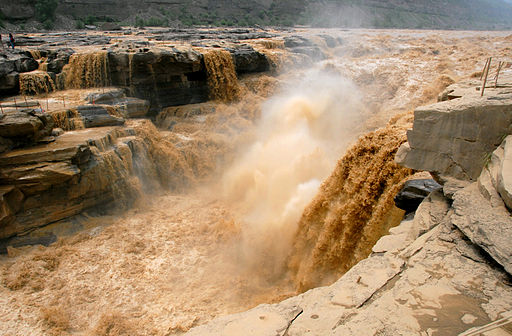
Hukou Waterfall on China’s muddiest river, the Yellow {credit}Leriswing, Wikimedia Commons{/credit}

UN ‘observances’ or International Years can seem random: 2013, for instance, was the International Year of Water Cooperation — and Quinoa. This year the themes are more fundamental, but as tenuously linked: 2015 is both the International Year of Light  and of Soils.

The latter gets a look-in this week in Nature’s Books & Arts section, in a review of David Pietz’s The Yellow River by ex-Nature editor Philip Ball. As Ball shows, the Yellow is the world’s muddiest river — soil in motion. It easily outclasses the swilling sediments of the Nile, tidal squelch of the Thames and oozy glories of America’s Mississippi.

The clogging and flooding that result have made the mighty Yellow a testing ground for leadership in China. “Is there any other nation whose flood myth has a hydraulic engineer as the hero?” Ball asks. “By taming the water, Yü the Great was able to found the first dynasty”. Controlling the river, Ball notes, became a “mandate to rule”. 

Qing Dynasty (1644-1912) maps of the Yellow River

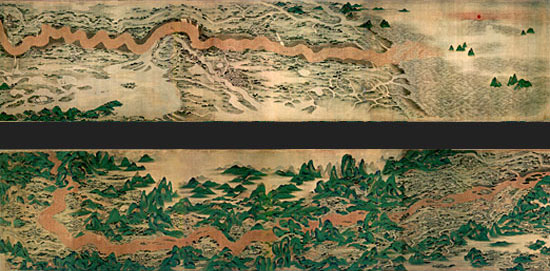
Qing Dynasty (1644-1912) maps of the Yellow River{credit}https://www.nigensha.co.jp/kokyu/en/p102.html{/credit}

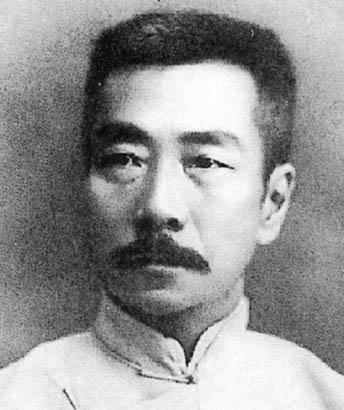
The loess plains that endow the Yellow with mud featured in another excellent book about soil and nation-building: Grace Yen Shen’s Unearthing the Nation: Modern Geology and Nationalism in Republican China, reviewed by palaeontologist Xu Xing last year. As Xu revealed, modern Chinese science literally grew from the nation’s earth. Nineteenth-century Western geologists such as the American Raphael Pumpelly, drawn to the country’s dramatic topography, ignited rock fever in the Chinese. Pioneers such as Zhou Shuren (under his pen name Lu Xun, a towering figure in Chinese literature) and Deng Wenjiang were leading the geological charge by the early twentieth century. Scientific institutions and publications burgeoned in their wake.

Pioneering Chinese geologist Zhou Shuren (aka writer Lu Xun) in 1930

Pioneering Chinese geologist Zhou Shuren (aka writer Lu Xun) in 1930{credit} wikidata: Property P1472{/credit}

The rivers run through that narrative too. Pumpelly travelled the Yangtze, as he recounted in his riproaring 1870 Across America and Asia; in it he observes how the river “might be aptly called the ‘father of the land’, as the immense quantity of silt rolled oceanward by its current is steadily adding to the continent”.

Nature was in on the story soon enough, with a paper by naturalist Henry Guppy calculating the silt content in three of China’s great rivers. Guppy’s measurement for the Yellow, however, infuriated Liverpudlian geologist T. Mellard Reade, who in a correspondence speculated that it was based on “wet mud” (italics his) and therefore invalid. Recalculating in immense detail, he asks: “I should feel obliged if [Guppy] would explain why the surface-current of the Yang-tse and Pei-ho should vary so in velocity with the same average depth of water. It seems anomalous.” Dangerous ground indeed.  

For Nature’s full coverage of science in culture, visit www.nature.com/news/booksandarts.