Raising Horizons: women in science reframed

Posted on behalf of Elizabeth Gibney
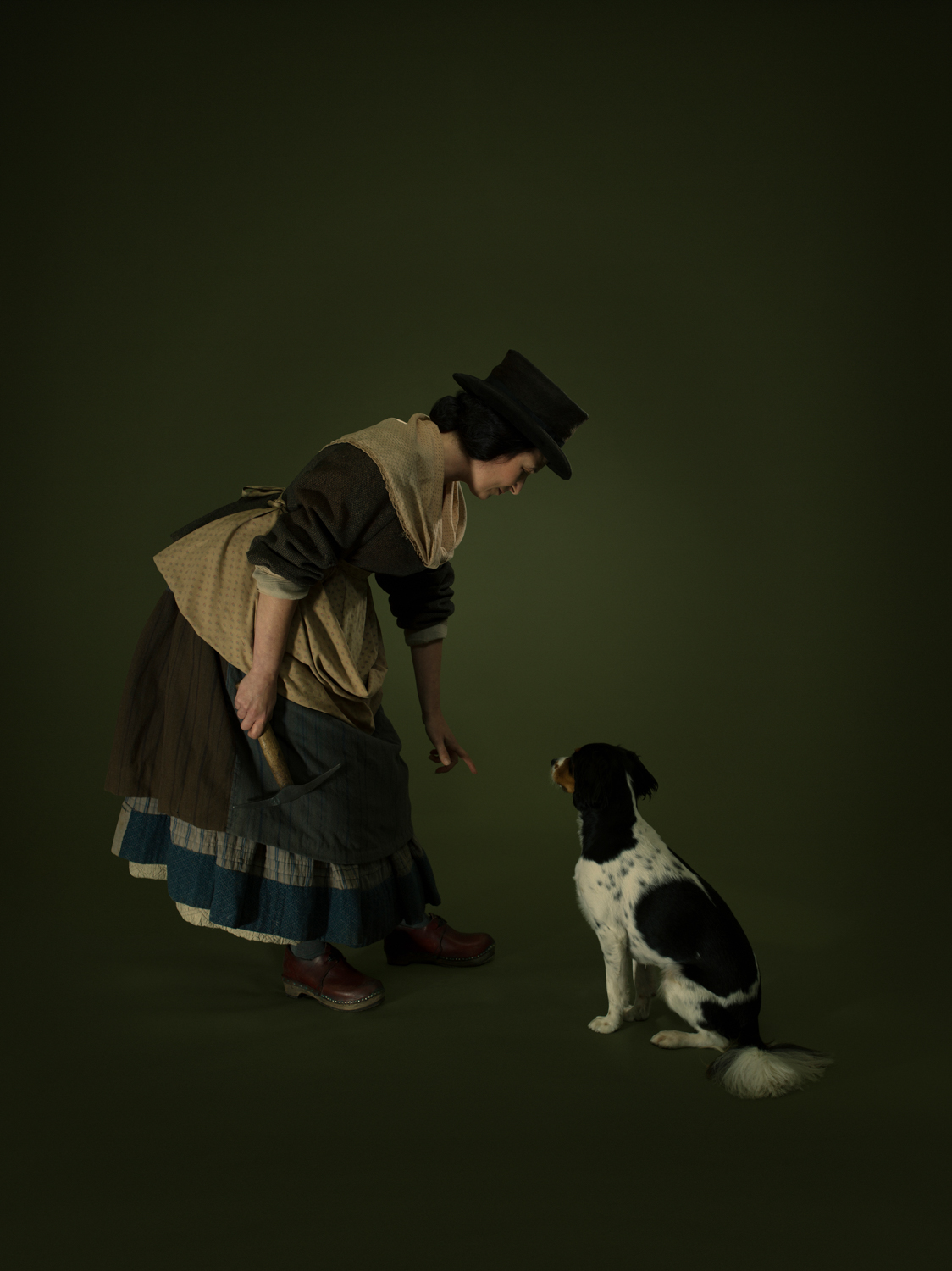
Mary Anning

Victorian fossil hunter Mary Anning, posed by earth sciences curator Lorna Steel.{credit}Leonora Saunders{/credit}

Women in geoscience today can be struck by the paucity of their predecessors in the scientific record. This month, an exhibition helps to redress the balance: portraits celebrating 200 years of pioneering work by women archaeologists, palaeontologists and geologists, on display at London’s Geological Society library.

Raising Horizons — created by photographer Leonora Saunders and science outreach group TrowelBlazers — celebrates 14 women scientists, from fossil-hunter Mary Anning (1799-1847) to underwater archaeologist Honor Frost (1917-2010). The twist is that the portraits are photographs in which present-day scientific counterparts enact these historical luminaries. Thus Lorna Steel, senior curator in earth sciences at London’s Natural History Museum, is dressed as Anning out collecting with her dog Tray, and maritime archaeologist Rachel Bynoe is shown as Frost emerging dripping after a ‘wreck dive’ in the Mediterranean.

Underwater archaeology pioneer Honor Frost, portrayed by scientific counterpart Rachel Bynoe.

Underwater archaeology pioneer Honor Frost, portrayed by scientific counterpart Rachel Bynoe.{credit}Leonora Saunders{/credit}

Saunders, known for her work on gender and equality, has shot these portrayals of glass-ceiling smashers and adventurous field scientists in rich hues and with deep-green backdrops. They evoke oil paintings — an honour accorded to few of these formidable professionals during their lifetimes.

Most are portrayed at work. Geologist Catherine Raisin (1855-1945), modelled by pioneering geoconservationist Cynthia Burek, scrutinises a geological map. Archaeologist Shahina Farid — who was field director at Turkey’s Neolithic site Çatalhöyük for 17 years — appears as renowned archaeologist of Neolithic culture Kathleen Kenyon (1906-1978), pausing for breath at the excavation of Great Zimbabwe in the 1930s.

Archaeologist Shahina Farid - former field director at Turkey's Çatalhöyük site - as Kathleen Kenyon, who helped to excavate Great Zimbabwe.

Archaeologist Shahina Farid – former field director at Turkey’s Çatalhöyük site – as Kathleen Kenyon, who helped to excavate Great Zimbabwe.{credit}Leonora Saunders {/credit}

With Saunders, the four TrowelBlazers scientists — archaeologists Suzanne Pilaar Birch and Rebecca Wragg Sykes, bioarchaeologist Brenna Hassett and palaeobiologist Victoria Herridge — dug into archives for each portrayal. Period artefacts, such as the 1930s field camera Farid is holding, were used in some of the photos. The period class system is also on show. Geologist Charlotte Murchison (1788-1869), portrayed by earth scientist Natasha Stephen, wears a glamorous evening gown; Murchison’s contemporary, the working-class Anning, a simple dress and clogs.

“There are so many other people I could have chosen,” says Wragg Sykes, who selected subjects from almost 150 biographies accumulated by Trowelblazers. Although many of the women featured in the press, their names rarely made it into scientific publications, says Amara Thornton, the social historian of archaeology who portrays Margaret Murray (1863-1963), Britain’s first female archaeology lecturer.

Mary Leakey, the archaeologist who found the famous “Zinjanthropus” fossil, portrayed by specialist in Neanderthals Ella Al-Shamahi.

Mary Leakey, the archaeologist who found the famous “Zinjanthropus” fossil, portrayed by specialist in Neanderthals Ella Al-Shamahi.{credit}Leonora Saunders{/credit}

A highlight is Dorothy Garrod (1892-1968), an archaeologist who led digs at the prehistoric Mount Carmel site in Palestine and discovered an important Neanderthal skull at Gibraltar in the 1920s. Archaeologist Nicky Milner captures Garrod in intense concentration, examining a stone tool.

The exhibition does a fine job of emphasising just how long women have made key advances in these arduous fields. Like the Bearded Lady Project — which also celebrates female earth scientists — Raising Horizons indicates that the Indiana Jones stereotype could be on the wane. And the success of the Academy Award-nominated film Hidden Figures – about African-American female mathematicians whose calculations were crucial to the space race – shows a public appetite for such stories.

Social historian of archaeology Amara Thornton as archaeologist Margaret Murray, shown in the process of unwrapping a mummy.

Social historian of archaeology Amara Thornton as archaeologist Margaret Murray, shown in the process of unwrapping a mummy.{credit}Leonora Saunders{/credit}

The lives of many of Raising Horizons’ subjects are intertwined, as the women taught, mentored or worked alongside each other. A large part of Trowelblazers is about encouraging such networks today, says Wragg Sykes. Judging from the lively launch event – which, refreshingly, buzzed with children and babies, as well as women and men – they seem to be succeeding.

The scientists in these portraits are a diverse group representing generally white, wealthy historical predecessors. In terms of inspiring a new generation of trowel-wielding women, diversity in role models is essential, says Wragg Sykes. As the Trowelblazers put it, “If you can’t see it, you can’t be it”.

Geologist Catherine Raisin scrutinising a geological map, posed by geoconservationist Cynthia Burek.

Geologist Catherine Raisin scrutinising a geological map, posed by geoconservationist Cynthia Burek.{credit}Leonora Saunders{/credit}

Saunders says the photos were designed with the learned society setting in mind. Mounted high around the rail of the library, the intent is literally to ‘raise horizons’, slipping these scientists’ legacies back into positions in history they should already hold. But these images are so absorbing that I’d also hope to see them in larger formats when the exhibition tours Britain, and at eye level. That way young women contemplating the life scientific can ‘meet’ these inspiring researchers face to face.

Elizabeth Gibney is a reporter on physics for Nature based in London. She tweets at @LizzieGibney. Raising Horizons will run at The Geological Society, London, until 28 February. It will then set off on a UK tour, to include the University Women’s Club, London, the Lyme Regis Fossil Festival and the Women of the World festival in Chester.


For Nature’s full coverage of science in culture, visit www.nature.com/news/booksandarts.
Picturing science: top 5 illustrated books

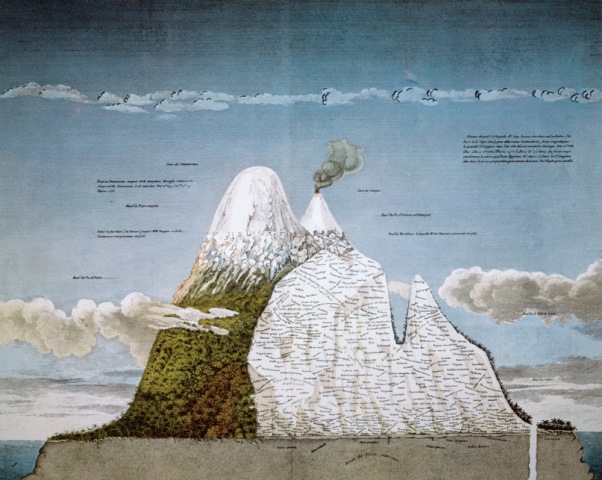
A study from Alexander von Humboldt's detailed expedition notebooks. This cross-sectional study of Chimborazo in Ecuador (1805) shows flora growing at different altitudes.

Alexander von Humboldt kept immensely detailed expedition notebooks. This cross-sectional study of Chimborazo in Ecuador (1805), derived from a sketch, shows flora growing at different altitudes on the volcano.{credit}akg-images. Reproduced in Explorers’ Sketchbooks. {/credit}

We live in illustrated times — a golden age for science graphics, data visualisation and scientific illustration generally. Photography has become positively eye-popping — from the cosmoscapes of Hubble to the Earthly delights of nature photography and photo archives the world over. And luckily for us, this gargantuan trove is being steadily funnelled into science-oriented coffee-table books.

I confess that in early in 2016 I was hanging around waiting for one. Then, like a fleet of barouches, several came along at once. In them I’ve found aesthetic thrills, deep insights and unexpected hilarity. Here are five of the best.

xxx turtle in xxx.

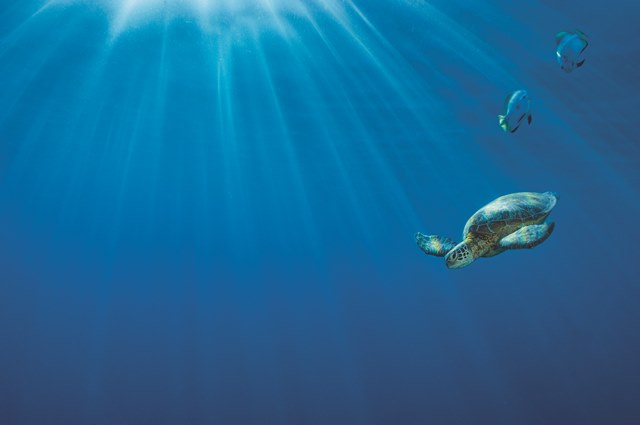
A green turtle (Chelonia mydas).{credit}Alex Mustard, in Secrets of the Sea.{/credit}

Animals proved a draw  — archival menageries and photo-surveys playing on our unquenchable fascination with other species. Secrets of the Seas: A Journey into the Heart of the Oceans (Bloomsbury), with text by marine biologist Callum Roberts and photographs by underwater adept Alex Mustard, explores the wild beneath the waves. It begins in the Coral Triangle, where 4 million square kilometres of tropical ocean support three-quarters of the world’s corals and 2,500 fish species. One denizen, the paddle-flap scorpionfish Rhinopias eschmeyeri of Indonesia, is a cartoon in bubble-gum pink. Beauties throng here too, from the sinuous ballets of California sealions Zalophus californianus to silver blizzards of shoaling fish — mackerel to barracuda.

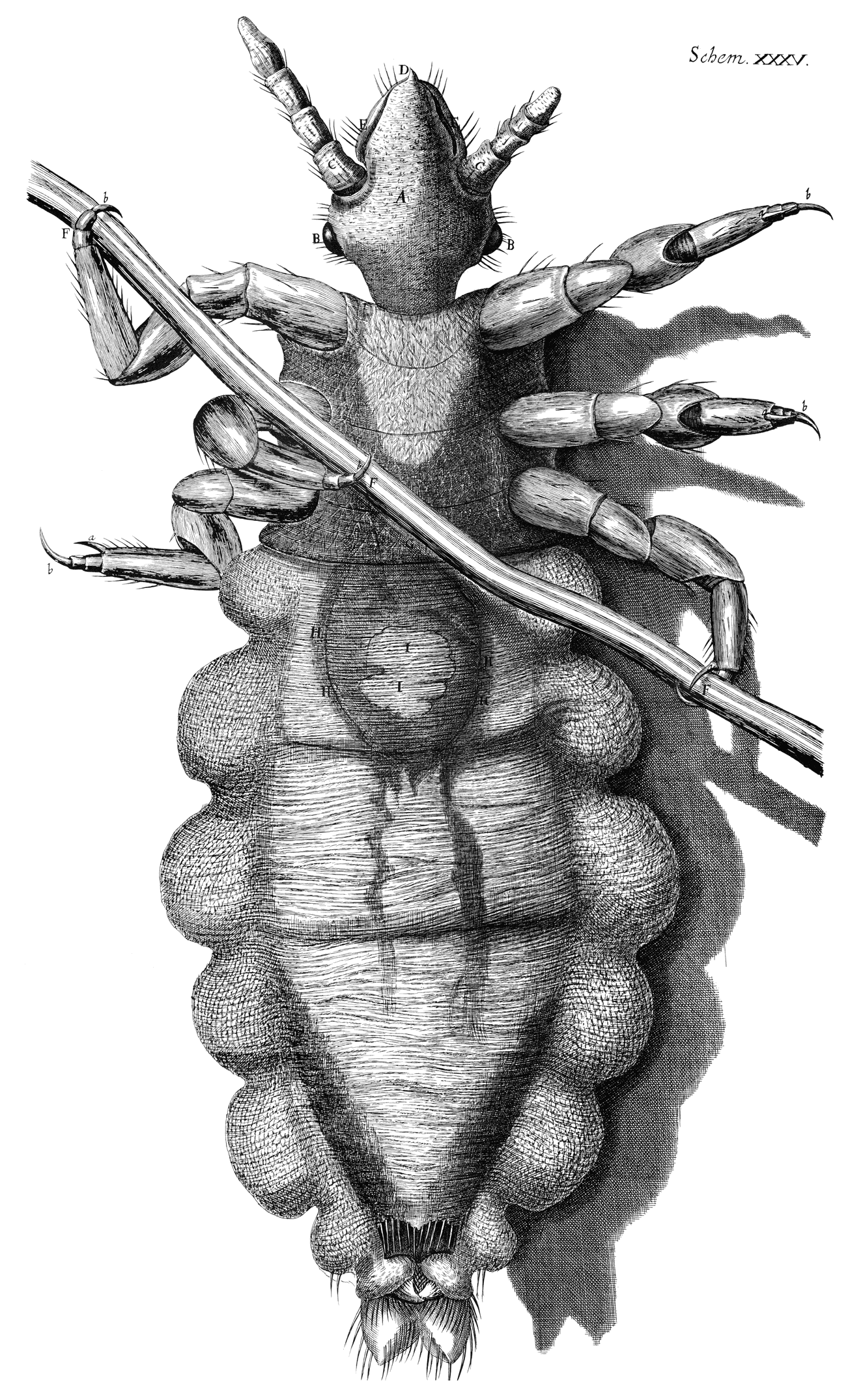
Robert Hooke's 1665 drawing of a louse on a human hair, from Micrographia.

Robert Hooke’s 1665 engraving of a louse on a human hair, from Micrographia.{credit}National Library of Wales. Reproduced in The Paper Zoo.{/credit}

Roberts’s urgent text underlines the state of play for today’s beleaguered marine animals. The Paper Zoo focuses firmly on the planet’s biodiverse past, rummaging through the British Library’s wealth of natural history illustrations spanning 500 years. Science historian Charlotte Sleigh leads us through an ark of beasts from the exotic to the ‘paradoxical’, limned by greats of scientific illustration. Robert Hooke’s eighteenth-century microscopic menagerie of drone flies and lice jostle with natural historian John Ray’s Dürer-like renderings of fish from the 1680s. The nineteenth-century art ranges further South; my favourite is an anonymous double portrait of langurs (one black, one white) staring sagely out in mid-snack.

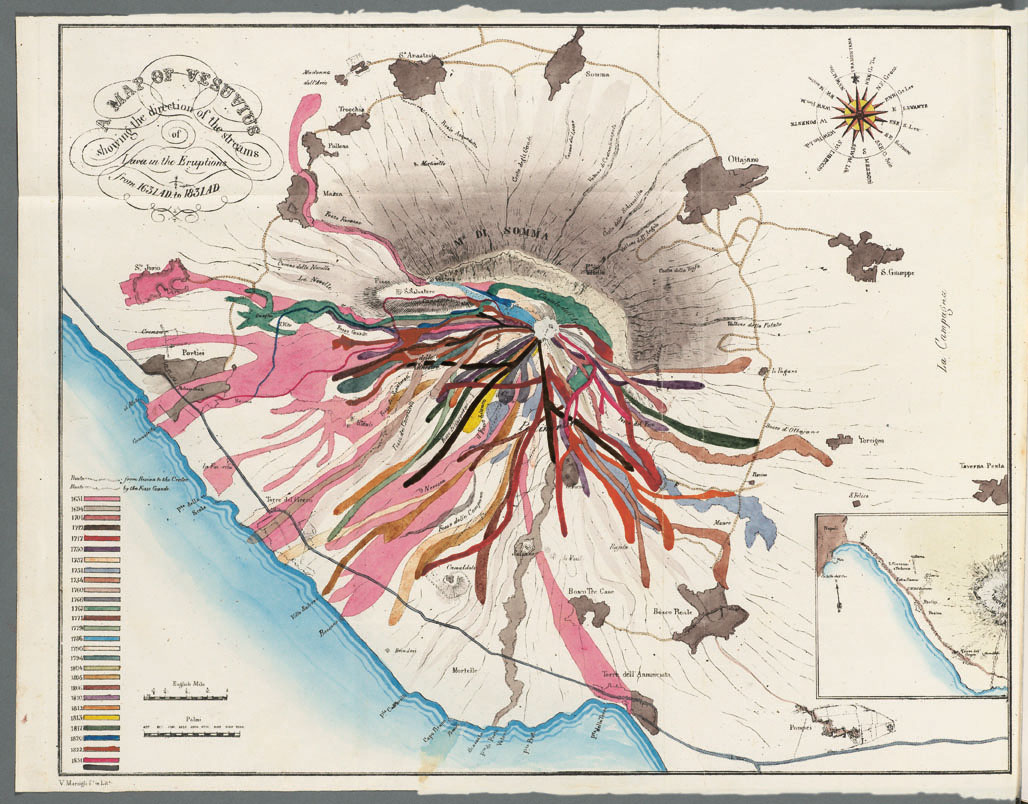
By necessity, many explorers were illustrators manqué — before the advent of reliable cameras, sketches were essential records of the geological, zoological and meteorological wonders they encountered. Explorers’ Sketchbooks: the Art of Discovery and Adventure (Thames & Hudson), by cultural historians Huw Lewis-Jones and Kari Herbert, is a mesmerising multiverse of them. Facsimile pages from the notebooks of 70 ‘terranauts’ give a stunning immediacy to distant time and space. Edward Wilson’s dreamlike evocations of the Antarctic, Maria Sibylla Merian’s caiman chomping on a false coral snake, the lava streams on Vesuvius mapped by John Auldjo, Alexander von Humboldt’s bold cross-section of Chimborazo — every turn of the page is a subtle thrill.

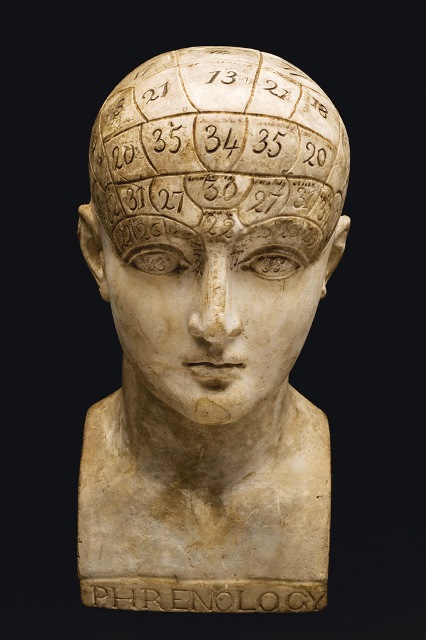
A phrenological bust.

A phrenological bust.{credit}Wellcome Library, London. Pictured in This Way Madness Lies.{/credit}

There are outer, and inner, journeys. Mike Jay’s This Way Madness Lies (Thames & Hudson) peers into the history of mental illness and its treatment as ‘madhouses’ gradually morphed into mental hospitals. (The book accompanies the Wellcome Collection show Bedlam.) Many of the more than 600 images, gleaned from European and US archives, are harrowing portraits of marginalised people further marginalised by experimental treatments ranging from the bizarrely exploitative to the ineffectual. Yet, as Jay notes, there were countercurrents. Franco Basaglia’s 1960s-70s psychiatric revolution in Italy sought to reinstate patient autonomy and social integration. Community refuges from Geel, Belgium, to Gould Farm, Massachusetts, offer treatment based on acceptance and occupation. And the science advances — even as depression and psychoses remain very much with us. A gallery features astounding art by the diagnosed, from proto-surrealist and Victorian parricide Richard Dadd to Adolf Wölfi, a talented abstractionist confined to a Bern asylum for life in 1895.

Finally, there are journeys into myth. The Un-Discovered Islands: An Archipelago of Myths and Mysteries, Phantoms and Fakes (Polygon) by travel writer Malachy Tallack and artist Katie Scott relates the stories of islands that never were. The Terra Novas off East Antarctica spotted by expedition leader Phillip Law in the 1960s were probably icebergs. The Auroras, a trio of islands halfway between the Falklands and South Georgia, were discovered in 1762, actually surveyed in 1796, and finally declared non-existent in the nineteenth century. There are more, from Hy Brasil to Bermeja, and all embellished by Scott’s strange and powerful images of whales, rabbits and jellyfish — species inhabiting what Tallack calls the “geography of the mind”.

John Auldjo's nineteenth-century map of successive lava flows on Vesuvius.

John Auldjo’s nineteenth-century map of successive lava flows on Vesuvius.{credit}Houghton Library, Harvard University, Cambridge, Massachusetts. Reproduced in Explorers’ Sketchbooks. {/credit}


For Nature’s full coverage of science in culture, visit www.nature.com/news/booksandarts.
Werner Herzog gets geological

Posted on behalf of Noah Baker

InfernoThe film Into the Inferno opens with a grand spectacle. The camera glides up and over tiny figures clustered on the peak of the volcanic island of Ambrym in Vanuatu in the South Pacific. Far below, an ominous lava lake splutters to a bombastic choral soundtrack. There is a sense of ritualistic grandeur here that sets the tone for what follows.

The documentary, created by legendary filmmaker Werner Herzog and Cambridge volcanologist Clive Oppenheimer, straddles the science and culture of volcanoes. It is strong on exploring the significance of volcanoes to humanity — their role in local mythologies, traditions and lifestyles, now and through the centuries. The film even suggests that our relationship with these geological giants stretches back to early hominids living in the shadows of volcanoes in East African rift valleys.

Like many Herzog films, Inferno goes off on tangents and strays into quirky side stories, hopping about among unusual locations. One moment we’re hearing from a volcanology station in North Korea, where Oppenheimer, in a rare international collaboration, has been working with local volcanologists for several years. The next we’re in the midst of an archaeological dig in Ethiopia, scientists scraping away at the soil in search of early hominid remains. The stories and locations do link back to volcanoes, but sometimes a little obliquely.

Oppenheimer occasionally brings insights into the science among the craters and cones, but his central quest remains cultural. And that yields a trove — not least the ‘cargo cult’ on the island of Tanna in Vanuatu. Its members worship a US serviceman called John Frum, who they claim lives in local volcano Yasur.

Noah Baker is senior editor in Nature’s multimedia team. Hear his Nature Podcast interview with Oppenheimer here.


For Nature’s full coverage of science in culture, visit www.nature.com/news/booksandarts.
An artist on Mars: Georgia O’Keeffe

From the Faraway, Nearby, 1937 (oil on canvas).

From the Faraway, Nearby, 1937 (oil on canvas). {credit}The Metropolitan Museum of Art, New York. Alfred Stieglitz Collection, 1959 © 2016 Georgia O’Keeffe Museum/ DACS, London. Photo: Malcom Varon ⓒ 2015. Image copyright The Metropolitan Museum of Art/ Art Resource/ Scala, Florence {/credit}

Jimson weed, a cow’s skull, bare mountainsides scored by flash floods: revelations of beauty in badlands mark the work of American artist Georgia O’Keeffe (1887-1986). This is ‘nature’ art from a Modernist sensibility — strong, simplified form shocked into being by a lush palette. O’Keeffe may once have been drawn to the dark hearts of flowers, but she became a desert geek par excellence, in love with geological strata and stripped skeletons in the Martian landscapes of New Mexico. “The bones,” she wrote, “seem to cut sharply to the center of something that is keenly alive on the desert even though it is vast and empty and untouchable”. Much as early nineteenth-century art of the sublime — in tandem with explosive discoveries in geology — shifted Europe’s responses to its own wilderness from repulsion to awe, O’Keeffe taught us to see new worlds in the New World.

Georgia O'Keeffe, 1918 (platinum print).

Georgia O’Keeffe, 1918 (platinum print).
{credit}Alfred Stieglitz {/credit}

As I’m reminded again and again at the eponymous show at London’s Tate Modern, this was an artist formidably focused on subjects not as an element in a composition but as the main event. Many pieces are like tightly cropped photographs. Her marriage to engineer-turned-photographer Alfred Stieglitz and friendships with his peers, such as Paul Strand, steeped her in the technology’s possibilities. Like them, O’Keeffe relished extreme close-ups and ‘long shots’ framed to emphasise form.

Her lifelong immersion in nature began on a Wisconsin dairy farm. The youthful O’Keeffe was encouraged in her bent towards art, studying at Chicago’s prestigious Art Institute School and the Art Students League in New York. In 1912 she ventured to west Texas for two years to teach art. Her aesthetic — severe and sinuous, hovering between abstract and representational — began to emerge as she exulted in the vivid geomorphology of Palo Duro canyon (a “lone place”, she noted approvingly) and experimented with watercolour. Back on the East Coast, she studied under the Japanese-influenced artist Arthur Wesley Dow, who emphasised abstract patterns and using the “facts of nature to express an idea or emotion”. She began to produce radical abstracts in charcoal, which would find their way to Stieglitz’s New York gallery and kickstart her career.

The charcoals on show at Tate Modern are powerful evocations of unrolling fern fronds or the intricate lace of a cloud. But in Red and Orange Streak (1919) O’Keeffe flexes different experimental muscles. The painting’s bold arc is a visual rendering of cattle lowing. O’Keeffe’s fascination with music and synaesthesia (which she shared with Wassily Kandinsky) played out in several works, whose many-layered, biomorphic shapes can be read as sonic motifs. In Blue and Green Music (1919/21), subtly shaded waves, ripples and bars surge like a visual symphony.

Blue and Green Music, 1919-21 (oil on canvas).

Blue and Green Music, 1919-21 (oil on canvas). {credit}The Art Institute of Chicago; Alfred Stieglitz Collection, gift of Georgia O’Keeffe, 1969 © The Art Institute of Chicago.{/credit}

O’Keeffe’s life in 1920s New York with Stieglitz was an exploration of urban canyonlands. She became a portrait painter of iconic skyscrapers, deploying stark chiaroscuro and a burgeoning command of form. But like a weed cracking the concrete jungle, nature breaks in. The lunar ‘eye’ in O’Keeffe’s New York Street with Moon (1925) gazes down through a jagged space between buildings at its brash mimics, a streetlamp and traffic light. There is always, in O’Keeffe, a search for an authentic source. The flower paintings (many executed upstate at idyllic Lake George) dive straight in — Oriental Poppies (1927) is a drenching in scarlet, orange and near-black. By working in extreme close-up in this and other pieces such as Dark Iris No I (1929), O’Keeffe frames floral anatomy as pure form. Few look at flowers, she noted, because “to see takes time”; her aim was to surprise the viewer into taking that time.

New York Street with Moon, 1925 (oil on canvas).

New York Street with Moon, 1925 (oil on canvas).{credit}Carmen Thyssen-Bornemisza Collection on loan at the Museo Thyssen-Bornemisza, Madrid © 2016 Georgia O’Keeffe Museum/ DACS, London.{/credit}

O’Keeffe’s pull towards New Mexico began in 1929 and crystallised some two decades later, when she moved there permanently after Stieglitz’s death. Her house facing the flat-topped peak Pedernal (‘Flint Hill’) and the deserts round it became a crucible for her visionary ideas and creative energies. She immersed in landscape and skyscape, sleeping on the roof nights and walking, camping and working in her mobile studio, an ingeniously repurposed Ford Model A. The Southwest, not least New Mexico, had long been an artistic hotbed. But O’Keeffe held her own among illustrious contemporaries probing its riches, such as the great nature photographer Ansel Adams.

She became a connoisseur of bones, discovering their exquisite formal possibilities. Horse’s Skull on Blue (1931) displays its subject like a jewel on satin. Mule’s Skull with Pink Poinsettia (1936) is a Southwestern memento mori, one of many paintings juxtaposing blooms and animal skulls in a strange dialogue between life and death. Was she edging into Surrealism or commenting on the ecological calamity of the Dust Bowl then raging on America’s southern plains? That art-world debate hardly signifies. Despite their massive overexposure, these anatomic portraits seem perennially fresh. From the Faraway, Nearby (1937) fills the canvas with a complex interlacing of antlers sprouting from a deer’s skull; it rides over rolling hills like a multi-perspective meditation on the power of yearning.

Others in O’Keeffe’s New Mexican works play with echoes in organic and inorganic form. The cascades of wrinkled, torn and folded red sandstone in The Mountain, New Mexico (1931) and Black Mesa Landscape, New Mexico/Out Back of Marie’s II (1930) resemble vast piles of offal. And the avalanche of paintings she produced from 1936 to 1949 in ‘Black Place’ — the Bisti Badlands in Navajo territory — intently probe voids and masses in hills she compared to a “mile of elephants”.

Black Mesa Landscape, New Mexico / Out Back of Marie's II, 1930 (oil on canvas mounted on board).

{credit}Georgia O’Keeffe Museum. Gift of The Burnett Foundation © 2016 Georgia O’Keeffe Museum/ DACS, London.{/credit}

Georgia O’Keeffe is an engrossing encapsulation of this great Modernist’s work on the centenary of her first show. It cannot showcase the vast output of her 70-year career, but it does reveal how far she travelled. In the 1924 Celebration — a response to Equivalents, Stieglitz’s series of abstract cloudscapes  — she painted bulbous clouds in restless confusion, like goldfish in a jar. The show’s last painting, finished nearly four decades later, is Sky Above the Clouds III. Its aerial view of flattened cloudforms streaming out to the horizon is, I feel, O’Keeffe freed into the “faraway” — as she put it, “keeping the unknown always beyond”. After her long grappling with the primal in wild America, she was still out there discovering new worlds.

Georgia O’Keeffe runs at Tate Modern, Bankside, London SE1 9TG until 30 October.


For Nature’s full coverage of science in culture, visit www.nature.com/news/booksandarts.
Sculpting deep time

Cloud Fire Head

Cloud Fire Head, caramel onyx, by Emily Young.{credit}The Fine Art Society, London{/credit}

Human culture is bedded in stone — from the 3.3-million-year-old rock tools dug up near Kenya’s Lake Turkana to China’s Great Wall. Spewed out by volcanoes, folded and transformed by pressure and heat, laid down by patient tides and currents, the stone in habitations, palaces, bridges and objects represents an intimate relationship between civilisation and deep time.

But even as the tactile nature of shaped stone still draws us, the historic technique of free carving is dying out with the advent of 3D printing and sculpting media that can range from polyamide to frozen blood.

 I was therefore intrigued to note concurrent London shows by two devotees of direct carving — Emily Young, and the late multimedia modernist icon Barbara Hepworth — a stone’s throw from each other.

Young (whose grandmother was the sculptor Kathleen Bruce, pupil of Auguste Rodin and widow of Scott of the Antarctic) is noted for bravura pieces such as colossal heads that can weigh several tonnes. Call and Response, her new exhibition at the Fine Art Society in London, features more heads, but at an intimate scale.

Emily Young working.

Emily Young at work.{credit}The Fine Art Society, London{/credit}

As I pass their ranks I am struck by the dazzling variety, mineral and textural. The veined and striated marbles, malachite, onyx and quartzite are saturated with powerful earthy hues or ethereally pale. Polished faces with Zen-like expressions emerge by degrees from rock left raw or deliberately roughened — like phases of the moon set in stone. In Cloud Fire Head, a profile juts from a translucent chunk of caramel onyx, swirled with an admixture of other minerals. The back of a dreaming head in montorsaio, a dolomitic limestone, is sheared at an angle like a boiled egg.

It got off lightly. “A lot of montorsaio is now smashed for gravel,” Young tells me, “along with the red marble rouge de vitrolle, once much used in Roman temples and palaces.” Young laments overextraction, and sources her raw material ethically. “What I like is unwanted, ‘unuseable’ stone. I have found amazing old blocks of it in defunct Italian quarries.”

Montorsaio Moon Head, Quartzite Head of a Woman 1, White Onyx Head of a Woman, Verdite Forest Head (all, Emily Young).

Montorsaio Moon Head, Quartzite Head of a Woman 1, White Onyx Head of a Woman, Verdite Forest Head (all, Emily Young).{credit}The Fine Art Society, London{/credit}

She shapes it experimentally, working with natural flaws and patterns to discover what to work and what to leave alone. “I respond to the stone. I try to do as little as possible: the material guides the work.” Insights into the behaviour of materials emerge from that process. She tells me how Zimbabwean verdite, a fuchsite-based, chromium-rich rock used for her Forest Head, shoots out molten globules rather than dust under the diamond drill.

Young’s ethos and practice are rooted in an understanding of the processes that create stone over millions or billions of years. “Stone tells us of the origins of the planet, as geological pioneer Charles Lyell found. And as a medium it will endure. Today’s environmental problems are based on short-term thinking. I’m taking the long view, making something based on the pragmatic realities of matter and energy, and trying to remind people that this is our physical heritage — a piece of our mindboggling Universe.”

Barbara Hepworth with the 1953 limestone Monolith (Empyrean) at her Whitechapel retrospective in 1954. (The sculpture is now sited at Kenwood House, London.)

Barbara Hepworth with the 1953 limestone Monolith (Empyrean) at her Whitechapel retrospective in 1954. (The sculpture is now sited at Kenwood House, London.){credit}The Hepworth Estate{/credit}

Across town at Tate Britain, Hepworth’s evocative pieces in stone shaped by chisel and mallet reveal different tensions. Many of her abstract forms are pierced, allowing interplay between space and mass and offering an exploration of inner form — as well as a window on new perceptions. As she wrote in the 1952 Barbara Hepworth: Carvings and Drawings: “I had felt the most intense pleasure in piercing the stone in order to make an abstract form and space; quite a different sensation from that of doing it for the purpose of realism.”

In this illuminating retrospective — the first in nearly 50 years — most of the stone sculptures on show are early and small-scale. Some are figurative, such as the beautiful Doves from 1927.

Doves (Group), Parian marble, 1927, by Barbara Hepworth.

Doves (Group), Parian marble, 1927, by Barbara Hepworth.{credit}© Manchester City Galleries{/credit}

Others are ‘biomorphic’, rounded organic abstractions that hint at the influence of mathematical biologist D’Arcy Thompson’s seminal treatise On Growth and Form (reviewed here) on Hepworth and fellow sculptors including Henry Moore. The monumental stoneworks Hepworth created at St Ives in Cornwall appear solely in a fascinating 1953 documentary film by Dudley Shaw Ashton, Figures in a Landscape.

The purity of form in Hepworth’s stone abstractions is one with the pristine marbles she often chose. She pursued another kind of harmony in dynamic relationships. In Two Forms of 1937, the negative space between the pair of tapering standing stones in Serravezza marble seems charged with meaning. Hepworth wrote of being gripped by “the unconscious grouping of people when they are working together, producing a spatial movement which approximates to the structure of spirals in shells or rhythms in crystal structure; the meaning of the spaces between forms, or the shape of the displacement of forms in space, which in themselves have a most precise significance.”

Double exposure of Two Forms, 1937, by Barbara Hepworth (photograph, gelatin silver print on paper).

Double exposure of Two Forms, 1937, by Barbara Hepworth (photograph, gelatin silver print on paper).
{credit}© The Hepworth Photograph Collection{/credit}

Ashton’s film underlines another relationship — between Hepworth’s works and the environment, specifically the Cornish landscape that inspired so much of her work. Eidos, a stone ovoid with concentric concavities, is shown lodged on a beach like some wave-washed boulder. Tall marble slabs with perforated edges echo lighthouses and megaliths.

The footage of Hepworth chipping away at the 3-metre limestone Monolith (Empyrean) of 1953 with equally monolithic patience calls to mind another passage in Barbara Hepworth: “it was not dominance which one had to attain over material, but an understanding, almost a kind of persuasion”. It is an approach Young would recognise. There is something profoundly meditative and inquiring about the work of these two material women. By piercing form, Hepworth allows a glimpse of its inner life. By finding where to let the raw rock speak for itself, Young allows a glimpse of deep time.  

Barbara Hepworth: Sculpture for a Modern World is at Tate Britain, London, to 25 October 2015, and features a number of large works in African hardwood and bronze not discussed here. Emily Young’s exhibition Call and Response is at the Fine Art Society, London, to 27 August; and the Madonna dell’Orto, Venice, Italy, to 22 November, as part of the Venice Biennale.


For Nature’s full coverage of science in culture, visit www.nature.com/news/booksandarts.
Shedding some light on Chinese geology

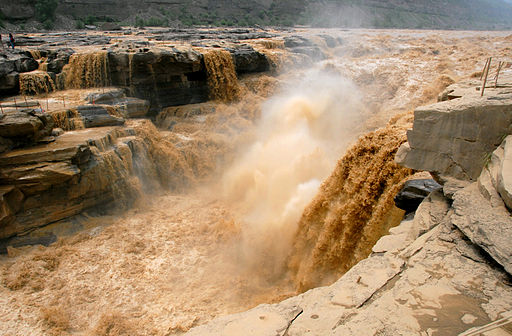
Hukou Waterfall on China's Yellow River

Hukou Waterfall on China’s muddiest river, the Yellow {credit}Leriswing, Wikimedia Commons{/credit}

UN ‘observances’ or International Years can seem random: 2013, for instance, was the International Year of Water Cooperation — and Quinoa. This year the themes are more fundamental, but as tenuously linked: 2015 is both the International Year of Light  and of Soils.

The latter gets a look-in this week in Nature’s Books & Arts section, in a review of David Pietz’s The Yellow River by ex-Nature editor Philip Ball. As Ball shows, the Yellow is the world’s muddiest river — soil in motion. It easily outclasses the swilling sediments of the Nile, tidal squelch of the Thames and oozy glories of America’s Mississippi.

The clogging and flooding that result have made the mighty Yellow a testing ground for leadership in China. “Is there any other nation whose flood myth has a hydraulic engineer as the hero?” Ball asks. “By taming the water, Yü the Great was able to found the first dynasty”. Controlling the river, Ball notes, became a “mandate to rule”. 

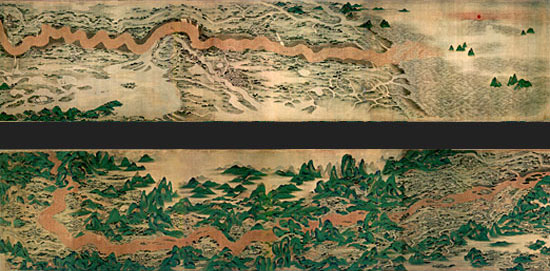
Qing Dynasty (1644-1912) maps of the Yellow River

Qing Dynasty (1644-1912) maps of the Yellow River{credit}https://www.nigensha.co.jp/kokyu/en/p102.html{/credit}

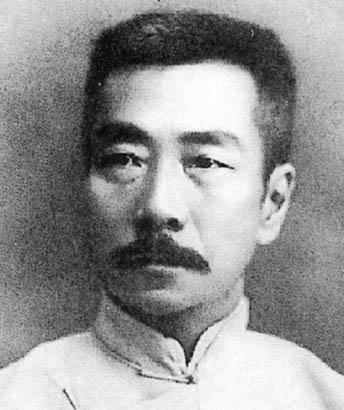
The loess plains that endow the Yellow with mud featured in another excellent book about soil and nation-building: Grace Yen Shen’s Unearthing the Nation: Modern Geology and Nationalism in Republican China, reviewed by palaeontologist Xu Xing last year. As Xu revealed, modern Chinese science literally grew from the nation’s earth. Nineteenth-century Western geologists such as the American Raphael Pumpelly, drawn to the country’s dramatic topography, ignited rock fever in the Chinese. Pioneers such as Zhou Shuren (under his pen name Lu Xun, a towering figure in Chinese literature) and Deng Wenjiang were leading the geological charge by the early twentieth century. Scientific institutions and publications burgeoned in their wake.

Pioneering Chinese geologist Zhou Shuren (aka writer Lu Xun) in 1930

Pioneering Chinese geologist Zhou Shuren (aka writer Lu Xun) in 1930{credit} wikidata: Property P1472{/credit}

The rivers run through that narrative too. Pumpelly travelled the Yangtze, as he recounted in his riproaring 1870 Across America and Asia; in it he observes how the river “might be aptly called the ‘father of the land’, as the immense quantity of silt rolled oceanward by its current is steadily adding to the continent”.

Nature was in on the story soon enough, with a paper by naturalist Henry Guppy calculating the silt content in three of China’s great rivers. Guppy’s measurement for the Yellow, however, infuriated Liverpudlian geologist T. Mellard Reade, who in a correspondence speculated that it was based on “wet mud” (italics his) and therefore invalid. Recalculating in immense detail, he asks: “I should feel obliged if [Guppy] would explain why the surface-current of the Yang-tse and Pei-ho should vary so in velocity with the same average depth of water. It seems anomalous.” Dangerous ground indeed.  

For Nature’s full coverage of science in culture, visit www.nature.com/news/booksandarts.