The art of engineering: 9 Evenings revisited

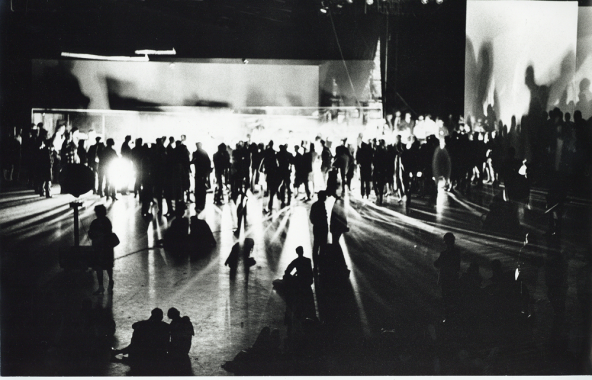
Composer John Cage's xxxx at 9 Evenings, October 1966.

John Cage, Variations VII, 9 Evenings: Theatre & Engineering, October 1966.{credit}Adelaide de Menil{/credit}

I’m gazing at a stage draped in white when a giant zipper suddenly appears, projected onto one wall. As it works its way noisily around, more projections — live-streamed or pre-recorded moving images of buildings, blurred pedestrians, discarded clothing and simmering water — judder on crumpled backdrops. An apparently random urban soundtrack lulls and roars in the background. In the foreground, performers skip rope and cut hair; one solemnly rips up, boils and eats her shirt. It’s quite an evening.
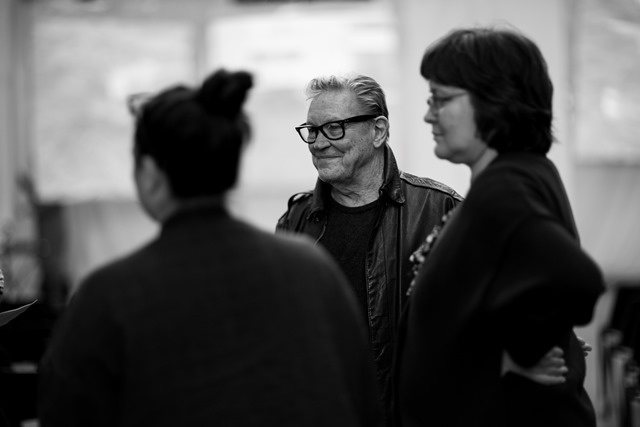
Robert Whitman at performance of Side Effects, October 2016.

Robert Whitman (centre) at performance of Side Effects, October 2016.{credit}Christopher Fernandez{/credit}

The artist behind this indeterminate, playful, technologically rich and vaguely disturbing piece, Side Effects (commissioned by Arts Catalyst) is Robert Whitman. The evening is an homage to 9 Evenings: Theatre & Engineering, a legendary series of performances that, 50 years ago, galvanised New York with an unprecedented mix of cutting-edge technologies and avant-garde art. Whitman was one of 10 artists — among them multi-media maverick Robert Rauschenberg, composer John Cage and choreographer Lucinda Childs — who collaborated one-to-one with 30 engineers, most from research powerhouse Bell Labs and including, notably, the visionary electrical engineer Billy Klüver. Klüver was adamant about involving technologists rather than scientists, feeling that technology is essentially about “the material and the physicality”. It was a moment that paved the way to crossover disciplines such as digital art.

There was a utopian edge to technology then, as America literally reached for the Moon. For artists seeking new media, high-tech expertise enabled fresh explorations in sound and vision. For the engineers, artists expanded what Klüver (already a veteran of collaborations with Jean Tinguely, Andy Warhol, Rauschenberg and Cage) saw as constrained horizons. Whitman, whom I caught up with after the performance of Side Effects, recalled that the 9 Evenings teams included a lot of “arranged marriages”, but worked if goals and enthusiasms chimed.
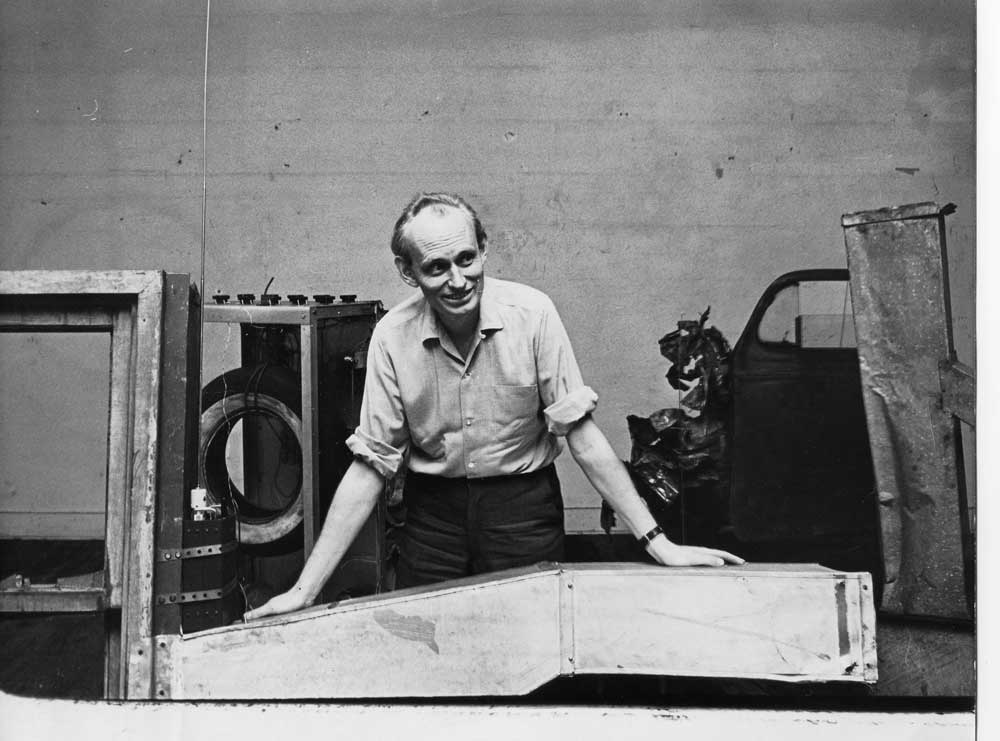
Billy Kluver in 1965.

Billy Klüver with Robert Rauschenberg’s work Oracle in 1965.{credit}New York Times, courtesy of E.A.T.{/credit}

By that time (October 1966), Whitman had been creating immersive pieces for some years, combining film, performers and ‘shape-changing’ props such as plastic sheeting. His 1960 The American Moon, for instance, had a hallucinatory quality and a sense of “slow time”, according to fellow experimentalist Claes Oldenburg. 9 Evenings offered a chance to push the boundaries in a bold venue.

That was the 69th Regiment Armory, a hangar-like midtown Manhattan edifice where, over 50 years before, another exhibition had exploded America’s cultural complacency with artworks such as Marcel Duchamp’s Nude Descending a Staircase. For 9 Evenings, some 1,500 people a night filed into its reverberating spaces.

Signal splitters, Geiger counters

Whitman’s contribution Two Holes of Water – 3 featured input from a number of engineers, including cellular telephony researcher Robby Robinson. The piece involved 23 performers, seven plastic-wrapped cars equipped with film projectors, one of the first fibre-optic miniature video cameras, film shot using an optical device with parallel mirrors, and a signal splitter that allowed a performer’s front and back view to be superimposed. A projected live image of water being poured into a glass on the Armory floor and documentary footage of Alaskan flora and fauna also featured.

Equally bravura was Cage’s composition Variations VII (pictured above), which harnessed live feeds from numerous sound sources. As Cage ‘played’ several transistor radios, 10 telephone lines picked up ambient noises from locations round the city, including the 14th Street Con Edison electric power station and the press room of the New York Times. Signals from two Geiger counters were converted into sounds; six contact microphones amplified noises generated by performers handling devices such as juicers, while data from electrodes on the forehead of another were converted into sound waves.
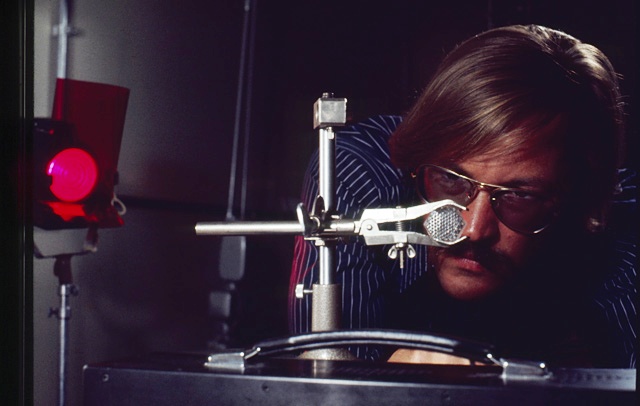
Robert Whitman in the 1970s.

Robert Whitman in the late 1960s.{credit}A&T archives, courtesy Los Angeles County Museum of Art{/credit}

Some critics tore into the event, as technology historian Patrick McCray has noted. Whitman, Rauschenberg, Klüver and fellow engineer Fred Waldhauer, however, had already forged ahead with another venture. The non-profit foundation Experiments in Art and Technology (E.A.T.) took the cross-fertilisation further. By 1969, E.A.T. comprised 2,000 artists and as many technologists, riding the wave of innovation in electronics and communications. Their Projects Outside Art series, for instance, featured Telex: Q&A, which linked public spaces in India, Japan, New York and Sweden to encourage citizens of each to question future possibilities.

Meanwhile, a programme with aims similar to E.A.T.’s had sprung up at the Los Angeles County Museum of Art (LACMA). Art and Technology, the brainchild of curator Maurice Tuchman, boasted star physicist Richard Feynman as consultant. Whitman was also involved. So began his immensely fruitful teamwork with optical scientist John Forkner, then at Philco-Ford, the company that built the equipment at NASA’s Johnson Space Center mission control.
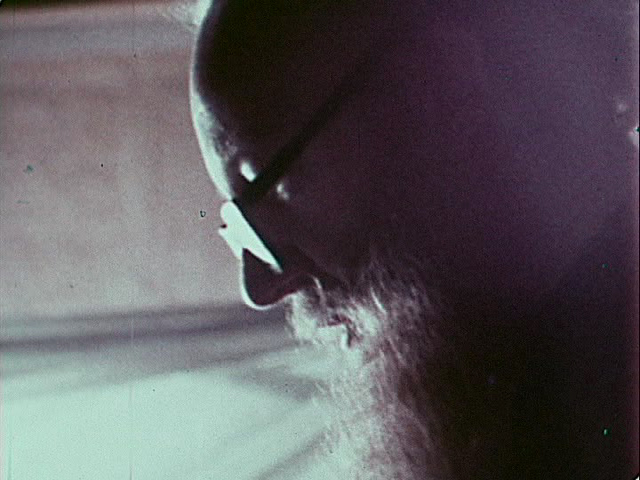
Optics scientist John Forkner.

Optical scientist John Forkner.{credit}A&T archives, courtesy Los Angeles County Museum of Art{/credit}

“This public-relations official introduced me to a guy with a long beard. I was lucky,” says Whitman. “John was a natural genius in optics and very interested in music and art. I remember that at one point I was sitting in a car with Feynman and he said, ‘Where’d you find him? He’s terrific.’”

Over 18 months, Whitman and Forkner created a spectacular installation for LACMA at the US Pavilion at Expo ’70 in Osaka, Japan. Tuchman described the work as an “optical tour de force” incorporating 1,000 corner-shaped mirrors reflecting the viewer’s multiplied image to them, as well as pulsating mylar mirrors and “eerily bright three-dimensional objects (a pear, drill, goldfish bowl with live fish, a knife, a clock, ferns, etc.).”

E.A.T. was equally busy at Expo ’70: the Pepsi Pavilion was a focus for several of its cutting-edge collaborations. A major element was a spherical mirror over 27 metres in diameter that created real images of visitors, hanging in space above their heads. Whitman contributed here too, along with physicist Elsa Garmire, while artist Fujiko Nakaya worked with physicist Tom Mee to create the evocative fog sculpture capping the structure. It was clear that by this time, as McCray puts it, artists and engineers between them had “rewired modern art”.
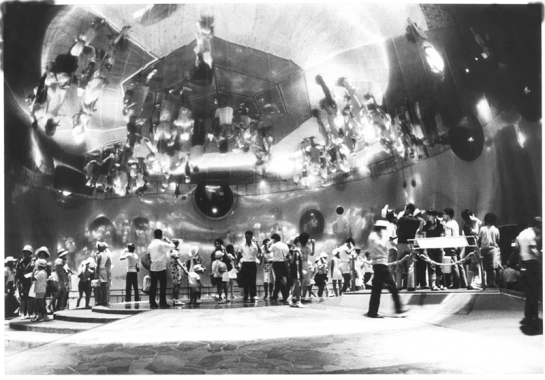
Mirror dome room at the Pepsi Pavilion at Expo '70 in Osaka.

Mirror dome room at the Pepsi Pavilion at Expo ’70 in Osaka.{credit}Shunk-Kender{/credit}

Whitman is now 81, and busy. Many other movers and shakers behind 9 Evenings and E.A.T. are gone. As for E.A.T. itself, it has effectively ended as an entity, but “exists as an idea,” notes its director Julie Martin (Klüver’s widow). Klüver himself, in a 1999 interview with Hans Ulrich Obrist, said, “once everybody understands the idea of artists and engineers working together, there is no reason for E.A.T. to exist”.

I asked Whitman what he thought about 9 Evenings now. “Looking back is what I call ‘dead guy stuff’. You need to get onto the next thing. As for the future, it’d be fun to be around.” There is something there of the unquenchably optimistic technophile, always looking for the next innovation. Yet just for a moment, he did look back. “I didn’t know it at the time, but for me it all started with Emmett Kelly,” he told me. On a childhood visit to the circus in the 1940s, Whitman had been galvanised by the iconic American clown, who had a routine where he swept up the spotlight with a broom. “I was staring at everyone around me, wondering why they weren’t seeing this miracle. It set me on my way.”

I thought of the spotlit zipper in Side Effects, and began too to see how an early bent towards flux and illumination led him to performance, advanced technology and the intensive mix of both that was 9 Evenings. And beyond.

Arts Catalyst’s 9 Evenings: Theatre and Engineering Revisited 1966/2016 continues to 29 October.

Archival information on 9 Evenings and E.A.T. can be accessed at the Daniel Langlois Foundation Collection. Maurice Tuchman’s report on LACMA can be accessed here. My thanks to Robert Whitman, Julie Martin and Patrick McCray for additional information. McCray is currently writing a book (tentatively entitled Art Rewired: Engineering a New Creative Culture) on the art-technology nexus in that era. His Leaping Robot blog meanwhile offers much fascinating detail on 9 Evenings, E.A.T. and more.

Science fiction: journey to the East

Cixin Liu

Cixin Liu.{credit}Li Yibo{/credit}

Posted on behalf of Iulia Georgescu

Last week’s Chinese Sci-Fi event at the London Literature festival was irresistible: I love science fiction and have a keen interest in the Far East. The star here was Cixin Liu, whose 2008 Hugo-awarded novel The Three-Body Problem is a huge best-seller in China and, since its English translation (Head of Zeus, 2015), beyond. (See Nature’s interview with its translator, sci-fi writer Ken Liu, here.) Liu’s fellow panellist was Xiaolu Guo, the award-winning, genre-defying Chinese novelist and filmmaker now living in Britain, whose works include the 2014 I Am China and 2012 UFO In Her Eyes.

Xiaolu Guo.

Xiaolu Guo.{credit}provided by Xiaolu Guo{/credit}

Both Cixin Liu and Guo had much to say. They agreed that sci-fi is a Western concept imported into China in the late 1970s and 80s. Post-Cultural Revolution China had the perfect climate for nurturing the genre, they said. First, there was a void in fantastic and speculative literature: much of Chinese literature in the twentieth century was focused on realism. Secondly, as science education was very poor at that time, sci-fi was a means of educating about science. The public fell upon it, eager to learn more about the latest discoveries.

Although Liu was heavily influenced by Western sci-fi writers, Chinese sci-fi has unique features. The difference, he seemed to think, lies in the Christian tradition imprinted on Western fiction. For instance, there is much discussion of whether the ethical implications of human cloning are perceived differently in China (see this Nature article). Liu averred that more than that, the idea of a doomsday, so dominant in Western thought, is less so in Chinese culture, which enshrines the concept of time flowing continuously and eternally.

imagesThat said, Liu’s The Three-Body Problem is about the end of the world — which is perhaps one of the reasons for its international popularity. (Japanese sci-fi is rich in apocalyptic scenarios too, for example in classics such as Kobo Abe’s Inter Ice Age 4, Sakyo Komatsu’s Japan Sinks, or the Neon Genesis Evangelion media franchise.)

Liu and Guo agreed that for them, the appeal of sci-fi lies in its departure from realism. Guo suggested that sci-fi is perhaps the only way for writers living in China to talk about political and social issues, as with Jingfang Hao‘s Hugo-winning novelette Folding Beijing (set in a future where three social classes inhabit Beijing in different spatial dimensions that only occasionally overlap). For Liu, sci-fi allows him to explore a bigger picture – humanity as a whole and its place in the Universe, as in the last book of his Three-Body trilogy, set in the very distant future.

The event made me realize anew how little of contemporary Asian literature has been translated into English. I hope that Liu’s popularity prompts publishers to more translations: I already have a long wish list.

Iulia Georgescu is senior editor, Nature Physics.


Access Natures science fiction special here; and Natures science-fiction column Futures (and Future Conditional blog) here. For Nature’s full coverage of science in culture, visit www.nature.com/news/booksandarts.

Smoke on the water

Posted on behalf of Rich Monastersky

41818dc4-5a71-11e6-8ecd-005056b70bb8

{credit}© 2016 Lionsgate{/credit}

Nobody loves disasters more than movie producers. If threats in real life matched their frequency on screen, we should be in a constant state of panic over the risks of alien invasions, zombie viruses and asteroid impacts. Given the film industry’s appetite for catastrophes, it is no surprise that it has finally focused on the greatest environmental disaster in US history: the 2010 oil spill in the Gulf of Mexico that began with explosions that killed 11 people and sank the Deepwater Horizon drilling rig.

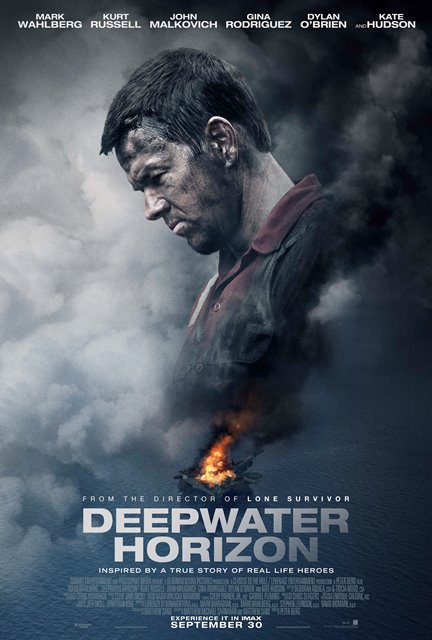
Peter Berg’s film, Deepwater Horizon, is filled with Hollywood heavyweights. Mark Wahlberg plays an everyman electrician who finds his inner hero during the disaster. Kurt Russell portrays the grizzled rig chief who steps up while everything is collapsing, and John Malkovich is the company man chasing profit at the expense of prudence. But the real star is the rig itself. Berg provides a rare look at life on board one of the most sophisticated drilling platforms on the planet. For that reason alone, the film is worth watching, despite the unnecessary liberties it takes with several key facts.

Deepwater Horizon was a US$560-million marvel of engineering, with a gleaming steel deck bigger than a football field perched on four immense floating legs. In 2009, the vessel had distinguished itself by drilling the deepest oil well to date. Owned by the company Transocean, Deepwater Horizon was leased to BP at the time of the disaster and was finishing drilling operations on the Macondo oil well, which reached 18,360 feet (5,596 metres) below sea level.

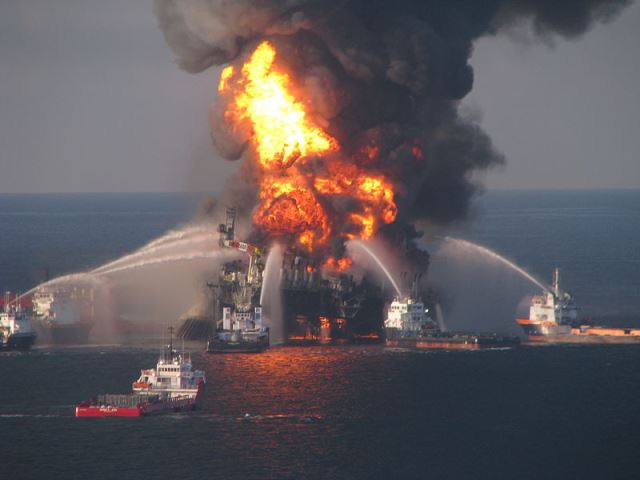
Fire boat response crews battle the blazing remnants of the offshore oil rig Deepwater Horizon. A Coast Guard MH-65C dolphin rescue helicopter and crew document the fire while searching for survivors. Multiple Coast Guard helicopters, planes and cutters responded to rescue the Deepwater Horizon's 126 person crew.

Firefighters try to extinguish blazes on the Deepwater Horizon drilling rig in the aftermath of explosions that killed 11 people. {credit}US Coast Guard{/credit}

The movie’s producers spared no expense on their star. Production designer Chris Seagers and his crew of 85 welders worked for eight months to build an 85% scale replica of the Deepwater Horizon, which helped to drive the cost of the movie to an estimated value well over $100 million.

To most of the public, the name Deepwater Horizon brings to mind the 4.9 million barrels of oil that spewed into the Gulf over 87 days after the catastrophic blowout. For the filmmakers, the spill is literally an afterthought — a few words that scroll on screen at the movie’s end. The drama concentrates instead on the first few hours of the disaster, when the crew was racing to finish its work on the long-delayed oil well.

Berg’s movie brings to life an industry that touches everybody but is seen by few. Oil and gas operations on land and offshore bore the holes that provide more than half the energy used across the globe. And yet the industry is overlooked, even shunned, in a society where most of us prefer not to dwell too much on the potentially disturbing origins of our gasoline, steak and smartphones.

Well from hell

Deepwater Horizon puts faces on the drillers, electricians, crane operators, toolpushers and mud engineers who were among the 126 people on board at the time of the explosion. That day began tensely: the crew was behind schedule in finishing up operations on the “well from hell”. Deepwater Horizon’s assigned task was to drill the hole and then seal the walls of the Macondo well with steel casing and concrete. On 20 April, the crew had finished pumping concrete to the bottom of the hole and was testing the seal job. After that, Deepwater Horizon would depart and a smaller production rig would move in to extract the oil and gas.

To the credit of Berg and the screenwriters, the movie accurately portrays many details of the critical testing phase, during which the first signs of problems arise. But in the interest of creating an engaging narrative, the filmmakers turn these pivotal scenes into a cartoonish contest of good versus evil. BP employees — particularly Malkovich’s character, Donald Vidrine — come across as primarily responsible for the disaster, while the Transocean crew members are the heroes more focused on safety.*

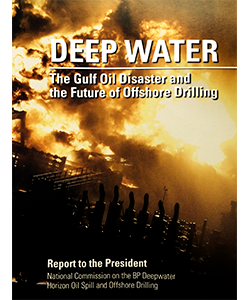
deepwater-cover-250That stark contrast in the way the movie treats BP and Transocean does not match the conclusions of several investigative panels, which found that representatives of both companies on the rig failed to heed important warning signs that immense pressure was building up in the well. The report to President Obama from the National Commission on the BP Deepwater Horizon Oil Spill and Offshore Drilling found plenty of blame to go around, including government regulations and the company Halliburton, which had previously identified problems in the type of cement slurry it used in the Macondo well on the morning of the blowout.

The movie also neglects to mention that Transocean did not tell the Deepwater Horizon crew about a similar pressure problem that had almost turned disastrous at one of its wells in the North Sea in late 2009 — a point raised by the National Commission in its report.  And Transocean did not identify problems with a crucial safety device, called a blowout preventer, according to an investigation by the US Chemical Safety Board, which issued its report this year. The blowout preventer is a 400-tonne apparatus that sits on the seafloor and is designed to seal the well if the pressure inside rises to uncontrollable levels. But the crew on Deepwater Horizon did not act quickly enough when evidence of trouble first appeared and the blowout preventer failed in the crucial moment.

In the end, though, blame is not central to the movie. It is more concerned with the heroic actions of many members of the crew, including some of those who perished, which saved most of the lives on the Deepwater Horizon. Although the film alters some facts here, too, it captures the central truth that some ordinary people stepped forward in the darkest hour and committed acts of extreme bravery.

*The US government indicted Vidrine and Robert Kaluza, another BP employee on the rig at the time of the explosion, on charges of involuntary manslaughter but later dropped the charges. Vidrine pleaded guilty last December to a misdemeanor pollution charge and was sentenced to 10 months of probation, a $50,000 fine and community service. Kaluza was charged with the same offence but took the case to trial and won in February.

Rich Monastersky is news features editor at Nature, based in Washington DC. He tweets at @RichMonastersky.


For Nature’s full coverage of science in culture, visit www.nature.com/news/booksandarts.