CRISPR patent belongs to aliens

Mulder and Scully are back.

Mulder and Scully are back.{credit}THE X-FILES © 2016 Fox and its related entities. All rights reserved{/credit}

Posted on behalf of Sara Reardon

“Welcome back, you two,” says assistant FBI director to Fox Mulder and Dana Scully. He unlocks the door to Mulder’s old pencil-strewn office. The iconic I WANT TO BELIEVE poster lies crumpled on the floor.

We agree. After nearly 15 years, FOX rebooted the X-Files for a six-episode season that wrapped up last week. The technological advances of the past decade and a half, CRISPR included, gave the writers a raft of new ideas for its supernatural plots. DNA sequencing can be done in hours. People snap pictures of close encounters on their smartphones. Mulder’s ringtone, hilariously, is the X-Files theme song. Now the internet provides a platform for conspiracy theorists and the ill-informed to spread misinformation about the dangers of vaccines, genetically modified crops and gluten. (Spoilers aplenty to follow).

The new season takes full advantage. It opens with an internet personality who has become rich off his conspiracy theory videos. He wants Mulder and Scully to investigate a young woman who claims to have been injected with “alien DNA.” Scully, who was abducted in the show’s second season, finds similar DNA in her own cheek swab.

The scientific dialogue is laughable jargon jazz. But the concepts involve cutting-edge research. Alien DNA, for example, was floated in the first season in 1993, explains the series’ science advisor Anne Simon, a virologist at the University of Maryland. Back then, Mulder & Scully found a bacterium with six different letters in its DNA code rather than the usual four,

Since then, such DNA has actually been made. In 2014, researchers at Scripps Research Institute in La Jolla, California created the first cell that survived with two synthetic bases. These bases expand the number of possible DNA codes by orders of magnitude.

Other advances that the show predicted long ago have also become reality. In the second episode of the new series, the agents investigate a doctor, nicknamed ‘The Founder’, who purportedly studies children with rare genetic diseases – real conditions, cartoonishly amplified for the show. He’s been altering these babies’ DNA.

The title of the episode is Founders’ Mutation. This is a concept in evolutionary biology when an individual’s mutation spreads through all of its descendants, eventually creating a novel group of organisms. Explaining the idea, Scully gives a shoutout to a 2015 paper in Nature Communications, which suggests that most European men descended from just three men.

Indeed it is human genome editing that forms the season’s backbone: a concept that is far more scientifically plausible today than it was in 2001 — or even 2012. The CRISPR/Cas9 system, which makes precise snips in DNA, is revolutionizing agriculture, basic research, and medicine. Two groups of scientists, one at the Broad Institute in Boston and one at the University of California Berkeley, are battling over which owns the technology’s patent.

That patent, Simon jokes, should belong to the aliens.

Alien DNA is an antidote to the Spartan virus (which Simon and the writers invented for the show) that lives in us all, the story goes. Scully and a few other lucky people who have the alien DNA will presumably be able to survive the coming apocalypse. The Spartan virus was created by aliens and integrates into the human genome. For reasons yet to be revealed, a secretive cabal spread the virus through the smallpox vaccine over decades. It entered the germline and was passed on to children who never received the vaccine after 1972 when it stopped being administered.

The virus contains the code for CRISPR and the enzyme Cas9. It spreads through the body and snips at the gene for adenosine deaminase: an enzyme essential for immune function. When the virus is activated through ions spread in aeroplanes’ vapour trails– yes, the chemtrail conspiracy theory — the CRISPR system begins destroying immune systems. Soon, everyone, including Mulder, is dying of simple diseases.

Scully buys some time by making a vaccine from her alien DNA, which she believes encodes a way to inhibit Cas9. The season, as always, ends on a cliffhanger – hospitals overrun with dying people, panic in the streets and traffic stalled on bridges across the Potomac River. We have to wait for next season to find out the purpose of the alien DNA, Simon says.

As someone nearly as obsessed with CRISPR as Mulder is with alien encounters, it’s fun to see Scully and a new protégé geeking out over it and amusing when Scully dramatically intones, “I want you to do a PCR.” The genome-editing-as-bioweapon storyline is intriguing, but it’s unclear where it’s going to make judgement. And, as always, one must look past the made-for-TV compromises: the insta-vaccine for instance.

Simon doubts that the episode will fuel fears of CRISPR. “It’s just a tool,” she says. In fact, when director Chris Carter asked her to create a world-destroying technology, she took care to avoid stoking real fears. GMOs and common vaccines were right out. She settled on the smallpox vaccine because it hasn’t been routinely given since 1972. And relegating vaccination conspiracies to the same level as aliens and chemtrails might even be helpful.

She does hope that the entrance of CRISPR into popular culture will stimulate discussion of its many applications and ethical ramifications, primarily those involving editing humans. “I think we have to be careful about modifying the human germline because we don’t know what we’re doing,” Simon says. The public, not just those who wield the technology, should be crucial players in making such decisions.

For Nature’s full coverage of science in culture, visit www.nature.com/news/booksandarts.
The X-Files is on Channel 5, Mondays at 9pm.

Finding the art in research

3Q: Rich Johnston

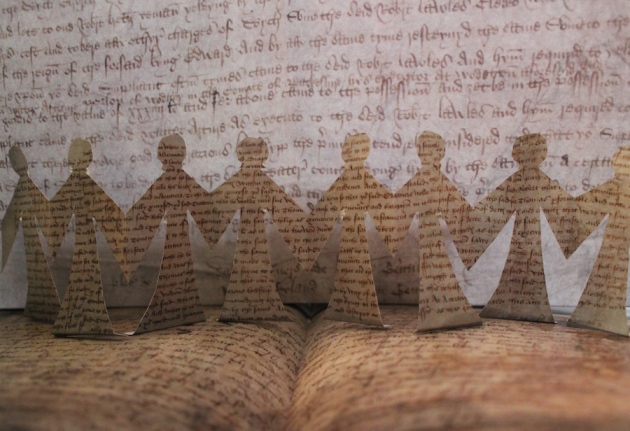
Rising from the page: bringing medieval women to life/Sparkey Booker and Deborah Young. Winner of the 2015 Research as Art competition.

Rising from the Page: Bringing Medieval Women to Life. Sparky Booker and Deborah Youngs. (Winner of the 2015 Research as Art competition.) {credit}Sparky Booker and Deborah Youngs{/credit}


For scientists used to describing experiments in scientific papers, distilling their research down to one picture and a 150-word description presents a challenge. But this is what the ‘Research as Art’ competition demands. With the 2015 entries on display at the Royal Institution in London until 2 March, materials scientist Rich Johnston, co-director of Swansea University’s Advanced Imaging of Materials facility, told Nature about the competition, which he founded in 2009.

What is the purpose of Research as Art, and how does it differ from other science-photography competitions?

Research as Art is less about the stunning picture, and more about the story. It’s about what goes on behind the research; what it means to be a researcher. The most compelling submissions aren’t an image that was lying unappreciated on a lab hard drive for years, or a beautiful false-coloured electron microscopy image. They are the submissions that describe the years of failure in the laboratory, the imposter-syndrome and the way you question yourself daily. Submissions can be very personal. For 2015, I received an acrylic painting, Nearly Not Dusk, from geographer Jennifer Stanford. It was her view from the deck of a research vessel in the Norwegian Sea. She described the cold isolation of seeing neither darkness nor land for weeks on end. I’ve never been on a research ship in the Arctic Circle, but reading the text and looking at the painting, I was transported to that spot, to her viewpoint, to her life.

Nearly Not Dusk: A view from the deck of a research vessel in the Arctic/Jennifer Stanford.

Nearly Not Dusk. Jennifer Stanford. {credit}Jennifer Stanford{/credit}

Conventional research output doesn’t provide an avenue for the creativity and emotion that underpins research. The conventions of publication mean that the human is stripped from the final product — the research paper. Researchers are creative. They develop exciting hypotheses and they are creative in their proposals for funding.

Do you have a favourite image from the competition?

This year was the first time the wonderful judging panel selected my favourite as the overall winner: Rising from the Page: Bringing Medieval Women to Life (pictured, top) by Sparky Booker and Deborah Youngs. They are historians, working primarily with medieval legal texts. Perhaps not the easiest subject matter in this context, but they created a submission that represented their research, their process, the challenges they face in lifting these experiences from incomplete text and presenting a rounded view of medieval women. And they did it in a unique and clever way, with a paperchain of women, cut from a manuscript, literally rising from the page.

My favourite from the early years of Research as Art helped develop the project in a new direction, revealing the humanity behind research. This was by Suzy Moody, entitled Scrutiny. When I first saw this entry in 2011, I remember being amazed that someone had so perfectly captured their research process, and what it means to them, and how our identity as humans can be shaped by the research we do.

Scrutiny/Suzy Moody. An entry to the 2011 Research as Art competition.

Scrutiny. Suzy Moody.{credit}Suzy Moody{/credit}

I have another favourite too. Matt Carnie works on photovoltaics, or solar cells. He teamed up with his wife Jay Doyle to represent failure in research with Graveyard of Ambition. They arranged lots of small solar cells in rows, like gravestones. These cells were all failures. Failed attempts at improving on previous research, which are a part of Matt’s past, but also shape his future, as he learns from each one. They are as much a part of his research as the one cell that does yield a higher efficiency, which makes it into his academic paper.

Graveyard of Ambition/Matt Carnie and Jay Doyle.

Graveyard of Ambition. Matt Carnie.{credit}Matt Carnie{/credit}


Do you produce art in your own research?

I lead an imaging research group where we X-ray all manner of interesting things, and find even more interesting and otherworldly shapes when we peer inside them at the micro-scale. So we produce striking images and 3D animations in the lab daily. But, I don’t really consider these to be our art. We can spend a lot of time working on huge X-ray data sets to make them beautiful, and they may be considered SciArt, but I see them as a gateway to the research story.

A Sand Dollar/Rich Johnston.

A Sand Dollar. Rich Johnston.{credit}Rich Johnston{/credit}

I have put submissions into the exhibition when it tours different places, but I wouldn’t want to influence potential contributors too much. I began Research as Art, but the researchers who’ve engaged with the project and given a glimpse into their process are far better at Research as Art than I am, and have had a huge impact on how it’s developed. They have found a platform to explore their creativity and convey their emotion and humanity. Their submissions astound me every year. I’m blown away by their ability to reveal part of their soul … in just an image and 150 words or less.

Rich Johnston was a 2013 British Science Association media fellow at Nature. Interview by Daniel Cressey, a reporter for Nature in London. He tweets at @DPCressey.

For Nature’s full coverage of science in culture, visit www.nature.com/news/booksandarts.

Darwin Day: a poem on the Sandwalk

Posted on behalf of Philip Parker

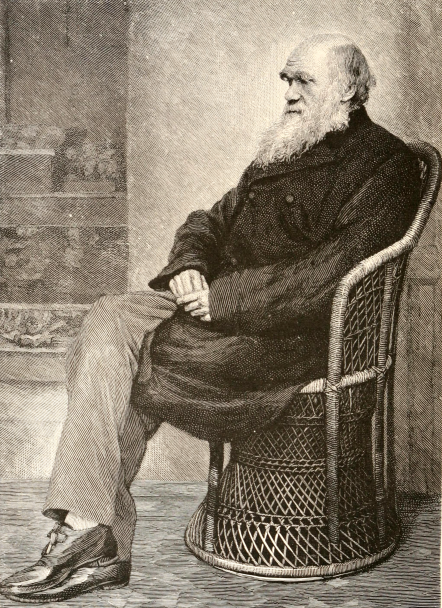
Charles Darwin (engraving adapted from photograph, in Francis Darwin (ed.), Life and Letters of Charles Darwin, 1891).

Charles Darwin famously built a circular path in the grounds of Down House near Orpington, Kent, soon after he moved there in 1842. It became known as the Sandwalk, a gravel-lined oval walk around the trees and bushes he planted. He called this his ‘thinking path’ and walked it morning and afternoon, often with his fox terrier Polly, observing seasonal changes, while mulling over his most difficult problems.

The Sandwalk has inspired me too. To celebrate Darwin Day — which marks the evolutionary biologist’s stunning achievements on his birthday, 12 February, each year — I wrote a sestude (a piece of 62 words) as part of 26 Postcodes. This project of not-for-profit UK organisation ‘26’ paired 26 writers each with a different postcode, which we visited literally, and in our imagination, to spark a piece of writing. I wrote ‘Last Circuit of the Sandwalk’ (below) after visiting Darwin’s house at BR6 7JT.

The Sandwalk at Darwin's home, Down House near Orpington, Kent.

The Sandwalk at Darwin’s home Down House near Orpington, Kent.{credit}Tedgrant at English Wikipedia.{/credit}

I knew from the outset that I wanted to reflect Darwin’s humanity, as well as the scope of his achievement, and that the piece would be in two parts. The first part attempts to present Darwin as a person, not an icon. Down House was his home for the last 40 years of his life, where he brought up his children and wrote his masterwork On the Origin of Species by Means of Natural Selection (1859). His favourite child was Annie. She died at the age of ten and Darwin nursed her in her final weeks and wrote movingly of the loss. His writing indicates that he most likely became agnostic.

Down House was also Darwin’s laboratory. He was a practical scientist using garden and greenhouse for experiments, or laying out skeletons of birds on his billiards table, or indeed dissecting barnacles (his pioneering classification of barnacles made his reputation as a natural historian).

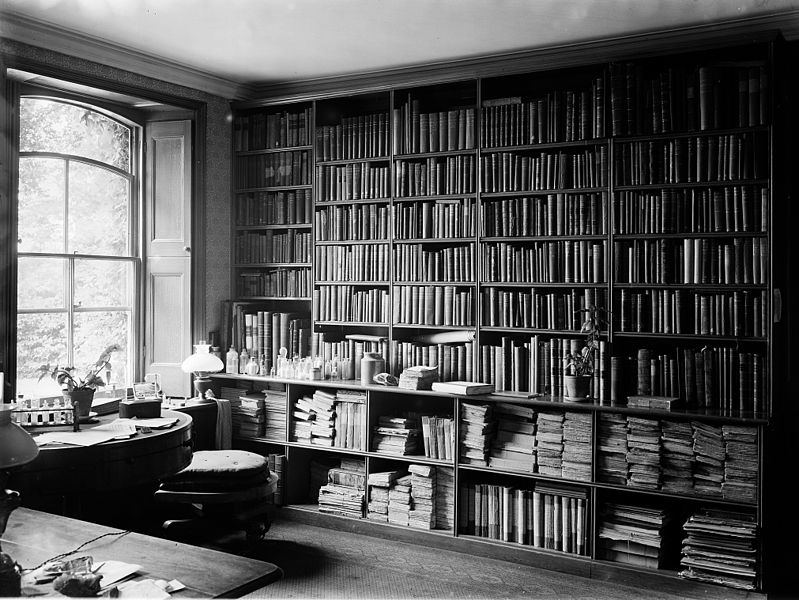
Visitors to Down can walk into his study, where his furniture has been returned including his wheeled armchair, and see what remains of the garden experiments. And you can tour the Sandwalk. While early drafts of the sestude concerned the house, my research on the Sandwalk was the ‘way in’. I saw Darwin, a venerable old man, standing on the gravel path looking back on his life, his journey.

Interior of Darwin's study at Down House in 1932.

Interior of Darwin’s study at Down House in 1932. {credit}Wellcome Images, images@wellcome.ac.uk, Wellcome Library, London. {/credit}

The letters of his children recollect how they played on the Sandwalk. At least 15,000 of Darwin’s own letters survive and have been diligently digitised by Cambridge University. The Victorian post was the internet of its day. A letter could be written and posted after breakfast, and a reply delivered back to the sender by teatime. In this way Darwin discussed his ideas and requested evidence and information from hundreds of colleagues worldwide, as well as eloquently replying to his critics.

These letters were most important to me. They show the man. He robustly defends his ideas, but also shows immense consideration for the feelings of his peers and family, reiterating his friendship. In them, he appears to me to be the most self-effacing and kind of souls.

The second half of my piece conveys his evidence-gathering and crystallising into the coherent theory he so elegantly described in what he refers to as Origin. It was because he had the most unusually broad but detailed knowledge of geology, botany and zoology that he could assemble the tens of thousands of pieces of evidence and begin to work out the mechanism of evolution, his specimens going back to his voyage aboard the HMS Beagle in the 1830s, finches’ beaks included.

Darwin’s many journeys culminated in the book, arguably one of the most influential of all time.


LAST CIRCUIT OF THE SANDWALK

Your kind, lined face peers into the thinking path. Fifty years, concentrating on millions.

Annie’s ghost dances round the birch you planted. Faith interred with her.

A closing correspondence. Evidence encircling the Earth, reaching kin, collaborators, critics. Your crystal mind the core.

Charting immense horizons of Beagle, beaks, barnacles. Focused to a final orbit of the Sandwalk. Tracing the elongated ‘O’. Origin.


Philip Parker is strategy manager for Royal Mail Stamps. The opinions expressed in this article are his own. He tweets at @parkerpj01. Find 26 Postcodes on Facebook and Twitter, and join the discussion at #26postcodes.

For Nature’s full coverage of science in culture, visit  www.nature.com/news/booksandarts.

Humour on the brain: Robert Newman reviewed

Posted on behalf of Kerri Smith

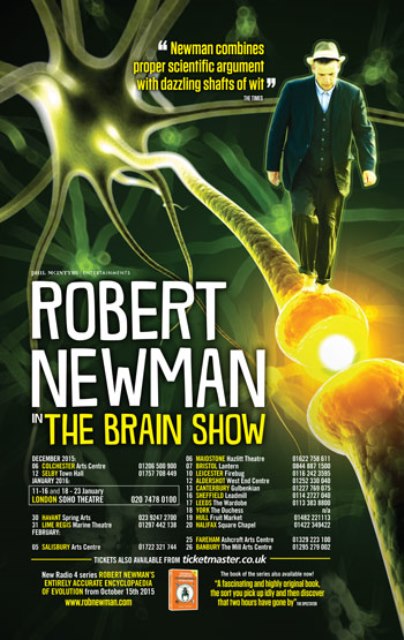
brainshowposterdecember 2British comedian Robert Newman kicks off new act The Brain Show like any self-respecting scientist: with an abstract. He tells the audience about the billions pouring into mapping European and American brains through, respectively, the Human Brain Project and the White House BRAIN (Brain Research through Advancing Innovative Neurotechnologies) Initiative. He lays out the shortcomings of these projects’ best-known predecessor, the Human Genome Project, which, he bemoans, never did find half the genes it promised. There was no “gene for getting into debt”; no “low voter turnout” gene. And he explains what the rest of his argument will be: that humans cannot be thought of as machines, and that scientists devalue us all by conceptualising people in this reductive way.

Critiques of neuroimaging could not often be called comic. Newman, however, manages it.

Newman hinges The Brain Show on a re-imagining of an infamous 2000 neuroimaging experiment by Andreas Bartels and Semir Zeki. This claimed to have found the brain network responsible for romantic love, and Newman purports to have taken part. Many of his gags are only tangentially related to the science, but it’s skilfully done. He is asked to bring four photos to the scanner session: one of someone he is deeply in love with, and three of friends he is fond of. He worries about his selection of the first image. “I’m looking at this photo and thinking: is this the best picture of me I could have brought?”

Once in the scanner, he starts to question how the experiment has been set up. Have the neuroscientists who scanned his brain really found ‘the love spot’? “Maybe what we’ve discovered,” Newman says, “is the bit of the brain that lights up when we spot an elementary conceptual blunder in experimental design.” (You can hear more from the show in this week’s Nature Podcast.)

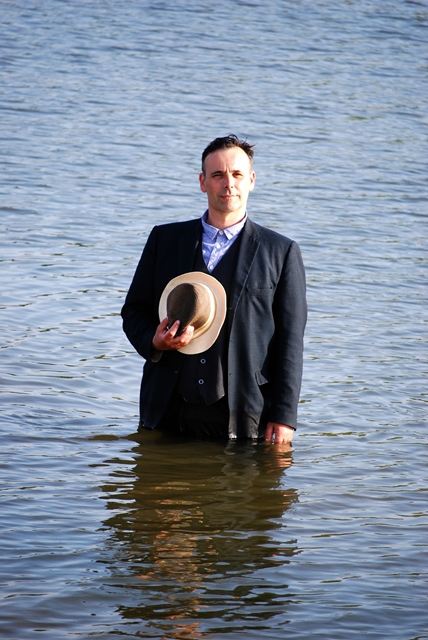
Robert Newman in 2013.

Robert Newman in 2013.

I found him on shakier ground when he chided modern neuroscience for deeming ‘we are our brains’. This encapsulation is simplistic, I’ll grant him, but to believe anything else is to come over a little bit Descartes, in danger of endorsing that mind and body are different things. To many neuroscientists, it isn’t dehumanising to imagine that cognitive powers and personalities are just patterns of neural activity. I think Newman is right to say, though, that “the idea that the brain is a wet computer is a philosophical assumption, not a scientific idea”.

At times, the comedian veers off into evolutionary biology, familiar to anyone who saw his 2013 show, New Theory of Evolution. It is perhaps easier to be hilarious when nature offers up such delights as the lemon ant (Myrmelachista schumanni). The Amazonian insects are actually known for creating so-called ‘devils’ gardens’ in which they kill off certain trees by injecting formic acid into their leaves. Newman, however, simply riffs off their name, telling us that London’s Natural History Museum employs an ant taster responsible for naming the salt-and-vinegar ant and the “I can’t believe it’s not beetle” ant.

During the show Newman wears a large flashing helmet to demonstrate his brain activity during a study of guilt. He also plays the ukulele to two rubber cephalopods, and does a great impression of the physicist and broadcaster Brian Cox standing behind a row of skulls and talking about evolutionary progress. “That’s not evolution Brian, that’s a xylophone!”

Occasionally awkward and delightfully eccentric throughout, Newman also delivers shafts of insight. He doesn’t know which discipline he’ll target next – possibly the history of science – but as his previous shows attest, he’s certainly willing to do his time in the library.

The Brain Show is on tour in the UK until 26 February, and will be reprised at the Edinburgh Fringe festival. Kerri Smith is acting head of Nature’s multimedia team. She tweets at @minikerri.

For Nature’s full coverage of science in culture, visit  www.nature.com/news/booksandarts.