The rise and fall of the UFO

Posted on behalf of Daniel Cressey
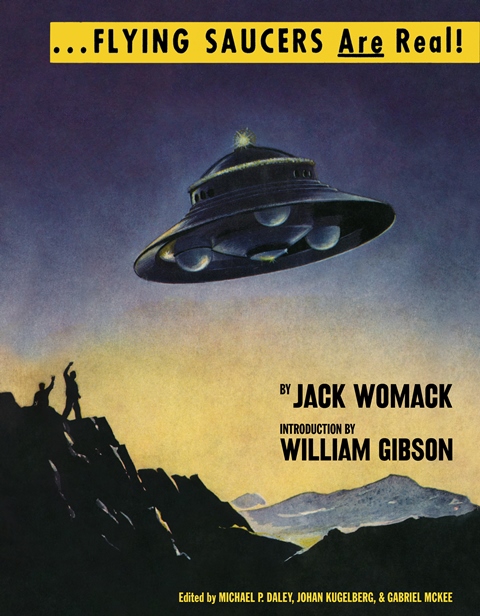
ARC028 - UFO - CoverIt seems amazing that anyone ever believed in them. In the mid-twentieth-century heyday of unidentified flying objects (UFOs), grainy pictures of flying saucers hovering in the sky were a staple even in  respectable magazines such as Time and Life. Volumes were written earnestly detailing the visits of aliens. This novel form of cold war paranoia seemed to seep into the collective psyche on both sides of the Atlantic.

For believe they did. A sizeable section of the public ate up cheap books on saucers and devoured tales of visitors from beyond our planet, whether their intent was good or ill. Fortunately for anyone enamoured of American subcultures in all their garish glory, the speculative-fiction writer Jack Womack has amassed a huge collection of these books, from sex-obsessed adult novels to earnest pseudo-academic treatises. He reproduces many of these gems in his lavishly illustrated menagerie of the tracts, Flying Saucers Are Real.
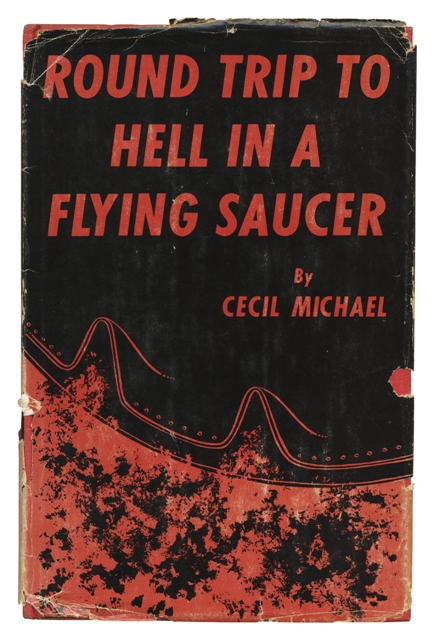
ARC028 - UFO - MIichael, C - Round Trip To Hell In A Flying Saucer

A 1955 title.

They range from what Womack calls the “finest science fiction cover to ever appear on a non-science fiction book” (The Flying Saucers Are Real by Donald Keyhoe) to the mundane (Richard S. Shaver’s 1948 I Remember Lemuria).

While Womack is deeply invested in these books, he doesn’t spare them. UFO Photographs Around the World Vols 1 and 2, he notes, “offers the most complete compilation of lens flares, camera smudges, film imperfections, blurs and jiggled shots ever published”. Womack points out that British linguist Gavin Gibbons (author of The Coming of the Space Ships (1956) and They Rode In Space Ships (1957)), and others from the UK brought “a wide-eyed if not overly creative spirit to the field”. Gibbons rewrote other people’s UFO encounters, “managing to make their accounts far less interesting”.

This is no attempt to deconstruct the reasons behind the rise and fall of the UFO. Instead, Womack seems to be attempting to understand a bizarre lost cult by collecting the artefacts they left.

We learn of George Adamski, born in Poland in 1891, who ended up founding the “Royal Order of Tibet” in California (and co-writing the 1953 Flying Saucers Have Landed) before setting up an eatery. Adamski’s ‘close encounters’ include a man who claimed to be from Venus — evidenced by the fact that his “trousers were not like mine”. In Britain, Leonard G. Cramp’s 1966 UFOs and Anti-Gravity purported to lay bare the engineering of the flying saucer, complete with detailed blueprints, which he apparently thought revealed an anti-gravity system “similar to one of his own devising”.

Womack describes another book, Flying Saucer from Mars (1954), as written by “Cedric Allingham” — a hoax said to have been perpetrated by a now-deceased British astronomer and his friend. This friend apparently admitted pretending to be Allingham to give a talk to a flying saucer club, during which he wore a false moustache.
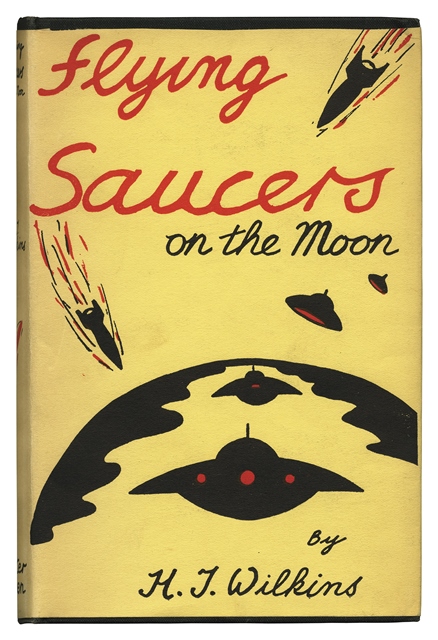
Harold T. Wilkins's 1954 text.

Harold T. Wilkins’s 1954 text.

Womack’s book can be as confusing to follow as the arguments of his UFO proponents. The typefaces switch to signal passages from source materials, and covers, photos and drawings abound. Following the huge numbers of authors mentioned and whether they are believers, hoaxers or fictional becomes something of a task. There is no clear logic to this collection of what science-fiction luminary William Gibson calls “testimonials to certain human needs” in the introduction.

Some of the notes accompanying the awesome images are brief and baffling. We read on page 10: “When John C. Sherwood was seventeen, Gray Barker published his book, Flying Saucers are Watching You (1967), a dry account of events during the 1966 Michigan Flap. Barker’s congratulation, post-publication, ‘Evidently the fans swallowed this one with a gulp.’” Who Sherwood and Barker are, and what the “Michigan Flap” was, we can only guess.

Womack’s collection is heading to Georgetown University Library in Washington DC, to be preserved among its special collections. It may stand as a monument to collective lunacy, a testament to how easily people can be led down the garden path, or simply a collection of egregious publishing mistakes. Whichever it is, Womack has preserved a record of something that felt very real to a great many people. These books began emerging, after all, around a decade after the filmmaker and theatre impresario Orson Welles inadvertently frightened an estimated 1.2 million US listeners during his famous 1938 radio broadcast of an adaption of H.G. Wells’s The War of the Worlds.

Today, the ubiquitous advanced cameras mean the lack of convincing photographs is more and more of a problem for believers. The evidence collected here is as ‘real’ as flying saucers will ever get.

Daniel Cressey is a senior reporter for Nature in London. He tweets at @dpcressey. Flying Saucers Are Real is the first book release of New York City publisher Anthology Editions, a partnership between Boo-Hooray Gallery and Anthology Recordings.


For Nature’s full coverage of science in culture, visit www.nature.com/news/booksandarts.
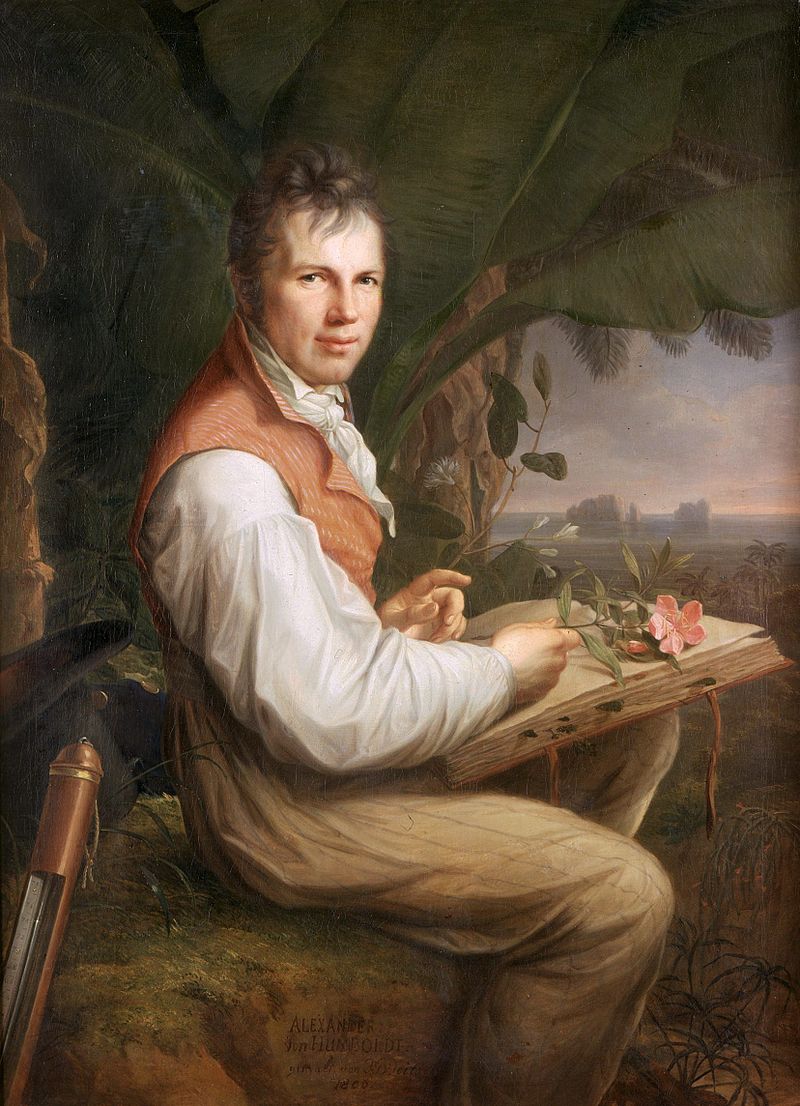
Humboldt biography wins Royal Society prize

Alexander von Humboldt (oil painting by Friedrich Georg Weitsch, 1806).

Alexander von Humboldt (oil painting by Friedrich Georg Weitsch, 1806).

If fame were measured in namesakes, Alexander von Humboldt might reign supreme. The moniker of the brilliant biogeographer, naturalist and explorer graces dozens of species and phenomena, from the hog-nosed skunk Conepatus humboldtii to a sinkhole in Venezuela. Yet the Prussian polymath’s reputation has lagged somewhat behind that of, say, Charles Darwin. Andrea Wulf’s The Invention of Nature went some way towards changing all that. Now this immensely acclaimed biography is burnished anew by winning the Royal Society’s Science Book Prize, sponsored by Insight Investment.

Wulf writes as if electrified by the fierce intellect of her subject. The Invention of Nature is also a model of concision, I feel, given the range of  Humboldt’s prodigious findings over his long life (1769–1859). He defined climate zones, predicted climate change, experimented with geomagnetism and conducted a gruelling five-year expedition in South America, discovering the Peru Current and numerous plant species, making a record ascent of Chimborazo and amassing 30 volumes of data.

Andrea Wulf.

Andrea Wulf.{credit}Antonina Gern{/credit}

Wulf’s tour de force is in good company, as one of the six that were up for the prize (and all reviewed in Nature).

Tim Birkhead’s The Most Perfect Thing: Inside (and Outside) a Bird’s Egg (Bloomsbury) (reviewed here) is a 360-degree tour of the avian egg, unshelling the chequered history of oology and the natural history of the thing itself — from formation in the ovary to the functions of their elegant colouration. As reviewer John Marzluff noted, we have yet to crack all their mysteries: “Why, for example, does the egg of a chicken travel through the hen pointed end first until the very last minute, when it turns through 180° on the horizontal plane to be laid blunt end first?”

Birkhead chose the ubiquitous. In The Hunt for Vulcan: How Albert Einstein Destroyed a Planet and Deciphered the Universe (Head of Zeus) (reviewed here), Thomas Levenson chronicles the nonexistent: a planet hypothesised to explain oddities in the orbit of Mercury, only to be quashed by Einstein’s general theory of relativity. In the telling, Levenson achieves what many science writers aspire to — a narrative weaving discoveries, backstories and implications into a synthesised tapestry.

From history to the here and now — Jo Marchant’s Cure: A Journey into the Science of Mind Over Body (Canongate) (reviewed here) is a revved-up, research-packed explication of the use of mind in medicine, from meditation to guided visualisation. Marchant’s nimble reportage on the work of scientists in novel fields such as psychoneuroimmunology and her discussion of placebos are as fresh as her reminders of how stress and poverty affect wellbeing are timely.

Equally apropos for our disordered times is The Planet Remade: How Geoengineering Could Change the World by Oliver Morton (Granta) (reviewed here). Morton’s journey through climate fixes is an assured tour of the science, the history of climate interventions and, as reviewer Jane Long noted, the “ethical, political and social implications if climate intervention became available”.

Finally, Siddhartha Mukherjee’s The Gene: An Intimate History (Bodley Head) (reviewed here) is a book of two halves. Mukherjee’s treatment of early genetics controversially skips over some complexities, but  reviewer Matthew Cobb felt it picks up from the 1970s onward with compelling detail on clinical work, the burgeoning of biotech and discoveries such as the genetic basis of Huntington’s disease.

Certainly, from Mendel to CRISPR–Cas9, the story of genetics has been a wonder. Yet it’s just a strand in the grand scientific saga that, luckily for us, continues to inspire fine writers.

The judges of this year’s prize included chair Bill Bryson, whose books include A Short History of Nearly Everything, which won the Royal Society’s Aventis Prize; lecturer and Royal Society University Research Fellow Clare Burrage; American evolutionary ecologist and ornithologist Devorah Bennu (GrrlScientist); author and Science Museum Group director of external affairs Roger Highfield; and award-winning author Alastair Reynolds.


For Nature’s full coverage of science in culture, visit www.nature.com/news/booksandarts.
 

Star Trek puts its stamp on the future

hi res 2

{credit}© USPS 2016{/credit}

As Star Trek boldly sails into its second half-century, you might wonder what other impacts on science and culture this astonishing franchise could have. ‘Live long and prosper’, for instance — could the show hold clues to hyper-longevity? (Certainly ‘Bones’ McCoy managed to survive an incurable terminal illness, xenopolycythemia, during heated skirmishes on the asteroid-ship Yonada in an early series). Might the weird paradoxes the series harnessed to explain time travel ever transpire?

We can only wait. But in the meantime, on 2 September the US Postal Service issued a stunning set of Star Trek ‘Forever’ stamps — a time-bending product useable for posting a first-class, 1-ounce letter into perpetuity “regardless of star date”, they assure us.

hi res 6

{credit}© USPS 2016{/credit}

hi res 4

{credit}© USPS 2016{/credit}

Launched in June at a ceremony featuring a talk by Walter Koenig (the original series’ inimitable navigator Pavel Chekhov), the stamps’ designs feature motifs of the USS Enterprise, Starfleet insignia and a crew member in mid-transport. The stamp featuring the Enterprise inside the silhouette of a Vulcan salute is frankly awesome, and sure to fulfil (as Spock might say) “the needs of the many”.

They don’t promise delivery at warp speed, but these stamps are a beautiful reminder, if we needed another one, of our deep, enduring affinity with Gene Roddenberry’s brainchild.

Sidney Perkowitz’s essay on Star Trek’s 50-year impact is just part of Nature’s packed science-fiction special, a cornucopia of offerings including Shamini Bundell’s podcast segment on how the franchise is used to teach ethics in engineering and beyond.


For Nature’s full coverage of science in culture, visit www.nature.com/news/booksandarts.

Breaking barriers: the US space programme’s black women mathematicians

Posted on behalf of Alexandra Witze

Mathematician Katherine Johnson at NASA's Langley Research Center, where she worked as a "computer" from 1953 to 1986.

Katherine Johnson at NASA’s Langley Research Center, where she worked as a “computer” and mathematician from 1953 to 1986. Her illustrious career included calculating Apollo 11’s trajectory on its flight to the Moon. {credit}NASA{/credit}

Some of the most intriguing stories in the history of US science have emerged over the past few years. It’s about time. These books centre on something long under wraps: the centrally important roles women played starting some 70 years ago in the great technological transition that gripped the twentieth century. Denise Kiernan’s The Girls of Atomic City (Touchstone, 2013) chronicled the contributions of the women who worked at the secret atomic-bomb laboratory in Oak Ridge, Tennessee, during the Second World War. Rise of the Rocket Girls by Nathalia Holt (reviewed here) depicted the mathematicians or “human computers” who crunched numbers at the Jet Propulsion Laboratory in southern California from the 1940s. In this catalogue, Margot Lee Shetterly’s Hidden Figures is more than just another entry.

Shetterly’s book is an exploration of the groundbreaking achievements and shocking discrimination experienced by a group of talented mathematicians in all aspects of their professional and personal lives. These African-American women — Dorothy Vaughan, Katherine Johnson, Mary Jackson and Christine Darden among them — began working from the early 1940s at the Langley Research Center in Hampton, Virginia, then the nation’s premier aeronautical laboratory. That wartime breakthrough was to propel many of them into long and successful careers at the heart of the space race. (A feature film based on the book and starring Taraji P. Henson will be released in January.)

Christine Darden in the control room of Langley's Unitary Plan Wind Tunnel in 1975. Darden became an expert on sonic booms and supersonic flights.

Christine Darden in the control room of Langley’s Unitary Plan Wind Tunnel in 1975. Darden became an expert on sonic booms and supersonic flights.{credit}NASA{/credit}

These stellar scientists broke major political and social barriers. Virginia in the American South was a segregated state. Beginning after the Civil War and lasting until the civil-rights era of the 1960s, “Jim Crow” laws enforced a rigid racial hierarchy. Shops, restaurants, public transportation — all viciously discriminated against African-Americans in matters as basic as where to use the toilet.

The mathematicians whose experience Shetterly unveils came of age in this reality. Members of a thriving African-American middle class, they went to universities such as Howard in Washington DC — historically black institutions where they were taught by eminent faculty trained at universities such as Harvard, who could not secure a position there because of their race. These accomplished young women became teachers, then generally the sole career option for educated black women. (Postgraduate education was not even possible in some states; rather than admit African-American students to its state university for graduate studies, between 1936 and 1950 Virginia paid them “scholarships” to attend graduate school elsewhere.)

Top flight

But after America entered the war in 1941, new professional opportunities opened. Langley, where engineers designed and tested technological advances that permitted US planes to fly higher and faster, needed an awful lot of number-crunchers to calculate, say, the ideal air flow over an aeroplane wing. That crushing demand opened the gates to women. Female computers began working through calculations that kept Boeing’s B-29 Superfortress bomber  aloft and the North American Aviation P-51 Mustang fighter manoeuvering through the skies.

Even here, however, segregation persisted. Vaughan and her colleagues were placed in Langley’s ‘West Computing’ unit. White women computed on the east side. At the back of the Langley cafeteria, a white cardboard sign labeled COLORED COMPUTERS directed the West mathematicians to sit together at lunch rather than mingle. Eventually, “tiny firebrand” Miriam Mann stole the sign, and the table was left unlabelled.

Margot Lee Shetterly.

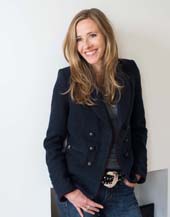
Margot Lee Shetterly.{credit}Aran Shetterly{/credit}

Shetterly, who grew up in Hampton, illuminates this remarkable group’s professional careers and personal travails. Simply getting housing as a black woman was fraught with difficulty in these decades. It was only by harnessing the strong social networks of the African-American middle class that these mathematicians finally got a toehold in the American dream. Shared work experiences bound the group outside Langley: Vaughan and Mann brought their families together for local activities including a phenomenal performance in Hampton by iconic African-American singer Marian Anderson.

Postwar, the future was unclear, Shetterly shows. Would women be pushed out of the workforce? The Soviet Union’s launch of Sputnik in 1957 changed all that. In 1958, the Langley lab became part of the newly formed NASA and the centre of Project Mercury, the programme for crewed space travel. The West computers scattered to other divisions to begin work on the complex calculations of getting spacecraft into orbit.

HiddenFigures_HC HiResIn 1959 Johnson and her colleague Ted Skopinski first calculated the mathematics of firing a capsule into ballistic flight. The equations described the flight of a spacecraft, from the angle of launch, to point of re-entry, to the effect of Earth’s rotation. Their work underlay the successful 1961 suborbital flight of astronaut Alan Shepard. The following year, when John Glenn was about to make the first US orbital flight, he personally requested Johnson to double-check, by hand, the calculations of his trajectory. Johnson went on to an illustrious career in the US space programme. Her mathematics dictated the trajectory of the Apollo 11 flight to the moon, Neil Armstrong and Buzz Aldrin’s descent to the surface, and their tricky rendezvous with the command module in lunar orbit in order to make it safely home. Later, she worked on the space shuttle programme. In November 2015, she received the Presidential Medal of Freedom, the nation’s highest civilian honor, from President Barack Obama.

Vaughan, who in the 1950s had served as Langley’s first black supervisor, forged a successful career in computer programming. Jackson achieved the rank of engineer, then turned her attention to helping other women and minorities into high-level positions. Darden, one of the next generation to benefit from the barriers broken by this group, became a world expert on sonic booms and supersonic flight.

Hidden Figures is not the definitive history of women in the space programme, nor of women at Langley. It does not need to be. It lies at the intersection of the greatest scientific advances and the greatest civil-rights battles in US history.

Alexandra Witze is a correspondent for Nature based in Boulder, Colorado. Her email is witzescience@gmail.com and she tweets at @alexwitze.


For Nature’s full coverage of science in culture, visit www.nature.com/news/booksandarts.