Superbugs: fighting the flood of antimicrobial resistance

Posted on behalf of Andrew Jermy
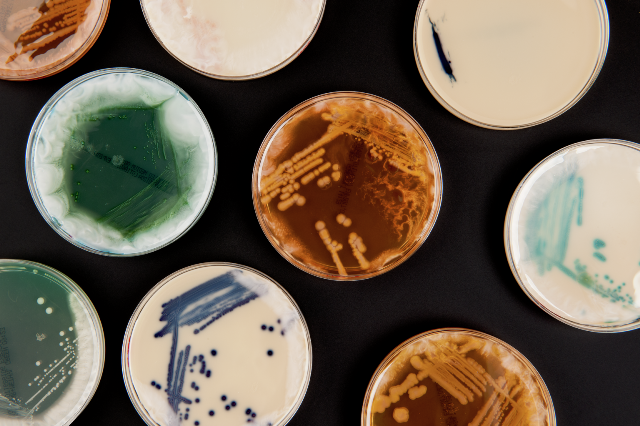
Enterobacter cloacae, Enterococcus faecalis, Staphylococcus epidermidis and the Superbugs exhibition.

Petri dishes with cultured Enterobacter cloacae, Enterococcus faecalis, Staphylococcus epidermidis and Escherichia coli at the London Science Museum’s Superbugs exhibition.{credit}® The Board of Trustees of the Science Museum{/credit}

Antimicrobial resistance has spread to London this month. The source of the outbreak? The Science Museum: its new exhibition, Superbugsexplores this monumental issue and our responses to it.

As Superbugs graphically shows, the inflammatory tone of the many headlines predicting an impending antibiotic apocalypse is not baseless. The evolution and spread of resistance among serious (and increasingly commonplace) bacterial infections continues to blunt much of our antibiotic arsenal, and make routine operations significantly more risky. Such infections now claim almost 700,000 lives annually, a figure that could rise to more than 10 million by 2050.

Superbugs isn’t out simply to scare, however. Much like Nature Microbiology, the journal I edit, the Science Museum aims to join the ‘resistance against resistance’ by shining a light on the problem’s scale, and the range of potential solutions.
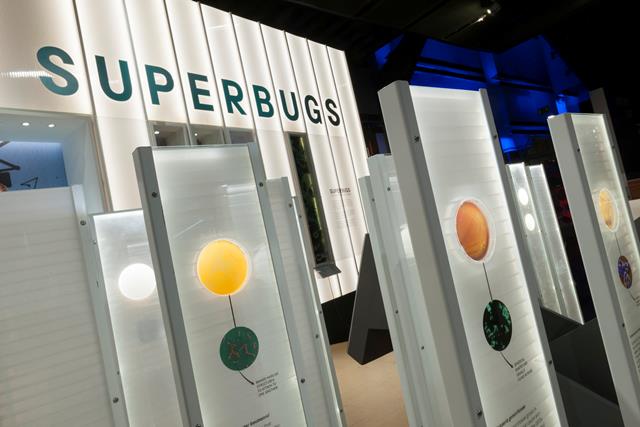
The monumental 'wall' and towers at the exhibition.

The monumental ‘wall’ and towers at the exhibition.{credit}{credit}® The Board of Trustees of the Science Museum{/credit}{/credit}

The physical design of the installation aptly reflects aspects of the crisis. A vast illuminated wall dominates; set into it is a series of displays. This monolith, emblazoned with the show’s title, speaks of antibiotics’ barrier function — how they act as a great dam holding back a flood of infections. Standing in front of this cracked levee are 12 small towers into which have been set Petri dishes. Each contains a different type of (inactive) microbe, including MRSA and Neisseria gonorrhoeae — like outposts of resistance that have breached the barricade and now mingle among the crowds. It’s a powerful scene.

I was drawn irresistibly to the inset display cases. Combining text with striking visuals and interactive content, these take the visitor through medical history, from the discovery and introduction of antibiotics in the first half of the twentieth century, to the rise of resistance in the years following the introduction of each new drug, to ongoing efforts to revitalize our dwindling drug cabinet. Peppered through are personal testimonies. We meet doctors explaining why antibiotics are overprescribed; a nurse reminding of the fundamental importance of their work on infection control; designers who create products that enable no-touch use, or incorporate anti-bacterial materials, to reduce the risk of transmission.
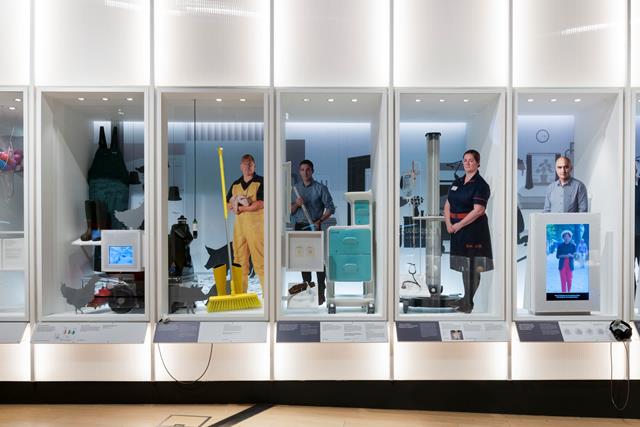
Interviews with nurses, medics and others waging war on antibiotic resistance feature in the exhibition.

A display on the people at the frontline of ‘resistance against resistance’.{credit}® The Board of Trustees of the Science Museum{/credit}

We hear a recording of bacteriologist and discoverer of penicillin Alexander Fleming, describing how microbes can become ‘educated’ to resist a drug. A culture of Penicillium mold grown from a stock of his original sample is shown nearby. A video describes the harrowing experience of Geoffrey Pattie, a cancer patient who during surgery contracted a strain of Klebsiella pneumoniae resistant to all current antibiotics. He spent five months in an isolation ward, and today lives with the life-altering effects of the infection, such as reduced mobility.

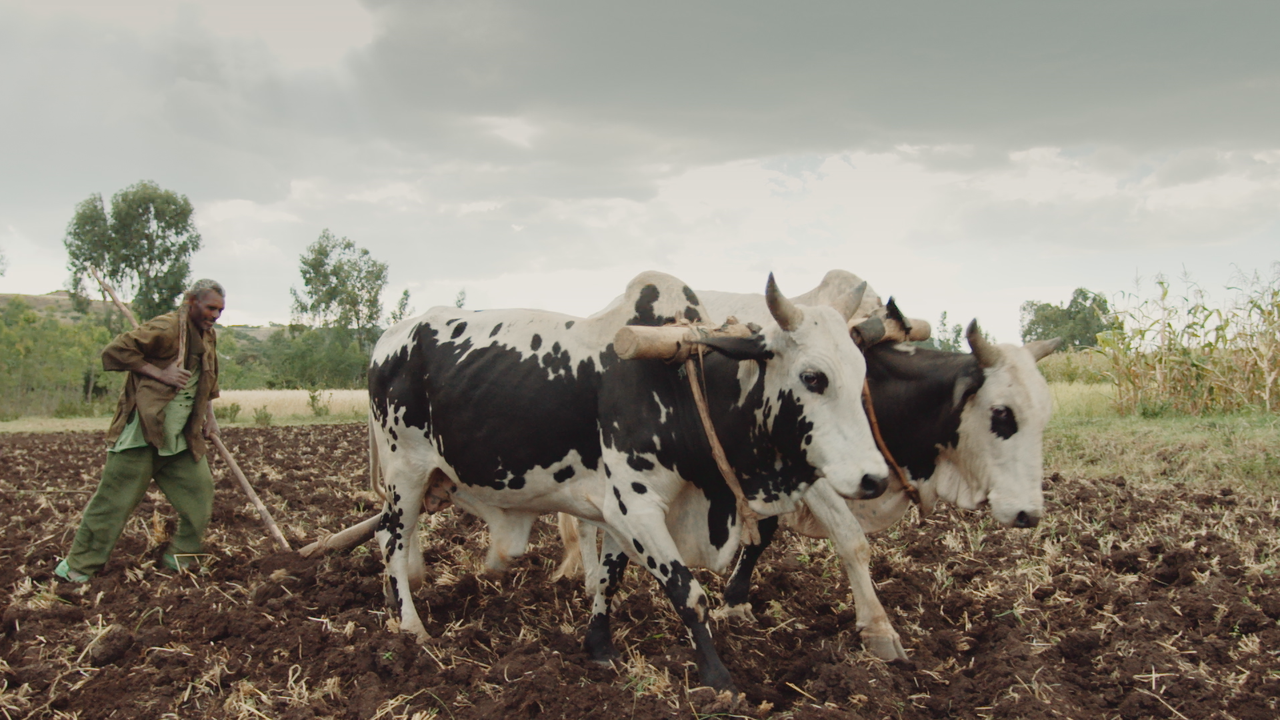
Nearly half of antibiotic use occurs in agriculture, to treat and prevent infection in livestock, but often also to promote growth. The drugs and bacterial resistance genes that they select for become widespread in terrestrial and marine environments, giving a large potential reservoir from which resistance can leap into clinically relevant pathogens. Inevitably, that is a serious problem for human health. The show reveals some of the technological fixes that are being investigated, including automated systems for monitoring livestock welfare to allow targeted interventions rather than treating an entire herd prophylactically. Also presented are possible alternative approaches to tackling infections, such as phages (viruses that kill bacteria) sourcing new antibiotic leads from oceans, soils and host-associated microbiomes in humans, komodo dragons and leafcutter ants.

The promise of such efforts is stirring. But finding a new antibiotic class that will make it to the clinic is “like searching for a needle in a field of haystacks”, cautions one researcher interviewed.
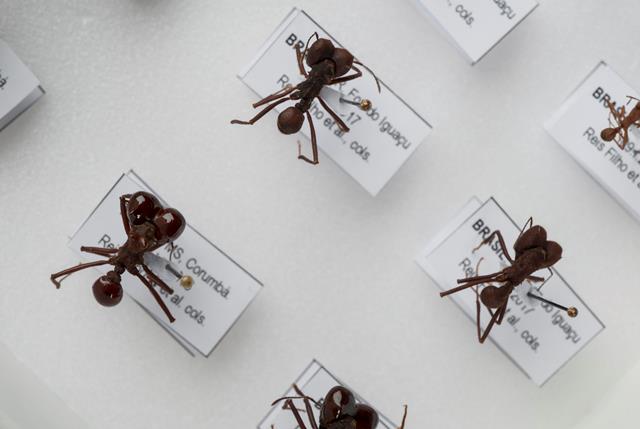
The bacteria leafcutter ants use to defend their nests against fungi and microbes excrete chemicals that are effective antibiotics.

The bacteria leafcutter ants use to defend their nests against fungi and microbes excrete chemicals that are effectively antibiotics.{credit}® The Board of Trustees of the Science Museum{/credit}

What isn’t covered in much depth is the parlous state of the antibiotic R&D pipeline. Many large pharmaceutical companies have closed their antibiotic development programmes in recent years. That includes Pfizer, the main sponsor of the exhibit — although the company did announce in 2016 that it planned to acquire AstraZeneca’s antibiotics division, and reinforced a strategic focus on tackling infectious diseases. The economics of antibiotic discovery and development is complicated: to bring a drug to market takes a massive investment in time and finances. Yet we will need these new drugs to be used ever more sparingly in future. So, under the current system, there is actually a disincentive for industry to put in the necessary investment – they would never break even, let alone see a return.

Superbugs is doubly timely. This week (13-19 November) is the World Health Organization’s World Antibiotics Awareness Week 2017, an opportunity to take stock of progress. Antibiotic resistance, until recent years a concern only of clinicians and microbiologists, is now globally recognised as a crisis through the work of key individuals, such as Britain’s chief medical officer Sally Davies, and reports from national and international bodies. In 2016 this culminated in the UN High-Level Meeting on Antimicrobial Resistance (see this Nature Microbiology editorial).The rise in academic research and conferences focused on antimicrobial resistance is a positive sign that new approaches can and will be found, despite the issues with the pharma marketplace and the ongoing hunger for antibiotics in agriculture and medicine.

But we remain a long way from winning what the Science Museum describes succinctly as the “fight for our lives”. Hopefully this polished, fact-packed exhibition will call many more to arms — from the lay visitor to the family doctor, local farmer and political representative.

Andrew Jermy is chief editor at Nature Microbiology. He tweets at @jermynation.

Superbugs: The Fight for Our Lives is free, and at the Science Museum until spring 2019.


For Nature’s full coverage of science in culture, visit www.nature.com/news/booksandarts.

Hunger games: food security on stage and screen

Metta Theatre's production of Lydia Adetunji's play Bread on the Table, Trafalgar Studios, London.

Metta Theatre’s production of Lydia Adetunji’s Bread on the Table juxtaposes food commodity trading and starvation in poorer countries.{credit}Richard Davenport{/credit}

A Nigerian farmer feeds her last cow to a man who pays with his life. A biologist in an agribusiness-dominated dictatorship risks death by growing potatoes. An official in a world of water wars tortures a man dehumanised by thirst.

Mouthful, a set of six playlets at London’s Trafalgar Studios, offers pungent glimpses — some bleakly comic, some harrowing — of food crises real and potential. It joins a spate of films — including the documentaries 10 Billion and Land Grabbing — and books re-examining the issues to ask how and why hunger still haunts us, after decades of humanitarian and scientific effort, and enshrinement in the Millennium Development Goals.

Some 795 million people remain malnourished, according to the UN Food and Agriculture Organization. But globally, the complexities of food production, distribution and consumption create another kind of havoc. The World Health Organization notes that over 600 million adults are obese. Humanity’s relationship with food has become intractably tangled in tandem with population growth, globalisation, economic inequities, and technological changes such as factory farming and food processing. We swim in a bouillabaisse of biotech agribusiness, threatened crop biodiversity, rising food prices, and a vast tonnage of wasted food.

Alisha Bailey of Metta Theatre in Neil LaBute's drought-ridden dystopia 16 Pounds.

Alisha Bailey of Metta Theatre in Neil LaBute’s drought-ridden dystopia 16 Pounds.{credit}Richard Davenport{/credit}

Six scientists steeped in the issues collaborated with the six playwrights behind Mouthful. Thus Tim Benton,  champion of the UK Global Food Security programme, teamed up with renowned film director and writer Neil LaBute for his drought-bound dystopia 16 Pounds (Benton also helped hammer out issues explored by all the plays). Lydia Adetunji, whose trenchant Bread on the Table picks at the link between food commodification and the Middle East food riots, worked with plant breeder Molly Jahn. The researchers were sounding boards and fact checkers, ensuring assertions were evidence-based, and suggesting real-world concerns as dramatic inspiration.

These joint ventures are a world away from Duncan Macmillan’s recent 2071. Essentially a lecture on climate change by climate scientist Chris Rapley, that play drew fire from many critics for its bald didacticism. Mouthful gets its multiple messages across via the expressive skill of the Metta Theatre ensemble (whose four members play all the roles) and director Poppy Burton-Morgan. Interludes by artistic director William Reynolds deliver quantification — projections of data and brief videos — but at so rapid a pace it was hard to get more than an impression of the facts.

And that made me wonder how someone new to them might experience Mouthful. Where the drama in 2071 is meant to emanate from the science alone, here theatrical skill is the weight-bearing element. Certainly, the performances are superb, particularly Doña Croll’s as, in turn, a commodity broker’s client, a Fulani farmer and a biodiversity activist, and Robert Hands’s as a starving Tunisian — and a giant insect in the interval revue Try Me, a paean to entomophagy.

Mouthful is best at taking humanity’s botched attempts to feed itself to their logical conclusions, and at showing with some subtlety the interlinkages between conflict, corporate greed and hunger. It is politicised, but that is inevitable given the economic inequalities that are the worm at the core of this unwieldy problem.

Feeding the billions

10 Billion covers much of the same territory as Mouthful. But the film’s dramatic tension is sparked by the friction between extremes — top-down, lab-bound, big-money solutions alternating with bottom-up experiments and experiences. While the dichotomy and development paradigms are familiar, the director — environmental journalist Valentin Thurn — gives us a mindboggling range of responses to the food crisis.

The film opens on Thurn munching a deep-fried grasshopper, intoning that apropos of food, “It may not be long before we can’t afford to be picky any more”. It’s a taster for a sometimes queasy tour taking in a Mozambican farmer ejected from her land by soy growers, a panoply of organic farmers, the scientific advisor to a high-tech Japanese lettuce factory, the director of a vast industrial chicken production business in India, Canadian researchers genetically modifying salmon, “in vitro meat” engineer Mark Post and many others. These individuals become unique windows on the often baffling world of ‘global food’.

Thurn makes no secret of his disdain for agribusiness. This is muckraking of a serious type, and that some of his interviewees are hoist with their own petard is in the nature of documentary-making. Thurn does, however, milk the visual contrast between the researchers and farmers. The technicians in lab coats under artificial light seem shot with a slo-mo surreality, giving their work an alien, claustrophobic feel in stark contrast to that of the farmers in sunny fields full of scurrying livestock.

B. Soundararajan of Indian company Suguna Poutry Farm, featured in 10 Billion.

B. Soundararajan of Indian company Suguna Poutry Farm, featured in 10 Billion.{credit}Prokino 2015{/credit}

Again like Mouthful, 10 Billion is strongest in its revelations of interconnections and tradeoffs. Thurn shows how vast multitudes of factory-farmed chickens mean more soy fields in Africa to feed them, and how food commodities speculation in Chicago can cause the price of staple crops to fluctuate in scores of poor countries. He is unimpressed by the idea — propounded by Jim Rogers, founder of the Rogers International Commodity Index — that high food prices benefit farmers, arguing that profits often circulate solely within the commodities market.

His point that small farmers can, by becoming self-sufficient, opt out of the global system entirely is hardly novel, but the case studies are salutary. Malawian Fanny Nanjiwa, for instance, intercrops pigeon peas, cabbage and cassava to keep her food supply resilient. Across the world in Wisconsin, basketball veteran Will Allen boosts urban community food security through Growing Power. The venture features intensive vermicomposting and ‘aquaponics’, a closed system neatly meshing fish farming with food cropping.

A highlight is Thurn’s look at Indian landraces. Many of these indigenous crop varieties, having evolved under highly variable local conditions, are very hardy; and there is a resurgence of interest in them. We see Kusrum Misra, an ebullient Balasore-based seed collector, touring conservation fields preserving over 700 varieties of rice resistant to salt, flooding and drought.

Small farmers in Cambodia who were forced off the land, featured in Land Grabbing.

Small farmers in Cambodia who were forced off the land, featured in Land Grabbing.{credit}Wolfgang Thaler{/credit}

One wonders what Misra would make of Jes Tarp. Chairman of a company called Asian Global Management, he is shown gazing proudly over a rippling monoculture soy field saying, “two years ago, this looked like that” as he points to a nearby forest. Tarp, however, is not pushing people off the land — a now worldwide phenomenon. The Austrian documentary Land Grabbing by Kurt Langbain and Christian Brüser graphically reveals the cost of this practice in Cambodia, Romania, Sierra Leone and Ethiopia.

And it is high. Western demand for the crops fuelling our lifestyle — sugarcane for sugar and ethanol, oil palms for the saturated vegetable oil used increasingly in everything from lipstick to sweets — is met in part by companies operating in poverty-stricken countries. Land Grabbing explores that relationship in depth, and clarifies the extent of savannah and rainforest clearances that make way for vast plantations, and the siphoning off of water supplies. As entire villages can be burnt, bulldozed or simply divested of cropland in the process, social stability can be lost along with biodiversity and scarce resources.

Land Grabbing is a film less orchestrated than 10 Billion, and the better for it. Martin Hausling — a German farmer-turned-MEP in the European Parliament for the Greens  — does provide some context, notably on the links between European Union subsidies and evictions of hundreds of thousands of small farmers in Cambodia, which have been amply reported elsewhere. But on the whole we parse for ourselves the pronouncements of an agribusiness consultant fired up by palm-oil profits (a hefty $40 million per 10,000 hectares a year), World Bank advisors thrilled by opportunities for agricultural entrepreneurship in Africa, ethanol producers — and farmers traumatised by the grabs.

Vegetable picker Alemgema Alemayoh, featured in Land Grabbing.

Vegetable picker Alemgema Alemayoh, featured in Land Grabbing.{credit}Wolfgang Thaler{/credit}

And it is the people working the land who speak loudest. I was struck by two of the Ethiopians interviewed. One, Alemgema Alemayoh, picks peppers and tomatoes in a vast, foreign-run greenhouse whose produce is airlifted to five-star restaurants in Saudi Arabia. (The Ethiopian government, we are told, offers investors the lease of 3.6 million hectares of land at 5 euros a hectare per year.) She has never tasted these vegetables; she and her six children live on maize.

The other is Gebreyesus Tesfay. Under a government project helping small farmers improve soils, compost, intercrop and row-plant the grain teff, Tesfay is shown cultivating his land with a magnificent brace of oxen and a formidable handmade plough. Before, he says, they starved. Now they plant vegetables three times a year and are secure, although it is obviously still a tough life. As with Nanjiwa and Allen, self-sufficiency enlightened by the best of tradition and of small-scale science can work, if bad governance and skewed economics are held at bay.

Gebreyesus Tesfay on his farm in Ethiopia, featured in Land Grabbing.

Gebreyesus Tesfay on his farm in Ethiopia, featured in Land Grabbing.{credit}Wolfgang Thaler{/credit}

Globally, small farms number half a billion and support an estimated 2.5 billion people. They are, as these plays and films reveal, vulnerable; but they are centrally important as bulwarks against hunger. Meanwhile, the West’s demand for crammed supermarket aisles seems largely decoupled from a full understanding of the human dramas behind all that bounty. If tackling hunger is a ‘war’, it’s fought on many fronts; and it is winnable only if, in addition to appropriate technologies and sustainable innovation, richer societies fully grasp the politics that complicate this fraught issue.


See here for a Nature Podcast on Mouthful. For Nature’s full coverage of science in culture, visit www.nature.com/news/booksandarts.