And Algae Shall Inherit the Earth

In October, I touched on the promise of biofuels as part of a larger revolution in consumer biology. The recent emergence of biofuels on the political agenda is worthy of note. It is clear that the world’s dependence on fossil fuel is strained on two fronts: the projection that global supplies will eventually run out, and the need to reduce greenhouse emissions and alter the course of global warming.

The world’s largest user of fossil fuels is the United States, mostly for transportation fuel. Therefore, changes to the way that the US uses fossil fuels and any moves to use alternatives are highly significant drivers to the alternative fuels market. Recently, there has been three key developments, all driven by the US, that have created a ‘perfect storm’ of opportunity for strategically placed companies, including well-positioned start-ups.

Firstly, the US Environmental Protection Agency’s new set of Renewable Fuel Standard (RFS) regulations requiring 36 billion gallons of renewable fuel to be blended into gasoline and diesel by 2022. Secondly, regulations due to start in 2015 will require all ships operating within a US designated area, called the Emissions Control Area (an area that includes Canada, Alaska, the US Virgin Islands, and Puerto Rico), to use fuel with less than 0.1% sulfur content (1,000 parts per million). Essentially, opening up the potential for cruise operators and others to now seriously consider using biofuels. Thirdly, and most significantly, the news from last August that the Departments of Energy, Defense, and Agriculture will commit $510 million to build a viable biofuels industry able to provide half of the US Navy’s fuel needs by 2020 – a staggering 5 billion gallons each year. This last measure is born from both strategic and economic needs. The cost of a barrel of oil continues to rise and the Straits of Hormuz is growing more vulnerable in a political game of chess.

Continue reading

GM Plants and 7 billion people

dolls.jpg

Beginning in the mid-’70s, Brazil prepared for a gene revolution. Patent, cultivar and biosafety laws were enacted in the ’90s before the commercial release of agricultural biotech products. Brazil has consistently invested in human resources training in science for the last 30 years. Science in Brazil is growing at a rate comparable to or higher than most developed countries.

Also, during the past 25 years, Brazil has trained excellent plant cell, molecular and developmental biologists at EMBRAPA research center CENARGEN (the National Research Center for Genetic Resources and Biotechnology), to team up with plant geneticists and breeders to develop the best programs for the tropics. Funds for molecular biology were applied to plant genetic engineering, but still, somehow plant breeding disappeared in Brazil during the last decade. Why is that?

Well, when the first genetically modified plant was commercially released in 1995, worldwide non-governmental organizations (NGOs) protested against it, a movement supported by the judiciary system in Brazil. We lost every legal action against the NGOs from 1997 on. One judge voting against the release of GMOs said he was judging a dispute between Greenpeace and Monsanto. The decision had nothing to do with science or what would be the best for Brazilian agriculture. It was a political and ideological decision.

The consequence was that from September of 1998 until 2005, Brazil could not commercially release genetically modified plants in Brazil. Those willing to do plant molecular biology and genetically modify plants even at scientific level were denied funds, as rules created by the Ministry of Environment in the country required years of endless justifications for scientists to release a field experiment. Beans engineered to be resistant to the Golden Mosaic Virus by applying RNA interference methods took almost 10 years to be released, with considerable opposition coming from NGOs, which garnered support by sectors of the Executive in Brazil.

What is really sad is that this is not isolated to Brazil. Plant genetic engineering in Europe is a shadow of what is was during the ‘80s, when Marc Montagu and Jeff Schell built the scientific basis for plant genetic engineering. Twenty years later, Ingo Potrykus is still struggling in Europe to bring his Golden Rice to market. This genetically modified rice has the potential to save the lives of millions of children in the developing world by fighting vitamin-A deficiency. Potrikus also has struck deals with dozens of biotech companies for patents on the technologies he used to create his rice. The world’s poorest regions of Central and West Africa would gain the most from the gene revolution. However most work in biotech by the large corporations are directed to soybean, cotton, cannola and corn — not much for staple crops. No wonder those representing developing countries feel excluded from the gene revolution.

Science and scientists are on the spot. Thousands die of hunger each day, mostly children. Ignoring this and not using the bioscience advances to attenuate this problem is morally unacceptable. Brazil surveyed recently its poverty. There are almost 20 million living at extreme poverty levels, close to 10% of the Brazilian population. They do not have enough money to eat two meals/day. In some rural areas of the Northeast the poverty average ranks twice the national average. It is imperative to have a global, science-based effort toward a less hungry world that builds jobs and focuses on major constraints for agriculture development in the tropics. This effort cannot be achieved if we demand never-ending biosafety analysis of products known to be safe. We must focus initially on plants resistant to drought, pests, and to soil aluminum toxicity, which affect more than half of tropical soils. Grasses capable of fixing nitrogen from the air are also needed (following up the work by Johanna Döbereiner, who died some years ago) to allow poor people to save the cost of oil-derived urea, which pollutes the soil and the water.

We can make the Gene Revolution work in the same direction as the Green Revolution did decades ago. We have a much more powerful science in our hands. We need an effective strategy to unite the world toward this goal. How do we explain to the developing world that almost a decade was required for the innocuous rice produced by Potrikus to be released, while a fast-track was found to commercially release a cosmetic that prevents wrinkles, purified from a neurotoxic protein from the Clostridium botullinum? Hunger is a world problem. Wrinkles are not. Poverty in Brazil is a small fraction of the world`s poverty, and Brazil will face it. What about the rest of the world? Can we ignore the advances of biosciences in this context? Think about it, please.

Luiz Antonio Barreto de Castro

Biotech in Malaysia

Lumpur.jpg

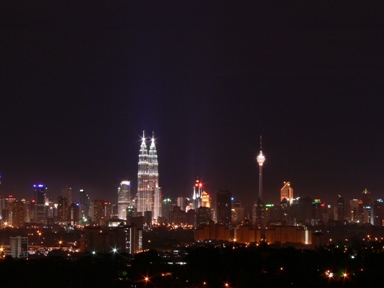
Malaysia is located in Southeast Asia with two distinct regions, namely Peninsular west Malaysia and East Malaysia. It has a population of approximately 28 million, and is famous for elegant and gigantic “PETRONAS Twin Towers” located in the heart of Kuala Lumpur (pictured above, at night).

Malaysia also has one of the best economic records in Asia, with GDP growing an average 6.5% for almost 50 years. The economy has traditionally been fuelled by its rich natural resources, mining and agriculture, but is expanding in the sectors of science, tourism, commerce and medical tourism. It is one of the largest exporters of petroleum, tin, rubber and palm oil in the world. It is the third largest economy in ASEAN (Association of Southeast Asian Nationals) and 29th largest economy in the world. The country is multi-ethnic and multi-cultural (Malays, Chinese and Indians) and its freedom of religion is protected by a secular constitution. Bahasa Malaysia or Malay language is the national and official language of the country, though English is widely used in commerce and industry.

The infrastructure of Malaysia is one of the most developed in Asia. The country has seven international ports and 200 industrial parks dedicated to science and technology industries. Malaysia has 58 airports (36 on East Malaysia and 22 on Peninsular Malaysia), with 37 of them having scheduled passenger service on commercial airlines. Malaysia has 8 international airports and a well-networked telecommunication system in both rural and urban areas. The country is self-sufficient in energy production from oil and natural gas.

Malaysia encourages foreign investment in biotechnology and offers many incentives and advantages to foreign investors. The national interest in biotech started in the 5th Malaysian Plan (1986-1990) but was given due recognition and emphasis in the 8th Malaysian Plan (2001-2005). Malaysian Biotechnology Corporation Sdn Bhd (BiotechCorp) is the custodian of national biotechnology policy (NBP) and was launched in 2005 to provide a development framework for the industry over three phases. Those phases are:

Phase I – Capacity Building (2006-2010)

Phase II – Science to Business (2011-2015)

Phase III – Global Business (2016-2020)

Since the launch of the NBP in 2005, the Malaysian biotechnology industry has recorded a total investment of $1.3 billion (RM 4.5 billion) by 2009. Out of this investment, 57.8% was funded by the government, while the remainder was funded by the private sector. The contribution of the biotechnology industry toward the gross domestic product (GDP) in 2009 was estimated at 2%.

In terms of total employment, it is estimated that 54,000 people were employed in the life-science and biotechnology-related industry in 2009. As of Sept. 30, 2009, a total number of 349 biotech companies were identified in Malaysia, a three-fold increase from 117 companies in 2005. Out of thse 349, 41% were involved in ag-biotech, 38.4% in healthcare biotech, and the remaining (20.6%) in industrial biotech.

But, due to the higher entry barriers for medical devices and molecular diagnostic kits, the extensive product regulations and procedures for registration, and the costs of manufacturing and exports, healthcare biotech contributed only 31.6% of revenues. Of the total investment, the industrial biotech sector has the highest investment dollars, with close to $300 million (RM 1 billion). Total investment in agricultural and healthcare biotech sectors is $287.5 million (RM 1 billion) and $235.1 million (RM 822.8 million), respectively. This investment includes contribution from the US, UK, France, Germany, Italy, Belgium, India, China, Hong Kong, Singapore, Thailand, Australia, New Zealand, Japan and Taiwan.

There is a tremendous base building in Malaysia. My next post will explore in more detail the rules around launching a company there.

Prashanth Bagali

India’s Vision 2020 – BioPharma Strategy – R&D

7.jpg

In order for India’s biopharmaceutical players to compete effectively on the global scale for biosimilars market by 2020, the private sector as well as Government of India (GOI) will have to invest a considerable amount of capital in building the manufacturing capacity and skills base to provide the necessary enabling environment. The Department of Pharmaceuticals, GOI in partnership with Association of Biotechnology Led Enterprises (ABLE) and PricewaterhouseCoopers (PwC) have attempted to address this opportunity and provided the key recommendations into six broad sections, which you can read about here.

The first section is focused on the research & development area of the biopharmaceuticals sector which is divided into seven sub-sections.

1. Build protein characterization laboratories and GLP-certified animal study facilities

The biopharma product development process includes both the method of manufacture and high-end bioanalytical product characterization to verify the equivalence in quality to the original drug. Foreign regulatory authorities require evidence to the applicable standards as part of the regulatory submission. The validated product (bioanalytical-proof) is then tested in a GLP-certified animal laboratory and the data from bioanalytical studies and animal tests are submitted to the regulator for permission to conduct a clinical trial.

India currently has very few GLP-certified animal laboratories and only one GLP-certified protein characterization laboratory at the National Centre for Biological Sciences (NCBS) in Bengaluru. The country needs at least four more GLP-certified laboratories. The GOI should therefore fund the construction of the necessary facilities in national scientific institutions and laboratories, as well as in CROs. It should also promote collaboration between academia and industry. In addition, the GOI should offer duty waivers or other incentives to encourage existing service providers to branch into biologics development, using the Research-as-a-Service (RaaS) model – which would, in turn, attract multinationals wanting to outsource such activities and improve revenue generation. India’s public institutions are not equipped to provide such services because they do not have sufficient understanding of the regulatory requirements.

2. Create a national animal breeding facility

India needs a National Animal Breeding Facility to produce high-quality animals for preclinical studies and to generate certified data that meet international standards and scrutiny. Recently, the GOI announced plans to establish a large centre to breed dogs and monkeys for use in clinical research, and the Department of Pharmaceuticals has invited expressions of interest from both public and private institutions with relevant biomedical expertise. However, at least one rodent facility and two large-animal facilities are required to develop MAbs and biosimilars by the biopharma industry in the country. The Committee for the Purpose of Control and Supervision of Experiments on Animals (CPCSEA), acting under the aegis of the Department of Forestry, currently controls all animal facilities, including registrations, but lacks the expertise to conduct proper scientific inspections and is understaffed. Therefore, the GOI need to intervene to better equip the CPCSEA to match the international standards.

3. Provide financial assistance for ensuring compliance with global standards

All facilities for characterizing proteins, breeding animals, conducting animal studies and performing viral testing will need to operate to international standards. Therefore, the GOI needs to provide financial assistance with the cost of hiring consultants to advise the global regulations.

4. Expand viral testing and evaluation facilities

India does not have enough facilities for testing and evaluating the viral safety of biologics derived from characterized cell lines of human or animal origin, in compliance with International Conference on Harmonization guidance ICH Q5A (R1). The GOI will have to consider constructing more testing and evaluation facilities. At the same time, the Indian regulatory agencies need to ask for the ‘viral clearance’ as a pre-condition for approval of all domestic biomanufacturing plants.

5. Promote the development of preclinical service providers

Consider the fact that the market for toxicology and bioanalytical services is worth about $12 billion and only 15% is outsourced. The GOI could provide credit and/or tax incentives to help preclinical service providers establish such facilities in the country. There are not many facilities for offering such services other than bioanalysis and toxicology studies to speed up the number of early drug candidates being developed by companies and to outsource these activities.

6. Provide practical support for conducting clinical trials worldwide

Any Indian biosimilars company that wants to sell a biosimilar in a regulated market will be required to conduct clinical trials of that biosimilar against the reference product in the country concerned. This represents a major financial risk, therefore, the GOI could provide assistance in engaging consultants to design and execute world-class trials.

7. Simplify the procedures for importing and exporting biologics

The procedures for importing comparator drugs, test materials, Genetically Modified Organisms (GMOs) and Living Modified Organisms (LMOs) into India for research purposes, and for exporting biologics out of India, for clinical studies in other countries, are very cumbersome. India also lacks cold storage facilities (and most biologics are heat-sensitive).

The GOI should therefore simplify the process for importing biological samples and participate in negotiating government-to-government treaties for handling biologics (which would make it easier to export biosimilars that are manufactured in India). In addition, it should encourage the construction of cold storage throughout the supply chain and mandate faster clearance times at customs to avoid loss of material in transit.

In the next blog post, I will discuss the manufacturing and commercialization aspects of the biopharmaceuticals sector, as it pertains to India’s vision 2020 strategy.

Viren Konde

Retail biology

lick.jpg

The recent sad news about Steve Jobs got me thinking about the evolution of markets. In the early years of “information and communication technologies” (ICT) there was an obvious focus on the mainstays. People like Jobs and Bill Gates focused on the hardware and software that would ultimately drive the nascent industry.

Biology is following a similar path, with a natural focus on the development of the main platforms that have gradually improved and been refined much in the same way as ITC. However, like ICT, many (myself included) expect that we are on the brink of an explosion of new, smaller, but very important fragment markets that are best described as consumer biology or perhaps retail biology.

Just as fortunes were made by the designers and manufacturers of the humble mouse mat after the launch of the Apple Macintosh, we are likely to see consumer products exponentially increasing. It is difficult for us now to fully appreciate the number of tiny ICT devices that populate our cars, kitchen goods and even children’s toys; but the time is ripe for a new generation of biotech entrepreneurs to look for novel ways to create consumer products using biological advancements.

It isn’t clear what these products will be or where they might come from, but the starting embers of this revolution can be seen in projects like MIT’s synthetic biology BioBrick programme for schools, where engineering principles are applied to creating genuine, novel and, importantly, useful biological tools. Again, taking a page out of the ICT book, the synergy that could be created by combining novel engineering, exciting design and biological innovation is difficult to overemphasize. There is no way to gauge the potential size of retail biology, but it’s likely to be huge. The initial products probably will be in the food or energy sectors but not on a massive industrial scale. More likely to be smaller, domestic-scale ideas with the potential to catch fire.

For example, in energy, decades of research into the use of biological “feedstocks” for the production of biofuels – mainly biodiesel – are now bearing commercial fruit. Many countries (and some US States – notably Iowa) have taken leadership positions and made huge commitments to this fledgling industry. It’s fair to say that the jury is still out on whether this enormous investment will ever make biofuels the sole replacement for fossil fuels in transportation, but how about retail consumer-level biofuels? Surely, we could very soon see our local Home Depot or Home Base stores selling small toaster- or microwave-sized bioreactors that fit on our patios and generate fuel for our mowers, mulchers or BBQ. With a clever design and some genetically modified microalgae (e.g. from Craig Venter’s Synthetic Genomics, or George Church’s Joule Unlimited) we might have a whole new industry of consumer energy products.

In the food industry, a fear of diminishing food security in the 21st century could get consumers happily shopping for generic protein sources, rather than specific meats like beef, pork or chicken. This surely offers opportunities for entrepreneurial biotechnologists to create novel means to use currently unpalatable sources, such as insects or molluscs. In fact, entophagy (to use the correct terminology), is alive and well in Southeast Asia but is an almost negligible market in the West. Clever biotechnology could, by either altering the insects themselves or by altering their environment, find efficient and sustainable ways to industrialise the farming and harvesting of large flying insects in a similar way to our current harvesting of prawns and shrimp from the oceans. Fresh frozen “locust burgers” in our local supermarkets may not be that far off.

Similarly, the recent invasion of huge numbers of giant African snails that has blighted Florida and many Caribbean islands could easily be turned to the advantage of entrepreneurial scientists with an innovative way to package the protein content.

I will miss Steve Jobs, especially his focus on innovative design and his way of delivering the final product with a flourish. He once famously said, “You know a design is good when you want to lick it.” I now officially throw down the gauntlet to this generation of biotech entrepreneurs – show us something that we want to lick.

Chris Hillier

Entrepreneurship and the Middle East

In my last post, I elaborated extensively on the demographic and unique cultural behavior that, in my opinion, makes the Middle East (ME) a fertile ground for novel biology-related discoveries.

I will now critically discuss the steps taken by local governments and related agencies in capitalizing on this immense and ‘hidden’ resource.

Oil and its derivatives have contributed greatly in the development of the ME. This fact is true for oil-producing countries or other countries of the ME and beyond, whose populations enjoyed the prosperity bestowed from the black gold. However, time waits for no one, and oil-producing countries have not capitalized on their huge resources as yet. A recent UNESCO report stated this deficiency loud and clear.

Let us look at what is available in the ME:

Virtually, all ME countries have universities and these institutes have been key in producing graduates. In Kuwait, for example, biotechnology and science-related graduates have been struggling to find suitable placements. I am not surprised, given the scarcity of biotech-related industries. It is personally disheartening to see a graduate in genetics employed in a bank, but this is not unusual these days, given the dissociation between ‘wishing to be’ and actual availability of biotechnology-related jobs. My personal experiences and observations are that ME-based universities are more concerned with generating graduates than with enhancing and encouraging entrepreneurship, which is looked at as a luxury and not a necessity for local economies. Nevertheless, people are trying against all odds to rectify this situation, though the pace has been too slow to have any impact.

In Kuwait, his Highness the Amir Sheikh Sabah Al-Ahmad Al-Sabah highlighted the importance of investing in human capital and promoting the culture of innovation by establishing a center: Sabah Al-Ahmad Center for Giftedness and Creativity (established May 2010). The goal is to sponsor talented/gifted and creative people in hopes of generating transformational effects across the community, which engenders social, economic and cultural development. The Center is headed by an ambitious, well-informed director, Dr. Omar Al-Banai, who also recognizes the importance of linking the University Technology Transfer Office to the development of patents and marketing.

In Qatar, the situation is rather mixed. There, research and development focus on foreign recruitments and some local input. The Qatar Science and Technology Park (QSTP) is the national agency charged with executing applied research and delivering commercialized technologies in four themed areas: energy, environment, health sciences, and information and communication technologies. QSTP is located in Qatar Foundation’s Education City and has access to the resources in leading research universities. In addition to QSTP’s centres, members include small companies, international corporations and research institutions, which have together committed to funding new ventures, creating intellectual property, enhancing technology management skills and developing innovative new products in line with the national vision. QSTP supports economic and human development in Qatar and has achieved recognition as an international hub for applied research, innovation and entrepreneurship. QSTP has ongoing projects in these four pillars.

In Dubai, the most ambitious of the United Arab Emirate states, the drive has been largely fueled by attracting foreign companies. The Dubai Biotechnology & Research Park is propagated as the major life sciences cluster in the ME. It is located in Free Zone that provides the ultimate platform for life sciences companies to set up operations and access the fast growing and emerging markets of the region.

To date, over 75 life sciences companies operate from the park, including Genzyme, Amgen, Pfizer, Merck-Serono, Maquet, National Reference Lab oratory and Firmenich. However, how these commercial entities integrate into local bio-entrepreneurship and most importantly the universities is rather unclear, at least to me.

During the last Human Genome Organization meeting held in Dubai, 14-17 of March, I had the great privilege of meeting the National Reference Laboratory representative, and we exchanged ideas. I was surprised to learn that the lab plans to export samples to the West for diagnosis. To me this action works against the local entrepreneurial spirit. The ME has suffered enough from the ‘Brain drain’ and the unique patients and samples drain. Let me just remind you of my first post on this blog where I have discussed the importance of our unique population in bio-discovery and the bioentrepreneurship processes.

Generally, I believe that there is a lack of understanding of the bioentrepreneurship ideology in the ME. Entrepreneurship must depend on local manpower, universities and research centers with the encouragement of outside contribution, support and partnerships. These efforts require more than 0.1-1% of GDP currently spent on research and development.

Ultimately we need to look forward and offer viable solutions to the future generations. A revolution in research and development is needed and urgently.

I am looking forward to hearing your opinions on the points raised here. Why has it taken us so long to develop a proper research and development program in the ME? Why has the Western investment in the ME been so limited? Surely, such investment may be of benefit to all humanity.

Fahd Al-Mulla

The Entrepreneur’s Bookshelf

books1.jpg

Joyce’s Ulysses. Huxley’s Brave New World. Faulkner’s The Sound and the Fury. Some of the most important books ever published in the English language. Or so I’ve heard. I’ve never read them. Of course, I want to read them. I suspect most of us have a reading list we apparently only manage to add to.

Well, here a few more candidates. I took note of the titles and authors of every book that came up during presentations or discussions over two years in the Kauffman Fellows Program, which I’m proud to say I recently completed. Somewhere between a mini-MBA course, a field guide to best practices in venture capital and entrepreneurism, and a self-help seminar, the KFP offers a group of change-the-world-type Fellows the opportunity to listen and learn from some of the best minds in business and innovation. Needless to say, I made sure to listen closely to what these people were telling me. What they were reading, or did read and deemed valuable, seemed important too. I think I caught every literary reference. To be clear, this isn’t a class reading list or required texts, but rather a compilation of off-the-cuff comments on impactful reading from a group of highly accomplished business people.

Here’s the list:

  • • Dialogue: The Art of Thinking Together – William Isaacs
  • • Thought as a System – David Bohm
  • • Primal Leadership: Realizing the Power of Emotional Intelligence – Daniel Goleman, Annie McKee, Richard Boyatzis
  • • Silent Messages: A Primer of Nonverbal Communication – Albert Mehrabian
  • • The 7 Habits of Highly Effective People – Stephen R. Covey
  • • The Speed of Trust – Stephen R. Covey
  • • The Rise of the Western World: A New Economic History – Douglass North and Robert Paul Thomas
  • • Crossing the Chasm – Geoffrey Moore
  • • The Post-American World – Fareed Zakaria
  • • Five Dysfunctions of a Team: A Leadership Fable – Patrick Fencioni
  • • Ethics for the Real World – Clint Korver
  • • Predictably Irrational – Dan Ariely
  • • Topgrading: How Leading Companies Win by Hiring, Coaching, and Keeping the Best People – Bradford Smart
  • • Joyless Economy -Tibor Scitovsky
  • • Mr. China: A Memoir – Tim Clissold
  • • Sharkproof: Get the Job You Want, Keep the Job You Love… in Today’s Frenzied Job Market – Harvey Mackay
  • • Gates of Fire: An Epic Novel of the Battle of Thermopylae – Steve Pressfield
  • • Where Good Ideas Come From – Steven Johnson:
  • • The Back of the Napkin: Solving Problems and Selling Ideas with Pictures – Dan Roam
  • • How We Decide – Jonah Lehrer

Looking over it now, I see an overarching theme of effective leadership, one of the most important elements in successful entrepreneurship and company building. Leadership is an expansive concept, so works on communication and team-building, ethics and integrity, and reflections on personal strengths and fallibilities all emerged from the group discussions.

I suspect that I’ll peruse most of these books at the library or bookstore, yet read only a few in their entirety. As I’m prone to do, which is somewhere in between I guess, is read a few thorough book reviews, and walk away feeling like I’ve read the books themselves. I can’t be the only one guilty of that infraction.

Of course, if you have a reaction to the list or suggestions for additions, please leave a comment below.

Adam Bristol

The Future of Startups in Brazil

hand coins2.jpg

I’ve already written about Brazil as an emerging power in the area of science. A remaining challenge for the country is to move from science to industry in major areas, including biotech. I’ve also written about the laws surrounding biotech, but these laws mostly affect medium and large-size companies, because those can demonstrate incomes from which fiscal incentives can be applied and deducted from income tax.

But what happens to small, start-up biotech companies? Do they have a future? Brazil has launched a system called “subvenção economica,” which is inserted in the law previously mentioned.

Since 2006, there has been an annual call for proposals, inviting companies to apply for funds that don’t need to be paid back. Last year the “subvenção” offered about $300 million in reais (US$190 million) and the demand was four times that amount. Two hundred and fifty-two companies qualified for funds, and a majority will receive some. Biotechnology and health together totaled 25% (67 companies). Overall, small companies asked for 72% of the funds, which is remarkable.

Still, these small startups get an initial push but do not have a mechanism to scale up their business later. The two laws mentioned previously do not apply to small biotech companies because they do not have incomes from which to deduct incentives, and also they cannot offer guarantees to back up bank loans. One component of the Innovation Law provides tax deduction for entrepreneurs that invest in technological innovation and as such could give rise to funds from entrepreneurs to small business companies.

However, biotech does not stimulate the immediate economy because the projects are long term. So the only attractive factor coming from these small companies is IPR to be offered to larger companies as a means to assure that investments can be made under the protection of the Brazilian Patent Law – Law No 9726/96. The Patent Law in Brazil is restrictive to innovations related to biology, but I’ll talk about that later.

In order to establish an innovation center in the northeast of Brazil, we concluded that a non-profit association should be established, much like the Wisconsin Alumni Association, to deal with patents generated by the biotechnology network called RENORBIO.

RENORBIO in four short years accumulated more than 60 patents, deposited in Brazil and abroad. Funds are needed to assure that these patents will be of use for the industry, so we invited six entrepreneurs to be part of a management council in hopes of bringing together the private and the public sectors.

It’s too early to say if they will advance risk capital. If it doesn’t work, Brazil will attempt a tax deduction from Northern States and Counties. Nine Northern States in Brazil will collect an estimated US$25 billion in taxes in 2011. If that holds, 0.1% would be enough to establish an Innovation Pole in the Northeast of Brazil and small startup biotech companies would then have a future.

Luiz Antonio Barreto de Castro

Funding Bioentrepreneurs in South Africa

finance.JPG

Many business-minded individuals and young entrepreneurs who cannot find jobs in the public sector are now creating their own small enterprises. Bioentrepreneurs in South Africa have a vast avenue to seek funds for their innovative projects. Besides commercial banks, there are government agencies such as the Development Bank of South Africa job fund, the Technology Innovation Agency (TIA), Industrial Development Cooperation (IDC), Growth Fund and Enablis Khula Loan Fund.

South Africa’s ZAR9 billion (US$1.3 billion) Jobs Fund recently announced by Finance Minister Pravin Gordhan in his budget vote plans to create 150,000 jobs over the next three years. The fund should encourage many entrepreneurs, associations, companies and non-governmental organizations to create innovative projects that will either expand companies or produce innovative products to be spun into new companies.

The Development Bank of Southern Africa will be implementing this fund on behalf of the South African Government and call for proposals will close July 30, 2011. The fund will focus on these areas:

Enterprise Development – investments in product development, local procurement, marketing support, equipment upgrading or enterprise franchising.

Infrastructure Investment – such projects as light manufacturing enterprise zones, local market and business hub facilities, critical transport and communication links and upgrading of infrastructure services.

Support for Work Seekers – support programmes for unemployed young people such as job search projects, training activities and career guidance and placement services.

Institutional Capacity Building – projects aimed at strengthening institutions through which jobs are created or overcoming institutional barriers to job creation

There is also the Technology Innovation Agency (TIA), established in 2008 to stimulate and intensify technological innovation, in the hopes of improving economic growth and the quality of life of South Africans across the board. The agency has six key sectors (health, agro and industrial biotechnology, and in the industrial area, mining, ICT and advanced manufacturing). Funds could be for idea development and establishing new start-up companies.

The oldest of all the funding institutions is the Industrial Development Corporation (IDC), established in 1940. The IDC is a national development finance institution set up to promote economic growth and industrial development. The IDC operates many funds but the most accessible to young entrepreneurs is the Support Program for Industrial Innovation Fund (SPII). This fund is designed to promote technology development in manufacturing industries in South Africa through support for innovation of competitive products and/or processes.

With the expected increase in the development, expansion and restructuring of infrastructure and related projects, provincial governments are also establishing their own funds. A good example is the ZAR1.1billion (US$164 million) long-term debt fund of the Kwazulu Natal Growth Fund. The Growth Fund is intended to create sustainable economic development, and help with job creation and broad-based black economic empowerment. The fund is accessible to entrepreneurs who would like to invest in the province.

Enablis Khula Loan Fund, a ZAR 50 million Fund (US$7.5 million), which provides a 90% loan guarantee exclusively to Enablis members in South Africa through its banking partner First National Bank. The Funds’ objectives are to foster entrepreneurship, strengthen the SME sector, promote ICTs, open new markets, create jobs and encourage meaningful economic participation, with a focus on supporting business ventures of historically disadvantaged persons in Africa.

Angel investors and venture capitalists are not yet playing a strong role in South Africa. The few available are the Shuttleworth – Linux distribution enterprise Ubuntu Project and Bio venture South Africa. It is anticipated that the picture will change if more innovative ideas come out of the universities, research institutions and the private sector.

Blessed Okole