Illustrated books of 2017: the magnificent eight

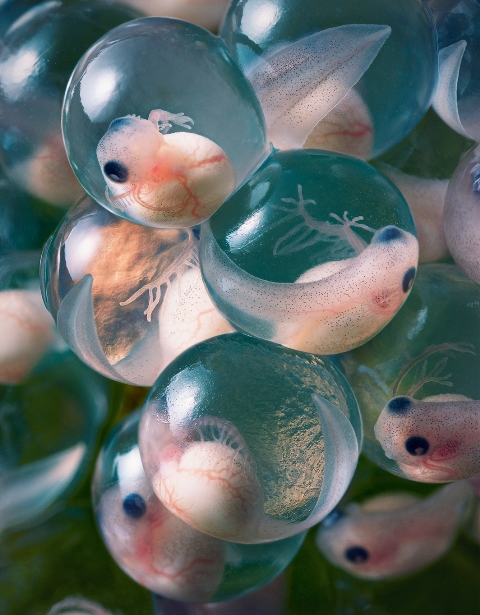
Yellow-eyed tree-frog eggs, from Endangered by Tim Flach, with text by Jonathan Baillie (Abrams).

Yellow-eyed tree-frog eggs, from Endangered by Tim Flach, with text by Jonathan Baillie (Abrams). {credit}© 2017 Tim Flach{/credit}

There’s something about a collection. We seem to harbour an urge to amass and sort as we build menageries, museums, taxonomies. And the illustrated book is a portable simulacrum, a paper cabinet of curiosities, curated for maximum aesthetic punch.

This year, my favourites include coffee-table tomes on the Solar System and early voyages from Europe to Latin America. The rest, as with those I prized most last year, focus on fauna — a reflection of the emphasis on animal intelligence, behaviour, extinction and resurrection in popular-science publishing. Our obsession with Animalia is unstoppable. In some important way, the thread has yet to snap between us and the humans who, 35,000 years ago, layered exquisite images of bison, lion and rhino on the walls of Chauvet cave.
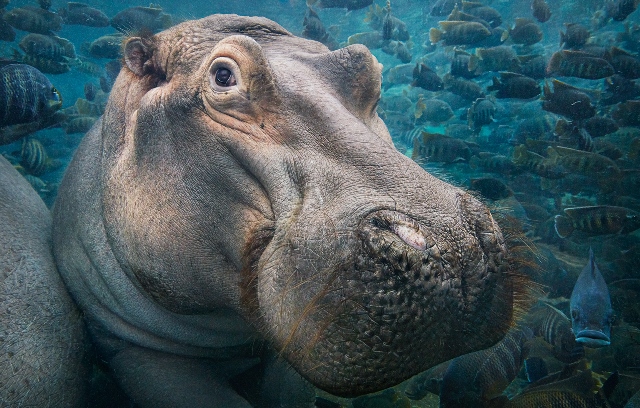
Hippopotamus underwater, from Endangered by Tim Flach, with text by Jonathan Baillie (Abrams).

Hippopotamus underwater, from Endangered by Tim Flach, with text by Jonathan Baillie (Abrams). {credit}© 2017 Tim Flach{/credit}

Among the eight illustrated books that leapt out at me, Endangered (Abrams) won the long jump. On the cover, a crowned sifaka lemur tightly clutches its knees, citrine eyes staring with alien intensity. Inside is a virtuosic gallery of species at the edge: the bulbous topography of a hippo’s face; Mexican free-tailed bats slicing up the sky; a long-range shot of a polar bear curled in snow, white on white. Complementing Tim Flach’s hyper-stylised images are commentary by Jonathan Baillie, the National Geographic Society’s chief scientist, and writer Sam Wells.
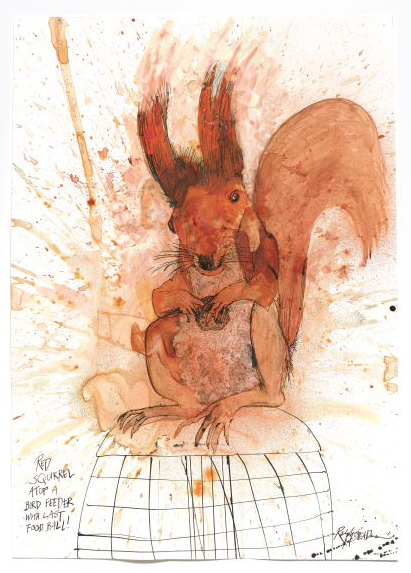
Red squirrel by Ralph Steadman in Critical Critters (Bloomsbury).

Red squirrel by Ralph Steadman in Critical Critters, by Steadman and Ceri Levy (Bloomsbury).{credit}Ralph Steadman and Ceri Levy{/credit}

Biodiversity loss has also gripped self-styled “gonzovationist” and illustrator Ralph Steadman for years, as his 2015 Nextinction showed. Now, in Critical Critters (Bloomsbury), Steadman (with Ceri Levy) pictures another bevy of beasts, exuberantly splatting his way from iconic megafauna such as tigers to dugongs, wombats and a red squirrel in burnt orange, ears aflame. The irrepressible Steadman includes the ‘grunting spiked turt’, a chameleon-like animal that should exist, but doesn’t.
Tortoise beetle, from Microsculpture: Portraits of Insects by Levon Biss (Abrams).

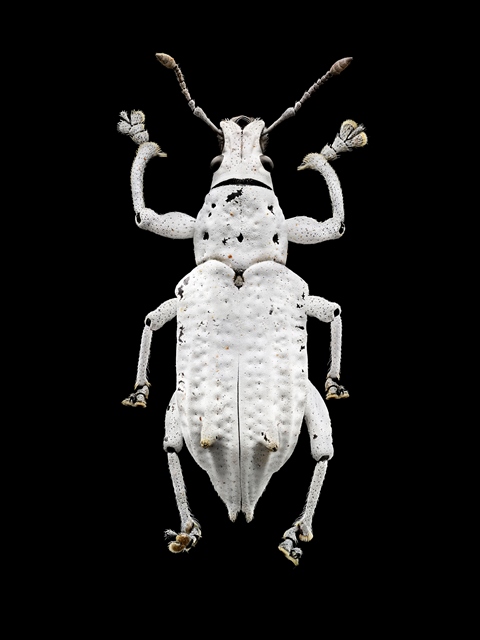
Short-nosed weevil, from Microsculpture: Portraits of Insects by Levon Biss (Abrams).{credit}© Levon Biss{/credit}

Insects that did exist, yet look impossible, feature in Levon Biss’s photographic feat Microsculpture (Abrams). Biss (whose work can also be seen in this film) imaged the world’s oldest insect collection at the Oxford University Museum of Natural History, including specimens bagged by Darwin and Alfred Russel Wallace. Each bravura photograph incorporates some 8,000 separate shots, from the ornate tortoise beetle — a rococo delight — to the ghostly short-nosed weevil.
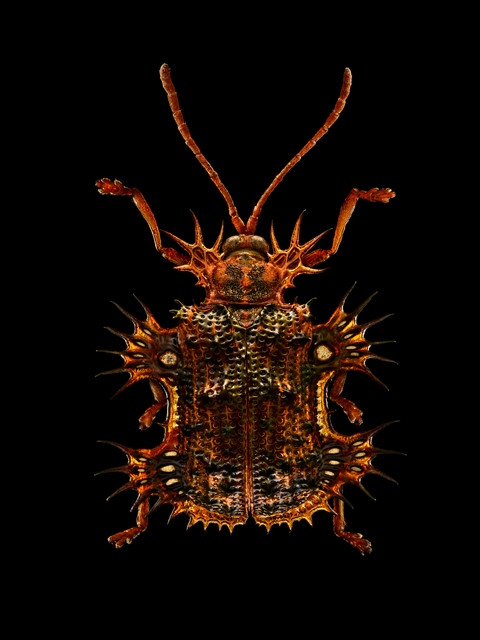
Tortoise beetle, from Microsculpture: Portraits of Insects by Levon Biss (Abrams).

Tortoise beetle, from Microsculpture: Portraits of Insects by Levon Biss (Abrams).{credit}© Levon Biss{/credit}

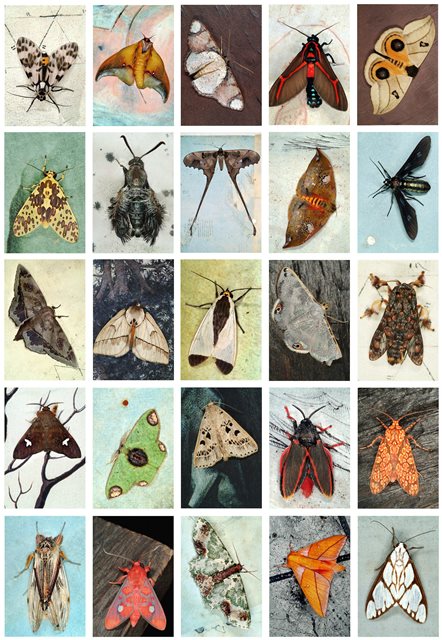
More entomological glory flutters in Mariposas Nocturnas (Princeton University Press), photographer Emmet Gowin’s hard-won homage to South American lepidoptera. From Brazil to Panama and over two decades, Gowin shot over 1,000 species of nocturnal moths alive. Arranged in typologies of 25, they form a morphologically varied, vividly hued patchwork. As Gowin writes, “By loving the minutiae, we find the whole.”
xxx

Index 31, taken in April 2010 in French Guiana, in Mariposas Nocturnas by Emmet Gowin (Princeton University Press){credit}Emmet Gowin{/credit}

Long before photography, engravers and printers battened upon beasts as evocative subjects for artworks and books — not just bestiaries and early natural-history tomes, but also allegories, illustrated tales and even playing cards. Animal (Bloomsbury) tells that story through powerful, often deeply strange works from the fifteenth to the twentieth centuries, deftly curated by editors Rémi Mathis and Valérie Seuer-Hermel from the National Library of France collection.
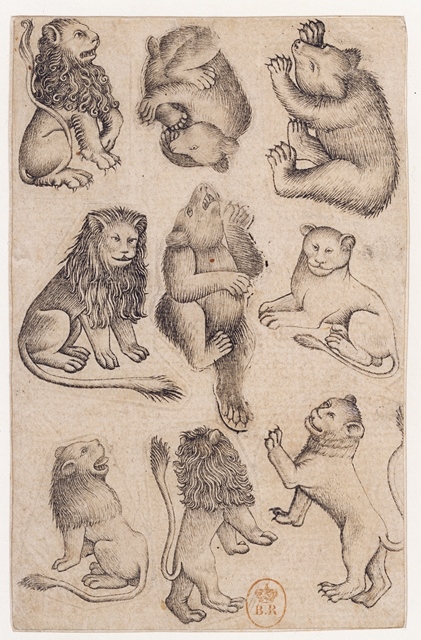
Cards with bear and lion symbols by the Master of the Playing Cards, Upper Rhine Valley, 1435-1445. In Animal, edited by

Cards with Bear and Lion Suit Symbols, by the Master of the Playing Cards,1435-1445, in Animal, edited by Rémi Mathis and Valérie Seuer-Hermel (Bloomsbury). Printed on copper plates, these cards were the first examples of engraving on metal seen in Europe.{credit}National Library of France{/credit}

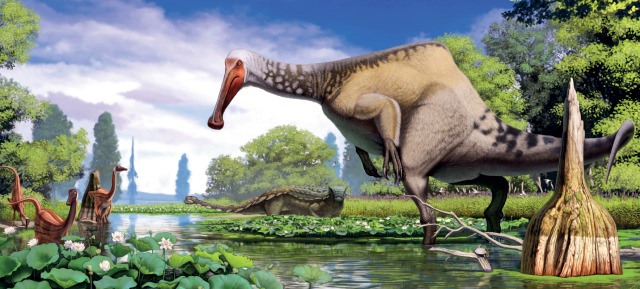
The cutting-edge imaging technologies of today feature in Dinosaur Art II (Titan Books), edited by artist Steve White. This follow-up to the 2012 Dinosaur Art features works of scientific precision and nuanced beauty by 10 top painters, modellers and digital artists. Among many standouts are Sergey Krasovskiy’s oil painting of the giant-jawed, tiny-limbed Pycnonemosaurus nevesi and a digital portrayal of the mysterious duck-billed Deinocheiris mirificus by Andrey Atuchin.
xxxx

The duck-billed dinosaur Deinocheiris mirificus (digital, 2014) by Andrey Atuchin, in Dinosaur Art II, edited by Steve White (Titan Books).{credit}Andrey Atuchin{/credit}

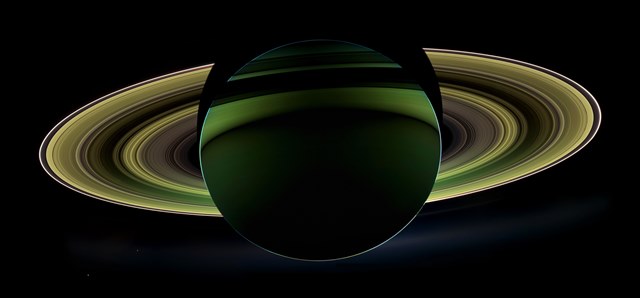
Zooming out from deep time to deep space, The Planets (Chronicle Books) by writer Nirmala Nataraj mines the NASA archives for a thrill-a-minute tour of our cosmic neighbourhood. It’s a handsome array, from the flow of dunes in Mars’s Nili Patera caldera, caught by the HIRISE camera on the Mars Reconnaisance Orbiter, to an opulently hued backlit view of Saturn captured by Cassini’s wide-angle camera.

Dunes patterning Nili Patera caldera on Mars, caught by the HIRISE camera on the Mars Reconnaisance Orbiter. From The Planets (Chronicle Books) by Nirmala Nataraj.

Dunes patterning Nili Patera caldera on Mars, caught by the HIRISE camera on the Mars Reconnaisance Orbiter. From The Planets (Chronicle Books) by Nirmala Nataraj. {credit}NASA, JHUAPL, Carnegie Institution of Washington{/credit}
xxx

A back-lit view of Saturn, captured by Cassini’s camera. From The Planets (Chronicle Books) by Nirmala Nataraj. {credit}NASA, JPL-Caltech, SSI{/credit}

In mapping the Solar System, it’s easy to forget that swathes of Earth were uncharted five centuries ago, and indigenous Americans and Europeans had yet to meet. When they did, starting with Columbus’s 1492 voyage, a “vertiginous transformation” began, reminds historian Daniela Bleichmar in Visual Voyages (Yale University Press). It spelt immeasurable devastation for New World peoples even as their knowledge rewrote the Old World’s book of nature. As this fascinating, sensitively written book attests, this revolution, in turn, kickstarted a frenzy of printing and cartography to frame the barrage of botanical, zoological, anthropological and geographic data.
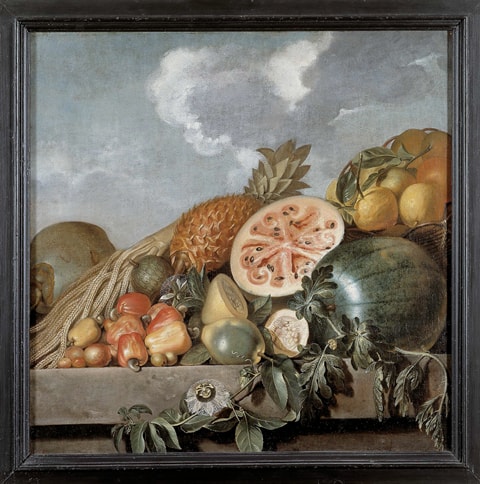
Fruits, Pineapple and Melon, 1640-50 (oil on canvas) by Albert Eckhout, in Visual Voyages by Daniela Bleichmar, Yale University Press.

Fruits, Pineapple and Melon, 1640-50 (oil on canvas) by Albert Eckhout, in Visual Voyages by Daniela Bleichmar, Yale University Press.{credit}National Museum of Denmark{/credit}

For Nature‘s full coverage of science and culture, see https://go.nature.com/2CMOwaL.
Ancient DNA and the rise of ‘celebrity science’

Elizabeth Jones.

Science historian Elizabeth Jones.

3Q: Elizabeth Jones

Whether it’s about Neanderthal-human interbreeding or the prospect of resurrecting woolly mammoths, the public cannot seem to hear enough about ancient-DNA research. For science historian Elizabeth Jones, ancient DNA offered an opportunity to study the development of a field in the crucible of intense public interest. She defines the phenomenon as “celebrity science”, in which scientists harness attention to generate interest in their work and capture future funding.

What led you to the definition of celebrity science?

As a historian, I used traditional research methods, like looking at professional and popular literature. I’ve gone back to conferences and archives. But one of the main reasons I’ve come up with the idea of celebrity science is from my conversations with scientists working in ancient DNA themselves. Many of them are alive so I can talk to them, but it’s also dangerous territory because their careers could be impacted by what I write. Meanwhile, if you go back to the 1970s and 80s, you see that the interest in ancient DNA was there from the very beginning. My speculation is that this comes from a long history of popularizing certain public-facing fields, such as palaeontology, archaeology and molecular biology. Our fascination with dinosaurs, human history and genetics and DNA as the code of life is documented. When you get these things together, the interest is just explosive.

Jurassic_Park_logo

The Jurassic Park franchise enabled a visual image of what using ancient DNA to bring back extinct species might mean.

How important do you think the Jurassic Park films are to the field?

Steven Spielberg’s 1993 film Jurassic Park had, for the first time, this visual image of what it would mean to use DNA to do something like bring back dinosaurs. That image was used by both researchers and reporters to talk to the public – ‘I’m doing this ancient-DNA research, and it’s kind of like this but not really’. It created a lot of momentum and it influenced press interest. There are some arguments that it influenced publication timing in journals like Nature. Did it influence research? One good example has to do with funding in the United States. Jack Horner, who is a palaeontologist but was also the scientific consultant to the Jurassic Park films, applied to the National Science Foundation in 1993 for money to try to extract DNA from dinosaur bones. Interviewees I talked to who were involved in the project feel the funding was awarded in part because of the public interest in the film at the time. Some researchers think this close connection between science and science fiction was damaging to press and publication expectations about what their research could really do. But a lot of the researchers who work in this field are very attuned to news value. They understand that you have to sell science. That means packaging it in such a way that the consumer wants to read it or learn more about it. They understand that Jurassic Park was an easy entry for communicating to the public what their research can and can’t do.

What changes have you seen in the field since?

Ancient-DNA researchers agree that they have achieved a great sense of credibility in the field of evolutionary biology. You can look at a lot of the work with ancient humans like the Neanderthal genome, for example, that’s really shown the power of ancient DNA. But even the Neanderthal genome was still very much a celebrity kind of study. Svante Pääbo was really active in designing it that way, by issuing press releases, putting a strict deadline on his lab and telling the rest of the world “we’ll sequence the genome in two years’ time”. It’s very much still science in the spotlight, but one that has demonstrated that they can do rigorous research. Next-generation sequencing has allowed researchers to get some high coverage genomes from extinct organisms. There are a few researchers in the ancient-DNA community who are not necessarily pursuing de-extinction, but they’re involved in these conversations. Because they’re respected scientists, they have lent a sense of credibility to the idea that de-extinction might happen. I think researchers in the ancient-DNA community are starting to pay attention to this pursuit in a way they wouldn’t have 15 years ago. As for my own work, I worry that scientists will think I’m saying celebrity science is a sell-out kind of science. Of course there are tensions between science and the spotlight. But ancient-DNA research is a great example of how really rigorous work can coincide with press and public interest.

Interview by Ewen Callaway, a senior reporter for Nature based in London. He tweets at @ewencallaway. 

This interview has been edited for length and clarity.


For Nature’s full coverage of science in culture, visit www.nature.com/news/booksandarts.

Waltzing for science

Posted on behalf of Quirin Schiermeier

The Vienna Science Ball 2017, in the city's Town Hall.

The Vienna Ball of Sciences 2017, in the City Hall.{credit}©PID/Christian Jobst{/credit}

Around midnight on 28 January, hundreds of couples lined up in the splendid ballroom of the Vienna City Hall for the quadrilles — and the Vienna Ball of Sciences became tangibly interdisciplinary. Students, scientists and scholars of myriad fields whose paths would scarcely cross in daily academic life moved gracefully to the waltzes of the younger Johann Strauss. Laughter filled the air as rows of elegantly clad dancers performed (in reasonably perfect composure) the bows and figures of the traditional courtly dance.

Balls are the very hallmark of Vienna’s social life and an essential part of its cultural identity. Some 450 take place during January and February. Many trades and professions – from hunters to physicians – proudly hold their own in splendid venues such as the Hofburg, Vienna’s imperial palace. However, the city’s growing and increasingly international research community, currently numbering about 220,000 people, had long been standing aloof from the parallel world of its ball society.

That changed in 2015 when Oliver Lehmann and Alexander Van der Bellen launched an annual Vienna science ball. “We wanted to set a counterpoint to ultra-conservative student corps and the academic ball they organize,” says Van der Bellen, the former Green politician and economist who last week took office as Austria’s new president. “Vienna’s liberal science community absolutely deserves a wonderful ball of their own, we thought.”

Promoting diversity

Lehmann, a public relation expert with the Institute of Science and Technology (IST Austria) in Klosterneuburg near Vienna, says that Vienna’s balls tend to be high-level political affairs that have in the past drawn violent protests from some on the extreme left, who deem them elitist. But the science ball promotes diversity, reaching out to students and researchers from all academic disciplines and institutions. Like Berlin’s Falling Walls conference, held every November to commemorate the divided German city’s 1989 reunification, it is a clever attempt to associate a big city’s science base with its most distinguished cultural characteristics.

And the sold-out event was ample proof that the organizers had hit a nerve. The 3,000-strong crowd happily waltzed, tangoed and foxtrotted the night away in environs that subtly alluded to science. Light-emitting diodes illuminated dancers’ moves to stunning effect; tables were decorated with supposedly aphrodisiac plants (pomegranate, celery, orchids) selected by botanists at the University of Vienna’s department of pharmacognosy; and young artists with Vienna’s Academy of Fine Arts had covered the walls with expressive paintings.

Bundespräsident Van der Bellen, Bürgermeister Häupl und Stadtrat Mailath-Pokorny eröffnen den Ball der Wiener Wissenschaft

Austrian president Alexander Van der Bellen opens the Vienna science Ball. In the background are Oliver Lehmann of the Institute of Science and Technology (right), and Wolfgang Ortner, the conductor of the ball’s orchestra (left).{credit}©PID/Christian Jobst{/credit}

Those more inclined to test the laws of probability theory were offered a chance to do so at two roulette wheels. On large screens, researchers with the Ludwig Boltzmann Institute of Archaeological Prospection and Virtual Archaeology displayed the results of their geomagnetic prospection and ground-penetrating radar measurements of Stonehenge. And at the tables, animated discussions ranged over science and the arts. How often does it happen in academe that a pensive researcher on African cultural identity exchanges ideas with a tipsy quantum physicist about Arthur Schopenhauer’s philosophy of pessimism?

Computer scientist Thomas Henzinger, director of IST Austria and a member of the ball’s honorary committee, is not someone inclined to indulge in rambling sophism. He says he doesn’t even care much for ballroom entertainment, but he does agree that the ball raises Vienna’s profile as a cosmopolitan city of science. Vienna and Austria, he says, benefit a lot from the influx of talent from Eastern Europe and other countries. At the IST, launched in 2009, less than a fifth of 600 staff — and only 5% of postdocs — are Austrian, he says.

Isn’t a ball a bit jingoistic for such a global profession? “Nationalism is the very last thing I support,” Van der Bellen told me, speculating that Europe could soon become a haven for US scientists and intellectuals escaping the Trump administration. “I do appeal to all young scientists, here and around the world, to resist chauvinism and stand up for liberal values.”

As the scientists had a ball, anxiety about world politics became distant concerns — for a few hours. Some had travelled from as far as China to join the fun; many pledged to come again. Tickets for next year’s Science Ball go on sale on 15 November.

 Quirin Schiermeier is senior reporter for Nature in Munich. He tweets at @tomboy180463.


For Nature’s full coverage of science in culture, visit www.nature.com/news/booksandarts.

Werner Herzog gets geological

Posted on behalf of Noah Baker

InfernoThe film Into the Inferno opens with a grand spectacle. The camera glides up and over tiny figures clustered on the peak of the volcanic island of Ambrym in Vanuatu in the South Pacific. Far below, an ominous lava lake splutters to a bombastic choral soundtrack. There is a sense of ritualistic grandeur here that sets the tone for what follows.

The documentary, created by legendary filmmaker Werner Herzog and Cambridge volcanologist Clive Oppenheimer, straddles the science and culture of volcanoes. It is strong on exploring the significance of volcanoes to humanity — their role in local mythologies, traditions and lifestyles, now and through the centuries. The film even suggests that our relationship with these geological giants stretches back to early hominids living in the shadows of volcanoes in East African rift valleys.

Like many Herzog films, Inferno goes off on tangents and strays into quirky side stories, hopping about among unusual locations. One moment we’re hearing from a volcanology station in North Korea, where Oppenheimer, in a rare international collaboration, has been working with local volcanologists for several years. The next we’re in the midst of an archaeological dig in Ethiopia, scientists scraping away at the soil in search of early hominid remains. The stories and locations do link back to volcanoes, but sometimes a little obliquely.

Oppenheimer occasionally brings insights into the science among the craters and cones, but his central quest remains cultural. And that yields a trove — not least the ‘cargo cult’ on the island of Tanna in Vanuatu. Its members worship a US serviceman called John Frum, who they claim lives in local volcano Yasur.

Noah Baker is senior editor in Nature’s multimedia team. Hear his Nature Podcast interview with Oppenheimer here.


For Nature’s full coverage of science in culture, visit www.nature.com/news/booksandarts.

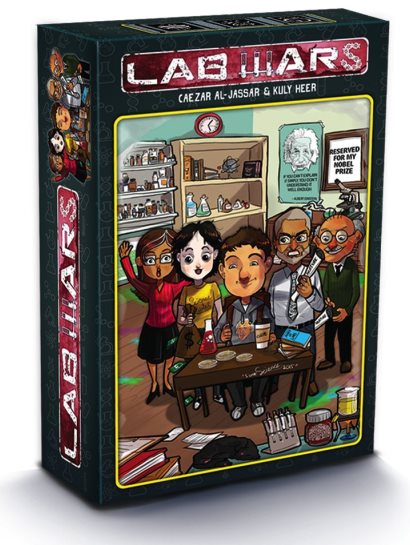
Lab Wars: a game of scientific sabotage

Posted on behalf of Richard Van Noorden

3d box a

{credit}© “LAB WARS” BY CAEZAR AL-JASSAR AND KULY HEER; GRAPHIC DESIGN BY CRIMZON STUDIO, ILLUSTRATIONS BY NIZAR ILMAN{/credit}


In the race for discovery and recognition, researchers have sometimes cheated, lied, colluded, suppressed evidence and even sabotaged others to get what they want — as Michael Brooks documented in his 2012 book Free Radicals: The Secret Anarchy of Science.

Two researchers today launch a game that captures this anarchic spirit. Board-game fans Caezar Al-Jassar, a postdoc at the Laboratory of Molecular Biology in Cambridge, UK, and Kuly Heer, a clinical psychologist, have designed the card game Lab Wars to represent the scientific rat race, with extra sabotage.

“It’s a very exaggerated form of science,” admits Al-Jassar. Most testers wanted even more power to disrupt, he adds.

Competitors play lab archetypes, ranging from ‘PhD student’ to ‘emeritus professor’. They collect equipment such as electron microscopes and centrifuges, generate results, and acquire papers, books, and, most valuable of all, Nobel prizes. Characters interfere with each other’s productivity: a principal investigator derails a PhD student by dictating their experimental time; a PhD student annoys a post-doc by necessitating extra equipment costs; and so on.

The game is at its most cut-throat when players mess up other laboratories. They can steal papers or lab equipment, gain favours from peer reviewers, or sabotage other labs with radioactive materials and computer viruses. If all that sounds unlikely, Al-Jassar says that all the sabotage cards are based on real or rumoured events.

promo cards

{credit}{credit}© “LAB WARS” BY CAEZAR AL-JASSAR AND KULY HEER; GRAPHIC DESIGN BY CRIMZON STUDIO, ILLUSTRATIONS BY NIZAR ILMAN{/credit}{/credit}

Some games based around science mingle education with entertainment: there’s a card deck of women in science, for example, Cell Trumps, and various efforts at representing evolution in board game format.

There’s an element of the didactic in Lab Wars, with some explanation of the lab equipment involved. The cards’ designs contain knowing winks: astrophysicist Neil de Grasse Tyson’s face is cast on the Nobel medal, rather than Alfred Nobel’s; players compete for papers in the fictional journal Nurture. Al-Jassar says he hopes to add famous historical scientists with their lab equipment to the deck if there is enough enthusiasm. (As is the way for specialist products, LabWars’ Kickstarter page doubles as a purchase point for the basic game and as a fundraising campaign site for future interest; it will only be funded if the developers raise £5,000.)

But in the main, Lab Wars is for fun. Borrowing elements from established favourites such as Citadels and Dominion, the game is a fairly complex tactical battle that will take less than an hour to complete with three players; it is aimed at older children and adults, scientists and non-scientists alike.

And some testers, Al-Jassar says, have enthused about using the game to show others what science is really like. After all, for many a hard-pressed post-doc, research can feel like a game where the cards are stacked against them.

Richard Van Noorden is senior news editor at Nature. He tweets at @Richvn.


For Nature’s full coverage of science in culture, visit www.nature.com/news/booksandarts.