Illustrated books of 2017: the magnificent eight

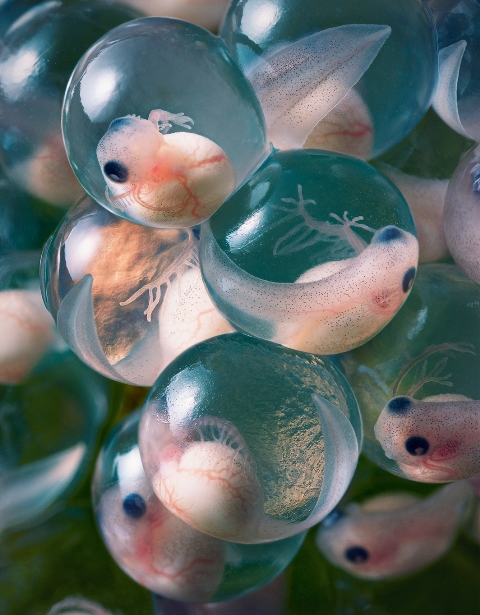
Yellow-eyed tree-frog eggs, from Endangered by Tim Flach, with text by Jonathan Baillie (Abrams).

Yellow-eyed tree-frog eggs, from Endangered by Tim Flach, with text by Jonathan Baillie (Abrams). {credit}© 2017 Tim Flach{/credit}

There’s something about a collection. We seem to harbour an urge to amass and sort as we build menageries, museums, taxonomies. And the illustrated book is a portable simulacrum, a paper cabinet of curiosities, curated for maximum aesthetic punch.

This year, my favourites include coffee-table tomes on the Solar System and early voyages from Europe to Latin America. The rest, as with those I prized most last year, focus on fauna — a reflection of the emphasis on animal intelligence, behaviour, extinction and resurrection in popular-science publishing. Our obsession with Animalia is unstoppable. In some important way, the thread has yet to snap between us and the humans who, 35,000 years ago, layered exquisite images of bison, lion and rhino on the walls of Chauvet cave.
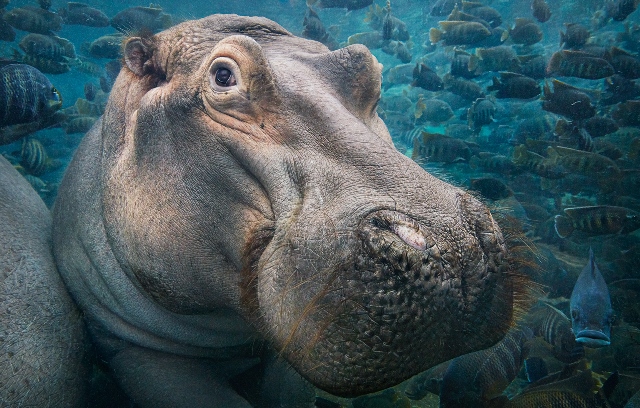
Hippopotamus underwater, from Endangered by Tim Flach, with text by Jonathan Baillie (Abrams).

Hippopotamus underwater, from Endangered by Tim Flach, with text by Jonathan Baillie (Abrams). {credit}© 2017 Tim Flach{/credit}

Among the eight illustrated books that leapt out at me, Endangered (Abrams) won the long jump. On the cover, a crowned sifaka lemur tightly clutches its knees, citrine eyes staring with alien intensity. Inside is a virtuosic gallery of species at the edge: the bulbous topography of a hippo’s face; Mexican free-tailed bats slicing up the sky; a long-range shot of a polar bear curled in snow, white on white. Complementing Tim Flach’s hyper-stylised images are commentary by Jonathan Baillie, the National Geographic Society’s chief scientist, and writer Sam Wells.
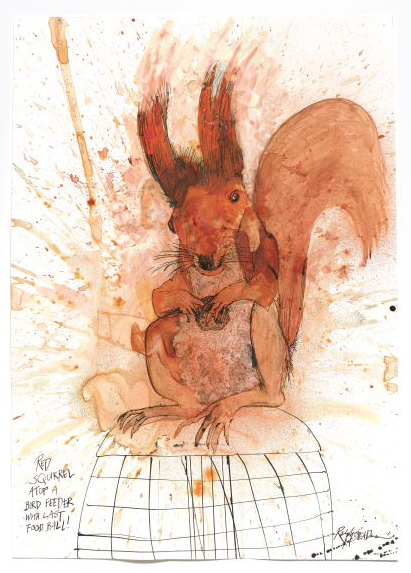
Red squirrel by Ralph Steadman in Critical Critters (Bloomsbury).

Red squirrel by Ralph Steadman in Critical Critters, by Steadman and Ceri Levy (Bloomsbury).{credit}Ralph Steadman and Ceri Levy{/credit}

Biodiversity loss has also gripped self-styled “gonzovationist” and illustrator Ralph Steadman for years, as his 2015 Nextinction showed. Now, in Critical Critters (Bloomsbury), Steadman (with Ceri Levy) pictures another bevy of beasts, exuberantly splatting his way from iconic megafauna such as tigers to dugongs, wombats and a red squirrel in burnt orange, ears aflame. The irrepressible Steadman includes the ‘grunting spiked turt’, a chameleon-like animal that should exist, but doesn’t.
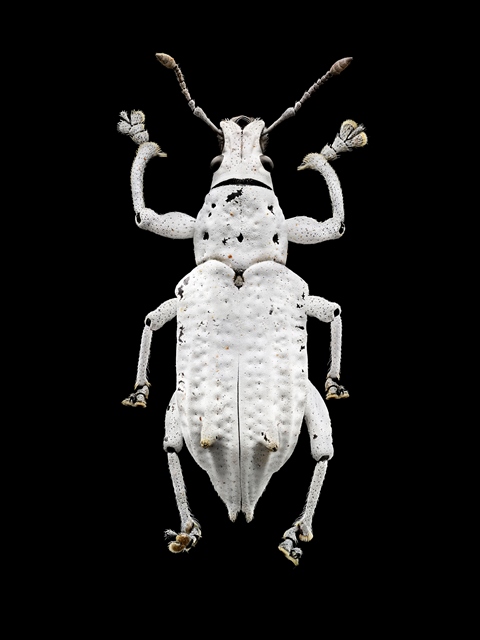
Tortoise beetle, from Microsculpture: Portraits of Insects by Levon Biss (Abrams).

Short-nosed weevil, from Microsculpture: Portraits of Insects by Levon Biss (Abrams).{credit}© Levon Biss{/credit}

Insects that did exist, yet look impossible, feature in Levon Biss’s photographic feat Microsculpture (Abrams). Biss (whose work can also be seen in this film) imaged the world’s oldest insect collection at the Oxford University Museum of Natural History, including specimens bagged by Darwin and Alfred Russel Wallace. Each bravura photograph incorporates some 8,000 separate shots, from the ornate tortoise beetle — a rococo delight — to the ghostly short-nosed weevil.
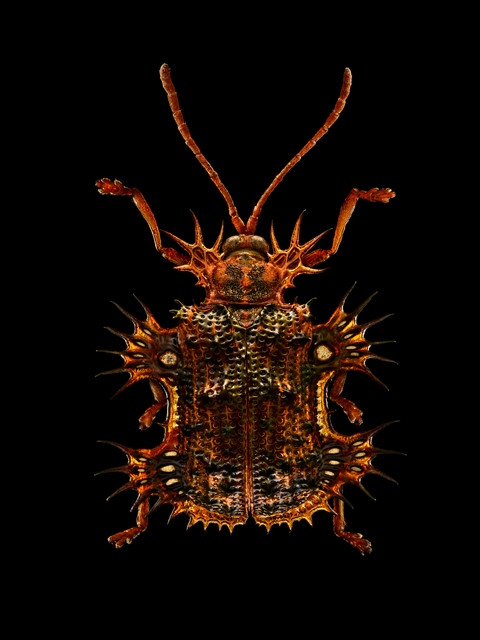
Tortoise beetle, from Microsculpture: Portraits of Insects by Levon Biss (Abrams).

Tortoise beetle, from Microsculpture: Portraits of Insects by Levon Biss (Abrams).{credit}© Levon Biss{/credit}

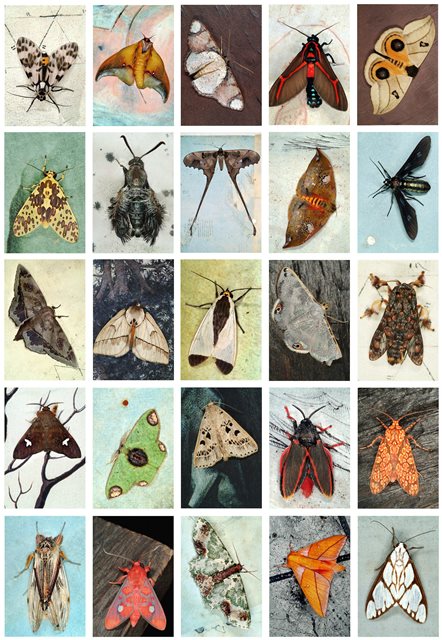
More entomological glory flutters in Mariposas Nocturnas (Princeton University Press), photographer Emmet Gowin’s hard-won homage to South American lepidoptera. From Brazil to Panama and over two decades, Gowin shot over 1,000 species of nocturnal moths alive. Arranged in typologies of 25, they form a morphologically varied, vividly hued patchwork. As Gowin writes, “By loving the minutiae, we find the whole.”
xxx

Index 31, taken in April 2010 in French Guiana, in Mariposas Nocturnas by Emmet Gowin (Princeton University Press){credit}Emmet Gowin{/credit}

Long before photography, engravers and printers battened upon beasts as evocative subjects for artworks and books — not just bestiaries and early natural-history tomes, but also allegories, illustrated tales and even playing cards. Animal (Bloomsbury) tells that story through powerful, often deeply strange works from the fifteenth to the twentieth centuries, deftly curated by editors Rémi Mathis and Valérie Seuer-Hermel from the National Library of France collection.
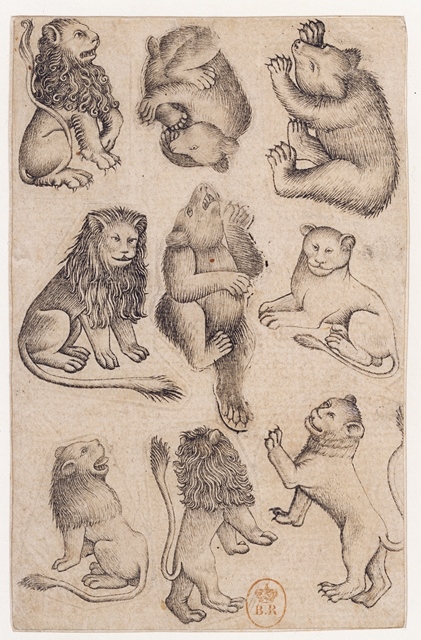
Cards with bear and lion symbols by the Master of the Playing Cards, Upper Rhine Valley, 1435-1445. In Animal, edited by

Cards with Bear and Lion Suit Symbols, by the Master of the Playing Cards,1435-1445, in Animal, edited by Rémi Mathis and Valérie Seuer-Hermel (Bloomsbury). Printed on copper plates, these cards were the first examples of engraving on metal seen in Europe.{credit}National Library of France{/credit}

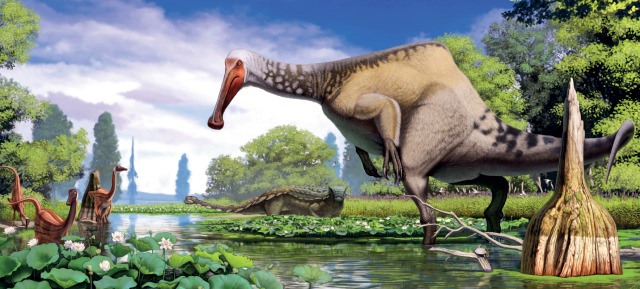
The cutting-edge imaging technologies of today feature in Dinosaur Art II (Titan Books), edited by artist Steve White. This follow-up to the 2012 Dinosaur Art features works of scientific precision and nuanced beauty by 10 top painters, modellers and digital artists. Among many standouts are Sergey Krasovskiy’s oil painting of the giant-jawed, tiny-limbed Pycnonemosaurus nevesi and a digital portrayal of the mysterious duck-billed Deinocheiris mirificus by Andrey Atuchin.
xxxx

The duck-billed dinosaur Deinocheiris mirificus (digital, 2014) by Andrey Atuchin, in Dinosaur Art II, edited by Steve White (Titan Books).{credit}Andrey Atuchin{/credit}

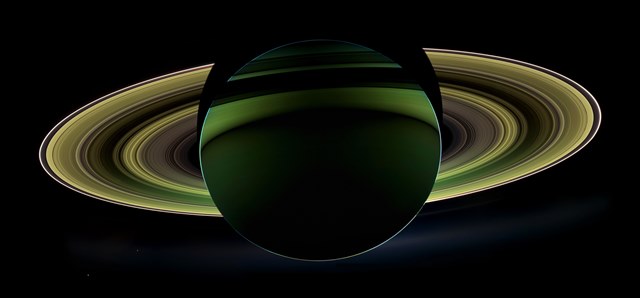
Zooming out from deep time to deep space, The Planets (Chronicle Books) by writer Nirmala Nataraj mines the NASA archives for a thrill-a-minute tour of our cosmic neighbourhood. It’s a handsome array, from the flow of dunes in Mars’s Nili Patera caldera, caught by the HIRISE camera on the Mars Reconnaisance Orbiter, to an opulently hued backlit view of Saturn captured by Cassini’s wide-angle camera.

Dunes patterning Nili Patera caldera on Mars, caught by the HIRISE camera on the Mars Reconnaisance Orbiter. From The Planets (Chronicle Books) by Nirmala Nataraj.

Dunes patterning Nili Patera caldera on Mars, caught by the HIRISE camera on the Mars Reconnaisance Orbiter. From The Planets (Chronicle Books) by Nirmala Nataraj. {credit}NASA, JHUAPL, Carnegie Institution of Washington{/credit}
xxx

A back-lit view of Saturn, captured by Cassini’s camera. From The Planets (Chronicle Books) by Nirmala Nataraj. {credit}NASA, JPL-Caltech, SSI{/credit}

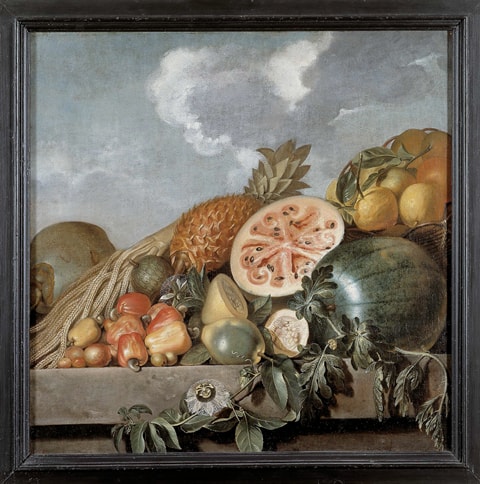
In mapping the Solar System, it’s easy to forget that swathes of Earth were uncharted five centuries ago, and indigenous Americans and Europeans had yet to meet. When they did, starting with Columbus’s 1492 voyage, a “vertiginous transformation” began, reminds historian Daniela Bleichmar in Visual Voyages (Yale University Press). It spelt immeasurable devastation for New World peoples even as their knowledge rewrote the Old World’s book of nature. As this fascinating, sensitively written book attests, this revolution, in turn, kickstarted a frenzy of printing and cartography to frame the barrage of botanical, zoological, anthropological and geographic data.
Fruits, Pineapple and Melon, 1640-50 (oil on canvas) by Albert Eckhout, in Visual Voyages by Daniela Bleichmar, Yale University Press.

Fruits, Pineapple and Melon, 1640-50 (oil on canvas) by Albert Eckhout, in Visual Voyages by Daniela Bleichmar, Yale University Press.{credit}National Museum of Denmark{/credit}

For Nature‘s full coverage of science and culture, see https://go.nature.com/2CMOwaL.
Top 20 books: discovering worlds

Artist's conception of a hypothetical planet covered in water around the binary star system of Kepler-35A and B.

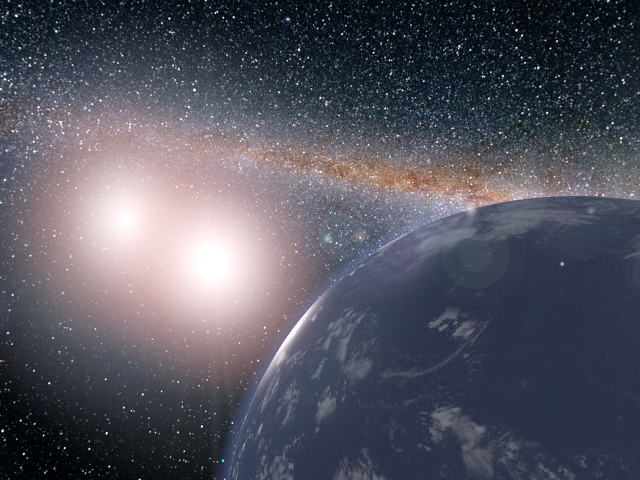
Artist’s conception of a hypothetical planet covered in water around the binary star system of Kepler-35A and B.{credit}NASA/JPL-Caltech{/credit}

In terms of job satisfaction, discovering worlds must take the Sachertorte. Sibling astronomers William and Caroline Herschel, for instance, rejoiced in a haul that included Uranus, eight comets and several moons gleaned from what William called the “luxuriant garden” of the skies. Their final tally of deep-sky objects, with that of William’s gifted son John, numbered in the thousands. I’m sure their minds would be boggled by today’s exoplaneteering exploits — such as the TRAPPIST-1 system of seven Earth-like planets that fully emerged this year.

In my way, I’m in the business of discovering — and rediscovering — worlds. That they’re between two covers and on sale in your local bookshop is neither here nor there. And the 2017 harvest has been rich. We revisited Jonathan Swift’s 1726 Gulliver’s Travels, for instance — which, Greg Lynall noted in his eye-opening essay, is a journey across an unfamiliar Earth that even features Swift’s accurate prediction of the moons of Mars, 150 years before their detection. (The terra incognita flavour of this year’s events gave all that particular resonance.)

As for the new books sifted from the non-stop stream, as always I entered their portals with the open mind of an explorer. Thus, through Caspar Henderson’s A New Map of Wonders we scope the known cosmos with new eyes. In Hetty Saunders’s My House of Sky we sift the psyche of reclusive nature writer J.A. Baker. And in Jonathan Silvertown’s Dinner with Darwin, we see a plateful of food transformed into a repository of dazzling evolutionary stories.

It has, in short, been an astounding year for those of us engaged in tracking literary planets across the publishing firmament. Here’s my sky survey.

Improbable Destinies, Jonathan Losos. Riverhead. In a “deep, broad, brilliant” study, the biologist explores how evolutionary solutions, morphological to molecular, repeatedly emerge. (Reviewed here.)

A Crack in Creation, Jennifer A. Doudna and Samuel H. Sternberg. Houghton Mifflin. A pivotal player in the CRISPR saga delivers her dispatch from the genome-editing frontline. (Reviewed here.)

Collecting the World, James Delbourgo. Allen Lane. A life of Hans Sloane — medic, Royal Society president, ‘wondermonger’ and collector extraordinaire — is limned by an accomplished historian. (Reviewed here.)

The Death Gap, David Ansell. University of Chicago Press. The social epidemiologist lays bare how ‘structural violence’ in US healthcare fosters disparities in life expectancy. (Reviewed here.)

The Great Leveller, Walter Scheidel. Princeton University Press.  In a magisterial socio-political chronicle, the historian untangles the deeper roots of inequality. (Reviewed here.)

The Imagineers of War, Sharon Weinberger. Knopf.  The defence writer delves into the shadowy history of DARPA, the US agency that forecasts “imagined weapons of the future”. (Reviewed here.)

Miracle Cure, William Rosen. Viking. The accomplished writer’s swansong superbly captures the rise of antibiotics, from the discovery of penicillin on a mouldy cantaloupe to the war on resistance. (Reviewed here.)

The Vaccine Race, Meredith Wadman. Viking. A former Nature journalist tells the convoluted story of human fetal cell line WI-38, still deployed in vaccine research. (Reviewed here.)

Deep Thinking, Garry Kasparov. PublicAffairs. The chess titan revisits his 1997 match against computer Deep Blue in an “impressively researched” history of AI. (Reviewed here.)

The Songs of Trees, David George Haskell. Viking. In a sensory tour de force, a biologist documents the exquisite interconnections of arboreal life. (Reviewed here.)

Rigor Mortis, Richard F. Harris. Basic Books. The science journalist jumps into the deep end of biomedicine’s reproducibility crisis. (Reviewed here.)

Dawn of the New Everything, Jaron Lanier. Bodley Head. The virtual-reality pioneer traces the unconventional trajectory of an extraordinary career. (Reviewed here.)

The Origins of Creativity, E.O. Wilson. Liveright. In exploring the wellsprings of creativity, the ecologist calls for a “third enlightenment” meshing science with the humanities. (Reviewed here.)

Outside the Asylum, Lynn Jones. Weidenfeld & Nicolson. A psychiatrist working in war and disaster zones elucidates both policy implications and the uncommon courage of survivors. (Reviewed here.)

The Quantum Labyrinth, Paul Halpern. Basic Books. A physicist unpicks the intertwined lives of consummate theoreticians and chums Richard Feynman and John Wheeler. (Reviewed here.)

Life 3.0, Max Tegmark. Knopf. The cosmologist peered into possible risks and benefits of evolving AI, from an autonomous-weapons arms race to quark-powered ‘sphalerizers’. (Reviewed here.)

A Mind at Play, Jimmy Soni and Rob Goodman. Simon & Schuster. A journalist and a political theorist vividly portray information theorist — and rocket-powered-Frisbee inventor — Claude Shannon. (Reviewed here.)

Stalin’s Meteorologist, Olivier Rolin. Harvill & Secker. A harrowing account of a Soviet researcher exiled to the Gulag testifies to the endurance of science in the midst of political chaos. (Reviewed here.)

The Darkening Web, Alexander Klimburg. Penguin. The policy expert reports on the new cold war between ‘free Internet’ and ‘cybersovereignty’ forces. (Reviewed here.)

The Seabird’s Cry, Adam Nicolson. William Collins. The environmental writer’s inspired survey of 10 seabird species — albatross to shearwater — is a paean to life at the edge. (Reviewed here.)


For Nature’s full coverage of science in culture, visit www.nature.com/news/booksandarts.

Tracking the propulsive power of science books

station-839208_960_720What makes a science tome so audacious, original and right that it kickstarts a life’s journey, propelling someone to the bench or field? Science writer Ann Finkbeiner (of The Last Word on Nothing) has written about that for A View from the Bridge. And when Academic Book Week fired up on 23 January, I started musing anew about encounters with remarkable books.

Academic Book Week celebrates “the diversity, innovation and influence of academic books” as forces shaping modern Britain. The popular vote went to economist John Maynard Keynes‘s 1936 The General Theory of Employment, Interest and Money. But despite the inclusion of works by Stephen Hawking, Richard Dawkins and James Watson in the ABW top 20, I saw a relative dearth of science in there. (No mention, for instance, of Charles Darwin’s On the Origin of Species or D’Arcy Thompson’s On Growth and Form.) Books that reveal the complexities of a culture to itself are essential. Books that unpick the complexities of nature seem as key.

So we asked readers to vote for their top science read – broadening the discussion by including any in the English language. Science writer David Quammen, for instance, cites David Hull’s 1988 Science as a Process and Horace Judson’s The Eighth Day of Creation (1979). Dawkins and Hawking are a noted presence, while Carl Sagan looms largest. Here’s a sampling:

12346789101112131415161718

A straw poll among colleagues yielded more rich pickings. US news editor Lauren Morello recalls reading The New York Times Guide to the Return of Halley’s Comet (1985) cover to cover at age seven, while James Gleick’s 1992 Genius: The Life and Science of Richard Feynman proved a beacon in high school. Podcast editor Kerri Smith extols Oliver Sacks‘s 1985 The Man Who Mistook His Wife for a Hat, “which made science feel like storytelling and was so much more pleasurable to read than the classic but quite dense pop science I had read before”. She notes further: “Maybe not a causal relationship, but I did a MSc in neuroscience a couple of years later.”

Nature reporters reported no less galvanising reads. Heidi Ledford recalls encountering Cosmos early on – and “how excited I felt whenever I picked it up”. As a teenager, Lizzie Gibney found that Hawking’s A Brief History of Time “really made me think science. The Time and Space of Uncle Albert had a huge influence too.” Ewen Callaway names thrilleresque 1995 The Hot Zone – Richard Preston’s non-fiction tome on viral haemorrhagic fever – as key. And Amy Maxmen opts for E.O. Wilson’s 1994 Naturalist, which she writes “made me get serious about bug collecting in high school, which resulted in a 10-year detour in science”.

What science classic pried open the door to your life in science? We’d love to know: answers either to the comments on A View from the Bridge, or to @naturenews with the hashtag #AcBookWeek.


For Nature’s full coverage of science in culture, visit www.nature.com/news/booksandarts.