npj Parkinson’s Disease: Opening Up Access to Scientists and Patients Alike

Guest post by James Beck and Paul Zimmet, Parkinson’s Disease Foundation.

Many scientists, as evidenced by recent discussions, appreciate the value of an open access journal – the convenience of being able to immediately and freely access the latest articles, for example, and the value in a freer exchange of scientific ideas. But what may be less obvious is why this matters to the community served by the Parkinson’s Disease Foundation (PDF) – the patients whose lives are directly impacted by the advances and disappointments in Parkinson’s disease research.

Just two months ago, when the PDF announced its partnership with Nature Publishing Group (NPG) in launching npj Parkinson’s Disease, both communities were on our minds. Our primary goal of working with NPG is to create a home where the best science about Parkinson’s disease can be gathered in one place for all to read and freely shared. But equally important to PDF is the goal of empowering the Parkinson’s community to be a part of the research that will ultimately solve their disease.

People with Parkinson’s disease, or any chronic condition, need to be well-informed about their own disease in order to fight it effectively. But how can you do that when most people do not have direct access to the latest research on the disease?

PDF believes that open access can help to change that. In this way, open access is the right thing to do for the patient community. But even more compelling, we would argue that it is the effective thing to do … because it can accelerate Parkinson’s research.

This has been our experience working with our network of more than 200 PDF Research Advocates. They (including one of the authors of this blog) can directly attest to the effectiveness of this patient engagement approach.

PDF Research Advocates "in action"- educating the Parkinson's community about the importance of participating in PD clinical research studies. (Image: PFD)

PDF Research Advocates “in action”- educating the Parkinson’s community about the importance of participating in PD clinical research studies. (Image: PDF)
Continue reading

Electrifying light

Guest post by Nicky Dean, Team Manager Physics, Nature Communications.

For this week’s set of experiments in our poll we will stick to the 19th century. Our first entry is from 1839, when Alexandre Edmond Becquerel invented the photovoltaic cell at the tender age of 19. While playing around in his father’s lab, Becquerel created an electrolytic cell from silver chloride in acid. After connecting it to platinum electrodes, he found that exposing it to light generated an electrical current. Currently, photovoltaics is one of the most active themes in materials research, as it may be key in our challenge to produce enough clean energy for the world for generations ahead.

Skipping ahead to 1887, our next experiment also unveiled some of the intricacies of the interaction between light and matter. While testing Maxwell’s theory of electromagnetic waves, Heinrich Hertz constructed a receiver device based around a gap between two metallic electrodes across which a spark could propagate. He realised that light promoted spark production but also found that this could be suppressed by inserting a piece of glass between the light source and his receiver. Crucially, this wasn’t the case for a sheet of quartz and from this, Hertz deduced that ultraviolet light, which glass absorbs but quartz does not, was responsible for easing the ejection of electrons from the metal electrodes, forming his sparks. Thus he discovered the photoelectric effect, in which electrons can be emitted from a metal by light.

Later on, Albert Einstein would explain this effect as arising from the quantum nature of light. Hertz didn’t think his findings were of any practical use and that they merely served to support Maxwell’s theories. Ironically, his investigations would eventually lead to such world-changing inventions as telegraphy, radio, and television.

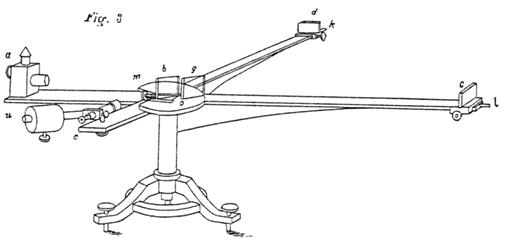
While Hertz was busy submitting his findings to the Annalen der Physik, our final experiment was taking place on the other side of the Atlantic. The growing understanding of light throughout the 19th century led people to believe that light needed a medium to transit through, much as sound travels through air and waves ripple across water. Scientists called this medium the “luminiferous aether” and it was believed to permeate all of space. As such, while the Earth was whizzing around the Sun, it must be moving relative to the aether and so it must surely be possible to detect its presence.

Michael Morley interferometer (Wikimedia)

Michelson interferometer (Wikimedia)

Continue reading

Theory of light and colours

Guest post by Iulia Georgescu, Senior Editor, Nature Physics

The next couple of experiments with light listed in our ‘beautiful experiments’ poll come from, well, the age of enlightenment.

First up is Christian Huygens. Although Galileo first used a telescope to make detailed observations of celestial objects, it was Huygens who by 1655 had crafted a telescope with a refracting lens powerful enough to resolve the ring structure of Saturn.

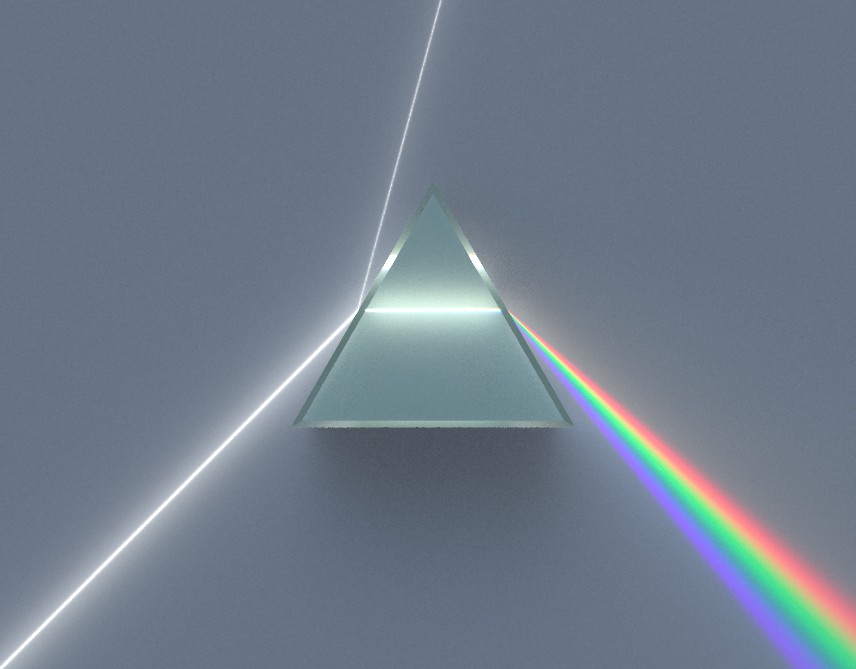
A decade later, in 1665, Isaac Newton discovered that a beam of white light is decomposed by a prism into its component colours, which another prism would combine back into white. At the time, the origin of colours was still debated and Newton’s experiment confirmed that it is light that gives colour to the world. His work influenced art and Newton also came up with the colour circle he described in his book Optiks.

Around the same time the Dutch merchant Antonie van Leeuwenhoek  was indulging into lens-making. He crafted powerful lenses and was the first to create a microscope with sufficient magnification to see single-celled organisms. He later dedicated himself to the characterization of tissues and micro-organisms, becoming the father of microbiology.

In 1679 Ole Rømer, working at the Royal Observatory in Paris, determined the speed of light by cataloguing the eclipses of Jupiter’s moon Io. Rømer was in fact trying to calculate the orbital period of the moon, but noticed time differences depending on the relative positions of Earth and Jupiter and realized that these could only be explained by the finite speed of light. He estimated that light would take 22 minutes to cross the diameter of the Earth’s orbit – not a bad estimate given his rough data.

Dispersive Prism.

Dispersive Prism (Wikimedia)

Continue reading

Years of Light – Vote for your most beautiful light experiment

Guest post by Liesbeth Venema, Senior Physics Editor, Nature

We are basking in light. In our daily lives we encounter a multitude of light-based technologies from basic lighting, optical fibre communication, television and computer screens, to diagnostic techniques in healthcare. Sunlight energy harvesting will almost certainly be essential to match the world’s growing energy needs. The International Year of Light 2015, which is celebrating these achievements, and more, is now in full swing.

Of course, light plays a key role in scientific inquiry and discovery. To take a closer look, we have opened up a poll to find out what are the most striking, beautiful experiments with light. To have your say, please click here and simply select three experiments from the list of candidates that would be top of your list. Over the next few weeks, we will introduce the candidate experiments on this blog, in chronological order. The results of the poll will be announced here at the beginning of May.

So let us start – with Greek philosophers who of course already pondered the nature of light. They debated for example how we can see: with light emitted by our own eyes or by absorbing rays that reflect from objects?

Lighthouse Lens By Tonya Cook (Own work) [CC BY-SA 3.0 (https://creativecommons.org/licenses/by-sa/3.0)], via Wikimedia Commons)

Lighthouse Lens by Tonya Cook (Own work) (CC BY-SA 3.0, via Wikimedia Commons)

Continue reading

Statistics for biologists – A free Nature Collection

Guest blog by Veronique Kiermer, Director, Authors and Reviewers services, Nature Publishing Group.

Irreproducibility issues affecting basic research in biology can be traced to a variety of common causes. One of them is the misguided use of statistics.

As new experimental technologies and approaches increasingly allow biologists to probe their model systems in quantitative ways, biological disciplines that have traditionally relied on qualitative observations are turning to number crunching. Yet many practising biologists complain that the formal statistics instruction in their curriculum has been inadequate. Poorly focused statistical training, mostly theoretical and centred on examples foreign to their discipline of study, has left biologists ill-equipped to apply statistics in their everyday experimental work.

In the past couple of years, the Nature journals publishing biological research have started paying much more attention to statistics. We have appointed a statistical advisor, Terry Hyslop from Duke University, who has helped us assemble a panel of statisticians who act as consultants on certain papers.

Continue reading

Publishing initiative makes research widely available to read and share

Macmillan Science and Education, the parent group of Nature Publishing Group, has today announced an initiative that will make research articles on nature.com widely available to read and share.

The initiative aims to support collaborative research and make it easy for readers to share a wealth of scientific knowledge with researchers and scientists worldwide.

From today, subscribers to 49 journals on nature.com will be able to share the full-text articles of interest with colleagues who do not have a subscription. This will be done through a shareable web link on nature.com that will go through to a read-only version of published research. To add to this, more than 100 global media outlets and blogs that report on the findings of articles published on nature.com will be able to provide their own readers with a link to a full text, read-only view of the original scientific paper.

Watch the video demonstration of how this works here.

video pic 2

“In today’s global, internet-enabled world, we think we can meet the needs of science and society better,” says Steven Inchcoombe, CEO of Nature Publishing Group.

He continues: “We’re committed to adapting to meet the needs of the community, and to basing our decisions on an evidence-based approach. We are conducting our own ‘experiment’ to understand how best to help the sharing of knowledge in a sustainable way. Working with authors, readers, libraries and journalists, we hope to learn a lot.”

Listen to Steven Inchcoombe, CEO of Nature Publishing Group and Timo Hannay, Chief Executive of Digital Science talk about the launch here.


https://vimeo.com/user13098047/review/113262768/539fc2ff23

The initiative includes Nature, the Nature family of journals and fifteen other quality science journals.  This means scientists and students at more than 6,000 universities and organisations worldwide will be able to share article to aid collaboration, for personal, non-commercial use.

Digital Science’s portfolio company Readcube has developed the technology behind the initiative and further functionality will give subscribers the option to annotate, share comments and highlight text with colleagues.

Nature Publishing Group has also released a new beta policy to accompany the initiative. It will be adapted and refined over a one year period, based on community feedback. The policy is based on reasonable use. More detail is available here.

Follow the hashtag #scishare for updates on the pilot process.


Citizen Science: In the Shadows of Volcán Tungurahua

How Ecuadorian communities and scientists are linking up to reduce the risk of one of South America’s most active volcanoes.

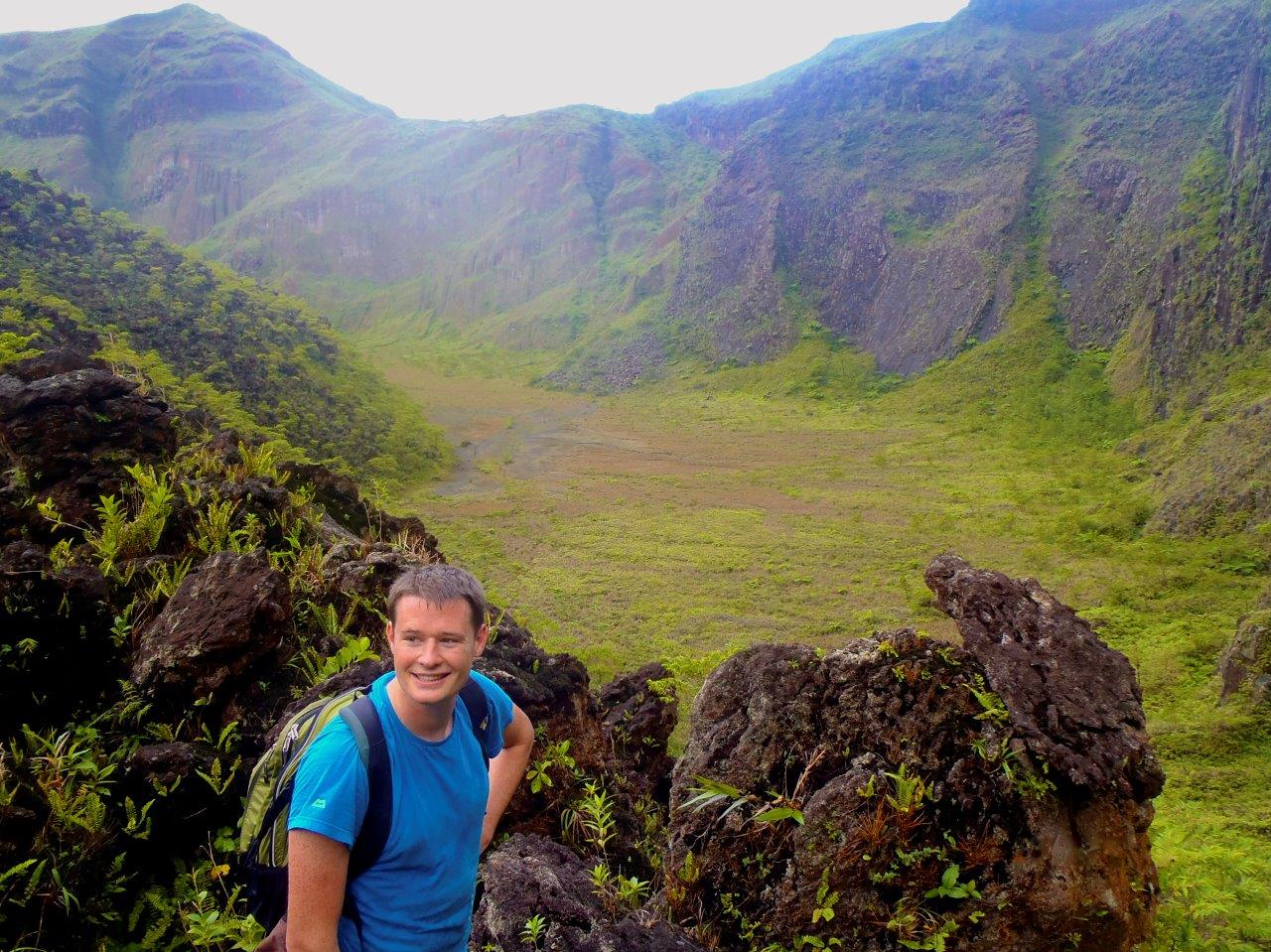
Jonathan Stone: “In volcanology a great deal of research is put into the prediction of specific hazards and the needs of those affected can often be overlooked." Image credit: (Richie Robertson)

Jonathan Stone: “In volcanology a great deal of research is put into the prediction of specific hazards and the needs of those affected can often be overlooked.” Image credit: (Richie Robertson)

Jonathan Stone is a PhD researcher at the School of Environmental Sciences, University of East Anglia, working in volcanology and disaster risk reduction.  His research focuses on the interactions between citizens, scientists and authorities around volcanoes, examining the effects of citizen science on these relationships. Although his background is in Geology, with an MSc in the Science of Natural Hazards, Jonathan went on to study for an MRes in Environmental Social Sciences before starting a PhD funded by the Economic and Social Research Council and the British Geological Survey. This experience (expertise in) of both the natural and social sciences has lead him to work on the Strengthening Resilience in Volcanic Areas (STREVA) project.

Outside of research, Jonathan is passionate about public engagement and was one of the creators of Volcanoes Top Trumps. More recently he has been involved in producing a series of short documentaries about the societal impact of volcanoes, told by the voices of those who lived through eruptions in St Vincent, West Indies. He likes running in his spare time, being involved in his local church – and of course – climbing volcanoes. 

Seemingly unflappable, tall and with a sharp sense of humour betrayed by a cheeky grin that can’t help but make you smile, Benigno Meneces is by no means your average citizen scientist. As a farmer in the modest surroundings of the Ecuadorian Andes village Bilbao, Meneces ploughs the land by day and monitors volcano eruptions by night. He is one of 35 residents across local villages and towns in the path of Volcán Tungurahua that make up a network of volunteers, known as the ‘vigías’.

Translated as watchman, guard or sentinel, the Spanish word ‘vigía’ only partially covers the passion and enthusiasm local villagers have brought to their voluntary roles protecting their communities. Made up from locals working in agriculture, teaching and business – the volunteers are tasked with communicating observations about the volcano to scientists at the Instituto Geofísico de la Escuela Politécnica Nacional (IG-EPN) and the Secretaría Nacional de Gestión de Riesgos (the Ecuadorian civil protection agency).

Tungurahua looms over the town of Baños.

Tungurahua looms over the town of Baños.

Continue reading

Stuff Matters scoops Royal Society Winton Prize for Science Books

And the winner is…..

The annual award ceremony for the Royal Society Winton Prize for Science Books is always a brilliant affair. The atmosphere is all bubbling excitement, the audience peppered with the celebrities of the science world and the event itself a joyful hurtle through some truly brilliant popular science books.  Last night was no exception, as five of the six shortlisted authors took to the stage to read excerpts from their books and discuss their work with the charming Alice Roberts, who hosted with an enormously infectious enthusiasm that left the audience raring to add the titles to their Christmas lists.

President of the Royal Society, Sir Paul Nurse, kicked off the evening with a brief greeting before passing over to Roberts to introduce the authors, all of whom read a short passage from their book, with John Browne sending a video message as he was sadly unable to attend. A discussion followed, with the brilliantly witty Mary Roach kicking things off to general hilarity and good humour by describing her research on utilising the body cavity to smuggle contraband in and out of US prisons. Mark Miodownik followed with an explanation of why you should never put chocolate in the fridge, George Johnson provided insight into the world of cancer research and Pedro Ferreira charmed with tales of enthusiastic relativists from the world of science. Phil Ball finished off the conversation with some truly fascinating discussion of the accuracy of the reporting of the behaviour of scientists during the Nazi regime.

Mark

Mark Miodownik talks about his winning book, Stuff Matters.

Continue reading

SpotOn London 2014 – Fringe Events

To accompany this year’s SpotOn London conference, at the Wellcome Trust on Friday, 14 November and Saturday, 15 November, we have a number of exciting fringe events taking place around London.

Tickets are available for the main event and you can read about the workshops, panels and unconference here. This year’s theme looks at the challenges of balancing the public and the private in the digital age.

Here’s the run-down on fringe events taking place across the week.


Pint of Science Logo with GlassesPint of Science

When: Thursday 13th November 2014, 7pm – 11pm

Where: The Driver, Wharfdale Road, King’s Cross

Pint of Science have teamed up with SpotOn London to offer an evening of informal, fun science talks relating to science policy, communication and preventing fraud in science.

In between pints and talks we’ll gather around for some good old fashioned storytelling with a science theme.

Speakers so far include Professor Tony Segal (UCL), who will be talking about how we can prevent fraud in science and Dr Aeneas Wiener (Cytora), who will talk about how his company Cytora uses open data to assess real time political risk. A third speaker will be announced shortly.

The event will be held the evening before the SpotOn conference, in The Driver pub near King’s Cross, on Thursday 13th November at 7pm.

Tickets cost £3 and are available at https://www.wegottickets.com/event/295178.


science showoff 2014 logo

Science Showoff

When: Friday 14th November 2014, 7pm – 10pm

Where: Basement bar, The Star of Kings pub, London

Science Showoff is the anarchic science cabaret night that gives everyone the chance to share their love of science in whatever chaotic way they like.

The stage at the Star of Kings will be full of SpotOn conference delegates and the cream of London’s science communication scene, talking about science, telling jokes, doing demos, playing songs… hell, they can do an interpretive dance if they want to as long as it relates to science.

The whole thing is loosely held-together by our MC and super-nerd Steve Cross, who will be keeping our acts to time and getting science completely wrong for laughs.

Tickets cost £6 with all donations going to the Lightyear Foundation charity and are available at https://www.wegottickets.com/event/295387

Get involved: If you think you’ve got what it takes to showoff your science and you want to take part, we’re currently looking for five performers who are attending SpotOn London 2014 to perform 9-minute sets, communicating any kind of science in any way at all. You could:

Continue reading

Book 2: Gulp by Mary Roach (2014 Royal Society Winton Prize for Science Books)

Alice’s Analysis – Gulp by Mary Roach

Gulp

I feel I must start with a confession. I love science. It’s dominated my working life and I get to enjoy finding out about new research every day at Nature. But when I’m at home, well, I often reach for a great novel over non-fiction. So I was amazed to find myself eschewing the joys of the latest from the New York Times bestseller list in favour of Gulp and racing through the chapters with the greatest of relish.

Continue reading