Nature vs Nurture: Girls and STEM

This article was written by Zuleyka Zevallos, Buddhini Samarasinghe and Rajini Rao.

Dr. Zuleyka Zevallos is a research and social media consultant with a PhD in Sociology. Dr. Buddhini Samarasinghe is a molecular biologist specialising in cancer research. Professor Rajini Rao is a research scientist and graduate program director at Johns Hopkins University. Together they manage STEM Women, a website dedicated to highlighting the issues facing women in STEM. Follow them on Twitter and Google+

In a New England pub after a conference, our male academic colleagues shrug their collective shoulders at the gender imbalance; in their opinion, women drop out of science because their hormones make them “different”. As women in science know all too well, similar examples of bias abound in academia. We read with familiar dismay, therefore, the arguments that girls find science “boring,” that attempts to bridge the gender divide “deny human biology and nature,” and that efforts to achieve gender equality in the Science, Technology, Engineering and Mathematics (STEM) fields are doomed. Attributing the gender gap to biology misses the obvious contribution of societal and institutional biases.

The “girls are not interested in STEM” mantra is itself an example. Knowledge of a prejudicial stereotype can lead to enough anxiety that it becomes a self-fulfilling prophecy. Although initially applied to racial bias in IQ tests, ‘stereotype threat’ can be extended to gender as well. Negative stereotypes are transmitted from parents and teachers to girls. Reminding girls that they are girls just before a math test can impede their performance. This effect can be seen in children as young as age five. The key point is that as adults, we are able to view stereotypes as generalisations about a group. Unfortunately, young children are more accepting of stereotypes, and may implicitly believe that girls are indeed poor at STEM subjects. As girls grow up, these stereotypes affect their identities as STEM professionals. So how do these stereotypes take shape?

The Draw a Scientist Test (DAST) shows that science stereotypes are socialised from an early age. The test has its origins in a pilot study from 1957, in which high school students were asked to describe their image of a scientist. Subsequent research from the 1960s onwards has examined a timeline of when this image is cemented. This research finds that children in kindergarten and the first grade are less likely to draw a stereotypical scientist; that is, a White man with facial hair, who wears a lab coat and glasses, and who is surrounded by lab equipment, formulae and books, making a “Eureka!” style exclamation. By the second grade, however, “the stereotype has began to take root,” due to a combination of how science is taught at school as well as through media images and social ideas and expectations that children pick up from parents, teachers and other influences. By the fifth grade, the stereotype is overwhelmingly fixed. A review study of 50 years worth of international research on the DAST demonstrates that, across cultures, “the stereotype of scientists being male has largely endured since 1957.” More specifically, the research shows that in Western cultures, this image is of a White male, even amongst minority students. However, children exposed to female scientists, via a combination of visits by women scientists in the classroom and by talks and readings about women’s contribution to science and their careers, are more likely to draw both women and men as scientists. Studies demonstrate that teachers themselves can contribute to these stereotypes, by giving boys more attention in class, and by rating their abilities higher than girls, even when girls get the same test scores as boys. Conversely, “intervention programs” for teachers, including career information and weekly visits by women researchers to the classroom, as well as short courses with follow-up visits, are subsequently less likely to result in stereotypical DAST results amongst students. This is because the teacher’s bias has been actively addressed, leading to the reinforcement of diversity in their teaching.

Despite the fact that people are socialised into believing that girls can’t do science, popular culture blames the individual; young girls are often chastised Don’t get your dress dirty, or Be careful, why don’t you hand that to your brother, as a recent viral video reminded us. If only girls were more confident. If only girls spoke up and asked more questions in class. If only they actively looked for mentors. Then they could easily overcome this stereotype threat and perform just as well as boys in STEM subjects. Unfortunately this “leaning in” viewpoint is naive because it ignores the institutional disadvantages contributing to the academic exclusion of women and minorities.

Sexual harassment is widespread in academic fieldwork. Women trainees are the primary targets with the perpetrators being predominantly senior professional males. Female undergraduates in male dominated fields report higher levels of sex discrimination, and are more likely to consider changing majors. Another study showed that high-achieving male biologists train fewer women than men in their laboratories, and that these men predominantly fill Assistant Professor slots in academia. In the same study, biomedical science male postdocs are 90% more likely than women to have an adviser who is a Nobel laureate. Not only is there a ‘leaky pipeline’ problem, the plumbing itself is broken.

Image Courtesy of www.stemwomen.net

Image Courtesy of www.stemwomen.net

Continue reading

Online education: Credit and cost are critical

piggy bank

{credit}ImageSource{/credit}

Contributor Charles Choi

As well as the convenience of an online course, key to a course’s viability is whether the institution offering it is accredited. “I have students email me from all over who, for whatever reason, can’t take biochemistry at their own institution and are looking for alternatives. Because the University of Buffalo is an accredited institution, other institutions are willing to accept students taking our courses,” says Lara Hutson, a research assistant professor at the University of Buffalo.

The issue of accreditation is a significant consideration when it comes to Massive Open Online Courses (MOOCs) offered by companies such as Coursera. MOOCs are typically free, offering a whole curriculum of written material and online videos. However, they usually do not offer credit.

“MOOCs are a huge growth area across the world, but it remains to be seen how much of that experiment is going to work out,” says Chris Taylor, engagement manager at the Quality Assurance Agency for Higher Education in the United Kingdom. “A key issue when it comes to MOOCs is how assessment of students will work and the accreditation given to them. They don’t give rise to any recognized higher-education qualification.”

If someone does want to learn only through MOOCs, they should consider whether they want academic credit for professional development, Taylor explained. “No-one wants students to spend time on something that doesn’t get them wherever they want to go.” Continue reading

A STEM major offers career opportunities in all sectors

On 10 July 2014, the United States Census Bureau published an interactive visualisation of careers that college graduates go on to have, based on data it has collected via the 2012 American Community Survey.

Census-data-visualisation

Screen shot from the US Census Bureau website

The graphic links US graduates who majored in STEM (Science, Technology, Engineering and Mathematics) to the jobs they went on to do. By moving your mouse over the label for each STEM subject, you can see the main destination occupations for those graduates. For example, the majority of students majoring in biological, environmental and agricultural sciences ended up working outside the STEM occupations, notably in healthcare.

Some interesting patterns emerge from this graphic. For example, almost half of graduates from courses in engineering or computers, mathematics and statistics stay in STEM-related careers. For all other STEM majors, most graduates end up working in other fields.

It’s also interesting to view it from the other direction. Hover your mouse over the occupational group, and you can see the proportion of graduates from each STEM discipline and what subjects these people studied as their major at college (graduates from non-STEM disciplines are not shown on this graphic, but can be found on one of the other tabs). For example, of the STEM graduates in the business and financial sector, the majority are drawn from the social sciences – which might be surprising if, like me, you thought it would be maths.

The graphic also allows you to split the data according to gender, showing, for example, that STEM-related occupations make up a smaller percentage of jobs for women STEM graduates than for men. The data can also be split according to ethnicity.

This shows what the work force of 2012 is doing, and what they studied, and is an interesting but high-level overview. It would also be useful to know, for example, when they graduated, and whether they are following STEM careers in or outside of academia. Although they don’t have that information, they do have something more.

If you dig a little deeper, you’ll find some more stats that the US Census Bureau collected on median estimated earnings of college graduates split by field of bachelor’s degree, occupation, gender, and STEM-specific roles. They also compare STEM eployement rates across all US states. They surveyed “Full-time, year-round civilian employed aged 25 to 64 with a bachelor’s degree or higher level of education.” Below are just a few highlights.

Across the entire sample, the highest median earners were those with a degree in engineering ($92,883) while the lowest were those from the visual and performing arts ($50,684).

The gender difference is stark. The largest pay gap exists between men and women who have received a bachelor’s in physical and related sciences. Here, the median wage for a man with is $89,558. For a woman, it’s $61,907. Across all other bachelor degrees, the difference in median earnings between the sexes is approximately $15,000. But, the data doesn’t show how long people have been working in their respective occupations. they may be comparing people (men and women) who have only just entered the job market with those who have been working for 20 or more years.

The combination of this visualisation with the data on median earnings can be useful for anyone in STEM looking at their career paths. What it shows is that your career choices aren’t limited – US graduates with a STEM major seem to be able to find work in any occupational field, with certain states employing more than others – and certain careers paying more.

Jon Spaihts: Hollywood’s go-to science fiction screenwriter on the importance of science in filmmaking

Jon Spaihts

Hollywood’s go-to science fiction writer.

Jon Spaihts is the screenwriter of The Darkest Hour, Ridley Scott’s Prometheus and the upcoming Passengers and The Mummy. The one-time physics student and science writer has become one of the go-to writers for hard science fiction and space epics in Hollywood. He is currently working on a remake of Disney’s classic, The Black Hole and is writing Marvel’s forthcoming movie Doctor Strange.

Jon also features in today’s OSAM blog: Behind the Science of Hollywood

Here Jon speaks to Alex Jackson on collaborative work with scientists on film, the importance of science in filmmaking and finding the right balance between scientific practice, current knowledge and future developments with the demands of fine storytelling.

What experiences of working with scientists in the screenwriting process, do you have?

Much of the collaboration I’ve done with scientists is related to projects still in development – so there’s only so much I’m allowed to talk about them.

For example, I’m currently working on a remake of Disney’s classic, The Black Hole. It raises critical questions about robotics, artificial intelligence, interstellar travel, singularities, quantum mechanics, and string theory. Quite a to-do list! We’ve convened a panel of remarkable scientists to help us think through the scientific issues.

Continue reading

Behind the Science of Hollywood

MIT Professor Neil Gershenfeld (right) enlightens Jerry Zucker (left) during a Science & Entertainment Exchange Salon at the Zucker's home.

MIT Professor Neil Gershenfeld (right) enlightens Jerry Zucker (left) during a Science & Entertainment Exchange Salon at the Zucker’s home.

There is a moment in the deservedly lauded Breaking Bad when Walt must convince Gus that he and Jesse are indispensable, dramatically asserting “Without us you have nothing.” It is a scene of great suspense and emotion. But not only that, it is a fine example of where good science is used to the narrator’s advantage.

The high-level scientific dialogue sees Walt tout his superior chemical knowledge of protic vs aprotic catalytic hydrogenation and stereospecific reactions yielding enantiomerically pure products. “The dialogue had to be perfect in order to be powerful instead of laughable, and Bryan Cranston’s magnificent delivery was convincing,” explains the show’s scientific advisor, Dr Donna Nelson.

“To a scientist, seeing incorrect science in movies or on TV is like fingernails on a blackboard,” asserts Dr Nelson, who worked on all five series of the hit AMC show. “At best, it breaks one’s focus on the scene and plot. At worst, it spoils the entire show.”

Continue reading

Spotlight on Women in Science with Una Ryan

Una Ryan

Una Ryan

Naturejobs is celebrating Women in Science. Every day this week we’re interviewing an inspirational female scientist. Yesterday, we spoke to Roma Agrawal, structural engineer at WSP.

Today we’re in conversation with Una Ryan, the Chair of the Bay Area Bioeconomy Initiative and an angel investor in the San Francisco Bay Area. I met Una at a SynBioBeta event at Imperial College London in April this year, where she chaired an all-male panel on the venture capital climate in the Bay Area, and how it differs to that in the UK. Una was disappointed that the panel was comprised entirely of men, but noted that unfortunately there aren’t many female biotech venture capital investors to choose from.

This is something that Una is hoping to change. She invests a huge amount of time in young scientists—both male and female—to support them through their careers. I spoke to Una after her panel event to find out about how she became interested in science, and how she is hoping to inspire others.

Continue reading

Bill Bryson: A champion of science and science communication

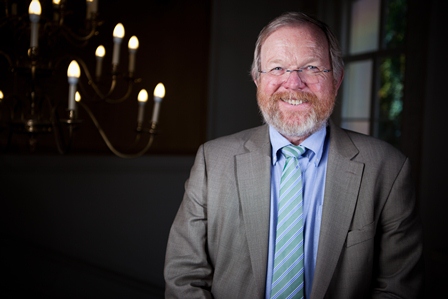
A passionate science advocate: best-selling US author Bill Bryson. Image courtesy of the Royal Society

A passionate science advocate: best-selling US author Bill Bryson. Image courtesy of the Royal Society.

Bill Bryson’s bestselling travel books include The Lost Continent, A Walk in the Woods and Notes from a Small Island, which in a national poll was voted the book that best represents Britain.

His acclaimed book on the history of science, A Short History of Nearly Everything, won the Royal Society’s Aventis Prize as well as the Descartes Prize, the European Union’s highest literary award.

He has written books on language, on Shakespeare, and on his own childhood in the memoir The Life and Times of the Thunderbolt Kid.

His last critically lauded bestseller was At Home: a Short History of Private Life and his most recent book, One Summer: America 1927 chronicles a forgotten summer when America came of age and changed the world for ever.

He was born in the American Midwest, and lives in the UK.

It is over a decade since popular US author Bill Bryson embarked on his eye-opening journey of research for the acclaimed science book ‘A Short History of Nearly Everything’. At that time, he could never have envisaged the popularity and esteem his book would be held in today.

With Bryson’s impeccable wit, charm and honesty, he managed to open up a world of science that was accessible and revealing in equal measure. And yet, in writing the book, Bryson was faced with narrative adjustments and the trepidation of not knowing many of the fields he intended to cover.

Continue reading

MakerBot CEO Bre Pettis on 3D Printing and the DIY Spirit

"3D Printing is a tinkerer's dream and it’s the DIY Holy Grail to make something that creates things."

“3D Printing is a tinkerer’s dream and it’s the DIY Holy Grail to make something that creates things.” Image courtesy of MakerBot.

Bre Pettis is the CEO of MakerBot, a company that produces 3D printers, which he co-founded in 2009. Pettis also co-founded the Brooklyn hacker collective NYC Resistor, where MakerBot technology was first created, tested, and proven.

In 2006, Bre started the popular “Weekend Projects” video podcast for Make: Magazine, where he taught millions of viewers to make things from pinhole cameras to bicycles to hovercrafts. He also introduced the blog at the popular online handcrafts marketplace, Etsy. Prior to both endeavors, Bre was an art teacher in the Seattle Public Schools system.

In 2012, Bre was honored with the Disruptive Innovation Award from the Tribeca Film Festival, for “creating an entire ecosystem for desktop 3D printing.”

Since its launch in 2009, MakerBot has positioned itself in the 3D printing community as a leader in DIY production. Co-founded by former public school art teacher Bre Pettis, MakerBot facilitates the dreams of tinkerers and the curious minded with nothing more than corn-based plastic and an idea.

Continue reading

Google Chrome’s security lead on STEM, women in technology and fighting cyber crime

An ambassador for women in technology and STEM education.

An ambassador for women in technology and STEM education. Image courtesy of Brandon Downey.

Parisa Tabriz is Google Chrome’s security lead. She has worked on information security at Google for more than 6 years, starting as a “hired hacker” software engineer for Google’s security team. As an engineer, she found and closed security holes in Google’s web applications, and taught other engineers how to do the same.

Today, Parisa manages Google’s Chrome security engineering team, whose goal is to make Chrome the most secure browser and keep users safe as they surf the web. In late 2012, she was selected by Forbes as one of the 30 under 30 pioneers in technology. When she’s not hacking, she likes to make things (art, food, miscellaneous DIY projects) or escape Silicon Valley to go hiking and rock climbing in the mountains.

“Good code is marked by qualities that go beyond the purely practical; like equations in physics or mathematics, code can aspire to elegance,” author Vikram Chandra recently exclaimed in an article in the Financial Times.  In an environment where statistics in US education make for grim reading in the numbers of young people, especially women, that are going into programming and computer science, this “beautiful art form” needs to be embraced – and fast.

Column inches have been filled with critics condemning the state of technology education in the US and all the while increasingly more jobs are now reliant on computer and coding across all sectors. A 2010 report from both the Association for Computing Machinery and the Computer Science Teachers Association found that more than two-thirds of US states had little or no literacy in computer science at secondary school level. It is a problem, which the report suggests, has left the US “woefully behind in preparing students with the fundamental computer science knowledge and skills they need for the future.”

Continue reading

Buzz Aldrin: Space policy, cooperative efforts to Mars and the need to inspire future generations

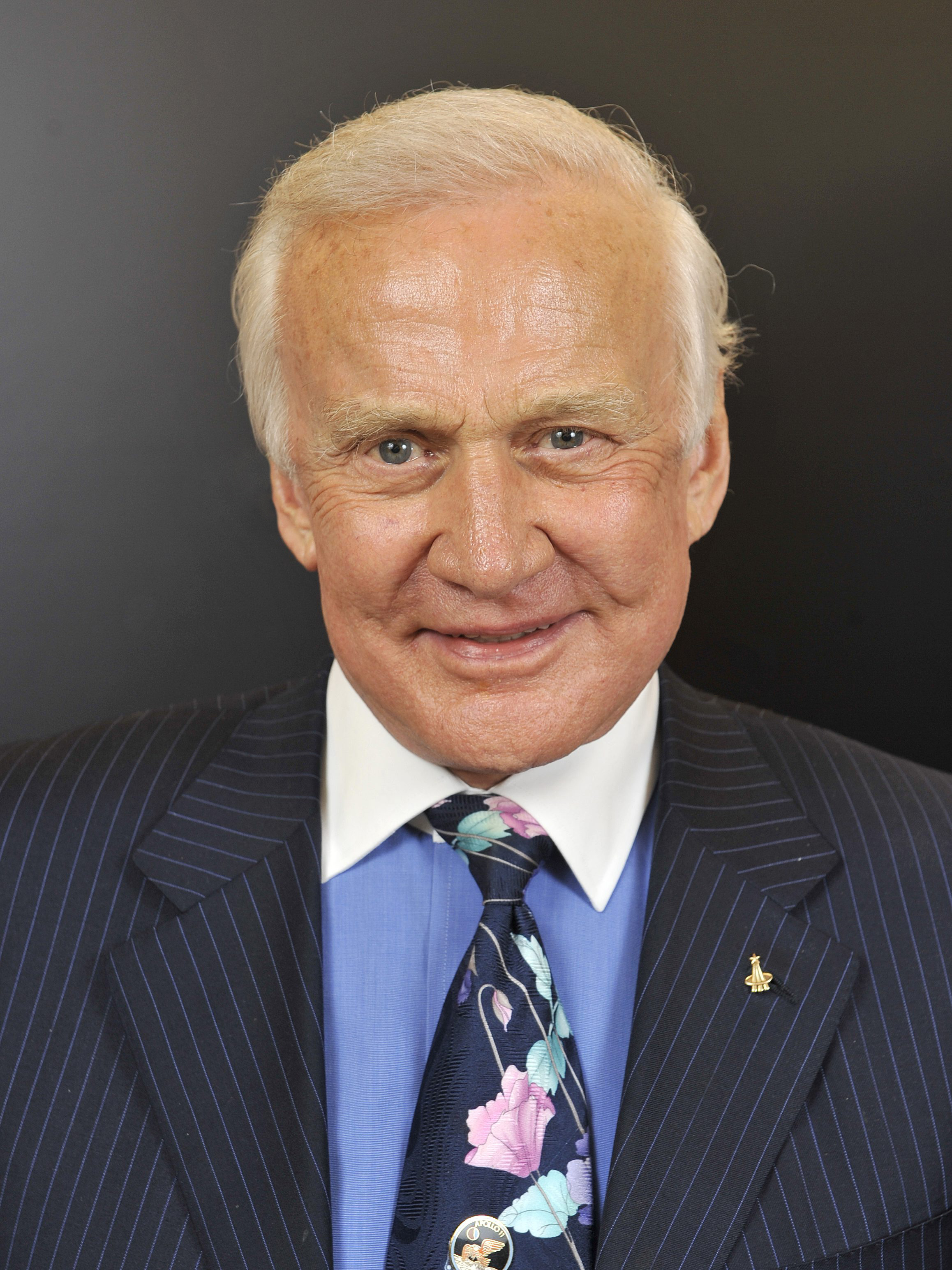
Buzz Aldrin is a retired US Air Force pilot, a former American astronaut and the second person to walk on the Moon, on July 21, 1969. He was the lunar module pilot on Apollo 11, the first manned lunar landing in history.

A global space ambassador. Courtesy of the Buzz Aldrin Archive

A global space ambassador.
Courtesy of the Buzz Aldrin Archive

Upon returning from the moon, Dr Aldrin was decorated with the Presidential Medal of Freedom, the highest American peacetime award.

Since retiring from NASA and the Air Force, Col Aldrin has remained at the forefront of efforts to progress human space exploration. On November 16, 2011, Dr Aldrin was awarded the Congressional Gold Medal, the nation’s highest civilian honour, along with the other Apollo 11 crew members, Neil Armstrong and Michael Collins, and Mercury Seven astronaut, John Glenn, for their significant contribution to society and exploration.

Dr Aldrin has also written eight books including the New York Times best-selling autobiography, Magnificent Desolation, released in 2009 before the 40th Anniversary of the Apollo 11 moon landing. He has released best-selling illustrated children’s books, two space science-fiction novels and his most recent book Mission to Mars: My Vision for Space Exploration was published by the National Geographic Society in 2013.

“To realize the dream of humans on Mars we need a unified vision. We need to focus on a pathway to the prize.” These were the strident historic words articulated by Buzz Aldrin in July 2009 at the Smithsonian Air and Space Museum’s John Glenn Lecture Series for NASA’s 40th anniversary of the Apollo 11 Moon landing.  Five years on, and having very recently celebrated his 84th birthday, Dr Aldrin’s enthusiasm, ambassadorial work, resolute attitude and ideals are no less subdued.

Exciting developments in space science are coming thick and fast and showing notable progress. It is however, US President Barack Obama’s objective of a manned mission to Mars in his lifetime, preceded by a robotic landing on a real orbiting asteroid, that remains a most ambitious follow on to lunar robotic surface control by the US and the occupation of a jointly designed International Lunar Base.

Continue reading