A Review of Peer Review

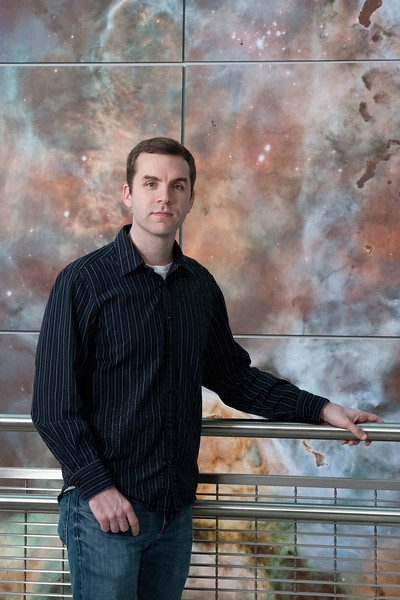
Josh Salvi is a biomedical fellow in the Laboratory of Sensory Neuroscience at The Rockefeller University and a student in the Tri-Institutional MD-PhD Program. He also acts as Executive Director of the Weill Cornell Community Clinic. You can read more of his posts on his blog, Musings of a MudPhud and can follow him on Twitter (@joshsalvi).

A key component in science is communication. We hope that this communication is accurate, conveys its intended purpose, and remains archived for future reference. Thus, the medium by which this message is conveyed must be regulated.

Peer review is the process by which members of a field evaluate the work of other members in the same field as a form of regulation. This increases credibility and, presumably, quality within the field. For example, this can refer to review of manuscripts for publication, review of teaching methods by other educators, or, within the medical profession, the creation and maintenance of health care standards. My focus will be on scholarly peer review, more particularly on methods of peer review in publication and less in the clinical setting for the purposes of this post. Issues relating to technical peer review in fields such as engineering or standardization within education will not be discussed here. However, remember that “peer review” is a broad term encompassing many fields. The purpose of this post is to bring to light historical context and to bring into focus the benefits and drawbacks of our current system.

In 1665, Henry Oldenburg created the first scientific journal to undergo peer review, the Philosophical Transactions of the Royal Society. Peer review in this journal differed from the kind we see today. Whereas professionals in the same field and often in competing labs will review today’s articles for publication, articles in this journal were reviewed by the Council of the Society. This journal created a foundation for the papers we see today, disseminating peer-reviewed work and archiving it for later reference. Peer review later developed in the 18th century as one where other professionals, often experts in the field, would perform the review, as opposed to the editorial review of the aforementioned journal. This form of scholarly peer review did not become institutionalized until closer to the 20th century. However, professional peer review, such as that performed by physicians, dated back to the 9th and 10th centuries, where one physician would comment on the ethical decisions or procedures of another.

Since that time, scholarly peer review has become a mainstay of academic publication. It is amazing to think that this regulatory process has only been so strong for less than a century. However, the procedure does not come without significant criticism (Though what topic in science is not heavily criticized?).

First, though, let us consider the benefits of scholarly peer review. Mentioned above was the improved quality of published work. Simply put, this works by first presenting a barrier that authors must overcome in order to be published, and critiques from reviewers are then addressed by authors to improve the quality of a manuscript. These suggestions may include additional experiments that will further test the work. The process filters out scientific error, thus improving accuracy of published information. Poor-quality work is rejected by the peer-review process. Additionally, work is stratified by journal quality, and this process routes papers to the correct tier. In effect, peer review is at the heart of scientific critique.

One of the most common critiques of peer review is that it remains untested, as purported by a 2002 article in JAMA. The Cochrane Collaboration in 2003 (and reconfirmed in 2008) concluded that there existed “little empirical evidence to support the use of editorial peer review as a mechanism to ensure quality of biomedical research, despite its widespread use and costs.” They recommend, “A large, well-funded programme of research on the effects of editorial peer review should be urgently launched.” Additionally, a study took an article about to be published in the British Medical Journal (BMJ), purposely added a number of errors, and measured the error detection rate to be about 25%, with no reviewer correcting more than 65% of the errors. This study was particularly interesting, as it was headed by Dr. Fiona Godlee, who later went on to critique the lack of external peer review of the Cochrane Collaboration. Her pioneering work in this field has stimulated much interest.

Finally, single-blinded peer review is open to bias. This could be bias against nationality, language, specialty, gender, or competition. Additionally, there is a common trend of bias toward positive results. Double-blinded review may help to overcome this critique.

Alternatives to single-blind review include double-blind review, post-publication review, and open review. In double-blind review, neither the authors nor the reviewers know the other party, and this would presumably reduce aforementioned bias. Surveys had shown a preference to double-blind review. Post-publication review would be an excellent supplement to the current review system to improve the rate of error correction in publications. Finally, open peer review, where the reviewer is known, would also possibly reduce the bias. However, one may be less willing to critique work by a senior author in the field, and the pilot by Nature in 2006 was far from successful.

The question is not, “Is peer review an ineffective system?” I believe it is. Instead, the question is, “Why does peer review sometimes fail to meet our lofty expectations?” This is a question that can be answered with rigor.

At this stage, the system is the best we have, and problems lie less in the peer review process and more in the access to scholarly work without a costly subscription. Discontent in the field does not translate to a desire for one of the alternative methods described. Nonetheless, we should be critical of our process, much in the same way the process itself is critical.

Socially Contagious Itching

Jamie Ward is a Professor of Cognitive Neuroscience at the University of Sussex. You can find his webpage here and he is @jamiewardsussex on Twitter.

If you see someone having a vigorous scratch then does this make you feel itchy too?  There have been many anecdotes to suggest that observations or thoughts of itchiness make people feel itchy themselves.  For instance, it can be quite hard for medical students to sit through dermatology classes without engaging in scratching at some point!  However a new study published in PNAS this month explores this systematically for the first time and provides the first evidence for the neural basis of socially contagious itch.  It also considers why some people may be more prone to it than others.

The study used movie clips of people scratching their arm or chest for 20 seconds.  One of the first challenges for designing this study was to find control stimuli that were approximately matched to these stimuli but would not induce feelings of itchiness.  Our pilot research led us to use movies of tapping of the same body parts: this involves both observation of touch, and observations of self-generated actions, but without any connotations of itchiness.  The study itself involved presenting these two sets of stimuli to two groups of participants.  At the end of each movie they were simply asked to rate how itchy it made them feel.  One group of participants observed the movies whilst undergoing fMRI (functional magnetic resonance imaging) scanning.  Another group  took the test in the lab and we recorded any spontaneous scratching actions.  (The imaging group were not allowed to scratch).  The movies depicting scratching tended to elicit itchiness in virtually all participants and around two-thirds of participants scratched themselves at some point in this condition (when free to do so). Continue reading

Curious about life on Mars – Curiosity has the answers!

Dr Louisa J. Preston is a Postdoctoral Research Associate at The Open University. Louisa is a TED fellow and tweets @LouisaJPreston.

A robotic planetary geologist landed on Mars at 6.31am GMT on Monday August 6th 2012. The appropriately named ‘Curiosity’ rover is NASA’s latest offering to help us determine whether past and/or present habitable environments exist on Mars. This car-sized, nuclear-powered mobile science laboratory is on a mission to Gale Crater, a 154 km diameter impact crater located just south of the equator. Here, scientists are hoping to learn about the environmental conditions that existed in the crater and whether these conditions would have favoured life.

Within minutes of being lowered onto the dusty surface, Curiosity transmitted back images of a beautiful sun drenched Martian vista. Since then hundreds of images have been returned to Earth, but none as breath-taking as Curiosity’s self-portrait captured by the Mars Hand Lens Imager (MAHLI). It was taken on Sol 84 and shows the rover, scoop marks, tire tracks and Mount Sharp rising in the background. Although I am not a member of the MSL team, like hundreds of scientists around the world, I am following the progress of the mission, eagerly awaiting the data Curiosity is collecting. I guess you could say we are Curiosity groupies.

The rover at "Rocknest” in Gale Crater. This full colour image is composed of a set of 55 high-resolution images stitched together {credit}NASA/JPL-Caltech/Malin Space Science Systems{/credit}

Of the ten science instruments on board, the Sample Analysis at Mars (SAM) package is a particular focus of mine. It is a suite of three analytical tools designed to study chemistry relevant to life by checking for carbon-based compounds which on Earth are used as life’s molecular building blocks. Results from SAM are already coming in and will ultimately change how we view Mars by providing us with definitive evidence regarding its habitability potential. A positive result i.e. the discovery of organic compounds, will not necessarily mean there is life on Mars, just that conditions have existed at this site that might have allowed for it.

One major factor in whether Mars was ever habitable is the composition of its atmosphere, how this composition has changed over billions of years and ultimately what caused Mars to lose a large fraction of it. The first ‘sniffs’ of the Martian atmosphere by SAM have catalogued the most sensitive measurements to date. Initial results of atmospheric CO2 show an increase of 5% in heavier isotopes of carbon compared to estimates of the isotopic ratios present when Mars formed. These enriched ratios of heavier isotopes to lighter ones suggest the top of the atmosphere may have been lost to interplanetary space. This provides weight to theories that in Mars’ distant past it may have had a thicker atmosphere and liquid water on its surface. NASA’s Mars Atmosphere and Volatile Evolution (MAVEN) mission will investigate this question of atmospheric loss further when it arrives at Mars in 2014. Its main goal is to search for methane gas, a simple precursor chemical for life. SAM’s atmospheric measurements, however, so far reveal little to no methane. This gas is of interest as, on Earth, it is one of the most abundant organic compounds and can be produced biologically or by non-biological processes. If this isn’t enough work for SAM, it is also set to analyse its first solid sample in the coming weeks, beginning the search for organic compounds in the rocks and soils of Gale Crater. This will answer the question of whether Gale Crater was once, or possibly is currently, a habitable environment.

Another instrument making headlines is the Chemistry and Mineralogy (CheMin) experiment which provided the first analysis of Martian soil from within Gale Crater. Crystalline feldspar, pyroxenes and olivine mixed with some amorphous (non-crystalline) material was identified and this is similar to volcanic soils in Hawaii. Hawaii has long been considered a brilliant analogue environment for Mars, with this latest finding highlighting the relevance of planetary analogue research and opening the world’s eyes to the fact that, although the Earth and Mars may look very different, there are actually many similarities. I work in environments such as Hawaii, which is almost like visiting another planet in the study of the rocks, soils and life that thrive there. Some of these sites, such as Antarctica, are a little hard to get to, whereas others include the red acidic rivers of Rio Tinto in Spain, the volcanoes of Mt Teide in Tenerife and Mt Etna in Italy, hot springs in Iceland and Yellowstone National Park, and the hundreds of impact craters around the world, such as those in the Canadian High Arctic and Arizona. Looking at these places teaches us about the possibilities of life in similar environments and geological settings on Mars, what this life might look like and what tools and technologies we might need to find it.

The base of Mount Sharp {credit}NASA/JPL-Caltech/MSSS{/credit}


Mars Desert Research Station in the canyon lands of Utah, a Mars analogue site {credit}Image from https://mdrs.marssociety.org/{/credit}


This search for life on Mars is the cornerstone of Astrobiology, which is an enigma amongst science as it has yet to prove its subject matter actually exists i.e. we have not found extra-terrestrial life. This multi-disciplinary subject, however, is growing at an immense rate and now involves diverse fields such as geology, biology, chemistry, physics, history and medicine to name a few, all working together to answer humanity’s last great question – is there life beyond the Earth?

Fomalhaut b: the Phoenix Planet

Dr. Thayne Currie is currently a postdoctoral fellow in the Department of Astronomy and Astrophysics at the University of Toronto. His research focuses on detecting and characterizing massive planets via direct imaging. The main goals of his research are to understand the formation and evolution of planetary systems, to determine how the solar system fits within the range of planet formation outcomes and how the properties of planets around other stars compare to those in our solar system.


In November 2008, two teams announced what were then described as the first directly imaged exoplanetsplanets outside a Solar System, around stars HR 8799 and Fomalhaut. The object called Fomalhaut b (reported by Kalas et al. 2008) was imaged just inside the debris ring and was invoked to explain the ring’s offset from the star. From comparing the ring’s thickness and location to models for ring sculpting by planets, the authors concluded that Fomalhaut b is likely jovian mass. They found Fomalhaut b to be variable, a feature they attribute to gas accretion onto the planet. Continue reading