Bioinformatics what is it and how it can bring prehistory to life?

ivan.JPG

Ivan Karabaliev joined Eagle Genomics located at the Babraham Research Centre in Cambridge, UK, a bit more than a year ago and has been discovering the essence of bioinformatics. Coming from a business marketing background, Ivan likes to explain the complex world of bioinformatics to new audiences and the general public.

Explained in just one sentence, bioinformatics is the science of managing, analysing, storing and merging biological data (DNA sequences, proteins, etc.) using advanced computing techniques. Put another way, it is the application of computer science and information technologies to solve biological questions. Simple questions include asking what a specific region of given DNA is responsible for, or how closely related one organism is to another by comparing their genomes.

The genome is the entirety of an organism’s hereditary information; the genetic make-up of all living organisms. It contains the instructions needed for a living organism to grow and function. When we know the sequence of a gene, the role it has in an organism and the diseases caused by malfunctioning copies of the gene, this information can be used to improve life for the organism. This is where bioinformatics comes along, to better interpret and understand genetic messages.

The genomes of organisms, some of which can be several billion DNA base pairs long, can be stored in biological databases. The data stored may include gene function, structure, localization (both cellular and chromosomal), physiological or clinical effects of genetic mutations, as well as similarities of biological sequences and structures.

In 1990 the Human Genome Project was formally given a green light, encouraged by the need to understand and help cure human diseases – the genomic revolution started to take its first steps. The project was led by Dr. Francis Collins, head of the International Human Genome Institute. The whole human genome, which is 3 billion base pairs long, was sequenced in 2000. The news was proclaimed by Bill Clinton:

Humankind is on the verge of gaining immense, new power to heal. It will revolutionize the diagnosis, prevention and treatment of most, if not all, human diseases!

You can watch a YouTube video of the announcement here. During the announcement a very important fact was neglected: the sequence was not truly complete, but a mere first draft. About 10 percent of the human genome had not been read.

It wasn’t until 2003 that the human genome’s sequencing was officially completed. Since then, along with the constant improvement of bioinformatics, genetic investigations have enabled the development of new tests, drug targets and have given fresh insights into the basis of human disease. However, these pioneering investigations have also revealed just how complicated human biology is and how much remains to be understood.

The human genome project is a great example of the application of bioinformatics. The project stores huge amounts of genetic data in a database that analyses and maintains human genome sequences. The database is able to write complex, biologically-aware algorithms to analyse the massive amount of information and to compare it to other related data. This enables the efficient sequencing and identification of all three billion chemical units in the human genetic instruction set, helping to find the genetic roots of diseases. But, this is just one example of how bioinformatics can be used. Below is an overview of some of the other interesting applications of bioinformatics:

The Microbial Genome Project where scientists are determining the DNA sequence of C. crescentus, one of the microorganisms used for sewage treatment. Genomes of highly resistant bacteria are sequenced and analyzed to aid the waste treatment industry. Some bacteria can reduce levels of uranium in water. Other bacteria species like the Geobacter are capable of breaking down petroleum compounds so polluted waters can be treated.

• Climate change can also be aided thanks to bioinformatics. How? Well the Department of Energy in USA launched a program to decrease atmospheric carbon dioxide levels. One method of doing so is to study the genomes of microbes that use carbon dioxide as their sole carbon source.

• In the food industry, researchers anticipate that understanding the physiology and genetic make-up of Lactococcus lactis bacteria used in the dairy industry (buttermilk, yogurt, cheese, also used to prepare pickled vegetables, beer, wine and breads) will prove invaluable for food manufacturers as well as the pharmaceutical industry. Similar advances are expected in forensic science where bioinformatics tools are used to compare crime-scene samples to existing databases to see if they are present there or if they are related to other microbes.

• Another and potentially controversial application of bioinformatics is in defence. Scientists have built the virus poliomyelitis using entirely artificial means. They did this using genomic data available on the Internet and materials from a mail-order chemical supply. The research was financed by the US Department of Defence as part of a biowarfare response program to prove to the world the reality of bioweapons. The researchers also hope their work will discourage officials from ever relaxing programs of immunization.

In agriculture, sequencing of the genomes of plants and animals has enormous benefits for the field. Bioinformatics tools are used to search for potentially useful genes within these genomes and to elucidate their functions. The gathered genetic knowledge could then be used to produce stronger, more drought-, disease- and insect-resistant crops, or to improve the quality of livestock making them healthier, more disease-resistant and more productive.

Future uses of bioinformatics

• Medicine will become more personalised with the development of the field of pharmacogenomics, which is the study of how an individual’s genetic make-up affects the body’s response to drugs. At present, many drugs fail to make it to the market because a small percentage of patients show adverse affects to a drug often due to sequence variants in their DNA.

• Enhancement of gene therapies. Gene therapy is the approach used to treat , cure or even prevent disease by changing the expression of a person’s gene. Currently this field is in its infancy. There are currently many ongoing clinical trials for different types of cancer and other diseases.

• And finally my favourite example for potential use of bioinformatics is in sequencing dinosaur DNA. Remember Spielberg’s movie Jurassic Park based on the book by Michael Crichton? Scientist Mark Boguski read the book and decided to do a simple experiment to replicate the movie’s premise of dinosaur DNA having been preserved inside an amber-encased mosquito. He found out that the genetic sequence quoted in the book and movie had nothing to do with dinosaurs, so he wrote a journal article about his findings. Crichton came across this manuscript and approached Boguski to provide him with a real DNA sequence for his second book: The Lost World. (Read the full story here.) This is the actual paper where Boguski wrote his findings:

Conclusion

Bioinformatics isn’t going to replace lab experiments any time soon. For now it is best used to help “focus” and complement scientific research. In most cases, bioinformatics helps to eliminate false positives, saving time and money pursuing false leads. However, with the ever-increasing volumes of data, bioinformatics has become an important part of all genomic research projects and the future is bright. As developments in genomic and molecular research technologies improve, in line with developments in information technology, bioinformatics is becoming a major player in the understanding of biological processes and disease.
Science Across Egypt© Project

gihan.png This week’s guest blogger is Gihan Samy Soliman, an Educational Consultant & Master’s Researcher at the Institute of Environmental Studies & Research, Ain Shams University.

Since 1936, when Egypt became a party to the Convention Relative to the Preservation of Fauna and Flora in their Natural State, they have been among the pioneering countries taking an active interest in the conservation of biodiversity and the preservation of natural resources. In 1992, Egypt signed the Biodiversity Convention of Rio de Janeiro and ratification of this Convention was completed in 1994. This Convention required the parties to formulate national strategies setting a framework for the conservation of biological diversity (biodiversity). Although much “technical” attention has been paid to biodiversity in Egypt, with many conferences, recommendations and ratification of laws, the problem of an evidently defective system of education in Egypt means that the right information on conservation doesn’t seem to reach the right people: students.

fig 1.jpg

Teaching methods in Egypt need to be addressed, particularly in relation to biodiversity. Biodiversity is the degree of variation of life forms within a given ecosystem and is a measure of the health of ecosystems. Biologists define biodiversity as the “totality of genes, species, and ecosystems of a region.” For students in the US, biodiversity is studied as a science; students can explore textbooks and review material according to their curriculum, which is usually based on each state’s learning standards (Figure 1). However, in Egypt there is hardly any real relationship between science and the environment, making learning about these issues difficult.

Several attempts at reform have been made to enhance science education in Egypt and raise awareness of biodiversity issues. However, they’re usually confined to issuing books, booklets, CDs and posters which are not systematically presented to students and end up sitting on school library shelves and hidden away in cupboards (e.g. www.biomapegypt.org ).

As an educational consultant working with Ahmed Abdel Azeem, Ph.D, I have started working with schools on a self-financing environmental and applied science project called Science Across Egypt©. The project’s aim is to integrate conservation of biological diversity into curricula and extra-curricular activities in “Egyptian schools”.:https://www.misrnewsagency.com/main/art.php?id=109&art=10914

fig 2.png

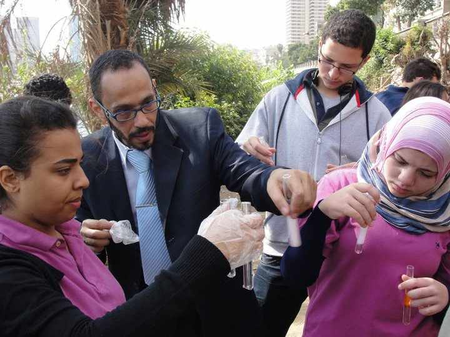
The Science Across Egypt project carries out many initiatives that aim to teach children more about the environment. As an example, on International Water Day on March 22, 2011, students of Port Said American School

were accompanied to the Nile River bank to celebrate the event and take water samples to measure the level of pollution onsite. They also campaigned for declaring the river Nile as a natural protectorate (Figure 2). The Media reported the event as being a unique opportunity for children to learn more about the environment.

fig 3.jpg

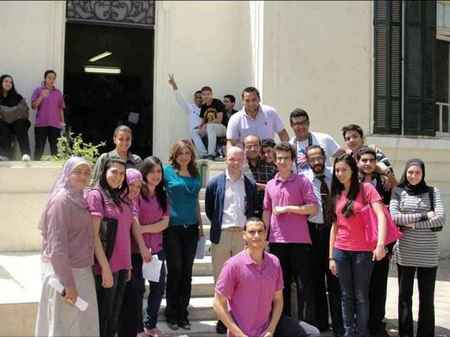
Reforming science education in Egypt will need more determined efforts on both national and international levels (Figure 3). Taking a step in this direction, for the first time in Egypt, a group of scientists and attentive community leaders have established an international Egyptian NGO (International Foundation for Environment Protections and Sustainability) to address the issues of biodiversity in Egypt (www.ifeps.org ). Will such efforts work? Let’s keep our fingers crossed.

Engineering improvements in surgical technologies

peter.bmp

Dr Pete Culmer is a Senior Translational Research Fellow in the School of Mechanical Engineering, University of Leeds (UK). He has a background in medical engineering, with a PhD and subsequent post-doc work developing technology for rehabilitation assessments and interventions. He was awarded his current position, funded by the Biomedical Health Research Centre (BHRC), in 2010 and works with a growing team of researchers including engineers, surgeons and psychologists, conducting research in Surgical Technologies._

I’m at a large white console that wouldn’t be out of place in a games arcade, staring into a 3D display and carefully manoeuvring two hand-held controllers. Across the room, the other half of the surgical robot looms over the operating table, its arms mirroring my movements. It gives me a helping hand, ironing out the slight shake in my hands and scaling things so the small instruments it holds move more delicately than I could ever manage on my own. I’m trying to tie off a knot, yet despite all this technological help I mess up, miss the loop of thread and instead plunge the needle into the soft mass beneath. Oops…

It sounds like science fiction, but this robot system, the da Vinci, is widely used for minimally invasive surgery in healthcare systems around the world. This one is in the heart of Leeds General Infirmary where I’m sitting with colleagues, currently laughing at my lack of surgical prowess. Luckily this is just a practice using silicon models rather than people and I’m an engineer, not a surgeon.

It might seem unusual for an engineer, but this is part of my job in the Surgical Technologies research group at the University of Leeds. The group, led by Anne Neville (Prof. of Engineering and next up at the da Vinci’s controls) and David Jayne (Prof. of Surgery, watching on amused), focuses on developing new technology to improve modern surgery, with a particular emphasis on laparoscopy (minimally invasive surgery (MIS) on organs such as the bowel within the abdomen). For engineers it’s a challenging and fascinating task, but with systems like the da Vinci already in use, is new technology still necessary and beneficial? Understanding this question takes clinical expertise and experience and this is why our group comprises both surgeons and engineers working closely together. The answer, by the way, is a definite ‘yes’; laparoscopic surgery is sometimes described as being like trying to tie your shoelaces using a pair of long chopsticks….we need to give surgeons all the help we can to improve this situation.

As a researcher I’m fortunate in having a 5 year fellowship position which has been incredibly valuable in helping me establish a career in academia. It provides me with the opportunities, resources and crucially the time to develop my own research. My interests focus on developing ‘smart’ surgical tools that integrate sensors, data analysis and feedback systems to improve the surgeon’s operating experience. But there’s way too much work for one person alone so a key part of my job involves developing our research group by working with colleagues to obtain funding for new PhD students and post-docs. This gives us more hands on deck but also a wider set of skills to better tackle the multidisciplinary work, from robotics specialists to trainee surgeons with clinical expertise.

One interesting area we’re looking at is how human tissue can be damaged by surgical tools – and how we can help prevent it. In laparoscopy, organs and tissues are manipulated by grasping them with plier-like tools. However, the tools are on long levers (the chopsticks) which pass through the abdominal wall and their mechanisms are affected by friction – factors which make it extremely difficult for the surgeon to ‘feel’ and regulate the forces that they apply to the tissue. This can result in tissue damage through excessive force, like getting a bruise but with potentially far more serious consequences for the patient. So we need to understand how the damage is caused; how much force is too much and how long a ‘grasp’ is too long? Our approach highlights the multidisciplinary nature of this work; using computer controlled lab equipment we grasp tissue specimens with precisely controlled forces. Then we relate this to clinical measures of tissue damage through histological analysis – looking at small sections of the tissue under a microscope and assessing how structures and cells have been deformed or destroyed. Using this information we’re working to develop improved tools that minimise tissue damage. The solutions have come from a range of different engineering fields; tribology: new bio-inspired materials with surfaces that reversibly adhere to tissue (think bio-velcro), mechanics: computational models of how tissues react to forces; robotics: tools that can actively and automatically regulate the forces they apply to prevent damage.

peter c.JPG

The other side of my work here involves teaching, something I’ve gradually moved into and really enjoy. We have an emphasis on linking our research with teaching here at Leeds. I think (hope!) this keeps things interesting and relevant for the students, it definitely does for me. I teach a 1st year computing course and the material could be quite abstract so it’s important to ground it with real-world examples – from controlling equipment at CERN to autonomously recording high scores on Guitar Hero, both important in their own way! One part I particularly enjoy is running projects for 3rd and 4th year students; it gives them a bite-sized taste of research and the opportunity to apply the engineering skills they’ve learnt without the normal constraints of lab-classes etc. This year I ran a project with my colleague Rob Hewson. Hatched over a strong coffee or two, we thought it might have been a touch ambitious…the idea was to investigate how palpation could be applied to laparoscopic surgery. It’s commonly used by clinicians (e.g. in breast examinations) to detect and assess lumps, which could potentially be cancerous, by feeling the tissue and its mechanical properties (tumours are typically much stiffer than healthy tissue). However, in laparoscopic surgery the surgeon cannot directly touch the tissue so an alternative approach is needed. The student team surpassed all our expectations, developing a proof-of-concept system that uses a computer model to simulate liver tissue (including a tumour) and then allows you to feel, and virtually palpate the tissue using a ‘haptic’ interface. They worked hard to achieve a lot in a short space of time and it was great to see this recognised when they were runners up in the Global NI student design competition, receiving some attention in the press which they took in their stride! We’ve now submitted the work for publication – certainly a tough act for this year’s students to follow!

liver.bmp

It’s the end of a long week; over the last few days we’ve run a conference on Oncological Engineering which has had some fascinating talks, I’ve started teaching our new intake of first year students and there’s been lots going on in our research projects. It’s a mix that constantly keeps me on my toes and reflects the challenge of working in modern day academia with its often competing demands. I’m not looking for sympathy though, it’s stimulating, rewarding and involves working with a great bunch of people, I wouldn’t have it any other way -already looking forward to next week!

Fractals: How nature just keeps on giving

jovan.bmp

This week’s guest blogger is Jovan Nedic, a PhD student in the Department of Aeronautics at Imperial College, London. His work looks at understanding how fractal geometries can be used to interact with fluids and how they can be implemented in engineering applications.

It is difficult in this day and age of scientific enlightenment to even think there is something in nature that can allow us to understand, and more importantly, exploit the world we have created for ourselves, but fractals are certainly one of those things.

I always love explaining what fractals are to others, mainly because I get to see the expression on their face change from a blank, vacant, almost bored expression, to a sudden realisation that fractals really are everywhere you look and that conceptually at least, they are relatively simple to understand. The tree is my favorite example, because it’s the easiest. Have a look at Figure 1 and you will see what looks like the various stages of a tree’s growth, or is it? Well it is, except in this example all you are really looking at is the different components of the final tree on the right which I arranged in a fractal manner.

Figure 1

tree.bmp

Now look at the Figure 2 below, courtesy of Per Ivar Somby. Can you spot the similarities? Put simply, a fractal is a self repeating pattern where if you kept zooming in, you would always see the same pattern. Mathematically, this means that you can go on for infinity, but practically there are obvious limitations.

Figure 2

2990547760_11594fbab9.jpg

The mathematics of self-similar shapes has existed for centuries, but what was rather surprising was realising that this is a natural phenomena, and trees are not the only example. River networks, clouds, coral reefs, leaves, lightning bolts, birds wings, broccoli, and the cardiovascular system are just a few examples that illustrate the abundance of this fractal pattern in nature. So there must be a reason as to why this is a naturally occurring phenomena and more importantly, could we exploit this in some way?

This is what myself and the rest of the researchers in the Turbulence, Mixing and Flow Control Group in the Department of Aeronautics at Imperial College London, under the supervision of Professor Vassilicos, are doing. Our aim is to not only understand how they might affect fluids, but to also apply this knowledge to real life applications.

One of the first things, and probably the most fundamental aspects of fractals to understand, is that fractals allow you to maximize the volume or space you are given. For plants this is vital because they want to capture as much sunlight as possible so they can grow. For our lungs it allows us to take in as much oxygen as possible and distribute it to the rest of the body as quickly as possible. Where does this come in handy for engineering applications? In-line mixers are one example that has been looked at; finding the most efficient way of mixing two fluids is vital for chemical combustion.

None of this happened by chance, and for the last ten years or so, there has been a lot of work on understanding how fractal geometries might be used to control turbulence and flow in general. Some of the results coming from these studies, as well as ones that are currently being carried out, show that certain turbulent parameters are not as universal as people once thought. This is not to say that scientists have been wrong in the past; scientific conclusions are based on the data that is in front of them, and as these change, so do the conclusions. This is how science evolves.

As our understanding of this new type of flow grows through experimental and numerical work, we can begin to use it to our benefit. One of the recent studies carried out in our group, and one that I have been working on, is for acoustic manipulation, specifically on aircraft wing spoilers. The noise generated by the spoilers comes from the unsteady flow created by it, which give off a very low frequency booming noise that can travel for miles on end; as you can imagine, this is a problem for the aviation industry! There were some signs that by simply adding holes to these plates, you would shift the noise to higher frequencies, frequencies we can’t hear. Dogs might, but they won’t be on the plane so that’s not too much of a problem. What we noticed however, is that if you used a fractal pattern to created the holes, you would get better results and furthermore, you could control the noise level.

Currently my work has started to look at using fractal generated geometries on wings, again following in the footsteps of nature as birds’ wings have a fractal element to them. This is still a work in progress but initial signs look promising. These are just a few examples, but interest in this field is growing every year and is not just confined to the UK, so expect to see many more examples of how fractal geometries are being used to help the world around us.