Science in the Arab world

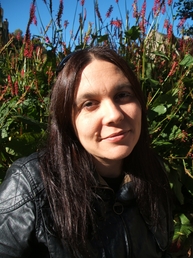
rana.bmp Dr. Rana Dajani teaches molecular biology and is the Director of the Center for Studies at the Hashemite University of Jordan. She is also the founder of the initiative We Love Reading, which aims to encourage children in the Arab world to read for pleasure. Dr Rana Dajani, who took part in the Belief in Dialogue conference on 21-23 June, blogs about what’s needed for science to flourish.

The conference was organised by the British Council in partnership with the American University of Sharjah and in association with the International Society of Science and Religion.

As a scientist in the Arab world, I practise science and research everyday. The challenges are multiple and in many cases not so obvious for those in the West, who can afford to take these things for granted. The most important element for fostering research is creating an environment to encourage, support and sustain it.

Firstly, such an environment can only be created if you put in the work and deal with the problems as they arise. It’s not something that you can just dream up while sitting at your desk. Secondly, to make it sustainable, management needs to be accountable for its actions. Unfortunately, this is not always the case here. Without these two elements, no money in the world will allow science to progress and develop.

There is an abundance of minds and creativity in the Arab world. However, most of them drain into the West because there is a well-established support system for research.

So, what is the solution? The solution is freedom; freedom of opinion, being able to come to a decision through questioning, unhindered contemplation, institutional accountability, democracy and human rights.

Freedom will ultimately lead to progress and development not only in science but in all aspects of life in the Arab world. Freedom of opinion starts at home, with children given the opportunity and encouragement to question, challenge and form their own opinions.

This should further be fostered in schools, where teachers encourage students to ask questions. If teachers don’t have the answers, they should say so honestly and without covering up gaps in their knowledge by stifling the student. Children can learn to form their own opinions if they are taught reasoning and deduction and are granted the space to practise those skills. That is what our children need and that is what is missing in the Arab world.

University students have not been able to form independent opinions reflecting their original thinking. The day my students wrote essays expressing themselves was the day they felt human. One student told me that he was finally Someone – with a capital S.

The day I listened to a student explain her opinion was the day she could give me a big smile and tell me it was the first time she felt respected. It is such individuals who build our communities and nations, who will make a difference, who will take us into the twenty-first century with confidence.

How do we achieve this goal?

I believe the only effective way is to instil a love of reading in our young ones, so that they can learn from other people’s experiences across time and space and see and respect other ways, other narratives, that are equally justified. I have developed a programme called We Love Reading to do that throughout the Arab world by training women to read aloud to children in their neighbourhoods.

Follow Belief in Dialogue on Twitter

Facts and figures – treat with caution

David.bmp

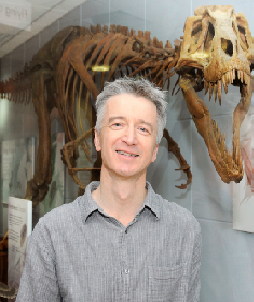
Dr David Barlow is Consultant in Genitourinary Medicine at St Thomas’ and Guy’s Hospitals, London. He has been the lead author for the chapter on gonorrhoea in the last three editions of the Oxford Textbook of Medicine. Between 1986 and 1993, at St Thomas’, he ran the largest linked HIV sero-survey in the United Kingdom. The third edition of his book Sexually Transmitted Infections- The Facts, Oxford University Press, with original cartoons by the late Geoffrey Dickinson, was published in March 2011.

There is something slightly uncomfortable about authoring a book whose cover proclaims: “XXX – The Facts”, with a sub-heading “All the information you need, straight from the experts”. Such is the house style of the OUP for its medical ‘Facts’ series, currently some 35 strong, but going forth and multiplying as you read.

Anyway, it got me thinking about how, in my specialty, when ‘facts’ become ‘figures’, caution is called for. I had an interest in heterosexual transmission of HIV in the 1980s and 1990s which put me in conflict with the official number-crunchers and I’m afraid I’m still suspicious when presented with totals. At the final proof stage of my ‘Facts’ book, I checked the Health Protection Agency’s website for the numbers of UK STIs reported for 2008. Unmentionable diseases including syphilis, gonorrhoea, warts and herpes remained as I had written. Total chlamydial infections, however, had changed from 126,882 (accessed July 2010) to 217,570 (accessed January 2011). A small adjustment might be reasonable. But 70%? This was a DB Type 4 numerical error.

DB’s numerical errors: Types 1-5

Type 1 Somebody has a vested interest: “If we tell these clap-doctors that laboratory culture of the gonococcus is only 70% sensitive, they’ll shut their lab’ and buy our ‘totally sensitive’ NAAT.”

Type 2 The totals may be correct but are misleading (1): “It is Government/Department (of Health) policy to pretend that there is a rapidly increasing HIV epidemic in heterosexuals who are transmitting within the UK.”

Type 3 The totals may be correct but are misleading (2): There is a genuine, probably innocent, misinterpretation of the figures (see horseradish sauce, below)

Type 4 The totals may be correct but are misleading (3): The explanation is perfectly reasonable and logical, but the calculation is opaque/we are keeping it to ourselves/forgot to tell you/have you read the small print?

Type 5 The totals are incorrect: Woops!

At the beginning of June, I awoke to BBC headlines about a doubling of UK-acquired HIV between 2001 and 2010. This drew me to the HPA’s website where I found a press release (June 6): ‘Last year there were 3,800 people diagnosed with HIV who acquired the infection in the UK, not aboard [sic], and this number has doubled over the past decade.’ From the same site: ‘… HIV diagnoses among heterosexuals who most likely acquired in the UK have risen in recent years from 210 in 1999 to 1,150 in 2010’. I shall return to these later but if you really have nothing better to do, why not see whether you can confirm the figures quoted above by accessing the HPA’s ‘New HIV Diagnosis,’ Table 5 here. And your next task (5 marks) is to re-word the press release…

Exactly thirty years ago, on 5th June 1981, the sleuths at the Centers for Disease Control published their crafty bit of epidemiology entitled ‘Pneumocystis pneumonia – Los Angeles’. The CDC had picked up an increase, from the West Coast, in requests for pentamidine. This was the drug used to treat PCP, a rare lung infection found in renal transplant patients whose immunity had been weakened (deliberately) to reduce rejection.

These new cases were different. The men were immuno-compromised but none were undergoing transplantation and all were gay. Thus were HIV and AIDS (although not so named for a year or two) introduced to an awe-struck, and soon fear-stricken, public.

Britain had its first AIDS case in 1981 and in August 1982 the Communicable Disease Surveillance Centre (the UK’s CDC) published the first of their monthly updates in the Communicable Disease Report, the CDR. The risk categories were divided into homosexual, haemophiliac, blood transfusion, intravenous drug users and heterosexuals [without other risk]. It was with these heterosexual cases that the distinction between ‘the truth’ and ‘the whole truth’ became lost during late 1986.

The May 1986 CDR tables broke down the heterosexual AIDS cases into: 3 with USA/Caribbean connection, 3 simply ‘heterosexual contact’ (of whom two “…had recently returned from Uganda and Mozambique.”), and 12 associated with sub-Saharan Africa. In October this connection became a footnote: “associated with sub-Saharan Africa” and by November, the categories had become: ‘contact UK’ and ‘contact abroad’. The December, separate, HIV figures were reported, without footnote, simply as ‘heterosexuals’ ( Type 2 numerical error ). Africa had disappeared from the tables.

By one of those coincidences loved by cynics and conspiracy theorists, the UK-wide leaflet drop about AIDS occurred in January 1987, the very next month, to be followed, in February, by the ’_Don’t die of ignorance_’ campaign. The national press then published increasingly doom-laden descriptions, largely unchallenged, of the burgeoning UK AIDS epidemic in heterosexuals.

What actually mattered was the number of cases being transmitted in Great Britain. Was the disease spreading? What was the risk from a bonk?

The change in wording of the heterosexual categories in the late 1980s allowed speculation that the ‘infected abroad’ category was largely made up of British nationals who had gone overseas and returned with HIV/AIDS. This was the CDR’s interpretation when they gave advice to travellers in 1991 ( Type 3 numerical error ).

We published an alternative view in the Lancet (CDR did not print correspondence, commentary or criticism) and the CDSC, unusually given the chance to reply in the same edition, graciously and politely acknowledged our figures from St Thomas’ but said that they were not representative. Neither my first nor last experience as an outlier.

Have you ever made horseradish sauce? Epidemiologists and cookery-writers run similar risks. Counting and cooking need to be in their respective repertoires but, for both, the craft improves with hands-on experience: contact with patients, or trying out the recipe. If your cookbook doesn’t mention wearing goggles with the wind behind you while you grate this vicious root (and most don’t), the author has never made the sauce. Epidemiologists don’t need the formula for horseradish peroxidase either, but they may miss an open goal if they don’t see patients.

Four other hospitals in or near London (I confess to prompting) reported that most of their (no other risk) HIV-positive heterosexuals were, like ours, from Africa, (Outliers 5, Regression Lines 0). It was not until later in the 1990s that the CDSC accepted the UK heterosexual HIV/AIDS epidemic to be largely imported, with little evidence of significant transmission between heterosexuals from, or in, this country.

So, how did you get on with the HPA’s table 5? You found the 210 for 1999 easily enough, I’m sure. But the 1,150 (and 3,800) for 2010? Well, a helpful person in the HPA’s epidemiology section told me they reached this figure by extrapolating the, as yet, uncategorized (‘not reported’ – penultimate row Table 5) cases in the same proportion as the different categories where the region of infection was actually known ( Type 4 ).

“But you didn’t apply that correction to the 210 in 1999”.

“Ah, no. We didn’t!” ( Type 5 ).

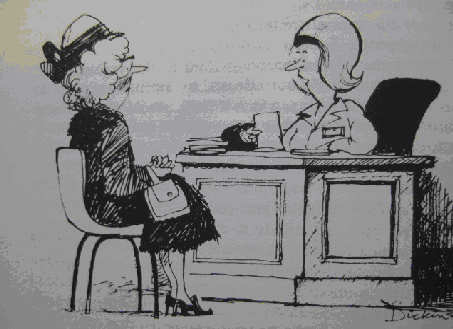
And, finally, the Type 1 numerical error? Specificity is also important in diagnostic tests (the 55 year-old Granny who went to her GP for a smear test, was screened for chlamydia, and came out with gonorrhoea. Yes truly!). The Nucleic Acid Amplification Tests for gonorrhoea may give you false positives.

Why didn’t you tell me about this before, Mother?
box.bmp

So, am I advising less sex?

What, and put myself out of a job? Give over!

References

Barlow D (2004) HIV/AIDS in ethnic minorities in the United Kingdom.

In Ethnicity and HIV: prevention and care in Europe and the USA, Eds, Erwin, Smith and Peters. 21-46

Barlow D, Daker-White G and Band B (1997) Assortative mixing in a heterosexual clinic population – a limiting factor in HIV spread? AIDS; 11:1039-44

Belief in Dialogue: Science, Culture and Modernity

fern.JPG Dr Fern Elsdon-Baker is Director of the British Council’s Belief in Dialogue Programme. Belief in Dialogue is a new intercultural programme, which explores how people in the UK and internationally can live peacefully with diversity and difference in an increasingly pluralistic world. Fern currently serves on the UK Arts and Humanities Research Council’s Science in Culture Advisory Group. A passionate believer in the interactive communication of science, history and philosophy, in her spare time she is the recorder for the History of Science section for the British Science Association. She also serves on the programme’s committee for the British Society for the History of Science.
This blog post is coming to you from the United Arab Emirates. I am at a British Council conference organised with the American University of Sharjah, in association with the International Society for Science and Religion. The title of the conference, Belief in Dialogue: Science, Culture and Modernity, may at first seem a little challenging to some regular readers of Nature. How can there possibly be a dialogue of this kind?

One of the key questions we will be asking at the conference is what factors need to be in place in any society or culture for scientific endeavour or inquiry to flourish. At first these might seem like quite simplistic questions – surely it’s just about good science education and funding for scientific research institutions? However, I would argue it takes much more than that to build a thriving scientific economy. There are certain building blocks needed in areas of society that we might not readily recognise.

The role technological and medical advances can play in our daily lives is clear. We are all aware where the ethical boundaries may lie, whether this be around a range of questions from stem cell research, reproductive technologies, climate change through to water security.

However, to get to the root of what makes science flourish we need to make one fundamental observation – what we mean when we use the terms ‘science’, ‘technology’ or ‘medicine’ are all different. Intrinsically intertwined with shared – yet in places divergent – historical contexts, they have different approaches to methodology or their philosophical underpinning.

For technology to flourish you do not necessarily need a flourishing ‘scientific’ culture – significant societal drivers such as industry and entrepreneurship play perhaps a bigger role than a purely ‘scientific’ approach. Scientific inquiry is as much a way of thinking, seeing and asking questions about the world around us, as it is a consensus on a type of agreed methodological approach.

‘Science’ in this way, whether we recognise it or not, is an integral part of our daily lives. It is the very fabric of our cultural context but in different ways. I am far from arguing that there is no hope of an ‘objective science’ in the way that many scientists would argue – I am certainly not suggesting that the very stuff of science is culturally relative. But the cradle of all scientific inquiry is the broader societal and cultural context in which it sits. Not just the cultural perspective of the individual or team of researchers, but the context of the political system which supports or suppresses, the funding stream that can inadvertently create fashions and trends, and those of us in wider society who are ultimately the end users of any research and in turn fuel both political and funding priorities. This rich tapestry of influences ultimately shapes the scientific discourse of the day.

The answer then to my question lies outside of the science faculty or classroom. It is becoming increasingly recognised in developing scientific economies that the humanities play a key part in helping to frame the systems of thinking that are needed to engage both critically and analytically with the world around us. In the UK, we have long recognised the role of strong multidisciplinary discourse and it is to our credit that our research funding councils see the critical value in this interplay between sciences and humanities – even in these difficult economic times.

Another factor that we are growing to value more and more is the open engagement with wider society and cultures in science communication. Gone are the days when we would expect to disseminate ‘knowledge’ to an uninformed and apparently wilfully ignorant public. We are all members of that amorphous mass we like to call public and we cannot assume that we are all uninformed, uninterested or do not have valid questions about the role of science in society today or how it relates to our own individual cultural perspectives.

Freedom of thought and expression play a key role here too. Too often fundamentalists at the extremes of the spectrum close down on other’s perspectives not because of any epistemological impasse, but merely due to an unwillingness to even engage with another’s cultural perspective. Too often when we communicate science we cleave to polarising narratives that create an ‘us’ and ‘them’ approach to science communication – which can exclude a large proportion of the world’s population. There is no ‘them’, there is only an ‘us’.

In an increasingly globalised world where we all have multiple identities it is not possible to delineate between communities or cultures in the simplistic ways of the past. We cannot therefore assume, as has been done in previous years, that it is possible to create divisions between any culture – be that a disciplinary cultural divide between science and humanities or a cultural divide between world views.

In my work I have had the opportunity to meet a number of people from many different cultures, communities and faiths. Sometimes my perspective on how we view the world might differ from those I meet, but I have as yet not had the misfortune to meet someone who is so set in his own world view that we cannot openly engage in a discussion about those differences. In some surprising and heart-warming circumstances I have found considerable common ground with those who initially felt they were in opposition to my work communicating evolutionary science but have since become firm supporters. At other times I have come away with my own prejudices and misconceptions challenged and found a new respect or understanding of another’s world view even if it is one I do not wholly share.

What I hope we will see at the conference at the American University of Sharjah is an opportunity to openly share different perspectives on the issues and challenges at the core of scientific discourse that are fundamental to all societies’ growth. But more importantly I would hope that by bringing people together from different countries with different beliefs and world views, we will each take our part of the jigsaw and place it together – so that in the future we can build a clearer global picture of how to communicate science in a more effective way as we face the many challenges ahead of us all in the 21st century.

To join in the discussion on Twitter, the conference hashtag is #BIDSCM and you can find the official Belief in Dialogue Twitter account here.

Making science make sense

LauraB.JPG

This week’s guest blogger is Laura Blackburn who works as a Scientific Communications Officer at the Cancer Research UK Cambridge Research Institute (CRI). After a PhD in Zoology, she dabbled in science writing, first as an intern at Science, then as the News and Views Editor at the Journal of Experimental Biology. She joined the CRI in 2007 where she writes and edits articles on their research in print and online, organises scientific meetings and acts as a coordinator for internal and external communications.

It’s just after lunch on a Wednesday and my brain is tired. A background in Zoology (specifically insect physiology and behaviour) is no match for the intricacies of the regulation of gene transcription. The Institute’s lunchtime talks, from our PhD students and postdocs, stretch my brain and provide a fantastic opportunity to absorb as much information as I can while eating lunch. I’m hoping, in my case at least, that chewing while listening increases my chances of absorbing a lot of what is being said. As a former working scientist I am lucky that I can still indulge my love of learning science, without the hours of necessary lab-time.

The research at the Cambridge Research Institute (CRI), one of the five Institutes core-funded by Cancer Research UK, covers a broad spread from basic science to clinical research. Our 22 research groups focus on basic cell biology such as regulation of gene transcription, epigenetics and senescence, through to computational biology and statistics, cancer stem cells, imaging and experimental therapeutics. One of the CRI’s goals is translational research, also known as ‘bench to bedside’ research that aims to take the discoveries made in the lab through to practical application in the clinic as quickly as possible. You can see Cambridge’s Addenbrooke’s Hospital out of the Institute’s windows, so it’s exciting to think that treatments developed in our laboratories could end up being used in a building less than five minutes walk away.

front.JPG

Picture of the CRI. Credit: Charles Thomson/Cancer Research UK

My role in all of this is to help make our research accessible to the outside world, from other scientists, through to our supporters, which includes donors, fundraising groups and volunteers. Every November my team begins work on the scientific report, the annual review of the Institute’s achievements. I write some sections of the report and edit the rest, generating a bundle of Word documents that my colleague turns into a coherent printed publication. While this report is an important annual record of our progress, it’s not that user-friendly for non-scientists so we also produce a layman-friendly booklet for our visitors. We’re lucky to have so many dedicated and enthusiastic supporters and it’s important that we make our work accessible to them. We hope that by providing this information, giving them lab tours and talks from scientists, demystifies what we do and makes our research more accessible and less intimidating.

We’re currently working on the third edition of our booklet so I have been refreshing my knowledge on what our researchers do. In order to effectively write and edit articles for non-specialists, it really helps me to get the concepts clear in my mind, hence my seminar-induced brain ache.

One area that I have been learning about this week is DNA quadruplexes, four-stranded stable structures that commonly occur in guanine-rich reaches of DNA and are studied by Shankar Balasubramanian’s research group. The interesting thing about guanine(G)-quadruplexes is that they are common in the promoter region of many genes, including some oncogenes. Therefore one of their implicated roles is in the regulation of gene expression. A proposed novel anti-cancer strategy involves developing therapeutics that stabilise G-quadruplexes in the promoters of oncogenes, repressing transcription and therefore preventing the production of the protein. One of the group’s research goals is to map where G-quadruplexes form in the genome using a variety of chemical probes that stabilise these structures in the cell. The next step is to isolate the genomic DNA attached to these probes and use next-generation sequencing technology to find the location of the G-quadruplexes in the genome. Knowing the location of these G-quadruplex ‘hot spots’ can give researchers a clearer idea of how their formation could be used to develop novel approaches to treating cancer.

Another field that I have been reading up on is molecular diagnostics, studied by Nitzan Rosenfeld’s group. This makes use of the fact that the DNA sequence of the cells in a tumour differ from the sequence in normal cells. The techniques that the group are developing involve studying tumour-specific DNA molecules that are circulating in the blood, meaning that studying them only involves taking a blood sample, rather than a much more invasive tumour biopsy. The blood sample can therefore contain a lot of valuable information about the cancer, such as how it is progressing, whether it might relapse, or how it is responding to therapy. It is not entirely clear how these small sections of DNA end up in a patient’s blood, but it is probably due to tumour cell death. The blood also contains a higher amount of normal DNA than tumour-specific DNA, so picking out and accurately measuring the tumour-specific DNA is not easy. This work is still in its early stages so the lab are also studying how the collection and processing of blood samples affects the amount and quality of circulating tumour DNA that they can find. They are developing methods for analysing the circulating DNA sequences, so that this approach can be adapted for simple use in the clinic. In parallel, they are exploring how blood DNA levels change during the course of patients’ treatment. The major challenge of this project is to design diagnostic tests that are informative and give results that are easy to interpret and could give clinicians the information they need to optimise a patient’s treatment.

With an overhaul of the CRI’s website coming up in the next fortnight, I’m looking forward to getting to grips with the latest advances in everyone’s work and updating the site. The next few years are going to be an exciting time for the CRI and although I can’t claim to be a cancer expert by any stretch of the imagination, I can be sure that most weeks I will learn something new.

Making Hay

jan.bmp

This week’s guest blogger is Jan Zalasiewicz. He is a Senior Lecturer at the Department of Geology, University of Leicester, UK. His main research interests are in palaeoenvironmental change during episodes of Earth history ranging somewhat irregularly from the early Palaeozoic to the present (‘Anthropocene’) time. He has published two popular science books, The Earth After Us and The Planet in a Pebble. He is discussing science at the Hay Festival, tying in nicely with our mini-series on science festivals.

An Oscar is unexpectedly heavy. Given that such a thing is often awarded to actresses who tend to the fragile and gazelle-like, one might imagine that it should be a delicately spun confection. No: it’s solid metal through and through, and a couple of weeks in the gym beforehand, toning up the biceps, should be advised to any potential winners. This particular trophy was on one of the many cluttered desks in the crowded temporary office from which operations at the Hay-on-Wye Book Festival are masterminded; it had been recently won by one of those involved, and it (not he) had a slight dent to the forehead. There had obviously been a good party.

This is one of the many strange and magical things that one can encounter at that remarkable event, as one moves – no, is swept – through its course. I had been asked to give a talk there, describing the life (so to speak) and times (surprisingly various) of a pebble of Welsh slate, having recently written a book on such a thing. It’s one of the occasional treats that writing a popular science book brings with it. For, as almost every author knows, the rewards of book writing do not generally encompass yachts, pet football teams or inflated bank balances – particularly when one is attempting to popularise geology, even in microcosm. Rather, the rewards – other than the pleasure of the writing itself – lie largely in the small adventures that turn up, just now and then, once the book is out there, like a shiny silver sixpence in the solid plum pudding of Life.

Seeing the festival from the view of a writer (or ‘artist’, as the notice-boards endearingly put it) is especially revealing. As an operation, it is simply staggering. Like the apocryphal bumble-bee that shouldn’t fly but does, this multi-dimensional happening gets off the ground and, somehow, stays aloft. The arrivals, appearances and departures of a bewildering number of writers (here, one really does seem to be among a cast of thousands) is calmly (so it appears), efficiently (for sure) and above all amiably navigated, by a large team of employees and volunteers – and that’s even before the legions of bibliophiles come through the gates. Orchestrating the whole lot is Peter Florence, who is clearly very good at this kind of thing. When those painfully convoluted climate negotiations of Kyoto, Copenhagen and Cancun are finally re-cranked, it would be a good idea to put the whole show in his hands. Atmospheric CO2 levels should begin to plummet within the week.

Giving the talk itself was a touch different to giving a standard undergraduate lecture – or even the standard popular lecture of an evening. All the talks are in large tents. When the wind blows strongly (as on that Welsh springtime afternoon), the structure creaks and groans like a storm-tossed galleon. A spotlight illuminates the speaker while the audience is in darkness, so eye contact is mainly in the infra-red spectrum. There was nothing for it, then, but to hold forth in the manner of one of the more despairing tenors of a Wagner epic, and hope for the best. Luckily, the sound system was (of course) more than capably managed. Enough pebble science got through, thankfully, for the questions at the end to be right on the button.

It’s the noises off, though, that make the event. The lightly concussed Oscar was next to a small laptop streaming in the European Cup Final, around which a motley assemblage of volunteers and stray writers was clustered. Even with the rather pointilliste images (despite all the available bandwidth being plundered for the purpose), it was obvious that Barcelona were playing in some different part of the space-time continuum to the gallant Mancunians. For the second half, I was smuggled into (it wasn’t quite gatecrashing, honest) an exclusive party on the other side of the creative tracks. There, amongst other delights, was a very large 3D television screen. This was a new experience to me. Heaven knows what the new technology will do to the flying crockery in the more emotional soaps, but David Villa’s goal soared like a comet.

And, of course, there was lots of conversation, and the meeting of people that normally don’t cross my personal orbit. The Hay Festival is good for science – this year, there were John Barrow, Brian Cox, Martin Rees and many others. But at heart it represents a cross-section of human life and interests that, to a scientist, provides a kind of reality check. Science may have brought about the conditions by which the Earth can support, now, seven billion people. People, however, generally have more immediate concerns than science; more, even, than the state of the Earth that supports them. Most people live very much in the world of people, and within the intricate human networks that seem like a living vindication of the ‘noosphere’ – the global sphere of human thought that Teilhard de Chardin proposed almost a century ago.

This is a sphere crammed with human tragedy, triumph, greed, commerce, low comedy, love and hope and fear – in the tradition of Tolstoy and of Jackie Collins too. By contrast, the world inhabited by, say, the average Earth scientist spans billions of years, encompasses extraordinary volcanoes, deep glaciations and bizarre life-forms. This world is literally inhuman, one nigh well impossible to connect with emotionally: even the most ardent cat-lover would not think to scritch the ear of a sabre-tooth tiger, while the trilobites and armoured fish of deeper times might as well have been on another planet.

The two worlds are interconnected, naturally. We all need a stably functioning Earth. And the Earth, these days, in a sense, needs us – especially given how many of its functions we have appropriated. It needs us collectively, at least, to try to steer the least damaging course consistent with human need. Occasions like Hay might – just – help bridge the gap. And, of course, one can have a hell of a good time there too. Even scientists are human, after all.

If you want to read more highlights from our mini-series on science festivals, you can find a summary of all our coverage here.

A Happy Revolution

nick.bmp

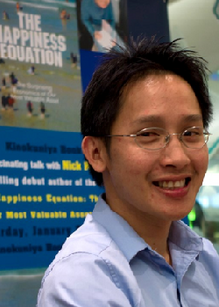
Dr Nattavudh (Nick) Powdthavee is a behavioural economist in the Department of Economic at Nanyang Technological University, Singapore, and is the author of The Happiness Equation: The Surprising Economics of Our Most Valuable Asset. He obtained his PhD the economics of happiness from the University of Warwick. Discussions of his work have appeared in over 50 major international newspapers in the past five years, including the New York Times and the Guardian, as well as in the Freakonomics and Undercover Economist blogs.

It’s not often in our lifetime that we could almost hear the intellectual tide turning. The year was 1993. The main perpetrators were Andrew Oswald and Andrew Clark; two British economists who, in October that year, organised the world’s first ever economics of happiness conference at London School of Economics and Political Sciences. Posters advertising the event were put up weeks in advance. A hundred chairs were put out in the famous Lionel Robbins building, waiting to be filled by many of the world’s greatest minds. The meeting, the organisers thought, was going to be revolutionary to economics science. Perhaps it was even going to be historical, not so dissimilar to the one which was held a few months earlier in Cambridge where British mathematician Andrew Wiles presented the proof of Fermat’s Last Theorem to a few hundred academics before him.

Imagine their disappointment when only eight people turned up on the day*. It was official; the world’s first ever economics of happiness conference was no less of a complete and utter failure.

Fast forward eighteen years to 2011. Happiness is currently one of the hottest topics in world’s politics and economic research. The British Prime Minister David Cameron has set out a plan to measure and improve people’s happiness – or in his compound term “general well-being”. The French president Nicholas Sarkozy has already launched an inquiry into happiness, commissioning Nobel Prize winners Joseph Stiglitz and Amartya Sen to look at how policies on Gross Domestic Products (GDP) sometimes trampled over the government’s other goals, such as sustainability and work-life balance. There are now over two hundred thousand economic papers on the World Wide Web written exclusively on “happiness”, “life satisfaction”, or “subjective well-being”.

How did we get here so fast in just less than two decades?

Of course, one of the early issues that people have with the economics of happiness (and you’d be forgiven if you yourself did laugh at the idea) is that happiness is hardly a measurable concept. This is a big deal for economists who like to call themselves quasi-scientists (in that they mainly deal with objectively measurable data such as income and inflation rates). If what people say about the way they are feeling is subjective by definition, how can it be analysed and quantified?

This issue, I feel, has now been resolved almost entirely. Working alongside scientists, psychologists have been able to provide objective confirmations that what people say about their own happiness does indeed provide useful information about their true inner well-being. For instance, self-rated happiness has been shown to correlate significantly with the duration of “Duchenne” or genuine smiles a person give during a day, as well as the quality of memory, blood pressure, brain activities, and even heart beats per second. More remarkably, scientists have been able to show that how happy we feel about our lives today have important predictive power of whether or not we will still be alive, forty or fifty years from now. Put it simply, we really do mean what we say.

The last two decades had also seen a substantial rise in the number of newly available data sets which are impossibly large by previous standards. And by applying appropriate statistical tools on these randomly drawn samples, researchers are able to explore whether or not the determinants of individual’s happiness (which is normally captured by asking individuals to rate their happiness from “1.not too happy”, “2.pretty happy”, or “3.very happy”) are the same in America as they are in Great Britain, South Africa, and China (which they are, thus lending further credence to the idea that such answers should be taken seriously).

So, what are the interesting results happiness economists have discovered so far? Well, for a start, happiness is U-shaped in age. On average, we are likely to be happier with our life at the younger and older age points in our life-cycle, with the minimum point occurring somewhere around mid-40s. Money buys little happiness, whilst other people’s money tends to make us feel unhappy with ours. The big negatives in our life include, for example, unemployment and ill health. Yet these negative experiences hurt us less subjectively if we happened to know a lot of other unemployed people (or in the case of ill health, other people with the same illness as ours). Marriage and friendships are extremely valuable, although there is little statistical evidence to suggest that children make parents any happier than their non-parents counterpart. And more recently, happiness economists have been able to put dollar, pound, or euro values on happiness (or unhappiness) from seemingly priceless experiences or life events that come with no obvious market values such as time spent with friends, getting married, losing one’s job, and even different types of bereavement.

It’s difficult to try and forecast how important this kind of work will be in the political arena in the forthcoming century. It’s possible that future governmental policies may shift entirely from the pursuit of wealth towards more non-materialistic goals as a result of these findings. We may even witness a replacement of GDP for a more general well-being index such as the GNH (or Gross National Happiness) altogether, although this is probably unlikely to happen. However, one thing’s for sure; economics as a dismal science will never be the same again.

*Of those eight, five were speakers especially invited to speak at the conference by the organisers.