Portrait of a Chemist: From a wartime fascination with chemistry to advising inner-city groups

Peter Gallant found his love for chemistry as a schoolboy during the war while recovering from polio. After 30 years of working with rockets and nuclear power, he went on to apply his chemical experience in the voluntary sector advising inner-city groups.

He speaks to Alex Jackson about his lifelong passion for science.

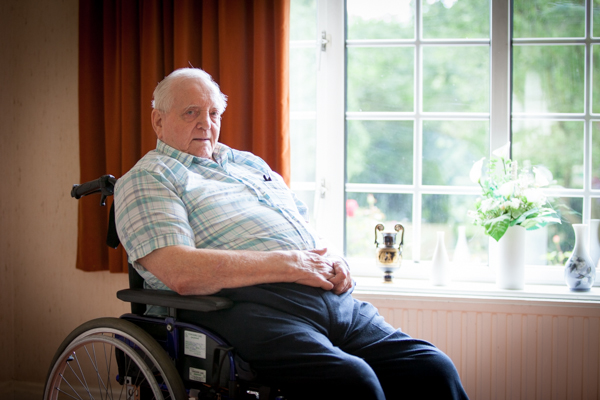
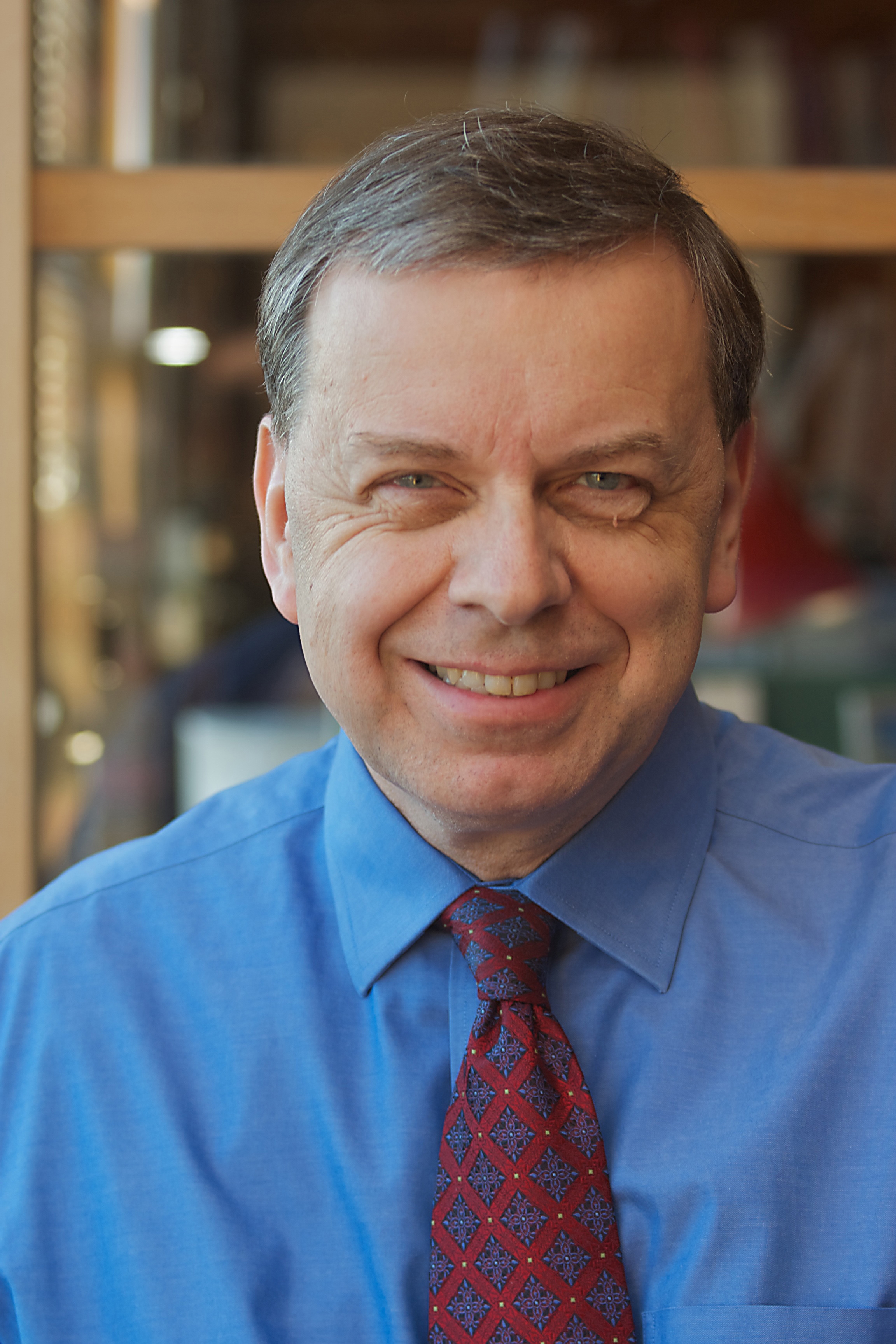
“I read chemistry books like other people read detective stories,” says affable, wide-eyed 86-year-old Peter Gallant. Gallant’s story is one of remarkable fortitude that in recent years has seen him awarded an MBE.

985_001

“I read chemistry books like other people read detective stories,” says Peter Gallant.
Photograph: Stephen Lake/Royal Society of Chemistry)

Early life

Growing up in the early 1930s in Edgware, London, Gallant’s early childhood was much like many of his schoolmates. Both his parents worked in the admiralty, his dad supplying crews for ships, and his mum, a secretary. An only child, he recalls how after class he would devour books, play with train sets, and listen avidly to his parents’ records. Yet one day at the age of nine, his life would dramatically change. Taken ill in the summer of 1938, Gallant was diagnosed with osteomyelitis, a nasty bone disease which infects and inflames the bone or bone marrow.

“It was a killer. Back then, the death rate was about 50%. There were no antibiotics; the only treatment was major orthopaedic surgery,” says Gallant, describing how the infection spread rapidly through his body. He had operations on the femur and tibia of his right leg, his pelvis and arms, leaving his right hip at about 30 degrees and right leg 6cm shorter than his left. “I went into hospital in June 1938 and didn’t come out until September 1942 — more than four years later. At the start I was so ill, there was no question of any education.”

“I went into hospital in June 1938 and didn’t come out until September 1942 — more than four years later. At the start I was so ill, there was no question of any education.”

Evacuated from Guy’s Hospital during the Munich crisis for fears of German air raids, he was taken to Treloar, a children’s hospital in Alton, Hampshire. He vividly recalls the five hospital ward blocks, each arranged in an arc on a hillside, facing the train tracks. His few hospital perks included watching the trains – a “huge hobby” – a daily half pint of stout “to build me up”, and being wheeled out onto the balcony in the summer of 1941 to see an eclipse.

“For four years I was strapped to two pieces of wood which went from my armpits to my feet and was fixed to the bottom of the bed,” recalls Gallant. “We would overhear dogfights on the street and see the flames rise on the southern horizon when Southampton and Portsmouth were being blitzed.”

Encouraged by his mother to read the daily News Chronicle paper while confined to his bed, Gallant would keep his mind active reading about the war and international affairs. A school teacher would also visit twice a day for an hour and “stop us forgetting what we already knew.”

Continue reading

Bill Bryson: A champion of science and science communication

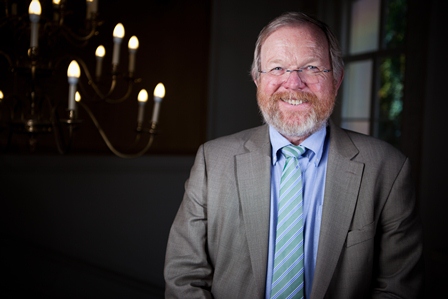
A passionate science advocate: best-selling US author Bill Bryson. Image courtesy of the Royal Society

A passionate science advocate: best-selling US author Bill Bryson. Image courtesy of the Royal Society.

Bill Bryson’s bestselling travel books include The Lost Continent, A Walk in the Woods and Notes from a Small Island, which in a national poll was voted the book that best represents Britain.

His acclaimed book on the history of science, A Short History of Nearly Everything, won the Royal Society’s Aventis Prize as well as the Descartes Prize, the European Union’s highest literary award.

He has written books on language, on Shakespeare, and on his own childhood in the memoir The Life and Times of the Thunderbolt Kid.

His last critically lauded bestseller was At Home: a Short History of Private Life and his most recent book, One Summer: America 1927 chronicles a forgotten summer when America came of age and changed the world for ever.

He was born in the American Midwest, and lives in the UK.

It is over a decade since popular US author Bill Bryson embarked on his eye-opening journey of research for the acclaimed science book ‘A Short History of Nearly Everything’. At that time, he could never have envisaged the popularity and esteem his book would be held in today.

With Bryson’s impeccable wit, charm and honesty, he managed to open up a world of science that was accessible and revealing in equal measure. And yet, in writing the book, Bryson was faced with narrative adjustments and the trepidation of not knowing many of the fields he intended to cover.

Continue reading

Marcus du Sautoy: Communicating Science within the Sciences and to the Public

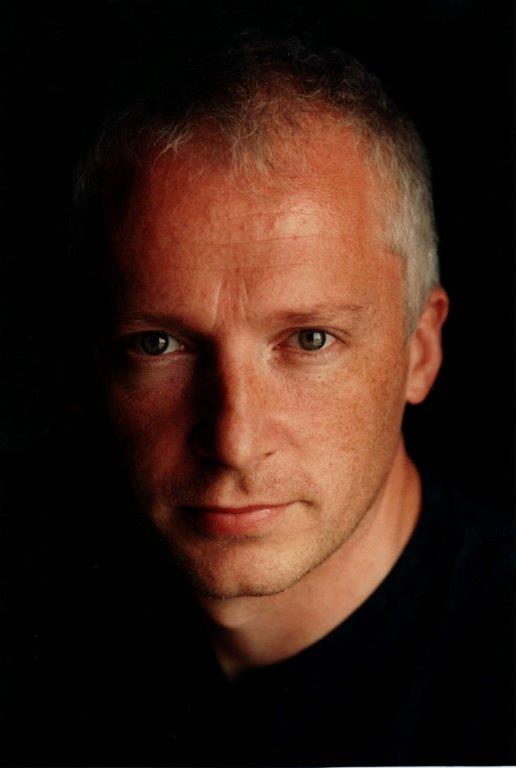
Marcus du Sautoy. A passionate advocate for the "wonders of science".

Marcus du Sautoy. A passionate advocate for the “wonders of science”.

Marcus du Sautoy, OBE, is the Simonyi Professor for Public Understanding of Science and a Professor of Mathematics at the University of Oxford. He is known for his efforts in popularizing mathematics and has been named by The Independent on Sunday as one of the UK’s leading scientists. He was a recipient of the London Mathematical Society’s prestigious Berwick Prize in 2001, which is awarded every two years to reward the best mathematical research by a mathematician under forty.

Du Sautoy writes for the Times and the Guardian and has presented numerous television and radio programmes, including The Story of Maths, School of Hard Sums and The Code. He is also the author of many academic articles and books including the best-selling The Music of the Primes and The Num8er My5teries: A Mathematical Odyssey Through Everyday Life.

When mathematician Marcus du Sautoy was appointed the prestigious role of the Simonyi Professor for the Public Understanding of Science at the University of Oxford back in October 2008, he had two distinct priorities looming prominently in his mind.

The job brief was clear in its motives at the time and reflected on the one-hand high-level science, and on the other, the ability to communicate this scientific research widely to a public audience. The latter was the first priority. Stepping into fill the boots of the inaugural holder Richard Dawkins, was by no means an easy feat, but du Sautoy also a Professor of Mathematics at the University of Oxford, took to the role naturally.

“When I took over from Richard, my immediate thoughts were on clearly communicating to the public what was happening in science,” says du Sautoy. “Science has such a big impact on humanity. In order for people to feel empowered and for them to be able to make decisions on where they want science to go and the long lasting effects it has on society, they must first fully understand the surrounding issues.”

The second role of his job, encouraging the communication of science between disciplines within the sciences, is perhaps the most intriguing, in terms of developments. The biggest challenges, du Sautoy says, are the “inbuilt education system” and the “linguistic barriers” across the sciences. “This is a fascinating area where across academia we’re looking to break down the silo mentality which I believe has been prevalent in most universities across the world”, asserts du Sautoy. “This is partly due to the time and hard work we put into our own specialist subject meaning there often isn’t time to see what’s happening in other areas.”

Continue reading

Pole of Cold: An intrepid look at winter with climate scientist and adventurer Felicity Aston

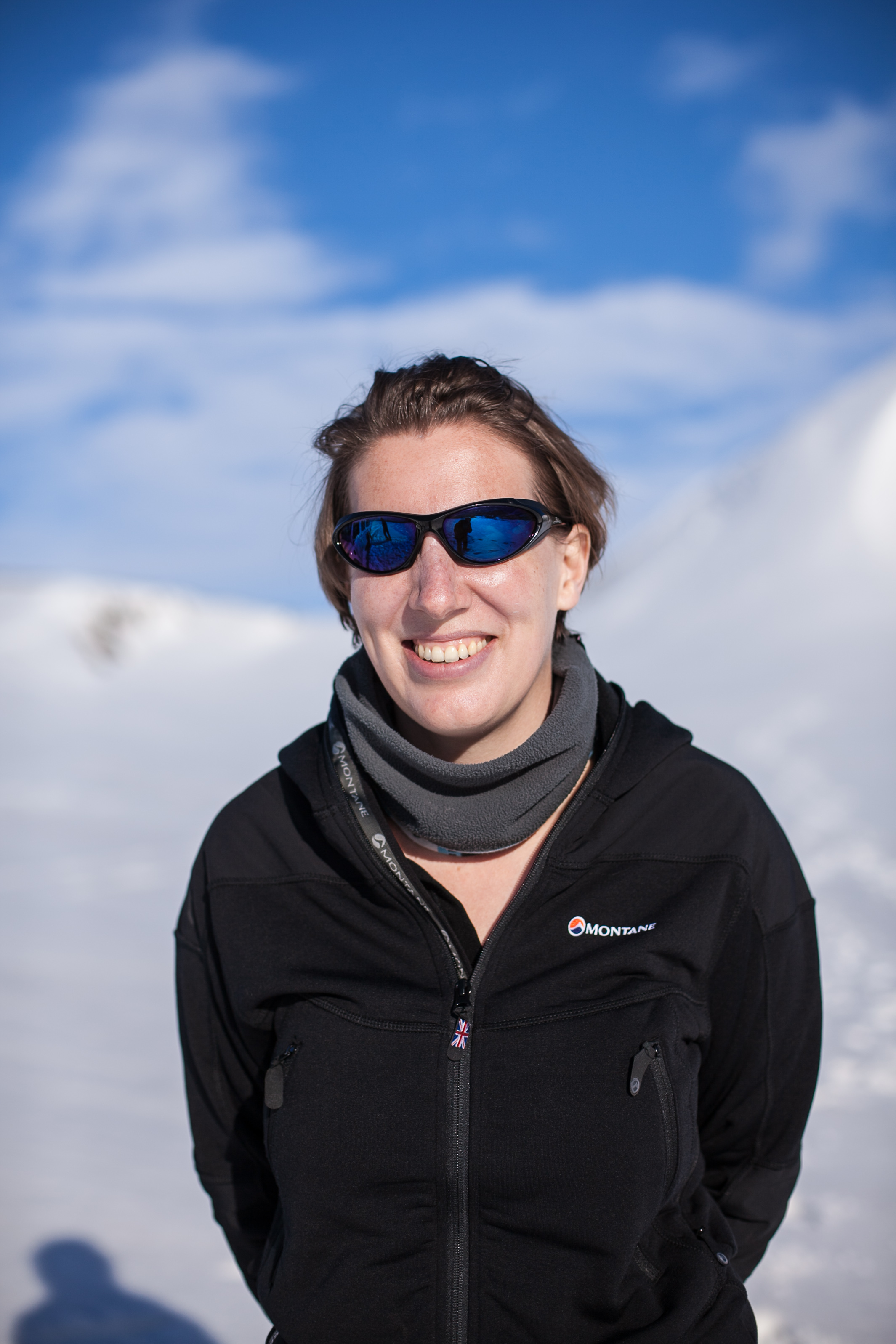
Felicity Aston is a British adventurer, climate scientist and STEM advocate, who in 2012 became the  first woman to ski solo across Antarctica.  At 23, Felicity left the UK to spend three years living and working in the Antarctic as a meteorologist with the British Antarctic Survey at Rothera Research Station. On her return, she was part of the first all-female team to complete the Polar challenge, a 360-mile endurance race across the Canadian Arctic. A year later, Felicity led the first British women’s crossing of the Greenland ice-sheet. Since then she has gone on to lead numerous expeditions including the Kaspersky Lab Commonwealth Antarctic Expedition, the largest and most international women’s expedition ever to ski to the South Pole.

Felicity Aston

“Our comfortable thought about Antarctica as a static cold monolithic environment is over as we’re now seeing it as a living being that’s dynamic and producing change. Change that is being broadcast to the rest of the world, possibly in response to what the world is broadcasting down to Antarctica,” a glaciologist aptly sums up his observations of the changing landscape in Werner Herzog’s documentary on Antarctica ‘Encounters At the End of the World’.

This resonates with the British climate scientist and adventurer, Felicity Aston, who is very familiar with the global environmental issues that she says threaten our planet. She is also an advocate for promoting awareness and understanding.

Having this year taken part in a photo shoot for the Guinness Book of Records after becoming the first woman to ski solo across Antarctica, Felicity is now well under-way with her next major challenge.

Following Winter

Travelling 30,000km across northern Europe and Siberia over three months, Felicity and her three person team will chase winter to the Pole of Cold, the coldest place in the world outside of Antarctica. Here they will explore the social, cultural and physical effects of living in the most extreme climates, engaging with local communities and researching how they have adapted to life in sub-zero temperatures.

“The team will track the extreme weather through scientific and creative means, documenting the physical, human and cultural geography as we go along,” says Felicity. “We’ll be looking at the day-to-day reality of life in the harshest of conditions and hope to bring alive the fascinating local stories. There are so many curiosities around how for example you use an iced-over lake to heat a house or whether it is possible for temperature to rise with altitude rather than drop?”

Continue reading

The Olympics: A Gateway to Engineering

Josh Chamot is the Public Affairs Specialist for Engineering at the National Science Foundation.  Since joining the agency in 2001, Chamot has helped develop a number of news, feature and multimedia products for NSF and established several successful outreach partnerships.  Recently, he joined the NSF-NBC Learn team.

Every two years, the Olympic Games focus world attention on a wide array of competitive sports, and those of us who write about science and technology try to find ways to piggy back on the experience.

Most resulting stories focus on new equipment, athletes’ near-impossible physical feats, or simple lessons in biology or physics, and while we reach new audiences and get people thinking about science and engineering, it’s not always clear we’re taking full advantage of the opportunity an Olympics—with its inspiring stories and global audience—presents to us. Continue reading

Top Recommendations from Top Women in Science

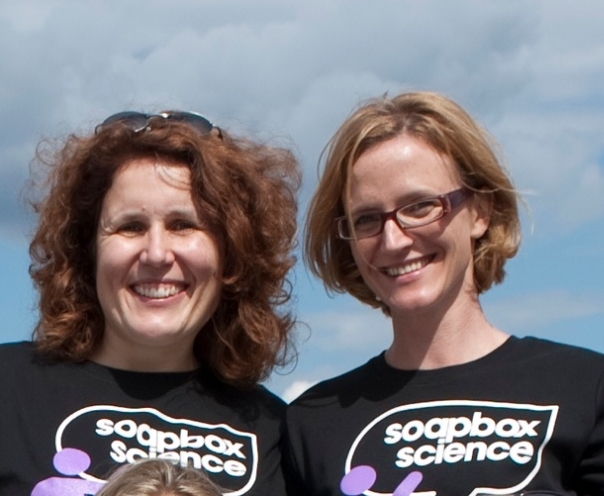
Dr Seirian Sumner & Dr Nathalie Pettorelli, (Institute Of Zoology, Zoological Society of London). 

Why are there still so few women in Science, Technology, Engineering and Mathemathics (STEM)? School girls are as excited as school boys about science, so the potential is clearly there. Yet we still do not routinely see female professors dominating examination panels, research institute directorial boards or the Royal Society fellowship community. Why is it so?

Clearly, the lack of women in science can be sourced from the loss of trained and skilled young women from STEM careers. The main highlighted reasons triggering their departure include fertility choices, stereotypic behaviours in the scientific community and work-home balance, as career progression in these competitive jobs is associated with a long working week and strong disincentives to have children. Women also tend to find the culture of male-dominated STEM departments and the scarcity of female role models off-putting. A report by the Royal Society of Edinburgh recently pointed out that the lack of part-time opportunities, the perception by the scientific community that part-time working is not compatible with a science career, the demand for high geographic mobility, the expense and availability of flexible childcare support, and the difficulty to re-enter the STEM sector after a career break are important reasons triggering the decision to leave. Continue reading

Science Mentoring: Nature Awards for Creative Mentoring in Science

The latest Soapbox Science mini-series focuses on the role of mentors in science. Tying in with this year’s Lindau Nobel Laureate meeting, where almost 600 young scientists have the opportunity to meet each other and 25 Nobel laureates, we’ll be looking at the importance of supportive relationships and role models. We’ll hear from a mix of mentors, mentees and projects set up to support scientists and we aim to explore not just the positive examples of good mentoring but what can happen when these key relationships are absent or break down. For more discussions around this year’s Lindau meeting, check out the Lindau Nobel Community site.

Dr. Philip Campbell is Editor-in-Chief of Nature and of the Nature Publishing Group. His areas of responsibility include the editorial content and management of Nature, and assuring the long-term quality of all Nature publications. He is based in London. He has a BSc in aeronautical engineering, an MSc in astrophysics and a PhD and postdoctoral research in upper atmospheric physics. Following his research, he became the Physical Sciences Editor of Nature and then, in 1988, the founding editor of Physics World, the international magazine of the UK Institute of Physics. He returned to Nature to take on his current role in 1995. He has worked with the UK Office of Science and Innovation, the European Commission and the US National Institutes of Health on issues relating to science and its impacts in society. He is a trustee of Cancer Research UK. He is an elected Fellow of the Royal Astronomical Society and a Fellow of the Institute of Physics, and was awarded an honorary DSc by Leicester University and Bristol University, and an Honorary Professorship by the Peking Union Medical College. He is an Associate of Clare Hall, Cambridge University. Continue reading

Belief in Dialogue: Science, Culture and Modernity

fern.JPG Dr Fern Elsdon-Baker is Director of the British Council’s Belief in Dialogue Programme. Belief in Dialogue is a new intercultural programme, which explores how people in the UK and internationally can live peacefully with diversity and difference in an increasingly pluralistic world. Fern currently serves on the UK Arts and Humanities Research Council’s Science in Culture Advisory Group. A passionate believer in the interactive communication of science, history and philosophy, in her spare time she is the recorder for the History of Science section for the British Science Association. She also serves on the programme’s committee for the British Society for the History of Science.

This blog post is coming to you from the United Arab Emirates. I am at a British Council conference organised with the American University of Sharjah, in association with the International Society for Science and Religion. The title of the conference, Belief in Dialogue: Science, Culture and Modernity, may at first seem a little challenging to some regular readers of Nature. How can there possibly be a dialogue of this kind?

One of the key questions we will be asking at the conference is what factors need to be in place in any society or culture for scientific endeavour or inquiry to flourish. At first these might seem like quite simplistic questions – surely it’s just about good science education and funding for scientific research institutions? However, I would argue it takes much more than that to build a thriving scientific economy. There are certain building blocks needed in areas of society that we might not readily recognise.

The role technological and medical advances can play in our daily lives is clear. We are all aware where the ethical boundaries may lie, whether this be around a range of questions from stem cell research, reproductive technologies, climate change through to water security.

However, to get to the root of what makes science flourish we need to make one fundamental observation – what we mean when we use the terms ‘science’, ‘technology’ or ‘medicine’ are all different. Intrinsically intertwined with shared – yet in places divergent – historical contexts, they have different approaches to methodology or their philosophical underpinning.

For technology to flourish you do not necessarily need a flourishing ‘scientific’ culture – significant societal drivers such as industry and entrepreneurship play perhaps a bigger role than a purely ‘scientific’ approach. Scientific inquiry is as much a way of thinking, seeing and asking questions about the world around us, as it is a consensus on a type of agreed methodological approach.

‘Science’ in this way, whether we recognise it or not, is an integral part of our daily lives. It is the very fabric of our cultural context but in different ways. I am far from arguing that there is no hope of an ‘objective science’ in the way that many scientists would argue – I am certainly not suggesting that the very stuff of science is culturally relative. But the cradle of all scientific inquiry is the broader societal and cultural context in which it sits. Not just the cultural perspective of the individual or team of researchers, but the context of the political system which supports or suppresses, the funding stream that can inadvertently create fashions and trends, and those of us in wider society who are ultimately the end users of any research and in turn fuel both political and funding priorities. This rich tapestry of influences ultimately shapes the scientific discourse of the day.

The answer then to my question lies outside of the science faculty or classroom. It is becoming increasingly recognised in developing scientific economies that the humanities play a key part in helping to frame the systems of thinking that are needed to engage both critically and analytically with the world around us. In the UK, we have long recognised the role of strong multidisciplinary discourse and it is to our credit that our research funding councils see the critical value in this interplay between sciences and humanities – even in these difficult economic times.

Another factor that we are growing to value more and more is the open engagement with wider society and cultures in science communication. Gone are the days when we would expect to disseminate ‘knowledge’ to an uninformed and apparently wilfully ignorant public. We are all members of that amorphous mass we like to call public and we cannot assume that we are all uninformed, uninterested or do not have valid questions about the role of science in society today or how it relates to our own individual cultural perspectives.

Freedom of thought and expression play a key role here too. Too often fundamentalists at the extremes of the spectrum close down on other’s perspectives not because of any epistemological impasse, but merely due to an unwillingness to even engage with another’s cultural perspective. Too often when we communicate science we cleave to polarising narratives that create an ‘us’ and ‘them’ approach to science communication – which can exclude a large proportion of the world’s population. There is no ‘them’, there is only an ‘us’.

In an increasingly globalised world where we all have multiple identities it is not possible to delineate between communities or cultures in the simplistic ways of the past. We cannot therefore assume, as has been done in previous years, that it is possible to create divisions between any culture – be that a disciplinary cultural divide between science and humanities or a cultural divide between world views.

In my work I have had the opportunity to meet a number of people from many different cultures, communities and faiths. Sometimes my perspective on how we view the world might differ from those I meet, but I have as yet not had the misfortune to meet someone who is so set in his own world view that we cannot openly engage in a discussion about those differences. In some surprising and heart-warming circumstances I have found considerable common ground with those who initially felt they were in opposition to my work communicating evolutionary science but have since become firm supporters. At other times I have come away with my own prejudices and misconceptions challenged and found a new respect or understanding of another’s world view even if it is one I do not wholly share.

What I hope we will see at the conference at the American University of Sharjah is an opportunity to openly share different perspectives on the issues and challenges at the core of scientific discourse that are fundamental to all societies’ growth. But more importantly I would hope that by bringing people together from different countries with different beliefs and world views, we will each take our part of the jigsaw and place it together – so that in the future we can build a clearer global picture of how to communicate science in a more effective way as we face the many challenges ahead of us all in the 21st century.

To join in the discussion on Twitter, the conference hashtag is #BIDSCM and you can find the official Belief in Dialogue Twitter account here.

Making Hay

jan.bmp

This week’s guest blogger is Jan Zalasiewicz. He is a Senior Lecturer at the Department of Geology, University of Leicester, UK. His main research interests are in palaeoenvironmental change during episodes of Earth history ranging somewhat irregularly from the early Palaeozoic to the present (‘Anthropocene’) time. He has published two popular science books, The Earth After Us and The Planet in a Pebble. He is discussing science at the Hay Festival, tying in nicely with our mini-series on science festivals.

An Oscar is unexpectedly heavy. Given that such a thing is often awarded to actresses who tend to the fragile and gazelle-like, one might imagine that it should be a delicately spun confection. No: it’s solid metal through and through, and a couple of weeks in the gym beforehand, toning up the biceps, should be advised to any potential winners. This particular trophy was on one of the many cluttered desks in the crowded temporary office from which operations at the Hay-on-Wye Book Festival are masterminded; it had been recently won by one of those involved, and it (not he) had a slight dent to the forehead. There had obviously been a good party.

This is one of the many strange and magical things that one can encounter at that remarkable event, as one moves – no, is swept – through its course. I had been asked to give a talk there, describing the life (so to speak) and times (surprisingly various) of a pebble of Welsh slate, having recently written a book on such a thing. It’s one of the occasional treats that writing a popular science book brings with it. For, as almost every author knows, the rewards of book writing do not generally encompass yachts, pet football teams or inflated bank balances – particularly when one is attempting to popularise geology, even in microcosm. Rather, the rewards – other than the pleasure of the writing itself – lie largely in the small adventures that turn up, just now and then, once the book is out there, like a shiny silver sixpence in the solid plum pudding of Life.

Seeing the festival from the view of a writer (or ‘artist’, as the notice-boards endearingly put it) is especially revealing. As an operation, it is simply staggering. Like the apocryphal bumble-bee that shouldn’t fly but does, this multi-dimensional happening gets off the ground and, somehow, stays aloft. The arrivals, appearances and departures of a bewildering number of writers (here, one really does seem to be among a cast of thousands) is calmly (so it appears), efficiently (for sure) and above all amiably navigated, by a large team of employees and volunteers – and that’s even before the legions of bibliophiles come through the gates. Orchestrating the whole lot is Peter Florence, who is clearly very good at this kind of thing. When those painfully convoluted climate negotiations of Kyoto, Copenhagen and Cancun are finally re-cranked, it would be a good idea to put the whole show in his hands. Atmospheric CO2 levels should begin to plummet within the week.

Giving the talk itself was a touch different to giving a standard undergraduate lecture – or even the standard popular lecture of an evening. All the talks are in large tents. When the wind blows strongly (as on that Welsh springtime afternoon), the structure creaks and groans like a storm-tossed galleon. A spotlight illuminates the speaker while the audience is in darkness, so eye contact is mainly in the infra-red spectrum. There was nothing for it, then, but to hold forth in the manner of one of the more despairing tenors of a Wagner epic, and hope for the best. Luckily, the sound system was (of course) more than capably managed. Enough pebble science got through, thankfully, for the questions at the end to be right on the button.

It’s the noises off, though, that make the event. The lightly concussed Oscar was next to a small laptop streaming in the European Cup Final, around which a motley assemblage of volunteers and stray writers was clustered. Even with the rather pointilliste images (despite all the available bandwidth being plundered for the purpose), it was obvious that Barcelona were playing in some different part of the space-time continuum to the gallant Mancunians. For the second half, I was smuggled into (it wasn’t quite gatecrashing, honest) an exclusive party on the other side of the creative tracks. There, amongst other delights, was a very large 3D television screen. This was a new experience to me. Heaven knows what the new technology will do to the flying crockery in the more emotional soaps, but David Villa’s goal soared like a comet.

And, of course, there was lots of conversation, and the meeting of people that normally don’t cross my personal orbit. The Hay Festival is good for science – this year, there were John Barrow, Brian Cox, Martin Rees and many others. But at heart it represents a cross-section of human life and interests that, to a scientist, provides a kind of reality check. Science may have brought about the conditions by which the Earth can support, now, seven billion people. People, however, generally have more immediate concerns than science; more, even, than the state of the Earth that supports them. Most people live very much in the world of people, and within the intricate human networks that seem like a living vindication of the ‘noosphere’ – the global sphere of human thought that Teilhard de Chardin proposed almost a century ago.

This is a sphere crammed with human tragedy, triumph, greed, commerce, low comedy, love and hope and fear – in the tradition of Tolstoy and of Jackie Collins too. By contrast, the world inhabited by, say, the average Earth scientist spans billions of years, encompasses extraordinary volcanoes, deep glaciations and bizarre life-forms. This world is literally inhuman, one nigh well impossible to connect with emotionally: even the most ardent cat-lover would not think to scritch the ear of a sabre-tooth tiger, while the trilobites and armoured fish of deeper times might as well have been on another planet.

The two worlds are interconnected, naturally. We all need a stably functioning Earth. And the Earth, these days, in a sense, needs us – especially given how many of its functions we have appropriated. It needs us collectively, at least, to try to steer the least damaging course consistent with human need. Occasions like Hay might – just – help bridge the gap. And, of course, one can have a hell of a good time there too. Even scientists are human, after all.

If you want to read more highlights from our mini-series on science festivals, you can find a summary of all our coverage here.