Science Mentoring: Surviving a hostile post-graduate experience

The latest Soapbox Science mini-series focuses on the role of mentors in science. Tying in with this year’s Lindau Nobel Laureate meeting, where almost 600 young scientists have the opportunity to meet each other and 25 Nobel laureates, we’ll be looking at the importance of supportive relationships and role models. We’ll hear from a mix of mentors, mentees and projects set up to support scientists and we aim to explore not just the positive examples of good mentoring but what can happen when these key relationships are absent or break down. For more discussions around this year’s Lindau meeting, check out the Lindau Nobel Community site.

Malcolm is currently an MSc student at the University of KwaZulu-Natal, Pietermaritzburg, where he studies the coordination and medicinal chemistry of vanadium.

The Lindau meeting of Nobel Laureates and young scientists highlights a specific area of interest and concern: that of providing mentors for the next generation. As defined by the Oxford Online Dictionary, mentor means, as a noun: an experienced and trusted advisor; or as a verb: to advise or train. However, with the current climate of challenges, where research budgets are routinely being slashed, while at the same time, the pressure to publish more papers in the highest possible rated journals continues to increase, the ability of researchers to properly mentor their students can suffer. On occasion, problems in the student-mentor relationship can arise as a result of more personal reasons. Often, a poor mentor can lead to students abandoning their chosen path of science, or even the discipline in general. Continue reading
Science Mentoring: A Viewpoint on Good Mentoring

The latest Soapbox Science mini-series focuses on the role of mentors in science. Tying in with this year’s Lindau Nobel Laureate meeting, where almost 600 young scientists have the opportunity to meet each other and 25 Nobel laureates, we’ll be looking at the importance of supportive relationships and role models. We’ll hear from a mix of mentors, mentees and projects set up to support scientists and we aim to explore not just the positive examples of good mentoring but what can happen when these key relationships are absent or break down. For more discussions around this year’s Lindau meeting, check out the Lindau Nobel Community site.

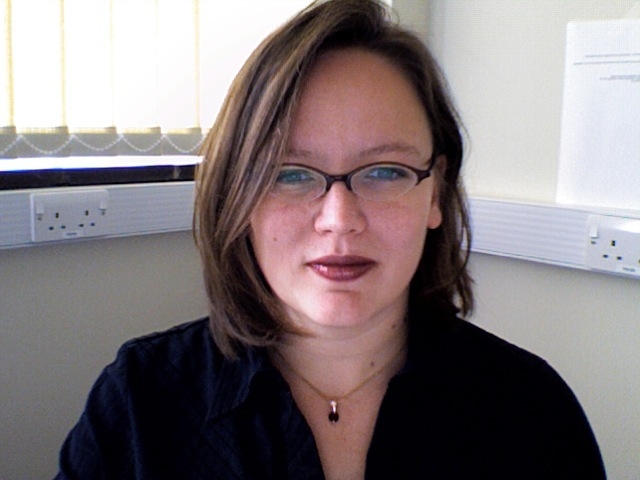
Michael Habib is originally from Baltimore, MD and he completed his B.A. and M.S. work at the University of Virginia, and his Ph.D. work at Johns Hopkins. His academic interests fall mostly in the realm of anatomy, biomechanics, and comparative zoology. One of his interests is in flight biomechanics and he has focused recently on the flight abilities of giant Late Cretaceous pterosaurs, which were the largest flying animals of all time. Michael also work on problems related to the flight performance and skeletal reinforcement of living birds and bats. Outside of academia, he enjoys Kung Fu training, as well as inline skating, illustration and orchid growing. Continue reading

Science Mentoring: A Lecturer’s Perspective on Academic Mentoring

The latest Soapbox Science mini-series focuses on the role of mentors in science. Tying in with this year’s Lindau Nobel Laureate meeting, where almost 600 young scientists have the opportunity to meet each other and 25 Nobel laureates, we’ll be looking at the importance of supportive relationships and role models. We’ll hear from a mix of mentors, mentees and projects set up to support scientists and we aim to explore not just the positive examples of good mentoring but what can happen when these key relationships are absent or break down. For more discussions around this year’s Lindau meeting, check out the Lindau Nobel Community site.

Michelle L. Oyen is a Lecturer in Mechanics of Biological Materials in the Mechanics and Materials Division and the Engineering for the Life Sciences (Bioengineering) group in the Cambridge University Engineering Department. She holds a B.S. degree in Materials Science and Engineering and an M.S. Degree in Engineering Mechanics, both from Michigan State University and a Ph.D. degree in Biophysical Sciences and Medical Physics from the University of Minnesota. She joined Cambridge Engineering in 2006 following an appointment as Research Scientist at the University of Virginia Center for Applied Biomechanics. She is a member of the Materials Research Society, and webmaster for the new UK-based Bioengineering Society. Continue reading

Science Mentoring: Does Race Matter?

The latest Soapbox Science mini-series focuses on the role of mentors in science. Tying in with this year’s Lindau Nobel Laureate meeting, where almost 600 young scientists have the opportunity to meet each other and 25 Nobel laureates, we’ll be looking at the importance of supportive relationships and role models. We’ll hear from a mix of mentors, mentees and projects set up to support scientists and we aim to explore not just the positive examples of good mentoring but what can happen when these key relationships are absent or break down. For more discussions around this year’s Lindau meeting, check out the Lindau Nobel Community site.

Stephani Page is a rising 5th year graduate student at The University of North Carolina at Chapel Hill.  She is pursuing her PhD in the Department of Biochemistry & Biophysics and is a member of the Bourret/Silversmith Lab in the Department of Microbiology & Immunology. 

There are many qualities that signify an outstanding mentor:  compassionate, wise, and humble; forthright, patient, and honest; knowledgeable, generous, and genuine. When I think of all of the individuals whom I have called “mentor”, they have demonstrated all of these qualities.  The attributes and qualities of good mentorship cannot be assigned to gender, race, religion, or economic status; I have had many mentors from diverse backgrounds.  Largely due in part to the depth and diversity of the relationships with people who have taken the time to mentor me, I feel equipped to step out into the vast unknown: a career in the sciences. Continue reading

Science Mentoring: Online Mentoring for Improving Scientific Literacy

The latest Soapbox Science mini-series focuses on the role of mentors in science. Tying in with this year’s Lindau Nobel Laureate meeting, where almost 600 young scientists have the opportunity to meet each other and 25 Nobel laureates, we’ll be looking at the importance of supportive relationships and role models. We’ll hear from a mix of mentors, mentees and projects set up to support scientists and we aim to explore not just the positive examples of good mentoring but what can happen when these key relationships are absent or break down. For more discussions around this year’s Lindau meeting, check out the Lindau Nobel Community site.

Gurmit Singh is a healthcare and HIV digital activist, educator and researcher. Gurmit is the co-founder and co-facilitator of The HIVe (https://www.hiv-e.org), a global community of  researchers, practitioners and activists to improve health and human rights with community-based and led HIV prevention and education using digital and networking technologies. He is also the co-convener and co-facilitator of We Decide, an e-democracy learnscape for equity and social justice. He is an ESRC Scholar at The University of Leeds UK researching how to improve the impact on practice and patient care of using Web 2.0 networking technologies for online healthcare continuing professional development. Continue reading

Science Mentoring: Journal of Emerging Investigators

The latest Soapbox Science mini-series focuses on the role of mentors in science. Tying in with this year’s Lindau Nobel Laureate meeting, where almost 600 young scientists have the opportunity to meet each other and 25 Nobel laureates, we’ll be looking at the importance of supportive relationships and role models. We’ll hear from a mix of mentors, mentees and projects set up to support scientists and we aim to explore not just the positive examples of good mentoring but what can happen when these key relationships are absent or break down. For more discussions around this year’s Lindau meeting, check out the Lindau Nobel Community site.

Sarah Fankhauser officially began her scientific career when she majored in biology at Georgia Tech.  While at Georgia Tech, she had the opportunity to work in a microbiology lab and completed her senior thesis on the chemotaxis system of the bacterium Bacillus subtilis.  After graduating with a BSc in 2007 she began her PhD.  work at Harvard Medical School studying the immune response to bacterial pathogens. While at Harvard, Sarah has taught a range of students, from graduate and medical students to middle and high school students, about a variety of scientific subjects.  In 2011 she founded the Journal of Emerging Investigators, a science journal dedicated to publishing the research performed by middle and high school students.  Sarah is passionate about science teaching and engaging more researchers in the classroom and she plans to teach at college or high school level.   Continue reading

Science Mentoring: The Science Club for Girls and the cycle of mentoring

The latest Soapbox Science mini-series focuses on the role of mentors in science. Tying in with this year’s Lindau Nobel Laureate meeting, where almost 600 young scientists have the opportunity to meet each other and 25 Nobel laureates, we’ll be looking at the importance of supportive relationships and role models. We’ll hear from a mix of mentors, mentees and projects set up to support scientists and we aim to explore not just the positive examples of good mentoring but what can happen when these key relationships are absent or break down. For more discussions around this year’s Lindau meeting, check out the Lindau Nobel Community site.

Meghna Marjadi

Meghna Marjadi is a Massachusetts Promise Fellow(Americorps) serving as the the High School Programs Coordinator for  Science Club for Girls. The Cambridge, Mass. – based group sends volunteer mentor-scientists from local universities, research labs, and companies to area schools. Group members also train teens to serve as “Junior Mentors” to younger girls so they can “ picture themselves in STEM careers. Meghna also runs the herring monitoring program with the Mystic River Watershed Association.
While women comprise nearly half the work force, they fill only 25 per cent of STEM jobs, according to a 2011 report by the US Department of Commerce. The  factors influencing underrepresentation of women in science include a dearth of role models,  STEM careers that offer little family time and  gender stereotyping. For example, earlier this year, the clothing store Forever 21 carried a t-shirt that read, “allergic to algebra.”

Continue reading

Science Mentoring: Is it different for girls?

The latest Soapbox Science mini-series focuses on the role of mentors in science. Tying in with this year’s Lindau Nobel Laureate meeting, where almost 600 young scientists have the opportunity to meet each other and 25 Nobel laureates, we’ll be looking at the importance of supportive relationships and role models. We’ll hear from a mix of mentors, mentees and projects set up to support scientists and we aim to explore not just the positive examples of good mentoring but what can happen when these key relationships are absent or break down. For more discussions around this year’s Lindau meeting, check out the Lindau Nobel Community site.

Helen Wollaston, newly appointed Director of UKRC-WISE, ponders whether the factors which motivate female scientists are different to those which draw men to the subject.  Helen brings a wealth of experience promoting opportunities for women and girls, as former Director of Campaigns at the Equal Opportunities Commission, through her own equality consultancy business and as Chair of Platform 51, a charity which supports women and girls to achieve their potential.  Continue reading

Science Mentoring: Mentoring Women in Science

The latest Soapbox Science mini-series focuses on the role of mentors in science. Tying in with this year’s Lindau Nobel Laureate meeting, where almost 600 young scientists have the opportunity to meet each other and 25 Nobel laureates, we’ll be looking at the importance of supportive relationships and role models. We’ll hear from a mix of mentors, mentees and projects set up to support scientists and we aim to explore not just the positive examples of good mentoring but what can happen when these key relationships are absent or break down. For more discussions around this year’s Lindau meeting, check out the Lindau Nobel Community site.

Dr. Meghan Groome is the Director of K12 Science Education and Science & the City at the New York Academy of Sciences. Dr. Groome joined the Academy in July of 2010 after spending three years as a special projects consultant to the American Museum of Natural History. Previous, Dr. Groome was a Senior Policy Analyst with the National Governors Association and co-authored Building a STEM Agenda, a framework for states and large organizations to improve their science education pipelines from birth through graduate school. Dr. Groome completed her PhD at Teachers College Columbia University in Science Education with a focus on urban science education. During graduate school, Dr. Groome co-founded uPublic, an education consulting company focused on local, national, and international education reforms. Dr. Groome graduated from The Colorado College in 2000 with a major in biology and theater and is a certified science teacher with experience teaching PreK through Graduate school. Continue reading

Turing : The Irruption of Materialism into thought

Paul Cockshott is a computer scientist and political economist working at the University of Glasgow. His most recent books are Computation and its Limits (with Mackenzie and Michaelson) and Arguments for Socialism (with Zachariah). His research includes programming languages and parallelism, hypercomputing and computability, image processing, and experimental computers. This article originally appeared on the OUP blog.

This year is being widely celebrated as the Turing centenary. He is being hailed as the inventor of the computer, which perhaps overstates things, and as the founder of computing science, which is more to the point. It can be argued that his role in the actual production of the first generation computers, whilst real, was not vital. In 1946 he designed the Automatic Computing Engine (ACE), a very advanced design of a computer for its day, but because of its challenging scale, initially only a cut down version (the Pilot ACE) was built (and can now be seen in the Science Museum, London). From 1952 to 1955, the Pilot ACE was the fastest computer in the world and it went on to be sucessfully commercialised as the Deuce. In engineering terms though, none of the distinctive features of Turing’s ACE survive in today’s computer designs. The independent work of Zuse in Germany or Atanasoff in the US indicates that electronic computers were a technology waiting to be discovered across the industrial world. Continue reading