Science Mentoring: Strongest Advocate Strongest Critic – A Guide to Mentoring

The latest Soapbox Science mini-series focuses on the role of mentors in science. Tying in with this year’s Lindau Nobel Laureate meeting, where almost 600 young scientists have the opportunity to meet each other and 25 Nobel laureates, we’ll be looking at the importance of supportive relationships and role models. We’ll hear from a mix of mentors, mentees and projects set up to support scientists and we aim to explore not just the positive examples of good mentoring but what can happen when these key relationships are absent or break down. For more discussions around this year’s Lindau meeting, check out the Lindau Nobel Community site.

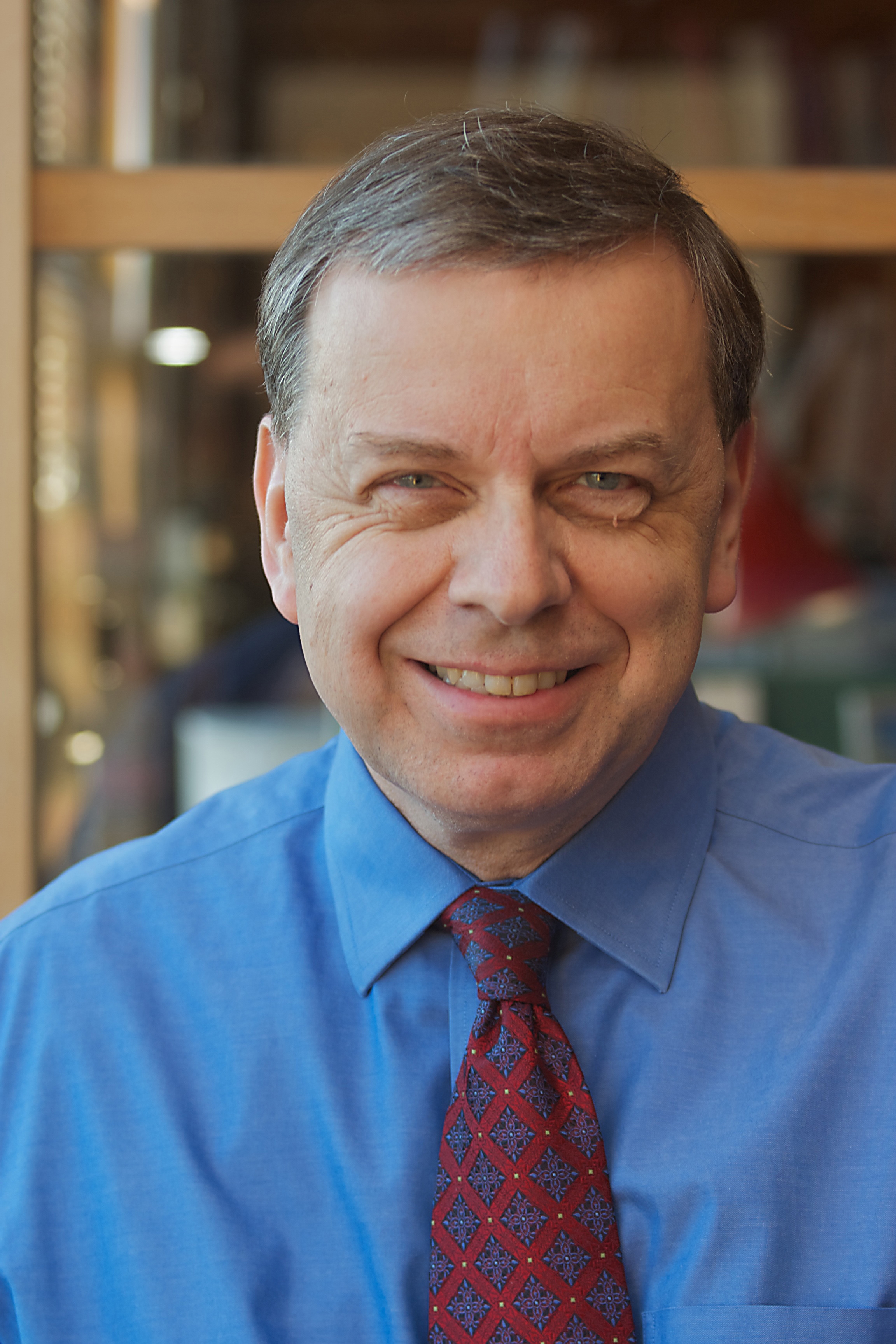
Dr. C. Gita Bosch has twenty years of academic leadership experience (PhD, MD/PhD, Post-baccalaureate and undergraduate research education) and seven years of laboratory biomedical research. As Associate Dean at both Mount Sinai School of Medicine and Memorial Sloan-Kettering Cancer Center (where she led the effort to create and establish the Graduate School) she has served as the Minority Student Advocate for over twenty years. She also served on an Advisory Group of the American Association of Medical Colleges (AAMC) to look at health disparities in biomedical research and the biomedical workforce in the US. And for almost twenty years, she has been working with various organizations that work with underrepresented undergraduate and graduate students such as the ABRCMS (formerly NMRS), SACNAS and MHPF. She also currently serves on External Advisory Committees for Post-Baccalaureate Research Education Program (PREP), Minority Access to Research Careers Programs (MARC) and Research Initiative for Scientific Enhancement (RISE). As an elected member of the Steering Committee of the GREAT Group, AAMC, she founded and chaired the Gateway for Aspiring Biomedical Scientists Committee which created and launched a resource website for trainees at all levels. She also has a long history leading professional development workshops for undergraduate and graduate students. She has also served as a consultant with the Office of Inclusion, Diversity and Equal Opportunity at Case Western Reserve University to help guide the preparation of a Diversity Strategic Action Plan for the University, and to the Association of UNCF/Merck Fellows (The AUMF) to help launch a professional association of African American biomedical scientists established as a national presence.

If you’ve been inspired to try mentoring yourself, here is a guide to help you along the way! Continue reading

Science Mentoring: Nature Awards for Creative Mentoring in Science

The latest Soapbox Science mini-series focuses on the role of mentors in science. Tying in with this year’s Lindau Nobel Laureate meeting, where almost 600 young scientists have the opportunity to meet each other and 25 Nobel laureates, we’ll be looking at the importance of supportive relationships and role models. We’ll hear from a mix of mentors, mentees and projects set up to support scientists and we aim to explore not just the positive examples of good mentoring but what can happen when these key relationships are absent or break down. For more discussions around this year’s Lindau meeting, check out the Lindau Nobel Community site.

Dr. Philip Campbell is Editor-in-Chief of Nature and of the Nature Publishing Group. His areas of responsibility include the editorial content and management of Nature, and assuring the long-term quality of all Nature publications. He is based in London. He has a BSc in aeronautical engineering, an MSc in astrophysics and a PhD and postdoctoral research in upper atmospheric physics. Following his research, he became the Physical Sciences Editor of Nature and then, in 1988, the founding editor of Physics World, the international magazine of the UK Institute of Physics. He returned to Nature to take on his current role in 1995. He has worked with the UK Office of Science and Innovation, the European Commission and the US National Institutes of Health on issues relating to science and its impacts in society. He is a trustee of Cancer Research UK. He is an elected Fellow of the Royal Astronomical Society and a Fellow of the Institute of Physics, and was awarded an honorary DSc by Leicester University and Bristol University, and an Honorary Professorship by the Peking Union Medical College. He is an Associate of Clare Hall, Cambridge University. Continue reading

Science Mentoring: My graduate school mentor

The latest Soapbox Science mini-series focuses on the role of mentors in science. Tying in with this year’s Lindau Nobel Laureate meeting, where almost 600 young scientists have the opportunity to meet each other and 25 Nobel laureates, we’ll be looking at the importance of supportive relationships and role models. We’ll hear from a mix of mentors, mentees and projects set up to support scientists and we aim to explore not just the positive examples of good mentoring but what can happen when these key relationships are absent or break down. For more discussions around this year’s Lindau meeting, check out the Lindau Nobel Community site.

Mariena is a 30 year old puertorrican scientist living in NY. Currently she works as an electron cryomicroscopist, the field she was trained in while in graduate school. In 2009 she completed a degree in biophysics at Vanderbilt University, followed by a postdoc in biochemistry at the University of Western Ontario. Last year she moved away from the tenure-track to pursue a dream of working with instrumentation and training people in microscopy. She’s interested in science, science communication and literacy, tweeting, blogging and photography.

I didn’t know what I was going to study when I decided to go to grad school, but I did decide to go to a school with an umbrella program in the southern US, one in which I didn’t have to commit to a lab or project from the get-go. I could do rotations in several departments for a year, then decide where I wanted to join. The year before, while doing a summer internship, I learned about the technique I would use and become proficient in for my PhD. I thought it was a really cool approach, though I didn’t get to do it as an undergrad. Then in grad school, I saw a poster with my mentor’s name and all the projects her lab was working on and noticed that her lab was using this great structural biology approach I had learned about as an undergrad. She had recently moved to my school and was looking for rotation students and I was eager to meet her and hopefully do a rotation in the lab. I admit now that my eyes lit up that day and I started attending some of the departmental seminars and greeting her down the hall, even when I wasn’t doing rotations in said department. Continue reading

Science Mentoring: A Lindau Attendee’s Experience

The latest Soapbox Science mini-series focuses on the role of mentors in science. Tying in with this year’s Lindau Nobel Laureate meeting, where almost 600 young scientists have the opportunity to meet each other and 25 Nobel laureates, we’ll be looking at the importance of supportive relationships and role models. We’ll hear from a mix of mentors, mentees and projects set up to support scientists and we aim to explore not just the positive examples of good mentoring but what can happen when these key relationships are absent or break down. For more discussions around this year’s Lindau meeting, check out the Lindau Nobel Community site.

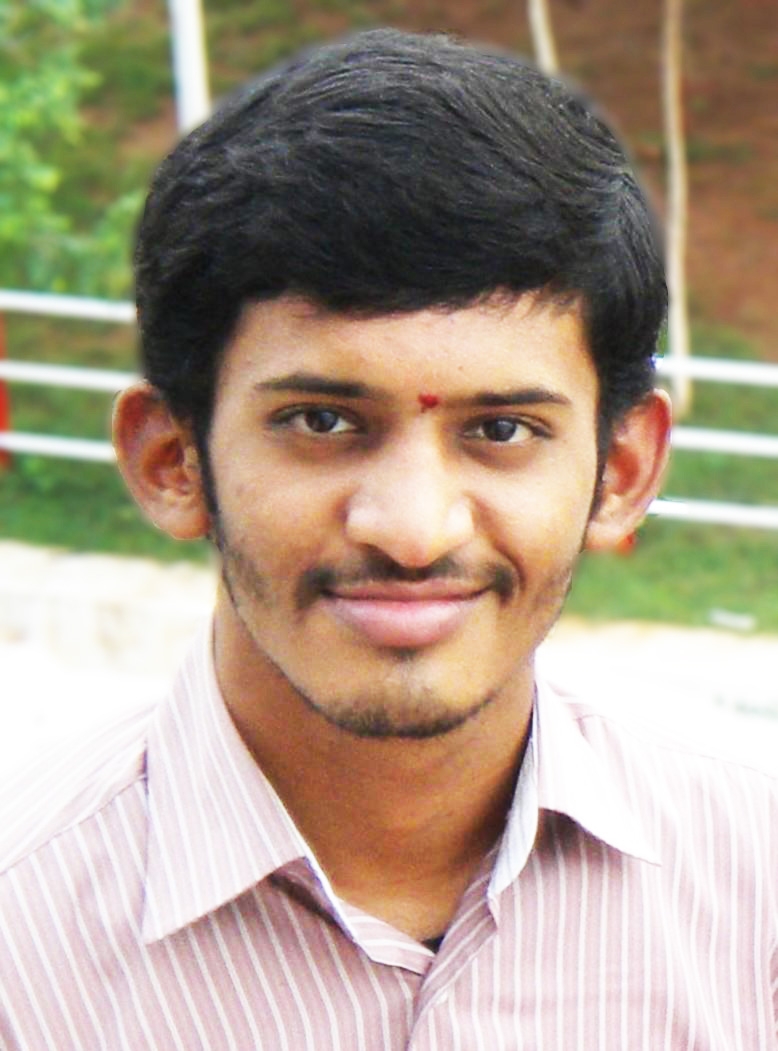
Harshavardhan Reddy Pinninty, representing India in this year’s Lindau Nobel Laureates Meeting, is a fourth year Integrated MSc Physics student at University of Hyderabad. He is also a convener of Junior Science Club, a student organization which aims to promote and develop scientific interest among the students of the university community by organizing various activities related to science. He is working on a project related to light matter interaction at different time scales (nano, pcio and femto second regimes), under the guidance of Prof. D. Narayana Rao along with his regular academics. Harshavardhan’s interests include Yoga and Meditation. Continue reading

Science Mentoring: I’m just not clever

The latest Soapbox Science mini-series focuses on the role of mentors in science. Tying in with this year’s Lindau Nobel Laureate meeting, where almost 600 young scientists have the opportunity to meet each other and 25 Nobel laureates, we’ll be looking at the importance of supportive relationships and role models. We’ll hear from a mix of mentors, mentees and projects set up to support scientists and we aim to explore not just the positive examples of good mentoring but what can happen when these key relationships are absent or break down. For more discussions around this year’s Lindau meeting, check out the Lindau Nobel Community site.

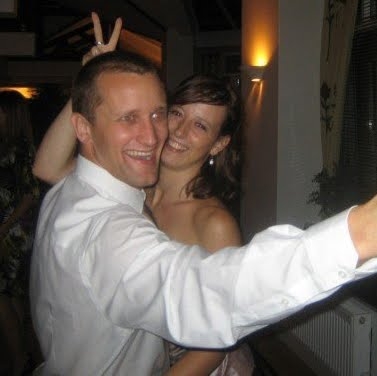
Vince Knight is a lecturer at the School of Mathematics at Cardiff University. Vince’s research interests lie in the intersection of queueing theory and game theory and he enjoys understanding how individual behaviour affects queueing situations. Vince lives in Cardiff with his fiancée Zoë and their two cats: Chick and Duck.

In my life I have been lucky enough to have various mentors: my parents, my high school teachers and rugby coaches, and currently my head of research group at Cardiff University. The subject of this blog is one particular mentor: my high school physics teacher. Continue reading

Science Mentoring: Surviving a hostile post-graduate experience

The latest Soapbox Science mini-series focuses on the role of mentors in science. Tying in with this year’s Lindau Nobel Laureate meeting, where almost 600 young scientists have the opportunity to meet each other and 25 Nobel laureates, we’ll be looking at the importance of supportive relationships and role models. We’ll hear from a mix of mentors, mentees and projects set up to support scientists and we aim to explore not just the positive examples of good mentoring but what can happen when these key relationships are absent or break down. For more discussions around this year’s Lindau meeting, check out the Lindau Nobel Community site.
Malcolm is currently an MSc student at the University of KwaZulu-Natal, Pietermaritzburg, where he studies the coordination and medicinal chemistry of vanadium.

The Lindau meeting of Nobel Laureates and young scientists highlights a specific area of interest and concern: that of providing mentors for the next generation. As defined by the Oxford Online Dictionary, mentor means, as a noun: an experienced and trusted advisor; or as a verb: to advise or train. However, with the current climate of challenges, where research budgets are routinely being slashed, while at the same time, the pressure to publish more papers in the highest possible rated journals continues to increase, the ability of researchers to properly mentor their students can suffer. On occasion, problems in the student-mentor relationship can arise as a result of more personal reasons. Often, a poor mentor can lead to students abandoning their chosen path of science, or even the discipline in general. Continue reading

Science Mentoring: A Viewpoint on Good Mentoring

The latest Soapbox Science mini-series focuses on the role of mentors in science. Tying in with this year’s Lindau Nobel Laureate meeting, where almost 600 young scientists have the opportunity to meet each other and 25 Nobel laureates, we’ll be looking at the importance of supportive relationships and role models. We’ll hear from a mix of mentors, mentees and projects set up to support scientists and we aim to explore not just the positive examples of good mentoring but what can happen when these key relationships are absent or break down. For more discussions around this year’s Lindau meeting, check out the Lindau Nobel Community site.

Michael Habib is originally from Baltimore, MD and he completed his B.A. and M.S. work at the University of Virginia, and his Ph.D. work at Johns Hopkins. His academic interests fall mostly in the realm of anatomy, biomechanics, and comparative zoology. One of his interests is in flight biomechanics and he has focused recently on the flight abilities of giant Late Cretaceous pterosaurs, which were the largest flying animals of all time. Michael also work on problems related to the flight performance and skeletal reinforcement of living birds and bats. Outside of academia, he enjoys Kung Fu training, as well as inline skating, illustration and orchid growing. Continue reading

Science Mentoring: A Lecturer’s Perspective on Academic Mentoring

The latest Soapbox Science mini-series focuses on the role of mentors in science. Tying in with this year’s Lindau Nobel Laureate meeting, where almost 600 young scientists have the opportunity to meet each other and 25 Nobel laureates, we’ll be looking at the importance of supportive relationships and role models. We’ll hear from a mix of mentors, mentees and projects set up to support scientists and we aim to explore not just the positive examples of good mentoring but what can happen when these key relationships are absent or break down. For more discussions around this year’s Lindau meeting, check out the Lindau Nobel Community site.

Michelle L. Oyen is a Lecturer in Mechanics of Biological Materials in the Mechanics and Materials Division and the Engineering for the Life Sciences (Bioengineering) group in the Cambridge University Engineering Department. She holds a B.S. degree in Materials Science and Engineering and an M.S. Degree in Engineering Mechanics, both from Michigan State University and a Ph.D. degree in Biophysical Sciences and Medical Physics from the University of Minnesota. She joined Cambridge Engineering in 2006 following an appointment as Research Scientist at the University of Virginia Center for Applied Biomechanics. She is a member of the Materials Research Society, and webmaster for the new UK-based Bioengineering Society. Continue reading

Science Mentoring: Does Race Matter?

The latest Soapbox Science mini-series focuses on the role of mentors in science. Tying in with this year’s Lindau Nobel Laureate meeting, where almost 600 young scientists have the opportunity to meet each other and 25 Nobel laureates, we’ll be looking at the importance of supportive relationships and role models. We’ll hear from a mix of mentors, mentees and projects set up to support scientists and we aim to explore not just the positive examples of good mentoring but what can happen when these key relationships are absent or break down. For more discussions around this year’s Lindau meeting, check out the Lindau Nobel Community site.

Stephani Page is a rising 5th year graduate student at The University of North Carolina at Chapel Hill.  She is pursuing her PhD in the Department of Biochemistry & Biophysics and is a member of the Bourret/Silversmith Lab in the Department of Microbiology & Immunology. 

There are many qualities that signify an outstanding mentor:  compassionate, wise, and humble; forthright, patient, and honest; knowledgeable, generous, and genuine. When I think of all of the individuals whom I have called “mentor”, they have demonstrated all of these qualities.  The attributes and qualities of good mentorship cannot be assigned to gender, race, religion, or economic status; I have had many mentors from diverse backgrounds.  Largely due in part to the depth and diversity of the relationships with people who have taken the time to mentor me, I feel equipped to step out into the vast unknown: a career in the sciences. Continue reading

Science Mentoring: Online Mentoring for Improving Scientific Literacy

The latest Soapbox Science mini-series focuses on the role of mentors in science. Tying in with this year’s Lindau Nobel Laureate meeting, where almost 600 young scientists have the opportunity to meet each other and 25 Nobel laureates, we’ll be looking at the importance of supportive relationships and role models. We’ll hear from a mix of mentors, mentees and projects set up to support scientists and we aim to explore not just the positive examples of good mentoring but what can happen when these key relationships are absent or break down. For more discussions around this year’s Lindau meeting, check out the Lindau Nobel Community site.

Gurmit Singh is a healthcare and HIV digital activist, educator and researcher. Gurmit is the co-founder and co-facilitator of The HIVe (https://www.hiv-e.org), a global community of  researchers, practitioners and activists to improve health and human rights with community-based and led HIV prevention and education using digital and networking technologies. He is also the co-convener and co-facilitator of We Decide, an e-democracy learnscape for equity and social justice. He is an ESRC Scholar at The University of Leeds UK researching how to improve the impact on practice and patient care of using Web 2.0 networking technologies for online healthcare continuing professional development. Continue reading