Google Chrome’s security lead on STEM, women in technology and fighting cyber crime

An ambassador for women in technology and STEM education.

An ambassador for women in technology and STEM education. Image courtesy of Brandon Downey.

Parisa Tabriz is Google Chrome’s security lead. She has worked on information security at Google for more than 6 years, starting as a “hired hacker” software engineer for Google’s security team. As an engineer, she found and closed security holes in Google’s web applications, and taught other engineers how to do the same.

Today, Parisa manages Google’s Chrome security engineering team, whose goal is to make Chrome the most secure browser and keep users safe as they surf the web. In late 2012, she was selected by Forbes as one of the 30 under 30 pioneers in technology. When she’s not hacking, she likes to make things (art, food, miscellaneous DIY projects) or escape Silicon Valley to go hiking and rock climbing in the mountains.

“Good code is marked by qualities that go beyond the purely practical; like equations in physics or mathematics, code can aspire to elegance,” author Vikram Chandra recently exclaimed in an article in the Financial Times.  In an environment where statistics in US education make for grim reading in the numbers of young people, especially women, that are going into programming and computer science, this “beautiful art form” needs to be embraced – and fast.

Column inches have been filled with critics condemning the state of technology education in the US and all the while increasingly more jobs are now reliant on computer and coding across all sectors. A 2010 report from both the Association for Computing Machinery and the Computer Science Teachers Association found that more than two-thirds of US states had little or no literacy in computer science at secondary school level. It is a problem, which the report suggests, has left the US “woefully behind in preparing students with the fundamental computer science knowledge and skills they need for the future.”
Continue reading

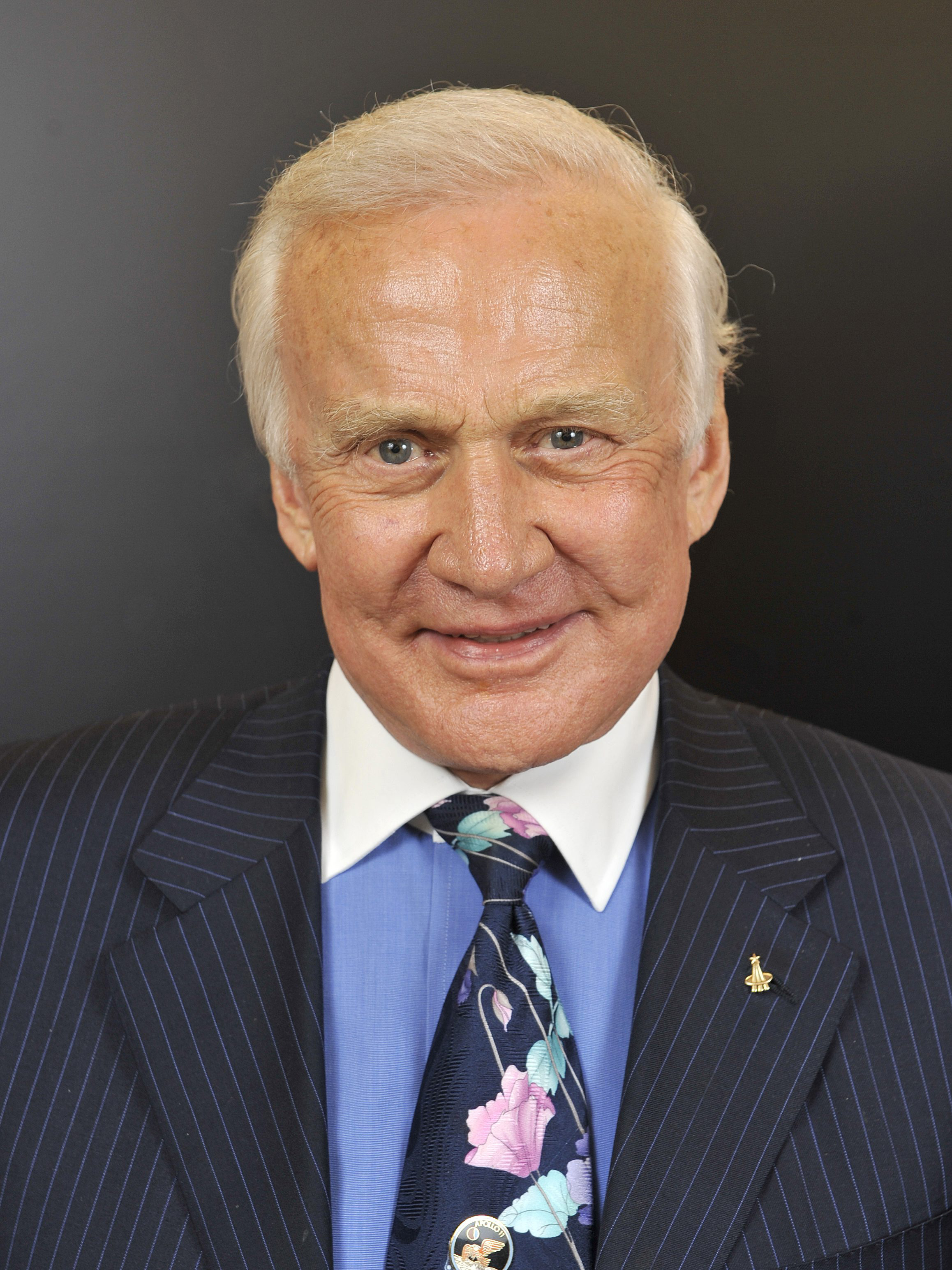
Buzz Aldrin: Space policy, cooperative efforts to Mars and the need to inspire future generations

Buzz Aldrin is a retired US Air Force pilot, a former American astronaut and the second person to walk on the Moon, on July 21, 1969. He was the lunar module pilot on Apollo 11, the first manned lunar landing in history.

A global space ambassador. Courtesy of the Buzz Aldrin Archive

A global space ambassador.
Courtesy of the Buzz Aldrin Archive

Upon returning from the moon, Dr Aldrin was decorated with the Presidential Medal of Freedom, the highest American peacetime award.

Since retiring from NASA and the Air Force, Col Aldrin has remained at the forefront of efforts to progress human space exploration. On November 16, 2011, Dr Aldrin was awarded the Congressional Gold Medal, the nation’s highest civilian honour, along with the other Apollo 11 crew members, Neil Armstrong and Michael Collins, and Mercury Seven astronaut, John Glenn, for their significant contribution to society and exploration.

Dr Aldrin has also written eight books including the New York Times best-selling autobiography, Magnificent Desolation, released in 2009 before the 40th Anniversary of the Apollo 11 moon landing. He has released best-selling illustrated children’s books, two space science-fiction novels and his most recent book Mission to Mars: My Vision for Space Exploration was published by the National Geographic Society in 2013.

“To realize the dream of humans on Mars we need a unified vision. We need to focus on a pathway to the prize.” These were the strident historic words articulated by Buzz Aldrin in July 2009 at the Smithsonian Air and Space Museum’s John Glenn Lecture Series for NASA’s 40th anniversary of the Apollo 11 Moon landing.  Five years on, and having very recently celebrated his 84th birthday, Dr Aldrin’s enthusiasm, ambassadorial work, resolute attitude and ideals are no less subdued.

Exciting developments in space science are coming thick and fast and showing notable progress. It is however, US President Barack Obama’s objective of a manned mission to Mars in his lifetime, preceded by a robotic landing on a real orbiting asteroid, that remains a most ambitious follow on to lunar robotic surface control by the US and the occupation of a jointly designed International Lunar Base.

Continue reading

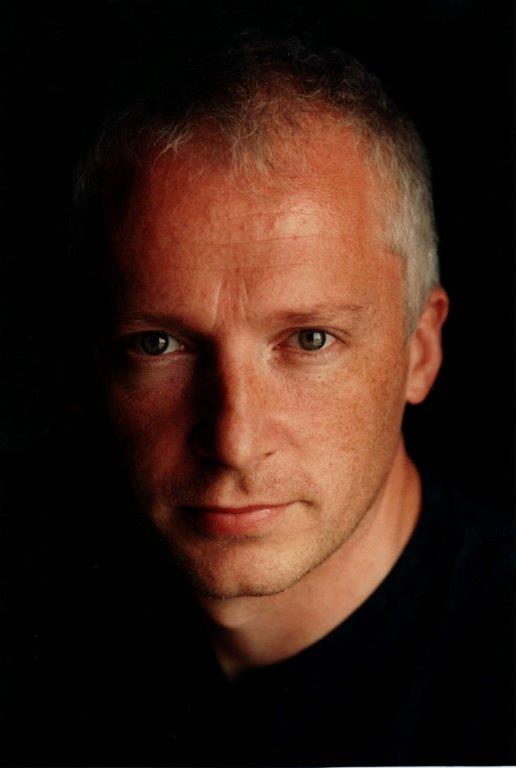
Marcus du Sautoy: Communicating Science within the Sciences and to the Public

Marcus du Sautoy. A passionate advocate for the "wonders of science".

Marcus du Sautoy. A passionate advocate for the “wonders of science”.

Marcus du Sautoy, OBE, is the Simonyi Professor for Public Understanding of Science and a Professor of Mathematics at the University of Oxford. He is known for his efforts in popularizing mathematics and has been named by The Independent on Sunday as one of the UK’s leading scientists. He was a recipient of the London Mathematical Society’s prestigious Berwick Prize in 2001, which is awarded every two years to reward the best mathematical research by a mathematician under forty.

Du Sautoy writes for the Times and the Guardian and has presented numerous television and radio programmes, including The Story of Maths, School of Hard Sums and The Code. He is also the author of many academic articles and books including the best-selling The Music of the Primes and The Num8er My5teries: A Mathematical Odyssey Through Everyday Life.

When mathematician Marcus du Sautoy was appointed the prestigious role of the Simonyi Professor for the Public Understanding of Science at the University of Oxford back in October 2008, he had two distinct priorities looming prominently in his mind.

The job brief was clear in its motives at the time and reflected on the one-hand high-level science, and on the other, the ability to communicate this scientific research widely to a public audience. The latter was the first priority. Stepping into fill the boots of the inaugural holder Richard Dawkins, was by no means an easy feat, but du Sautoy also a Professor of Mathematics at the University of Oxford, took to the role naturally.

“When I took over from Richard, my immediate thoughts were on clearly communicating to the public what was happening in science,” says du Sautoy. “Science has such a big impact on humanity. In order for people to feel empowered and for them to be able to make decisions on where they want science to go and the long lasting effects it has on society, they must first fully understand the surrounding issues.”

The second role of his job, encouraging the communication of science between disciplines within the sciences, is perhaps the most intriguing, in terms of developments. The biggest challenges, du Sautoy says, are the “inbuilt education system” and the “linguistic barriers” across the sciences. “This is a fascinating area where across academia we’re looking to break down the silo mentality which I believe has been prevalent in most universities across the world”, asserts du Sautoy. “This is partly due to the time and hard work we put into our own specialist subject meaning there often isn’t time to see what’s happening in other areas.”

Continue reading