From despair to repair: Empowering communities to restore their oceans

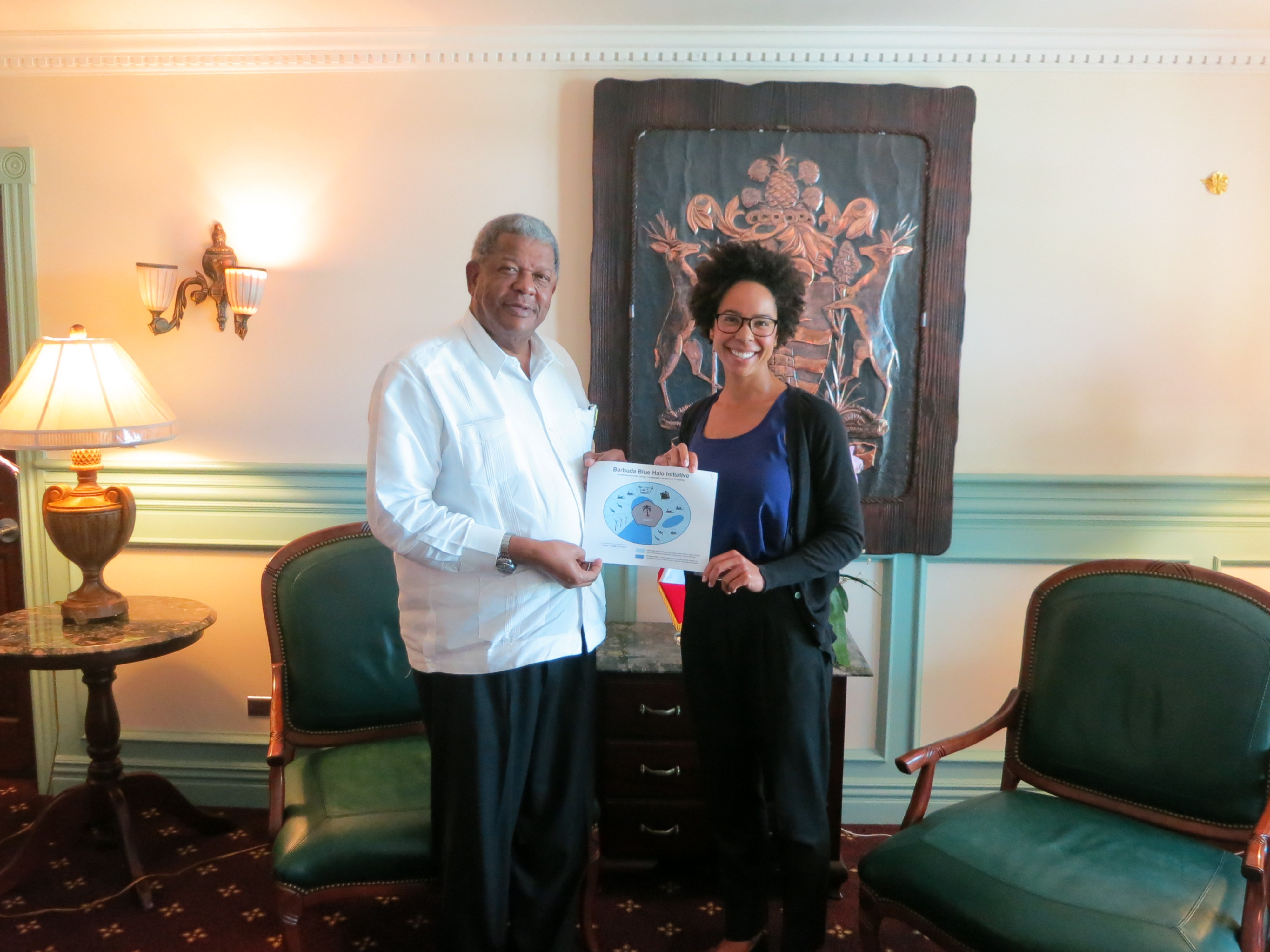
Dr Ayana Elizabeth Johnson with Barbuda Prime Minister, Baldwin Spencer.

Dr Ayana Elizabeth Johnson with then Antigua and Barbuda Prime Minister, Baldwin Spencer. (Image: Waitt Institute)

Dr. Ayana Elizabeth Johnson is a marine biologist and Executive Director of the Waitt Institute. Johnson’s mission is to collect, create, actualize and amplify the best ideas in ocean conservation. Her work has been featured in the New York Times, on her blog for National Geographic, in The Atlantic, and elsewhere. She holds a Ph.D. from Scripps Institution of Oceanography, a BA from Harvard University in Environmental Science and Public Policy, and has worked on ocean policy at both the National Oceanic and Atmospheric Administration (NOAA) and the Environmental Protection Agency (EPA). You can find her talking oceans on Twitter @ayanaeliza

“People used to talk about the size of the fish they caught vertically,” says a perspicacious 15-year-old Curaçaoan holding his hands off the ground at head height. “But now we show fish size horizontally.” As the young man lowers his hands at shoulder width apart to demonstrate this, it is strikingly clear the great fishing catches of old have all but gone in the southern Caribbean Sea.

The vibrantly scenic shores and glistening beaches of this bustling island are in stark contrast with the rather gloomier outlook of the once thriving Caribbean ecosystems that supported local fisheries. Speak to any of the older residents or fishermen on Curaçao and they’ll swear by the unprecedented changes they’ve seen in their oceans in the last half century.

This is a familiar picture across the Caribbean, which is suffering from the same threats of overfishing, climate change, pollution and habitat loss, seen worldwide. In August 2014, the National Oceanic and Atmospheric Administration (NOAA) listed 20 species of coral as threatened under the Endangered Species Act, including five Caribbean species. Projected impacts of global warming and ocean acidification motivated this action, but as marine biologist Ayana Elizabeth Johnson eloquently writes in a New York Times op-ed: “climate change really is only half the story.”

Johnson’s encounter with the young Curaçaoan and his jarringly precocious words struck a chord with her eight years ago, in the midst of her PhD research. Focusing on fisheries management and ecology in the southern Caribbean, she interviewed more than 400 fishermen, scuba divers, and locals in Curaçao and Bonaire, to inquire what major changes they had seen in their oceans.

“It is critical to understand what local people see as the threats to the ocean, as the perceived problems have a huge influence on what the perceived solutions should be,” says Johnson. “Often scientists’ outside perspective can be very different to the local one – and this can lead to disconnect when discussing sustainable policy and solutions.”
Continue reading

UNESCO Regional Chair on Women, Science & Technology, Dr Gloria Bonder, talks women in science and gender equality

“What I would love to see is more qualitative research not on why women can’t and why so few, but who the women are that are successfully developing careers in engineering, technology or sciences.”

In part four of our five features this week celebrating prominent women in science and technology across the world, we speak to Dr Gloria Bonder, the coordinator of the Global Network of UNESCO Chairs on Gender and the UNESCO Regional Chair on Women, Science and Technology in Latin America. She talks about UNESCO’s latest global figures on women in science, changes that need to be made in both policy and education, and the necessity for more qualitative research on the women who are successfully developing careers in engineering, technology and science.

Dr Gloria Bonder is the Director of the Department of Gender, Society and Policies of the Latin American Postgraduate Institute of Social Sciences (FLACSO Argentina). She coordinates two regional programmes including the UNESCO Regional Chair on Women, Science and Technology in Latin America and the e-learning master’s programme on Gender, Society and Public Policies. Bonder is the coordinator of the Global Network of UNESCO Chairs on Gender. Since 2014, she has coordinated the region’s activities in the global GenderInSITE programme, through her role as the UNESCO Regional Chair. The programme aims to influence policies and policy makers in science, technology, innovation and engineering, to integrate gender equality principles and goals.

She is a researcher and consultant on Women, Science and Technology for several national, regional and international organisations such as: Minister of Science and Technology in Argentina, United Nations, Women and Development Unit, ECLAC and the Office of Science and Technology, UNICEF, UNIFEM, UNDP and UNESCO, among others. Bonder has developed several research projects on gender issues and/in technology and science, education, communication, health and youth, and published books and articles both national and international. She is a member of the advisory board of UN Women for Latin America and the Caribbean and WISAT (Women in Global Science and Technology).

“What I would love to see is more qualitative research not on why women can’t and why so few, but who the women are that are successfully developing careers in engineering, technology or sciences,” strongly asserts Gloria Bonder, coordinator of the global network of UNESCO Chairs on Gender and the Regional Chair on Women, Science and Technology in Latin America.  She continues: “We should look at why they chose that career, what their experiences have been so far, and what they like and don’t like, as well as how they overcome obstacles. We must move away from the basic question of why so few.”

Dr Bonder is not one to mix her words lightly. Having worked on gender studies for more than 40 years in science and technology, she has an authoritative voice and is deeply respected across the world. During unstable political times in the mid-1970s in her home country of Argentina, she was the catalyst behind the creation of a women’s study centre, carrying out independent research on different aspects of gender studies. At that time, it was quite the pioneering community and as a result led to the introduction of a postgraduate programme on women’s studies at the University of Buenos Aires, which Bonder was the founding director of between 1987 and 1999.

Fundamental Changes

As we look back at Dr Bonder’s achievements having set up the Gender, Society and Policies Institute in 2001 at FLACSO-Argentina, there is something on her mind that won’t shift. She interjects: “We need to not only attract both women and men to these careers, but make fundamental changes to the workplace culture and promote that both genders share caring responsibilities. If I was young now, would I choose the science and technology subjects that are taught today? No. To go into laboratories or industries  and make a career in such a way that you have to choose between having a family and enjoying other dimensions of your life, or being a successful scientist, is just plain wrong.”

At FLACSO, Bonder has been quite the influential director coordinating regional programmes across Latin America. The institute runs two huge programmes, which consist of the e-learning Master’s Programme on Gender, Society and Public Policies, and working on training and research projects for UNESCO and other organisations, alongside Bonder, in her role as the Regional Chair on Women, Science and Technology in Latin America.

Continue reading

Oreoluwa Somolu: The Nigerian woman empowering young women in Africa to engage with technology

"Lots of the girls who attend the centre have never seen or met a woman who is a computer scientist or engineer, so the prospect of becoming one, is not within the realms of possibility."

“Lots of the girls who attend the centre have never seen or met a woman who is a computer scientist or engineer, so the prospect of becoming one, is not within the realms of possibility.”

In the third of our five features celebrating Ada Lovelace Day and prominent women in science and technology across the world, we speak to Oreoluwa Somolu about empowering young women in Africa to engage with technology and pursue careers in science and technology.

Ada Lovelace Day, marked yesterday across the world, is an annual celebration of the achievements of women in science, technology, engineering and maths (STEM).

Oreoluwa Somolu Lesi is the Founder and Executive Director of the Women’s Technology Empowerment Centre (W.TEC). Somolu worked for several years in the United States at an educational non-for-profit organisation on a number of projects, which explored the interplay between gender and technology and which sought to attract more girls and women to study and work in science and technology-related fields. She has a Bachelors degree in Economics from Essex University, U.K, a Master’s degree in Analysis, Design and Management of Information Systems from the London School of Economics & Political Science and a Certificate in Applied Sciences from Harvard University’s Extension School. Her interests are the applications of technology in improving lifelong learning and also to raise the economic and social conditions of people (especially women and children) in the developing world.

Somolu also has some research experience, which includes working on the Gender Equity in Math and Science (GEMS) project, while working at the Education Development Center in MA, U.S.A from 2001 to 2003. She is a 2014 Vital Voices Lead Fellow, 2013 Ashoka fellow and a recipient of the Anita Borg Change Agent Award for her commitment to issues of women in computing in Nigeria.

It was while volunteering in a downtown Boston community centre and women’s shelter, that Nigerian-born STEM enthusiast Oreoluwa Somolu realised the severe lack of awareness around the benefits of using technology. Every day she would teach women and children from across different parts of the US city how to use computers, answering questions and offering guidance on web design and basic programming. It would often surprise her how “mysterious” computing was to many, but made her fully grasp the profound impacts technology could have on people’s lives.

“I naively expected everyone to be able to use a computer as this was America, but found that to be far from the truth,” remarks Somolu. “It was an eye opener to the real world, where more women and people from ethnic communities considerably lacked computer skills. Some had never turned on a computer before, let alone knew the benefits. It was so empowering to see women return to the centre a few months later to report they had found a job as a result. They had a new found self-confidence.”

Continue reading

Distinguished South African Professor Tebello Nyokong on science, education and innovation

"When I talk to schools or parents, the first thing I say, is let your children touch and explore, it’s the first path to science.” Image courtesy of Ettione

“When I talk to schools or parents, the first thing I say, is let your children touch and explore, it’s the first path to science.” Image courtesy of Ettione

In the first of our five features celebrating Ada Lovelace Day and prominent women in science and technology across the world, we speak to Professor Tebello Nyokong, an internationally renowned Chemist, on African science, education and innovation.

Ada Lovelace Day, which this year takes place on October 14, is an international celebration of the achievements of women in science, technology, engineering and maths (STEM).

Prof Tebello Nyokong holds a DST/NRF professorship in Medicinal chemistry and Nanotechnology at Rhodes University in South Africa.  She is also Director of the DST/Mintek Nanotechnology Innovation Centre (NIC)-Sensors at Rhodes University where she joined in 1992 after lecturing at the University of Lesotho for five years. She has been undertaking research on applications of phthalocyanines in healthcare: as photodynamic therapy (PDT) of cancer agents in combination with nanosized metal nanoparticles and quantum dots. In September 2009, a special motion was passed in the South African National Assembly acknowledging Professor Nyokong’s role in the transformation of science in South Africa. Nyokong has also been award the title of Distinguished Professor at Rhodes University and recognized by the Royal Society in Chemistry/Pan African Chemistry Network as a  Distinguished Woman in  Chemistry. 

“I keep telling people I’m no longer a role model, I’m too old, too straight and not hip enough,” asserts a hysterical Professor Tebello Nyokong in her own typically modest and charismatic demeanour. Of course, her defiance is far removed from the truth. The quick-talking, affable and extremely accommodating distinguished professor is today not only one of the most internationally respected scientists in the world, lauded for her pioneering research into photodynamic therapy for cancer treatment, but is a constant source of inspiration for students across Africa.

Brought up in politically unstable times in her home country of South Africa, she was sent to live with her grandparents in the mountainous terrain of Lesotho. As an eight-year-old, she would work as a shepherd on alternate days from school, learning the traits of a hard day’s shift. It was here where she found “much solace in nature’s beauty” and learned to appreciate the great science around her.

Challenging expectations

Initially dissuaded by her peers to study sciences at school, Nyokong was desperate for a challenge. After three years studying arts and humanities, she realised they had guided her in the wrong direction. “There were no role models to look up to back then. You just learned to follow your peers,” says Nyokong. “They told me science was too hard and way beyond me, but I was adamant I wanted to do it and with two years left switched courses.”

Nyokong pins much of her determination and steely resistance down to her upbringing and this is evident in her unerring enthusiasm for teaching as the director of the Nanotechnology Innovation Centre at Rhodes University in South Africa. “I was brought up to work hard, whether it was as a young shepherd or working long hours mixing cement and concrete for my father’s company. I was just used to touching things,” brims Nyokong. “Now when I talk to schools or parents, the first thing I say, is let your children touch and explore, it’s the first path to science.”

As an influential voice in South African education, she is not afraid to express her fearless views on the teaching of science and believes much needs to be changed. “In South Africa we have this system that constantly strives for 100% pass rates at schools. Many of the teachers themselves find science hard, as very few are trained in teaching the discipline, and therefore under great pressure, they discourage students from courses. It is a deeply flawed system,” notes Nyokong despondently.

“Science is not just part of our culture, it is part of our everyday life, and role models are crucial in promoting this." Image courtesy of Sophie Smith.

“Science is not just part of our culture, it is part of our everyday life, and role models are crucial in promoting this.” Image courtesy of Sophie Smith.

Continue reading

Bill Bryson: A champion of science and science communication

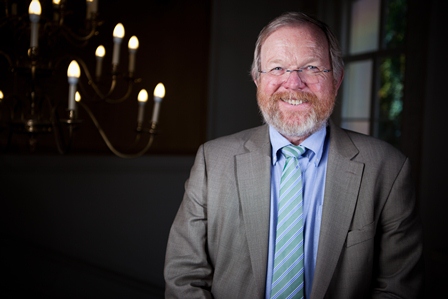
A passionate science advocate: best-selling US author Bill Bryson. Image courtesy of the Royal Society

A passionate science advocate: best-selling US author Bill Bryson. Image courtesy of the Royal Society.

Bill Bryson’s bestselling travel books include The Lost Continent, A Walk in the Woods and Notes from a Small Island, which in a national poll was voted the book that best represents Britain.

His acclaimed book on the history of science, A Short History of Nearly Everything, won the Royal Society’s Aventis Prize as well as the Descartes Prize, the European Union’s highest literary award.

He has written books on language, on Shakespeare, and on his own childhood in the memoir The Life and Times of the Thunderbolt Kid.

His last critically lauded bestseller was At Home: a Short History of Private Life and his most recent book, One Summer: America 1927 chronicles a forgotten summer when America came of age and changed the world for ever.

He was born in the American Midwest, and lives in the UK.

It is over a decade since popular US author Bill Bryson embarked on his eye-opening journey of research for the acclaimed science book ‘A Short History of Nearly Everything’. At that time, he could never have envisaged the popularity and esteem his book would be held in today.

With Bryson’s impeccable wit, charm and honesty, he managed to open up a world of science that was accessible and revealing in equal measure. And yet, in writing the book, Bryson was faced with narrative adjustments and the trepidation of not knowing many of the fields he intended to cover.

Continue reading

Emily Anthes discusses how biotechnology is shaping the future of our furry and feathered friends

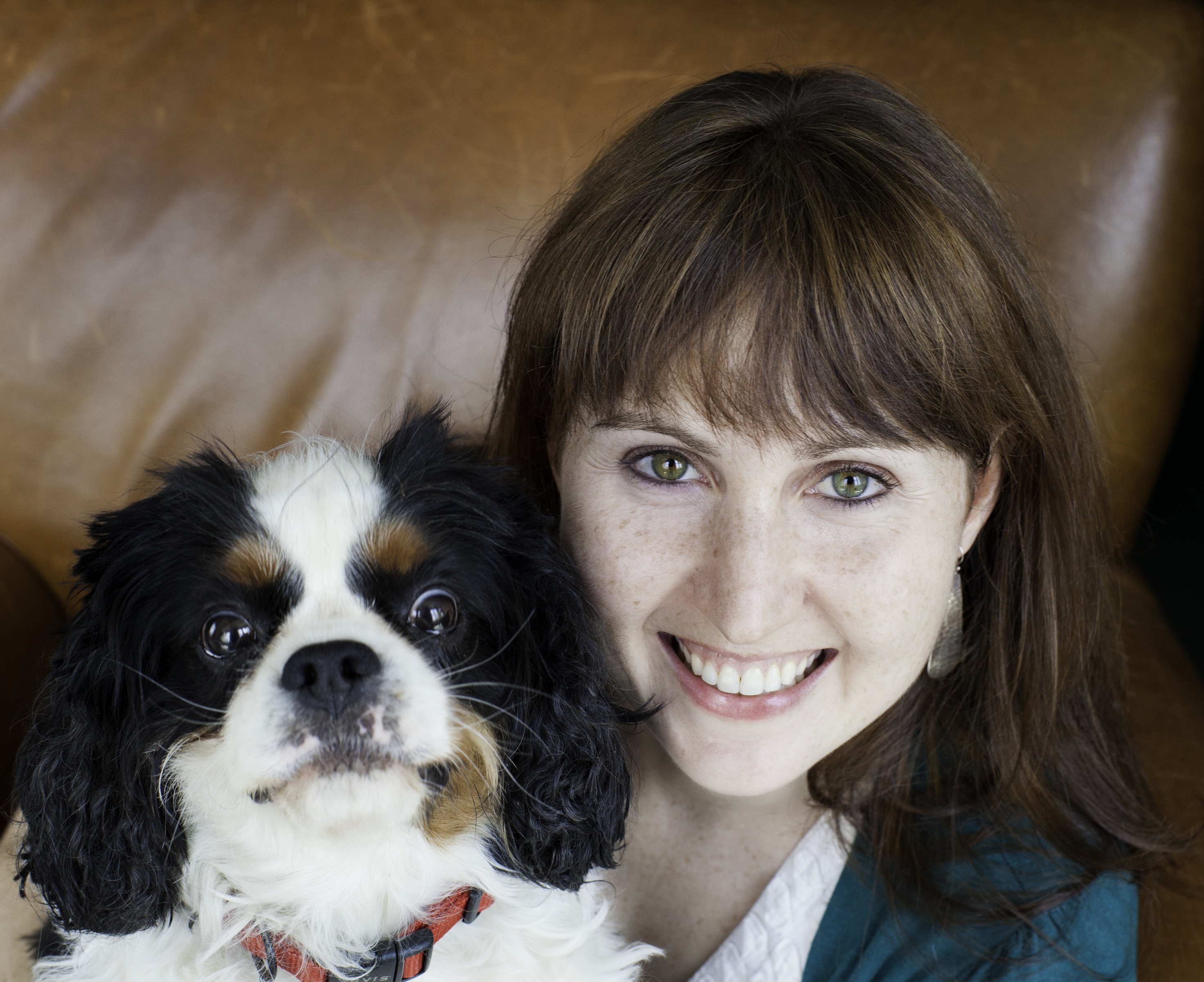
American science journalist and author Emily Anthes with her dog, Milo. Image Courtesy of Nina Subin.

American science journalist and author Emily Anthes with her dog, Milo.
Image Courtesy of Nina Subin.

Emily Anthes is a science journalist and author. Her work has appeared in The New York Times, Wired, Scientific American, Psychology Today, BBC Future, SEED, Discover, Popular Science, Slate, The Boston Globe, and elsewhere.

Her book, Frankenstein’s Cat: Cuddling Up to Biotech’s Brave New Beasts, is out in paperback today published by Scientific American/Farrar, Straus and Giroux. It received the 2014 AAAS/Subaru SB&F Prize for Excellence in Science Books. 

Emily is also the author of the Instant Egghead Guide: The Mind (St. Martin’s Press, 2009).

Her blog post, “When a deaf man has Tourette’s,” was selected for inclusion in The Open Laboratory 2010: The Best of Science Writing on the Web.  

Emily has a master’s degree in science writing from MIT and a bachelor’s degree in the history of science and medicine from Yale, where she also studied creative writing. She lives in Brooklyn, New York with her dog, Milo.

Continue reading

Chief Scientific Adviser to the European Commission discusses evidence-based policy and nurturing and supporting a European scientific culture

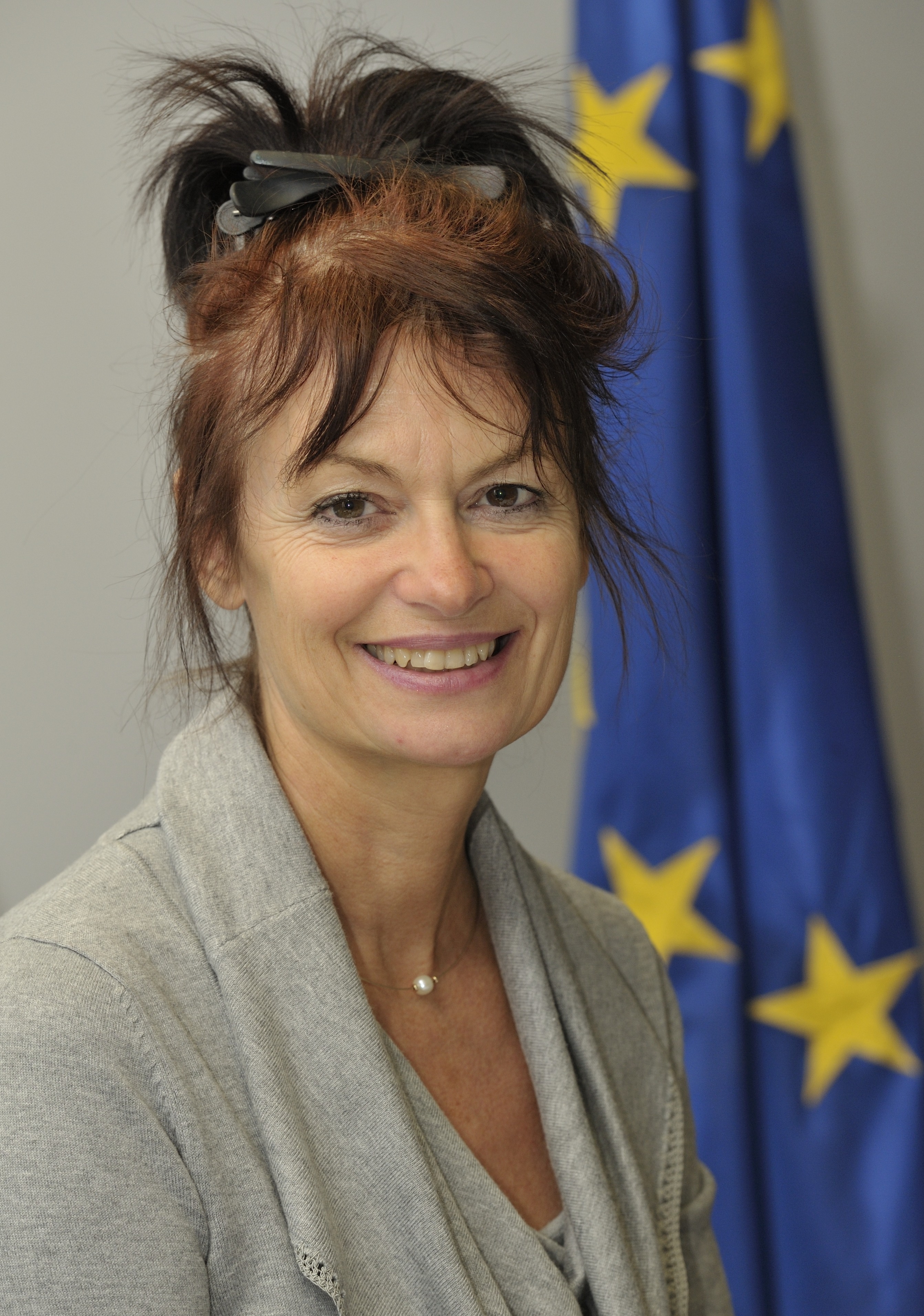
"The policy world very much mirrors what we do in science today."  Image: (c) European Union

“The policy world very much mirrors what we do in science today.” Image: (c) European Union

Professor Anne Glover joined the European Commission as Chief Scientific Adviser to the President in January 2012, and is the first person to hold this position.

In this role she advises the President on any aspect of science and technology, liaises with other science advisory bodies of the Commission, the Member States and beyond, coordinates science and technology foresight, and promotes the European culture of science to a wide audience, conveying the excitement and relevance of science to non-scientists. She also chairs the recently established Science & Technology Advisory Council of the President.

Prior to her current appointment she was Chief Scientific Adviser for Scotland from 2006-2011. Professor Glover currently holds a Personal Chair of Molecular and Cell Biology at the University of Aberdeen. Most of her academic career has been spent at the University of Aberdeen where she has a research group pursuing a variety of areas from microbial diversity to the development and application of whole cell biosensors (biological sensors) for environmental monitoring and investigating how organisms respond to stress at a cellular level.

Professor Glover holds several honorary doctoral degrees and is an elected Fellow of the Royal Society of Edinburgh, the Society of Biology, the Royal Society of Arts and the American Academy of Microbiology. Professor Glover was recognised in March 2008 as a Woman of Outstanding Achievement in the UK and was awarded a CBE for services to Environmental Science in the Queen’s New Years Honours list 2009.

When Professor Anne Glover finished her five-year term as Chief Scientific Adviser for Scotland, the biologist was lauded for not only raising the visibility of science in Scotland and the UK, but for further increasing the role of scientific evidence in the policy-making process.

These fruitful five years led her to the challenging and geographically diverse role of Chief Scientific Adviser to the European Commission (EC), which she leaves after three years in the position, at the end of 2014. As the first ever scientist to be tasked with the responsibility of independently advising politicians and policy-makers governing more than 500m people across 28 member states, this was no easy assignment.

Continue reading

Neil deGrasse Tyson on Cosmos and integrating science in popular culture

"science matters in our lives for us to be better shepherds of not only our civilization, but the world." Image courtesy of Patrick Eccelsine/FOX.

“Science matters in our lives for us to be better shepherds of not only our civilization, but the world.”
Image courtesy of Patrick Eccelsine/FOX.

Neil deGrasse Tyson is the Frederick P. Rose Director of the Hayden Planetarium at the Rose Center for Earth and Space and a research associate in the department of astrophysics at the American Museum of Natural History.

A popular American astrophysicist, author, science communicator and educator, Tyson hosted the science educational show NOVA ScienceNow on PBS for five years. He received a bachelor’s degree in Physics from Harvard University and a doctorate in Astrophysics from Columbia University in 1991. After spending a number of years doing post-doctorate work at Princeton University, Tyson landed a role at the Hayden Planetarium.

He is the author of several best-selling books, including Space Chronicles: Facing the Ultimate Frontier, Death By Black Hole and Other Cosmic Quandaries and the Pluto Files: The Rise and Fall of America’s Favorite Planet. In 2001, US President George W Bush appointed Tyson to the Commission on the Future of the United States Aerospace Industry. He also served another commission three years later to examine US policy on space exploration. In 2004, Tyson was awarded the NASA Distinguished Public Service Medal, the highest civilian honour bestowed by NASA. He also hosts his own podcast and radio show StarTalk.

Cosmos is truly intended for anyone with a beating heart. I haven’t checked recently whether zombies have beating hearts, but if they do – I’ll take them too,” barks Astrophysicist Neil deGrasse Tyson, with exalted hilarity.

Continue reading

Buzz Aldrin: Space policy, cooperative efforts to Mars and the need to inspire future generations

Buzz Aldrin is a retired US Air Force pilot, a former American astronaut and the second person to walk on the Moon, on July 21, 1969. He was the lunar module pilot on Apollo 11, the first manned lunar landing in history.

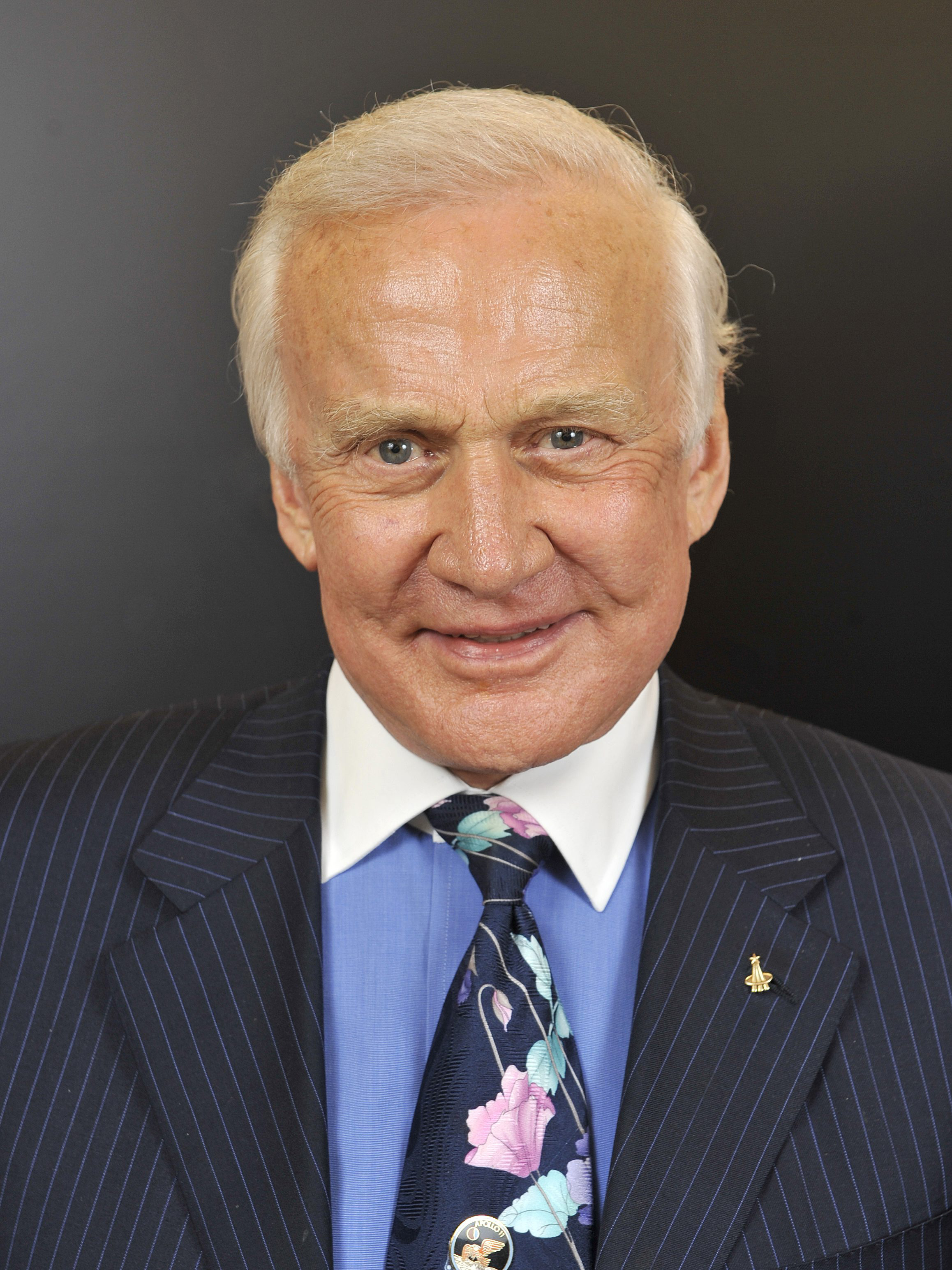
A global space ambassador. Courtesy of the Buzz Aldrin Archive

A global space ambassador.
Courtesy of the Buzz Aldrin Archive

Upon returning from the moon, Dr Aldrin was decorated with the Presidential Medal of Freedom, the highest American peacetime award.

Since retiring from NASA and the Air Force, Col Aldrin has remained at the forefront of efforts to progress human space exploration. On November 16, 2011, Dr Aldrin was awarded the Congressional Gold Medal, the nation’s highest civilian honour, along with the other Apollo 11 crew members, Neil Armstrong and Michael Collins, and Mercury Seven astronaut, John Glenn, for their significant contribution to society and exploration.

Dr Aldrin has also written eight books including the New York Times best-selling autobiography, Magnificent Desolation, released in 2009 before the 40th Anniversary of the Apollo 11 moon landing. He has released best-selling illustrated children’s books, two space science-fiction novels and his most recent book Mission to Mars: My Vision for Space Exploration was published by the National Geographic Society in 2013.

“To realize the dream of humans on Mars we need a unified vision. We need to focus on a pathway to the prize.” These were the strident historic words articulated by Buzz Aldrin in July 2009 at the Smithsonian Air and Space Museum’s John Glenn Lecture Series for NASA’s 40th anniversary of the Apollo 11 Moon landing.  Five years on, and having very recently celebrated his 84th birthday, Dr Aldrin’s enthusiasm, ambassadorial work, resolute attitude and ideals are no less subdued.

Exciting developments in space science are coming thick and fast and showing notable progress. It is however, US President Barack Obama’s objective of a manned mission to Mars in his lifetime, preceded by a robotic landing on a real orbiting asteroid, that remains a most ambitious follow on to lunar robotic surface control by the US and the occupation of a jointly designed International Lunar Base.

Continue reading

Marcus du Sautoy: Communicating Science within the Sciences and to the Public

Marcus du Sautoy. A passionate advocate for the "wonders of science".

Marcus du Sautoy. A passionate advocate for the “wonders of science”.

Marcus du Sautoy, OBE, is the Simonyi Professor for Public Understanding of Science and a Professor of Mathematics at the University of Oxford. He is known for his efforts in popularizing mathematics and has been named by The Independent on Sunday as one of the UK’s leading scientists. He was a recipient of the London Mathematical Society’s prestigious Berwick Prize in 2001, which is awarded every two years to reward the best mathematical research by a mathematician under forty.

Du Sautoy writes for the Times and the Guardian and has presented numerous television and radio programmes, including The Story of Maths, School of Hard Sums and The Code. He is also the author of many academic articles and books including the best-selling The Music of the Primes and The Num8er My5teries: A Mathematical Odyssey Through Everyday Life.

When mathematician Marcus du Sautoy was appointed the prestigious role of the Simonyi Professor for the Public Understanding of Science at the University of Oxford back in October 2008, he had two distinct priorities looming prominently in his mind.

The job brief was clear in its motives at the time and reflected on the one-hand high-level science, and on the other, the ability to communicate this scientific research widely to a public audience. The latter was the first priority. Stepping into fill the boots of the inaugural holder Richard Dawkins, was by no means an easy feat, but du Sautoy also a Professor of Mathematics at the University of Oxford, took to the role naturally.

“When I took over from Richard, my immediate thoughts were on clearly communicating to the public what was happening in science,” says du Sautoy. “Science has such a big impact on humanity. In order for people to feel empowered and for them to be able to make decisions on where they want science to go and the long lasting effects it has on society, they must first fully understand the surrounding issues.”

The second role of his job, encouraging the communication of science between disciplines within the sciences, is perhaps the most intriguing, in terms of developments. The biggest challenges, du Sautoy says, are the “inbuilt education system” and the “linguistic barriers” across the sciences. “This is a fascinating area where across academia we’re looking to break down the silo mentality which I believe has been prevalent in most universities across the world”, asserts du Sautoy. “This is partly due to the time and hard work we put into our own specialist subject meaning there often isn’t time to see what’s happening in other areas.”

Continue reading