Bill Bryson: A champion of science and science communication

A passionate science advocate: best-selling US author Bill Bryson. Image courtesy of the Royal Society

A passionate science advocate: best-selling US author Bill Bryson. Image courtesy of the Royal Society.

Bill Bryson’s bestselling travel books include The Lost Continent, A Walk in the Woods and Notes from a Small Island, which in a national poll was voted the book that best represents Britain.

His acclaimed book on the history of science, A Short History of Nearly Everything, won the Royal Society’s Aventis Prize as well as the Descartes Prize, the European Union’s highest literary award.

He has written books on language, on Shakespeare, and on his own childhood in the memoir The Life and Times of the Thunderbolt Kid.

His last critically lauded bestseller was At Home: a Short History of Private Life and his most recent book, One Summer: America 1927 chronicles a forgotten summer when America came of age and changed the world for ever.

He was born in the American Midwest, and lives in the UK.

It is over a decade since popular US author Bill Bryson embarked on his eye-opening journey of research for the acclaimed science book ‘A Short History of Nearly Everything’. At that time, he could never have envisaged the popularity and esteem his book would be held in today.

With Bryson’s impeccable wit, charm and honesty, he managed to open up a world of science that was accessible and revealing in equal measure. And yet, in writing the book, Bryson was faced with narrative adjustments and the trepidation of not knowing many of the fields he intended to cover.

Continue reading

Emily Anthes discusses how biotechnology is shaping the future of our furry and feathered friends

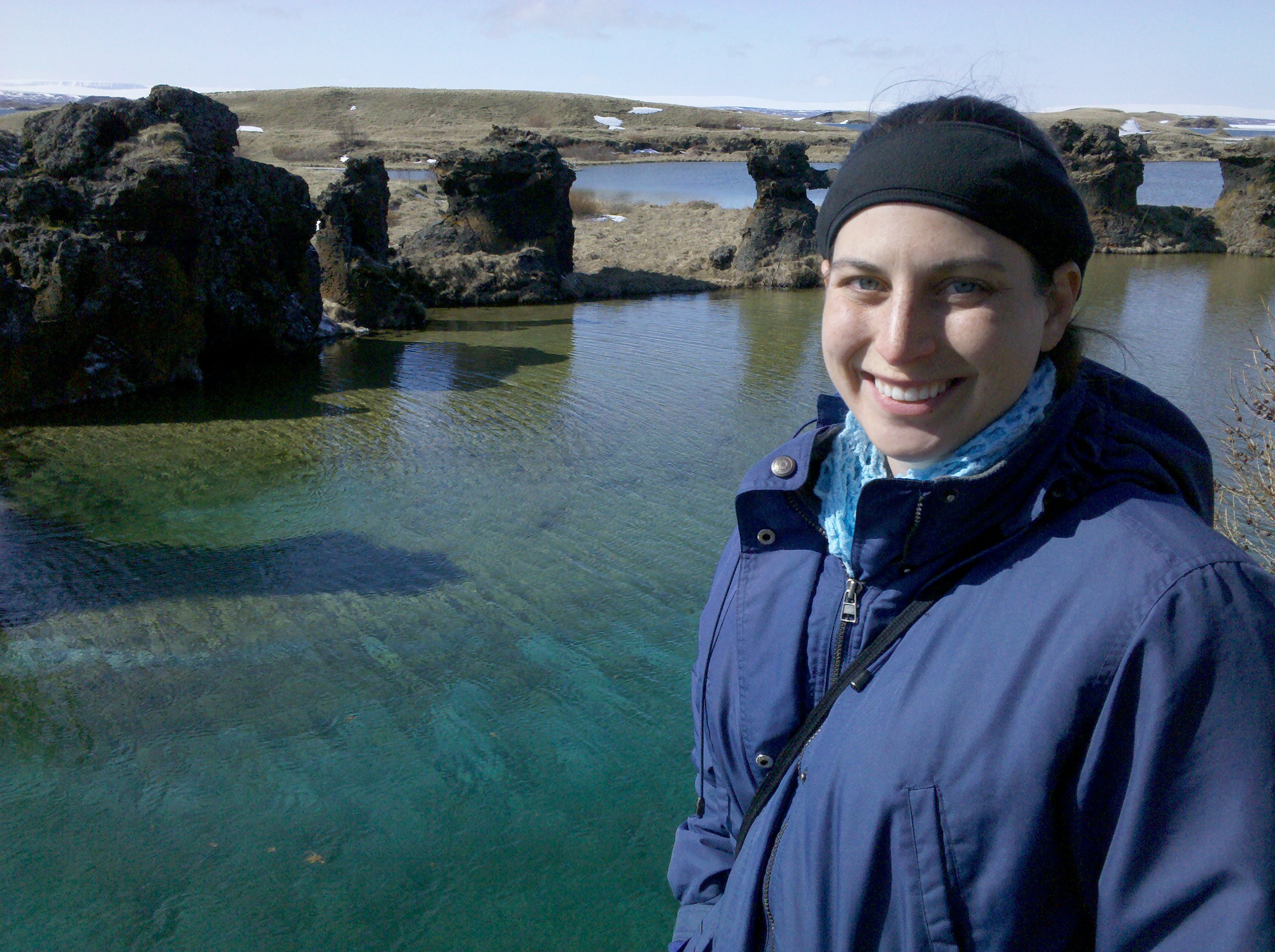
American science journalist and author Emily Anthes with her dog, Milo. Image Courtesy of Nina Subin.

American science journalist and author Emily Anthes with her dog, Milo.
Image Courtesy of Nina Subin.

Emily Anthes is a science journalist and author. Her work has appeared in The New York Times, Wired, Scientific American, Psychology Today, BBC Future, SEED, Discover, Popular Science, Slate, The Boston Globe, and elsewhere.

Her book, Frankenstein’s Cat: Cuddling Up to Biotech’s Brave New Beasts, is out in paperback today published by Scientific American/Farrar, Straus and Giroux. It received the 2014 AAAS/Subaru SB&F Prize for Excellence in Science Books. 

Emily is also the author of the Instant Egghead Guide: The Mind (St. Martin’s Press, 2009).

Her blog post, “When a deaf man has Tourette’s,” was selected for inclusion in The Open Laboratory 2010: The Best of Science Writing on the Web.  

Emily has a master’s degree in science writing from MIT and a bachelor’s degree in the history of science and medicine from Yale, where she also studied creative writing. She lives in Brooklyn, New York with her dog, Milo.

Continue reading

Buzz Aldrin: Space policy, cooperative efforts to Mars and the need to inspire future generations

Buzz Aldrin is a retired US Air Force pilot, a former American astronaut and the second person to walk on the Moon, on July 21, 1969. He was the lunar module pilot on Apollo 11, the first manned lunar landing in history.

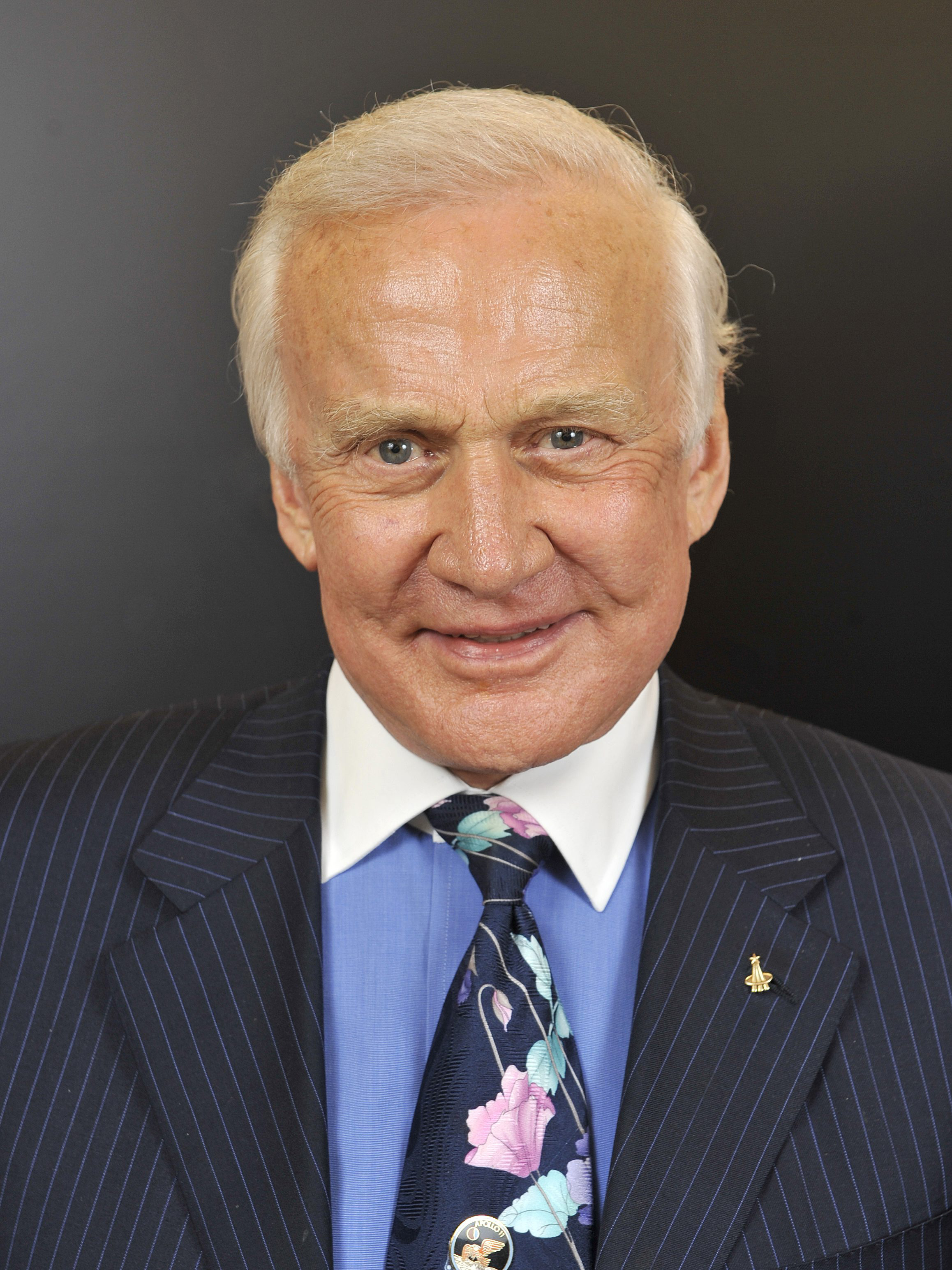
A global space ambassador. Courtesy of the Buzz Aldrin Archive

A global space ambassador.
Courtesy of the Buzz Aldrin Archive

Upon returning from the moon, Dr Aldrin was decorated with the Presidential Medal of Freedom, the highest American peacetime award.

Since retiring from NASA and the Air Force, Col Aldrin has remained at the forefront of efforts to progress human space exploration. On November 16, 2011, Dr Aldrin was awarded the Congressional Gold Medal, the nation’s highest civilian honour, along with the other Apollo 11 crew members, Neil Armstrong and Michael Collins, and Mercury Seven astronaut, John Glenn, for their significant contribution to society and exploration.

Dr Aldrin has also written eight books including the New York Times best-selling autobiography, Magnificent Desolation, released in 2009 before the 40th Anniversary of the Apollo 11 moon landing. He has released best-selling illustrated children’s books, two space science-fiction novels and his most recent book Mission to Mars: My Vision for Space Exploration was published by the National Geographic Society in 2013.

“To realize the dream of humans on Mars we need a unified vision. We need to focus on a pathway to the prize.” These were the strident historic words articulated by Buzz Aldrin in July 2009 at the Smithsonian Air and Space Museum’s John Glenn Lecture Series for NASA’s 40th anniversary of the Apollo 11 Moon landing.  Five years on, and having very recently celebrated his 84th birthday, Dr Aldrin’s enthusiasm, ambassadorial work, resolute attitude and ideals are no less subdued.

Exciting developments in space science are coming thick and fast and showing notable progress. It is however, US President Barack Obama’s objective of a manned mission to Mars in his lifetime, preceded by a robotic landing on a real orbiting asteroid, that remains a most ambitious follow on to lunar robotic surface control by the US and the occupation of a jointly designed International Lunar Base.

Continue reading

HEAVY DEBT

Gordon-ChaplinGordon Chaplin was a journalist in the Saigon bureau of Newsweek and at Bangkok World, the Baltimore Sun, and the Washington Post. He has also worked in sea conservation with the group Niparaja and since 2003 has been a research associate at the Academy of Natural Sciences in Philadelphia. He is the author of several books, including Dark Wind: A Survivor’s Tale of Love and Loss. He lives with his wife and daughter in New York City and Hebron, New York, where they run a grass-fed beef operation. Gordon is the author of FULL FATHOM FIVE: Ocean Warming and a Father’s Legacy

Returning to one’s childhood is a fraught exercise on many levels. What if your sacred memories turn out to be false or faulty? What if you yourself have changed too much to fit back in? And scariest of all, what if the place you’re returning to no longer exists?

I grew up in the Bahamas in the fifties and sixties, helping my ichthyologist father collect and study fishes for his monumental scientific text, Fishes of the Bahamas and Adjacent Tropical Waters. In many ways the book was my sibling. I knew the reefs as well as the rooms in our home, and the fishes that lived in them were my peers. Continue reading

Show, Don’t Tell: Covering the Human Side of Research

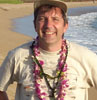
Thumb_Dan_Drollette_HawaiiDan Drollette Jr is the author of “Gold Rush in the Jungle: The Race to Discover and Defend the Rarest Animals of Vietnam’s ‘Lost World,’ ” and held a Fulbright Postgraduate Traveling Fellowship to Australia. He has written for publications ranging from Australian Geographic and Scientific American to the BBC’s “Future” column, and was most recently the editor of CERN’s online computing magazine, International Science Grid This Week.  You can also check out his TEDx Talk in Frankfurt, Germany, on the behind-the-scenes story of the making of the book here.

I recently discovered one of the most thrilling – and terrifying – parts of getting a book published by a traditional, large, old-line print house: reading the reviews.

Most of the time they contain good and thoughtful insights about the thing you have sweated over for years. On rare occasions, you wonder how in the world the reviewer ever came up with their conclusions. Rarer still, sometimes a reviewer really connects with the content on a profoundly deep level, to the point where you want to stand up, cheer, and shout aloud “That’s why I did this!” Continue reading

Why We Need Science Communication

Emily Coren is a science illustrator in California. She has a BS in Ecology and Evolutionary Biology from UC-Santa Cruz that led to a position making transgenic butterflies at SUNY Buffalo. She graduated from the UC Santa Cruz Program in Science Illustration and drew bugs, plants and dinosaur bones at the Smithsonian Institution’s Museum of Natural History and developed educational content for Walden Media in Los Angeles. Her goal as a science illustrator has always been to use popular media to make science accessible to people with non-science backgrounds.  Her current project for connecting is WalkaboutEm.com and she can be found on Twitter as @emilycoren.

I’ve attended several meetings this past year and when I talk with other science communicators, there are certain sources that keep coming up in conversation. I’d like to share with you some of the resources that describe and inform the theory and practice of science communication and have helped shape my perception of the work that I do.  I’m amazed at how new this information is to many of my peers in both science and science communication and I hope you will find the references as interesting and helpful as I did. Continue reading

Nature’s man – remembering Sir John Maddox in the Oxford Dictionary of National Biography

Dr Lawrence Goldman is Editor of the Oxford Dictionary of National Biography—based at Oxford University, UK—and fellow and tutor in history at St Peter’s College, Oxford, where he teaches modern British and American history.

The latest edition of the Oxford Dictionary of National Biography, published on 3 January 2013, includes the lives of 225 notable figures from British national life who died in 2009. Of these more than 30 are men and women principally remembered for their contribution to modern scientific and medical enquiry. They include Sir John Maddox who was twice editor of Nature between 1966 and 1975 and then again from 1980 to 1995. The outstanding science journalist of his generation, Maddox reversed the fortunes of the journal which, on his arrival, was in some disarray. Under his editorship Nature regained its reputation as one of the world’s most important scientific journals, as it had been when founded in 1869. Maddox’s biography for the Oxford DNB has been written by John Gribbin, one of his early employees and colleagues at Nature.

Sir John Maddox and Nature

Maddox was born in 1925 at Penllergaer, near Swansea, the son of a furnaceman in a tinplate mill. Attending Gowerton Boys’ County (Grammar) School, he won a scholarship to read chemistry at Christ Church, Oxford. He then studied physics at King’s College, London, and lectured in the subject at Manchester University before taking up a post as science correspondent for the Manchester Guardian in 1955. Continue reading

It Sounds Almost Like Stereo: Elizabeth Bass on Improvisational Acting with Scientists

Marc Kuchner is the author of Marketing for Scientists, an astrophysicist at NASA’s Goddard Space Flight Center and a country songwriter. He is the co-inventor of the band-limited coronagraph, a tool for finding planets around other stars that will be part of the James Webb Space Telescope. He is also known for his work on planets with exotic chemistries: ocean planets, helium planets, and carbon planets. Kuchner received his bachelor’s degree in physics from Harvard and his Ph.D. in astronomy from Caltech. He was awarded the 2009 SPIE early career achievement award for his work on planet hunting. He has contributed to more than 100 research papers and published articles in journals including the Astrophysical Journal, Nature, and Astrobiology. He appears as an expert commentator in the Emmy nominated National Geographic television show “Alien Earths” and frequently writes articles in Astronomy Magazine. For more career tips for scientists, go to www.marketingforscientists.com. You can also follow Marc on Twitter @marckuchner.

Elizabeth Bass’s job title doesn’t sound odd; she is the director of the Center for Communicating Science at Stony Brook University.  But what she does may strike you as challenging to say the least.  Founded in 2009 at the urging of Alan Alda, the Center for Communicating Science helps scientists become better communicators using, among other things, exercises in improvisational acting. Continue reading

Why is the Higgs Boson Called the ‘God Particle’?

Jim Baggott is author of Higgs: The Invention and Discovery of the ‘God Particle’ and a freelance science writer. He was a lecturer in chemistry at the University of Reading but left to pursue a business career, where he first worked with Shell International Petroleum Company and then as an independent business consultant and trainer. His many books include Atomic: The First War of Physics (Icon, 2009), Beyond Measure: Modern Physics, Philosophy and the Meaning of Quantum Theory (OUP, 2003), A Beginner’s Guide to Reality (Penguin, 2005), and A Quantum Story: A History in 40 Moments (OUP, 2010).

Read his collection of blog posts, celebrating the launch of his new book, over at the OUPblog. 

On 4th July 2012, scientists at CERN’s Large Hadron Collider (LHC) facility in Geneva announced the discovery of a new elementary particle they believe is consistent with the long-sought Higgs boson, also known as the ‘God Particle’. Our understanding of the fundamental nature of matter – everything in our visible universe and everything we are – is about to take a giant leap forward.

So, what is the Higgs boson and why is it called the ‘God Particle’? Science writer Jim Baggott, whose book Higgs: the Invention and Discovery of the ‘God Particle’, provides some of these answers. Continue reading

Prize Fight: The Race and the Rivalry to be the First in Science

Morton A. Meyers, MD is Distinguished University Professor and emeritus chair of the Department of Radiology in the School of Medicine SUNY, Stony Brook. He is the author of the seminal textbook on abdominal radiology (now in its sixth edition) that has been translated into Spanish, Italian, Japanese, Chinese, and Portuguese editions. He is also the founding editor in chief of the international journal Abdominal Imaging.  The author of award-winning Happy Accidents: Serendipity in Modern Medical Breakthroughs, he lives in Stonybrook, New York.

Continue reading