Comparing planets: could there be life on Mars?

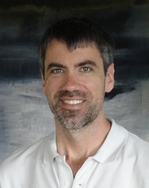
David Rothery is a geologist and planetary scientist at the Open University.  He chairs the Open University’s level 2 module on planetary science and is a leading member of the science team for BepiColombo, Europe’s forthcoming orbital mission to Mercury. His books include Planets: A Very Short Introduction, Geology: the Key Ideas, and Teach Yourself Volcanoes, Earthquakes and Tsunamis. Cross posted with permission from OUPblog. 

I’ve seen proud posts on the internet from people who saw five planets with the naked eye this Spring. Venus and Jupiter could hardly be missed in the west after sunset, though Mercury was more elusive as it never strays very far from the Sun and is smaller and fainter. Later in the evening Mars and then Saturn have been rising high in the east. Continue reading →

The Ethics of Transplants – Why Careless Thought Costs Lives

Janet Radcliffe Richards  is Professor of Practical Philosophy at the University of Oxford, and Distinguished Research Fellow at the Oxford Uehiro Centre for Practical Ethics.  Earlier, she was Lecturer in Philosophy at the Open University, and then Director of the Centre for Bioethics in the medical school at University College London.  She is a philosopher who originally specialized in metaphysics and philosophy of science, but has now for many years concentrated on the practical applications of philosophy, and is the author of The Sceptical Feminist (1980) and Human Nature after Darwin (2000).  She was drawn into transplant ethics some time ago when a short newspaper article of hers was picked up by transplant surgeons, and she has since been a frequent speaker at transplant conferences around the world.   “The Ethics of Transplants: why careless thought costs lives” was published in the UK in March 2012. Continue reading →

Open Season

Misha Angrist is the author of Here is a Human Being: At the Dawn of Personal Genomics (HarperCollins), now out in paperback. He teaches at Duke University and blogs at blogs.plos.org/genomeboy.

Us…and Them

And after all we’re only ordinary men.

Roger Waters

As a graduate student, I studied the genetics of Hirschsprung disease, a congenital disorder of the nervous system in the gut (and, as I describe in my book, a disease that would affect my own family many years later). Among the things I found to be most gratifying (and yes, occasionally frustrating) in my doctoral studies were the interactions with Hirschsprung patients and families. We students had pledged our fealty to Science writ large, yes, but we weren’t studying roundworms or fruit flies. Our “subjects” (a descriptor of research participants that, in my opinion, is condescending and should be retired ASAP) were thinking feeling human beings. If we found a highly penetrant mutation in their DNA, it had the potential to alter their reproductive decisions and their lives. It meant something to them.

But even if it didn’t, shouldn’t life scientists-in-training, especially those whose model organism is Homo sapiens, have some sort of mandatory exposure to, you know, life? Should there not be some inevitable, meaningful exchange between researcher and researchee?

Increasingly, community members are beginning to assert this right in various ways: Open Science, PatientsLikeMe, the Society for Participatory Medicine and the Sage Bionetworks Commons are just a few manifestations. The recent ScienceOnline meeting, which embodies the same sort of grassroots ethos, is my favorite science gathering for exactly that reason.

But of course participants in these endeavors are self-selected. How do we reify their approaches on a massive scale? Virally spreading the word, certainly. But it will also require bravery and iconoclasm. Recently I read The Cure, Geeta Anand’s heartbreaking 2006 book about John Crowley’s tireless struggle in the early 2000s to get a treatment developed for his kids, two of whom have the devastating lysosomal storage disorder Pompe disease (the book was the basis for the movie Extraordinary Measures). At one point Crowley is trying to impress upon members of the drug development team at Genzyme the urgency of their task. He organizes a “Pompe Summit,” to which the 200 employees working on the disease are invited, as are patients and their families. “How many of you have ever met a patient?” he asks the Genzymers. Only a handful of hands go up. Even the doc leading the company’s Pompe trial had never met a patient.  Imagine an automotive design engineer never having driven a car. Extraordinary measures indeed.

Continue reading →

The Poisoner’s Guide to Story Telling

Deborah Blum is a Pulitzer-Prize winning science writer and the author of five books, most recently The New York Times best seller, The Poisoner’s Handbook: Murder and the Birth of Forensic Medicine in Jazz Age New York.  She also writes for publications ranging from The Wall Street Journal to Lapham’s Quarterly and blogs about chemistry, culture (and the occasional murder) for the Public Library of Science at Speakeasy Science, blogs.plos.org/speakeasyscience.  She is the Helen Firstbrook Franklin Professor of Journalism at University of Wisconsin-Madison.

So let me tell you the story of a suspected murder, a real one, the irresistibly tragic tale of a beautiful young actress of early 20th century Hollywood, the adventure-loving heroine of one successful film after another: Madcap Madge, The Flapper, and – what would turn out to be her last picture – Everybody’s Sweetheart.

The actress, Olive Thomas, had the look of a charming child, with a shining bob of dark, curly hair, big violet-blue eyes, and a pale, heart-shaped face. It was a look that launched her career, starting in 1914 when she’d won a “Most Beautiful Girl in New York City contest.” And it launched her marriage to a member of Hollywood’s inner circle, Jack Pickford – younger brother of screen star Mary Pickford.

The couple rapidly developed a reputation for wild behavior, intense partying, intense quarreling, usually over his numerous side affairs – he’d developed syphilis as a result of one of them.  They separated, reunited, separated, tried again, delighting the gossip magazines. In early September 1920, the couple flew to Paris, reportedly on a reconciliation holiday. They checked into the Hotel Ritz and whirled off to enjoy time in a Prohibition-free city. At the end one particularly drunken spree, Pickford and Thomas staggered into their hotel room at nearly three in the morning.  As Pickford told the police, he was floating in a whiskeyed haze, when Olive began screaming, over and over, “Oh my God, my God.”

He stumbled into the dimly lit bathroom, where she was leaning against the counter. Mistaking it for her sleeping medicine, she had picked up a bottle of the bichloride of mercury potion that he rubbed on the painful sores caused by syphilis, poured a dose, and chugged it down. As the corrosive sublimate burned down her throat, she had a moment to realize her mistake. He caught her up and carried her back to the bed, grabbing the phone and calling for an ambulance. “Oh my God,” she repeated, “I’m poisoned.”

And it’s at this point, that I hope I’ve gotten you caught up in the story so that you’ll continue read on as I pause to tell you something about the poisonous element mercury – its history, its chemistry, its use in everything from thermometers to medications, it’s rather insidious poisonous effects. The fact that it’s most dangerous when part of a chemical compound, such as the bichloride of mercury (HgCl2) which makes it far more easily absorbed than in its pure, slippery and self-contained, state.

I might even tell you that by the time of the Olive Thomas test, toxicologists had developed tests sensitive enough to detect the poison in human tissues from exposures as small as .005 of a grain of mercury bichloride. And I’d even tell you about how those tests worked, the way chemists would use a deft mixture of heat, acid, and vapor to coax mercury from a tissue sample to form a thin gleaming deposit on a copper probe. And all of that would lead you back to the question of how Olive Thomas died and whether it was, as her husband insisted, an accident.

Or at least that’s what I did in my book, The Poisoner’s Handbook: Murder and the Birth of Forensic Medicine in Jazz Age New York, although at far greater length. The idea is to weave science through the story well enough that it’s just part of the story. A little devious, you’re thinking. I do tell stories of science more directly, for instance in a story on chemical communication in Scientific American last fall, or in my blog on chemistry and culture, Speakeasy Science. But in my last book, I wasn’t thinking so much about the already science literate audience. I was wondering about the outer circle, about whether  if I could spin a good enough story that people who don’t love chemistry at all would read the book anyway.

In fact, as my non-fiction story is set in the time period that the mystery novelist Agatha Christie started her career (debuting in 1920 with a strychnine-focused tale, The Mysterious Affair at Styles); it was Christie who I hoped to channel when writing about two crusading scientists in the early days of forensic toxicology.  I won’t tell you I pulled it off perfectly but I can tell you that The Poisoner’s Handbook was a finalist for a non-fiction Agatha award, given to favorite books of murder mystery readers. And that I talked about chemistry and poison at the annual conference of mystery writers, Malice Domestic, last spring. And that I was the only science writer in attendance.

I sometimes think of this more subtle weaving of science into a story as a kind of subversive education.  And I think it matters.  Because the audience, the one beyond the inner circle of the science literate,  matters. If we believe what we say – that science communication is important because it helps us build a community with greater understanding of research  – then we need to be creative in the ways we reach far and wide into that community. We need to care about the science disenfranchised as well as the science savvy. I don’t suggest this is the only goal of science communication or that my approach is right for every story or every book. But I will tell you that I hear from some surprising readers, mostly recently a 5th grade boy. I like connecting with that diverse audience. And that I think experimenting with telling science stories has made me better at what I do.

Or so I hope. But, as they say, enough about me.

The stricken actress lingered in the hospital for three more days after she swallowed bichloride of mercury. And during those days, the newspapers repeated every rumor smoking around them – his infidelities had driven her to suicide; Pickford had wished to get rid of her and tricked his wife into taking the poison; as the days passed, he became more evil, she more saintly. So many people flocked to Thomas’s funeral in Paris that women fainted in the crush and the streets became carpeted with countless hats, knocked off and trampled.

The police launched an investigation, including an autopsy, and concluded that it was, as Pickford had said, just a terrible accident. In an interview, with The Los Angeles Examiner, after his return to California, Pickford couldn’t stop dwelling on how much his wife had wanted to live: “The physicians held out hope for her until the last moment, until they found her kidneys paralyzed. Then they lost hope. But the doctors told me she had fought harder than any patient they ever had.”

Not the happiest of conclusions.  And it was not one that laid to rest all the doubts and whispers about Pickford. It may be one reason why he faded away as a Hollywood star. But then it’s real life with all its imperfections, not a mystery novel. And if my subversive plan worked here you read until I reached that conclusion.


The periodic table: matter matters

Cross-posted with permission of OUPblog.

eric.bmp

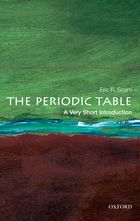
Eric Scerri is a chemist and philosopher of science, author and speaker. He is a lecturer in chemistry, as well as history and philosophy of science, at UCLA in Los Angeles. He is the author of several books including The Periodic Table, Its Story and Its Significance, Collected Papers on the Philosophy of Chemistry and Selected Papers on the Periodic Table. His latest book, The Periodic Table: A Very Short Introduction, is published this week.

As far back as I can remember, I have always liked sorting and classifying things. As a boy I was an avid stamp collector. I would sort my stamps into countries, particular sets, then arrange them in order of increasing monetary value shown on the face of the stamp. I would go to great lengths to select the best possible copy of any stamp that I had several versions of. It’s not altogether surprising that I have therefore ended up doing research and writing books on what is perhaps the finest example of a scientific system of classification – the periodic table of the elements. Following degrees in chemistry I wrote a PhD thesis in the history and philosophy of science and specialised in the question of whether chemistry has been explained by quantum mechanics. A large part of this work dealt with the periodic table, the explanation of which is considered as one of the major triumphs of quantum theory, and the notion of atomic orbitals.

As I often mention in public lectures, it is curious that the great 20th century physicist, Ernest Rutherford, looked down on chemistry and compared it to stamp collecting. But we chemists had the last laugh since Rutherford was awarded the Nobel Prize for chemistry and not for his beloved field of physics.

periodictable.jpg

In 2007 I published a book called The Periodic Table, Its Story and Its Significance, which people tell me has become the definitive book on the subject. More recently I was asked to write a Very Short Introduction to the subject, which I have now completed. Although I first thought this would be a relatively easy matter it turned out not to be. I had to rethink almost everything contained in the earlier book, respond to comments from reviewers and had to deal with some new areas which I had not developed fully enough in the earlier book. One of these areas is the exploration of elements beyond uranium or element number 92, all of which are of a synthetic nature.

At the same time, there has been a veritable explosion of interest in the elements and the periodic table especially in the popular imagination. There have been i-Pad applications, YouTube videos, two highly successful popular books, people singing Tom Leher’s element song in various settings as well as artists and advertisers helping themselves to the elegance and beauty of the periodic table. On the scientific side, elements continue to be discovered or more precisely synthesised and there are official deliberations concerning how the recently discovered elements should be named.

table.jpg

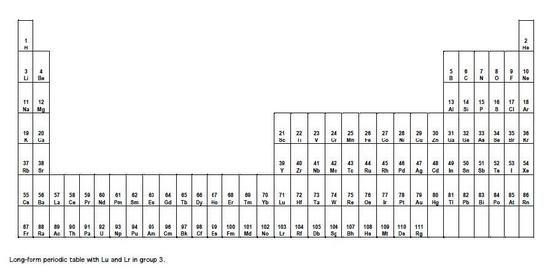
On November 4th The International Union for Pure and Applied Physics (IUPAP) officially announced that elements 110, 111 and 112 are to be known officially as darmstadtium (Ds), roentgenium (Rg) and copernicium (Cn). The names come from the German city of Darmstadt where several new elements have been artificially created; Wilhelm Konrad Roentgenm, the discoverer of X-rays; and the astronomer Nicholas Copernicus who was one of the first to propose the heliocentric model of the solar system. Of the three names it is the last one that has caused the most controversy. Apart from honouring a great scientist it was chosen because the structure of the atom broadly speaking resembles that of a miniature solar system in which the nucleus plays the role of the sun and the electrons behave as the planets do, an idea that originated with the work of Rutherford incidentally. Except that electrons don’t quite orbit the nucleus. One of the major discoveries to emerge from the application of quantum mechanics to the study of the atom has been the realisation that electrons do not follow planetary-like orbits around the nucleus. The electrons behave as much as diffuse waves as they do as particles, and as such they exist everywhere at once within so-called orbitals. The change in wording from ‘orbit’ to ‘orbital’ is a little unfortunate since it does not begin to convey the enormous conceptual change from Rutherford’s solar system model to the quantum model.

Another controversial aspect of all the synthetic elements, that lie beyond the old boundaries of the periodic table, or elements 1 to 92, is that they are radioactive and mostly very short lived which leads most people to think that making them is an enormous waste of time and resources. But such a view is a little short sighted. Some of these elements have found important applications. Take element 95 or americium for example. It has managed to find its way into every modern household as a vital component of smoke detectors.

Or consider the element technetium, which has a far lower atomic number of 43 but which was first discovered in Palermo, Sicily in 1937 after being artificially created in a cyclotron machine in Berkeley, California. Over the subsequent years technetium has found its way into every major hospital in the world and is used in a plethora of medical scanning procedures as well as for treating various medical conditions. It was later found that technetium occurs naturally on earth but in absolutely minute amounts. This happens because technetium is a bi-product of the natural decay of uranium and also because it is a bi-product in the operation of nuclear reactors. The second of these sources provides macroscopic amounts of technetium, which allow scientists to study the chemistry of the element in great detail and to make many new and medically useful compounds. There have been entire conferences devoted to the chemistry and uses of technetium.

Nobody has yet found the means of producing macroscopic amounts of the most recently named elements, and they probably won’t, but their formation provides chemists and physicists with an excellent opportunity to refine theories on nuclei and atoms and new techniques with which to experiment upon them. Almost of matter is made of the elements and that’s why the elements really matter to us, even the more exotic ones.

Why We Need A New Economics

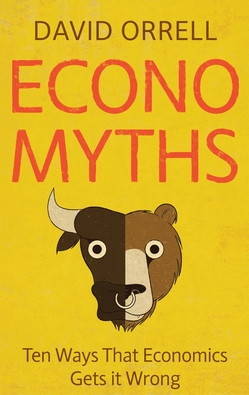
david.JPGThis week’s guest blogger is David Orrell, an author, founder of Systems Forecasting, and an Honorary Visiting Research Scholar at the Smith School of Enterprise and the Environment in Oxford. The UK Kindle edition of Economyths is available for a limited time at the highly economical price of 99p.

In January 2009, in the immediate aftermath of the credit crunch, the physicist and hedge fund manager J.P. Bouchaud wrote in the pages of Nature that Economics needs a scientific revolution.

Economyths is an attempt to spell out what such a revolution might look like, and document the exciting developments taking place in economics.

It too is written from an outsider perspective – that of an applied mathematician, working mostly in the area of computational biology. Many of the techniques used in that field, such as network theory and agent-based modelling, are beginning to find widespread applications in economics. But the assumptions they are based on are completely different from those of mainstream economics.

Consider for example the idea that the “invisible hand” of the marketplace drives prices to an optimal equilibrium. This idea is usually attributed to Adam Smith, though as the Czech economist Tomas Sedlacek argues it actually goes back much further.

In the 19th century, neoclassical economists such as William Stanley Jevons and Léon Walras attempted to demonstrate this principle mathematically, based on the idea of Homo economicus, or rational economic man. In the 1950s, economists finally managed to prove that markets would indeed reach a Pareto-optimal equilibrium. But to do so, they had to make numerous assumptions – including rational utility-maximising behaviour, coupled with perfect information, and infinite computational capacity.

Economyths front cover.JPG

In the 1960s, efficient market theory was proposed as an explanation for why the economy was impossible to predict. Again, it assumed that market participants were rational and acted independently of one another to optimise their own utility. In the 1970s, rational expectations theory was all the vogue. Tools in use today – such as the risk models relied on by banks, or the General Equilibrium Models called on by policy makers – continue to make these assumptions, with at best small modifications.

Of course, no one thinks that people are perfectly rational or independent, or that the economy reaches a perfect equilibrium – but it has been generally believed that these assumptions were good enough to capture the overall behaviour. They could be viewed as representing an ideal economy, to which the actual economy can at least aspire. And they provided policy makers with an excuse for dangerous deregulation of the financial sector – what Adair Turner has called “regulatory capture through the intellectual zeitgeist.”

Unfortunately, as illustrated most recently by the credit crunch, this picture of the economy is highly unrealistic. The behaviour of home owners during the US credit crunch – or for that matter large firms like Lehman Brothers – hardly conforms to the model of rational economic man. And if stock markets are really governed by the invisible hand, then it has a bad case of the shakes.

So-called heterodox economists have long questioned the assumptions behind mainstream economics. But following the credit crunch, there has been an even more concerted effort to develop alternative models which can address issues such as economic inequality, environmental sustainability, human wellbeing, and financial instability. Many of the new ideas are coming from areas of applied mathematics such as nonlinear dynamics, complexity, and network theory.

An example is the agent-based models being used by complexity researchers such as Doyne Farmer to simulate the economy. Models have been developed of artificial stockmarkets in which hundreds of simulated traders buy and sell stocks. Each of the trader “agents” has its own strategy, which adapts in response to both market conditions and the influence of other agents. Instead of settling on a stable equilibrium, it is found that prices experience periodic booms or busts as investors flock in and out of the market. Agent-based models are also used to simulate the highly skewed distribution of wealth in many economies, in which a small percentage of the population sequesters most of the wealth.

Another rich source of new ideas is those other life sciences, biology and ecology. The ecologist Robert May recently joined forces with the Bank of England’s Andrew Haldane to analyse the financial network from a systems perspective. They found that risk metrics used for individual institutions such as banks fail to account for systemic risk.

The financial system has become increasingly interconnected in recent decades. This is good for short-term efficiency, but also means there is an increased risk of contagion from one area to another, which does not register with conventional risk models. As ecologists know, robust ecosystems tend to be built up of smaller, weakly connected sub-networks. Maybe financial regulators can learn a trick from nature, by introducing a degree of modularity and redundancy. An even more urgent issue, of course, is how to make the human economy fit in with the global ecosystem which contains it.

One of the lessons of complex systems research is that it requires collaborations between people from a broad mix of backgrounds. Another is that models are only imperfect approximations of a system. Accurate prediction will always remain elusive. However we can at least base our models on realistic assumptions. And even if we cannot predict the exact timing of the next financial crisis any better than we could the last one, at least we can learn how to make the system more robust in the first place.

The Language of Genetics

denis.bmp Denis Alexander is this week’s guest blogger. He has spent 40 years in the biological research community in various parts of the world, latterly as Head of the Laboratory of Lymphocyte Signalling and Development at The Babraham Institute, Cambridge which he left in 2008. Since then he has been heading up the new Faraday Institute for Science and Religion at St. Edmund’s College, Cambridge, where he is a fellow.

I have always been fascinated with the public understanding of science, including the many and varied ways in which scientific ideas can migrate out of the lab to populate the worlds of politics, sociology, popular culture and religion. Since finally closing down my research group in immunology a few years ago, I have had the privilege of indulging some of these interests more fully in a way that the pressures of an active research life didn’t really allow.

Recently we brought a group of historians and philosophers to Cambridge to sit round a table for a few days and discuss all the varied ways in which biology has been used and abused for non-biological purposes from 1600 to the present day. So many are the examples that our challenge was not to find sufficient topics or authors, but to restrict ourselves to a series that would eventually lead to a book of reasonable length. The outcome was Biology and Ideology – From Descartes to Dawkins which came out last year [Denis Alexander and Ronald Numbers (eds), Chicago University Press, 2010]. In turn this interest is leading on to a grants programme in which competitive funding applications will be received during this coming year for research on contemporary ways in which biological ideas are being used for good or for ill, purposes well beyond their original scientific contexts.

The area of genetics is one that seems particularly prone to being reported in the media or in the public domain more generally in dramatised ways that often distort the actual science involved. I was therefore particularly pleased to be approached by a publisher recently to write an introductory book on genetics that would not only introduce the science for a general readership, but also address some of the wider ethical and other questions that genetics raises concerning human value and identity. The result is The Language of Genetics – an Introduction [Darton, Longman and Todd, 14 June 2011] published just a few days ago [N.B. although Amazon has some good offers the Faraday Shop is selling at £12/copy plus p&p starting soon after 27th June].

I am a great believer in making a clear distinction between science and the wider issues that arise from science, finding that when the language and concepts of different disciplines are co-mingled, confusion inevitably results. The Language of Genetics therefore has 11 chapters of straight explanatory science, whereas the wider questions arising from genetics are contained within the final chapter 12.

One of the topics I tackle there is the pervasive idea of genetic determinism – that there are such things as genes “for” musicality, intelligence or being a political liberal. Although I think biologists, with rare and unfortunate exceptions, are generally rather careful to describe in their scientific writings what genes actually do, by the time their discoveries get reported in the media, the head-line for the story too often ends up implying that some complex human behavioural trait is largely determined by a single gene.

The genome wide association studies (GWAS) that have proliferated over the past few years are instructive in this respect. One study was carried out on the variation in height between humans, a trait known to be around 70-80% inheritable. The study based on 180,000 individuals came up with 180 different variant gene regions that correlate with variation in height, yet taken together they explain only around 10% of the inheritability. There is a huge amount of “missing inheritability”. Where is it? Being a bit taller or shorter is complex, involving many aspects of our physical being.

Imagine now the genetics of some complex human behaviour which has a supposed element of inheritability, together with our brains with their 10¹¹ neurons and 10¹4 synapses (the precise number, rather unsurprisingly, depends on the precise volume of your brain) – such a scenario does not readily lend itself to interpretations that depend on genetic determinism.

None of this is to say that genetic variation is irrelevant to who we are as individuals – far from it. But The Language of Genetics highlights the way in which the fertilised egg, with its newly acquired unique genome, is from its very first day onwards in intimate interaction with its environment in all its myriad aspects. Rather than reifying the ‘genome’ and the ‘environment’ as if they were separate entities, it is biologically more accurate to see both aspects as thoroughly intertwined. The fascinating fields of evo-devo (chapter 3) and of epigenetics (chapter 10) do much to highlight that insight.

The science of genetics is a fantastic gift to humankind if used wisely. But the greatest gifts can be the most abused; the best protection remains continued awareness and vigilance.

Facts and figures – treat with caution

David.bmp

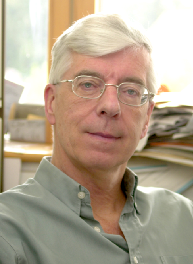
Dr David Barlow is Consultant in Genitourinary Medicine at St Thomas’ and Guy’s Hospitals, London. He has been the lead author for the chapter on gonorrhoea in the last three editions of the Oxford Textbook of Medicine. Between 1986 and 1993, at St Thomas’, he ran the largest linked HIV sero-survey in the United Kingdom. The third edition of his book Sexually Transmitted Infections- The Facts, Oxford University Press, with original cartoons by the late Geoffrey Dickinson, was published in March 2011.

There is something slightly uncomfortable about authoring a book whose cover proclaims: “XXX – The Facts”, with a sub-heading “All the information you need, straight from the experts”. Such is the house style of the OUP for its medical ‘Facts’ series, currently some 35 strong, but going forth and multiplying as you read.

Anyway, it got me thinking about how, in my specialty, when ‘facts’ become ‘figures’, caution is called for. I had an interest in heterosexual transmission of HIV in the 1980s and 1990s which put me in conflict with the official number-crunchers and I’m afraid I’m still suspicious when presented with totals. At the final proof stage of my ‘Facts’ book, I checked the Health Protection Agency’s website for the numbers of UK STIs reported for 2008. Unmentionable diseases including syphilis, gonorrhoea, warts and herpes remained as I had written. Total chlamydial infections, however, had changed from 126,882 (accessed July 2010) to 217,570 (accessed January 2011). A small adjustment might be reasonable. But 70%? This was a DB Type 4 numerical error.

DB’s numerical errors: Types 1-5

• Type 1 Somebody has a vested interest: “If we tell these clap-doctors that laboratory culture of the gonococcus is only 70% sensitive, they’ll shut their lab’ and buy our ‘totally sensitive’ NAAT.”

• Type 2 The totals may be correct but are misleading (1): “It is Government/Department (of Health) policy to pretend that there is a rapidly increasing HIV epidemic in heterosexuals who are transmitting within the UK.”

• Type 3 The totals may be correct but are misleading (2): There is a genuine, probably innocent, misinterpretation of the figures (see horseradish sauce, below)

• Type 4 The totals may be correct but are misleading (3): The explanation is perfectly reasonable and logical, but the calculation is opaque/we are keeping it to ourselves/forgot to tell you/have you read the small print?

• Type 5 The totals are incorrect: Woops!

At the beginning of June, I awoke to BBC headlines about a doubling of UK-acquired HIV between 2001 and 2010. This drew me to the HPA’s website where I found a press release (June 6): ‘Last year there were 3,800 people diagnosed with HIV who acquired the infection in the UK, not aboard [sic], and this number has doubled over the past decade.’ From the same site: ‘… HIV diagnoses among heterosexuals who most likely acquired in the UK have risen in recent years from 210 in 1999 to 1,150 in 2010’. I shall return to these later but if you really have nothing better to do, why not see whether you can confirm the figures quoted above by accessing the HPA’s ‘New HIV Diagnosis,’ Table 5 here. And your next task (5 marks) is to re-word the press release…

Exactly thirty years ago, on 5th June 1981, the sleuths at the Centers for Disease Control published their crafty bit of epidemiology entitled ‘Pneumocystis pneumonia – Los Angeles’. The CDC had picked up an increase, from the West Coast, in requests for pentamidine. This was the drug used to treat PCP, a rare lung infection found in renal transplant patients whose immunity had been weakened (deliberately) to reduce rejection.

These new cases were different. The men were immuno-compromised but none were undergoing transplantation and all were gay. Thus were HIV and AIDS (although not so named for a year or two) introduced to an awe-struck, and soon fear-stricken, public.

Britain had its first AIDS case in 1981 and in August 1982 the Communicable Disease Surveillance Centre (the UK’s CDC) published the first of their monthly updates in the Communicable Disease Report, the CDR. The risk categories were divided into homosexual, haemophiliac, blood transfusion, intravenous drug users and heterosexuals [without other risk]. It was with these heterosexual cases that the distinction between ‘the truth’ and ‘the whole truth’ became lost during late 1986.

The May 1986 CDR tables broke down the heterosexual AIDS cases into: 3 with USA/Caribbean connection, 3 simply ‘heterosexual contact’ (of whom two “…had recently returned from Uganda and Mozambique.”), and 12 associated with sub-Saharan Africa. In October this connection became a footnote: “associated with sub-Saharan Africa” and by November, the categories had become: ‘contact UK’ and ‘contact abroad’. The December, separate, HIV figures were reported, without footnote, simply as ‘heterosexuals’ ( Type 2 numerical error ). Africa had disappeared from the tables.

By one of those coincidences loved by cynics and conspiracy theorists, the UK-wide leaflet drop about AIDS occurred in January 1987, the very next month, to be followed, in February, by the ’_Don’t die of ignorance_’ campaign. The national press then published increasingly doom-laden descriptions, largely unchallenged, of the burgeoning UK AIDS epidemic in heterosexuals.

What actually mattered was the number of cases being transmitted in Great Britain. Was the disease spreading? What was the risk from a bonk?

The change in wording of the heterosexual categories in the late 1980s allowed speculation that the ‘infected abroad’ category was largely made up of British nationals who had gone overseas and returned with HIV/AIDS. This was the CDR’s interpretation when they gave advice to travellers in 1991 ( Type 3 numerical error ).

We published an alternative view in the Lancet (CDR did not print correspondence, commentary or criticism) and the CDSC, unusually given the chance to reply in the same edition, graciously and politely acknowledged our figures from St Thomas’ but said that they were not representative. Neither my first nor last experience as an outlier.

Have you ever made horseradish sauce? Epidemiologists and cookery-writers run similar risks. Counting and cooking need to be in their respective repertoires but, for both, the craft improves with hands-on experience: contact with patients, or trying out the recipe. If your cookbook doesn’t mention wearing goggles with the wind behind you while you grate this vicious root (and most don’t), the author has never made the sauce. Epidemiologists don’t need the formula for horseradish peroxidase either, but they may miss an open goal if they don’t see patients.

Four other hospitals in or near London (I confess to prompting) reported that most of their (no other risk) HIV-positive heterosexuals were, like ours, from Africa, (Outliers 5, Regression Lines 0). It was not until later in the 1990s that the CDSC accepted the UK heterosexual HIV/AIDS epidemic to be largely imported, with little evidence of significant transmission between heterosexuals from, or in, this country.

So, how did you get on with the HPA’s table 5? You found the 210 for 1999 easily enough, I’m sure. But the 1,150 (and 3,800) for 2010? Well, a helpful person in the HPA’s epidemiology section told me they reached this figure by extrapolating the, as yet, uncategorized (‘not reported’ – penultimate row Table 5) cases in the same proportion as the different categories where the region of infection was actually known ( Type 4 ).

“But you didn’t apply that correction to the 210 in 1999”.

“Ah, no. We didn’t!” ( Type 5 ).

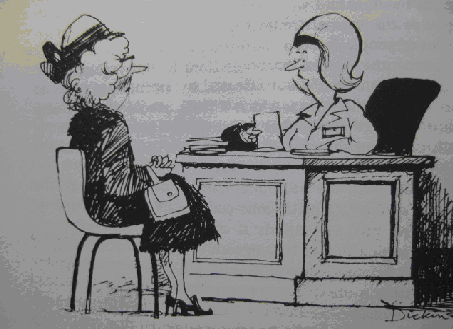
And, finally, the Type 1 numerical error? Specificity is also important in diagnostic tests (the 55 year-old Granny who went to her GP for a smear test, was screened for chlamydia, and came out with gonorrhoea. Yes truly!). The Nucleic Acid Amplification Tests for gonorrhoea may give you false positives.

Why didn’t you tell me about this before, Mother?
box.bmp

So, am I advising less sex?

What, and put myself out of a job? Give over!

References

Barlow D (2004) HIV/AIDS in ethnic minorities in the United Kingdom.

In Ethnicity and HIV: prevention and care in Europe and the USA, Eds, Erwin, Smith and Peters. 21-46

Barlow D, Daker-White G and Band B (1997) Assortative mixing in a heterosexual clinic population – a limiting factor in HIV spread? AIDS; 11:1039-44

A Happy Revolution

nick.bmp

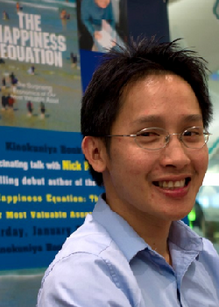
Dr Nattavudh (Nick) Powdthavee is a behavioural economist in the Department of Economic at Nanyang Technological University, Singapore, and is the author of The Happiness Equation: The Surprising Economics of Our Most Valuable Asset. He obtained his PhD the economics of happiness from the University of Warwick. Discussions of his work have appeared in over 50 major international newspapers in the past five years, including the New York Times and the Guardian, as well as in the Freakonomics and Undercover Economist blogs.

It’s not often in our lifetime that we could almost hear the intellectual tide turning. The year was 1993. The main perpetrators were Andrew Oswald and Andrew Clark; two British economists who, in October that year, organised the world’s first ever economics of happiness conference at London School of Economics and Political Sciences. Posters advertising the event were put up weeks in advance. A hundred chairs were put out in the famous Lionel Robbins building, waiting to be filled by many of the world’s greatest minds. The meeting, the organisers thought, was going to be revolutionary to economics science. Perhaps it was even going to be historical, not so dissimilar to the one which was held a few months earlier in Cambridge where British mathematician Andrew Wiles presented the proof of Fermat’s Last Theorem to a few hundred academics before him.

Imagine their disappointment when only eight people turned up on the day*. It was official; the world’s first ever economics of happiness conference was no less of a complete and utter failure.

Fast forward eighteen years to 2011. Happiness is currently one of the hottest topics in world’s politics and economic research. The British Prime Minister David Cameron has set out a plan to measure and improve people’s happiness – or in his compound term “general well-being”. The French president Nicholas Sarkozy has already launched an inquiry into happiness, commissioning Nobel Prize winners Joseph Stiglitz and Amartya Sen to look at how policies on Gross Domestic Products (GDP) sometimes trampled over the government’s other goals, such as sustainability and work-life balance. There are now over two hundred thousand economic papers on the World Wide Web written exclusively on “happiness”, “life satisfaction”, or “subjective well-being”.

How did we get here so fast in just less than two decades?

Of course, one of the early issues that people have with the economics of happiness (and you’d be forgiven if you yourself did laugh at the idea) is that happiness is hardly a measurable concept. This is a big deal for economists who like to call themselves quasi-scientists (in that they mainly deal with objectively measurable data such as income and inflation rates). If what people say about the way they are feeling is subjective by definition, how can it be analysed and quantified?

This issue, I feel, has now been resolved almost entirely. Working alongside scientists, psychologists have been able to provide objective confirmations that what people say about their own happiness does indeed provide useful information about their true inner well-being. For instance, self-rated happiness has been shown to correlate significantly with the duration of “Duchenne” or genuine smiles a person give during a day, as well as the quality of memory, blood pressure, brain activities, and even heart beats per second. More remarkably, scientists have been able to show that how happy we feel about our lives today have important predictive power of whether or not we will still be alive, forty or fifty years from now. Put it simply, we really do mean what we say.

The last two decades had also seen a substantial rise in the number of newly available data sets which are impossibly large by previous standards. And by applying appropriate statistical tools on these randomly drawn samples, researchers are able to explore whether or not the determinants of individual’s happiness (which is normally captured by asking individuals to rate their happiness from “1.not too happy”, “2.pretty happy”, or “3.very happy”) are the same in America as they are in Great Britain, South Africa, and China (which they are, thus lending further credence to the idea that such answers should be taken seriously).

So, what are the interesting results happiness economists have discovered so far? Well, for a start, happiness is U-shaped in age. On average, we are likely to be happier with our life at the younger and older age points in our life-cycle, with the minimum point occurring somewhere around mid-40s. Money buys little happiness, whilst other people’s money tends to make us feel unhappy with ours. The big negatives in our life include, for example, unemployment and ill health. Yet these negative experiences hurt us less subjectively if we happened to know a lot of other unemployed people (or in the case of ill health, other people with the same illness as ours). Marriage and friendships are extremely valuable, although there is little statistical evidence to suggest that children make parents any happier than their non-parents counterpart. And more recently, happiness economists have been able to put dollar, pound, or euro values on happiness (or unhappiness) from seemingly priceless experiences or life events that come with no obvious market values such as time spent with friends, getting married, losing one’s job, and even different types of bereavement.

It’s difficult to try and forecast how important this kind of work will be in the political arena in the forthcoming century. It’s possible that future governmental policies may shift entirely from the pursuit of wealth towards more non-materialistic goals as a result of these findings. We may even witness a replacement of GDP for a more general well-being index such as the GNH (or Gross National Happiness) altogether, although this is probably unlikely to happen. However, one thing’s for sure; economics as a dismal science will never be the same again.

*Of those eight, five were speakers especially invited to speak at the conference by the organisers.

What The Computer Says About Who We Are

steve.bmp

Steve Fuller is Auguste Comte Professor of Social Epistemology in the Department of Sociology, University of Warwick. His next book, Humanity 2.0: What It Means to Be Human Past Present and Future is out with Palgrave Macmillan in September 2011.

You can tell a lot about the sort of creature we think we are, by the value we place on the things we make. In October 2010, the Economist staged an on-line debate on the most important technological innovation of the 20th century. The challengers: the digital computer and the artificial fertiliser. Perhaps unsurprisingly, the computer won by a margin of 3-to-1. Why was this result not surprising? After all, the artificial fertiliser is arguably the invention most responsible for a fourfold growth in the world’s population over the past century, as well as cutting the proportion of suffering from malnutrition by at least two-thirds. It would be difficult to think of another product of human ingenuity that has had such deep and lasting benefits for so many people. Even if it is true, that in absolute terms there are more people living in poverty now than the entire population of the earth in 1900, the success of artificial fertilisers has kept alive the dream that all poverty is ultimately eradicable.

Yet, the computer won – even though its development has tracked and in some cases amplified, global class divisions. Indeed, it is becoming increasingly common to speak of ‘knows’ and ‘know-nots,’ in the way one spoke of ‘haves’ and ‘have-nots’ fifty years ago. Nevertheless, over the ten days of debate it became clear that the computer was bound to win because, for better or worse, we identify more strongly with the extension than the conservation of human potential. Underlying this distinction is a fundamental ambivalence that human beings have always had towards the bodies of their birth. The fact that, when compared with other animals, we take such a long time to reach adulthood has led philosophers through the ages to muse that we are by nature premature beings who need to go beyond ourselves to complete our existence.

Whether we call this prosthetic extension ‘culture’, ‘technology’ or, in Richard Dawkins’ case, the ‘extended phenotype’, it suggests that we are not fully human until, or unless our biological bodies are somehow enhanced. The computer captures that desire in a twofold sense: it both provides a model for how to think of ourselves in such an enhanced state and the environment in which to realize it. A new book by the media theorist David Berry, The Philosophy of Software, explores the implications of this development in terms of such computer-based technologies as iPhones and iPads that increasingly constitute the human life-world. Bluntly put, the more time people spend interacting with high-tech gadgets, the more grounds there are for claiming that what the previous generation called ‘virtual reality’ is becoming the actual reality in which people define themselves.

Seen in this light, it is not surprising that an invention that ‘merely’ keeps alive our normal biological bodies – such as the artificial fertiliser – should be ranked decidedly lower than the computer in terms of importance. Back in the 1960s, the economist Thomas Schelling argued that you can tell the value that people place on their own lives by the amount they are willing to pay for securing it. Whether the relevant sense of ‘security’ is defined in terms of healthcare, life insurance, development aid or military budgets, one would be left with an open verdict on just how much people value the indefinite maintenance of the bodies of their birth. If we identify people’s preferences with what they do rather than what they say, it would seem that beyond a certain point, people would prefer to forgo security in favour of the freedom (and risk) to explore alternative possible modes of existence – for which the computer, again for better or worse, provides the technological exemplar.