
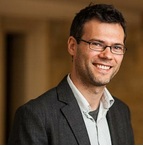
 Mark Stokes is a senior research scientist at the Oxford Centre for Human Brain Activity, University of Oxford. As Head of the Attention Group, his research programme explores the brain mechanisms that control attentional selection for perception, memory, decision-making and conscious awareness. In addition to frontline research, he is also interested in public engagement. In 2012, he launched a neuroscience blog, The Brain Box, to discuss all matters mind and brain, covering research from his own lab as well as latest findings and controversies in the field. He has also been commissioned to contribute blog posts and comments to mainstream news providers, including the Guardian and The Independent. Mark has also appeared in science documentaries, including a Discovery Channel programme on hypnosis and has advised for BBC 1’s Bang Goes the Theory and BBC2’s Horizon. Currently, Mark is working on an article discussing the neuroscience of law and criminal justice, based on David Eagleman’s new book, Incognito. You can follow him on Twitter @StokesNeuro. Continue reading
Category Archives: Philosophy or Psychology or Ethics
Beyond Replication: Misleading Reports of a Provocative Experiment
 Jonathan Ellis is an Associate Professor in the Department of Philosophy at the University of California, Santa Cruz, where he has taught since 2002. He received his PhD in Philosophy from the University of California, Berkeley (2002). Since 2005, he has been Co-Director of the Santa Cruz Linguistics and Philosophy Group at UC Santa Cruz. Ellis’s primary areas of research are the philosophy of psychology, the philosophy of mind and epistemology. Recently he co-edited *Wittgenstein and the Philosophy of Mind* (published by Oxford University Press in 2012). He is currently writing a book on the philosophical implications of motivated reasoning and other forms of compromised cognition. You can see more on his website at https://frodo.ucsc.edu/~jellis/.
Anyone familiar with the exploding genre of books from the cognitive sciences—Predictably Irrational; Thinking, Fast and Slow; Stumbling on Happiness; Blink—will know of John Bargh’s striking experiment on priming. The study, published in 1996, has recently been the subject of heated discussion among cognitive scientists, and reflection on the experiment continues to generate novel lessons for the scientific community even today. In the middle of it all is Nobel Laureate, Daniel Kahneman. Continue reading
Placebo for Psychogenic Illnesses: Why “It’s all in my head” does and doesn’t matter
Karen S. Rommelfanger, PhD has over 10 years experience as a movement disorders neuroscientist. She now is the Program Director of the Neuroethics Program at the Emory Center for Ethics and is a Fellow in the Scholars Program for Interdisciplinary Neuroscience Research in the Department of Neurology in the School of Medicine at Emory where she conducts research on placebo therapy and psychogenic movement disorders.
She is the Neuroscience Editor-in-Residence at the American Journal of Bioethics Neuroscience and manages The Neuroethics Blog, and founded Neuroethics Women Leaders.
If a belief in a sickness makes you unwell, why not treat with a belief in getting better?
Placebos are generally defined as inert substances thought to have no medical value, such as a sugar pill that is believed to relieve patient medical symptoms through the expectation of getting better. Placebo effects can be elicited by a number of other things such as vitamins, antibiotics for viral infections, and sub-threshold doses of prescription medications. The act of simply taking medicine or thinking that medicine might work can impact patient outcomes. Continue reading
There is no “normal”

Dr. Chris Gunter is the HudsonAlpha director of research affairs. She earned a bachelor’s degree in both genetics and biochemistry from the University of Georgia, and a Ph.D. in genetics from Emory University. Her research was centered on human genetics and genomics. Chris has also earned publishing experience at several journals, including editorial positions at Human Molecular Genetics and Science, and as the editor for genetics and genomics manuscripts at Nature. Upon starting to publish genome papers at Nature in 2002, Chris told her boss that if they ever got the platypus genome published, it would be time to move on. She started at the nonprofit HudsonAlpha Institute for Biotechnology in 2008 and coordinates research activities in genetics and genomics. She creates and maintains an academic environment and communicates HudsonAlpha’s research in a variety of different formats and public venues.
Chris also holds adjunct appointments at three universities, is an editor of the blog Double X Science, and currently serves on the Program Committee and as the chair of the Communications Committee for the American Society of Human Genetics. For probably too much info, see her @girlscientist on Twitter. Continue reading
The Ethics of Transplants – Why Careless Thought Costs Lives

Janet Radcliffe Richards is Professor of Practical Philosophy at the University of Oxford, and Distinguished Research Fellow at the Oxford Uehiro Centre for Practical Ethics. Earlier, she was Lecturer in Philosophy at the Open University, and then Director of the Centre for Bioethics in the medical school at University College London. She is a philosopher who originally specialized in metaphysics and philosophy of science, but has now for many years concentrated on the practical applications of philosophy, and is the author of The Sceptical Feminist (1980) and Human Nature after Darwin (2000). She was drawn into transplant ethics some time ago when a short newspaper article of hers was picked up by transplant surgeons, and she has since been a frequent speaker at transplant conferences around the world. “The Ethics of Transplants: why careless thought costs lives” was published in the UK in March 2012. Continue reading
Language and Advertising – What do we really know?
J ulie Sedivy is a cognitive scientist with an indomitable interest in language. She is a former faculty member of Brown University, and is currently an adjunct professor at the University of Calgary. She now devotes much of her time to writing about language for a general audience. She is the lead author of Sold on Language: How Advertisers Talk To You and What This Says About You. She blogs regularly for Language Log, Psychology Today and Discover, and tweets as @soldonlanguage.
One of the undergraduate courses that I most enjoy teaching is called Language and Advertising. Each year, I start off by presenting a particular scenario to students:
Imagine that the beef industry has joined forces with a company that makes a cola drink, and has worked out a deal to have a specific chemical that induces cravings for beef dissolved in the cola. The chemical is perfectly safe, and is listed among the ingredients; anyone is free to research its beef-craving properties.
Is this an ethical form of persuasion?
Most students say no. When pressed for an explanation, they typically say things like this: The companies are taking advantage of the fact that most consumers will be unaware of the effects of the chemical. Using techniques that are outside of the awareness of consumers is sneaky and dishonest. It undermines their freedom of choice, because consumers don’t know what is driving that choice.
I then ask them:
Do you think it’s ethical for a company to use language in its advertising as a means of persuasion?
As you might imagine, this question gets some strange looks. But the reality is that much of what happens in our minds as a result of language is just as hidden from our conscious awareness as the effects of fictional beef-craving chemicals. But while most people take it for granted that a great deal of their brain chemistry does its thing outside of their conscious knowledge or volitional control, they don’t have the same beliefs about language. This leads to a strange illusion about language: not only is much of what our minds do with it hidden from us, but the fact that so much is hidden is hidden from us.
Perhaps this is why a great deal of how language is discussed—whether it’s about linguistic pedagogy, language policy, language and persuasion, literary aesthetics, or language and culture—occurs without consideration of what is actually scientifically known about language. Authority figures, including members of the Académie Française, or literary luminaries such as George Orwell, have often made pronouncements about language which are readily accepted as intuitively obvious, but which make contemporary language scientists wince.
To me, the great fascination in studying language has been the discovery of its iceberg-like qualities, how some of its most intriguing properties lie well below the surface, accessible only through meticulous observation or ingenious experimentation. Scientific work on language has revealed that humans possess a truly staggering linguistic intelligence, a body of knowledge which is mostly made up of things we don’t know we know.
For example: Most English speakers, if asked, would report that the last sound in the word cleared and the first sound in the word dice are the same. But in fact, they are pronounced slightly differently. Your conscious mind may not be aware of this, but actually, your less conscious mind can put that information to good use as a perceptual clue about where words begin and end. This, it turns out, came in especially handy when you were an infant; before you actually knew many words, human speech sounded like an uninterrupted string of sounds rather than a series of words, much as a foreign language that you don’t know might sound to you now. But, as discovered by researchers Sven Mattys and Peter Jusczyk, infants younger than nine months can leverage the subtle differences in d sounds to make smart hypotheses about how a continuous stream of speech might be carved up into words. So even without knowing the words, they can guess at the word boundary in the phrase cleared ice versus throw dice.
In my own lab-based research, I’ve looked mainly at how people manage to cope with the ambiguity inherent in language, how they make rapid-fire decisions in interpreting a chunk of language which could be consistent with several interpretations. What we’ve seen from this work is that humans are able to very quickly integrate a number of different streams of information, ranging from statistical expectations about various linguistic structures to inferences about a particular speaker’s probable communicative intent or capabilities. And again, most of these decisions are happening completely outside of people’s awareness. To tap into them, you can’t simply ask people what they were thinking while processing a sentence. Often, we have to look at more reflexive behaviors as a clue, such as tracking their eye movements while they listen to language.
Once you start to dig around seriously in the guts of how language really works, though, it can change how you look at everyday language around you. While I was still a graduate student, my research meetings with my advisor, Greg Carlson, would often devolve into observations about how TV advertisements we’d seen had exploited this or that aspect of linguistic knowledge or language processing. These lingering conversations were the seeds for the book we eventually wrote together, titled Sold on Language: How Advertisers Talk To You and What This Says About You.
In the end, my reason for encouraging my students to compare language with beef-craving chemicals is not so much to raise alarms about nefarious mind-controlling practices by advertisers. Rather, it’s to point out that most of the information-processing that we humans do—including language—hums along at a fairly automatic level outside of our deliberate control. This means that in order to understand how we respond to language, how it might influence our thoughts and our behaviors, we have to move beyond intuition. We have to get a little bit intimate with the science.
Ignorance in Climate Science
 Jerome Ravetz wrote Scientific Knowledge and its Social Problems (1971, 1996) and (with Silvio Funtowicz) Uncertainty and Quality in Science for Policy (1990). They created the NUSAP notational system and the theory of Post-Normal Science. He is currently associated with the Institute for Science, Innovation and Society at Oxford University.
Our modern scientific view of knowledge was defined by a throwaway line in Descartes’ Discourse on Method. Referring to his dissatisfaction with his education at school, he claimed,
“I was convinced I had advanced no further in all my attempts at learning, than the discovery at every turn of my own ignorance”.
He was careful to say that his school was not to blame, although a little later he did a brilliant assassination job on the whole humanistic curriculum. Readers now might not notice the irony in Descartes’ complaint. It was not merely another case of late-adolescent angst. For in the mention of the discovery of ignorance, his educated readers would have recognised an echo of Socrates. This founder of philosophy was remembered as saying that his whole life’s work was the discovery of his ignorance. By the criteria of Socrates and all who followed, the education of the young Descartes had been a great success: so early in life he had succeeded in discovering his ignorance! With both Descartes and his readers knowing this background, they would recognise his complaint as the casual discarding a couple of millennia of moral philosophy. “Know thyself” was out, “Discover truth” was in.
This point is not of merely scholarly historical interest. The Scientific Revolution produced a variety of accounts of scientific knowledge, differing in their balance of reason and experience, and also in the strength of their claims to certainty. But they all agreed in their tacit elimination of ignorance from their pictures of the acquisition of knowledge. Of course, publicists for science recognise ignorance, but mainly as something out there to be conquered by the advance of science. When scientists have undergone a lengthy and rigorous training in which they learn that for every real problem there always one (and only one) correct answer, there is little danger of them sharing Descartes’ school-leaver’s predicament.
The relevance of this issue today is, to what extent should we incorporate ignorance, as distinct from tameable uncertainty, into our reasonings about science and science policy? I would argue that the suppression of ignorance in our debates, perhaps even its repression in our thinking, seriously impedes our management of our scientific affairs.
There is evidence that, particularly in climate science, ignorance is something of a taboo idea, even when it might seem to be most relevant. I have two illustrative examples from the climate science area. The first relates to a proposed scale of uncertainty, designed by James Risbey and Milind Kandlikar [1], and adopted by the IPCC [2]. This has the merit of providing a single robust scale of degrees of uncertainty, based on the notations for expressing it in numerical form. It could be of great use in resolving the confusing variety of schemes that are employed in the various special fields that contribute to climate science. The scale includes five degrees of increasing uncertainty, concluding with a sixth category for ignorance. The authors were pleased to see the scale adopted by the IPCC, but then surprised to see that the category for ignorance had been deleted in the IPCC version [3].
Another example provides even stronger evidence of a consistent attitude. Two authors who are eminent in their own fields, Sir Nicholas Stern and Leonard Smith, recently published a paper on the characterisation of uncertainty in climate science [4]. The paper is truly magisterial, bringing deep analytical clarity to this very confused subject. But, again surprisingly, a search for ‘ignorance’ in the text produces only three citations, and two of those are incidental (p. 16 twice). The only substantive reference relates ‘ignorance’, rather ‘recognised ignorance’, back to ‘ambiguity’ or ‘Knightian uncertainty’ (p.4). It would seem that ignorance, in its own right as a qualitatively deeper sort of uncertainty, is not relevant here. The absence must be deliberate, for the whole essay can be read as a detailed warning of the many pitfalls of mismanagement of uncertainty, along with the ‘fallacy of misplaced concreteness’ in relation to models. Indeed , it can be read as a Socratic exercise in all but name and vocabulary.
Particularly for that reason, I confess that I cannot agree with the absence of ignorance. Suppose that a senior planner, responsible for the long-range defences of the Thames Estuary, approaches experts for an estimate of the sea-level rise to the end of the century. It would be technically correct to say, “It will probably be somewhere between one and four metres, but where inbetween is a matter of ambiguity”. The planner might prefer to be told simply, “`I don’t know,” with a review of the reasons for speculating on the likelihood of one range of values over another.
It is not as if ignorance were totally banned from policy-relevant science. In medicine, for example, we know that we don’t know the causes of some important diseases, as indeed we are aware of our ignorance of the course of future epidemics. The sciences do not lose public prestige because of their frankness about their deep limitations in relation to some urgent issues. Rather, they gain trust because of their honesty with their publics.
We can see the explicit recognition of ignorance as part of the programme of a ‘technology of humility’ proposed by Sheila Jasanoff of Harvard University [5]. It would fit particularly well with climate science, since this is after all a part of a great humanitarian project rather than a quest for profit, power or privilege. The message of Socrates, rejected with such ultimately devastating effect by Descartes, could inform such a science and provide it with an enriching humane element.
References
[1] Risbey, J. & M. Kandlikar, 2007: Expressions of likelihood and confidence in the IPCC uncertainty assessment process. Climatic Change, 85 (1-2), 19-31.
[2] Mastrandrea, M., C. Field, T. Stocker, O. Edenhofer, K. Ebi, D. Frame, H. Held, E. Kriegler, K. Mach, G. Plattner, G. Yohe, and F. Zwiers 2010: Guidance notes for lead authors of the IPCC fifth assessment report on consistent treatment of uncertainties, Available at https://www.ipcc.ch
[3] Risbey, J. and T. O’Kane 2011: Sources of knowledge and ignorance in climate research: Climatic Change, 108 /4, 755-773,
[4] Leonard Smith and Nicholas Stern 2011, Uncertainty in science and its role in science policy, Phil. Trans. R. Soc. A 369, 1–24.
[5] Sheila Jasanoff 2003, Technologies of Humility: Citizen Participation in Governing Science, Minerva 41: 223–244.
The War on Cancer…Phobia
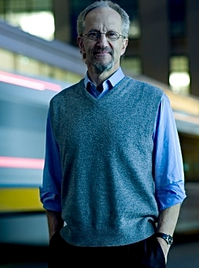 David Ropeik is an international consultant in risk perception and risk communication, and an Instructor in the Environmental Management Program at the Harvard University Extension School. He is the author of How Risky Is It, Really? Why Our Fears Don’t Always Match the Facts and principal co-author of RISK A Practical Guide for Deciding What’s Really Safe and What’s Really Dangerous in the World Around You. He writes the blog Risk; Reason and Reality at Big Think.com and also writes for Huffington Post, Psychology Today, and Scientific American.
He founded the program “Improving Media Coverage of Risk,” was an award-winning journalist in Boston for 22 years and a Knight Science Journalism Fellow at MIT.
If you were to be diagnosed with cancer, how do you think you would feel? It would depend on the type of cancer of course, but there’s a good chance that no matter the details, the word ‘cancer’ would make the diagnosis much more frightening. Frightening enough, in fact, to do you as much harm, or more, than the disease itself. There is no question that in many cases, we are Cancer Phobic, more afraid of the disease than the medical evidence says we need to be, and that fear alone can be bad for our health. As much as we need to understand cancer itself, we need to recognize and understand this risk, the risk of Cancer Phobia, in order to avoid all of what this awful disease can do to us.
In a recent report to the U.S. National Institutes of Health (NIH), a panel of leading experts on prostate cancer, the second most common cancer in men (after skin), said;
“Although most prostate cancers are slow growing and unlikely to spread, most men receive immediate treatment with surgery or radiation. These therapeutic strategies are associated with short- and long-term complications including impotence and urinary incontinence.”
“Approximately 10 percent of men who are eligible for observational strategies (keep an eye on it but no immediate need for surgery or radiation) choose this approach.”
“Early results demonstrate disease-free and survival rates that compare favorably (between observation and) curative therapy.”
“Because of the very favorable prognosis of low-risk prostate cancer, strong consideration should be given to removing the anxiety-provoking term ‘cancer’ for this condition.”
Let me sum that up. Many prostate cancers grow so slowly they don’t need to be treated right away…the unnecessary treatment causes significant harm…and one of the reasons nine men out of ten men diagnosed with slow-growing prostate cancer accept, indeed choose these unnecessary harms, is because “cancer” sounds scary.
Consider more evidence for Cancer Phobia. In “Overdiagnosis in Cancer” doctors at Dartmouth classified “25% of mammographically detected breast cancers, 50% of chest x-ray and/or sputum-detected lung cancers, and 60% of prostate-specific antigen–detected prostate cancers”, as ‘overdiagnosed’, which they defined as “1. The cancer never progresses (or, in fact, regresses) or 2. The cancer progresses slowly enough that the patient dies of other causes before the cancer becomes symptomatic.” The doctors described the negative health effects such patients suffer from a range of treatments that often involve radical surgery and noted; “Although such patients cannot benefit from unnecessary treatment, they can be harmed.”
Add to those harms the damage from stress caused by the diagnosis of cancer, or even the fear of getting it. Chronic stress raises blood pressure and contributes to heart disease. Even more directly as regards cancer, chronic stress weakens the immune system, the very system our bodies need to help prevent, fight, or recover from, the disease itself. and beyond these harms to individual patients, consider the cost of Cancer Phobia at the societal level.
The basic biological mechanics of what causes both cancer and heart disease are still inadequately understood and need fundamental research. But the U.S. National Institutes of Health spend about four times as much on cancer research as on heart disease research, despite the fact that heart disease kills about 10% more people (60,000 each year, 25 per day), than cancer. We are spending far more on the second leading cause of death than we are trying to figure out what is much more likely to kill us.
Despite all the progress we’ve made on cancer, a recent Harris poll found that cancer is the most feared disease in the U.S., 41% to Alzheimer’s 31%. (Only 8% of American are most afraid of the leading cause of death in the U.S., heart disease). In August 2011, Cancer Research UK found 35% of Britons feared cancer most, followed by Alzheimer’s at 25%.And this fear is hardly new. 40 years ago the U.S. National Cancer Act of 1971, which declared “War on Cancer” said “…cancer is the disease which is the major health concern of Americans today.”
Cancer Phobia goes even further back. The term itself was coined in an article by Dr. George Crile, Jr., in Life Magazine, in 1955, “Fear of Cancer and unnecessary operations”. His insights describe conditions today as accurately as they did then; “Those responsible for telling the public about cancer have chosen the weapon of fear, believing that only through fear can the public be educated. Newspapers and magazines have magnified and spread this fear, knowing that the public is always interested in the melodramatic and the frightening. This has fostered a disease, fear of cancer, a contagious disease that spreads from mouth to ear. It is possible that today, in terms of the total number of people affected, fear of cancer is causing more suffering than cancer itself. This fear leads both doctors and patients to do unreasonable and therefore dangerous things.”
Unfortunately, Dr. Crile Jr. overlooked the key truth about our fear of cancer; Cancer Phobia is hardly just the product of zealous health and environmental advocates magnified by media alarmism. It comes from the innate way we perceive all risks, a process that relies not only the statistical and medical facts, but on how those facts feel. Risk perception is a blend of conscious reasoning and subconscious instinct, and neuroscience suggests that between the two, instincts and emotions have the upper hand. While we’ve been busy studying cancer, we have also learned a lot about the specific psychological characteristics of cancer that make it particularly frightening.
The more pain and suffering a risk involves, like cancer, the scarier it is.
The less control over a risk we feel we have, the scarier it is. Despite great medical progress, cancer is still something that too often can’t be controlled. It is still widely assumed that a diagnosis of cancer is a death sentence.
The more a risk feels imposed on us, rather than the result of something we did by choice, the scarier it is. Many people continue to believe that a majority of cancers are ‘done to us’ by outside forces, despite the medical evidence that environmental cancers (beyond those caused by our lifestyle choices of diet and exercise) make up perhaps 10-15% of all cases.
The greater our ‘mental availability’ about a risk – how readily the risk comes to mind – the scarier it is. Cancer is constantly in the news. And the very mention of the word ‘cancer’ is instantly overwhelmingly negative, a psychological effect called Stigmatization that makes it difficult for us to think about things objectively.
“Cancer” is no longer the automatic death sentence it was once feared to be. From 1990 to 2010 the overall death rate from cancer in the U.S.has dropped 22% in men and 14% in women. (Incidence in the U.S.has stayed about the same.) In the U.K., the male mortality rate has dropped 26% and the female rate has declined 16% since 1980, (even while the incidence rate in the UK have increased 22%).
We have learned an immense amount about cancer, allowing us to treat, or even prevent, some types that used to be fatal. But we have also learned a great deal about the psychology of risk perception and why our fears often don’t match the evidence. We are failing to use that knowledge to protect ourselves from the significant, tangible health risks of our innately subjective risk perception system. The proposal of the NIH panel to replace the “C” word with something else that is medically honest but emotionally less frightening, is a tiny first step in the right direction, to open a new front in the War on Cancer, the battle against Cancer Phobia.
The rise of anomalistic psychology – and the fall of parapsychology?
Professor Chris French  is the Head of the Anomalistic Psychology Research Unit in the Psychology Department at Goldsmiths, University of London. He is also a Fellow of the British Psychological Society and of the Committee for Skeptical Inquiry and a member of the Scientific Advisory Board of the British False Memory Society. His main current area of research is the psychology of paranormal beliefs and anomalous experiences. He frequently appears in the media casting a skeptical eye over paranormal claims. He edited The Skeptic magazine for more than a decade and sometimes writes for the Guardian’s online science pages.
Ever since records began, people have reported strange experiences that appear to contradict our conventional scientific understanding of the universe. These have included reports that appear to support the possibility of life after death, such as near-death experiences, ghostly encounters and apparent communication with the dead, as well as claims by various individuals that they possessed mysterious powers such as the ability to read minds, see into the future, obtain information from remote locations without the use of the known sensory channels, or to move objects by willpower alone. Such accounts are accepted as veridical by most of the world’s population in one form or another and claims relating to miraculous healing, alien abduction, astrological prediction and the power of crystals are also accepted by many. Belief in such paranormal claims is clearly an important aspect of the human condition. What are we to make of such accounts from a scientific perspective?
 Should we accept at least some of these claims more or less at face value? That is to say, should we accept that extrasensory perception (ESP), psychokinesis (PK), and life after death are all real? Parapsychologists have systematically investigated such phenomena for around 130 years but have so far failed to convince the wider scientific community that this is the case. The eminent scientists and intellectuals who founded the Society for Psychical Research in 1882 were convinced that, with the tools of science at their disposal, they would settle the issue one way or another within a few years. Clearly, that has not happened. Instead, parapsychology has been characterised by a series of ‘false dawns’ during which it has been declared that at last a technique has been developed which can reliably show under well-controlled conditions that paranormal effects are real. With time, however, the technique falls out of favour as subsequent research fails to replicate the initially reported effects and methodological shortcomings become apparent.
The latest candidate for such a ‘false dawn’ is a series of relatively straightforward experiments reported by Daryl Bem in the prestigious Journal of Personality and Social Psychology. In eight of nine experiments, involving more than a thousand participants in total, Bem reported significant results suggesting that human beings are able in some way to sense events before they happen. For example, the study which produced the largest effect size appeared to show that participants are able to recall more words if they rehearse them than if they do not – even if the rehearsal does not take place until after recall has been tested! As so often happens, these controversial findings received widespread coverage in the mainstream science media. However, subsequent attempts at replication have failed, including a study involving three independent replication attempts carried by Richard Wiseman (University of Hertfordshire), Stuart Ritchie (University of Edinburgh), and myself (Goldsmiths, University of London).
If paranormal forces really do not exist, how are we to explain the widespread belief in them and the sizeable minority of the population who claim to have had direct personal experience of paranormal phenomena? One possible answer is that there are certain events and experiences which may appear to involve paranormal phenomena but which can in fact be fully explained in non-paranormal, usually psychological, terms. This is the approach adopted by anomalistic psychologists. In general, anomalistic psychologists attempt to explain such phenomena in terms of known psychological effects such as hallucinations, false memories, the unreliability of eyewitness testimony, placebo effects, suggestibility, reasoning biases and so on. It is noteworthy that anomalistic psychologists have, in just a few decades, produced many examples of replicable effects that adequately explain a range of ostensibly paranormal phenomena.
Anomalistic psychology is definitely on the rise. Not only is it now offered as an option on many psychology degree programmes, it is also an option on the most popular A2 psychology syllabus in the UK. Every year more books and papers in high quality journals are published in this area and more conferences and symposia relating to topics within anomalistic psychology are held. There is no doubt that anomalistic psychology is flourishing.
And what of parapsychology? The health of this discipline is somewhat harder to assess but apart from the occasional ray of hope offered by the latest false dawn, the situation does not look encouraging for parapsychologists. Funding for such research is inevitably more difficult to obtain in times of economic uncertainty. Scarce research funding will be invested in areas where the probability of success is high – and the history of parapsychology shows all too clearly that studies in this area often involve huge investments of time and resources and produce nothing in return. Without a genuine breakthrough in the near future, can parapsychology survive for much longer? Without psychic powers, it’s difficult to know but I certainly would not bet on it.
Safe spaces
-thumb-150x151-3809.jpg)
Rosemary Randall is a psychotherapist, founder of the community-based charity Cambridge Carbon Footprint and the nationally acclaimed Carbon Conversations project. Her work brings insights from psychotherapy to work on climate change and she writes and lectures widely on the psychological dimensions of the public response to the issue. Links to her work can be found on her website.
The idea of the ‘safe space’ is crucial to psychotherapy. What relevance does it have to climate change?
Many people find it hard to accept the reality of climate change and the need for both urgent action and widespread socio-political change. This is often an emotional rather than an intellectual problem: climate change threatens much that people hold dear. ‘Safe spaces’ where people can come to terms with what may happen, the changes that are needed and their own feelings about it can be crucial in helping them take action both in their personal lives and politically, as citizens.
In psychotherapy the safe space is created by the therapist who initiates a relationship that:
• Is non-judgmental and offers tolerance and respect
• Accepts the complexity and strength of feelings
• Embodies belief in the possibility of change and development
• Offers challenge as well as support
• Encourages and trusts in people’s creativity
The ‘safe space’ is not one which feels cosy but one which allows creativity and change to occur. It is safe enough to think, to feel, to question, to become uncomfortable, to be upset, to argue, fall out, make up and survive. If the safe space becomes merely comforting or self-congratulatory it is not doing its job.
The relevance for this to climate change relates to the fact that people do not change their opinions or adopt new behaviours through being given information or being put under pressure. Information on its own doesn’t work. Telling, arguing, shocking or bludgeoning just don’t do it. What does help is creating situations where people can reflect and get in touch with their own conflicting feelings, motivations and creativity. Creating situations that draw on the idea of the ‘safe space’ can lead to some interesting outcomes.
Examples
In my work for the charity Cambridge Carbon Footprint, the idea of the ‘safe space’ lay behind the Carbon Footprint interviews we conducted with over 2500 people in the City between 2005 and 2008. 32 questions about their home, their travel, the money they spent and the food they ate took people quickly to the heart of their carbon-dependent lives. Although an answer emerged at the end which told people where they stood in relation to the national average footprint, the point was the conversation that took place. Training the interviewers to make this a non-judgmental, exploratory, welcoming experience was key.
My subsequent work has continued this emphasis on safe spaces. Training volunteers in personal communications skills helps them judge quickly how a climate change conversation is going, alerts them to the subtle resistances that people bring to difficult subjects and helps them offer appropriate support and challenges. Carbon Conversations, a scheme now organised nationally by COIN, brings people together in small facilitated groups to share their responses to climate change and explore how to make major reductions to their carbon footprints. Again, it’s the creation of the safe, responsive space which is key to the success of these groups.
Safe spaces are not unique to psychotherapy. They can be found in many other contexts and can occur spontaneously where people trust each other enough to open themselves to new ideas and possibilities. Sharing values is often key and I experienced a good example of this at the recent Sustainability in Crisis conference in Cambridge. This was a conference of people from faith groups, primarily Christians, and so it had the ease of understanding and acceptance that comes when people know that their basic premises about life are likely to be affirmed and understood by others. Into this conference, (which like many meetings of like minds carried a risk of cosiness) flew Bill McKibben, the US environmentalist and activist, fresh from cooling his heels in a Washington clink, having been arrested during a demonstration about the planned oil pipeline from Canada. Warm, engaging, sharp and inspiring, McKibben embodied the creative challenge that the safe space both needs and makes possible. McKibben was uncompromising in his argument that the additive process of individual action won’t work. Political engagement is critical. He reminded his audience of the origins of non-violent direct action in the Christian tradition and encouraged them to stand up, take part and risk arrest. Conversations over coffee and supper were testament to the way he pitched his challenge but it was the context of the safe space that made it possible for him to be properly heard.
Politics and campaigning
In more directly political work the tension between the need to challenge and the need for a safe space can be tricky. Confrontation, uncompromising demands and irresistible pressure on those in power are necessary. The clue is to think about who needs to be confronted and who needs to be safe. There is often a dual audience, those in power who need to be challenged and a potentially sympathetic public who need to be engaged and encouraged to come on side and take part. Climate Rush with their mix of humour, drama and surprise is one group who seem to have a good balance of confronting those in power without alienating those who witness their demonstrations. Occupy London seem similarly well positioned in engaging the public while causing grave discomfort to those in power. Bill McKibben’s plea was for climate protestors to abandon the polar bear outfits and come dressed in respectable suits in order to demonstrate visually to the powerful that this is a protest of mainstream opinion and to mainstream opinion that here is a protest they can identify with and participate in. However it is done, the capacity to create the space in which ordinary people feel safe enough to pause, become curious, explore and then act is essential.