Celebrating impact: How multidisciplinary One Health research produced results for real change in the real world

475_Naomi_10

Guest post by Naomi Marks, project communications manager at the Institute of Development Studies. She managed the communications for the Dynamic Drivers of Disease in Africa Consortium and now works with two other multidisciplinary zoonoses-related projects, the Myanmar Pig Partnership, and Livestock, Livelihoods and Health.

With the end of a large research project, there can be a certain sense of bathos. All that ambition at the beginning culminating in … what? Published papers in scientific journals, conference presentations on Slideshare, a website that you hope will continue to be updated and, well, the move on to the next project.

None of this is to put down traditional academic outputs, only to acknowledge the desire of most scientists to see science really make its mark.

This is particularly true when it comes to research in developing countries where there is not just a real pressure from the funders, but also a strong desire from the researchers to contribute to real change in the world—or “impact“, as we all now know it.

And so it is with real pleasure that at the end of the large research project that I’ve been working with that I can report that we seem to have avoided that plummeting feeling.
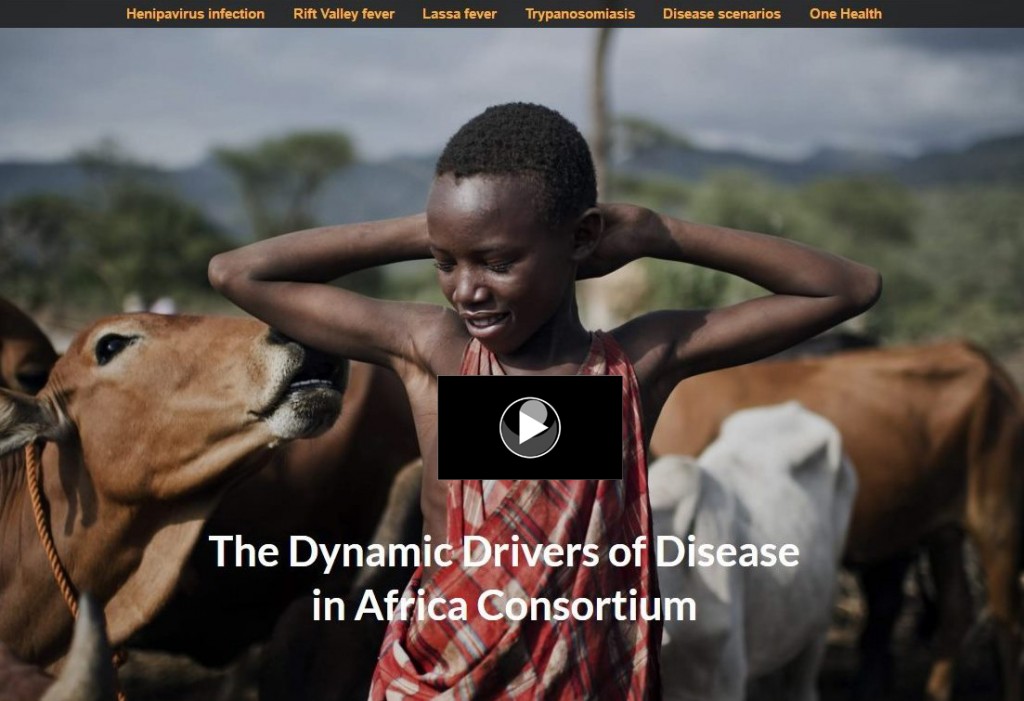
Dynamic Drivers of Disease

The Dynamic Drivers of Disease in Africa Consortium focused on diseases that pass from animals to people—those such as Ebola, Zika and avian flu that have led to so many headlines in recent years. It sought to explore the links between these diseases (known as zoonoses), ecosystems and poverty, and, in particular, how wider global patterns such as climate and land-use change affect how diseases emerge and spread.

A multidisciplinary undertaking, the project included environmental, biological, mathematical, social, political, and animal and human health researchers from 21 partners across three continents and eight countries—working not just alongside each other but also integrating their findings in new and exciting ways.

As if this wasn’t enough of an endeavour in its own right, other challenges came up over the four years of the project—some welcome (our lead researcher became Director of the Institute of Development Studies, adding to her workload considerably); some expected—or at least expectant (our pivotal research manager went on maternity leave); and one truly unexpected and ghastly: our Sierra Leone team, researching Lassa fever, had to stop work when the Ebola epidemic of 2014/15 resulted in movement restrictions in that country, and laboratory and clinical facilities were turned over to crisis Ebola work.

Despite all this, the project can claim to have contributed to real notches on the impact post.

Particularly notable is the creation of new, detailed risk maps for Rift Valley fever (RVF). These have already been put to use, forming an essential element of the Kenyan government disease monitoring and containment strategy when an epidemic threatened late last year. In the past, RVF epidemics have led to the deaths of millions of animals and hundreds of people with huge poverty impacts for pastoralists.

Also of note has been the identification of the patches of land to which tsetse flies are increasingly being confined in the Zambezi Valley in Zimbabwe. Tsetse are the insect vector of the trypanosomiasis parasite which causes disease in animals (with major knock-on effects on the farmers who are financially dependent on their livestock), and sleeping sickness in people (fatal when not properly treated). This has major implications for Zimbabwe’s tsetse control measures which have, in the past, targeted huge swathes of landscape. The research shows more targeted efforts will not only be more effective but also cheaper—and these findings are now being fed into the policy process.
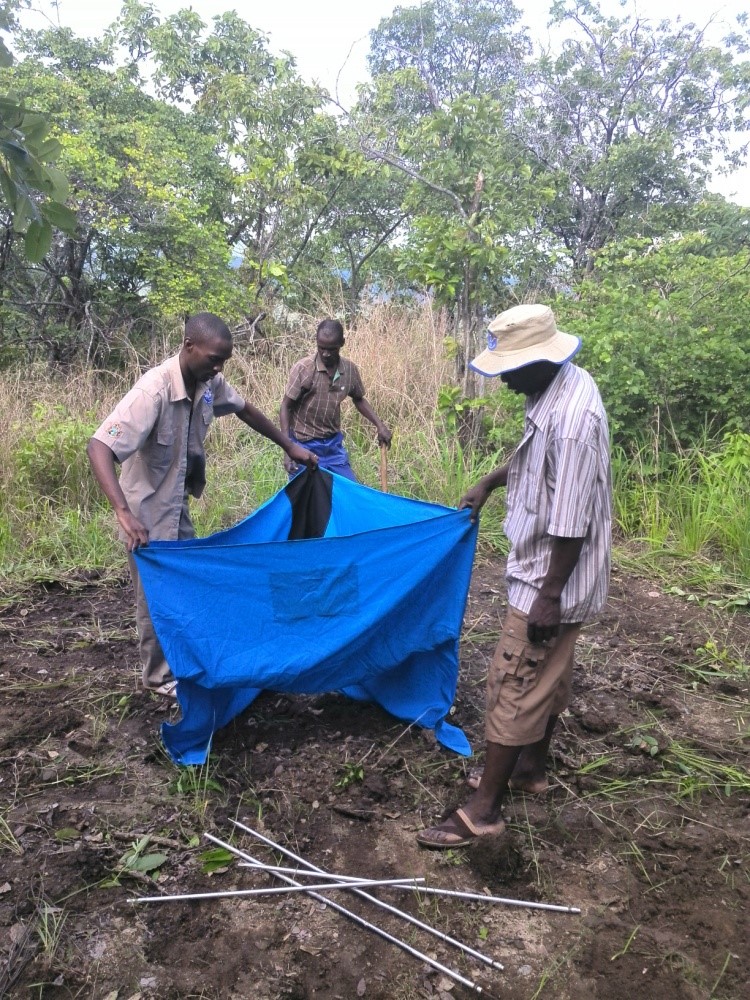
Tseste sampling in Zimbabwe

Tseste sampling in Zimbabwe (credit: Prof. Vupenyu Dzingirai)

Even in Sierra Leone where much of our work was necessarily curtailed, the anthropological research carried out pre-Ebola epidemic into the socio-cultural beliefs and practices surrounding infectious diseases found unexpected application during the epidemic. Much of it fed into an online platform delivering real-time evidence-based advice to organisations such as the World Health Organization, Department for International Development (DFID) and the UN Mission for Ebola Emergency Response (UNMEER).

To note all this is wonderful—and please do look at our other success stories—but some provisos are important. Impact is non-linear, takes time and can be hard to measure; some of our most compelling impacts (including those above) weren’t necessarily those we anticipated, while others—such as our original hope to facilitate more joined-up “One Health” interventions—require ongoing stakeholder engagement that will inevitably take time to filter through.

Also—and importantly—impact doesn’t happen on its own. The Dynamic Drivers of Disease in Africa Consortium, which was supported by the Ecosystem Services for Poverty Alleviation programme, had impact at its heart. It was stressed throughout the research process from conception workshop to final symposium.

So much science, both of the natural and social variety, is intrinsically fascinating. To make it worth celebrating too is a wonderful thing.

The impact stories from the Dynamic Drivers of Disease in Africa Consortium can be viewed at: bit.ly/One_Health_stories
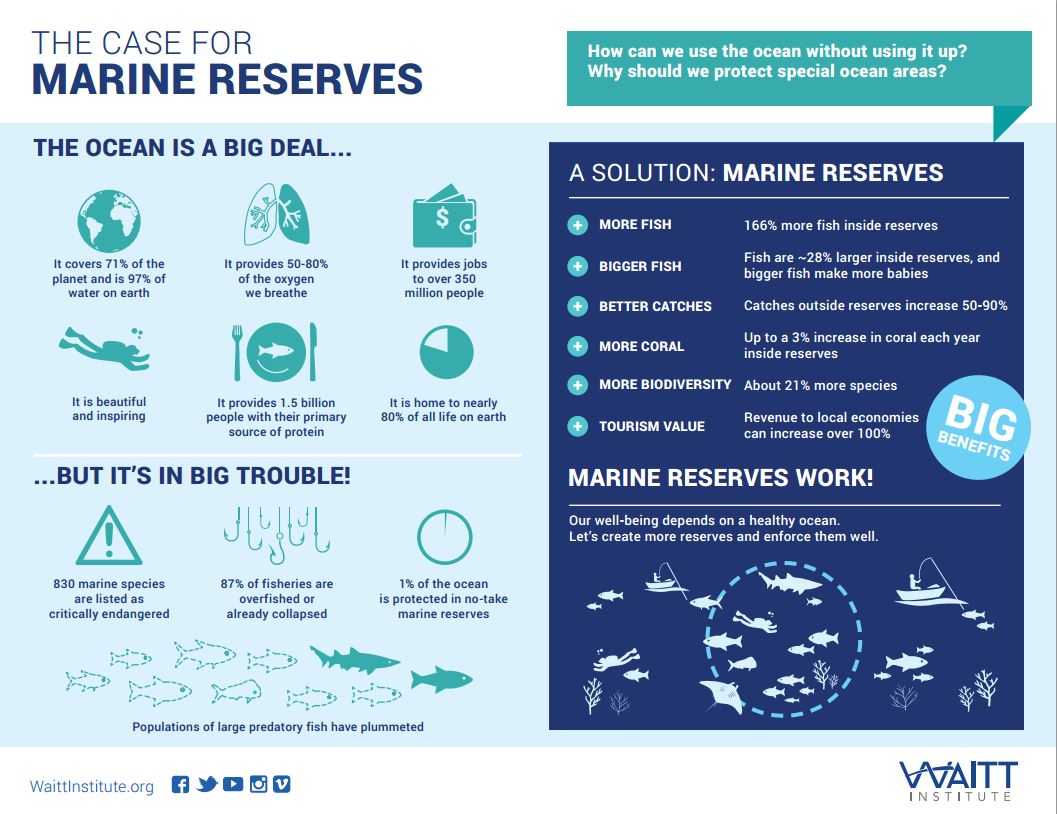
From despair to repair: Empowering communities to restore their oceans

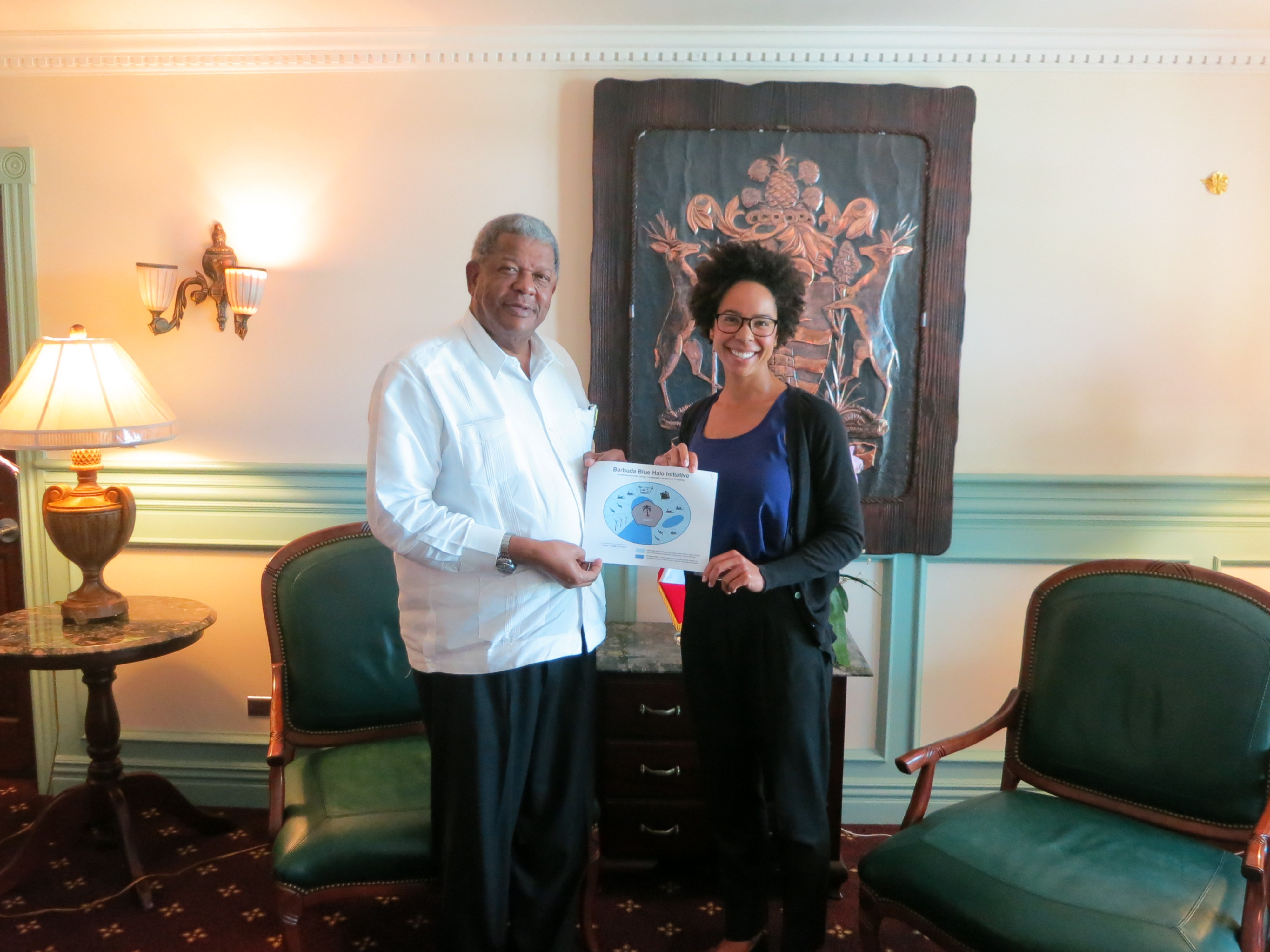
Dr Ayana Elizabeth Johnson with Barbuda Prime Minister, Baldwin Spencer.

Dr Ayana Elizabeth Johnson with then Antigua and Barbuda Prime Minister, Baldwin Spencer. (Image: Waitt Institute)

Dr. Ayana Elizabeth Johnson is a marine biologist and Executive Director of the Waitt Institute. Johnson’s mission is to collect, create, actualize and amplify the best ideas in ocean conservation. Her work has been featured in the New York Times, on her blog for National Geographic, in The Atlantic, and elsewhere. She holds a Ph.D. from Scripps Institution of Oceanography, a BA from Harvard University in Environmental Science and Public Policy, and has worked on ocean policy at both the National Oceanic and Atmospheric Administration (NOAA) and the Environmental Protection Agency (EPA). You can find her talking oceans on Twitter @ayanaeliza

“People used to talk about the size of the fish they caught vertically,” says a perspicacious 15-year-old Curaçaoan holding his hands off the ground at head height. “But now we show fish size horizontally.” As the young man lowers his hands at shoulder width apart to demonstrate this, it is strikingly clear the great fishing catches of old have all but gone in the southern Caribbean Sea.

The vibrantly scenic shores and glistening beaches of this bustling island are in stark contrast with the rather gloomier outlook of the once thriving Caribbean ecosystems that supported local fisheries. Speak to any of the older residents or fishermen on Curaçao and they’ll swear by the unprecedented changes they’ve seen in their oceans in the last half century.

This is a familiar picture across the Caribbean, which is suffering from the same threats of overfishing, climate change, pollution and habitat loss, seen worldwide. In August 2014, the National Oceanic and Atmospheric Administration (NOAA) listed 20 species of coral as threatened under the Endangered Species Act, including five Caribbean species. Projected impacts of global warming and ocean acidification motivated this action, but as marine biologist Ayana Elizabeth Johnson eloquently writes in a New York Times op-ed: “climate change really is only half the story.”

Johnson’s encounter with the young Curaçaoan and his jarringly precocious words struck a chord with her eight years ago, in the midst of her PhD research. Focusing on fisheries management and ecology in the southern Caribbean, she interviewed more than 400 fishermen, scuba divers, and locals in Curaçao and Bonaire, to inquire what major changes they had seen in their oceans.

“It is critical to understand what local people see as the threats to the ocean, as the perceived problems have a huge influence on what the perceived solutions should be,” says Johnson. “Often scientists’ outside perspective can be very different to the local one – and this can lead to disconnect when discussing sustainable policy and solutions.”

Continue reading

Citizen Science: In the Shadows of Volcán Tungurahua

How Ecuadorian communities and scientists are linking up to reduce the risk of one of South America’s most active volcanoes.

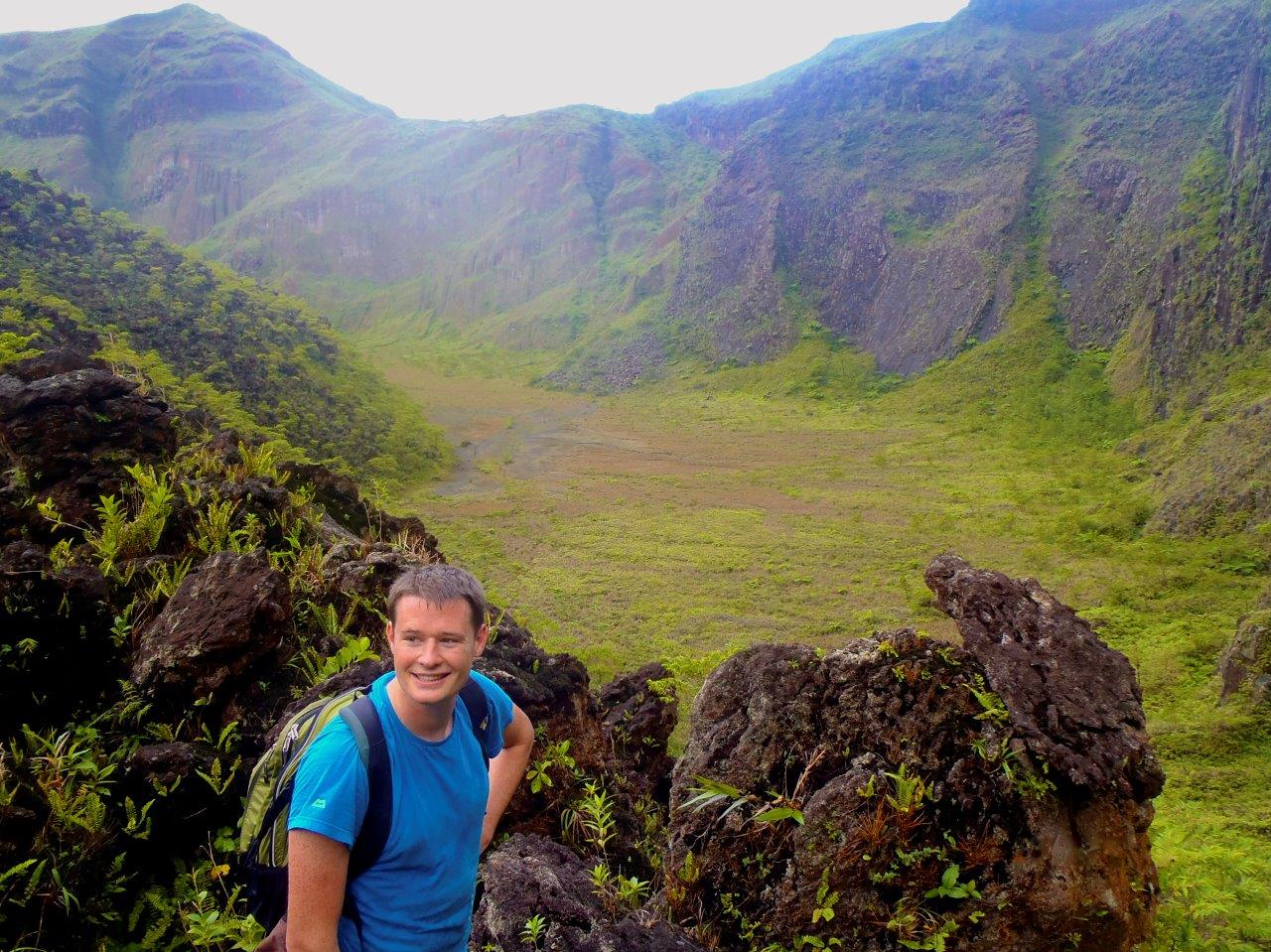
Jonathan Stone: “In volcanology a great deal of research is put into the prediction of specific hazards and the needs of those affected can often be overlooked." Image credit: (Richie Robertson)

Jonathan Stone: “In volcanology a great deal of research is put into the prediction of specific hazards and the needs of those affected can often be overlooked.” Image credit: (Richie Robertson)

Jonathan Stone is a PhD researcher at the School of Environmental Sciences, University of East Anglia, working in volcanology and disaster risk reduction.  His research focuses on the interactions between citizens, scientists and authorities around volcanoes, examining the effects of citizen science on these relationships. Although his background is in Geology, with an MSc in the Science of Natural Hazards, Jonathan went on to study for an MRes in Environmental Social Sciences before starting a PhD funded by the Economic and Social Research Council and the British Geological Survey. This experience (expertise in) of both the natural and social sciences has lead him to work on the Strengthening Resilience in Volcanic Areas (STREVA) project.

Outside of research, Jonathan is passionate about public engagement and was one of the creators of Volcanoes Top Trumps. More recently he has been involved in producing a series of short documentaries about the societal impact of volcanoes, told by the voices of those who lived through eruptions in St Vincent, West Indies. He likes running in his spare time, being involved in his local church – and of course – climbing volcanoes. 

Seemingly unflappable, tall and with a sharp sense of humour betrayed by a cheeky grin that can’t help but make you smile, Benigno Meneces is by no means your average citizen scientist. As a farmer in the modest surroundings of the Ecuadorian Andes village Bilbao, Meneces ploughs the land by day and monitors volcano eruptions by night. He is one of 35 residents across local villages and towns in the path of Volcán Tungurahua that make up a network of volunteers, known as the ‘vigías’.

Translated as watchman, guard or sentinel, the Spanish word ‘vigía’ only partially covers the passion and enthusiasm local villagers have brought to their voluntary roles protecting their communities. Made up from locals working in agriculture, teaching and business – the volunteers are tasked with communicating observations about the volcano to scientists at the Instituto Geofísico de la Escuela Politécnica Nacional (IG-EPN) and the Secretaría Nacional de Gestión de Riesgos (the Ecuadorian civil protection agency).

Tungurahua looms over the town of Baños.

Tungurahua looms over the town of Baños.

Continue reading

Christina Lewis Halpern: The New York woman inspiring young men from minority backgrounds to code

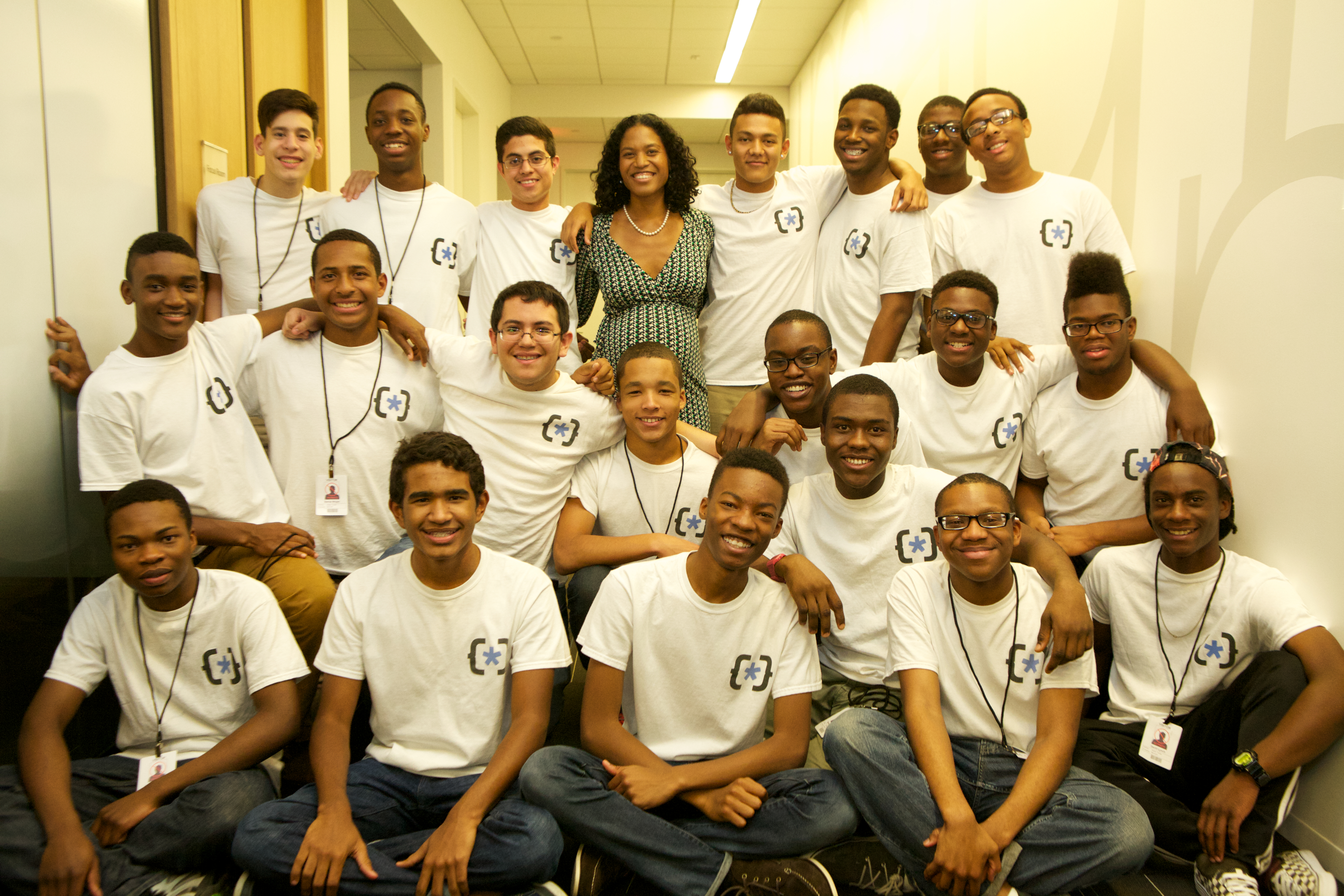
"It was an entirely new world, and IT opened my eyes to how few black and brown young men were active in the technology industry. " (Image courtesy of All Star Code)

“It was an entirely new world, and IT opened my eyes to how few black and brown young men were active in the technology industry.” (Image courtesy of All Star Code)

In the last instalment of our series celebrating prominent women in science and technology across the world, we speak to Christina Lewis Halpern, the founder of All Star Code, a charity which aims to prepare talented young men from minority backgrounds for careers in science and technology.

Christina Lewis Halpern is a social entrepreneur and award-winning journalist who is the founder of All Star Code, a unique, fast-growing non-profit education organization that attracts, prepares and places more young men of color in the technology sector. Christina is a board member of the Reginald F. Lewis Foundation, has been profiled in Fortune, Fast Company, Domino, and Vanity Fair and her work has been published in The New York Times Magazine and other publications. She has been recognized as a White House 2014 Champion of Change for STEM Access and has given talks at Harvard Law School, J.P. Morgan, the Wealth and Giving Forum, among others. She graduated from Harvard College and lives in New York City with her husband, son and dog. 

On a sign that adorns the premises of the vibrant New York technology charity, All Star Code, the bold messaging could not be clearer.  Displayed in large writing are the top ten principles that inspired the charity’s creation. Most prominently placed, and one that will ring true to many Americans, is number one. It reads: “Boys Matter: Young men of color are one of our nation’s greatest sources of untapped talent.” This is a sentiment echoed throughout the organisation’s activities, which primarily aims to prepare talented young men from minority backgrounds for careers in science and technology.

The west Chelsea offices have the look and feel of a traditional start-up. It is at once informal, accommodating and inclusive – the key ingredients that the charity, one year in, has thrived on. And yet, the protagonist behind its creation had until recently been very much an outsider to the technology community.

Wealth gap

Former Wall Street Journal business journalist, Christina Lewis Halpern, had a front row seat to observe and analyse the growth in income inequality and those with assets, who “reaped the seemingly ever-increasing rewards.” Through interviews with the upper echelons of the business world and covering real estate during both boom and bust, she became quickly attuned to the wealth gap. “The gap is very stark in the US with the average white household’s net worth of $110,000, compared to the average black household of around $6,000?” says Lewis Halpern. “It is a terrible problem. When I left the newspaper I was determined to see what I could do to make a difference.”

Lewis Halpern didn’t need to look far for inspiration, as the daughter of one of the most charismatic and powerful African-American businessmen in the US, the late Reginald F.Lewis. The month before her father died in 1993, she was named to the board of his foundation, aged just 12 years-old. The  Reginald F. Lewis Foundation had for many years funded grants of more than $10m to various non-profit programmes and organisations. It was dedicated to supporting youth, arts and education programmes that help minority communities.

Through writing a memoir on her father’s life, called Lonely at the Top, she was fortunate enough to speak to the professor who ran the access programme her father attended and which ultimately encouraged him to pursue law. “My father was one of the first African Americans to work in a white shoe law firm on Wall Street in the 1960s and 1970s, and was a pioneer in his field,” says Lewis Halpern. “He did this because of an access programme. Run by Harvard Law School, the programme would recruit college juniors from black colleges in the south and bring them to the city to introduce them to corporate law.”

Speaking to the now 85-year-old professor and Holocaust survivor, she felt immediately empowered and spurred on to create a prep programme that was as effective as her father’s. It was by chance that she attended her first ever technology conference, a world very different to the corporate environment she was used to reporting in. “It was an entirely new world, and IT opened my eyes to how few black and brown young men were active in the technology industry. It was clear this was the next economic opportunity and was where the wealth, innovation and job opportunities were,” declares Lewis Halpern.

She notes that if her father was a young man today, he would no doubt be working in technology. Through researching the industry and looking at what was available, it was clear there were some great programmes for young women, such as Black Girls Code, but a lack of opportunities for young minority men. “In honor of my father’s legacy – and everyone else who has fought for equal rights – I created this program to help the future generation of youth catch the next wave of opportunity,” remarks Lewis Halpern on her clear intentions for All Star Code.

"Many students we speak to have never heard of a hackathon or even knew there was such thing as a computer scientist. It’s clear we need more access in the pipeline.”

“Many students we speak to have never heard of a hackathon or even knew there was such thing as a computer scientist. It’s clear we need more access in the pipeline.”  (Image courtesy of All Star Code)

Continue reading

UNESCO Regional Chair on Women, Science & Technology, Dr Gloria Bonder, talks women in science and gender equality

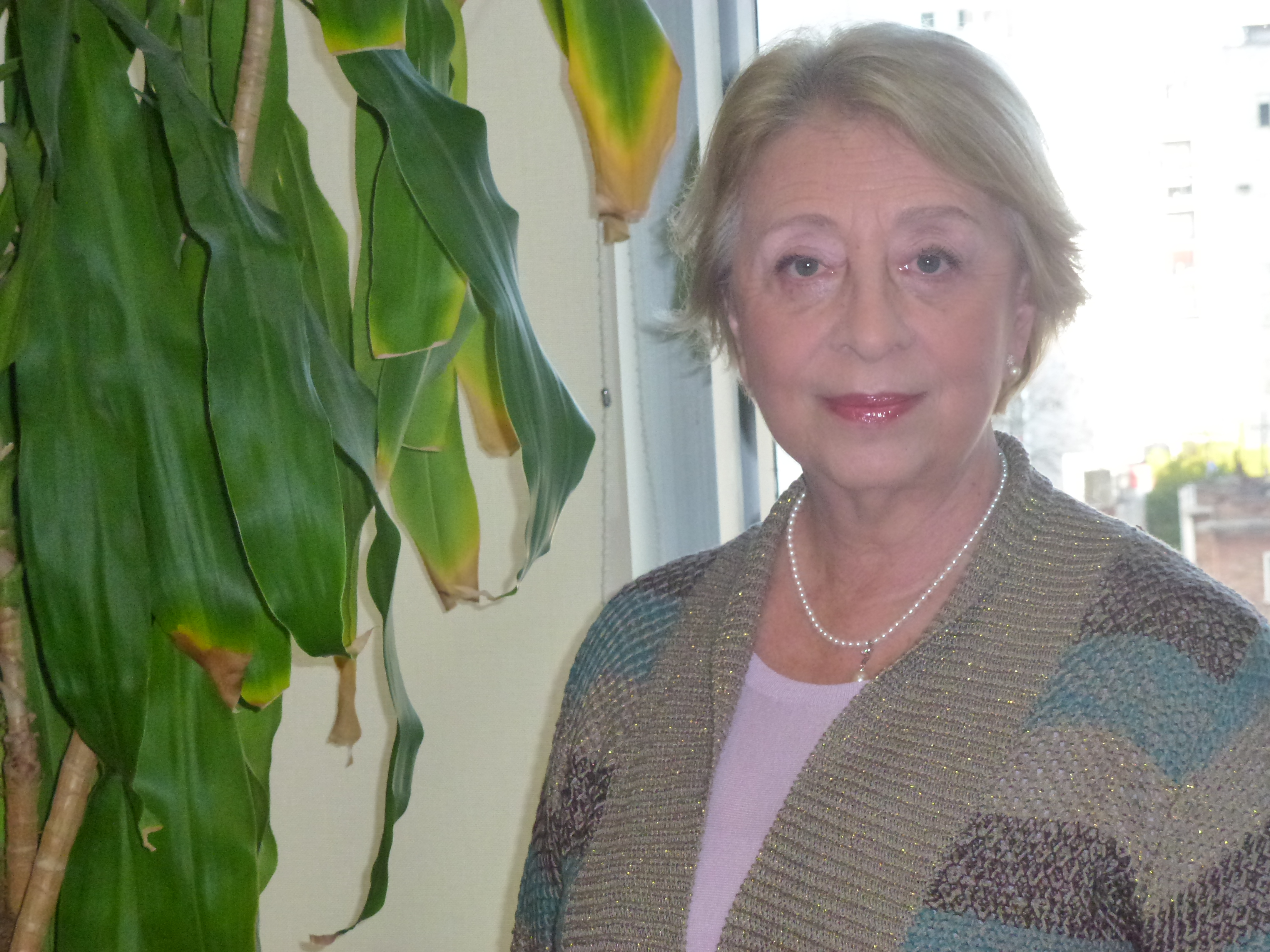
“What I would love to see is more qualitative research not on why women can’t and why so few, but who the women are that are successfully developing careers in engineering, technology or sciences.”

In part four of our five features this week celebrating prominent women in science and technology across the world, we speak to Dr Gloria Bonder, the coordinator of the Global Network of UNESCO Chairs on Gender and the UNESCO Regional Chair on Women, Science and Technology in Latin America. She talks about UNESCO’s latest global figures on women in science, changes that need to be made in both policy and education, and the necessity for more qualitative research on the women who are successfully developing careers in engineering, technology and science.

Dr Gloria Bonder is the Director of the Department of Gender, Society and Policies of the Latin American Postgraduate Institute of Social Sciences (FLACSO Argentina). She coordinates two regional programmes including the UNESCO Regional Chair on Women, Science and Technology in Latin America and the e-learning master’s programme on Gender, Society and Public Policies. Bonder is the coordinator of the Global Network of UNESCO Chairs on Gender. Since 2014, she has coordinated the region’s activities in the global GenderInSITE programme, through her role as the UNESCO Regional Chair. The programme aims to influence policies and policy makers in science, technology, innovation and engineering, to integrate gender equality principles and goals.

She is a researcher and consultant on Women, Science and Technology for several national, regional and international organisations such as: Minister of Science and Technology in Argentina, United Nations, Women and Development Unit, ECLAC and the Office of Science and Technology, UNICEF, UNIFEM, UNDP and UNESCO, among others. Bonder has developed several research projects on gender issues and/in technology and science, education, communication, health and youth, and published books and articles both national and international. She is a member of the advisory board of UN Women for Latin America and the Caribbean and WISAT (Women in Global Science and Technology).

“What I would love to see is more qualitative research not on why women can’t and why so few, but who the women are that are successfully developing careers in engineering, technology or sciences,” strongly asserts Gloria Bonder, coordinator of the global network of UNESCO Chairs on Gender and the Regional Chair on Women, Science and Technology in Latin America.  She continues: “We should look at why they chose that career, what their experiences have been so far, and what they like and don’t like, as well as how they overcome obstacles. We must move away from the basic question of why so few.”

Dr Bonder is not one to mix her words lightly. Having worked on gender studies for more than 40 years in science and technology, she has an authoritative voice and is deeply respected across the world. During unstable political times in the mid-1970s in her home country of Argentina, she was the catalyst behind the creation of a women’s study centre, carrying out independent research on different aspects of gender studies. At that time, it was quite the pioneering community and as a result led to the introduction of a postgraduate programme on women’s studies at the University of Buenos Aires, which Bonder was the founding director of between 1987 and 1999.

Fundamental Changes

As we look back at Dr Bonder’s achievements having set up the Gender, Society and Policies Institute in 2001 at FLACSO-Argentina, there is something on her mind that won’t shift. She interjects: “We need to not only attract both women and men to these careers, but make fundamental changes to the workplace culture and promote that both genders share caring responsibilities. If I was young now, would I choose the science and technology subjects that are taught today? No. To go into laboratories or industries  and make a career in such a way that you have to choose between having a family and enjoying other dimensions of your life, or being a successful scientist, is just plain wrong.”

At FLACSO, Bonder has been quite the influential director coordinating regional programmes across Latin America. The institute runs two huge programmes, which consist of the e-learning Master’s Programme on Gender, Society and Public Policies, and working on training and research projects for UNESCO and other organisations, alongside Bonder, in her role as the Regional Chair on Women, Science and Technology in Latin America.

Continue reading

Oreoluwa Somolu: The Nigerian woman empowering young women in Africa to engage with technology

"Lots of the girls who attend the centre have never seen or met a woman who is a computer scientist or engineer, so the prospect of becoming one, is not within the realms of possibility."

“Lots of the girls who attend the centre have never seen or met a woman who is a computer scientist or engineer, so the prospect of becoming one, is not within the realms of possibility.”

In the third of our five features celebrating Ada Lovelace Day and prominent women in science and technology across the world, we speak to Oreoluwa Somolu about empowering young women in Africa to engage with technology and pursue careers in science and technology.

Ada Lovelace Day, marked yesterday across the world, is an annual celebration of the achievements of women in science, technology, engineering and maths (STEM).

Oreoluwa Somolu Lesi is the Founder and Executive Director of the Women’s Technology Empowerment Centre (W.TEC). Somolu worked for several years in the United States at an educational non-for-profit organisation on a number of projects, which explored the interplay between gender and technology and which sought to attract more girls and women to study and work in science and technology-related fields. She has a Bachelors degree in Economics from Essex University, U.K, a Master’s degree in Analysis, Design and Management of Information Systems from the London School of Economics & Political Science and a Certificate in Applied Sciences from Harvard University’s Extension School. Her interests are the applications of technology in improving lifelong learning and also to raise the economic and social conditions of people (especially women and children) in the developing world.

Somolu also has some research experience, which includes working on the Gender Equity in Math and Science (GEMS) project, while working at the Education Development Center in MA, U.S.A from 2001 to 2003. She is a 2014 Vital Voices Lead Fellow, 2013 Ashoka fellow and a recipient of the Anita Borg Change Agent Award for her commitment to issues of women in computing in Nigeria.

It was while volunteering in a downtown Boston community centre and women’s shelter, that Nigerian-born STEM enthusiast Oreoluwa Somolu realised the severe lack of awareness around the benefits of using technology. Every day she would teach women and children from across different parts of the US city how to use computers, answering questions and offering guidance on web design and basic programming. It would often surprise her how “mysterious” computing was to many, but made her fully grasp the profound impacts technology could have on people’s lives.

“I naively expected everyone to be able to use a computer as this was America, but found that to be far from the truth,” remarks Somolu. “It was an eye opener to the real world, where more women and people from ethnic communities considerably lacked computer skills. Some had never turned on a computer before, let alone knew the benefits. It was so empowering to see women return to the centre a few months later to report they had found a job as a result. They had a new found self-confidence.”

Continue reading

Nature India Editor Subhra Priyadarshini on the Indian science boom and the role of journalism

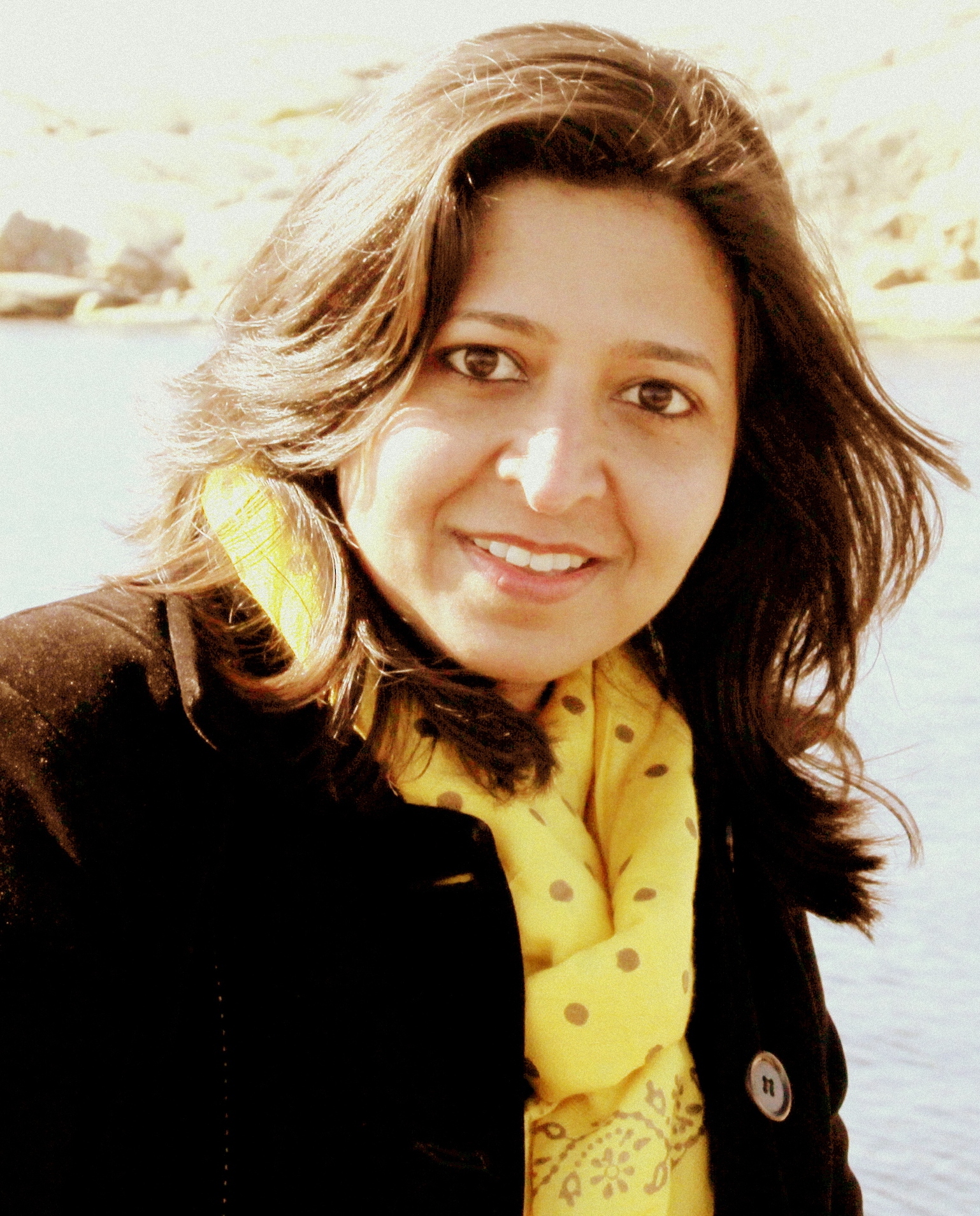
"India is now transitioning from a developing country into an emerging economic superpower and as a result many areas of development, including science, are catching up quickly."

“India is now transitioning from a developing country into an emerging economic superpower and as a result many areas of development, including science, are catching up quickly.”

In the second of our five features celebrating Ada Lovelace Day and prominent women in science and technology across the world, we speak to science journalist and Nature India Editor, Subhra Priyadarshini about the new resurgence of Indian science and the role science journalists play in narrating the country’s success stories.

Ada Lovelace Day, marked today across the world, is an annual celebration of the achievements of women in science, technology, engineering and maths (STEM).

Subhra Priyadarshini is an award winning science journalist and currently Editor of Nature India, the Nature Publishing Group’s (NPG) India portal. She was a deadline-chasing journalist covering politics and sports, fashion and films, crime and natural disasters in mainstream Indian media for over a dozen years. She finally chose to come back to her first love – science – in 2007 launching Nature India. Subhra has been a correspondent with major Indian dailies The Times of India, The Indian Express, The Asian Age, The Telegraph, news agency Press Trust of India (PTI) and environment fortnightly Down To Earth. She worked briefly for the Observer, London. Priyadarshini received the BBC World Service Trust award for her coverage of the ‘Vanishing islands of Sunderbans’ in the Bay of Bengal in 2006. She received letters of commendation from the PTI for her coverage of the Orissa super cyclone in 1999 and the Indian Ocean tsunami in 2004. She is a regular contributor to BBC Radio’s Hindi science programme ‘Vigyan aur Vikas’ (Science and Development) and taught science communication at University of Calcutta.

The scientific landscape of India is a constantly fascinating and fluctuating one. In a country poised to be a global super power, yet fighting issues of poverty, healthcare and education, Indian science has seen something of a new resurgence over the last decade. Research output and publications have increased significantly and an evolving technology industry has been reaping just rewards. And yet for all these exciting developments, in a country where more than 1.2 billion people live, there has until recent years been one fairly absent protagonist: the media.

When Subhra Priyadarshini, who started Nature India in 2006, first specialised in science journalism after nearly 10 years covering everything from economics to sport, she found there were certain challenges to getting science on the news agenda. “In the early 2000s you would be lucky to find a science journalist working on a newspaper or magazine in India. You had to be a generalist and would find yourself one day covering Bollywood and the next looking at financial markets,” says Priyadarshini, who has worked at the Times of India, The Asian Age and the Press Trust of India, among others. “Science was always my first love and I used to get the kind of fulfilment from a science story that I would not get from say a political reportage.”

Phenomenal growth

Priyadarshini is still today only one of a small handful of science journalists in India who are helping to narrate the ever evolving stories of Indian science. She believes many more science stories are now starting to be reported in the mainstream media, a distant reality when she first started specialising in 2000. “Scientific stories that were not popular interest ten years ago are now starting to creep into mainstream media and basic science research is getting more in-depth coverage,” Priyadarshini says. She cites new genomes being mapped or a new nanomaterial with applications in a variety of themes as the types of stories that are now starting to garner media coverage.

Continue reading

Distinguished South African Professor Tebello Nyokong on science, education and innovation

"When I talk to schools or parents, the first thing I say, is let your children touch and explore, it’s the first path to science.” Image courtesy of Ettione

“When I talk to schools or parents, the first thing I say, is let your children touch and explore, it’s the first path to science.” Image courtesy of Ettione

In the first of our five features celebrating Ada Lovelace Day and prominent women in science and technology across the world, we speak to Professor Tebello Nyokong, an internationally renowned Chemist, on African science, education and innovation.

Ada Lovelace Day, which this year takes place on October 14, is an international celebration of the achievements of women in science, technology, engineering and maths (STEM).

Prof Tebello Nyokong holds a DST/NRF professorship in Medicinal chemistry and Nanotechnology at Rhodes University in South Africa.  She is also Director of the DST/Mintek Nanotechnology Innovation Centre (NIC)-Sensors at Rhodes University where she joined in 1992 after lecturing at the University of Lesotho for five years. She has been undertaking research on applications of phthalocyanines in healthcare: as photodynamic therapy (PDT) of cancer agents in combination with nanosized metal nanoparticles and quantum dots. In September 2009, a special motion was passed in the South African National Assembly acknowledging Professor Nyokong’s role in the transformation of science in South Africa. Nyokong has also been award the title of Distinguished Professor at Rhodes University and recognized by the Royal Society in Chemistry/Pan African Chemistry Network as a  Distinguished Woman in  Chemistry. 

“I keep telling people I’m no longer a role model, I’m too old, too straight and not hip enough,” asserts a hysterical Professor Tebello Nyokong in her own typically modest and charismatic demeanour. Of course, her defiance is far removed from the truth. The quick-talking, affable and extremely accommodating distinguished professor is today not only one of the most internationally respected scientists in the world, lauded for her pioneering research into photodynamic therapy for cancer treatment, but is a constant source of inspiration for students across Africa.

Brought up in politically unstable times in her home country of South Africa, she was sent to live with her grandparents in the mountainous terrain of Lesotho. As an eight-year-old, she would work as a shepherd on alternate days from school, learning the traits of a hard day’s shift. It was here where she found “much solace in nature’s beauty” and learned to appreciate the great science around her.

Challenging expectations

Initially dissuaded by her peers to study sciences at school, Nyokong was desperate for a challenge. After three years studying arts and humanities, she realised they had guided her in the wrong direction. “There were no role models to look up to back then. You just learned to follow your peers,” says Nyokong. “They told me science was too hard and way beyond me, but I was adamant I wanted to do it and with two years left switched courses.”

Nyokong pins much of her determination and steely resistance down to her upbringing and this is evident in her unerring enthusiasm for teaching as the director of the Nanotechnology Innovation Centre at Rhodes University in South Africa. “I was brought up to work hard, whether it was as a young shepherd or working long hours mixing cement and concrete for my father’s company. I was just used to touching things,” brims Nyokong. “Now when I talk to schools or parents, the first thing I say, is let your children touch and explore, it’s the first path to science.”

As an influential voice in South African education, she is not afraid to express her fearless views on the teaching of science and believes much needs to be changed. “In South Africa we have this system that constantly strives for 100% pass rates at schools. Many of the teachers themselves find science hard, as very few are trained in teaching the discipline, and therefore under great pressure, they discourage students from courses. It is a deeply flawed system,” notes Nyokong despondently.

“Science is not just part of our culture, it is part of our everyday life, and role models are crucial in promoting this." Image courtesy of Sophie Smith.

“Science is not just part of our culture, it is part of our everyday life, and role models are crucial in promoting this.” Image courtesy of Sophie Smith.

Continue reading

Roma Agrawal on bridging the diversity gap in engineering and inspiring a future generation

Roma Agrawal: "We have to make sure stereotypes don’t get in the way of future choices.”

Roma Agrawal: “We have to make sure stereotypes don’t get in the way of future choices.” (Image courtesy of Nicola Evans, WSP)

Roma is an Associate Structural Engineer at WSP where she spent six years working on The Shard. Roma has a BA in Physics from the University of Oxford and an MSc in Structural Engineering from Imperial College.

She was awarded the ‘Diamond Award for Engineering Excellence’ and is an M&S Leading Lady. Roma was the only woman featured on Channel 4’s documentary, ‘The Tallest Tower’. 

Outside work, she promotes engineering careers to young people. She is a founding member of the Your Life campaign and has spoken to more than 3000 people at over 50 organisations in the last three years. She enjoys Indian classical, ballroom and Latin dancing, yoga, reading and baking. You can follow her on twitter @RomaTheEngineer and find out more at www.RomaTheEngineer.com.

When a young Roma Agrawal moved from her hometown of Mumbai in India to London, she could never have imagined that years later her ideas would be helping shape the future skyline of the capital. A maths and science whizz at school, with a childhood passion for design, technology and all things LEGO, she was encouraged by her teachers to go on to study physics at the University of Oxford.

At Oxford, Agrawal found her interests for design and science were a perfect fit to pursue a career in structural engineering. “I had no idea what I wanted to do when I grew up. I was fortunate that the teachers at my school were very encouraging of girls wanting to go on to study maths and science,” says Agrawal.

It was this encouragement throughout her education that sticks with her today and remains a source of inspiration for many of her projects. As one of a small team of structural engineers at WSP, who worked on the city’s most iconic building, The Shard, Agrawal’s profile quickly rocketed into the media spotlight. Yet it was with this attention that opportunity rose. Promoting engineering, scientific and technical careers to young people and under-represented groups, particularly women, became a priority and Agrawal was the perfect role model to do this.

Continue reading

Nature vs Nurture: Girls and STEM

This article was written by Zuleyka Zevallos, Buddhini Samarasinghe and Rajini Rao.

Dr. Zuleyka Zevallos is a research and social media consultant with a PhD in Sociology. Dr. Buddhini Samarasinghe is a molecular biologist specialising in cancer research. Professor Rajini Rao is a research scientist and graduate program director at Johns Hopkins University. Together they manage STEM Women, a website dedicated to highlighting the issues facing women in STEM. Follow them on Twitter and Google+

In a New England pub after a conference, our male academic colleagues shrug their collective shoulders at the gender imbalance; in their opinion, women drop out of science because their hormones make them “different”. As women in science know all too well, similar examples of bias abound in academia. We read with familiar dismay, therefore, the arguments that girls find science “boring,” that attempts to bridge the gender divide “deny human biology and nature,” and that efforts to achieve gender equality in the Science, Technology, Engineering and Mathematics (STEM) fields are doomed. Attributing the gender gap to biology misses the obvious contribution of societal and institutional biases.

The “girls are not interested in STEM” mantra is itself an example. Knowledge of a prejudicial stereotype can lead to enough anxiety that it becomes a self-fulfilling prophecy. Although initially applied to racial bias in IQ tests, ‘stereotype threat’ can be extended to gender as well. Negative stereotypes are transmitted from parents and teachers to girls. Reminding girls that they are girls just before a math test can impede their performance. This effect can be seen in children as young as age five. The key point is that as adults, we are able to view stereotypes as generalisations about a group. Unfortunately, young children are more accepting of stereotypes, and may implicitly believe that girls are indeed poor at STEM subjects. As girls grow up, these stereotypes affect their identities as STEM professionals. So how do these stereotypes take shape?

The Draw a Scientist Test (DAST) shows that science stereotypes are socialised from an early age. The test has its origins in a pilot study from 1957, in which high school students were asked to describe their image of a scientist. Subsequent research from the 1960s onwards has examined a timeline of when this image is cemented. This research finds that children in kindergarten and the first grade are less likely to draw a stereotypical scientist; that is, a White man with facial hair, who wears a lab coat and glasses, and who is surrounded by lab equipment, formulae and books, making a “Eureka!” style exclamation. By the second grade, however, “the stereotype has began to take root,” due to a combination of how science is taught at school as well as through media images and social ideas and expectations that children pick up from parents, teachers and other influences. By the fifth grade, the stereotype is overwhelmingly fixed. A review study of 50 years worth of international research on the DAST demonstrates that, across cultures, “the stereotype of scientists being male has largely endured since 1957.” More specifically, the research shows that in Western cultures, this image is of a White male, even amongst minority students. However, children exposed to female scientists, via a combination of visits by women scientists in the classroom and by talks and readings about women’s contribution to science and their careers, are more likely to draw both women and men as scientists. Studies demonstrate that teachers themselves can contribute to these stereotypes, by giving boys more attention in class, and by rating their abilities higher than girls, even when girls get the same test scores as boys. Conversely, “intervention programs” for teachers, including career information and weekly visits by women researchers to the classroom, as well as short courses with follow-up visits, are subsequently less likely to result in stereotypical DAST results amongst students. This is because the teacher’s bias has been actively addressed, leading to the reinforcement of diversity in their teaching.

Despite the fact that people are socialised into believing that girls can’t do science, popular culture blames the individual; young girls are often chastised Don’t get your dress dirty, or Be careful, why don’t you hand that to your brother, as a recent viral video reminded us. If only girls were more confident. If only girls spoke up and asked more questions in class. If only they actively looked for mentors. Then they could easily overcome this stereotype threat and perform just as well as boys in STEM subjects. Unfortunately this “leaning in” viewpoint is naive because it ignores the institutional disadvantages contributing to the academic exclusion of women and minorities.

Sexual harassment is widespread in academic fieldwork. Women trainees are the primary targets with the perpetrators being predominantly senior professional males. Female undergraduates in male dominated fields report higher levels of sex discrimination, and are more likely to consider changing majors. Another study showed that high-achieving male biologists train fewer women than men in their laboratories, and that these men predominantly fill Assistant Professor slots in academia. In the same study, biomedical science male postdocs are 90% more likely than women to have an adviser who is a Nobel laureate. Not only is there a ‘leaky pipeline’ problem, the plumbing itself is broken.

Image Courtesy of www.stemwomen.net

Image Courtesy of www.stemwomen.net

Continue reading