Knowledge, networks and nations

james wilsdon.jpg

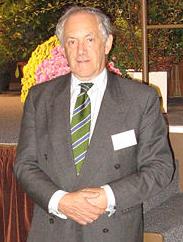
This week’s guest blogger is James Wilsdon, Director of the Science Policy Centre at the Royal Society since 2008. Prior to this, he was Head of Science and Innovation at the think tank Demos. His publications include ‘See-Through Science’ (Demos, 2004) ‘The Public Value of Science’ (Demos, 2005), ‘The Atlas of Ideas’ (Demos, 2007) and ‘China: the next science superpower?’ (Demos, 2007).

At the 1908 Olympic Games in London, China failed even to field a team. Eighty years later, in Seoul, they finished in 11th place. And in 2008, as Beijing played host to the most spectacular Olympics in history, China topped the table for the first time, with a tally of 51 gold, 21 silver and 28 bronze medals.

If this is what China can achieve in sport, how quickly can it become a leader in science and innovation? This is one of the questions that prompted the Royal Society’s recent report Knowledge, Networks and Nations. The report maps the global landscape for science in 2011 and charts the growing strength of nations such as China, India and Brazil; as well as the emergence of newer players in the Middle East, South-East Asia and North Africa.

In both science and sport, the Chinese government has set ambitious, long-term targets and mobilized vast resources to achieve them. Just as the $40 billion spent on the Beijing Games dwarfed anything that had gone before, so China is now at an early stage in the most ambitious programme of research investment the world has ever seen. Since 1999, China’s spending on R&D has increased by almost 20 per cent each year. It is now spending US$ 100 billion a year on research, and hitting its target of 2.5% of GDP by 2020 will require a further tripling of investment, to around $300 billion a year.

r and d spending.bmp

Quantity of input doesn’t necessarily result in quality of output, but these investments are starting to yield results. Since 1981, the number of peer-reviewed papers produced by China has increased 64-fold, and it is well on target to become the leading producer of scientific publications within this decade, perhaps as soon as 2013. China’s Olympic triumphs flowed in part from its careful targeting of medal-rich sports like gymnastics, shooting and judo. In the same way, it has focused its research investment on disciplines where the opportunities are greatest.

Alongside globalisation, a second theme of the ‘Knowledge, Networks and Nations’ report is collaboration. The scientific world is also becoming more interconnected: over a third of all articles published in international journals are internationally collaborative, up from a quarter 15 years ago. This is happening for a variety of reasons. Advances in communication technology and cheaper travel have played a part, but the primary driver is scientists themselves, seeking to work with the best of their peers and to access complementary resources, equipment and knowledge. So at a time when budgets in many countries are under pressure, our report makes a strong case for continued investment in collaboration, as vital to high-quality research, and to our capacity to address the big social and environmental challenges that we face today.

Science policy at the Royal Society

The ‘Knowledge, Networks and Nations’ report is one recent example of the contribution that the Royal Society makes to public policy. We’ve been doing this for a long time: our earliest report, on the state of Britain’s forests, was delivered to King Charles II back in 1664.

But today, scientific advice to underpin policy is more important than ever before. In 2009, the Royal Society established a Science Policy Centre to strengthen the independent voice of science in UK, European and international policy. Each year we publish half a dozen reports, usually produced by groups of our Fellows and other experts. We also run workshop and seminars, as well as engaging directly with policymakers and with the media.

Above all, we want to make the Royal Society a hub for debate about science, society and public policy; to act as ‘honest brokers’ of the choices that confront scientists and policymakers in the 21st century.

Last year, the Royal Society celebrated its 350th anniversary. As historians such as Steve Shapin have described, in its early years, the Royal Society was a ‘house of experiment’. Hooke, Boyle, and the Society’s other founders – ‘ingenious and curious gentlemen’ as they styled themselves – met regularly to conduct experiments, to peer through newly-invented telescopes and microscopes, and to dissect strange animals.

Today, while the Society funds the work of several hundred research scientists through its grant schemes, no actual experiments take place within its four walls. Science moved out long ago into the universities and corporate R&D labs. But in other ways, the Society remains a house of experiment. Only now, the experiments that take place are in those messy and contested commons and borderlands between science, politics and society.

This, as I see it, is one of the primary responsibilities of a national academy of science in the 21st Century – to be honest and open in our recognition of the shifting politics of knowledge. To ask and to help answer the burning social, ethical and political questions raised by and for science today.
It just doesn’t feel right

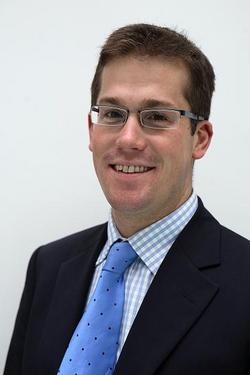
simon.bmpThis week’s guest blogger is Simon Laham, PhD, a social psychologist and a Research Fellow and Lecturer in Psychological Sciences at the University of Melbourne, Australia. His work focuses on the psychology of morality.

Matthew is playing with his new kitten late one night. He is wearing only his boxer shorts, and the kitten sometimes walks over his genitals. Eventually, this arouses him and he begins to rub his bare genitals along the kitten’s body. The kitten purrs and seems to enjoy the contact.

What do you think about this? Morally right or wrong? Well, if you’re like most, you think that Matthew’s behavior is not only pretty disgusting, but morally condemnable.

But now ask yourself why you think it’s wrong? No one is harmed here, after all; Matthew is having fun and it seems that the kitten isn’t too bothered. What about germs? Well, let’s say that the kitten has just been bathed and there is no chance of Matthew catching something. Still wrong?

When psychologist Jonathan Haidt presented participants in one of his studies with scenarios just like this (depicting harmless, but norm-violating behaviors, such as masturbating with frozen chickens and eating road kill), he found that many people relentlessly insisted that such behaviours were “just wrong,” even though they couldn’t muster any convincing justifications. These participants sat, “morally dumbfounded,” as Haidt put it, asserting simply that “it just feels wrong.”

When prodded, people’s moral foundations tend to wobble a little bit. Although many of us like to think that our moralities are firmly grounded in principles – thou shalt not kill, love thy neighbour as thyself – and that moral judgments spring from the logical application of such principles, it just so happens that many of our moral judgments aren’t driven by the rational, deliberative contemplation of moral rules at all. Rather they are driven by intuitions. We witness an action, experience an intuitive flash of disgust, or anger, for example, and, as a result, deem the action morally wrong. Matthew isn’t violating any lofty moral law with his kitten rubbing, he’s just doing something disgusting, and, thus, wrong.

Just where do these intuitions come from? It’s quite likely that they have an evolutionary basis. Put simply, we feel disgusted or angry about behaviors that somehow compromised the reproductive success of our evolutionary ancestors.

Take incest as an example. Those ancestors of ours who happened to have felt disgust at incest would have been less likely to commit it, and thus more likely to have produced viable offspring, passing on their incest-condemning genes to future generations. Certain moral intuitions conferred reproductive advantages in the past; those are the moral intuitions we feel today.

It’s quite sobering to realise that your moral outlook is shaped not by appeal to higher reason, but by the contingencies of your evolutionary history. Still more sobering, however, are results from other research which suggests that opinions about important moral questions are influenced by a raft of other, thoroughly irrelevant factors.

Consider this: if I had happened to write the Matthew scenario above in chiller font or blackadder ITC font or some other difficult to read font, chances are you would have found it even more morally wrong than you did originally. Some work from my own lab shows that when people have a difficult time processing a stimulus (because, for example, it’s hard to read), they are more likely to think it’s morally wrong than if they have an easy time processing it. The idea here is that “disfluent” processing feels negative, and this negativity seeps into our moral judgments, making us harsher moral critics.

Or consider this question: What entities in the world deserve our moral consideration? Apes? Dogs? Fetuses? This is not a trivial question. Your answers will form the basis of your attitudes towards vegetarianism, abortion, or animal experimentation, among other pressing moral issues. Yet even here we see the subtle influence of moral irrelevancies. When people are asked to generate a list of such morally worthy entities by selecting candidates from a longer list, they end up with fewer candidates than people asked to cross unworthy entities off a longer list. The size of your moral community, in other words, depends on how you happen to be asked to populate it.

The list of subtle shapers of moral judgment goes on: show people a clip from Saturday Night Live and they are more likely to make utilitarian judgments; have them make judgments in a dirty room, littered with used tissues and pizza boxes, and they become harsher moral judges; expose people to “fart spray” and they less likely to endorse marriage between first cousins…

It should give you pause to realize that your judgments of right and wrong – be they about euthanasia, incest, abortion, or kitten masturbation – are subject to a range on non-rational, gut feelings or intuitions rather than under the control deliberative, rational, reasoning processes. The belief that our moral compasses are guided by a set of well thought-out principles that we consciously and painstakingly apply to each new situation is simply inconsistent with the empirical evidence. This belief fails to capture the complexity of moral judgment and it ignores the now well-documented fact that our judgments of right and wrong are driven largely by intuitive and often irrelevant factors that reside largely outside of our awareness.

Working collectively to advance UK science and innovation

D.G.bmp

This week’s guest blogger is Diana Garnham, the chief executive of the Science Council, and chair of the Department for Business Innovation and Skills Expert Group on science for careers, and a regular on the FT science podcast. Prior to joining the Science Council, Diana has managed various other organisations, including the Association of Medical Research Charities. Throughout her career she has been involved with many science related engagement initiatives and policy campaigns.

Sir Gareth Roberts, was very clear about his reasons for wanting to set up the Science Council in 2000:

There are many challenging issues facing the world in the 21st Century and the science community will need to work both collectively and collaboratively to tackle these.

My principal task as Chief Executive of the Science Council is to establish priorities and ways in which the science community can work collaboratively to tackle the key issues faced by society today.

The Science Council has dual aims of advancing professionalism in science and increasing the application of science for social benefit. There are now more than 30 member organisations from across the spectrum of science – learned societies including chemistry, biology, physics, mathematics, psychology, as well as professional bodies from nuclear to soil science. It is funded collectively by these organisations and by individual professional scientists through the Chartered Scientist scheme.

What is science?

The Science Council’s embraces science and scientists from basic research through to development and application, as well as across disciplines and professions: it is both inter-disciplinarity and multi-disciplinarity. One of our early tasks was to establish a definition of science that worked across this breadth and in 2008 we published a definition that seems to be passing the test of time. It took us 18 months to agree science is the pursuit of knowledge and understanding of the natural and social world following a systematic methodology based on evidence. Science is a methodology rather than a discipline, and scientists are those who create knowledge and understanding and/or use and apply it.

Working in collaboration

As a seasoned chief executive of umbrella bodies I was under no illusions that getting more than 30 organisations to work together to make a difference was going to be an easy task, and there have certainly been ups and downs in the early years. There is now stronger ‘Science Council-ness’ and a coming together that has enabled us to set out overarching policy on science and innovation investment. This includes establishing some key collaborative projects on outreach, careers and skills, science policy, and advice to Government. Most importantly we help to raise the standards of professionalism in the practice of science, at all levels.

Developing and supporting the science workforce

The term scientist has come to be associated largely with research and development and there is a tendency – particularly in academia – to consider only those with PhDs as real scientists. Apart from this clearly not being true – many more scientists are employed outside academia than within it, with the majority or practicing scientists neither working in the public sector nor education. I personally don’t find this at all surprising – that the more science we discover and develop, the more scientists we need to translate and apply it in society and the economy. A narrow view of the role of the scientist is not only inhibiting young people from entering science, but inhibits the mobility of those who want to move on academia.

If the UK economy is going to compete globally then it will need to attract young people into science and to raise awareness of the career opportunities arising from the study of science and maths. The forecasts suggest demand is between 640,000 to 750,000 more people in the workforce with these skills by 2017-2024. UKCES suggests 58% of all new jobs will require science and technology skills. These numbers are staggering, therefore providing better careers information for school students, science teachers, careers advisers and parents has to be a high priority. There are well documented skills shortages and skills gaps: current shortage areas include food science and medical physics, for example, both sectors where we need to have strong skills to maintain public confidence.

The Science Council is leading work to increase the take up of science and maths post 16 in order to meet these skills demands. We have much deepened understanding of the many different roles that those with science backgrounds undertake in the economy and the mix of skills and competencies that employers will need, as well as seeking to understand transferability and generic knowledge and skills. We know that 58% of STEM graduates work for small and medium sized businesses and not the large, high profile employers that most can name. Central to all of this is the need to promote the profession of scientist – without improved awareness of what scientists do and what sort of people they are, we have no hope of inspiring more young people to aim for science careers. Our Hidden Science Map aiming to get all types of scientists, technologists, engineers and mathematicians to come out and show just how much science and technology is going on everywhere in the UK – sign up on the map – it’s and easy way to ‘do your bit’ on careers and skills.

In 2004 the Science Council launched the Register of Chartered Scientist and since then more than 15,000 practicing scientists have been registered. Last year we fulfilled our commitment to high standards of current competence for registrants by implementing annual revalidation through CPD, one of the first technical based registers to do so. Later this year we will launch a Science Technician Register and next an Intermediate ‘graduate’ register. All the registers encapsulate the multi-disciplinary nature of 21st Century science in which individuals will often practice or specialise in different areas of science and technology during their careers. But they will also, for the first time, recognise the different types and levels of skills that a science and innovation based economy will need.

For more information about the Science Council, its projects and the work of its member bodies click here.

On being

Cross-posted with permission of OUPblog.

Peter_Atkins_Paris_2007.JPG

Peter Atkins is the author of almost 60 books, including Galileo’s Finger: The Ten Great Ideas of Science, Four Laws that Drive the Universe, and the world-renowned textbook Physical Chemistry. His latest book is On Being, which is a scientist’s exploration of the great questions of existence. You can watch a video of him in conversation about this book here._

Deep questions of existence have entertained both sharp and dull minds throughout the history of humanity. Where did it all come from? What is the point of it? What happens after you die? Great mounds of implausible speculation have been tipped on these pressing questions by theologians and philosophers; whole churches have been founded as a result of the institutionalization of the answers. But all those answers were guided by speculation and sentiment and typically expressed in compelling language that captured minds but concealed emptiness. They were emperor’s new clothes with no emperor within.

Then, along came science. It is really very surprising that it took humanity so long to stumble on a technique of investigation that is so obvious: to examine the world to discover what it is really like rather than merely to think about it and then assert what it is like. At first, like a child with its milk teeth, the emerging band of scientists could tackle only the soft pap of questions, such as the swing of a pendulum, the action of a lever, and the motion of a planet. In due course, those milk teeth gave way to fangs of a sharper cut, and the international, interacting, intercultural army of practised scientists began to think about tough questions. Even the grand questions, such as the large-scale structure of the universe became part of their diet, and they began to digest what hitherto had seemed indigestible.

Science can now illuminate the great questions of being. Admittedly not fully, for science is not yet complete and certainly cannot tell us yet how the universe emerged out of absolutely nothing, nor can it tell us all the details of the emergence of the organic from the inorganic and its subsequent flourishing as the biosphere. It does know in considerable detail how life achieves a certain virtual immortality by passing on its embedded information from one generation to the next, and it understands in remarkable detail how Nature has stumbled on a way of interpreting that information as actual organism. It also knows in considerable detail how nature goes about clearing out those organisms once they have had the opportunity to pass on their precious information to the next cart, a clearing out that makes way for the continuation of other lives. Science can even speculate, but now with speculation in the hard grip of theories devised on the basis of observation, what the long-term future of the world and perhaps even the universe will be.

Science is still stumped by some of the great questions of being. It still is unable to provide the answers to perhaps the two greatest questions of all: how something came into being from absolutely nothing, not just empty space, and how that something acquired the ability to reflect on such questions (that is, the emergence and nature of consciousness). But neither great question is outside the grasp of science, and both are becoming open to investigation. As scientists are cautious optimists, there is every hope that these truly great and extraordinarily difficult questions will give way to their mode of investigation.

All of humanity should take pride in the fact that the grasp of the human mind, especially when working collectively and in collaboration across space and time, appears to be capable of boundless comprehension. It is a taste of its achievements, which in my view adds wonder to existence, that I seek to provide in On Being.