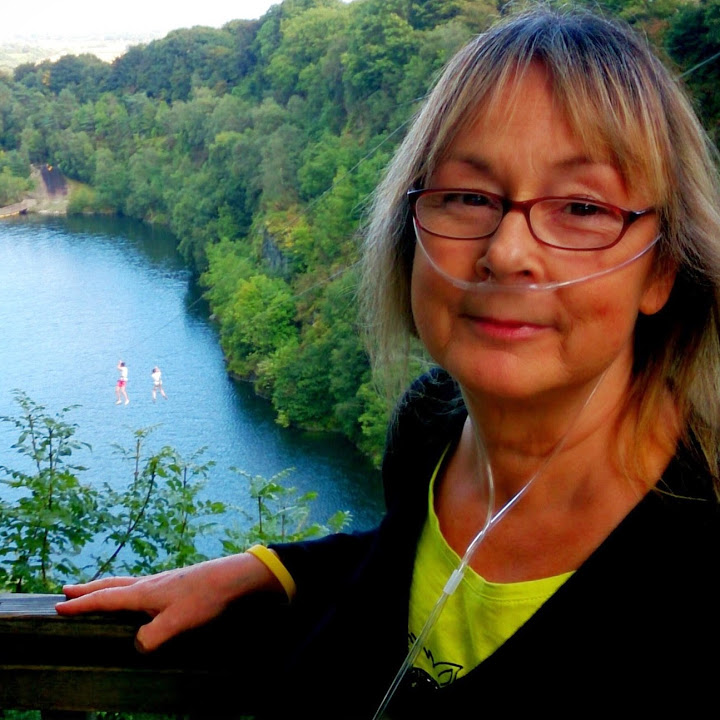
Vanessa Smith is a patient activist working to raise awareness of chronic obstructive pulmonary disease (COPD) and the importance of the patient voice within the medical and research community. Vanessa has severe COPD and recently wrote a patient perspective which was published in npj Primary Care Respiratory Medicine, an online-only, open access journal devoted to the management of respiratory diseases in primary care. She writes about living with COPD on her blog, COPD in Focus, and can be found on Twitter @vancopd.
Tell us about your experience with chronic obstructive pulmonary disease (COPD).
I was diagnosed with severe COPD during the winter of 2008/2009. Although I’d had chest infections over the last ten years, I’d never heard of COPD, so the diagnosis came as a real shock: “It’s caused by your smoking. There’s no cure and you’ll get worse. You may have only another two years.”
It was a bleak time. I was 53, recently widowed, and had a 13-year-old daughter who was still in school. I had no idea what the future would hold and was terrified of leaving her an orphan. The burning thought in my head was that whatever happens, I have to stay around long enough to see my daughter reach adulthood and finish university with a good starting point in life.
That was what really drove me online to find out anything and everything I could about COPD. The NICE guidelines were a starting point in telling me what I needed—the flu jab, pneumonia jab and pulmonary rehabilitation to learn how to breathe with my condition—but there wasn’t much else. I used to stay up until four in the morning, looking for scientific research that could offer me clues on how to cope with the disease. I read everything I could get my hands on and made a point of putting into practice what I found—if I read about the most effective exercises to prevent muscle wasting, I started doing those every day.
“I used to stay up until four in the morning, looking for scientific research that could offer me clues on how to cope with the disease.”
This was seven or eight years ago when research was far less open access than it is now. Sometimes I found older papers to download, but the most up-to-date research was always behind a paywall. It wasn’t just the cost of paying for articles that was the trouble—many journals required subscription, which I’d do, but some would ask which hospital I worked for and I wouldn’t be able to access those papers as a result.
Having access to the most up-to-date scientific research is very important to me, because it was through reading the latest research that I discovered my prognosis—two to five years’ life expectancy—was based on old information. By taking measures such as the flu shot and exercising regularly, people are living 10, 20, even 30 years these days. The science showed me ways to cope with my disease that I didn’t otherwise know about.
You recently wrote a patient perspective in npj Primary Care Respiratory Medicine on the practicalities of living with oxygen as a COPD patient. What prompted you to write this?
I completed the European Lung Foundation’s European Patient Ambassador Programme, which taught me how to represent people living with my condition when interacting with healthcare professionals, policymakers, researchers and journalists. The ELF passed on a request from one of the editors who was looking for someone willing to write on what it’s actually like to live with oxygen. Writing the patient perspective wasn’t any harder than other things I’ve done, like an event summary or a blog post—the hardest part was really keeping it so simple and short!
Why do you think the patient perspective is important?
The patient perspective is an opportunity for healthcare professionals to get feedback on things they don’t always hear. A GP could prescribe the best inhaler for you, but not know how you live with it and if you’re complying with it. If you’re not complying with it, is it because you have a swallowing or breathing issue? Do you have trouble handling the inhaler because you have rheumatoid arthritis in your hands, but don’t like to say?
By prioritising patients in research, doctors will know better what matters most to the people they are treating. In the arena of lung cancer, breast cancer and heart disease, there are some fantastic patient organisations which give voice on behalf of their patients, but for disorders like COPD which don’t have a specific organisation in the UK, patient perspectives offer a space for us to speak up.
What do you want COPD researchers to keep in mind when researching and publishing?
Be as generous and as open as possible with your work—the more you share information with your peers, patients and fellow healthcare professionals, the sooner we’ll be able to move forward in treating and curing COPD, which is the most underfunded disorder based on disease burden.
Clinical trials need to better reflect the real COPD population. Too often, trials focus on men with moderate COPD and no comorbidities. Very few patients are as lucky as I am and have only COPD—many will also have heart disease, diabetes, or lung cancer. We need more representative patient populations in the research: male and female, those with severe COPD or not, and a range of comorbidities.
What can publishers do to support and engage patients?
Make more research open access so that more people can benefit from the findings, from individual patients like me, to patient organisations that don’t have a budget for journals subscription. Developing countries like India have high levels of COPD so open access also helps doctors and patient organisations working there who otherwise wouldn’t be able to read the research.
Publishers should raise awareness of patient perspectives; most patients probably don’t know these even exist. It would also be good to have more diversity of voices. The patient perspectives I’ve seen in science journals are often written by well-educated, working professionals, but patients often get diseases like COPD in later life when they’re no longer working. They may not have advanced degrees, but they do have real knowledge about living with their disease. We need to see patient perspectives as opportunities for both patients and researchers to learn from each other.
Do you have any tips for other patients on writing patient perspectives?
- Only write about what you know about.
- If you have a brief, stick to it. It will keep you focused and make the article so much easier to write.
- Don’t go over the suggested word count.
- Be confident in your ability. Remember you’re writing as a patient from the patient perspective. This gives valuable insight to academics and researchers and healthcare professionals. They’re not expecting you to write an academic article.
- Remember it’s OK to ask for help. While you know your illness, no one expects you to know about the publishing process.
What’s next for you?
The European Lung Foundation is starting a new module on patient involvement in research within the next month. I’m looking forward to taking that and finding out how patients can be more involved with research—it’s something I’d like to do more of.
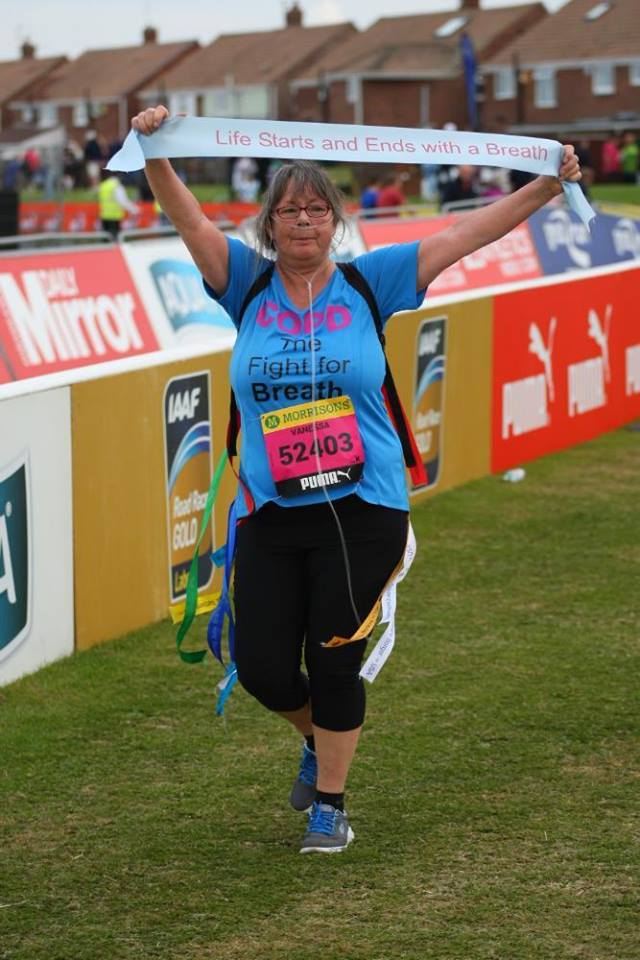
Completing the Great North Run half marathon for COPD