The presence of a chemical is not the same as presence of risk

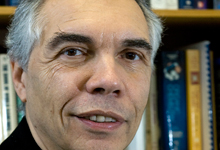
Dr. Joe Schwarcz bio pic 2Dr. Schwarcz’s is currently a chemistry professor at McGill University and the Director of McGill University’s Office for Science and Society. He also hosts “The Dr. Joe Show” on Montreal’s CJAD and has appeared on The Discovery Channel, CBC, TV Ontario and other networks. Dr. Schwarcz has received numerous awards for his work, including the American Chemical Society’s Grady-Stack Award for demystifying chemistry and the Canadian Chemical Institute’s “Montreal Medal” recognizing his lifetime contributions to chemistry in Canada. 

“Chemical” is not a dirty word. Nor is it a synonym for “poison” or “toxin.” Chemicals are the basic building blocks of all matter and classifying them as “safe” or “dangerous” is inappropriate. But of course there are safe or dangerous ways of using chemicals. In any case, chemicals are not to be feared or worshipped, they are to be understood. And perhaps the most important point to understand is that the presence of a chemical does not equate to the presence of a risk.

Thanks to our analytical capabilities, we can now routinely detect substances down to the part per trillion (ppt) level. That’s not finding a needle in a haystack; it’s finding a needle in a world full of haystacks. At that level, we can detect a myriad of chemicals should we choose to look for them! And by selectively referencing the scientific literature, the spectra of risk can be readily raised. Continue reading

Unclogging institutional conduits between research and outreach: Part 3 #reachingoutsci

Information about the authors can be found here.

Scientists who engage in policy-relevant research yearn to make our results, knowledge, and ideas useful to decision-makers.  More and more scientists are talking directly with stakeholders, policy makers and the public face-to-face and via the internet, both formally and informally.  At the same time, many of us are employed by universities, and our jobs are stabilized through a merit-based tenure system.  This can create daily pressures that add up to annual requirements and ultimately help give shape to whole careers.  Given the realities of what scientific institutions require of their scientists, where does societal engagement fit in?

In theory, being a professor can offer nearly unlimited freedom to engage in outreach and policy, as universities are some of the most spectacularly make-it-up-as-you-go-along institutions to be found. Many professors are taking advantage of this unique employment arrangement. They are interpreting the few rules that do exist in ways that allow them to incorporate outreach into teaching. They push the existing systems to facilitate outreach.  They use outreach to complement the research they are already doing to get tenure.  Individuals exploring the boundaries of what their universities will let them do has gone a long way towards helping some individuals engage in outreach activities. Continue reading

The Twenty-fifth Hour of the Day: Finding Time for Outreach: Part 2 #reachingoutsci

Information about the authors can be found here.

Academic scientists used to live by the mantra “publish or perish” but a sort of unwelcome relief is in sight: our fears about publishing enough and in prominent places are increasingly surpassed by the demands placed on us as hunters and gatherers of university overhead. With a growing number of soft-money research positions and tenure decisions decided by the number, and size, of NSF or NIH grants, there’s more pressure than ever to lock yourself in your office.

At the same time, the outside world needs science desperately. Atmospheric concentration of a key greenhouse gas, CO2, has just passed 400 ppm, a level that will cause dramatic climatic change unlike humanity has seen. Human population also has passed 7 billion people, placing strain on natural and built systems that are already stressed and diminishing. We need people of every color and walk of life to work on, speak out, and solve these problems. Doing science and engaging with the public about it can advance the reputation of scientists, help us to practice useful communication skills, and garner novel insights. There never has been a more important time to engage. Continue reading

Bridging the Science-to-Society Gap: Part 1 #reachingoutsci

Information about the authors can be found here.

The chasm between science and society is wide and deep, illustrated most recently by events in climate science1 and calls for increasingly politicized management of NSF-funding2.  Scientists tend to blame it on society, but scientists also share the blame2.  It is thus essential that the scientific community—and scientists as individuals—begin to re-think our approach to doing science.  This is particularly salient for biologists who study how natural systems work, given the widespread influence of human activities on Earth’s life-support systems and the profound dependence of humanity on other living things.

We speculate that scientists distance themselves from society in four ways, sometimes inadvertently, sometimes intentionally.  First, they tend to pursue a research agenda they are passionate about, often without thinking about how the energy devoted to a particular project serves society.  Second, most scientists regard their job as finished when they report their results in a specialized research journal, adding a notch to their publication count.  Third, scientists counsel that advocating for a particular societal position compromises their scientific credibility, so much so that the general credo is: “If you want to succeed as a hard scientist doing original research you do have to be a little careful about public communications,” as climate scientist James Hansen put it3. And finally, many scientists feel that dealing with societal issues is some other profession’s problem, something that requires too much time and for which they have little support or expertise [https://leopoldleadership.stanford.edu/]. Continue reading

Biographies for the #reachingoutsci series

The following authors have each contributed to the #reachingoutsci three-part series:

Organizers 

EBennett

Elena Bennett

Elena Bennett is an Associate Professor in the Department of Natural Resource Sciences and the McGill School of Environment at McGill University. She is trained as an ecosystem and landscape ecologist, and she now works with local communities in the Montreal area bringing the science of ecosystem services to bear on land use and land management decisions. She is now hard at work developing a training program in outreach and communication for McGill professors working in environment-related fields. Find her on twitter @ElenaBennett and learn more about her research at https://bennettlab.weebly.com Continue reading

Science Communication at a Tipping Point

liz

Liz Neeley is the Assistant Director of Science Outreach for COMPASS. She helps develop and lead communication trainings for scientists across the country, and specializes in traditional and social media. She is the founder of ScienceOnlineSeattle and affiliate staff at the University of Washington, where she teaches science communication for graduate students. Her interest in these topics springs from her graduate work on the evolution of visual systems and color patterns in tropical reef fish, and subsequent experiences with coral reef communities in Fiji and Papua New Guinea and working on international trade policy for deep sea corals. Find her on twitter @LizNeeley or on Google+ www.gplus.to/LizNeeley

 
On April 30, COMPASS published a paper at PLOS Biology that shared our experiences in science communication over the past decade. We organized a blog carnival to broaden the conversation about motivations, challenges, and lessons learned. This post is a reflection on public and private responses to the ideas we presented, and an attempt to answer, “Where do we go from here?” Continue reading

Show, Don’t Tell: Covering the Human Side of Research

Thumb_Dan_Drollette_HawaiiDan Drollette Jr is the author of “Gold Rush in the Jungle: The Race to Discover and Defend the Rarest Animals of Vietnam’s ‘Lost World,’ ” and held a Fulbright Postgraduate Traveling Fellowship to Australia. He has written for publications ranging from Australian Geographic and Scientific American to the BBC’s “Future” column, and was most recently the editor of CERN’s online computing magazine, International Science Grid This Week.  You can also check out his TEDx Talk in Frankfurt, Germany, on the behind-the-scenes story of the making of the book here.

I recently discovered one of the most thrilling – and terrifying – parts of getting a book published by a traditional, large, old-line print house: reading the reviews.

Most of the time they contain good and thoughtful insights about the thing you have sweated over for years. On rare occasions, you wonder how in the world the reviewer ever came up with their conclusions. Rarer still, sometimes a reviewer really connects with the content on a profoundly deep level, to the point where you want to stand up, cheer, and shout aloud “That’s why I did this!” Continue reading

Crowdfunding: Another Form of Science Outreach

Jeanne Garbarino, a Bronx native, currently serves as the Director of Science Outreach at The Rockefeller University in New York City.  After graduating from SUNY Geneseo with a BSc in biology, Jeanne went on to pursue her PhD in nutritional and metabolic biology from the Institute of Human Nutrition at Columbia University.  During her doctoral studies, Jeanne developed an environmental and genetic model to study the process of lipid-induced cell death using yeast as a model system.  She continued her studies in lipid metabolism as a postdoctoral researcher at The Rockefeller University, where she characterized proteins involved in the cellular transport of cholesterol. In addition to her role as a scientific researcher, Jeanne has been involved in many science communication and outreach initiatives, including co-founding SpotOn NYC (SoNYC), which is a monthly science discussion series held at The Rockefeller University in collaboration with Nature.com and Ars Technica. She is also the biology editor of Double X Science.  You can connect with Jeanne on TwitterLinkedIn, and Google+.  

At the most basic level, science outreach can be defined as facilitating the understanding of science to non-scientists. While the overall objective of science outreach is clear, the ways in which engagement can occur are numerous. Traditional modes of science outreach include classroom visits by scientists, laboratory tours, public science talks, and science museums. But evolving technologies have opened the door for additional science outreach models. Continue reading

What Can Be Done About Glass Ceilings in Science?

Ben Thomas Photo

Ben Thomas writes articles about a variety of topics for the Riley Guide, an online repository for career and education resources. As a freelancer, Ben also covers scientific research and technological breakthroughs as well as social issues involving the sciences. A regular contributor to several leading science news websites, Ben helps scientists and academics connect with the general public by explaining their latest discoveries and controversies in clear, down-to-earth terms.

Promotions in scientific careers don’t always follow the same rules of objectivity as the disciplines into which they fall. More than 40 years after the federal government passed Title IX, the civil rights law that prohibits sex discrimination in every educational program that receives federal funding, discrimination on the basis of gender and culture continues to persist in the sciences – both in intentional and unintentional manifestations. Here, three scientific experts contribute their insights on the root causes of these “glass ceilings”. They discuss the ways that gender and cultural biases can play out in individual scientists’ career paths and the ways in which some organizations are already making efforts to counteract them.

Unconscious causes

Biases in scientific fields can develop against men or women who hail from a variety of cultures. According to many experts, the unifying principles that inform these biases aren’t always intentional, and they  emerge when differing professional expectations and corporate cultures meet.

“A lot of bias-influenced decisions aren’t malicious decisions or even discriminatory decisions,” says Betty Shanahan, executive director and CEO of the Society of Women Engineers. “But the net result is the same: they prevent some talented people from getting ahead.”

So how can differences, for example, in communication styles,  bubble up into concrete distinctions among career paths and promotion levels?, A 2010 study funded by the National Science Foundation learned that recommendation letters written by women tended to focus on adjectives like “affectionate, helpful, kind, sympathetic, nurturing, tactful and agreeable,” whereas recommendation letters composed by men leaned towards behavior-oriented descriptions and adjectives like “confident, aggressive, ambitious, dominant, forceful, independent, daring, outspoken and intellectual.” Though both groups of recommendation letters were equally well-intentioned, small distinctions like these can add up to major divides in upper-management roles.

“I don’t believe that established leaders in their disciplines intend to be intentionally biased or discriminatory; they may simply not know how to deal with those who are ‘different’ from them,” says Donna J. Dean, executive consultant for the Association for Women in Science.

And it’s that managerial difficulty at dealing with differences – especially communication –based  ones – that creates often-unintentional career divides in the sciences.

Differing manifestations

There are other cases of unintentional biases,  in addition to the language used in recommendation letters cited above.

For example, “if you come from a culture that values accuracy, where the messages you receive your entire life are, ‘Only speak when you’re certain – do your research,’ you may not want to speak up in a meeting even if you think you might know the solution to a problem,” Shanahan explains.

Along the same lines, an employee who comes from a culture that emphasizes an attitude of “only speak when you’re fully prepared” may feel unnerved when confronted with a brainstorming exercise that requires him or her to “just say what comes off the top of your head.” Thus, people who are unfamiliar or uncomfortable with the overall level of office dialogue at their companies or labs may find themselves stuck in low-level positions where they wish to contribute, but encounter only frustration when they enter actual dialogues with their colleagues. When one crunches the numbers, these differences are striking: A recent Time magazine article, which discusses a team-based approach to curing cancer, lists 20 leading cancer researchers, 19 of which are men.

“These figures clearly don’t represent the scientists working in cancer labs, or getting the PhDs or MDs,” says Nancy Hopkins, professor of biology at MIT, “because the actual numbers are 50 percent women.”

Thus, these manifestations of biases – – extend not only to intra-organizational situations, but to how scientists are portrayed in the  press and to the public.

Tackling problems

The good news is that many scientific organizations and institutions have already taken practical steps to address “glass ceilings,” and many others have demonstrated that they’re highly receptive to actionable data on these kinds of professional divisions.

“I’m thrilled by the interest and participation we get in the programs we provide on concrete recommendations,” Shanahan says. “Take, for example, the University of Wisconsin, Milwaukee.” That university’s 2011 report “Stemming the Tide” compared four basic categories of women: Those who receive engineering degrees, those who never practiced engineering, those who went into engineering and left, and those who stayed in the field. In this report, the university’s researchers also published a variety of practical recommendations on how to improve the retention of women engineers within a company. “NASA has also been doing a lot to ensure that Title IX is enforced in STEM programs,” Shanahan says.

For example, NASA recently unveiled a compliance program in which its officers not only analyze and aim to counteract discrimination, but also actively seek out and promote successful scientists from under-promoted groups. Ultimately, though, Hopkins says, “If you believe in equality, it’s not enough just to say so – you have to help to create it.” In other words, speaking up for under-recognized groups helps raise awareness of the issue, but the only way to create lasting change is to reach out to those with the power to promote and recognize scientific achievement, and help them recognize and address their own unconscious biases. Harvard’s Implicit Association Test is a great place to start. “And once you’re aware of your biases,” Shanahan says, “you have to ask yourself if you’re making a false assumption about anyone in your organization.”

Most of us in the early twenty-first century don’t have any deliberate intention of discriminating against or under-promoting any gender, culture or other group. The problem is, our expectations in terms of communication, aggressiveness and even word use can influence our unconscious or semi-conscious choices when it comes time to hand out an award or a promotion. These glass ceilings can’t be shattered with good intentions alone – it takes an active intention to seek out unconscious biases in ourselves, to recognize achievements regardless of how we feel about the people who made them possible, and to look beyond physical and verbal factors in order to focus on our organizations’ quantifiable metrics of achievement. Changes are happening, but they’ll only persist if we hold to a scientific attitude and focus our attention on valuable data, rather than on how  – and by whom – that data is presented.