Transmission Received: How to Promote Accuracy in Your Press Interviews

Ben Thomas PhotoBen Thomas writes articles about a variety of topics for the Riley Guide, an online repository for career and education resources. As a freelancer, Ben also covers scientific research and technological breakthroughs as well as social issues involving the sciences. A regular contributor to several leading science news websites, Ben helps scientists and academics connect with the general public by explaining their latest discoveries and controversies in clear, down-to-earth terms.

In a perfect world, every scientific message would travel from the workbench to the press with perfect clarity – but journalists and scientists are only human. The needs and functions of each profession tug at every story in different ways; whereas scientific research values proof and quantitative analysis, journalism often values punchy headlines and online debates, making it tough yet crucial for scientists to convey their announcements clearly. Here, three professional science communicators share the lessons they’ve learned through years of working with the popular press.

Take time to prepare

Any time you’re about to talk with the media, practice, practice and then practice some more. Rehearsals accomplish a lot more than just calming nerves – they’ll train you to tailor your message into a compact, easily understandable format that leaves plenty of room for questions and discussion. As you’ll find out for yourself, this is surprisingly difficult on the very first run. Continue reading
Give conservation a sporting chance

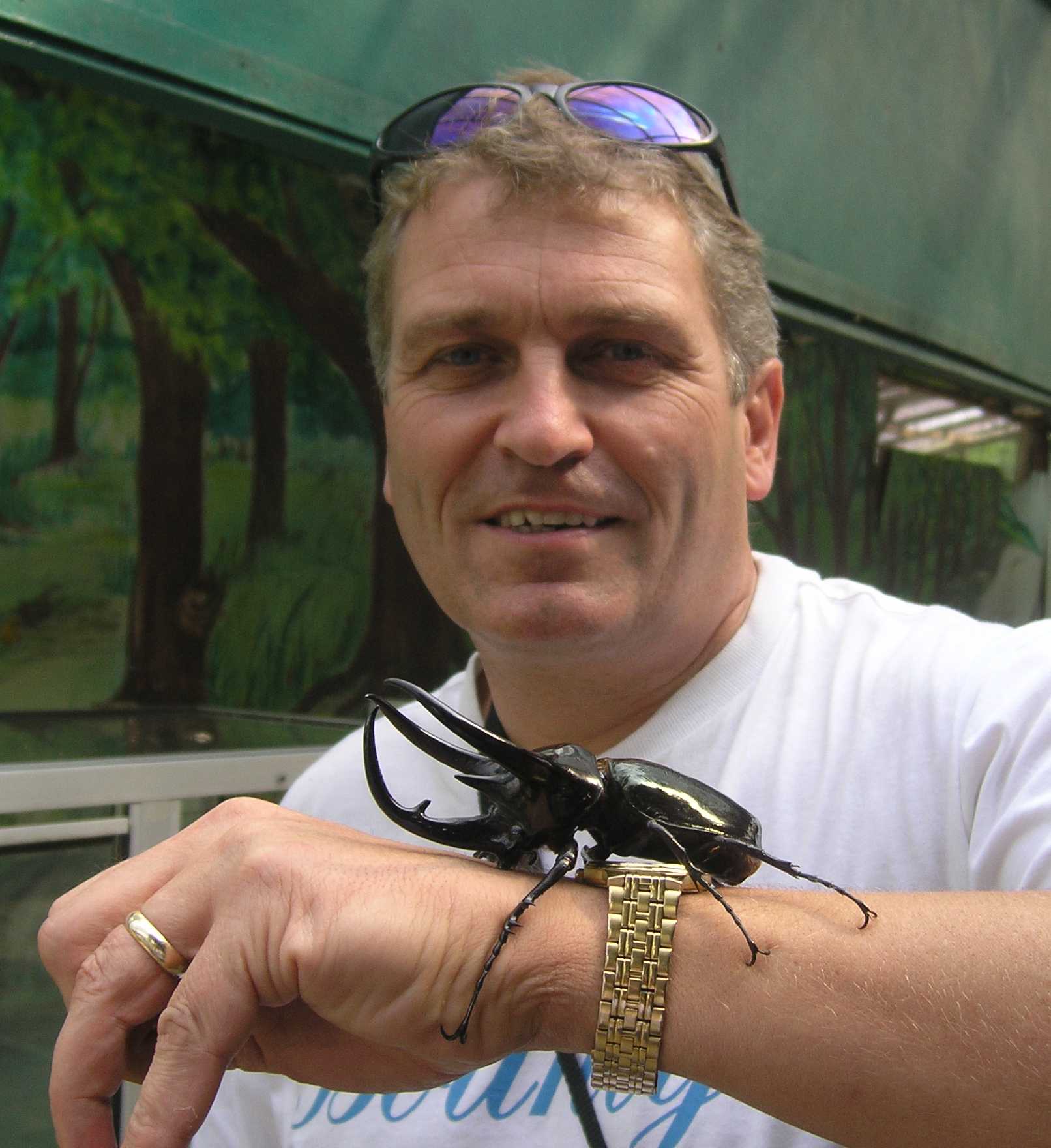
Reading Rhino with Rhino BeetleAlastair Driver, Environment Agency National Biodiversity Manager, has the honour of inclusion in Who’s Who for “distinction and influence” in the field of environmental conservation. He is one of the most experienced river and wetland conservationists in the UK, with a growing international reputation in the field of catchment management.

If you’d told me 35 years ago, after I’d scraped through beer-and-sport-fuelled university with an ecology degree, that I was going to make a living out of conservation, I’d have suggested you should be sectioned. But the fact is that there are now literally thousands of people out there who are professionally employed in conserving and restoring our still beautiful, but quietly ailing natural environment. In fact, there are 200 of them in the Environment Agency alone.

Back in the late 70s when I was cutting my teeth on wildlife surveys, I remember my rugby mates expressing indignance that their taxes were paying for me to “count grass” and suggesting that I had “a girl’s job.” Nowadays ‘the bloke down the pub’ instantly recognises that people like me have a role in society which is both interesting and valuable.

The question is – are we conservationists really making any difference? The simple answer to that is – yes, but just as the environment has suffered near-death by a thousand cuts, so it requires healing by a thousand operations, and that takes time. You can’t spend 200 years damaging the environment and then expect to put it right in the blink of a government. Continue reading

Predators in the publishing jungle

Ian WOOLEY (22-3-2010) _MG_0193

Ian Woolley is an infectious diseases physician who trained in Australia and the United States and who works at Monash Medical Centre in Melbourne. He is also Adjunct Senior Lecturer in the Departments of Medicine and Infectious Diseases at Monash University. In 2012/2013 he completed a sabbatical with the Manson Unit of Médecins Sans Frontières (MSF) UK during which he helped MSF respond to an outbreak of hepatitis E in South Sudanese refugee camps. 

In April 2013, I decided to count the number of unsolicited emails I received from journals that asked me to read them, write for them, review articles or be an editor for them; or some combination of the above. I counted nearly three dozen in that month alone; all were from journals that were open access in nature in some form. Like most people, I lack the time or knowledge to assess the merit of these journals and to decide whether or not they are bona fide. And until recently, perhaps naively, I hadn’t realised that this might even be necessary. Continue reading

Crossing the great divide – moving between academia and industry

clinicianfellows-052Luke Devey has joined the GSK Esprit R&D Programme as a Director of Translational Medicine. He completed his medical training at the University of Oxford and worked in Oxford, Newcastle and Edinburgh before going on to do an MRC-funded PhD at the University of Birmingham. In 2008 he was awarded an Academy of Medical Sciences/The Health Foundation Clinician Scientist Fellowship, which he undertook alongside training in transplantation and general surgery in Edinburgh.

Working as a doctor in any specialty, it soon becomes clear that medicine is imperfect, and unable to offer good treatments for a great many patients. I have always wanted medicine to think of itself as a ‘technology industry’, using creative research and development (R&D) to seek solutions to the problems of today to shape a better tomorrow.

Until now, my work as a clinical academic has been either at the laboratory bench or at the clinical coalface. As I approached the end of my clinical training and my Clinician Scientist Fellowship, I started to think about what my next move should be. The default position was to continue in clinical academia – very much a known entity. But part of me wanted to explore other opportunities to maximize the translational impact of my work, and I had come to realise that the critical steps on the long path (it takes 15 yrs and 1$bn to make a new medicine) between bench and bedside are most often taken in industry. Continue reading