UNESCO Regional Chair on Women, Science & Technology, Dr Gloria Bonder, talks women in science and gender equality

“What I would love to see is more qualitative research not on why women can’t and why so few, but who the women are that are successfully developing careers in engineering, technology or sciences.”

In part four of our five features this week celebrating prominent women in science and technology across the world, we speak to Dr Gloria Bonder, the coordinator of the Global Network of UNESCO Chairs on Gender and the UNESCO Regional Chair on Women, Science and Technology in Latin America. She talks about UNESCO’s latest global figures on women in science, changes that need to be made in both policy and education, and the necessity for more qualitative research on the women who are successfully developing careers in engineering, technology and science.

Dr Gloria Bonder is the Director of the Department of Gender, Society and Policies of the Latin American Postgraduate Institute of Social Sciences (FLACSO Argentina). She coordinates two regional programmes including the UNESCO Regional Chair on Women, Science and Technology in Latin America and the e-learning master’s programme on Gender, Society and Public Policies. Bonder is the coordinator of the Global Network of UNESCO Chairs on Gender. Since 2014, she has coordinated the region’s activities in the global GenderInSITE programme, through her role as the UNESCO Regional Chair. The programme aims to influence policies and policy makers in science, technology, innovation and engineering, to integrate gender equality principles and goals.

She is a researcher and consultant on Women, Science and Technology for several national, regional and international organisations such as: Minister of Science and Technology in Argentina, United Nations, Women and Development Unit, ECLAC and the Office of Science and Technology, UNICEF, UNIFEM, UNDP and UNESCO, among others. Bonder has developed several research projects on gender issues and/in technology and science, education, communication, health and youth, and published books and articles both national and international. She is a member of the advisory board of UN Women for Latin America and the Caribbean and WISAT (Women in Global Science and Technology).

“What I would love to see is more qualitative research not on why women can’t and why so few, but who the women are that are successfully developing careers in engineering, technology or sciences,” strongly asserts Gloria Bonder, coordinator of the global network of UNESCO Chairs on Gender and the Regional Chair on Women, Science and Technology in Latin America.  She continues: “We should look at why they chose that career, what their experiences have been so far, and what they like and don’t like, as well as how they overcome obstacles. We must move away from the basic question of why so few.”

Dr Bonder is not one to mix her words lightly. Having worked on gender studies for more than 40 years in science and technology, she has an authoritative voice and is deeply respected across the world. During unstable political times in the mid-1970s in her home country of Argentina, she was the catalyst behind the creation of a women’s study centre, carrying out independent research on different aspects of gender studies. At that time, it was quite the pioneering community and as a result led to the introduction of a postgraduate programme on women’s studies at the University of Buenos Aires, which Bonder was the founding director of between 1987 and 1999.

Fundamental Changes

As we look back at Dr Bonder’s achievements having set up the Gender, Society and Policies Institute in 2001 at FLACSO-Argentina, there is something on her mind that won’t shift. She interjects: “We need to not only attract both women and men to these careers, but make fundamental changes to the workplace culture and promote that both genders share caring responsibilities. If I was young now, would I choose the science and technology subjects that are taught today? No. To go into laboratories or industries  and make a career in such a way that you have to choose between having a family and enjoying other dimensions of your life, or being a successful scientist, is just plain wrong.”

At FLACSO, Bonder has been quite the influential director coordinating regional programmes across Latin America. The institute runs two huge programmes, which consist of the e-learning Master’s Programme on Gender, Society and Public Policies, and working on training and research projects for UNESCO and other organisations, alongside Bonder, in her role as the Regional Chair on Women, Science and Technology in Latin America.
Continue reading

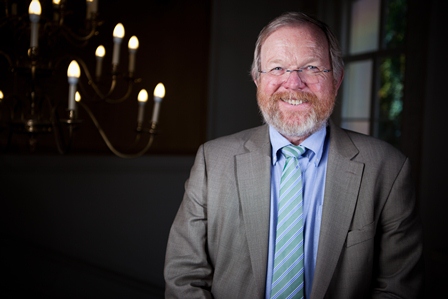
Bill Bryson: A champion of science and science communication

A passionate science advocate: best-selling US author Bill Bryson. Image courtesy of the Royal Society

A passionate science advocate: best-selling US author Bill Bryson. Image courtesy of the Royal Society.

Bill Bryson’s bestselling travel books include The Lost Continent, A Walk in the Woods and Notes from a Small Island, which in a national poll was voted the book that best represents Britain.

His acclaimed book on the history of science, A Short History of Nearly Everything, won the Royal Society’s Aventis Prize as well as the Descartes Prize, the European Union’s highest literary award.

He has written books on language, on Shakespeare, and on his own childhood in the memoir The Life and Times of the Thunderbolt Kid.

His last critically lauded bestseller was At Home: a Short History of Private Life and his most recent book, One Summer: America 1927 chronicles a forgotten summer when America came of age and changed the world for ever.

He was born in the American Midwest, and lives in the UK.

It is over a decade since popular US author Bill Bryson embarked on his eye-opening journey of research for the acclaimed science book ‘A Short History of Nearly Everything’. At that time, he could never have envisaged the popularity and esteem his book would be held in today.

With Bryson’s impeccable wit, charm and honesty, he managed to open up a world of science that was accessible and revealing in equal measure. And yet, in writing the book, Bryson was faced with narrative adjustments and the trepidation of not knowing many of the fields he intended to cover.

Continue reading

Neil deGrasse Tyson on Cosmos and integrating science in popular culture

"science matters in our lives for us to be better shepherds of not only our civilization, but the world." Image courtesy of Patrick Eccelsine/FOX.

“Science matters in our lives for us to be better shepherds of not only our civilization, but the world.”
Image courtesy of Patrick Eccelsine/FOX.

Neil deGrasse Tyson is the Frederick P. Rose Director of the Hayden Planetarium at the Rose Center for Earth and Space and a research associate in the department of astrophysics at the American Museum of Natural History.

A popular American astrophysicist, author, science communicator and educator, Tyson hosted the science educational show NOVA ScienceNow on PBS for five years. He received a bachelor’s degree in Physics from Harvard University and a doctorate in Astrophysics from Columbia University in 1991. After spending a number of years doing post-doctorate work at Princeton University, Tyson landed a role at the Hayden Planetarium.

He is the author of several best-selling books, including Space Chronicles: Facing the Ultimate Frontier, Death By Black Hole and Other Cosmic Quandaries and the Pluto Files: The Rise and Fall of America’s Favorite Planet. In 2001, US President George W Bush appointed Tyson to the Commission on the Future of the United States Aerospace Industry. He also served another commission three years later to examine US policy on space exploration. In 2004, Tyson was awarded the NASA Distinguished Public Service Medal, the highest civilian honour bestowed by NASA. He also hosts his own podcast and radio show StarTalk.

Cosmos is truly intended for anyone with a beating heart. I haven’t checked recently whether zombies have beating hearts, but if they do – I’ll take them too,” barks Astrophysicist Neil deGrasse Tyson, with exalted hilarity.

Continue reading

Voyager 1 Reaches Interstellar Space

Bohle headshotShannon Bohle has experience with NASA, is a Fellow of the Royal Astronomical Society in the UK,  is a lifetime member of the Cambridge University Astronomical Society, and has held  professional memberships in the AAAS, the British Society for the History of Science, The National Space Society, The Planetary Society, and The Mars Society. She is  a registered consultant for the Science and Entertainment Exchange run by the National Academy of Sciences.

Boldly Traveling Where No Archival Recording has Gone Before

On 12 September 2013, following analysis of data from its Voyager 1 spacecraft, NASA confirmed that the spacecraft has now reached a new milestone; interstellar space. It seems fitting that Carl Sagan, astronomy popularizer and pioneer in the field of exobiology, wanted to send library materials. Inside the box-like portion of the spacecraft, called the satellite bus structure, is the first archival sound recording designed to be understood by non-human intelligent life. If intelligent life is out there, let’s just hope they enjoy our first publication so much that they visit Earth to request a library card.

SCI Space Craft International, www.SpacecraftKits.com

SCI Space Craft International, www.SpacecraftKits.com. Click on the image to enlarge 

Infographic about the Voyager spacecraft showing the location of the image and sound recordings. “The SCI ‘Fact Sheet’ graphic products, for Voyager and other interplanetary spacecraft, have been seen in the hands of flight team members as well as enthusiasts among the public. The box structure is called the spacecraft bus. The circular, gold-plated information package is mounted to the outboard face of one of [the bus’s] ten bays.”

Voyager, A Look Back

Kicking the proverbial wheels and dipping the oil stick, on 5 September 1977 NASA launched Voyager 1 from Kennedy Space Flight Center. By 1979 it was whipping past Jupiter, and by 1980 it completed a flyby of Saturn and began a course that would take it out of the solar system:

Video credit: NASA JPL

pale blue dot

“This narrow-angle color image of the Earth, dubbed ‘Pale Blue Dot’, is a part of the first ever ‘portrait’ of the solar system taken by Voyager 1. The spacecraft acquired a total of 60 frames for a mosaic of the solar system from a distance of more than 4 billion miles from Earth and about 32 degrees above the ecliptic. From Voyager’s great distance Earth is a mere point of light, less than the size of a picture element even in the narrow-angle camera. Earth was a crescent only 0.12 pixel in size. Coincidentally, Earth lies right in the center of one of the scattered light rays resulting from taking the image so close to the sun. This blown-up image of the Earth was taken through three color filters — violet, blue and green — and recombined to produce the color image. The background features in the image are artifacts resulting from the magnification.”
(Description and image credit: NASA JPL).

In 1990, the spacecraft lost the ability to return photos to Earth. Its last image, Pale Blue Dot, has become a famous look back at our planet that shows just how small our world really is in the vastness of our solar system. It was also used in the title of and inspiration for science writer Carl Sagan’s book, Pale Blue Dot: A Vision of the Human Future in Space (1994).     

How Does NASA Know Voyager 1
Reached Interstellar Space?

There are some arguments about whether or not Voyager 1 has left the solar system. The term solar system is most commonly used to refer to the inner solar system which includes the sun and planets. So, yes, Voyager 1 left the inner solar system in 1990. On its journey, it continued towards the edge of the heliosphere. “The heliosphere is the immense magnetic bubble containing our [inner] solar system, solar wind, and the entire solar magnetic field.” In 2012, the probe passed the edge of the heliosphere, called the heliopause, which separates the heliosphere from the interstellar medium. The heliopause “traps” the stellar wind (which carries dust and particles) and does not let it escape into the interstellar medium. The term interstellar literally means “the space between stars,” the place where Voyager 1 is now located. (The plural of “interstellar medium” is “interstellar media,” from which is derived the title of this piece). The problem with saying that Voyager 1 is no longer in the solar system is that, technically speaking, the solar system (comprised of both the inner and outer solar system) is an area where any body is primarily influenced by the gravitational pull of a star, like our sun. Since the 1960s, scientists have agreed that the sun’s gravitational influence extends into the Oort Cloud, a very large region, but they are not sure how far into the Oort Cloud to draw the boundary of what could be considered our solar system. Clearly, then, Voyager is located in the interstellar medium but has not left the solar system.

v timeline

Voyager: The Grand Journey and Beyond.
(Image credit: NASA JPL)

As the sun “burns” it emits particles of light and heat released during nuclear reactions called hydrogen fusion. The energies from these reactions propel charged particles (called plasma) into space, sometimes through large bursts called prominences. Large prominences are called Coronal Mass Ejections (CMEs) while smaller ones are solar flares. Sometimes these particles hit the Earth in large doses, during space weather events, and are often referred to as solar storms or geomagnetic storms. Depending on their strength, which is measured and monitored by the US National Oceanic and Atmospheric Administration (NOAA) and other agencies, these particles can cause a variety of problems for communications satellites and the International Space Station orbiting the Earth as well as electronic equipment on Earth.

According to researchers at NASA’s Jet Propulsion Laboratory (JPL), when plasma passes through space within the heliosphere it would hit a detector “uniformly from all directions,” but particles that reached Voyager 1 as a result of the “St. Patrick’s Day Solar Storms” a year earlier showed different results. “Sunspot AR1429 unleashed a powerful X5-class solar flare detected by solar observing satellites and Earth on 7 March 2012, commencing the ‘St. Patrick’s Day storms’ of 2012.” Unusual readings continued to be detected from May through July 2012. According to NASA JPL, it took about 400 days (beginning 11 April 2013) for each solar outburst to have reached Voyager. See this video: Voyager 1 at the Final Frontier.

After the readings were taken it only took about 16 hours for Voyager’s radio waves to travel back to Earth. By 25 August 2012, scientists believed that Voyager had made it into interstellar space. Instead of normal readings, they said, “particles [were] hitting Voyager from some directions more than others” and sound recorded “oscillations increased in pitch,” like a shriek, indicating that the spacecraft had moved into a very different plasma environment, one that was nearly twice as dense as inside the heliosphere. Since this method for determining location had never been done before, they said, it took researchers at NASA over a year to be certain and to verify the data. See this video: Voyager Reaches Interstellar Space.

The heliopause boundary is created because in addition to plasma moving through space from the sun, so too is the solar magnetic field. The interstellar magnetic field, which is composed of ions like those found in hydronium, repels the adjacent solar magnetic field, creating a “bubble” of space called the heliopause which has previously been defined as the outer edge of the solar system. The magnetic field, while strong enough to create a barrier for radiation, is not strong enough to pose a problem for a metallic spacecraft passing through this boundary just as spacecraft are able to leave the Earth’s atmosphere.

Set a Course for the Oort Cloud–Engage!

oort

NASA JPL

Voyager still has a long way to go before leaving the solar system even though it is travelling at a rate of 37,000 miles per hour (60,000 km per hour). The spacecraft is presently 11.7 billion miles (18.8 billion kilometers) from Earth. Still, it will take an estimated “300 years for Voyager 1 to reach the inner edge of the Oort Cloud and possibly about 30,000 years to fly beyond it.” In 40,000 years it is expected to reach the constellation Camelopardalis. That’s long after you and I will live. To put it into perspective, should any intelligent life actually receive the message it is unlikely humanity (if it has managed to survive) will resemble anything like what is depicted in the recordings. If anything, it may serve as a record of our history, much like cave drawing of primitive humanoids 40,000 years ago during the Upper Paleolithic era (the “Later Stone Age”) does for us today. Interestingly, we are sending the message roughly at the midpoint of our communication technologies: analog stone tools, digital tools, and who knows what else 40,000 years from now.

Radio and television signals have long since left our solar system, so chances are that any non-human intelligent life in the universe would encounter those first, and view the Voyager 1 disk as an artifact. Nevertheless, unless faster than light transportation is turned from science fiction into science fact, Voyager 1’s “gold record” may be the first “Galactic hit” in terms of physical information objects from Earth held by an otherworldly civilization.


This blog post will be continued over on Shannon’s SciLogs blog

Tear Down These Walls

DSC_0190

Buddhini Samarasinghe is a molecular biologist with experience in cancer research. She completed her PhD at the University of Glasgow, UK and then recently completed a postdoctoral position at the University of Hawaii. Her science writing can be found at Jargonwall. She is also a passionate science communicator, engaging the public with current research in the life sciences. Where possible, she uses original research papers and describes the science minus the jargon! She is also involved in science outreach through broadcasts on YouTube and other social media sites.

On a cold weeknight in late November, 1660, a dozen men gathered in the rooms at Gresham College in London to found the Royal Society. Not all of them had a scientific background; some of them were lawyers, politicians, merchants and philosophers. The one thing they all had in common was a thirst for knowledge. The formation of the Royal Society was the coming together of a group of curious gentlemen determined to promote the accumulation and dissemination of useful knowledge. It represented a paradigm shift in the practice of science. The Royal Society invented scientific publishing and peer review, two major developments that redefined science from an amateur hobby to the rigorous beast that it is today.

Continue reading

Can we raise woolly mammoths from their Pleistocene graves?

This post has been cross-posted from the OUP blog.

SL bio picSharon Levy is a freelance science writer who specializes in making natural resource and conservation issues accessible for a broad audience. She is the author of Once and Future Giants, a book that introduces the idea that Ice Age megafauna extinctions hold important lessons for modern conservation. She lives in Humboldt County, California.

Thousands of years after the last woolly mammoth died, some bioengineers dream of resurrecting the species. When I first heard their arguments, these folks struck me as the modern, high-tech version of snake-oil salesmen. The product they’re promoting is not what they lead people to believe it is, and it won’t do what people like to imagine it will.

Mammoths and mastodons once roamed throughout the Americas, as well as much of Europe and Asia. There were several species, but the best-known is the woolly mammoth, a creature of the far north. Well-preserved carcasses have been discovered melting out of the permafrost in Siberia and the Yukon. There’s been a lot of talk of ‘cloning’ a mammoth by using DNA recovered from bodies preserved in permafrost. Continue reading

Nature’s man – remembering Sir John Maddox in the Oxford Dictionary of National Biography

Dr Lawrence Goldman is Editor of the Oxford Dictionary of National Biography—based at Oxford University, UK—and fellow and tutor in history at St Peter’s College, Oxford, where he teaches modern British and American history.

The latest edition of the Oxford Dictionary of National Biography, published on 3 January 2013, includes the lives of 225 notable figures from British national life who died in 2009. Of these more than 30 are men and women principally remembered for their contribution to modern scientific and medical enquiry. They include Sir John Maddox who was twice editor of Nature between 1966 and 1975 and then again from 1980 to 1995. The outstanding science journalist of his generation, Maddox reversed the fortunes of the journal which, on his arrival, was in some disarray. Under his editorship Nature regained its reputation as one of the world’s most important scientific journals, as it had been when founded in 1869. Maddox’s biography for the Oxford DNB has been written by John Gribbin, one of his early employees and colleagues at Nature.

Sir John Maddox and Nature

Maddox was born in 1925 at Penllergaer, near Swansea, the son of a furnaceman in a tinplate mill. Attending Gowerton Boys’ County (Grammar) School, he won a scholarship to read chemistry at Christ Church, Oxford. He then studied physics at King’s College, London, and lectured in the subject at Manchester University before taking up a post as science correspondent for the Manchester Guardian in 1955. Continue reading

Turing : The Irruption of Materialism into thought

Paul Cockshott is a computer scientist and political economist working at the University of Glasgow. His most recent books are Computation and its Limits (with Mackenzie and Michaelson) and Arguments for Socialism (with Zachariah). His research includes programming languages and parallelism, hypercomputing and computability, image processing, and experimental computers. This article originally appeared on the OUP blog.

This year is being widely celebrated as the Turing centenary. He is being hailed as the inventor of the computer, which perhaps overstates things, and as the founder of computing science, which is more to the point. It can be argued that his role in the actual production of the first generation computers, whilst real, was not vital. In 1946 he designed the Automatic Computing Engine (ACE), a very advanced design of a computer for its day, but because of its challenging scale, initially only a cut down version (the Pilot ACE) was built (and can now be seen in the Science Museum, London). From 1952 to 1955, the Pilot ACE was the fastest computer in the world and it went on to be sucessfully commercialised as the Deuce. In engineering terms though, none of the distinctive features of Turing’s ACE survive in today’s computer designs. The independent work of Zuse in Germany or Atanasoff in the US indicates that electronic computers were a technology waiting to be discovered across the industrial world. Continue reading

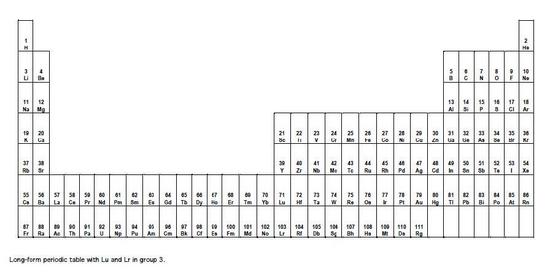
The periodic table: matter matters

Cross-posted with permission of OUPblog.

eric.bmp

Eric Scerri is a chemist and philosopher of science, author and speaker. He is a lecturer in chemistry, as well as history and philosophy of science, at UCLA in Los Angeles. He is the author of several books including The Periodic Table, Its Story and Its Significance, Collected Papers on the Philosophy of Chemistry and Selected Papers on the Periodic Table. His latest book, The Periodic Table: A Very Short Introduction, is published this week.

As far back as I can remember, I have always liked sorting and classifying things. As a boy I was an avid stamp collector. I would sort my stamps into countries, particular sets, then arrange them in order of increasing monetary value shown on the face of the stamp. I would go to great lengths to select the best possible copy of any stamp that I had several versions of. It’s not altogether surprising that I have therefore ended up doing research and writing books on what is perhaps the finest example of a scientific system of classification – the periodic table of the elements. Following degrees in chemistry I wrote a PhD thesis in the history and philosophy of science and specialised in the question of whether chemistry has been explained by quantum mechanics. A large part of this work dealt with the periodic table, the explanation of which is considered as one of the major triumphs of quantum theory, and the notion of atomic orbitals.

As I often mention in public lectures, it is curious that the great 20th century physicist, Ernest Rutherford, looked down on chemistry and compared it to stamp collecting. But we chemists had the last laugh since Rutherford was awarded the Nobel Prize for chemistry and not for his beloved field of physics.

periodictable.jpg

In 2007 I published a book called The Periodic Table, Its Story and Its Significance, which people tell me has become the definitive book on the subject. More recently I was asked to write a Very Short Introduction to the subject, which I have now completed. Although I first thought this would be a relatively easy matter it turned out not to be. I had to rethink almost everything contained in the earlier book, respond to comments from reviewers and had to deal with some new areas which I had not developed fully enough in the earlier book. One of these areas is the exploration of elements beyond uranium or element number 92, all of which are of a synthetic nature.

At the same time, there has been a veritable explosion of interest in the elements and the periodic table especially in the popular imagination. There have been i-Pad applications, YouTube videos, two highly successful popular books, people singing Tom Leher’s element song in various settings as well as artists and advertisers helping themselves to the elegance and beauty of the periodic table. On the scientific side, elements continue to be discovered or more precisely synthesised and there are official deliberations concerning how the recently discovered elements should be named.

table.jpg

On November 4th The International Union for Pure and Applied Physics (IUPAP) officially announced that elements 110, 111 and 112 are to be known officially as darmstadtium (Ds), roentgenium (Rg) and copernicium (Cn). The names come from the German city of Darmstadt where several new elements have been artificially created; Wilhelm Konrad Roentgenm, the discoverer of X-rays; and the astronomer Nicholas Copernicus who was one of the first to propose the heliocentric model of the solar system. Of the three names it is the last one that has caused the most controversy. Apart from honouring a great scientist it was chosen because the structure of the atom broadly speaking resembles that of a miniature solar system in which the nucleus plays the role of the sun and the electrons behave as the planets do, an idea that originated with the work of Rutherford incidentally. Except that electrons don’t quite orbit the nucleus. One of the major discoveries to emerge from the application of quantum mechanics to the study of the atom has been the realisation that electrons do not follow planetary-like orbits around the nucleus. The electrons behave as much as diffuse waves as they do as particles, and as such they exist everywhere at once within so-called orbitals. The change in wording from ‘orbit’ to ‘orbital’ is a little unfortunate since it does not begin to convey the enormous conceptual change from Rutherford’s solar system model to the quantum model.

Another controversial aspect of all the synthetic elements, that lie beyond the old boundaries of the periodic table, or elements 1 to 92, is that they are radioactive and mostly very short lived which leads most people to think that making them is an enormous waste of time and resources. But such a view is a little short sighted. Some of these elements have found important applications. Take element 95 or americium for example. It has managed to find its way into every modern household as a vital component of smoke detectors.

Or consider the element technetium, which has a far lower atomic number of 43 but which was first discovered in Palermo, Sicily in 1937 after being artificially created in a cyclotron machine in Berkeley, California. Over the subsequent years technetium has found its way into every major hospital in the world and is used in a plethora of medical scanning procedures as well as for treating various medical conditions. It was later found that technetium occurs naturally on earth but in absolutely minute amounts. This happens because technetium is a bi-product of the natural decay of uranium and also because it is a bi-product in the operation of nuclear reactors. The second of these sources provides macroscopic amounts of technetium, which allow scientists to study the chemistry of the element in great detail and to make many new and medically useful compounds. There have been entire conferences devoted to the chemistry and uses of technetium.

Nobody has yet found the means of producing macroscopic amounts of the most recently named elements, and they probably won’t, but their formation provides chemists and physicists with an excellent opportunity to refine theories on nuclei and atoms and new techniques with which to experiment upon them. Almost of matter is made of the elements and that’s why the elements really matter to us, even the more exotic ones.

It’s extraordinary to make discoveries about the universe…

brooks.bmp

This week’s guest post features an interview with Michael Brooks. As well as holding a PhD in quantum physics, Michael is an author, journalist and broadcaster. He’s a consultant to New Scientist, has a weekly column for the New Statesman, and is the author of the bestseller in non-fiction titled ‘13 Things That Don’t Make Sense’. As part of an ongoing cycle of lectures, the City of Arts and Sciences in Valencia, Spain, together with the British Council, recently invited Michael Brooks, to explain the simple question of the origins of the universe.

Nicolas Jackson, from North by Southwest, a partnership between National Radio of Spain (RNE) and the British Council, caught up with Michael Brooks on the occasion.

For a quick taster, here are a few snippets from Michael’s interview, but you can listen to the full interview in the podcast at the end of the post.

Q When did humans first begin to take an interest in discovering the origins of the universe?

Michael Brooks It’s a really interesting phenomenon that today, in 2011, we think of there being an origin to the universe or a beginning, because actually that’s a relatively new idea. It wasn’t really put out there till the 1920s by a Belgian catholic priest called Georges Lemaître. He came up with this idea of a day without yesterday, and there was a kind of firestorm, fireworks and suddenly, what he called the primeval atom, kind of exploded… and from this came the universe.

And… he kind of put this out in the late 1920s, and when Einstein heard about it in 1933, he said: “This is the most beautiful idea I’ve ever heard of”. In the meantime Edwin Hubble, the astronomer, had been gathering data that showed that most of the galaxies that surround us are moving away from us very fast, and if you wind that back, that implies that somehow they were all together in one place at the same time, which we would consider to be the beginning of the universe.

This seems like a common-sense idea to us now, actually it wasn’t accepted until the 1960s; it did 30 years in the cold and there were various debates over whether the universe had always existed. You couldn’t say anything about a beginning until we discovered the cosmic microwave background radiation, which was the echo of the Big Bang, and proved that there was some kind of cosmic explosion, like Lemaître had said. And that was the point at which we just dropped the idea of there being a steady state, always existing universe, and decided that there had to have been a beginning of everything.

Q Might the idea of the origins of the universe be challenging for certain religious sects in the same way that Darwin’s Origin of the Species has been?

Michael Brooks It’s very important to realise that scientists aren’t deliberately undermining people of faith and religious ideas. What they are doing is looking out into the cosmos and finding evidence for this and for that, and with that evidence we adjust our ideas – of course with Galileo we adjusted our ideas about whether the earth was at the centre of the universe. Based on the evidence we had to change that to having the sun as the centre of the solar system and the earth spinning around it.

Now, there is some backlash against this, particularly in the United States, where people want to only deal in terms of what their faith tells them to believe, or what their religious leaders tell them to believe. Science is no respecter of that really, in many ways, science comes in and says, “this is just what the evidence says, and this is what our experiments tell us,” or, “this is what we uncover in the fossil record.” I don’t think there is a deliberate attempt to create trouble; it’s certainly not an attempt to undermine some of the other benefits of faith communities and everything else. I think it’s just that there are historically always areas where science just treads on the toes of people who hold religious faiths, and whereas science doesn’t really kind of pull any punches, the religious people, the religious leaders have to bend and accommodate the new scientific understanding. So this is always going to happen, I think.

Q Scientific discovery is obviously accelerated massively in the last hundred years. How much more is there for mankind to discover?

Michael Brooks Science is actually very humble in a sense, in that we’ve had 400 years of discovery, and cosmology has uncovered the history of the universe – 13.7 billion years old. But at the same time we realise how little we know, and we’ve discovered that 96% of the universe is in some form that we don’t understand, 72% is dark energy, a mysterious force that seems to be pushing on the very fabric of the universe, and 24% is dark matter, the stuff that exists out there, we know it must be there, or we think it must be there, or our calculations say it must be there. And we then have to work out what it is and look for it, and we’ve actually been looking for it properly for about 40 years now and still not found any clue about where it might be, or what kind of particles these might be.

So it keeps us humble, in a sense inside, and that’s one of the great things, [that] for every discovery that we make, there seem to be about ten more unanswered questions coming. And I think that’s one of the beauties of science, that it never seems to end, it seems to provoke more and more curiosity and questions.

Q You and the City of Arts and Sciences in Valencia coincide in their desire to bring science closer to ordinary people and to make it accessible. Many people might see this as the exact opposite of the arts, where great art is not always meant to explain itself. Why is this?

Michael Brooks I think science takes the trouble because some of the concepts that we deal in are so abstract and so difficult to grasp. You can look at a painting and appreciate a painting without really knowing an awful lot about who painted it, or why, or what they were trying to get across, and you get this aesthetic beauty. Whereas some of the aesthetic beauty in science lies in very complicated equations, or in complicated ideas about, for instance, the beginning of the universe.

And so scientists are really taking it upon themselves to explain. And also there is a passion as well, about what we’ve discovered. It’s an extraordinary thing to be able to discover these things about the universe and how they work. So it’s very rewarding in and of itself to actually explain these to people and see their faces light up.

So maybe some of the arts, certainly painting and writing, people can take it in at whatever level they want to take it in at. So they don’t need so much kind of advocacy, they don’t need so much explanation and communication, whereas science is actually quite inaccessible until somebody is there acting as a bridge between the scientific community and the general public.

Podcast

North by Southwest 50 – Michael Brooks at The City of Arts and Sciences by British Council

North by Southwest is an English-language radio programme giving a taste of British and international culture and arts in Spain and also explores social, scientific and educational issues. North By Southwest is broadcast every week on RNE’s Radio Exterior (World Service) as part of its English-language programming.