Neil deGrasse Tyson on Cosmos and integrating science in popular culture

"science matters in our lives for us to be better shepherds of not only our civilization, but the world." Image courtesy of Patrick Eccelsine/FOX.

“Science matters in our lives for us to be better shepherds of not only our civilization, but the world.”
Image courtesy of Patrick Eccelsine/FOX.

Neil deGrasse Tyson is the Frederick P. Rose Director of the Hayden Planetarium at the Rose Center for Earth and Space and a research associate in the department of astrophysics at the American Museum of Natural History.

A popular American astrophysicist, author, science communicator and educator, Tyson hosted the science educational show NOVA ScienceNow on PBS for five years. He received a bachelor’s degree in Physics from Harvard University and a doctorate in Astrophysics from Columbia University in 1991. After spending a number of years doing post-doctorate work at Princeton University, Tyson landed a role at the Hayden Planetarium.

He is the author of several best-selling books, including Space Chronicles: Facing the Ultimate Frontier, Death By Black Hole and Other Cosmic Quandaries and the Pluto Files: The Rise and Fall of America’s Favorite Planet. In 2001, US President George W Bush appointed Tyson to the Commission on the Future of the United States Aerospace Industry. He also served another commission three years later to examine US policy on space exploration. In 2004, Tyson was awarded the NASA Distinguished Public Service Medal, the highest civilian honour bestowed by NASA. He also hosts his own podcast and radio show StarTalk.

Cosmos is truly intended for anyone with a beating heart. I haven’t checked recently whether zombies have beating hearts, but if they do – I’ll take them too,” barks Astrophysicist Neil deGrasse Tyson, with exalted hilarity.

Continue reading

Oscar-winning visual effects mastermind behind Gravity, talks Physics lessons, NASA imagery and defining the art of CG ‘weightlessness’ in space.

Tim Webber

“It could have fallen flat as a fairly unusual film, largely focused on one person in space. We thought it may be a tough film to sell to the public”.
Image Courtesy of Framestore.

Tim Webber is a visual effects supervisor  who has worked on an array of critically acclaimed blockbusters. He joined British visual effects company Framestore in 1988 and has been the driving force behind the company’s push into digital film and television, developing Framestore’s virtual camera and motion rig systems. He has worked on The Dark Knight, James Cameron’s Avatar and was second unit director on the Hallmark production of Merlin. He has most recently taken charge as Warner Brother’s VFX supervisor on Alfonso Cuarón’s space epic, Gravity. He won the Bafta Award for Best Special Effects and the Oscar for Best Achievement in Visual Effects.

Tim Webber has become one of the most talked about people in film in recent months. In the past, he has been an ‘unsung hero’ of visual effects, who has wielded his magic on many memorable cinematic scenes. From his previous Oscar nod on Christopher Nolan’s The Dark Knight in 2008, to creating the CG baby in Children of Men with Gravity’s director Alfonso Cuarón ; Webber has been a visionary, who until recently, has shied away from the spotlight.

Thrust deservedly into the limelight with last night’s Oscar win (Best Achievement in Visual Effects) and the previous month’s Bafta success for space epic, Gravity, Webber and the influential team of visual effects artists from Framestore have taken filmmaking to a whole new level. Yet Webber, who had a passion for Maths and Physics at school, before completing a degree in Physics at Oxford, still finds the attention and acclaim surprising.

Continue reading

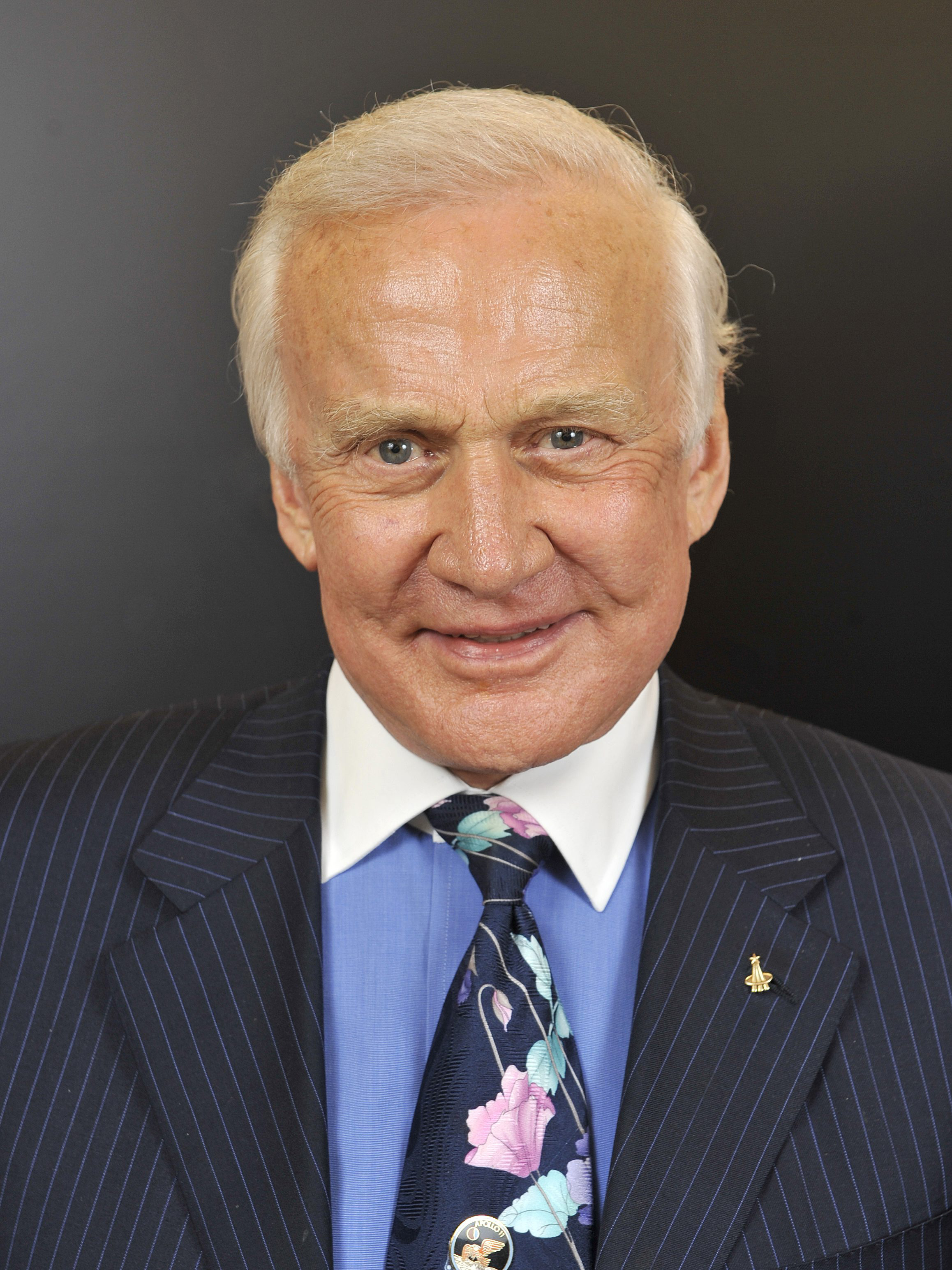
Buzz Aldrin: Space policy, cooperative efforts to Mars and the need to inspire future generations

Buzz Aldrin is a retired US Air Force pilot, a former American astronaut and the second person to walk on the Moon, on July 21, 1969. He was the lunar module pilot on Apollo 11, the first manned lunar landing in history.

A global space ambassador. Courtesy of the Buzz Aldrin Archive

A global space ambassador.
Courtesy of the Buzz Aldrin Archive

Upon returning from the moon, Dr Aldrin was decorated with the Presidential Medal of Freedom, the highest American peacetime award.

Since retiring from NASA and the Air Force, Col Aldrin has remained at the forefront of efforts to progress human space exploration. On November 16, 2011, Dr Aldrin was awarded the Congressional Gold Medal, the nation’s highest civilian honour, along with the other Apollo 11 crew members, Neil Armstrong and Michael Collins, and Mercury Seven astronaut, John Glenn, for their significant contribution to society and exploration.

Dr Aldrin has also written eight books including the New York Times best-selling autobiography, Magnificent Desolation, released in 2009 before the 40th Anniversary of the Apollo 11 moon landing. He has released best-selling illustrated children’s books, two space science-fiction novels and his most recent book Mission to Mars: My Vision for Space Exploration was published by the National Geographic Society in 2013.

“To realize the dream of humans on Mars we need a unified vision. We need to focus on a pathway to the prize.” These were the strident historic words articulated by Buzz Aldrin in July 2009 at the Smithsonian Air and Space Museum’s John Glenn Lecture Series for NASA’s 40th anniversary of the Apollo 11 Moon landing.  Five years on, and having very recently celebrated his 84th birthday, Dr Aldrin’s enthusiasm, ambassadorial work, resolute attitude and ideals are no less subdued.

Exciting developments in space science are coming thick and fast and showing notable progress. It is however, US President Barack Obama’s objective of a manned mission to Mars in his lifetime, preceded by a robotic landing on a real orbiting asteroid, that remains a most ambitious follow on to lunar robotic surface control by the US and the occupation of a jointly designed International Lunar Base.

Continue reading