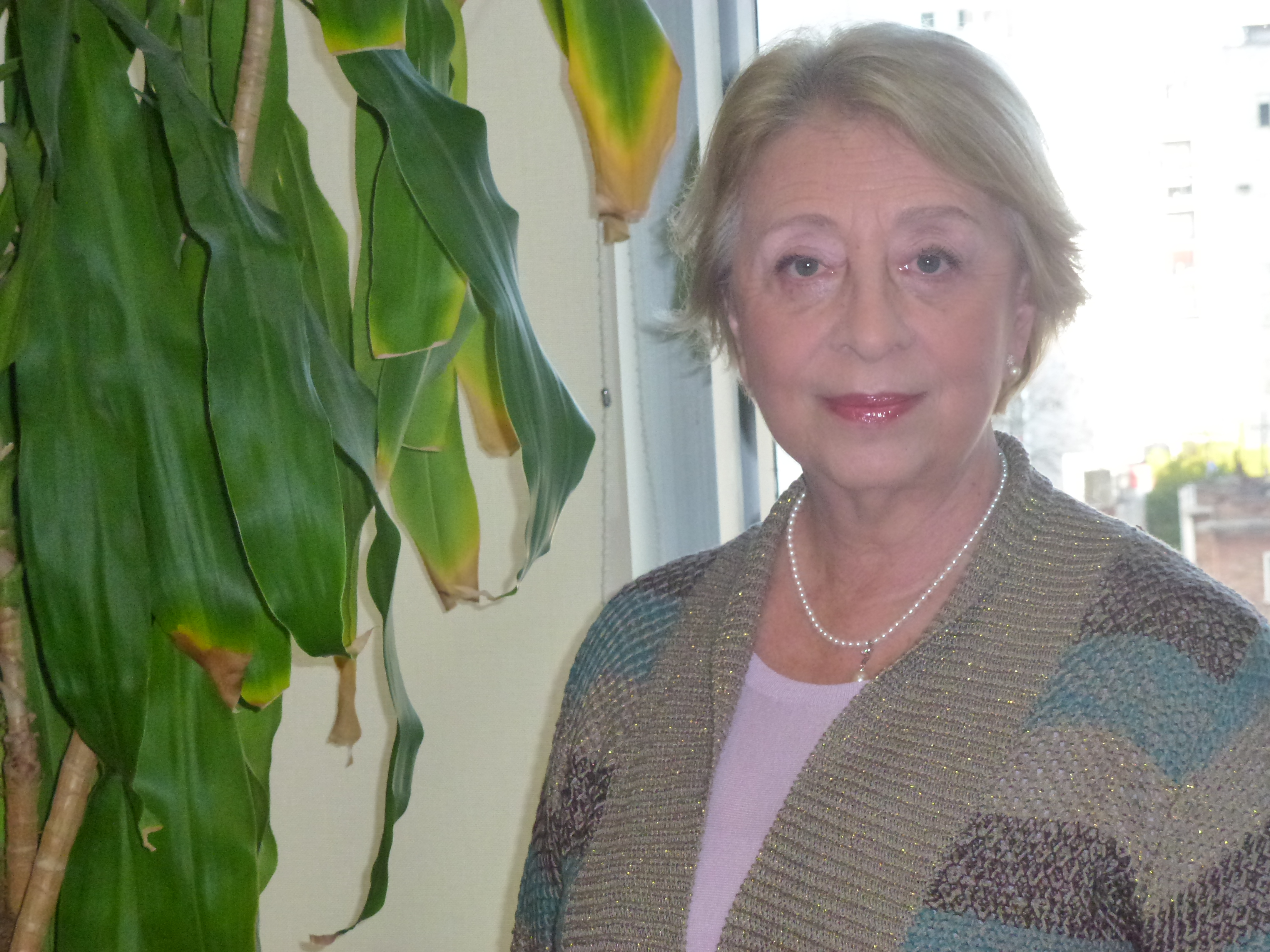
UNESCO Regional Chair on Women, Science & Technology, Dr Gloria Bonder, talks women in science and gender equality

“What I would love to see is more qualitative research not on why women can’t and why so few, but who the women are that are successfully developing careers in engineering, technology or sciences.”

In part four of our five features this week celebrating prominent women in science and technology across the world, we speak to Dr Gloria Bonder, the coordinator of the Global Network of UNESCO Chairs on Gender and the UNESCO Regional Chair on Women, Science and Technology in Latin America. She talks about UNESCO’s latest global figures on women in science, changes that need to be made in both policy and education, and the necessity for more qualitative research on the women who are successfully developing careers in engineering, technology and science.

Dr Gloria Bonder is the Director of the Department of Gender, Society and Policies of the Latin American Postgraduate Institute of Social Sciences (FLACSO Argentina). She coordinates two regional programmes including the UNESCO Regional Chair on Women, Science and Technology in Latin America and the e-learning master’s programme on Gender, Society and Public Policies. Bonder is the coordinator of the Global Network of UNESCO Chairs on Gender. Since 2014, she has coordinated the region’s activities in the global GenderInSITE programme, through her role as the UNESCO Regional Chair. The programme aims to influence policies and policy makers in science, technology, innovation and engineering, to integrate gender equality principles and goals.

She is a researcher and consultant on Women, Science and Technology for several national, regional and international organisations such as: Minister of Science and Technology in Argentina, United Nations, Women and Development Unit, ECLAC and the Office of Science and Technology, UNICEF, UNIFEM, UNDP and UNESCO, among others. Bonder has developed several research projects on gender issues and/in technology and science, education, communication, health and youth, and published books and articles both national and international. She is a member of the advisory board of UN Women for Latin America and the Caribbean and WISAT (Women in Global Science and Technology).

“What I would love to see is more qualitative research not on why women can’t and why so few, but who the women are that are successfully developing careers in engineering, technology or sciences,” strongly asserts Gloria Bonder, coordinator of the global network of UNESCO Chairs on Gender and the Regional Chair on Women, Science and Technology in Latin America.  She continues: “We should look at why they chose that career, what their experiences have been so far, and what they like and don’t like, as well as how they overcome obstacles. We must move away from the basic question of why so few.”

Dr Bonder is not one to mix her words lightly. Having worked on gender studies for more than 40 years in science and technology, she has an authoritative voice and is deeply respected across the world. During unstable political times in the mid-1970s in her home country of Argentina, she was the catalyst behind the creation of a women’s study centre, carrying out independent research on different aspects of gender studies. At that time, it was quite the pioneering community and as a result led to the introduction of a postgraduate programme on women’s studies at the University of Buenos Aires, which Bonder was the founding director of between 1987 and 1999.

Fundamental Changes

As we look back at Dr Bonder’s achievements having set up the Gender, Society and Policies Institute in 2001 at FLACSO-Argentina, there is something on her mind that won’t shift. She interjects: “We need to not only attract both women and men to these careers, but make fundamental changes to the workplace culture and promote that both genders share caring responsibilities. If I was young now, would I choose the science and technology subjects that are taught today? No. To go into laboratories or industries  and make a career in such a way that you have to choose between having a family and enjoying other dimensions of your life, or being a successful scientist, is just plain wrong.”

At FLACSO, Bonder has been quite the influential director coordinating regional programmes across Latin America. The institute runs two huge programmes, which consist of the e-learning Master’s Programme on Gender, Society and Public Policies, and working on training and research projects for UNESCO and other organisations, alongside Bonder, in her role as the Regional Chair on Women, Science and Technology in Latin America.
Continue reading

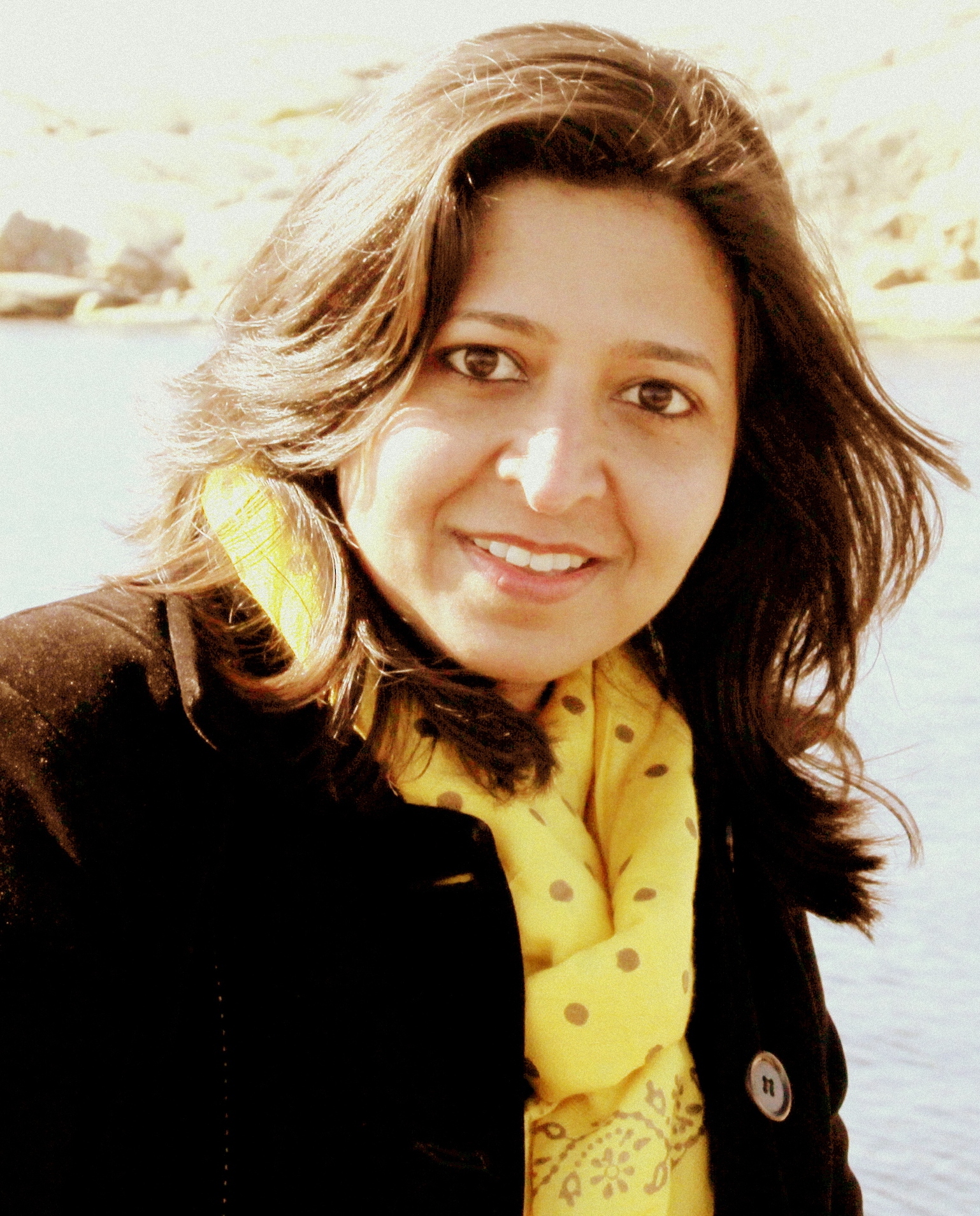
Nature India Editor Subhra Priyadarshini on the Indian science boom and the role of journalism

"India is now transitioning from a developing country into an emerging economic superpower and as a result many areas of development, including science, are catching up quickly."

“India is now transitioning from a developing country into an emerging economic superpower and as a result many areas of development, including science, are catching up quickly.”

In the second of our five features celebrating Ada Lovelace Day and prominent women in science and technology across the world, we speak to science journalist and Nature India Editor, Subhra Priyadarshini about the new resurgence of Indian science and the role science journalists play in narrating the country’s success stories.

Ada Lovelace Day, marked today across the world, is an annual celebration of the achievements of women in science, technology, engineering and maths (STEM).

Subhra Priyadarshini is an award winning science journalist and currently Editor of Nature India, the Nature Publishing Group’s (NPG) India portal. She was a deadline-chasing journalist covering politics and sports, fashion and films, crime and natural disasters in mainstream Indian media for over a dozen years. She finally chose to come back to her first love – science – in 2007 launching Nature India. Subhra has been a correspondent with major Indian dailies The Times of India, The Indian Express, The Asian Age, The Telegraph, news agency Press Trust of India (PTI) and environment fortnightly Down To Earth. She worked briefly for the Observer, London. Priyadarshini received the BBC World Service Trust award for her coverage of the ‘Vanishing islands of Sunderbans’ in the Bay of Bengal in 2006. She received letters of commendation from the PTI for her coverage of the Orissa super cyclone in 1999 and the Indian Ocean tsunami in 2004. She is a regular contributor to BBC Radio’s Hindi science programme ‘Vigyan aur Vikas’ (Science and Development) and taught science communication at University of Calcutta.

The scientific landscape of India is a constantly fascinating and fluctuating one. In a country poised to be a global super power, yet fighting issues of poverty, healthcare and education, Indian science has seen something of a new resurgence over the last decade. Research output and publications have increased significantly and an evolving technology industry has been reaping just rewards. And yet for all these exciting developments, in a country where more than 1.2 billion people live, there has until recent years been one fairly absent protagonist: the media.

When Subhra Priyadarshini, who started Nature India in 2006, first specialised in science journalism after nearly 10 years covering everything from economics to sport, she found there were certain challenges to getting science on the news agenda. “In the early 2000s you would be lucky to find a science journalist working on a newspaper or magazine in India. You had to be a generalist and would find yourself one day covering Bollywood and the next looking at financial markets,” says Priyadarshini, who has worked at the Times of India, The Asian Age and the Press Trust of India, among others. “Science was always my first love and I used to get the kind of fulfilment from a science story that I would not get from say a political reportage.”

Phenomenal growth

Priyadarshini is still today only one of a small handful of science journalists in India who are helping to narrate the ever evolving stories of Indian science. She believes many more science stories are now starting to be reported in the mainstream media, a distant reality when she first started specialising in 2000. “Scientific stories that were not popular interest ten years ago are now starting to creep into mainstream media and basic science research is getting more in-depth coverage,” Priyadarshini says. She cites new genomes being mapped or a new nanomaterial with applications in a variety of themes as the types of stories that are now starting to garner media coverage.

Continue reading

Distinguished South African Professor Tebello Nyokong on science, education and innovation

"When I talk to schools or parents, the first thing I say, is let your children touch and explore, it’s the first path to science.” Image courtesy of Ettione

“When I talk to schools or parents, the first thing I say, is let your children touch and explore, it’s the first path to science.” Image courtesy of Ettione

In the first of our five features celebrating Ada Lovelace Day and prominent women in science and technology across the world, we speak to Professor Tebello Nyokong, an internationally renowned Chemist, on African science, education and innovation.

Ada Lovelace Day, which this year takes place on October 14, is an international celebration of the achievements of women in science, technology, engineering and maths (STEM).

Prof Tebello Nyokong holds a DST/NRF professorship in Medicinal chemistry and Nanotechnology at Rhodes University in South Africa.  She is also Director of the DST/Mintek Nanotechnology Innovation Centre (NIC)-Sensors at Rhodes University where she joined in 1992 after lecturing at the University of Lesotho for five years. She has been undertaking research on applications of phthalocyanines in healthcare: as photodynamic therapy (PDT) of cancer agents in combination with nanosized metal nanoparticles and quantum dots. In September 2009, a special motion was passed in the South African National Assembly acknowledging Professor Nyokong’s role in the transformation of science in South Africa. Nyokong has also been award the title of Distinguished Professor at Rhodes University and recognized by the Royal Society in Chemistry/Pan African Chemistry Network as a  Distinguished Woman in  Chemistry. 

“I keep telling people I’m no longer a role model, I’m too old, too straight and not hip enough,” asserts a hysterical Professor Tebello Nyokong in her own typically modest and charismatic demeanour. Of course, her defiance is far removed from the truth. The quick-talking, affable and extremely accommodating distinguished professor is today not only one of the most internationally respected scientists in the world, lauded for her pioneering research into photodynamic therapy for cancer treatment, but is a constant source of inspiration for students across Africa.

Brought up in politically unstable times in her home country of South Africa, she was sent to live with her grandparents in the mountainous terrain of Lesotho. As an eight-year-old, she would work as a shepherd on alternate days from school, learning the traits of a hard day’s shift. It was here where she found “much solace in nature’s beauty” and learned to appreciate the great science around her.

Challenging expectations

Initially dissuaded by her peers to study sciences at school, Nyokong was desperate for a challenge. After three years studying arts and humanities, she realised they had guided her in the wrong direction. “There were no role models to look up to back then. You just learned to follow your peers,” says Nyokong. “They told me science was too hard and way beyond me, but I was adamant I wanted to do it and with two years left switched courses.”

Nyokong pins much of her determination and steely resistance down to her upbringing and this is evident in her unerring enthusiasm for teaching as the director of the Nanotechnology Innovation Centre at Rhodes University in South Africa. “I was brought up to work hard, whether it was as a young shepherd or working long hours mixing cement and concrete for my father’s company. I was just used to touching things,” brims Nyokong. “Now when I talk to schools or parents, the first thing I say, is let your children touch and explore, it’s the first path to science.”

As an influential voice in South African education, she is not afraid to express her fearless views on the teaching of science and believes much needs to be changed. “In South Africa we have this system that constantly strives for 100% pass rates at schools. Many of the teachers themselves find science hard, as very few are trained in teaching the discipline, and therefore under great pressure, they discourage students from courses. It is a deeply flawed system,” notes Nyokong despondently.

“Science is not just part of our culture, it is part of our everyday life, and role models are crucial in promoting this." Image courtesy of Sophie Smith.

“Science is not just part of our culture, it is part of our everyday life, and role models are crucial in promoting this.” Image courtesy of Sophie Smith.

Continue reading

Chief Scientific Adviser to the European Commission discusses evidence-based policy and nurturing and supporting a European scientific culture

"The policy world very much mirrors what we do in science today."  Image: (c) European Union

“The policy world very much mirrors what we do in science today.” Image: (c) European Union

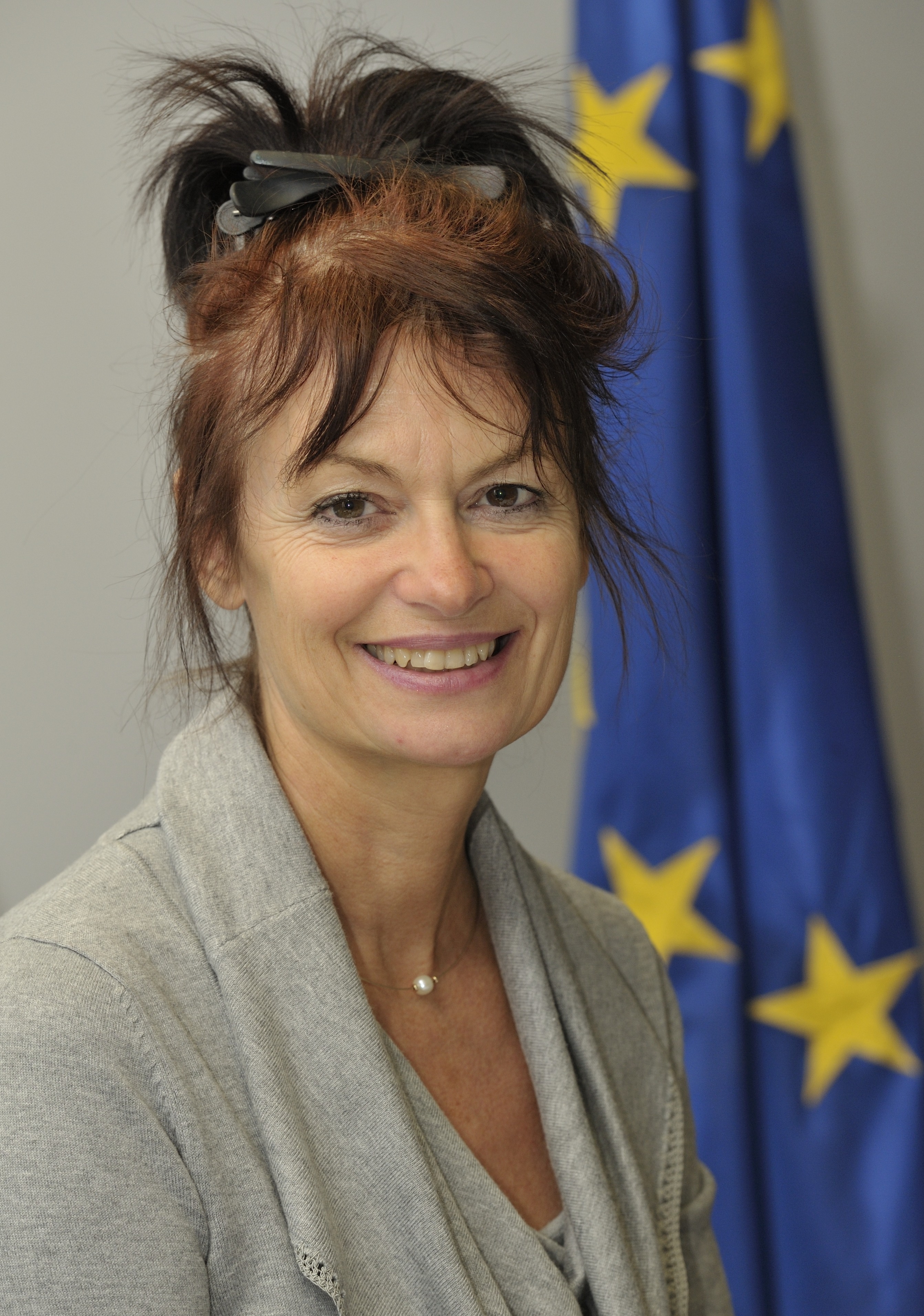
Professor Anne Glover joined the European Commission as Chief Scientific Adviser to the President in January 2012, and is the first person to hold this position.

In this role she advises the President on any aspect of science and technology, liaises with other science advisory bodies of the Commission, the Member States and beyond, coordinates science and technology foresight, and promotes the European culture of science to a wide audience, conveying the excitement and relevance of science to non-scientists. She also chairs the recently established Science & Technology Advisory Council of the President.

Prior to her current appointment she was Chief Scientific Adviser for Scotland from 2006-2011. Professor Glover currently holds a Personal Chair of Molecular and Cell Biology at the University of Aberdeen. Most of her academic career has been spent at the University of Aberdeen where she has a research group pursuing a variety of areas from microbial diversity to the development and application of whole cell biosensors (biological sensors) for environmental monitoring and investigating how organisms respond to stress at a cellular level.

Professor Glover holds several honorary doctoral degrees and is an elected Fellow of the Royal Society of Edinburgh, the Society of Biology, the Royal Society of Arts and the American Academy of Microbiology. Professor Glover was recognised in March 2008 as a Woman of Outstanding Achievement in the UK and was awarded a CBE for services to Environmental Science in the Queen’s New Years Honours list 2009.

When Professor Anne Glover finished her five-year term as Chief Scientific Adviser for Scotland, the biologist was lauded for not only raising the visibility of science in Scotland and the UK, but for further increasing the role of scientific evidence in the policy-making process.

These fruitful five years led her to the challenging and geographically diverse role of Chief Scientific Adviser to the European Commission (EC), which she leaves after three years in the position, at the end of 2014. As the first ever scientist to be tasked with the responsibility of independently advising politicians and policy-makers governing more than 500m people across 28 member states, this was no easy assignment.

Continue reading

Buzz Aldrin: Space policy, cooperative efforts to Mars and the need to inspire future generations

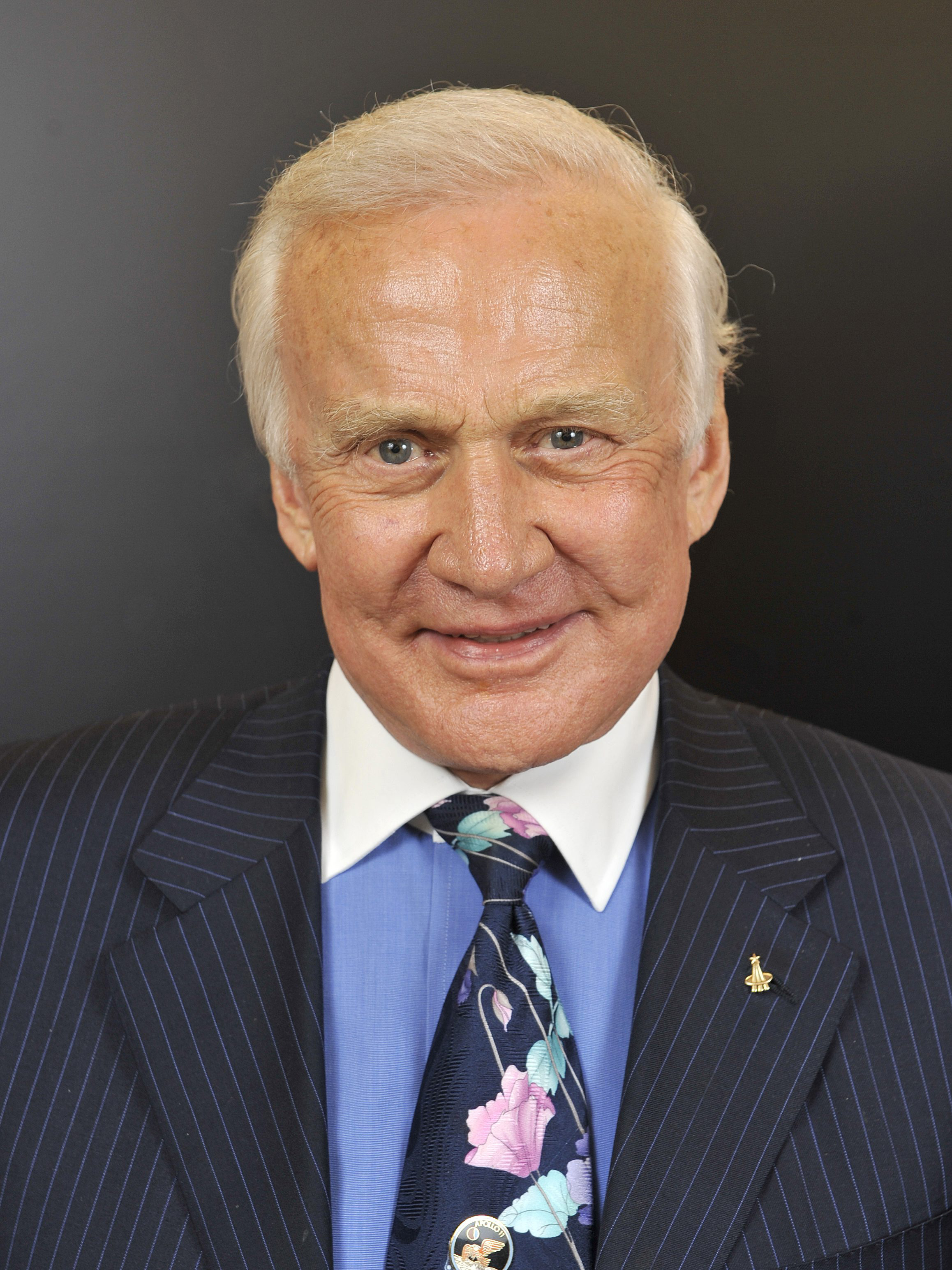
Buzz Aldrin is a retired US Air Force pilot, a former American astronaut and the second person to walk on the Moon, on July 21, 1969. He was the lunar module pilot on Apollo 11, the first manned lunar landing in history.

A global space ambassador. Courtesy of the Buzz Aldrin Archive

A global space ambassador.
Courtesy of the Buzz Aldrin Archive

Upon returning from the moon, Dr Aldrin was decorated with the Presidential Medal of Freedom, the highest American peacetime award.

Since retiring from NASA and the Air Force, Col Aldrin has remained at the forefront of efforts to progress human space exploration. On November 16, 2011, Dr Aldrin was awarded the Congressional Gold Medal, the nation’s highest civilian honour, along with the other Apollo 11 crew members, Neil Armstrong and Michael Collins, and Mercury Seven astronaut, John Glenn, for their significant contribution to society and exploration.

Dr Aldrin has also written eight books including the New York Times best-selling autobiography, Magnificent Desolation, released in 2009 before the 40th Anniversary of the Apollo 11 moon landing. He has released best-selling illustrated children’s books, two space science-fiction novels and his most recent book Mission to Mars: My Vision for Space Exploration was published by the National Geographic Society in 2013.

“To realize the dream of humans on Mars we need a unified vision. We need to focus on a pathway to the prize.” These were the strident historic words articulated by Buzz Aldrin in July 2009 at the Smithsonian Air and Space Museum’s John Glenn Lecture Series for NASA’s 40th anniversary of the Apollo 11 Moon landing.  Five years on, and having very recently celebrated his 84th birthday, Dr Aldrin’s enthusiasm, ambassadorial work, resolute attitude and ideals are no less subdued.

Exciting developments in space science are coming thick and fast and showing notable progress. It is however, US President Barack Obama’s objective of a manned mission to Mars in his lifetime, preceded by a robotic landing on a real orbiting asteroid, that remains a most ambitious follow on to lunar robotic surface control by the US and the occupation of a jointly designed International Lunar Base.

Continue reading

Knowledge, networks and nations

james wilsdon.jpg

This week’s guest blogger is James Wilsdon, Director of the Science Policy Centre at the Royal Society since 2008. Prior to this, he was Head of Science and Innovation at the think tank Demos. His publications include ‘See-Through Science’ (Demos, 2004) ‘The Public Value of Science’ (Demos, 2005), ‘The Atlas of Ideas’ (Demos, 2007) and ‘China: the next science superpower?’ (Demos, 2007).

At the 1908 Olympic Games in London, China failed even to field a team. Eighty years later, in Seoul, they finished in 11th place. And in 2008, as Beijing played host to the most spectacular Olympics in history, China topped the table for the first time, with a tally of 51 gold, 21 silver and 28 bronze medals.

If this is what China can achieve in sport, how quickly can it become a leader in science and innovation? This is one of the questions that prompted the Royal Society’s recent report Knowledge, Networks and Nations. The report maps the global landscape for science in 2011 and charts the growing strength of nations such as China, India and Brazil; as well as the emergence of newer players in the Middle East, South-East Asia and North Africa.

In both science and sport, the Chinese government has set ambitious, long-term targets and mobilized vast resources to achieve them. Just as the $40 billion spent on the Beijing Games dwarfed anything that had gone before, so China is now at an early stage in the most ambitious programme of research investment the world has ever seen. Since 1999, China’s spending on R&D has increased by almost 20 per cent each year. It is now spending US$ 100 billion a year on research, and hitting its target of 2.5% of GDP by 2020 will require a further tripling of investment, to around $300 billion a year.

r and d spending.bmp

Quantity of input doesn’t necessarily result in quality of output, but these investments are starting to yield results. Since 1981, the number of peer-reviewed papers produced by China has increased 64-fold, and it is well on target to become the leading producer of scientific publications within this decade, perhaps as soon as 2013. China’s Olympic triumphs flowed in part from its careful targeting of medal-rich sports like gymnastics, shooting and judo. In the same way, it has focused its research investment on disciplines where the opportunities are greatest.

Alongside globalisation, a second theme of the ‘Knowledge, Networks and Nations’ report is collaboration. The scientific world is also becoming more interconnected: over a third of all articles published in international journals are internationally collaborative, up from a quarter 15 years ago. This is happening for a variety of reasons. Advances in communication technology and cheaper travel have played a part, but the primary driver is scientists themselves, seeking to work with the best of their peers and to access complementary resources, equipment and knowledge. So at a time when budgets in many countries are under pressure, our report makes a strong case for continued investment in collaboration, as vital to high-quality research, and to our capacity to address the big social and environmental challenges that we face today.

Science policy at the Royal Society

The ‘Knowledge, Networks and Nations’ report is one recent example of the contribution that the Royal Society makes to public policy. We’ve been doing this for a long time: our earliest report, on the state of Britain’s forests, was delivered to King Charles II back in 1664.

But today, scientific advice to underpin policy is more important than ever before. In 2009, the Royal Society established a Science Policy Centre to strengthen the independent voice of science in UK, European and international policy. Each year we publish half a dozen reports, usually produced by groups of our Fellows and other experts. We also run workshop and seminars, as well as engaging directly with policymakers and with the media.

Above all, we want to make the Royal Society a hub for debate about science, society and public policy; to act as ‘honest brokers’ of the choices that confront scientists and policymakers in the 21st century.

Last year, the Royal Society celebrated its 350th anniversary. As historians such as Steve Shapin have described, in its early years, the Royal Society was a ‘house of experiment’. Hooke, Boyle, and the Society’s other founders – ‘ingenious and curious gentlemen’ as they styled themselves – met regularly to conduct experiments, to peer through newly-invented telescopes and microscopes, and to dissect strange animals.

Today, while the Society funds the work of several hundred research scientists through its grant schemes, no actual experiments take place within its four walls. Science moved out long ago into the universities and corporate R&D labs. But in other ways, the Society remains a house of experiment. Only now, the experiments that take place are in those messy and contested commons and borderlands between science, politics and society.

This, as I see it, is one of the primary responsibilities of a national academy of science in the 21st Century – to be honest and open in our recognition of the shifting politics of knowledge. To ask and to help answer the burning social, ethical and political questions raised by and for science today.

Working collectively to advance UK science and innovation

D.G.bmp

This week’s guest blogger is Diana Garnham, the chief executive of the Science Council, and chair of the Department for Business Innovation and Skills Expert Group on science for careers, and a regular on the FT science podcast. Prior to joining the Science Council, Diana has managed various other organisations, including the Association of Medical Research Charities. Throughout her career she has been involved with many science related engagement initiatives and policy campaigns.

Sir Gareth Roberts, was very clear about his reasons for wanting to set up the Science Council in 2000:

There are many challenging issues facing the world in the 21st Century and the science community will need to work both collectively and collaboratively to tackle these.

My principal task as Chief Executive of the Science Council is to establish priorities and ways in which the science community can work collaboratively to tackle the key issues faced by society today.

The Science Council has dual aims of advancing professionalism in science and increasing the application of science for social benefit. There are now more than 30 member organisations from across the spectrum of science – learned societies including chemistry, biology, physics, mathematics, psychology, as well as professional bodies from nuclear to soil science. It is funded collectively by these organisations and by individual professional scientists through the Chartered Scientist scheme.

What is science?

The Science Council’s embraces science and scientists from basic research through to development and application, as well as across disciplines and professions: it is both inter-disciplinarity and multi-disciplinarity. One of our early tasks was to establish a definition of science that worked across this breadth and in 2008 we published a definition that seems to be passing the test of time. It took us 18 months to agree science is the pursuit of knowledge and understanding of the natural and social world following a systematic methodology based on evidence. Science is a methodology rather than a discipline, and scientists are those who create knowledge and understanding and/or use and apply it.

Working in collaboration

As a seasoned chief executive of umbrella bodies I was under no illusions that getting more than 30 organisations to work together to make a difference was going to be an easy task, and there have certainly been ups and downs in the early years. There is now stronger ‘Science Council-ness’ and a coming together that has enabled us to set out overarching policy on science and innovation investment. This includes establishing some key collaborative projects on outreach, careers and skills, science policy, and advice to Government. Most importantly we help to raise the standards of professionalism in the practice of science, at all levels.

Developing and supporting the science workforce

The term scientist has come to be associated largely with research and development and there is a tendency – particularly in academia – to consider only those with PhDs as real scientists. Apart from this clearly not being true – many more scientists are employed outside academia than within it, with the majority or practicing scientists neither working in the public sector nor education. I personally don’t find this at all surprising – that the more science we discover and develop, the more scientists we need to translate and apply it in society and the economy. A narrow view of the role of the scientist is not only inhibiting young people from entering science, but inhibits the mobility of those who want to move on academia.

If the UK economy is going to compete globally then it will need to attract young people into science and to raise awareness of the career opportunities arising from the study of science and maths. The forecasts suggest demand is between 640,000 to 750,000 more people in the workforce with these skills by 2017-2024. UKCES suggests 58% of all new jobs will require science and technology skills. These numbers are staggering, therefore providing better careers information for school students, science teachers, careers advisers and parents has to be a high priority. There are well documented skills shortages and skills gaps: current shortage areas include food science and medical physics, for example, both sectors where we need to have strong skills to maintain public confidence.

The Science Council is leading work to increase the take up of science and maths post 16 in order to meet these skills demands. We have much deepened understanding of the many different roles that those with science backgrounds undertake in the economy and the mix of skills and competencies that employers will need, as well as seeking to understand transferability and generic knowledge and skills. We know that 58% of STEM graduates work for small and medium sized businesses and not the large, high profile employers that most can name. Central to all of this is the need to promote the profession of scientist – without improved awareness of what scientists do and what sort of people they are, we have no hope of inspiring more young people to aim for science careers. Our Hidden Science Map aiming to get all types of scientists, technologists, engineers and mathematicians to come out and show just how much science and technology is going on everywhere in the UK – sign up on the map – it’s and easy way to ‘do your bit’ on careers and skills.

In 2004 the Science Council launched the Register of Chartered Scientist and since then more than 15,000 practicing scientists have been registered. Last year we fulfilled our commitment to high standards of current competence for registrants by implementing annual revalidation through CPD, one of the first technical based registers to do so. Later this year we will launch a Science Technician Register and next an Intermediate ‘graduate’ register. All the registers encapsulate the multi-disciplinary nature of 21st Century science in which individuals will often practice or specialise in different areas of science and technology during their careers. But they will also, for the first time, recognise the different types and levels of skills that a science and innovation based economy will need.

For more information about the Science Council, its projects and the work of its member bodies click here.